Stanbic Bank
Stanbic Bank
17.6 C
Kampala
Stanbic Bank
Stanbic Bank
Home Blog Page 1518

Confusion as Iganga deejay dies in accident, girlfriend arrested

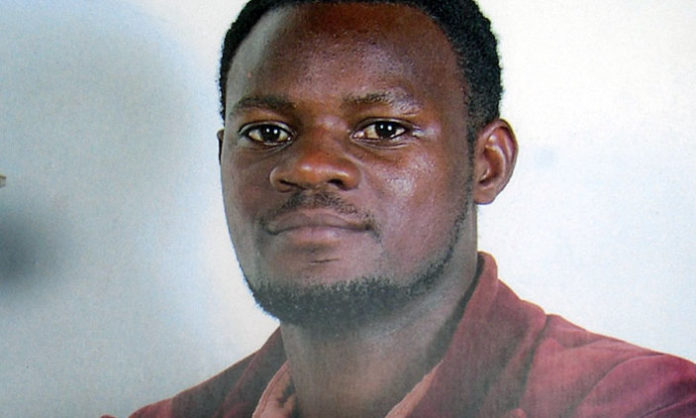
Late DJ Ramadhan Waiswa

It is not well in Inganga district as residents there are mourning the death of their beloved son and famous disco jockey, Ramathan Waiswa who was reportedly hit by a trailer at Busei trading center on the Iganga-Bugiri highway.

Residents who witnessed the accident say it occurred at around 4am on Thursday. Iganga district Police commander Nsambu Nditta confirmed the accident that happened on the busy road.

However, some residents there claimed that Waiswa had been murdered in a different place and that his body was dumped along the road by killers to conceal evidence. However, Nditta said Waiswa was killed in an accident.

Nidtta said Waiswa’s body was taken for a postmortem examination at Iganga Hospital Mortuary where it doctors said he died from injuries he suffered in the accident.

Meanwhile Waiswa’s longtime girlfriend, Shifa Namukose, was arrested by Police and briefly detained for questioning. She was later released after the post mortem results showed Waiswa had been killed by the speeding trailer.

The driver of the trailer was also arrested at Iganga Central Police Station and is due to appear before court to answer charges of careless driving and overspeeding.

Stories Continues after ad

Sadolin paint, the people’s, dealers’ money maker

Officials of Sadolin at the handover of paint to Omar

Ugandans have in the past two decades witnessed the emergency of a number of different paint manufacturing companies which has created stiff competition in the industry as exposed by the various media advertisements and billboards, each company claiming its paint to be the best.

To establish which company’s paint brand is the people’s favorite, dealers’ choice, Eagle Online commissioned an in-house simple market survey whereby it sent out its scouts to interact with individual consumers, wholesalers, contractors and retailers in key towns of Kampala and Wakiso districts which have construction projects going on day in day out.

The team moved in places such as Nakasero market, Natete, Kawempe, Kireka, Makindye, Nansana, Kyengera, Kibuli, Nakawa, Ntinda, Namugongo, Kiira, Bugolobi, Kitintale and Mengo among others as they interacted with people about the paint they have ever used.

The team reached out to over 300 people who were picked randomly, 10 percent of them being wholesalers while 20 percent comprised retailers. The rest 5 percent were contractors. The rest comprised house owners, painters and artists.

Asked which paint they have heard of or bought in the last three years. 80 percent of the house owners, painters and artists mentioned Sadolin, while other paint brands share the 20 percent. Enoch Kagwa, 57, said he had known Sadolin since his childhood. “My father, who was a teacher, built his permanent house in the village in 1986 and the paint he used was Sadolin.

For Tina Zawedde Nakacwa ,when asked which paint comes first in her mind when need arises, she said Sadolin always comes first, though she admitted having used a different paint due to scarcity of Sadolin paint in the nearby shop. “I always buy Sadolin products. I think they are the best on market though other paints exist,” she said.

For Ibrahim, a resident of Nakulabye, Sadolin is the only paint he can think of whenever he wants to give a new look to his 23-year old rentals. He added: “I was disturbed when I had that Sadolin had left the market but then after some time I heard an announcement on radio that Sadolin is still in Uganda,” he said.

An accountant of one of the construction companies based in Kampala’s central business district in a brief phone interview said they mostly buy Sadolin paint for their clients’ houses. “As you know we are not real estate developers but we only construct houses for clients.

However, we always have Sadolin in our inventory for a short time.
For dealers, much as they have other brands of paint, they told our scouts that Sadolin paint remains their number one money maker as it doesn’t stay in stores for a long time. One of the dealers in Kawempe was quoted by our scout as: “Before you arrived here I had loaded a small dyna pick-up with 40 big tins of Sadolin paint for someone finishing up his rentals.

Another dealer in Nakasero market said the quality of Sadolin paint is key in attracting clients. “Sadolin paint is not affected by weather and it is durable. That is why people like Sadolin,” he said. He said he has spent over twenty years dealing in paint but was happy to say that Sadolin is the people’s choice much as he sometimes has to store some other paint in case Sadolin runs out.

The sellers said clients are happy with the packaging of Sadolin paint which ensures convenience and easy transportation. The sellers say they see Sadolin dominating the local paints industry for the years to come as Ugandans colour their houses, schools, churches, hospitals and other facilities.

Stories Continues after ad

Uganda police still brutal, partisan and don’t care about citizens’ lives

When the new Inspector General of Police (IGP) Martins Ochola Okoth assumed office, many people he would change the image of the police in the eyes of the Ugandan public and the international community. Unfortunately since Mr. Ochola became IGP, there is nothing visible to show that he intends to turn around the bad image of the force before he retires.

The Ugandan policemen have a permanent of the growth of democracy. The officers are determined to crash anybody that comes up to defend their rights and freedoms. There is no difference between police under Gen. Kale Kayihura and police under Ochola.

One would be right to say that Ochola, despite promising a lot, has achieved nothing so far, especially when one considers the Force’s operations as it deals with members of the public who in one way or the other have held demonstrations to show their dissatisfaction towards government policies or unfair treatment.

Since Mr Ochola assumed the office of the IGP, he has not had close interactions with the members of the public. Yet we the public have issues with his force that is made of unqualified personnel, criminals, extortionists and others who believe that it should be the public to serve them and that any one that peacefully opposes government must be deterred with beating, flogging, kicking, slapping, tear gassing and boxing, just to mention but a few.

Mr Ochola seems determined to uphold the belief of his predecessor Gen. Kayihura who believed that any peaceful demonstration must be countered with teargas and live bullets. The officers continue to be trigger-happy and to them loss of a life arising out of their teargas and shooting is of no concern.

On July 11, when those opposed to social media tax and mobile money tax decided to show their disproval of the new tax measures by holding a peaceful demonstration in Kampala, the police rushed to disperse them in a manner that can only be applied in a fascist regime. We thought the NRM government is democratic and operates in a democratic framework-constitution which guarantees civil and peoples’ rights of speech and assembly.

In a democratic society, the role of the police, is to guide those involved in demos. The police are not there to give them permission. The Uganda Police which Ochola superintends over seems to be backward when it comes to observing this simple principle. The truth is Ochola and his men are operating on orders that can only be carried out in repressive states where leaders don’t care about the people that they govern.

Mr Ochola and his officers can not deceive the world that the social media and mobile money taxes have not affected their pockets, their families, relatives and even the force itself. Why would sane policemen target tear gas canisters to innocent people who are not armed in anyway? Mr Ochola, Ugandans are tired of teargas. The billions being wasted on buying the teargas can be used to build police quarters, upgrade police schools, or even used to raise officers’ salaries and allowances so that they stop extorting money from the members of the public.

Prime minister on July 11, while addressing members of parliament said government would review the two taxes, which confirms that those against the taxes and indeed the general public have issues with the taxes. A review of both taxes will also benefit Ochola and his men. The police should know that demos are allowed world over and are not sanctioned by the police. The police can only give procession/traffic guidelines and protection to those involved.

Finally Ochola is enjoying the benefits of being IGP but his predecessor is ‘kept’ somewhere and is wondering why he did certain things just to please the powers that be. It is a lesson that Ochola needs to learn. Citizens will always win no matter how long it takes.

The writer is a journalist with Eagle Online

Stories Continues after ad

Court to deliver ruling on torture of Magara murder suspects

Courtesy Photo: Late Suzan Magara portrait, "the Lady" painted by Daniel Lagen.

Kampala: Buganda Road magistrate’s court has set July 30 as the day it will deliver its ruling over allegation of torture of the suspects that were arrested in relation to the murder of Susan Magara.

The suspects were arrested in April from Usafi Mosque in operation that was conducted by a joint force of Police, Uganda people’s Defence force (UPDF) and Chieftaincy Military Intelligence (CMI) after receiving information zeroing them to the murder of Ms. Magara among other illicit activities.

Appearing before Grade one magistrate Robert Mukanza, suspects through lawyer Abdul Hakim Lubega lounged in their application complaining of torture, grievance harm inflicted on their bodies, and degrading acts committed against them done by security officers in prison wards.

He asked the president Judge to refer his clients to an independent organisation African Centre for Torture victims for examination.

However prosecution led by Patricia Cingitho told asked for adjournment of the matter saying police is still investigating the matter and within few weeks substantial evidence pinning suspects will be introduced for their commission to high court.

The suspects include: Yusuf Lubega, Hussein Wasswa, Muzamiru Ssali, Hajara Nakandi, Abubaker Kyewolwa, Mahad Kasalita an Imam at Usafi Mosque, Hassan Kato Miiro, Musa Abbas Buwembo and Ismail Bukenya.

Ms. Magara, 28, was in February kidnapped by unknown assailants on her way home in Lungujja, Lubaga Division, tortured for three weeks and killed after her agonizing family paid ransom of over Shs700 million.

Stories Continues after ad

0.5 per cent mobile money tax already incurred will be refunded-Museveni

President Museveni has said 0.5 per cent of the tax incurred while transacting on Mobile money will be refunded to all people who were deducted one per cent on mobile money transaction.

In an effort to have self-sufficiency in budget, this financial year, government introduced social media and mobile money tax. With Social media platforms such as WhatsApp, Twitter, Facebook, You Tube, Viber and Skype among others have been subjected to a daily levy of Shs200 as mobile money transaction have been subjected to a 1 per cent excise duty.

However after various protests against the introduced tax, Museveni said the one per cent on mobile money tax was a miss communication. “That is how the idea of 0.5 per cent for sending and 0.5 per cent for receiving came up. Due to the newness of the measure, the figure of 1 per cent came up by mistake. I signed the law with the error because we could not delay the other measures,” Museveni says in a social media post.

He said when Parliament reconvenes, legislators will be requested to correct it, “the ones whose deductions had been made on the basis of 1 per cent should have their money re- imbursed,” he added.

President Museveni’s response to social media feedback on his letter on tax

Greetings to all of you.

Thank you for responding to my message of July 4, 2018 on the issue of social- media and mobile money taxes. There were many responses. Some, like Brenda Margaret, saying that the ‘pigs’ in government are filling their stomachs.

Otherwise, people would not mind paying taxes because we all want the country to develop. Others, falsely, claiming that all the ‘massive taxes’ have failed to develop the country. What can 0.5 per cent do? That wrong statement was by Rose. RC@Rhone said that at Sh.200 per day, the tax would bring in Sh.720 billion per year yet “all the developments” would still be funded by loans.

Mercy Musinguzi wanted to know why it was the old man with a hat to clarify. Was the tax 1 per cent or 0.5 per cent? Mark Muyobo repeats the point that people would not mind paying the taxes if the tax money was well used. Leonard Lubwama, using luganda, wondered why he should travel to collect money when he can get it on phone. Premaz Kirabo Mayega was for scraping the tax.

Tusime Peter wonders what will happen to those who had paid the 1 per cent. George Mugwanja said tax should be simple and easily collected. Henry Othieno wonders why we do not tax the multinationals. Hackim Niwazy, commends my message but informs me that they are taxing mere deposits. I have been following up all these issues for a long time. Here are my comments on each of the points:

  1. Corrupt and unpatriotic pigs in government either steal the money or spend it on themselves (ego-centrism). That is certainly true to some extent. However, they steal or misuse the money that is already collected in the form of taxes. They cannot steal or misuse money that is not yet collected. The only pigs that can steal money which is not yet collected in taxes are the officials of URA and the Ministry of Finance who deliberately cover up areas of possible tax collection and share the money with the possible tax payers instead of the money developing our country by having a self- sufficient budget (embalira ya sente eyeggwanga eyemerira). What the broader category of pigs steal or misuse is part of the 14.2 per cent of the tax:GDP ratio that is already collected as Govt revenue.Therefore, while corruption and the ego-centrism of the elite in government are problems, the bigger problems are a small GDP in the past and even when the GDP started growing, we still have had the persistent under-collection of taxes as a proportion of GDP. On the issue of expanding the size of the GDP, the NRM has acquitted itself admirably on that front because the average rate of growth of the economy in the last 32 years has been 7 per cent per annum. It is the GDP:tax ratio that has remained low. Since we are developing our country, we need enough money to do so and we must handle all the three problems: corruption, selfish use of the money by elements of the elite and the under-collection of taxes compared to the growing size of the GDP. In the previous statement, I gave you the comparative figures. Some countries in Europe go up to 30 per cent of GDP: tax ratio. Our 14.2 per cent is too low even if there was no corruption etc.
  2. Ugandans have been massively taxed but where is the development? Come on, friends. Be serious. Only the other day we were at Kololo reminding ourselves that infectious diseases (polio, measles, T.B, small-pox etc), water-borne diseases and vector-borne diseases have greatly declined. Why? It is because of : immunization, more accessing safe water and controlling the vectors (mosquitoes, tse-tse flies, etc).On the contrary, 40 per cent of the deaths are due to non-infectious diseases (the so called non- communicable diseases – heart, kidney, diabetes, cancers, hypertension etc). These are due to eating too much and not doing physical work (collecting firewood, collecting water, cultivating, walk to and from work, etc etc).That is on health. You can go to Education. Two million children in the Primary Schools in 1986; now nine million. 190,000 students in the Secondary Schools; now 1.8 million. 5000 students in the university now 200,000. Electricity – 60mgws in 1986; now 2000 mgws. Telephones- 23,000 in 1986; now 23million. Roads, Roads, Roads: 1000km of potholed tarmac roads; now approaching 6000kms of tarmac plus 1000 pieces of brand new Road equipment for the murram roads.Piped water systems up to small Trading centres such as Kasambira in Kamuli; big irrigation schemes like Mubuku and Doho. The brand new ICT backbone that enabled the internet cost to go down from US $1200 in 2013 to US $300 in 2014 to the current US $70 per Mbps; then the under sea cable in which UTL has shares.

    Here, I have been talking about government projects. How about private units of wealth? How many new permanent buildings in the Kampala- Entebbe- Mukono- Nansana area? Do you have eyes to see? How about the factories? How about the hotels? How about the cars, the buses, the boda bodas etc? How about the Kilograms of tea produced, the bags of coffee produced etc per annum? Tea -3million kgs in 1986; now 60 milion kgs. Coffee-2million 60kgs bags ; today, five million 60kgs bags- mainly on account of Operation Wealth Creation in the last three years.

    How about the cattle? three million inv1986; now 14 million. How about scientific research in Agriculture, engineering, food science, medicine etc? How many patents do our scientists have? How about the petroleum and gas that was discovered by our Scientists? How about the other minerals? The 200 million metric tonnes of iron ore (obutare), the 230 million metric tonnes of phosphates, the 300million metric tonnes of Lime for cement, the three billion metric tonnes of aluminium clays etc. The envy and malice of the enemies cannot diminish the achievements of Uganda and the National Resistance Movement. Sorry for all the traitors.

  3. Since we are collecting more and more taxes, why is everything in the form of development paid for by loans? Not true. The long Olwiyo- Anaka- Koch – Goma – Gulu- Acholibur- Kitgum – Musingo Rd ( 235.1 kms) has been paid for, 100 per cent, by the Uganda government. The Shs.440 billion Kampala-Masaka road was paid, 100 per cent, by Uganda government. Kampala- Mityana; Mbarara- Kikagate – Murongo ferry; Ishaka- Kagaamba; Jinja- Kamuli; Mukono- Kayunga – Njeru; Iganga- Kaliro; Musita-Namayingo- Busia; Kampala- Kafu- Karuma- Gulu; Soroti- Katakwi- Moroto; Moroto- Nakapiripirit-Muyembe; Mubende- Kakumiro – Kibaale – Kagadi- Ndaiga; Matugga- Semuto-Kapeeka; Lira- Kamudini; Mityana- Mubende- Fort-Portal; Mbale- Tirinyi- Nakalama; Tororo-Mbale- Soroti; Mukono-Katosi-Nyenga roads; etc etc have all been paid for or are being paid for, 100 per cent, by the Uganda Govt. No loan., No grant.Even the ones paid for by loans such as Fortportal – Kamwenge partially; Ntungamo- Mirama Hills ; Atiak- Nimule etc; in the end, are funded by the Uganda government because we pay back those loans. Each year, we spend US $821 million paying back those old loans.If we did not pay back the old loans, they would not give us new ones. Therefore, all the projects either directly paid for by the Uganda government or through loans are, in reality, all funded by Uganda government. The only exceptions are the grants which in this year’s budget only account for Sh. 0.28 trillion out of a budget of Shs32 trillion.

    This is not of great significance. Many of the expenditures are paid for by the Govt tax revenue of Shs17.5 trillion and the Shs15.3 trillion borrowing from outside and from inside (Shs8.3 trillion from outside and Shs7 trillion from inside). Who lends to the government from within the country? National Social Security Fund, Banks etc through buying treasury bills and bonds of the government. Treasury bills of the government and bonds are pledges, in the form of documents ,where the government undertakes to pay back, without failure, with interest, the money lent to the government when the agreed period expires.

    The problem of funding government programmes with loans is that those loans have interest on them. Indeed, each year the government pays Shs2599 billion as interest for the old loans not to mention the paying back of the principal, the amount of the original money that was borrowed. This could construct six (6) Masaka- Kampala roads because, remember, earlier on, I told you that we spent Shs440 billion on that road. This is why it is important to raise enough government revenue in taxes to stop wasting our money paying interest instead of undertaking more projects.

  4. Why was there confusion about 1 per cent and 0.5 per cent and charging mere deposits on mobile money accounts which were not supposed to be taxed? It is because this was a new tax and people were not uniformly understanding what was involved. However, there are also elements who, on account of corruption, have been concealing possible tax sources from the government and have been aiding tax evasion.

They have been hiding the movement of money in and out of the country, the coming in and going of telephone calls, the misuse of social-media for subversion and malice. All these dishonest people tried to misinform the public in order to incite them against the efforts by the government to achieve financial independence from their foreign masters.

Ugandans need to know that there are two types of corruption. Some of the thieves steal our money that we have already collected. Others steal the money we have not collected in the form of concealing tax sources, under-declaring telephone calls, under-declaring rents collected from buildings, under-declaring the value of imports etc, as already pointed out above.

Given the size of our economy now, we should be able to attain budget independence and self- sufficiency if we collect all the legitimate taxes. What are legitimate taxes? The strategy of many far- sighted countries is not to tax, or not to tax too much, the production (manufacturing and agriculture); but, instead, to tax consumption, starting with the luxuries- beers, cigarettes, whiskies, fuel, vehicles etc. This is inorder to enable the population to create more wealth ( factories, farms, clinics, engineering services, etc).

We, therefore, do not tax machinery being manufactured in Uganda or being imported for the beer factory or the primary raw-materials for the manufacturing for that factory. This is to enable the factory manufacture cheaply so that it can make profits and get encouraged. When the beer is produced, however, the government starts by imposing excise duty – the tax collected as the beer is leaving the factory.

Later, the government will add the consumer tax. Who pays this tax? It is the consumer ( the buyer) who voluntarily buys that bottle of beer inspite of the slightly higher price – factory price plus the two taxes- excise and consumer. The factory does not pay other taxes until it starts making profit i.e. its costs of production being lower than what it earns.

This tax is called corporation tax. Sometimes, the Govts, in order to encourage the expansion of the factory, may give tax holiday of 10 years and, therefore, this corporation (profit) tax is not collected for those ten years. Why? It is because this factory is very useful.

It has created jobs for, maybe, 1000 Ugandans who were previously unemployed. These Ugandans, who are now working, are, moreover, apart from solving their personal problems ( education for their children etc) , are already contributing to the tax effort of the country in two ways. Through income tax and through the consumer taxes. Many Ugandans, once they have money, do not take long before going to the bar to buy a bottle of beer on which there is a tax; or buying perfume for his wife on which there is a tax.

Governments normally tax consumer items with inelastic demand. items with inelastic demand are items whose demand does not decline even when the price goes up on account of addiction or because they are no alternatives. Alcohol, tobacco etc fall in this category because of addiction; social-media use is definitely a luxury item. Internet use can be sometimes for educational purposes and research. This should not be taxed.

However, using internet to access social media for chatting, recreation, malice, subversion, inciting murder, is definitely a luxury. As I said in my earlier message, it is, moreover, a luxury that is costly to the country’s economy apart from the shillings the users keep spending to use the internet to access the social media (facebook).

The foreign telephone companies accumulate a lot of local shillings from the social media merry- makers or malice promoters; they, then, go to the forex bureaus and buy the dollars I have earned from my milk products, from coffee, from tea etc etc and, guess what, send abroad (send back the very dollars we had just earned) this hard currency. Thereby, putting pressure on our shillings.

In this heammorage, they are joined by the people of games betting where, again, betting machines are owned by the foreigners. This is not only extravagance but also parasitism. Our people are unknowingly being used by foreign interests (telephone companies, social media companies) to parasite on us- to take away our hard earned dollars in order to have fun or promote malice on social media. That is why a social media tax is, really, a minimum.

Instead of re-introducing foreign exchange control which other countries still have, we have simply said: “Please since you are endlessly having fun or expressing your views at the expense of the dollars we have earned, make a modest contribution to the building of the country”. Those involved, should, surely, happily, at least, do this minimum.

5. Mobile money tax is a different category from the social-media tax. Mobile money transfer is not a luxury. It is, in fact, a necessity and a very convenient way of sending money. There is, however, another issue for the partially pre- capitalist and partially informal economy we are still having. Many people’s earnings are not known. Apart from salary earners and those who use banks, the earnings of many other Ugandans are not known.

Mobile money transfers have brought to the surface the big volumes of money that are moving around the country. Each day US $ 52 million moves around in the form of mobile money. This is about US $19 billion a year. Much of this money is by big people; but, of course, some of it is by, economics-wise, small people.

Therefore, in an effort to have self-sufficiency in budget, this is a convenient source we should not over- look. What small portion can the state take away to balance its budget without hurting the users? That is how the idea of 0.5 per cent for sending and 0.5 per cent for receiving came up. Due to the newness of the measure, the figure of 1 per cent came up by mistake. I signed the law with the error because we could not delay the other measures. However, Parliament, when it reconvenes, will be requested to correct it.

The ones whose deductions had been made on the basis of 1 per cent should have their money re-imbursed. Should we only deduct from the sender or also from the receiver? Is it affordable? We should continue to study those questions. However, the necessity of using this for revenue generation is clear. The only question is: “By how much”? Let us discuss this in a disciplined manner.

6. Some of The contributors put the question: “Where will you put the Shs720 billion from the social-media tax?” Remember, above, I told you that Masaka- Kampala road cost Shs440 billion. That social-media tax will be equivalent to two roads of the type of the Kampala-Masaka road. There are so many roads that we want to tarmac but limited by money: Mpigi- Kisubi- Nakauka Rd ; Bwizibweera-Nsiika- Nyakabirizi Rd; Iganga-Luuka- Kamuli Rd etc etc.

7. I salute Mk Rogers, Svan Ismail, RC @Rhone, Kariuktin, Nakot Comrade, Martin Prince and others that commended the tax.

8. The multinationals are already paying their taxes.

9. Taxing deposits was wrong and it should stop. Re-imbursments will be made.

Next time, I will deal with:

1.Why spend money travelling to deliver money to friends instead of sending by mobile money which, of course, is commendable?

2.Scrapping the tax as proposed by some;

3.Tax should be simple and easily collectable.

Rushing to do the half- yearly de-worming of my cattle ,(your cattle because, in a week, I only eat 400 grammes of beef- the rest is for you , Kampala people). It is glorious that we are not importing beef, milk, bananas, maize, cassava, cement,etc etc.

I am contributing, in my small way, to what God commanded us in the Book of Genesis; “To establish dominion over nature”. It says in chapter 1:28 as follows: God blessed them and said to them, “Be fruitful and increase in number; fill the earth and subdue it. Rule over the fish in the sea and the birds in the sky and over every living creature that moves on the ground.”

Signed

Yoweri Kaguta Museveni

Gen (Rtd).

Date: Thursday, July 12, 2018

Stories Continues after ad

Didier Deschamps could become third person to lift the World Cup as player and manager

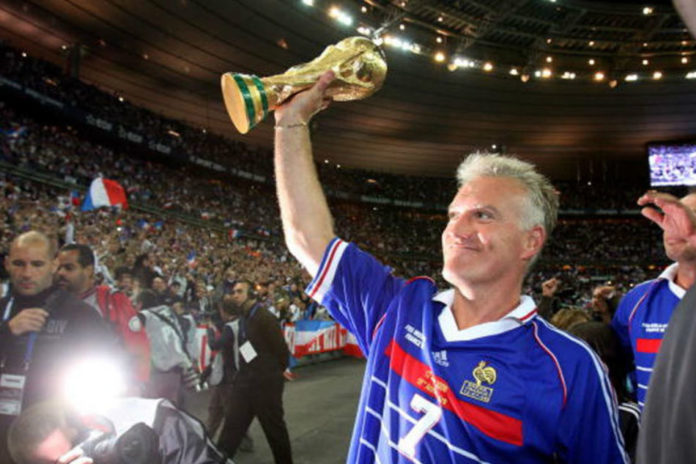
France national team coach, Didier Deschamps, with the world cup trophy in 1998

On this day in 1998, France defeated Brazil 3-0 in Paris to win their first World Cup trophy and the man who captained the team has moved to within 90 minutes of getting his hands on the trophy again, this time as a manager.

Didier Deschamps lifted the World Cup 20 years ago and in three days’ time, he guides France as the manager to take on Croatia in the showpiece of the biggest football event on earth, the 2018 World Cup final in Russia.

The French Manager will be looking forward to join both Mário Zagallo and Franz Beckenbauer who have won the world cup both as a player and coach on Sunday.

Two wins and a draw in the group stages, and then three straight victories in regular time in the knockout phase, have propelled Les Bleus to their third FIFA World Cup final. France head to the World Cup final for the first time since their defeat to Italy in 2006.

Deschamps has formed a very workable group and is as strong as any team from top to bottom. They can rely on in-form striker Antoine Griezmann and 19-year-old sensation Kylian Mbappe with the help of Kante, Pogba and Matuidi in midfield.

Croatia and France have met once before in the FIFA World Cup: at France 1998. It was Croatia’s first appearance at the tournament, and France’s second event as hosts. They met in the semi-final which saw Croatia take the lead through Davor Suker, only to be denied a place in the final by two goals from Les Bleus’ right-back Lilian Thuram.
The two finalist have met each other a total of five times since 1998. France have the edge with 3 wins to Croatia’s 0 wins and two draws between them. Their most recent meeting was an International Friendly game in 2011, which ended in a 0-0 draw in Paris.

In the group stages, Croatia won all three of their opening round games before battling through three extra time periods to advance through the knockout phase: they needed penalties to overcome Denmark and Russia, and an extra-time goal to prevail over England to reach their first-ever world cup final.

Luka Modric, who has produced moments of brilliance, and a contender for the player of the tournament, will still be needed to deliver the goods for Croatia with the help of their golden generation of Luka Modric, Mateo Kovacic, Perisic, Mandzukic and Ivan Rakitic.

1998 World Cup remains Croatia’s most historical campaign at the tournament when they finished in third place and their striker Davor Šuker was the top scorer with 6 goals.

No player is suspended for the final since the yellow cards accumulation was wiped-out in the semi-finals.
The final will take place at 6pm in Moscow’s Luzhniki Stadium on Sunday, 15 July.

Stories Continues after ad

Law society threatens to commence private prosecution against ISO Boss

Former ISO boss Colonel Frank Kaka Bagyenda

Uganda law society (ULS) has threatened to commence private prosecution against the Director General of internal security organisation (ISO) Col Kaka Bagyenda and individual officers for storming of MTN Towers, abduction and illegally detention of employees.

On 2 July 2018, two employees of Huawei Uganda (a contractor of MTN Uganda) were detained from MTN Towers, Hannington Road by heavily armed men in civilian clothing claiming to be Internal Security Organisation (ISO) agents who later forced to be granted access to the MTN Uganda’s Data Centre at Mutundwe.

ULS President Simon Kinobe contends that under section four and subsection two of security organisation act, ISO has no legal mandate to arrest and detain any person, “the power to arrest and detain is a preserve of police force and some instance the military through Chieftaincy of Military Intelligence (CMI), therefore ISO is neither a department of police nor military,” he added.

“It is a crime for an employee of ISO to arrest and detain or confine any person that illegal behavior mounts to behavior prejudicial to security organ and attracts a prison term of ten years, ISO should not act with Impunity and should accountable to people,” he warned.

He implored government to denounce the attack on the telecom company and decisively deal with particular individuals who broke the law.

Kinobe said ULS has for a long time opposed to the practice of parading suspects because the exercise is of no legal value and presumption of innocence however some security agencies go ahead and bleach the law.

Col Kaka said he is ready to be prosecuted and serve the sentence as longer as he is working for the betterment of Uganda.

“Some people make alarm when we are putting the house in order,” he added.

He said they operate with other government security agencies mandated under the law and vowed that all the arrested suspects will soon be produced before court for prosecution.

Stories Continues after ad

Land bonanza: Govt gives away over 70,000 acres of land to private developers

PLEASE LEAVE NSSF ISSUES TO US: Fund board tells Minister Betty Amongi

Government has controversially given out 72,650 acres of public land, including ranches to private individuals, companies and agencies for different projects despite opposition from Members of Parliament and other shareholders.

The decision by government to allocate the land to different entities was arrived at during a meeting by officials from the ministries of Land, Agriculture and the Uganda Land Commission in late May, 2018.

The meeting to give away public land was attended by Lands minister Betty Amongi, state minister for Animal Industry, Joy Kabatsi and Baguma Isoke, the Chairperson of the Uganda Land Commission.

Some of the entities given the land are supposed to use it to breed long-horned Ankole cattle as well as fattening the animals for beef, some of which can be exported.

Some of the beneficiaries include and Emmanuel Kamihingo, Barnabas Tikamanyire Nuwamanya, Eric Rutahigwa, Ankole Long-horned Cattle Breeders Cooperative Society and Amos Dairies and Gravity Investment Limited.

Other receivers of the land are ; National Animal Genetic Resources Centre and Databank (NAGRC & DB), Palm Oil Project, NARO, Palm Oil Outgrowers, Brentec for Livestock Vaccines Sasini Limited and Ahmed Altigani from the United Arab Emirates and Ji Xia Jia of Hibyishengyuan Company Limited.

Some of the ranches where land has been allocated are; Aswa, Nshaara, Maruzi, Lusenke, Ruhengyere, NARO Nakyesesa and Njeru.

A total of 7,680 acres of land in Aswa Ranch has been given to Gravity Investment Limited. The beef ranch is located in Pader District and was set up in the 1960s and was run by the Uganda Livestock Industries, a government parastatal. The ranch was economically vibrant in 1960s and was known for production of exotic dairy cattle. It had more than 30,000 head of cattle, including other livestock.

Another 27,520 acres in Maruzi Ranch have been allocated to Palm Oil Project, and another 4,480 acres in the same ranch has been allocated to NARO. National Animal Genetic Resources Centre and Databank (NAGRC & DB) has also received 5,120 acres in the ranch and another 4,480 in Nshaara Ranch.

Nshaara Ranch, located in Nyabushozi County, has seen Rutahigwa allocated 1,280 acres, Tinkamanyire given 3,200 acres while Ankole Long-horned Cattle Breeders Cooperative Society 1280 acres and Kamihingo given1,280 acres.

Amos Diaries Ltd has been given 1,280 acres. Ji Xia Jia of Hibyishengyuan Company Limited has also been allocated 3,200 acres in Nshaara, and the total farm area is about 6,000ha and has a carrying capacity of 2ha per Livestock Unit, the farm can graze 3,000 livestock unit compared to the current 1617 livestock unit on the farm.

Further, Ahmed Altigani from the United Arab Emirates has been allocated 1,280 acres in Ruhengyere Ranch.

Stories Continues after ad

Not educating girls costs countries trillions of dollars, new World Bank report

Ugandan school girls supported by Pearl Community Empowerment Foundation

Limited educational opportunities for girls and barriers to completing 12 years of education cost countries between US$15 trillion and US$30 trillion in lost lifetime productivity and earnings, says a new World Bank report launched on Wednesday ahead of the July 12 United Nations Malala Day.

According to Missed Opportunities: The High Cost of Not Educating Girls, less than two thirds of girls in low-income countries complete primary school, and only one in three girls completes lower secondary school. On average, women who have a secondary education are more likely to work and they earn almost twice as much as those with no education.

Other positive effects of secondary school education for girls include a wide range of social and economic benefits for the girls themselves, their children and their communities. These include near-elimination of child marriage, lowering fertility rates by a third in countries with high population growth, and reducing child mortality and malnutrition.

“We cannot keep letting gender inequality get in the way of global progress,” said World Bank CEO Kristalina Georgieva. “Inequality in education is yet another fixable issue that is costing the world trillions. It is time to close the gender gap in education and give girls and boys an equal chance to succeed, for the good of everyone.”

Over the past two decades many countries have reached universal primary education, and girls’ enrollment at the primary level in developing countries rivals that of boys. But this is not enough. Much larger benefits of education, as the analysis finds, would come from completing secondary school.

“When 130 million girls are unable to become engineers or journalists or CEOs because education is out of their reach, our world misses out on trillions of dollars that could strengthen the global economy, public health and stability,” said Malala Yousafzai, Malala Fund co-founder and Nobel laureate. “If leaders are serious about building a better world, they need to start with serious investments in girls’ secondary education.

This report is more proof that we cannot afford to delay investing in girls.” Today, some 132 million girls around the world between the ages of 6 and 17 are still not in school —75 percent of whom are adolescents. To reap the full benefits of education, countries need to improve both access and quality so that all girls have the opportunity to learn. These investments are especially crucial in some regions, such as Sub-Saharan Africa where, on average, only 40 percent of girls complete lower secondary school.

Countries also need policies to support healthy economic growth that will generate jobs for an expanding educated workforce. Women with secondary education also have a better ability to make decisions in their household, including for their own health care.

They are less likely to experience intimate partner violence, and they report higher levels of psychological well-being. They also have healthier children who are less likely to be malnourished and who are more likely to go to school and learn. Finally, better education for girls makes them more likely to participate fully in society and be active members of their community.

Educating girls and promoting gender equality is part of a broader and holistic effort at the World Bank, which includes financing and analytical work to remove financial barriers that keep girls out of school, prevent child marriage, improve access to reproductive health services, and strengthen skills and job opportunities for adolescent girls and young women.

Since 2016, the World Bank has invested more than US$3.2 billion in education projects benefiting adolescent girls. The report was published with support from the Children’s Investment Fund Foundation, the Global Partnership for Education, and Malala Fund.

A total of 114 countries were covered by the survey: 10 from East Asia and the Pacific, 40 from Europe and Central Asia, 21 from Latin America and the Caribbean, four from the Middle East and North Africa, one for North America, seven from South Asia, and 31 from sub-Saharan Africa.

Stories Continues after ad

Kasaija asks UIA’s Jolly Kaguhangire to vacate office after meeting Museveni

To leave Office: UIA ED, Jolly Kaguhangire

The Finance Minister Matia Kasaija has ordered the interdicted Executive Director of the Uganda Investment Authority (UIA) Jolly Kaguhangire to vacate office, paving the way for investigations into her activities at the agency.

The development comes following a meeting between Kaguhangire, the UIA board and president Yoweri Museveni at State House on July 5, 2018. Kaguhangire had refused to leave office as advised by the UIA board to open up investigations into crimes she was alleged to have committed.

According to the letter which minister Kasaija wrote on July 9, Kaguhangire was supposed to hand over the office to UIA to Basil Ajer, director of Small and Medium Enterprises (SME) on Wednesday this week. The board appointed, Ajer as the acting executive director pending investigations.

“Please take this matter in good spirit as it is a process to determine whether the accusations against your office and person bear any substance or not, “reads part of the letter that was copied to president Museveni.

Museveni attended the meeting that ordered Kaguhangire to leave office for a while as investigations kick off.

Kaguhangire will have to wait for three months to know her fate as the UIA Chairman Dr. Emely Kugonza has been tasked to produce a report on the matter within that period.

In late June Kaguhangire was interdicted and sent on forced leave for three months over a number of allegations including abuse of office, corruption, insubordination, misleading and lying to the board.

However, in defiance of the board’s decision, Kaguhangire wrote back, saying she would not vacate office. She argued that there was no quorum when the decision to interdict her was taken by the board and that the meeting was called at short notice. Museveni would later come in to settle the confusion at UIA.

Kaguhangire was appointed UIA ED effective April 1, 2017. Kugonza said then that Kaguhangire’s track record of managing corporate business plans and reforms in Uganda Revenue Authority made the board to point her as UIA at the time needed someone like her to implement the Strategic Plan 2016-2021.

Kaguhangire is said to be a highly accomplished strategic leader with immense experience of 23 years in serving a wide range of people and change management programs.

Stories Continues after ad