Stanbic Bank
Stanbic Bank
20.1 C
Kampala
Stanbic Bank
Stanbic Bank
Home Blog Page 1521

World Cup 2018 Semi-finals preview

The FIFA World Cup Trophy

Out of the 32 teams that started the tournament, only four sides remain in the chase for the 2018 FIFA World Cup glory with Tuesday’s and Wednesday’s semi-finals lined-up to determine who will play in the final come 15th July.

France Vs Belgium
In the quarter-finals, France overcame a tough opponent in Uruguay winning 2-0 with goals from Raphael Varane and Antoinne Griezmann while Belgium outclassed Brazil in a 2-1 victory to reach semis for first time in 32 years.

Belgian Red Devils are the leading scoring team in Russia with 14 goals in five World Cup matches. They have produced nine different scorers at this year’s World Cup. Only Italy in 2006 (10) was the last team to produce more scorers at a single tournament.

The last time France and Belgium played each other was on 7 June 2015 at the Stade de France outside Paris. The Red Devils won 4-3.

Coach Didier Deschamps looks forward to win the World Cup as a head coach after winning it as a player. He was the captain when France won the 1998 World Cup. If he wins it, he will join Mário Zagallo and Franz Beckenbauer who have won both as a player and coach.

Belgian defender Thomas Meunier will be suspended for the semifinal due to accumulation of bookings.

With yellow cards now wiped in the semi-finals, nobody will receive a suspension for the World Cup final unless they are sent off.

The match will be played in Saint Petersburg Stadium.

Head-to-head: France 24 wins, Belgium 30 wins, 19 draws.
Possible lineups:
France: Lloris (GK), Parvard, Umtiti, Varane, Hernandez, Pogba, Kante, Mbappe, Griezmann, Giroud.
Belgium: Courtois (GK), Alderweireld, Vertonghen, Kompany, Boyata, Witsel, Fellaini, Hazard, De Bruyne, Lukaku, Mertens.

England Vs Croatia
England defeated Sweden 2-0 with goals from Harry Maguire and Dele Alli to reach a world cup semi-final for first time in 28 years while Croatia won their second consecutive shootout against hosts Russia to reach final four.

Croatians were the dark horses of the tournament, but they rely on their golden talent of Luka Modric, Mateo Kovacic, Perisic, Mandzukic and Ivan Rakitic and see this a perfect chance for them to win the World Cup.

Croatia’s most historical campaign at the world cup was in France 1998 when they finished in third place and their striker Davor Šuker was the top scorer with 6 goals.

England’s Harry Kane is still the top scorer with six goals, making him the favourite to end the tournament with the golden boot. Belgium striker Romelu Lukaku trails him on four goals.

The match will be played in Luzhniki Stadium, Moscow.
Possible lineups:
England: Pickford (GK), Walker, Stones, Maguire, Trippier, Henderson, Alli, Lingard, Young, Sterling, Kane
Croatia: Subasic (GK), Vrsaljko, Lovren, Vida, Strinic, Rakitic, Modric, Rebic, Kramaric, Perisic, Mandzukic.
Head-to-head: England 4 wins, Croatia 2 wins, 1 draw.

The winners in the two semi-finals will meet on Sunday, 15 July 2018 in Moscow.

Tuesday, 10 July 2018
France Vs Belgium (9pm)
Wednesday, 11 July 2018
England Vs Croatia (9pm)

Stories Continues after ad

EC is set for tomorrow’s LC elections- Justice Simon Byabakama

EC Chairman Justice Byabakama addressing journalists in Kampala recently

Electoral commission (EC) is set to have a transparent local council (LC) election process following sufficient framework that was employed for people to participate in the country wide exercise, Electoral Commission Chairperson, Justice Simon Mugenyi Byabakama has said.

Appearing on NBS Television, Mr. Byabakama said they had transparent process in the organisation of the exercise, “This is the first time we(his leadership) are conducting elections by queuing behind our favorite candidates, let us give it a chance and see how it turns out,” added.

He said the country has 6800 villages and each village is a polling station however between 3800 to 4000 villages are likely to miss this exercise because they were not included in electoral commission’s data. He faulted local council leaderships for not including them in district local government’s data saying EC will avail them a program to elect their leaders too.

“LC elections will shape country’s politics and in five years to come, people might want to go back to this method because of how it worked out,” he said

He said due to urgency for legal LC leaders and unavailability of funds, government availed them shs22billion to conduct the process and implored citizens to participate in the exercise.

After the announcement of winners at each polling station, Byabakama said the newly elected chairman will be given a chance to appoint a committee that he will be working with.

LC I elections were last conducted in 2001 and have been in abeyance for three electoral cycles in 2006, 2011 and 2016, reportedly due to lack of funds.

And, after finalizing election processes, in November last year, High Court Registrar Sarah Langa issued an interim order blocking EC from organizing LC elections following petition filed by a ‘concerned citizen’ James Tweheyo contending that holding of LC elections would disenfranchise O and A level students, who are currently sitting for their exams.

Stories Continues after ad

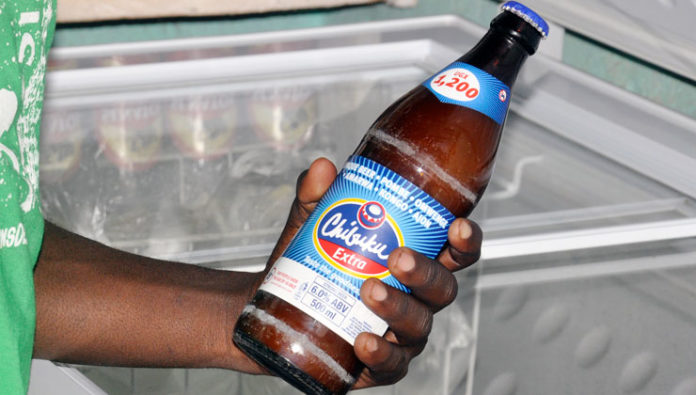
Nile Breweries shuts down Chibuku beer production over taxes

Chibuku-Beer

Ugandans who had hope that Nile Breweries Limited (NBL) would backtrack on the decision they took on July 1, 2018 to stop brewering Chibuku alcoholic drink will have to turn to other alternatives as the Communications Director Onapito Okomoloit has said.

Onapito says unfavourable tax of 30 per cent cannot allow them to continue producing the drink that was meant to draw people from local illicit traditional brews.

In early 2017, NBL commissioned Shs14 billion plant in Jinja to bottle Chibuku, a product similar to traditional ‘malwa’ that is produced through unhygienic processes but consumed by many people as it is cheap compared to opaque beers.

Chibuku was being brewed from finest whole maize, enriched with sorghum malt, to provide a highly nutritious and satisfying beer. Rich in taste, full of flavour, Chibuku was delivering a taste of tradition in a modern world. The raw matertials were being acquired locally.

Brewers say Chibuku beer had developed its own highly unique character. The taste varies from sweet to sour depending on age, the conditions it is exposed to and the maturity stage of the beer. An ‘acquired’ taste and character for those who have not been exposed to the product.

The drink was a partnership of NBL with the government as the company pioneered the use of local raw materials (LRM) in commercial brewing of clear beer in Uganda – the LEAP.

This initiative is aimed to offer low income consumers affordable, hygienic clear beer made from LRM, as an alternative to home brews and informal alcohol. But also it was to give market to farmers producing sorghum and maize in areas of Teso and Sebei.

Chibuku had within a short time proved a success, earning government billions of shillings in value added tax (VAT), but not paying excise tax, as agreed by the Ministry of Finance in the initial stages of the process to produce the drink. The consumption of Chibuku had risen from 100,000 liters in March 2017 to 1.4 million litres per month.

But now the closure of Chibuku production means government will lose Shs5 billion annually in value added tax (VAT) alone, which it had been getting even without excise duty of 30 per cent. The Uganda Revenue Authority (URA) was demanding the company 30 per cent excise duty in arrears yet the company says the ministry had said it should not pay the tax until a certain period when consumption volumes would be considered for taxing.

NBL had been purchasing average 3.6 million Kgs of maize annually locally to make Chibuku. For instance, over 1,000 farmers supplying maize for Chibuku have lost market and 6,000 direct and indirect jobs linked to Chibuku have been lost.

NBL was offering a guaranteed market and price for sorghum but now with the closure of the plant that was producing Chibuku, farmers will be the most hit.

The Excise Amendment Act 2018, Finance Ministry, introduced an excise rate for “opaque beer”, of 30 per cent of ex-factory price or Shs650 per litre. This tagged the excise tax for opaque beers like Chibuku at the same rate with clear beer brands such as Eagle, Senator and Engule.

Stories Continues after ad

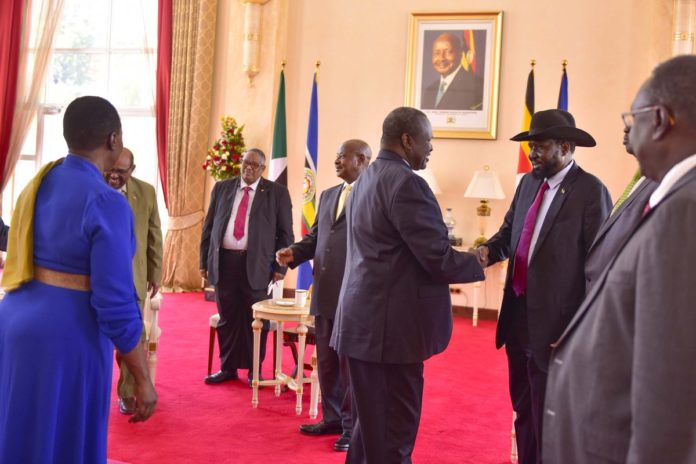
South Sudan peace talks in Khartoum postponed

Macha greeting Kiir at Entebbe State House on Saturday.

Negotiations in Khartoum aimed at ending South Sudan’s devastating civil war will be extended until Thursday, Sudanese foreign minister announced last evening.

This was after the Entebbe State House meeting with Presidents Omar El Bashir, Yoweri Museveni and Salva Kiir and Riek Macha on Saturday.

The talks, which began on June 25 in Khartoum, were initially expected to end on Monday and then moved to Kenya.

According to Sudan’s Minister of Foreign Affairs al-Dirdiri Mohamed Ahmed briefed foreign diplomats in Khartoum and said the South Sudanese peace talks have been extended until 12 July.

He pointed out that the South Sudan warring parties will continue the negotiations on the key pending issues in Khartoum.
The top Sudanese diplomat reiterated the commitment of Sudan and Uganda to work together for peace in South Sudan.

Al-Dirdiri urged the international community to support the ongoing talks under the umbrella of the East African regional bloc IGAD in order to achieve peace and stability in South Sudan.

Stories Continues after ad

DFCU in crisis meeting with BOU

DFCU board chairman, Elly Karuhanga and another member address a press on the issue of the bank last week.

As Britain’s Commonwealth Development Corporation plans to exit DFCU Bank, Eagle Online understands top managers at the bank are to hold a crisis meeting with the Bank of Uganda Director of supervision Dr .Tumubweine Twinemanzi this afternoon.

On Saturday the top managers met Deputy Governor of BOU Dr. Louis Kasekende in an effort to help them stream their operations as some major shareholders plan to exit.

An insider with the bank intimated to Eagle Online that managers want BOU to give them a clean sheet of operation, with the anticipation to attract more investors.

That came following the resignation of Arise B.V.’s Deepak Malik from the bank’s board of directors. Malik is the executive director of Arise B.V. which has majority shares in DFCU Bank.

Arise B.V.acquired a 55 per cent majority stake in dfcu Limited, the holding company of DFCU Bank after lending US $50 million in February 2017 to the bank to help it meet short-term capitalisation needs after it controversially took over Crane Bank in January 2017.

New details also indicate that the top shareholders in the bank are fighting over profits made in 2017. Insiders say some shareholders are not happy that Arise B.V. which only came in February 2017 is to take most of the profits.

Arise B.V. came in DFCU Bank after acquiring shares formally belonging to two previous largest shareholders, Bank-Rabo Development B.V and Norfinance AS (Norfund) which had a 27.54 per cent stake each.

After controversially acquiring Crane Bank in January 2017, DFCU Bank would by end of December announce net profit of Shs127.6 billion, which was Shs81 billion higher, considering that it recorded a profit of Shs46 billion at end of December 2016.

Other sources that have talked to Eagle Online say some of the UK-based shareholders are dissatisfied and want to sue top managers over a number of concerns.

According to Irina Grigorenko-CDC’s investment director, the company wants to exit DFCU though she said in a letter that no transaction has yet been approved by its investment committee. “Any decision by CDC to sell its shares in DFCU would be subject to the approval of the investment committee of the terms of the sale as well as the agreement of legal documentation,” she said.

Grigorenko pointed out two of the potential investors as Cranemere Africa Limited and responsAbility Investments AG (the Strategic Investors).

However, it remains to be seen whether the two companies can take over shares of CDC given the current state of affairs at DFCU Bank.

Stories Continues after ad

Ill advising infiltrators eating up both government and the state

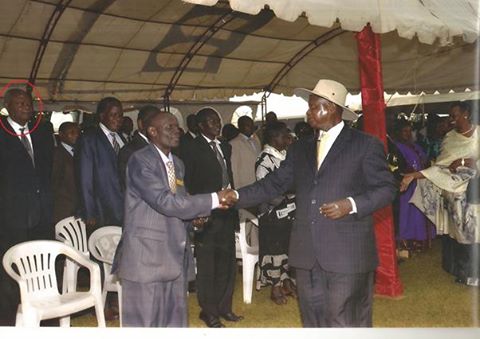
HULLO: President Yoweri Museveni greets the author Mr Nabende Wamoto.

By Nabendeh Wamoto

Mr President,

Apart from your Excellency’s deep concerns with criminal gangs operating within Uganda Police Force, there is equal measure of fear that infiltrators may have taken over some aspects and operations in Government and state.

Mr. President, I say this in reference to my recent, earlier correspondences. December 2013 and January 2014, I made a formal brief whose contents leaked and put my personal security in danger forcing senior security officers who personally knew me to intervene and they (groups) of infiltrators continue to frustrate my re-deployment as per your pledge for in appreciation for the not less than 500 air time hours annually of media advocacy on behalf of the government.

I warned about infiltration by wrong, sophisticated and wealthy inner-circle, actually very close to the Presidency who had started making ambitious attempts to politically destabilize the political movement (NRM) regime.

At the National Assembly (Parliament) on the 20th day of June 2018, Mr. President while addressing legislators at which meeting you unveiled the 10 point security plan and through our usual old military contacts, I relayed another urgent report to you but this time the contents were not drawn to your attention in time for I had proposed to your Excellency to make an addition to your 10 points as a matter of necessity the serious issues of:

(i) Corruption and (ii) Land grabbing for they are equally serious components security because as earlier interested you the infiltrators have earmarked non-combat strategies in constituencies such as peasants (evicted from land), women (murders), youth (unemployment) to effectively weaken your Government and eventually make the population to abhor the same.

As said above, the group(s) on the 6th day of February 2014, manipulated what we witnessed as the first malicious mix-up of resident district commissioners and their deputies reminiscent to the current embarrassing hitch in re-structuring the deployment and re-deployment of the same crop of human resource (RDCs and DRDCs) and one year ago, they misadvised you on the unpopular forceful acquisition of land meant for government infrastructure.

The country may wish to know that the infiltrators were again at play, ill-advising your government to tax religious materials (holy Bibles and holy Quran) and recently the anger packed mobile money and social media (OTT) tax, particularly to offend the below 35 years youth which is the biggest constituency in the country.

Nabendeh Wamoto S.P (0776-658433)
simonwamoto@yahoo.co.uk

The writer is a former RDC Bulambuli District

Stories Continues after ad

Stakeholders seek solutions to Africa’s energy challenges

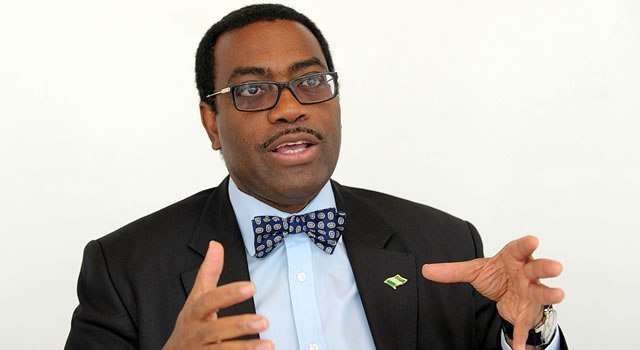
ADB President, Dr. Akinwumi Adesina

Public, private, civil society stakeholders, development partners and investors in the energy sector held a two-day workshop to discuss the technical, commercial, regulatory and financial issues in Africa’s fast-growing energy market.

The inaugural edition of the Africa Energy Market Place (AEMP) brought together more than 300 participants from northern, eastern, southern and western Africa.

The African Development Bank (ADB) President Akinwumi Adesina, while addressing the delegates, underscored the dire situation of Africa’s energy environment. “Africa has a lot of energy potential but potential doesn’t create anything … We cannot continue to accept Africa being referred to as the ‘dark continent’. We need to act speedily to accelerate our plans to light up and power Africa,” Adesina said.

ADB has made a US $12 billion investment commitment to its New Deal on Energy for Africa program. Sub-Saharan Africa currently has 14 per cent of the world’s population and accounts for 4% of global energy investment. Analysts at the Bank note that several countries, including Ethiopia, Gabon, Ghana and Kenya, are on track to reaching universal electricity access by 2030.

Participants at the AEMP had insightful and thought-provoking discussions looking at identifying quick wins in sustainable financing models, commercial and investment prospects, energy access and efficiency and regulatory reforms. Discussions also focused on governance, risk management, beyond-the-grid and renewable energy solutions, training and capacity building.

The AEMP is an industry-wide, collaborative platform convened by the African Development Bank to address barriers to mobilizing and scaling-up private investment into the energy sector by bringing together key stakeholders in the continent’s energy sector.

Specifically, it seeks to address Africa’s dismal energy and electricity production and consumption, which currently stands at 150kWh/capita.

The issues discussed during the AEMP are based on the latest research by the Bank and on inputs received from governments, according to Amadou Hott, African Development Bank’s Vice President in charge of Power, Energy, Climate and Green Energy complex.

The next AEMP meeting to review the progression of projects and investment opportunities in the sector will be on the sidelines of the Africa Investment Forum (AIF) scheduled in Johannesburg, South Africa in November 2018.

AEMP development partners include Power Africa, European Investment Bank, Africa50, the Asian Infrastructure Investment Bank, the International Finance Corporation, the European Union, New Development Bank, the Department for International Development, Japan’s Development Agency (JICA), Agence Francaise Development, Kfw, and the German Development Agency.

The AEMP initiative is part of the ‘New Deal on Energy for Africa’ program, a transformative partnership to light up and power Africa by 2025.

Stories Continues after ad

Indians continue to fight over money, positions as PM Modi prepares to visit Uganda

All is not well with different Indian communities and associations in Uganda as the country prepares to host Prime Minister Narendra Damodardas Modi in the last week of July 24, 2018.

A section of Indian bodies that have been left out of the organizing core committee are questioning how One billion shillings budgeted for Mr Mod’s visit is going to be used. The oppressd group also wants the core committee organizing the visit of Modi to have 20 members instead of 10, saying bodies have been left in the cold.

“To add to the injury the actions of the said core committee so far have been grossly unbecoming of a sound leadership, what with the proposed budget expenditure of one billion shillings, and unclear intention in choosing the venue for the address for the P.M.,” the excluded group says

The members, who want their issues addressed before Mr Modi arrives, say that money is huge for the event. “The event certainly does not call for a Bollywood singer to ridiculously add to the costs, “they say.
The core committee comprises 10 members, being members of the Indian Association which they say does not necessarily represent the interests of all Indians in Uganda.

Those opposed to the formed 10 member core committee say some of the members on the committee want to use Prime Minister Modi’s visit to Uganda for gain personal business deals at the expense of others. They say that the committee has not exhibited any transparency so far.

The different Indian Commissioner of India to Uganda Ravi Shankar received a letter on July 5 from some members who dissatisfied with the way how the Core Committee that is preparing for PM Modi’s visit was constituted.

“We the undersigned heads/office bearers of various communities strongly protest and express a great sense of dissatisfaction in the manner in which the core committee was nominated by your good offices, despite discussions and agreement of Mr. Vijay Chauthaivale,that is at least 20 leaders from various communities, associations and bodies be nominated.

They want the official to reconsider the core committee composition to allow at each Indian community-including religious bodies to have a representative.

Other reports allege that Ravi Shankar, who is conniving with former Rubaga North MP Singh Katongole to allegedly swindle billions raised by the community towards organising the highly billed event.

Sources say Shankar is silently dealing with Katongole, Pradeep Karia, a Director of Property Services to deny some Indians opposed to his way of doing things an opportunity to interface with some of the multi-billionaires who will accompany Modi on the historic visit.
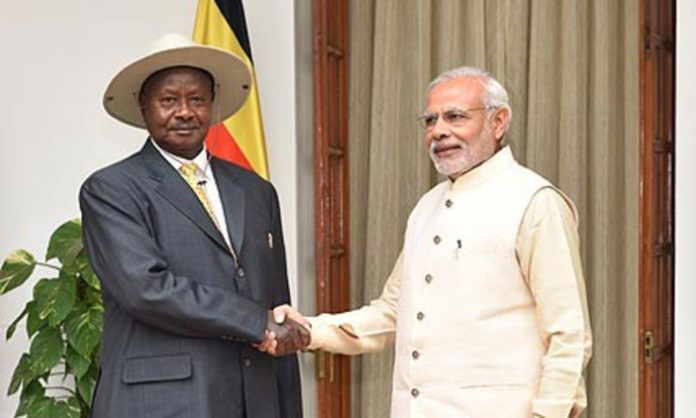
The Prime minister of India Narendra Modi will visit Uganda in the last week of July. His visit is expected to improve relations between Uganda and India in areas such as tourism, agriculture, business and health.

Stories Continues after ad

Rwanda opposition tells off Kigali gov’t

RPA RENEGADE: Lieutenant General Faustin Kayumba Nyamwasa

The opposition Rwanda National Congress party has dismissed as untrue media reports that they have commenced rebellion after a Ugandan court allegedly released some of the intercepted individuals.

Reacting the reports, RNC says the allegations are baseless and aimed at tarnishing their organization in bad faith.

“The Rwanda National Congress (RNC) dismisses as false allegations a media commentary published in the standard tabloid today (Friday) under the title ‘Uganda’s release of RNC rebels sends strong message to Rwanda. This report lacks all tenets of truth, accuracy, balance and fair and should be treated with the contempt it deserves.” Reads the press statement Eagle Online has seen and signed by Jean Paul Turayishimye, Spokesperson RNC.

The statement furthers says “The author alleges that on Monday June 25, the Magistrates Court in Mbarara released 39 RNC recruits who are part of the group of 46 young men who were intercepted trying to cross at Kikagati, along Uganda-Tanzania border. This is completely untrue and a blatant propaganda campaign to paint RNC in bad light.”
Turayishimye says RNC is a political organization not a rebel movement. He says that it is public knowledge that the people arrested were going for an evangelical pilgrimage not military training.

“RNC is well aware that the government of Rwanda is doing everything possible to malign and frame us” We can comfortably say that the tabloid involved has been relentless in propagating the Rwandan government narrative against RNC but we want to make it clear, RNC is a political organization that won’t be intimidated by this libel”

Turayishimye further warned that the people were released by court and not the Ugandan government as it is maliciously and falsely reported.

“Rwanda should draw a distinction that in other neighbouring countries, unlike Rwanda, the judiciary is independent and the presumption of innocence is cardinal unless proved guilty. The executive in those countries does not depend on the whims of police and other flimsy politically motivated harassment”

RNC is political party that was formed by many former comrades of the Kigali regime and key among them is Kayumba Nyamwasa who has survived several assassination attempts.

Stories Continues after ad

Embrace gov’t’ initiative like operation wealth creation to fight household poverty- Museveni

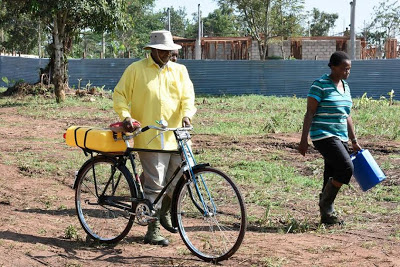
President Yoweri Museveni surprised Ugandans by fetching water on a bicycle in a demonstration to irrigate their crops during dry seasons.

President Yoweri Museveni has implored Ugandans to embrace government’s initiative like Operation Wealth Creation through commercial agriculture and the four-acre production plan in a bid to fight household poverty.

Museveni made the remarks at Kalisizo community playground in Kalisizo Sub-County of Kyotera district during the commissioning of youth who attained skills in tailoring, carpentry and Joinery, welding and weaving, among other courses.

He launched Kasolo Foundation, a private initiative started by the area Member of Parliament who doubles as the State Minister for Microfinance Kyeyune Haruna Kasolo, and launched Kalisizo Women Empowerment group at Kalisizo Town Council.

He commended Kasolo for emulating and putting in place what government has been preaching to Ugandans saying with skills, Ugandans can produce what is imported, “ we have electricity, You need small capital and skills to produce what you have been importing from other countries,”

He cautioned the youth about leading irresponsible life styles that lead them to contract deadly diseases such as HIV/AIDS and alcoholism and advised District Health Officers (DEO) to sensitize people, especially pregnant women and young children, on healthy living.

MR. Kasolo lauded Museveni for the support and development in the district, saying the initiative is intended to help the people, especially the youth, to address unemployment and fighting poverty in his area.

Stories Continues after ad