Stanbic Bank
Stanbic Bank
17.8 C
Kampala
Stanbic Bank
Stanbic Bank
Home Blog Page 1522

How some ventures continually stay ahead of the crowd

Martin Zwilling

By Martin Zwilling

As a business advisor, I have long been surprised by the large number of industry stalwarts, including Blockbuster, Kodak, and General Motors, that have been dealt major setbacks, or even total failure, by upstart young companies, with a fraction of the resources or industry experience. The stalwarts should be making the big leaps to be competitive, rather than the other way around.

In fact, almost 90 percent of the Fortune 500 firms that existed in 1955 are gone. Conventional wisdom is that mature companies are their own worst enemies, too blinded by their success to see the world changing around them, and too focused on repeatability to see the need for innovation and leapfrog advances in technology.

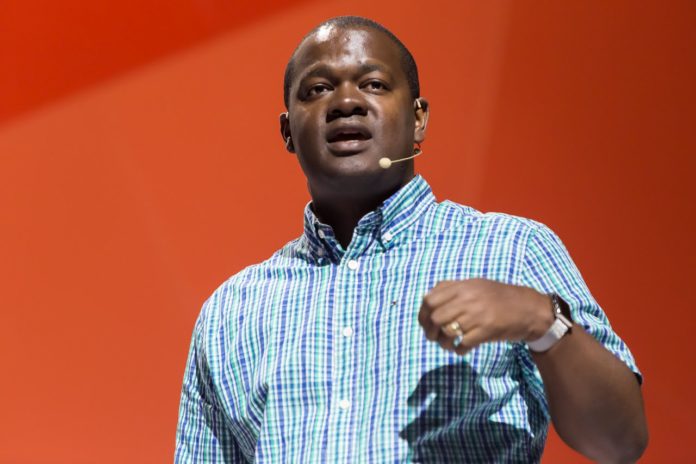
Based on my experience as an executive in a couple of large companies, including IBM and First Data, I second the principles for keeping up with competition and change outlined in a new book, “Leap: How to Thrive in a World Where Everything Can Be Copied,” by Howard Yu. He speaks from years of experience as director of an advanced management program for global executives.

Let me paraphrase a few key points that he and I both agree are critical:
Understand your firm’s foundational knowledge and trajectory. Many large companies, and even startups, often forget their core competencies and direction in an effort to grow their business and customer base faster. The results in a dilution of their focus, doing many things poorly, and losing sight of key markets and key competitors.

For example, Kodak invested billions of dollars into technology for mobile phones and other digital devices, but didn’t recognize the impact of digital cameras on their core film business. The result was that they reacted too late to recover, and were overrun by competitors as the market and technology rapidly changed.

Acquire and cultivate new knowledge disciplines. Competitive advantage depends most critically on the assimilation of new knowledge and the timely creation of new markets and new businesses. The role of managerial choices cannot be overstated here. True leaders have to be willing to take calculated risks, rather than taking safe positions.

Procter & Gamble, for instance, has maintained its leading position in household consumer goods by leaping toward new knowledge disciplines, versus merely refining existing products. They made big bets on IVORY soap earlier when they predicted candle revenues falling, and push the limits today with environmentally sustainable products.

Leverage seismic shifts in the market or economy. Although important variances exist between industries, certain seismic shifts to the global economy will be felt by everyone regardless of who you are and where you live. Today it is the inexorable rise of intelligent machines, the emergence of ubiquitous connectivity, and digital convenience.

Every potential winner must leverage these seismic shifts around them and leap accordingly. Whether you are a technology creator, traditional manufacturer, startup entrepreneur, or nonprofit organization, you must identify those forces that matter the most in the coming decades and reconfigure your competencies ahead of competitors.

Experiment to gain evidence about unknown unknowns. Bold decisions always look good – until they are proved wrong. To make evidence-based decisions, leaders must carry out frequent experimentation to arrive at conclusions with the required level of accuracy. The biggest risk in large corporations is often political infighting and inaction.

Starting with top executives, dive deep into execution. Awareness is not the same as commitment, so insights alone never suffice. Thinking doesn’t equate to doing. Committed executives at the very top must be ready to intervene to implement a new directive. Only they can remove the organizational hurdles that may stand in the way.

Deep dives are different from micromanagement, because they rely on knowledge power rather than position power. Elon Musk’s deep dive into Tesla has been based on his knowledge and conviction that electric and driverless car technology is here now, rather than any market research from third parties.

Even with these principles, outperforming competition is difficult, and doing it consistently over decades as your leadership changes is nearly impossible. It certainly can’t be done unless you start today. Your customers, your local community, and your stakeholders all are depending on you and count on you to maintain momentum and success. Are you ready to take the leap?

The Writer is a veteran startup mentor, executive, blogger, author, tech professional, and Angel investor. Published on Forbes, Entrepreneur, Inc.

Stories Continues after ad

AfDB, UDB sign $20m loan deal to support local SMEs

CEO of Uganda Development Bank, Patricia Ojangole.

The African Development Bank (AfDB) has approved a US $20 million (about Shs74 billion) loan to the Uganda Development Bank Limited (UDBL), the first development finance institution established by the government of Uganda in 1972.

The financial package comprises of a 10-year US$15 million (about Shs55.5 billion) Sovereign Guaranteed Line of Credit for on-lending to projects in various sectors and a US $5 million Non-Sovereign Line of Credit to support a financing program for SMEs.

The Non-Sovereign Line of Credit will also trigger a Technical Assistance programme of up to US $1 million (about Shs3.7 billion) to help improve UDBL’s credit risk management and underwriting processes. This should help improve loan quality, corporate governance and UDBL’s capacity to track development outcomes.

The transaction will give UDBL leverage to provide long term funding to deserving customers and industries where long tenured funds are scarce due to the perceived risk profile of SMEs. It also reinforces its role as a national development bank in implementing Uganda’s National Development Plan and complementing the institution’s efforts to diversify its funding base and mobilize resources from external sources.

UDBL intervenes in the agriculture and agro-processing, hotel and tourism, education, health and manufacturing sectors, among others. The support will enhance the country’s private sector development as beneficiaries’ businesses and revenues grow, with the associated positive impact on government’s tax income.

The facility aligns with the African Development Bank’s Uganda Country Strategic Paper (CSP) 2017-2021 and Financial Sector Strategy (2014-2019). It also supports Uganda’s Vision 2040, which aims to transform Uganda from a low-income agriculture- dependent economy to a prosperous middle-income industrialized nation.

The Loan will also advance the country’s financial inclusion, gender and social welfare aspirations. It will further contribute towards provision of quality and low-cost education and health services, helping to narrow the widening social and income gaps in the country.

The African Development Bank support to UDBL is consistent with three of the Bank’s High 5 priorities: “Feed Africa”, “Industrialize Africa” and “Improve the quality of life of the people of Africa”.

Mmakgoshi Lekhethe, Executive Director at the African Development Bank for Lesotho, South Africa and Swaziland, remarked that, “The Uganda Development Bank is clearly a well-managed institution with an experienced management team in place. I am particularly impressed with the diversity of the bank’s SME portfolio.

Stories Continues after ad

World Tourism Day 2018 to focus on innovation and digital transformation

Gorrilas are a major toursit attraction for Uganda.

The importance of digital technologies in tourism, providing opportunities for innovation and preparing the sector for the future of work, is at the centre of World Tourism Day 2018, to be celebrated in Budapest, Hungary on September 276, 2018.

World Tourism Day, celebrated every September 27 around the world, is a unique opportunity to raise awareness on tourism’s actual and potential contribution to sustainable development.

This year’s World Tourism Day (WTD) will help to put the opportunities provided to tourism, by technological advances including big data, artificial intelligence and digital platforms, on the map of sustainable development. The World Tourism Organization (UNWTO) sees digital advances and innovation as part of the solution to the challenge of marrying continued growth with a more sustainable and responsible tourism sector.

“Harnessing innovation and digital advances provides tourism with opportunities to improve inclusiveness, local community empowerment and efficient resource management, amongst other objectives within the wider sustainable development agenda,” said UNWTO Secretary-General Zurab Pololikashvili.

The WTD official celebration will be held in Budapest, Hungary, a country enjoying steady growth of tourism backed by consistent policy support and a commitment to the digital future. Other celebrations will take place worldwide.

The official celebration will also see the announcement of the semi-finalists of the 1st UNWTO Tourism Startup Competition, launched by UNWTO and Globalia to give visibility to startups with innovative ideas capable of revolutionizing the way people travel and enjoy tourism.

Stories Continues after ad

Ugandan citizens decry poor health services-survey

Latest data from Sauti za Wananchi brief on Ugandans’ views on governance, information and citizen engagement shows that six in ten citizens (59 per cent) cite poor health services as one of the top three problems facing Uganda today, more than for any other issue.

Sauti za Wananchi is a new initiative that uses mobile phones to regularly collect information from a broad cross section of Ugandan citizens.

Inflation and the high cost of living is cited by four in ten (38 per cent) and a lack of jobs by one in three (33 per cent).
When it comes to their own households, six in ten citizens (58 per cent) name inflation and the high cost of living as one of the top three problems they face. This is more than for any other issue, though the poor quality of health facilities follows close behind, named by just over half the population (55 per cent), and hunger / drought, also mentioned by half (49 per cent).

A clear majority of Ugandans (81 per cent) feel the government is not doing a good job of keeping the price of essential goods down. Similar numbers feel the government is not doing well at creating jobs (78 per cent) and fighting corruption (79 per cent).

Six in ten citizens (62 per cent) say that because government is run by a few powerful people there is not much that an ordinary citizen can do to influence government, preferring this over the statement that the average citizen can have an influence on government decisions.

Citizens are evenly split on whether avoiding tax is “understandable” when services are not provided or paying tax is a civic duty (51 per cent-49 per cent).

A majority (60 percent) of those who had contact with the police in the last year, say a bribe was either directly requested (47 per cent) or expected (13 per cent) in order to get assistance or speed up services. Half (50 per cent) say they paid a bribe.

Stories Continues after ad

David Lutalo stole my song – Emma Kulishizhi

Emma Kulishinzi

Trouble seems to be following David Lutalo again, with claims that the musician copy-pasted the latest ‘Nkwagalira Ddala’ song from Emma Kulishizhi without permission.

According to Emma, he claims that his song was recorded in Nathanate Studio, Jinja, 2010 and somehow, it received recognition especially in the Eastern part of Uganda.

He adds that in all efforts to have his song widely known, he met Mr. Fred Kayongo of Bukedde, who still remembers him, in 2012 for an interview and on September 7th 2012, it was published on page 16 of the newspaper.

David Lutalo

In his claim, he insists that his song was actually plagiarized and accusation is not stage managed to create a cheap rise-to-fame.
Emma told EagleOnline;
“I am accusing David Lutalo of plagiarism by copying and pasting my song ‘Nkwagalira Ddala’ so as to pen down his ‘Nkwagalira Ddala’ song, which has become a cult.

My accusation is not stage managed to create a cheap Rise-to-Fame; the fact is that my music was flawed, and so I called it quits about seven years ago after I proved the career wasn’t fruitful to me.

Though my “Nkwagalira Ddala” song was somehow received in especially the Eastern part of Uganda, my public profile remained very low, and as a result, I lacked confidence and opted to take a break in my musical career concentrating on my (withhold) ambitions.

I released that song in 2010 in Nathanate Studio, Jinja. In 2012, Mr. Fred Kayongo of Bukedde met me for an interview and on September 7, 2012 on page 16 of Bukedde, I was published (over that song).”

Mr. Kulishizhi now seeks for justice, saying he is the rightful owner of the song’s copyright and wants to halt distribution and publication of Lutalo’s song.

David Lutalo first gained success with his song “Kapaapala”. He is among Uganda’s talented vocalists and has several solo songs to his name as well as several collaborations with Eddy Kenzo, Bebe Cool and GoodLyfe.

Stories Continues after ad

FLASBACK: how parliamentary committee exposed rot in SGS vehicle inspection contract

Societe Generale De Surveillance.

A report on the inquiry into the mandatory inspection of motor vehicles in Uganda by the parliamentary committee on physical infrastructure exposed the rot in the contract that the Ministry of Works and transport (MOWT) awarded Societe Generale De Surveillance (SGS), S.A., a South African company to inspect vehicles in Uganda.

The Member of Parliament (Rubanda West) Eng. Denis Sabiti, played a significant role to ensure that SGS won the multi-billion contract and it did not matter to him whether he followed the procurement or not. Eng. Sabiti worked with MOWT before he switched to elective politics.

“The re-introduction of mandatory vehicle inspection through a private provider, whilst intended to aid the stemming of road carnage ended up being rift with a host of public concerns namely; exorbitant pricing, inadequate coverage, unrealistic deadlines and general skepticism over the overall intention of the intervention,” the report notes.

Procurement of SGS:
The Committee notes the procurement of SGS as a service provider for mandatory vehicle inspection took about eight years spanning the period 2007- 2015.

The procurement process was initially cancelled because of the use of the wrong bidding documents prior to 2009 and was later marred by allegations of breaches of ethics with regard to leaking competitor information and undue interference.

Terms and conditions of the contract with SGS
The evaluation of the contract that was signed on March 15, 2015 between the government of Uganda and SGS revealed breaches by both SGS and MOWT with regard to commencement date, payment of concession fees and its procedure, absence of a master test centric and inept contract supervision.

Review of the performance of the contract
A review of the performance of SGS since signing the contract in 2015, among others, reveals the failure to adhere to the contractual commencement date for vehicle inspection, inadequate national coverage, non-adherence to the timelines for payment of concession fees.

Absence of crash data system responsible for more accidents in Uganda
The report says that the absence of a crash data system has impeded the analysis of causes accidents in Uganda. “While the various reports by Uganda Police on the causes of road accidents cite vehicle conditions as accounting for 2.2 per cent of traffic accidents, the report says that the absence of a crash data system renders such police accident reports unreliable because of their reliance on subjective rather than scientific methods. “The actual contribution of vehicle conditions may actually account for far more traffic accidents than reported,” it says.

It says the subjectivity often leads the police to incriminate motorists for offences such as reckless driving in a bid to apportion responsibility for traffic accidents. “It is because of this that there have been various incidents of motorists attempting to flee traffic accident scenes to avert arrest. A crash data system would scientifically establish the actual cause of traffic accidents and aid the exoneration of such motorists,” it says.

Call to terminate the contract
Based on the findings and observations, the Committee recommends for the immediate termination of the implementation of the contract for Mandatory Inspection much as a minority report says the exercise should be suspended for a period of not less than 3 months to enable a review and renegotiation by the MOWT.

The committee in its report wants the a review and renegotiation to cover a number of aspects such as;
Significantly slashing the cost of inspection to make it affordable and equitable. This will enable motorists present their vehicles for inspection more regularly, in the end improving vehicle conditions and reducing road carnage.

An examination of the inspection charges reveals inherent disparities whereby larger more commercially viable vehicles are subjected to lesser charges than smaller less commercially viable ones. Buses for instance that fall under passenger vehicles of more than 60 passengers are charged Shs944 for inspection, while boda bodas that fall under motorcycles are charged Shs4, 752.

While such pricing makes economic sense to the service provider because the high prevalence of boda bodas will ensure colossal collections from charges, it entrenches inequity, which calls to sharp question the equity dimension of the pricing modalities of the mandatory vehicle inspection project.

The report says that the variance in inspection charges between a motorcycle and a heavy omnibus is about 58 times. That implies that to inspect a motor cycle, a cyclist has to pay 5800 per cent of the cost of inspecting a bus. “This exorbitant pricing especially in the case of motorcycles is aimed at fleecing the common man,” it says.

The committee notes that since the level of effort and sophistication required to inspect a big vehicle such as a bus is a lot higher than that of a smaller vehicle and yet inspecting a bus costs Shs944, it is imperative that the cost of inspecting all the other smaller vehicles shouldn’t exceed the cost of inspecting a bus.

The committee notes that such prohibitive charges for vehicle inspection will be a deterrent to routine and regular vehicle inspection. This will defeat the very essence of making vehicle inspection a habit in a bid to improve the condition of vehicles.

Gov’t in dilemma over contract
According to the report, should government decide to terminate SGS’s contract, taxpayers will pay heavily.
The costs of termination as per clause 7.8.5 of the conditions of contract states: “In the event that the contract is terminated by the Government of Uganda or the MoWT for any cause, except as provided in this contract, before the expiry of the five year term or any extension or renewal of such term, the MOWT shall pay to the provider at law or in equity in respect of the termination of this contract 75 per cent of the value of total investment made by the provider or 100 per cent of the expected income of provider from the services, whichever is greater, being the cost of demobilization.”

Possible collusion
Evidence shows that the rates for the MOWT ceiling and the cost quotations from SGS were unusually the same which points to the possibility of unethical practices in the procurement process. For instance, MOWT’s ceiling rates were quoted at Shs28,000, Shs56,000, Shs62,000, 56,000 and Shs75,000 for motor cycle inspection, car and dual purpose vehicle, Passenger vehicle of more than seven passengers and not exceeding 20 passengers, Goods vehicle of less than 3.5 tons and goods vehicle of 3.5 tons and less than 10 tons respectively. SGS quoted the same figures.

Another company Environmental System Products Holdings Inc (ESP) had quoted less figures for the first three categories, even as some of the quotations for other categories were higher than what SGS offered. This was after April15, 2010, when the financial evaluation gave SGS and ESP 90.40 per cent and72.79 per cent respectively, confirming the two firms as top competitors.

The report says that while it may be considered prudent business to insulate private owners of capital from possible loss in doing business with government using such contractual clauses, there has emerged a habit among public officials of saddling the country with risk of exorbitant costs even when some of the clauses of such contracts are potentially bogus.

In this particular case, available information shows that SGS within a spell of barely seven months had purportedly invested Shs51.2 billion, a figure that may be hard to verify considering inherent lapses in contract supervision. “The end result is that in the event of termination, the already over-burdened taxpayer will have to meet a cost which may be potentiality inflated,” the report says.

The failure of SGS to commence inspection within 18 months constituted a breach of Clause 7.1 of the Contract.
In spite if this breach, there was no evidence that the supervising entity the MOWT initiated any attempts at reprimanding SGS for this breach. It was not until Thursday December 1, 2016 that a one Benon M. Kajuna wrote retrospectively, on behalf of the Permanent Secretary, extending the commencement date of motor vehicle inspection from September 17, 2016 to November 28, 2016.

“It is noteworthy that SGS had commenced inspection two days earlier on November 28 2017. This letter can therefore be construed at best as a late attempt to insulate SGS from a severe breach of contract relating to commencement of inspection,” the report reads.

The report says that the same letter asked SGS to collect its performance security and yet barely 10 percent of the required structures for inspection was ready, thereby predisposing the taxpayer to loss. “At this point, the MOWT should have evoked Clause 7.7 of the contract, which grants the MOWT unilateral powers to terminate the contract due to breaches of one of the conditions of the contract. But this was not done and it points to complicity in breaching the contract,” it says.

Considering that the contract was signed on March 17, 2015, the exercise should have commenced by the September 17, 2016. At seven fixed inspection sites namely; Kawanda, Namanve, Nabbingo, Namulanda, Mbale, Gulu and Mbarara along with the three mobile testing equipment. However, the Committee ascertained that inspection began after 20 months moreover at only one site- Kawanda.

Gratification trips to South Africa
Contrary to Section 93 (1) and the fifth schedule of the PPDA Act, which bars employees from any business arrangement that might prevent the effective operation of fair competition or accept business gifts from current or potential government suppliers, SGS compromised a number of officers of the Ministry of Works and Transport with juicy offers. For suspect reasons, a benevolent treatment was accorded to one Mr. Ronald Amanyire, an understudy of Eng. Dennis Sabiiti at the Ministry of Works and Transport, who was granted an all-expenses paid trip to South Africa by Workshop Electronics, a South African SGS supplier of mobile testing stations, from November 7-10, 2016.

Other officials SGS gratified with trips to South Africa
The report notes that following Mr Amanyire’s all-expenses paid trip to South Africa, another team comprising Immaculate Nyamaizi (Inspector of Vehicles) and Anthony Muwonge (Inspector of Vehicles), led by Eng. Lukoma Fredrick Basalirwa (AS. Commissioner Mechanical Services/Chief Mechanical Engineer) visited Workshop Electronics for pre-shipment verification and inspection of the mobile motor vehicle inspection equipment. The team submitted its report to the Chief Mechanical Engineer on January 3, 2017.

As expected, the Lukoma Team gave a positive report on the mobile motor vehicle inspection equipment that SGS had procured from Workshop Electronics.

The all-expenses paid trip to South Africa for Mr Amanyire as well as the generous contract for Eng. Sabiiti Dennis should be treated as gratifications for their role in helping SGS secure the mandatory motor vehicle inspection contract in Uganda. Section 7.5.3 of the contract provides that the contract is automatically terminated if the provider gives offers, promises of any loan, fee, reward, or advantage of any kind to any employee of the Supervising Entity, provided that there is reliable and invincible information about such offers or promises.

Eng. Sabiti aids SGS’s vehicle inspection monopoly
The Committee established that Eng. Denis Sabiti, then Assistant Commissioner Safety and Inspection, MOWT, originated and forwarded the contract to the Office of the Attorney General for clearance without even the input from the Ministry of Works and Transport thereby denying the ministry the opportunity to negotiate fairer terms with the SGS. The report says Eng. Sabiti contravened the law as it is the Attorney General to do that as required by Article 119 (4) (b) of the 1995 Constitution. Sabiti’s action would give SGS the monopoly of inspecting vehicles in Uganda.

Eng. Sabiti joins SGS
On March 17, 2015 Eng. Sabiiti witnessed the signing of the Contract between the MOWT and SGS. In May 2015, Eng. Sabiiti resigned as Commissioner. On July 17, 2O17 he joined SGS as a consultant earning US $3, OOO (about Shs11.4 million) per month where he was retained as the only personnel. In May 2016, Sabiiti resigned from SGS in order to be sworn in as a Member of the 10th Parliament.

SGS involvement in possible tax evasion through fraudulent land transactions
According to the report, after winning the contract, SGS incorporated a number of companies for purpose of holding land and business operations but under the management of Christophe Dubois. A number of plots of land were acquired and vested in these companies. However, SGS evaded paying Stamp Duties on the transfers of Land Title Deeds into these Companies’ ownership as exemplified by the cases in Kawanda and Nabbingo.

Section 54 of the Registration of Titles Act (RTA) is to the effect that only registered instruments are effectual to pass any interest in any land among others. Once an Instrument is registered upon payment of fees or taxes, it is given a unique number known as Instrument Number. However, this was not the case with SGS land transactions, the report says.

According to the report, Kawanda Station stands on two plots of land- Plot 580 on Block 107 Kyadondo measuring 0.037 Hectare and Plot 577 on Block 107 Kyadondo measuring 1.581 Hectare. However the ownership of both Title Deeds were transferred from Industrial Steel Masters to UGMVIS on 31st March 2016 at the same time of 10:11 am using the same Instrument Number WAK00079414. It is important to note that each Instrument Number legalizes and validates a particular transaction.

Practically, the report says, two transactions cannot be conducted in one second nor can one Instrument Number validate two transactions. Since in the case of Kawanda land, the instruments were to validate transfer of ownership, which attracts a Stamp Duty payable to the Government. By using the same instrument to effect two transaction, SGS succeeded in evading payment of Stamp Duty to the Government on one of the transactions for which they should be held culpable.

Likewise, Nabbingo Station stands on two plots of land namely: Plot 705 on Block 331 Busiro measuring 0.404 Hectare and Plot 706 on Block 331 Busiro measuring O.406 Hectare. Similarly the transfers of ownership on both plots of land to UGMVIS Property Holdings Ltd were effected on 3lst March 2OL6 at the ,z-\/ 2L same time of 11: 32 am using the same Instrument Number WAK0OO79434.
Again here two transactions are effected within one second i.e. 1 1: 32 arn which is practically impossible except under fraudulent circumstances with an ulterior motive aforethought. Again Stamp Duty was evaded.

“Both cases of Kawanda and Nabbingo land transactions are covered with fraud that culminated into tax evasion and loss of revenue to the Government. Tax evasion, is a serious offense over which SGS should be sanctioned, officials investigated further and whoever is found culpable be punished accordingly,” the report says.

According to the report, the other land transactions involving SGS are equally suspect. For instance it is not clear why the same plot of land on which Namanve Station sits has two different title deeds which are held concurrently by SGS’ two different subsidiary companies namely: UGMVIS Property Holdings Company Limited and SGS Automotive Uganda Limited. Plot 1299 on Block 242 Kyadondo measuring 4.4410 Hectares with a 99 year lease effective from 1st July 2016 under Instrument WAK00093205 is under the ownership of UGMVIS Property Holdings Co. Ltd of P. O. Box 63 Kampala after transferring ownership from MMAKS Nominees Limited OF P O BOX 7166 Kampala on 10th April 2017 at 1: 18 am using Instrument Number WAK00 L22294.

However, the same Namanve Plot 1299 on Block 242 Kyadondo measuring 4.4410 Hectares with a 99 year lease effective July1, 2016 is also under the ownership of SGS Automotive Uganda Limited P O BOX 63 Kampala but this time ownership changed from Sumaria Properties Uganda Limited of P O BOX 7166 KAMPALA on Feb 20, 2017 at 12:48 pm using Instrument wAK00116057.

Strangely both holding companies have the same address and so do the ones leasing. All these point to one conclusion that SGS is a fraudulent organization that should not be entrusted with a monopoly of providing a sensitive service like mandatory motor vehicle inspection and managing the national motor vehicle databank. Such functions are so sensitive that leaving them in the hands of an organization like SGS with questionable reputation exposes the country to a serious security risk.

The report says SGS should be interrogated further on breaches of tax evasion and involvement in fraudulent activities. Serious sanctions should be preferred.

The Contract on Mandatory motor vehicle inspection should be rescinded on criminal and unethical grounds committed by the group, it adds.

Dismal number of vehicles inspected
As at August 23, 9 months after commencement of inspection, SGS only had three operational inspection sites and had tested only 31,327 vehicles of the estimated 1 million vehicles in the country. Of the tests so far carried out, 24,6L8 (79 per cent) vehicles have passed while 6,709 (21 per cent) have failed. The report says the dismal number of vehicles inspected is partially due to the limited reach of SGS and the exorbitant cost of inspection.

Stories Continues after ad

Minister Kibanzanga applauds Dairy Development Authority or empowering local investors

State Minister for agriculture Christopher Kibanzanga has applauded Dairy Development Authority (DDA) for empowering local investors to produce packaged and highly-competitive milk products on local and international market.

Speaking in Jinja agricultural show Kibanzanga said, as a result of strategic interventions in the dairy value chain, milk production has increased from 2.08 billion liters in 2015/16 to 2.23 billion liters in 2016/17 hence representing 6 per cent growth rate.

Agricultural show kicked off on Monday with a motive of empowering sector players with knowledge marketing opportunities, value addition and boosting of production.

“DDA has played a significant role in regulating and developing the dairy, thank you for delivering,” he said.

State Minister for Animal Industry Joy Kabatsi, said the mission of the DDA is to provide efficient development and regulatory services for increased production, processing and marketing of quality milk and dairy products for improved incomes and food security for dairy farmers in Uganda.

She said, last year, two milk collection centers with total collection capacity of 8,200 liters of milk were rehabilitated and equipped in Kayunga and Masindi. Over 1000 dairy farmers are already utilizing them.

“Soroti milk collection center and Entebbe Dairy Training School were also rehabilitated with the aim of skilling dairy stakeholders in Value addition and quality assurance,” she said.

And yesterday, Vice President Edward Kiwanuka Sekandi has appreciated innovations and projects exhibited in the Show including Vegetable Oil Development Project which is implemented in partnership with international fund for agriculture (IFA).

Stories Continues after ad

Museveni in Nebbi to drum up support for NRM flag bearers

PLEASE RETIRE: NRM party National chairman, Yoweri Kaguta. Museveni.

By Nassiwa Maria

The NRM chairperson president Yoweri Kaguta Museveni is in Nebbi municipality today in support of the NRM flag bearers in the forth coming lections slatted for July 27 2018.

Residents of Nebbi are jubilating as they wait for their party chairperson who is expected to hold a rally as he shows support for the NRM flag bearers in Nebbi municipality.

This rally is expected to be held at Nebbi primary school where residents of this region will gather to be addressed by their party chairperson president Yoweri Museveni.

These elections are for the newly created municipalities and the president is expected to address the residents of there places to drum up support for the NRM flag bearers

According to the spokesperson of NRM Rogers Mulindwa, he said the president is conducting these travels to different places to fetch up support for NRM candidate.

“The president is in Nebbi today, he is going to be in Apak tomorrow and on Sunday he will be in Mityana and this is majorly to fetch up support for the NRM flag bearers,” said mulindwa.

These elections are scheduled to usher in leaders of different posts of councilors, mayors and members of parliament. Two councilors will be voted to represent at the district level and two others that is to say the male and female councilor.

Earlier on in June 2018, the apathy of voters in Nebbi was severely affecting the NRM primary elections to choose party flag bearers for Nebbi municipality elections, as a number of voters preferred to continue with their usual gardening work.

The created municipals include Njeru in the central region, Bugiri eastern region, Kotido in Karamoja, Shema and Ibanda in Western region, Apak in Acholi and Nebbi in west Nile.

Nebbi was created and became operational in July 2016, without technical and political positions.

Stories Continues after ad
Umeme incurs Shs600m loss as Mukono vandals raid transformers for oil

Some of the vandals arrested recently being led by police and prisons officers.

Dr. Mark Mutebi (not real name), runs a clinic in Mukono Municipality. He offers diversified laboratory services to the communities in and around that city.
All the laboratory services and other clinical records done using computers are dependent on reliable electricity supply.

Of late however, Dr. Mutebi, like many other residents in the municipality, is not a happy man after transformer vandals hit the municipality, leaving up to 18 transformers, estimated at over Sh600 million damaged.
“We are stuck. We cannot do anything, yet there are so many patients in need of our services. In business terms, we have lost so much money because of the effects of vandalism,” Dr. Mutebi said.

The rampant vandalism of transformers in that town has forced Umeme to organise a second stakeholders’ engagement workshop with the residents of the area in a move to find solutions to the vice.
The meeting held on July 20, is a follow-up of a similar one conducted in March last year. It is targeting local and political leadership and all the key security personnel.

The thieves vandalise transformers to draw out the oil for sale. The oil is said to be used in cooking and production of cosmetics, which poses danger to victims the oil is toxic. Some are vandalized for copper cables.

Sources said the appetite for fast foods and beauty products and the booming scrap business is also not helping matters.

Abbey Gwaivu, the Umeme customer service engineer for greater Kampala, said the vandals targeted copper cables in the 18 damaged transformers.
“The rest of Kampala is still safe. We are engaging the communities to take ownership of the network infrastructure by protecting the transformers,” Gwaivu said.

Umeme currently incurs costs running up to billions of shillings annually in the replacement of vandalized infrastructure.

Vandalism has also been reported by the telecommunication companies, electricity transmission company (UETCL), roads authority (UNLA) and other agencies.
In the past, a number of vital distribution transformers for the Bweyogerere Industrial Park, Namanve and Mukono have been vandalized.
Consequently, supply to Seeta, Mukono, Kalagi, Mbalala, Katosi, Nagalama, Nakifuma and surrounding areas was interrupted for long hours, while Umeme teams replaced and repaired the damage caused by the vandals.

“This is frustrating and bogging down our efforts to refurbish the network for reliable supply. The money we are spending in repairing and replacing vandalized equipment would have created a greater customer experience if it is injected in network refurbishment,” Kalist Okello, the Umeme integrity manager, said.

He appealed to the public to report those involved in power theft and vandalism to the nearest Police station or local authorities.
“We need all the public support in fighting against this vice. More often than not, most of the unplanned outages experienced by our customers are a result of acts of vandalism. Vandalism causes frustration to our legitimate customers through prolonged power outages,” he said.

Top Umeme officials have continuously said vandalism was pulling down progress in infrastructure improvement.
“Vandalism and power thefts are a national problem, which amounts to an economic crime. It causes frustration to our customers through prolonged power outages, caused by the criminals,” Selestino Babungi, the Umeme managing director, said recently, urging the government to address the underlying problem across the affected sectors through deterrent legislation.

Babungi noted that the continued theft and vandalism of the electricity infrastructure was heavily costing the sector.

On average, Umeme loses an estimated Shs100 billion annually in power theft and vandalism.
A 1 percent energy loss reduction translates into about Sh10 billion in saving.
Despite the huge loss to the economy, the current Electricity Act, 1999, is not deterrent enough to curb the vice.

Okello said that the penalties for power theft and illegal connections in Uganda range from caution, community service, to maximum of Sh2 million fine or a three-year jail sentence.
He says it is time to speak out and watch over your neighbour’s activities since they can directly impact on your electricity supply reliability, the tariffs and more importantly your safety.

“Truth is you cannot have a reliable and safe power supply or lower tariffs when your neighbours are stealing power and vandalizing the distribution infrastructure,” he says.
Vandalism is also affecting the Uganda Electricity Transmission Company, Uganda National Roads Authority, telecoms and local government councils billions of shillings.

He said that vandalism of transformers affects Umeme’s bottom-line by increasing operations costs.
“Vandalism not only increases the cost of operating the network, it frustrates our dear customers through prolonged outages. Economically, customers may not run their businesses or light their homes,” he said, adding that the bulk of transformers are imported and their vandalism negates the company’s network expansion drive as it has to replace the vandalised equipment.

Experts said Umeme currently loses close to US $2 million per annum, in vandalized network equipment.

Solutions to the problem

The company has an anti – vandalism strategy that includes use of State security services to detect and investigate the root causes of the menace. Culprits arrested in the act are brought to book.

“We are engaging the legislators to amend the laws for stiffer penalties to the culprits. We also engage the community to safeguard these assets,” Okello said.

Gwaivu disclosed that the giant utility was in the testing process for dry transformers, without copper or oil, which is a target for the vandals.
“We are also doing network modification to relocate transfers from isolated to visible public places,” he said.

Stories Continues after ad

Uganda take on Samoa in 2018 Rugby Sevens World Cup

Rugby cranes train in USA ahead of Samoa match.

Uganda Rugby Cranes will lock horns with Samoa in the Rugby sevens World Cup pre-round of 16 tie at AT&T Park in San Francisco, United States.

The global tournament is set to kick off today with Kenya facing Tonga in the first game of the preliminary round. Uganda’s game will be the fifth.

The Rugby Cranes will face England if they win. However, they will drop to the Bowl Cup if they lose to the Oceanian country. The game will be played at 12:29am Ugandan time.

Uganda lost to Samoa 27-19 in the group stages and 29-5 in the knockout of the Bowl Cup in December 2016.

Rugby Cranes qualified for the 7s World Cup in October last year during the Africa 7s championship played in Kampala. They defeated Zimbabwe in the final to retain the African title.

Eight countries; South Africa, Fiji, New Zealand, Scotland, England, Argentina, USA and Australia get a bye into the round of 16 because of their good rankings.

The tournament is in its seventh edition and will take place from 20 to 22 July.
Over 95,000 fans are expected through the turnstiles over the three days of action. New Zealand are the reigning champions.
The Uganda Rugby Cranes Squad in USA:

Coach: Tolbert Onyango
Team: Desire Ayera, Adrian Kasiito, Michael Okorach, James Odong, Solomon Okia, Justin Kimono, Phillip Wokorach, Timothy Kisiga, Aaron Ofoyrwoth, Pius Agena, Byron Oketayot and Ivan Magomu.

Pre-round of 16 fixtures:
Kenya v Tonga
Canada v Papua New Guinea
France v Jamaica
Wales v Zimbabwe
Samoa v Uganda
Russia v Hong Kong
Japan v Uruguay
Ireland v Chile

Stories Continues after ad