Stanbic Bank
Stanbic Bank
19.4 C
Kampala
Stanbic Bank
Stanbic Bank
Home Blog Page 1523

DFCU Bank in crisis as major investor Arise B.V. trails Britain’s CDC in exit plans

TO REWWARD BEST INVESTMENT CLUB: The headquarters of dfcu Bank in Uganda

Arise B.V., an investment company based in Cape Town, also intends to quit DFCU Bank following reports that Britain’s Commonwealth Development Corporation Group (CDC) was secretly looking for a buyer of its 10 percent stake in the bank that controversially bought its rival Crane Bank in January last year.

Reports indicate that CDC is looking for another offshore company to buy its shares after reaping huge profits in the year 2017/18.
Arise B.V.acquired a majority stake in DFCU Limited, the holding company of DFCU Bank after lending US$50 million in February 2017 to the bank to help it meet short-term capitalisation needs after it controversially took over Crane Bank in January 2017.

Arise B.V acquired the stake in DFCU Bank from two previous largest shareholders of DFCU Bank-Rabo Development B.V and Norfinance AS (Norfund) which had a 27.54 percent stake each.

Arise B.V.was to support DFCU Limited via long-term investment in the bank’s growth ambitions, especially to enable the bank to improve its market position and efficiencies.

Arise B.V’s plans to quit DFCU has surprised many in the industry but the company has not given reasons that have forced it to take that option.

Insiders however say the company’s shareholders are not happy with the way in which DFCU’s local managers executed the Crane Bank deal that has become suspicious. DFCU Bank is said to have paid Shs200 billion for Crane Bank’s assets even as the Ugandan taxpayer had paid the similar amount to recapitalise Crane Bank before it was sold off by the Bank of Uganda.

Meanwhile, sources say CDC’s Investment Director Irina Grigorenko wrote a confidential letter to DFCU Bank Chairman, Elly Karuhanga announcing CDC’s desire to exit the now messy and turbulent Uganda banking economy which is faced with a low value shilling, increase on excise duty from 10 percent to 15 percent, 0.5 percent tax on mobile money transactions and poor savings culture.

Reports indicate that CDC wants to evade taxes on profits accrued as a shareholder in DFCU Bank and silently floating another foreign financial shareholder in CranemerebAfrica Limited and responsiAbility Investment AG to become the strategic investors to replace CDC and allow it to exit the market minus paying taxes to the Uganda Revenue Authority (URA).

CDC said in its letter to DFCU that with the knowledge of the company and Arise B.V., “we have held preliminary discussions with a small number of potential investors” which include Cranemere Africa Limited and responsAbility Investments AG.

Cranemere is a holding company for major businesses in the United States and Europe. Its shareholders are major families and institutions from the United States, Europe, the United Kingdom, Latin America, and the Middle East.

However Sources at URA say CDC has not written to them of its intention to sell off its shares to a third party 6 or expressed any obligations to pay the necessary taxes on dividends.

Financial analysts say this development will most likely affect DFCU’s core capital and it will further complicate DFCU’s legal status as the bank is still struggling with a buttress of court cases which arose out of out of Bank of Uganda’s decision to close several banks such as Crane Bank and National Bank of Commerce among others.
Grigorenko, said it was “undertaking a review of its investment in DFCU Limited which may lead to the disposal or some of some or all of its shares in DFCU over the short to medium term.”

DFCU is accused of conniving with some top Bank of Uganda executives to takeover Crane Bank at a throw away price and this has resulted into legal battles as CBL shareholders insist that the transaction wasn’t transparent.

DFCU’s total assets increased to a record Shs3 trillion, up from Shs1.7 trillion in 2016, like explained the boost in assets was a result of the acquisition of its rival Crane Bank. There is a pending case in court where former owners of Crane Bank are seeking recovery of assets, more so fixed assets.

The statement shows that DFCU’s core capital increased to Shs362 billion in 2017, up from Shs188 billion in 2016.

Records show that DFCU made an impressive Shs127.6 billion net profit in the year ended December 2017, up from Shs46.2 billion earned in 2016, which was an increase of 176.2 per cent.

The bank’s shareholders of CDC of Britain and others from Norway, Netherlands made abnormal profits when proposed dividends increased to Shs51 billion in 2017, up from Shs18.5 billion in 2016. It is suspected that CDC wants to pull out to avoid paying taxes or avoid losses in case Uganda’s economy continues to fail as the shillings weakens further against foreign currencies.

DFCU Shareholding percentages

Arise BV 58.71 per cent
CDC Group of the United Kingdom 9.97 per cent
National Social Security Fund (Uganda) 7.69 per cent
Kimberlite Frontier Africa Naster Fund 6.15 per cent
2 undisclosed Institutional Investors 3.22 per cent
SSB-Conrad N. Hilton Foundation 0.98 per cent
Vanderbilt University 0.87 per cent
Blakeney Management 0.63 per cent
Retail investors 11.19 per cent
BoU staff retirement benefit scheme is 0.59 per cent

Stories Continues after ad

Delegates support second phase of building regional border posts

Busia One Stop Border Post

Delegates at the 15th Meeting of the Sectoral Council on Transport, Communications and Meteorology (TCM) have agreed on the proposal to develop Phase II of the One Stop Border Posts (OSBPs) as well as the need to fast track the implementation of Vehicle Load Control and OSBPs Acts.

According to the latest press release, in an effort to further enhance the sub-sector in the region, the delegates sitting in Arusha, Tanzania recently also approved the EAC Railway Enhancement Study report and the EAC Postal Strategy.

In his remarks, Aggrey Bagiire, Uganda’s Minister of State for Works and Transport said there was need to make headway on air transport services liberalization and the EAC roaming framework.

the EAC Deputy Secretary General in charge of Planning and Infrastructure, Eng. Steven Mlote, said there were considerable developments that are being registered in the infrastructure subsector in the region including the fast pace in the development of multinational roads, the rapid expansion of airports and national airlines, the on-going development of the Standard Gauge Railway (SGR) on the Northern and Central corridors, the expansion of seaports, as well as the increase in mobile penetration and related mobile services.

“The EAC Heads of State, during the Joint EAC Heads of State Retreat on Infrastructure and Health Financing and Development held on 22nd February 2018, approved 286 projects including 17 flagship projects for championship at the Heads of State Level, whose total investment requirement amounts to US$ 79 billion,” Mlote said.

Eng. Mlote further emphasized that political support and leadership by the Ministers responsible for infrastructure sectors was a critical factor for successful implementation of the identified regional priority projects.

The meeting discussed various projects and programmes under the Infrastructure sub-sectors – roads, railway, civil aviation and airports, maritime transport, meteorology and communication.

The meeting was attended by ministers Permanent and Principal Secretaries and senior officials of the EAC Partner States responsible for infrastructure sectors, Civil Aviation Safety and Security Agency (CASSOA), the Lake Victoria Basin Commission (LVBC) and the EAC Secretariat. Also in attendance as observers were representatives from the East African Communications Organizations (EACO), Trademark East Africa (TMEA), Intergovernmental Authority on Development (IGAD), IGAD Climate Prediction and Application Centre (ICPAC), World Meteorological Organisation (WMO) and African Civil Aviation Commission (AFCAC).

Stories Continues after ad
Banks expect businesses to borrow more, default more on dollar loans-BOU

Standard Chartered Bank headquarters in Kampala

The latest Bank of Uganda (BOU) findings from the survey for the period April – June 2018, as well as expectations for July – September 2018, show that most banks anticipate an increase in the demand for credit, largely influenced by more business opportunities and expected investments in the oil and gas sector.

According to the Bank Lending Survey Report Fourth Quarter – FY 2017/18, the banks also expect the default rate on loans to businesses to increase mainly because of the likely impact of the depreciation of the Uganda shilling against the dollar, particularly from businesses that borrowed in foreign currency.

Following the reduction in Central Bank Rate for June 2018, the cost of funds to banks is expected to reduce, which will lead to reduction in pricing of loans, says BOU. The survey shows that a few banks expect their lending rates to decrease.

The survey shows that banks reported eased credit standards on net basis at 5.9 per cent in the quarter ended June 2018 compared to 17.2 per cent recorded in March 2018. The overall net easing was much lower compared to the net easing of 21.7 per cent that banks had anticipated in the previous survey.

Across firm size, credit standards were eased at a slower pace compared to the previous quarter for SMEs (from 35.5 per cent to 0.2 per cent) and tightened at a higher pace for large enterprises (from 10.6 per cent to 15.4 per cent).

In terms of loan duration, banks eased credit standards at a slower pace for short terms loans and increased tightening for long term loans in the quarter ended June 2018. Key reasons cited for the overall easing include: stable lending rates accompanied by stable prices in agricultural output, efforts to grow the loan
Credit Standards by Economic Sector.

In terms of credit standards to the different economic sectors; the report shows that manufacturing, agriculture, electricity and water, business services and trade registered a net easing while the rest of the sectors registered net tightening in the quarter ended June 2018.

Reasons given for net easing for manufacturing sector were increased demand for credit and continued reduction of Central bank rate. Other reasons cited were increased competition from other financial institutions and favorable weather conditions.

The building, mortgage, construction and real estate sector registered the highest net tightening (18.6 per cent) on account of low uptake in the sector arising from difficulties already being experienced in loan service in this sector. This was followed by personal and household (4.6 per cent) and Transport (1.2 per cent). Respondents indicated that the tightening was due to the high default rates observed in these sectors.

With regards to the observed decline in the central bank rate (CBR), banks were further requested to provide their opinions on the slow decline in the lending rates on new loans to borrowers. They said the major reason for the slow pace in reducing interest rates was the high cost of funds.

Bank of Uganda surveys 24 commercial banks and 9 non-bank institutions on a quarterly basis to better understand how they are lending and what the credit market in Uganda looks like.

Stories Continues after ad
Gov’t declares July 10 a public holiday for LC elections

Local Government Minister, Tom Butime.

Kampala: As part of the long term policy to ensure good governance, efficient and effective delivery of public services, government has declared July 10, a public holiday to enable citizens participate local council elections says the Minister of Local government Tom Butime.

LC I elections were last conducted in 2001 and have been in abeyance for three electoral cycles in 2006, 2011 and 2016, reportedly due to lack of funds.

However, as government laid grounds for LC elections last year, On 13 November, High Court Registrar Sarah Langa issued an interim order stopping the Electoral Commission from organizing local council elections following petition filed by a ‘concerned citizen’ James Tweheyo contending that holding of LC elections would disenfranchise O and A level students, who are currently sitting for their exams.

Speaking at media Centre, Mr. Butime said LC elections seek to provide leadership in all newly created administrative units in Uganda that became operational after 2001 minimize anxiety and avert any legal challenges that may arise out of the continued delay in conducting village and parish elections.

“Parish or Village Executive Committee shall oversee implementation of policies and decisions made by its council and shall assist in maintaining of law, order and security,” he said.

He said the system of local government shall be based on the district as a unit under which there shall be lower local government and administrative units to support self-help projects, recommend person in the area, monitor administration.

The queuing elections will be conducted t the cost of over Shs22.1 billion after government availed them additional funds of Shs6.2 billion on top of the Shs17 million.

Stories Continues after ad
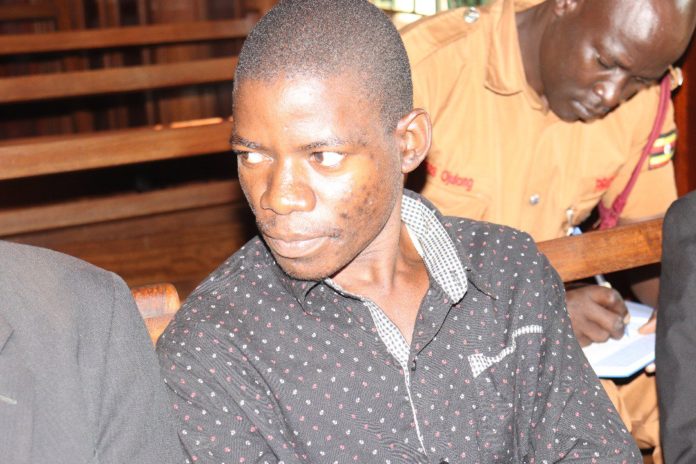
BOU top officials reject to disclose critical details on sale of commercial banks

Dr. Louis Kasekende.

Reports coming in indicate that investigators from the Auditor General’s Office are finding it hard to access critical information as they investigate Bank of Uganda top officials who presided over the liquidation and sale of defunct banks.

The officers from the AG’s office are carrying out a forensic audit to establish how defunct banks like Crane Bank, Teefe Bank, Greenland Bank, International Credit Bank, National Bank of Commerce, Cooperative Bank and Global Trust Bank were liquidated and sold by BOU which has never produced any report relating to the transactions.

An insider among the investigators has intimated to Eagle Online that Dr. Louis Kasekende-BOU’s Deputy Governor and other senior directors are reluctant to provide the required critical details that the investigators are interested in so as to come up with a credible report that can be relied on when similar transactions happen in the future.

“We have made some breakthrough but top officials at BOU are not cooperating 100 per cent when it comes to issues of monetary transactions, assets of banks before closure and others. We are finding it hard to get critical information,” one of the investigators who preferred to remain anonymous for he is not allowed to speak to the press, said.

In mid-May this year, the Speaker of Parliament Rebecca Kadaga directed the AG to investigate BOU after reports emerged that the bank officials had earlier on refused to cooperate with the AG officials, claiming the case of the sale of Crane Bank was already in court and that it would breach the sub-judice rule. The Solicitor General had advised BOU top managers not to cooperate with the AG’s investigators.

The expanded audit into BoU was prompted by petitions from Crane Bank shareholders and central bank employees regarding Shs200 billion taxpayers’ money that was allegedly invested into the defunct commercial bank before it was liquidated in October 2016 and sold to DFCU Bank in January 2017.

The shareholders had earlier on petitioned Parliament’s Committee on Commissions Statutory Authorities and State Enterprises (Cosase) chaired by MP Abdul Katuntu and requested for an investigation into the sale of Crane Bank to DFCU Bank and the closure of other several banks in the past.
Quoting from the interim report submitted to Cosase on April 10, MP Katuntu disclosed that BoU officials had denied the AG access to any information regarding closure of Crane Bank and the National Bank of Commerce (NBC).

Yet two whistleblowers had also petitioned Parliament and the Inspector General of Government (IGG) on the same matter, calling for an independent audit into the sale agreement on Crane Bank between BoU and Dfcu bank.

The sale agreement was signed on January 25, 2017, between Mr Mutebile and Mr Juma Kisaame, the managing director of Dfcu Bank.
The audit, according to some of the AG’s investigators, srutinise the disputed agreement the BOU top managers signed with DFCU Bank in the sale of Crane Bank, and other issues of accountability, supervision, guidelines and policies.

The AG’s team is tasked to identify both the perpetrators in case of any fraud in the sale of the defunct banks.
It should be remembered that the AG John Muwanga, in fear that BoU staff might block his team on account of the sub-judice wrote to BOU Governor Emmanural Tumusiime-Mutebile on May 15, saying that Speaker Kadaga had cleared him to investigate BOU and therefore needed their cooperation. “I have received the clarification from the Speaker in a letter, ref AP116/161/01 dated May 10, 2018, and copied to you guiding me to proceed with the audit and submit the report to Parliament as required by law,” Muwanga’s letter read in part.

Despite the Speaker clearing the AG to go ahead with the investigations, it has now turned out that BOU directors still continue not to cooperate with us on certain critical issues they think if revealed will cost them their job and reputation, says another investigator.

Stories Continues after ad
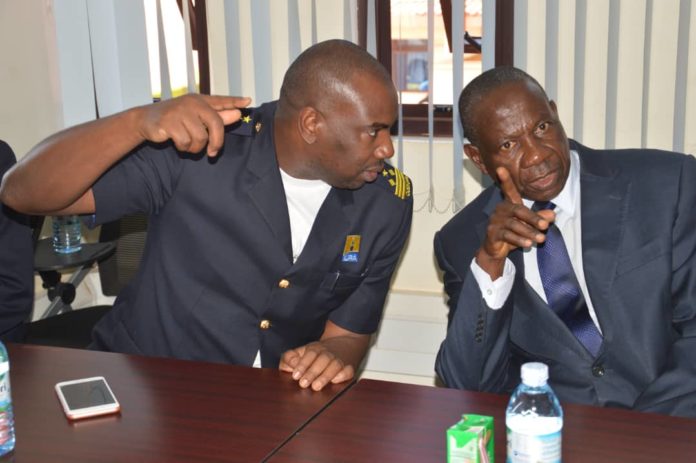
Gov’t should address farmers and SME’s concerns

Uganda will on July 7, celebrate international day of cooperatives at civil service collage Jinja as it strives to achieve middle status income.

Years down the road, cooperatives member were able to save, and acquire low interest loans from various cooperative unions and fund numerous productive activates a move that had elevated their financial status.

Under the theme, ‘sustainable consumption and production of goods and services’, the day is aimed at increasing public awareness on cooperatives and highlighting complementary goals of United Nations and cooperative movements.

At the peak of cooperative movements in Uganda, the country had both primary and secondary cooperative societies that served the interests of ordinary citizens. Of the then established numerous cooperative unions, only Bugisu cooperative union (BCU) has managed to wither the storm.

Heavy infrastructure such as cooperative bank that were closed down in 1999 for having become insolvent, cooperative training collage in Kigumba, Uganda cooperatives transport union (UCTU) and its ultramodern and mechanical workshop that were had been established to empower cooperative societies were all wasted.

However, farmers among small medium enterprises were left to battle with market forces that comprises of continuous importation of both low and quality products, high interest rates on loans that is at 17 percent, hiking prices for agricultural equipment.

At the commemoration of the 94th international day of cooperatives that was held in Nakaseke, the minister for trade and cooperatives vowed the government will compensate all who lost their property during the bush war however till now Bugisu cooperative as cooperative Union that was promised shs19 billion, Banyankole Kweterana Cooperative Union Shs2 billion among others have not received it.

Despite the introduction of National Agricultural Advisory Services Organization (NAADs), Savings and Credit Cooperative Organization (SACCO) Operations wealth creation, the functioning of cooperative societies/ Unions is definitely descending leading to unsustainable financial inclusion.

NAADs/ operation wealth creation, SACCOs that would serve the purpose for thriving of cooperative movements, deliver unsuitable seeds compared to nature of soils, as others fail to sprout.

Even though government introduced Buy Uganda Build Uganda (BUBU) policy to promote local products, it has failed to protect local manufacturers from continuous importation of goods.

Therefore as the country commemorates international day cooperatives, farmers and small medium enterprise (SME)’s concerns ranging from production, processing, marketing, branding must be put under consideration through the in lowering of interest rates to at least seven per cent, for economic transformation and attaining of middle status income that has become the song of the day.

Stories Continues after ad
World Cup 2018 quarter-finals preview

The FIFA World Cup Trophy

After completion of the Round of 16, the quarter-final matches have been decided. We take a look at all the four matches.

France Vs Uruguay
Uruguay’s last appearance at the quarter-final stage was at South Africa 2010. Their meeting with Ghana will go down as one of the most dramatic games in World Cup history remembered for a Luis Suarez deliberate handball in the 120th minute.

The 1998 winners France will face them in the first quarter-final fixture at the Nizhny Novgorod Stadium.

Didier Deschamps’ side remain one of the favourites to win this year’s world cup. France have scored seven goals so far but will find it difficult to break into a strong Uruguayan defence which has conceded only one goal in the four matches.

A brace form Edinson Cavani against Portugal in the round of 16 secured their spot but the striker may miss out due to an injury and the Uruguayans will need to rely on Suarez’s heroics.

Paul Pogba, Corentin Tolisso, Benjamin Pavard and Olivier Giroud are in danger of a suspension. If any of them receive a yellow card they will miss the semi-final should their team qualify.

The latest of Uruguay’s three meetings with France at a World Cup took place at South Africa 2010 when both sides played out a goalless draw in Cape Town on 11 June that year.

Head-to-head: Uruguay 2 wins, France 1 win, 4 draws
The winner of Uruguay-France tie will play the winner of Brazil-Belgium in the first semi-final on Tuesday, July 10.

Brazil Vs Belgium
It has been a long time since the teams faced each other. The last meeting was Brazil’s 2-0 World Cup Round of 16 victory in 2002. That was also their only competitive meeting to date. Rivaldo and Ronaldo were the goal scorers.

Five time winners Brazil overcame Mexico in the round of 16 while Belgium overturned a two goal deficit against Japan for both teams to set up a mouthwatering quarter-final.

Neymar, who has produced moments of brilliance, will still be needed to deliver the goods for Brazil with the help of Coutinho, Gabriel Jesus and Willian while the Belgian Red Devil will need their captain Hazard, De Bruyne and Lukaku to perform at their best.

If the Red Devils don’t progress past Brazil, some could point to something of a curse for the ‘golden generation’. Belgium were eliminated at the quarter-final stage in the past two tournaments. At Brazil 2014, they lost to Argentina (1-0) and at UEFA EURO 2016 were beaten by Wales (3-1).

Casemiro is suspended for Brazil due to accumulation of yellow cards. Fernandinho is expected to come in for the Real Madrid midfielder.

The two teams will meet at the Kazan Arena and the winner will play either France or Uruguay in the semifinal.
Head-to-head: Brazil 3 wins, Belgium 1 win.

Sweden Vs England
England booked their place in the quarter-finals with a dramatic victory over Colombia on penalty kicks on Tuesday afternoon after a 1-1 draw in fulltime while the Swedes edged past Switzerland with a deflected goal from Emil Forsberg.

The Three Lions won their first ever world cup penalty shootout to qualify for the quarter-finals for the first time in 12 years while Sweden qualified for the first time since 1994.

Sweden play as a team while Gareth Southgate’s side will look up to the tournament’s top scorer Harry Kane to deliver the goals.

All of Sweden’s players are based at clubs abroad, while all of Gareth Southgate’s men play their domestic football in England.

Sweden goalkeeper Robin Olsen has kept three clean sheets in four games so far at Russia 2018 while England has not kept any clean sheet.

Kane is the top scorer with six goals, making him the favourite to end the tournament with the golden boot. Belgium striker Romelu Lukaku trails him on four goals.

The winner will play either Croatia or Russia in the second semifinal on Wednesday, July 11.
The tie will be played in Samara Arena.

Head-to-head: Sweden 7 wins, England 8 wins, 9 draws
Croatia Vs Russia

Both Croatia and Russia qualified for the quarter-finals winning their penalty shootouts over Denmark and Spain respectively. The two sides have never met in the World Cup.

Croatia will rely on their golden talent of Luka Modric, Perisic, Mandzukic and Ivan Rakitic while Golovin and Artem Dzyuba will lead Russia’s attack. Mateo Kovacic will not participate for Croatia due to his shoulder injury.

Russia’s captain and goalkeeper Igor Akinfeev was the hero in the Round of 16 penalty shoot-out win over Spain while Subasic was the hero for Croatia saving three penalties.

Croatia’s most historical campaign at the world cup was in France 1998 when they finished in third place and their striker Davor Šuker was the top scorer with 6 goals.

Hosts Russia came in the tournament as the lowest ranked team among the 32 countries.

The match will be at Fisht Stadium, Sochi with the winner to play either England or Sweden in the semifinal.
Head-to-head: Croatia 1 win, 2 draws.

World Cup Quarter-finals
Friday, 6 July 2018
France Vs Uruguay, 5pm
Brazil Vs Belgium, 9pm
Saturday, 7 July 2018
Sweden Vs England, 5pm
Russia Vs Croatia, 9pm

Stories Continues after ad

Confusion as Museveni makes U-turn on mobile money tax

President Museveni

President Yoweri Museveni has caused confusion in the public after announcing that the actual tax on mobile money transactions is 0.5 per cent and not 1 per cent as passed by parliament in the 2018/19 budget.

“The 1 per cent was a miscommunication. The actual figure was 0.5 per cent, half of one per cent. That is what we should debate, on the mobile money,” Museveni said on Wednesday on his Facebook page.
He said mobile money transfer is a useful service though he said Ugandans should pay the 0.5 per cent tax on transactions to develop the country.

The president said there is no tax on depositing money on mobile money accounts. “This is to clarify that there is no tax on mere depositing money on a mobile phone account. That confusion should be clarified. The half –per cent tax, not 1 per cent, is only on the sender and the receiver of money through mobile money,” he said.
Yesterday the State Minister for Finance David Bahati while addressing the press in Kampala said Ugandans would pay 1 per cent tax for sending and receiving money on mobile money platforms run by telecom companies.

Following the president’s announcement, it is not clear whether those who had paid the 1 per cent tax on mobile money transactions since July 1 will get their extra money refunded. Some Ugandans had already sent the money to their relatives and paid utility bills.

On social media tax, he said social media chatting is “a luxury by those who are enjoying themselves or those who are malicious.” He said Ugandans by logging on to social media were donating money to foreign companies and sees no problem with Ugandans paying some tax to government.

“As to social- media tax, all the moral reasons are in favour of that tax. The social – media users have no right to squander the dollars I earn from my coffee , my milk etc by endlessly donating money to foreign telephone companies through chatting or even lying and, then, they are allergic to even a modest contribution to their country whose collective wealth they are misusing,” he said.

He said accused betting companies of siphoning the money earned in Uganda to their own countries, which he said has contributed to the weakening of the local currency. “The same with those who engage in games betting. They bet in local shillings. Since, however, our economy is an open one, the foreign owners of betting machines rush to the forex bureaus, buy dollars, the ones I earned , so as to externalize them. This is what affects our shilling,” he said.

“The importers of foreign luxury goods- wines, whiskies, artificial hair, furniture, textiles, shoes etc, goods that can be made here, also squander our dollars. Fortunately, on account of our campaigns, the import bill has decreased from US $7 billion to US $5 billion. That is not enough, however,” he said.

He however said: “There are no taxes on agricultural products, no taxes on machinery for factories or agricultural machinery , no taxes on raw- materials , no taxes on scholastic materials, no taxes on medicine, no tax on exports, no graduated tax etc. Most of the inputs in wealth and job creation are not taxed because we want people to engage in production. The essentials are never taxed.”

Stories Continues after ad

Local insurance companies ‘financially stable and sound’, says IRA boss

IRAU CEO Alhaj Ibrahim Kaddunabbi Lubega, and the Stanbic Bank boss Patrick Mweheire

All insurance companies in Uganda are financially stable and sound despite recent media reports that some were on the verge of collapsing, a top executive of the regulatory agency-the Insurance Regulatory Authority of Uganda has said.

“This is to clarify that are no insurance companies at the verge of collapsing. We would like to assure the insurance policyholders and the general public that licensed companies are financially sound and stable,” Alhaj Kaddunabbi Ibrahim Lubega, the CEO of IRA said Wednesday in a statement.

He said the growth rate of any company does not necessarily reflect its strength. Some media houses had used that to conclude that some companies would collapse soon.

On June 28, IRA released industry performance report for the year 2017 and first quarter of 2018, showing a significant growth with gross written premium totaling Shs737 billion from Shs635 billion in 2016, posting an overall growth rate of 16.13 per cent.

According to the report, medical insurance gross written premium grew by 33.16 per cent from Shs121 billion in 2016 to Shs161 billion in 2017.

There was also was increased uptake of agriculture insurance under the Agriculture Insurance Consortium. As at December 2017, the utilisation of the subsidy was Shs3.1billion for 45,704 farmers, which is about 68.1 per cent of the total subsidy.

As at March 2018, the utilisation of the subsidy was Shs4.8 billion for 59,146 farmers while the gross written premium for Agriculture insurance under the consortium arrangement (subsidy plus farmers contribution) was Shs10.1 billion.

In 2016/17 budget, government introduced the agriculture insurance subsidy aiming at making agriculture insurance affordable to farmers and increase access to credit by protecting agriculture loans disbursed by financial institutions from the effects of specified agriculture risks.

The industry paid out Shs291 billion in gross claims for life and non-life insurance policies, an increase by 11.71 per cent from Shs261 billion in 2016.

The performance showed that non-Life business continued to dominate the insurance industry with its gross written premium income growing by 14.65 per cent from Shs450 billion in 2016 to Shs516 billion in 2017. Whereas life gross written premium income increased by 27.19 per cent from Shs132 billion in 2016 to Shs168 billion in 2017 while health medical insurance increased marginally by 0.74 per cent from Shs52.1 billion in 2016 to Shs52.5 billion in 2017.

According to the IRA boss, there is need to have a stable insurance industry in Uganda to boost both investor and public confidence in order to enhance competitiveness and promote insurance inclusiveness.

Stories Continues after ad

Mobile Money tax risks reversing inroad promotion of financial inclusion- Wilbrod Owor

The Executive director for Uganda bankers association (UBA) Wilbrod Owor (Centre) said the newly introduced Mobile Money Tax risks reversing the inroads made in promoting financial inclusion

The Executive director for Uganda bankers association (UBA) Wilbrod Owor says the newly introduced Mobile Money Tax risks reversing the inroads made in promoting financial inclusion in citizens in the country.

Speaking about annual banker’s conference that is scheduled on July 17, Wilbrod said mobile money tax has made transactions more expensive as he categorically denies that bankers influenced that policy that has seen the introduction of mobile money tax.

“Banking sector is not at war with Mobile money, we are partners with Telecommunication companies, each mobile money wallet has a mirror account in the bank and we are working closely with them,” he said at Serena hotel.

Wilbrod said increased excise duty tax is not only affecting telecom companies, he revealed that excise duty in banks was moved from 10 per cent to 15 per cent, driving away customer’s progress in increasing financial inclusion by getting more people to embrace banking.

Patrick Mweheire sympathized with the government on the need to widen its tax base by taxing mobile money however called for a discussion on the methods through which it can be done.

He said if you look at Uganda’s tax to GDP ratio, it’s the lowest in the region therefore government is trying to figure out how to increase its tax base in an informal economy.

“Banks are moving away from ATMS and moving on to agent banking which will enable financial inclusion,” he said.

He said banker’s conference will be rich with speakers from different spaces like legal, payments and many others to discuss changes that are taking space in the banking sector to promote to promote financial sector growth in the economy.

This year’s conference will aim to deliver constructive discussions and recommendations on a range of subject matters affecting the performance and stability of the financial sector at the global, regional as well as domestic level.

Stories Continues after ad