Stanbic Bank
Stanbic Bank
20.1 C
Kampala
Stanbic Bank
Stanbic Bank
Home Blog Page 1525

Braving stormy weather to treat 6000: The story of Bulamu Doctors in Masaka

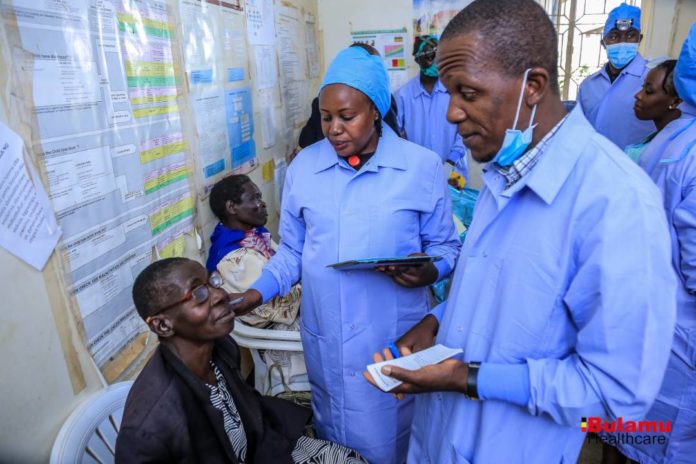
Doctors attend to a patient

The journey to save lives in the village of Kyannamukaaka, Masaka begun on a rather dreary note as rains continued to pour, rendering most of the muram roads slippery and muddy as the buses carrying the medical personnel to Kyannamukaaka health centre IV found it rather difficult to navigate the wet terrain.

The station where Bulamu International would hold its 9th medical camp in June, was a 40 minute drive from the town of Masaka, the unfavorable weather only served to delay the camp’s activities and further irritate the attendees and staff.

However, this neither deterred nor dampened the moods of the eager passengers onboard,as doctors and nurses jumped out and lent a hand on several occasions: shoveling and carrying the mud out from under the vehicles whilst others pushed the buses onto firmer ground.
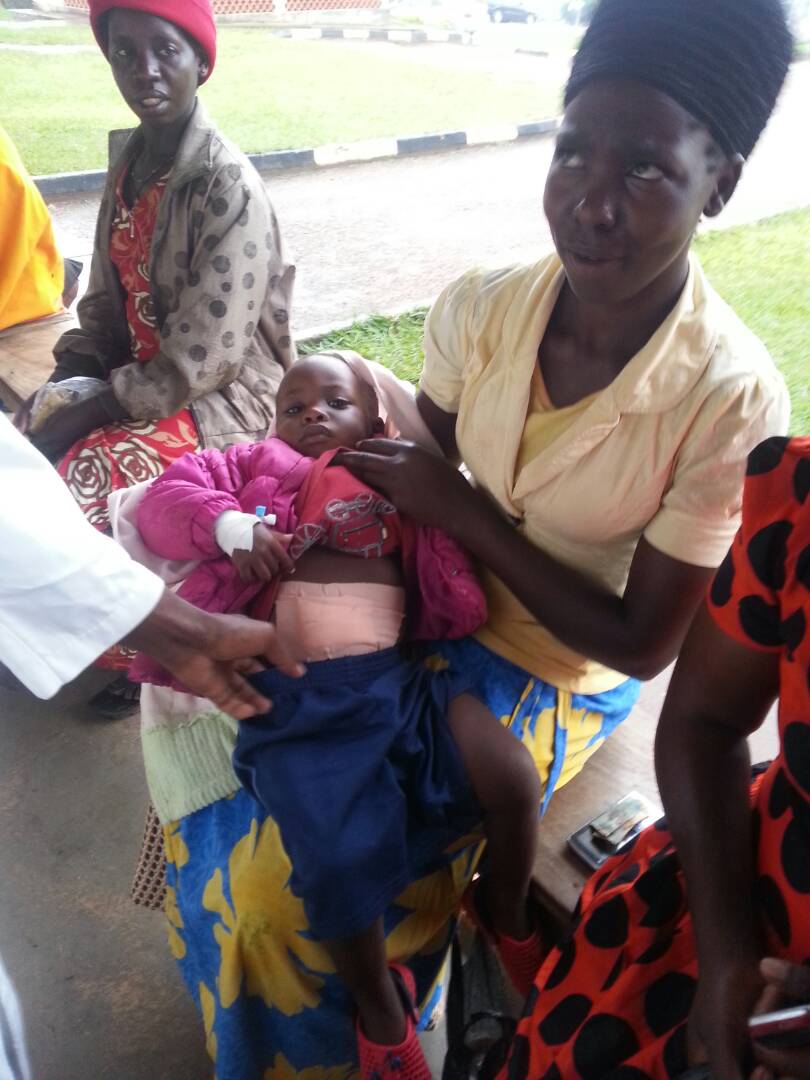
Mother and child after surgery.

This wouldn’t have been an issue had it not been repetitive for another two days.The strain became unbearable as several vehicles found themselves stranded in the same conundrum at odd hours of the night with little to know hope of break down services within that area.

Despite tensions rising, and anxiety at a climax, doctors continued to work around the clock not only to ensure the safety of their colleagues but also the lives of the patients awaiting their arrival at the camp site.

This was only but a glimpse into the trials and challenges that many of these doctors and nurses had to endure in order to secure the health of many Ugandans, not just during this camp alone but throughout the year and their medical careers.
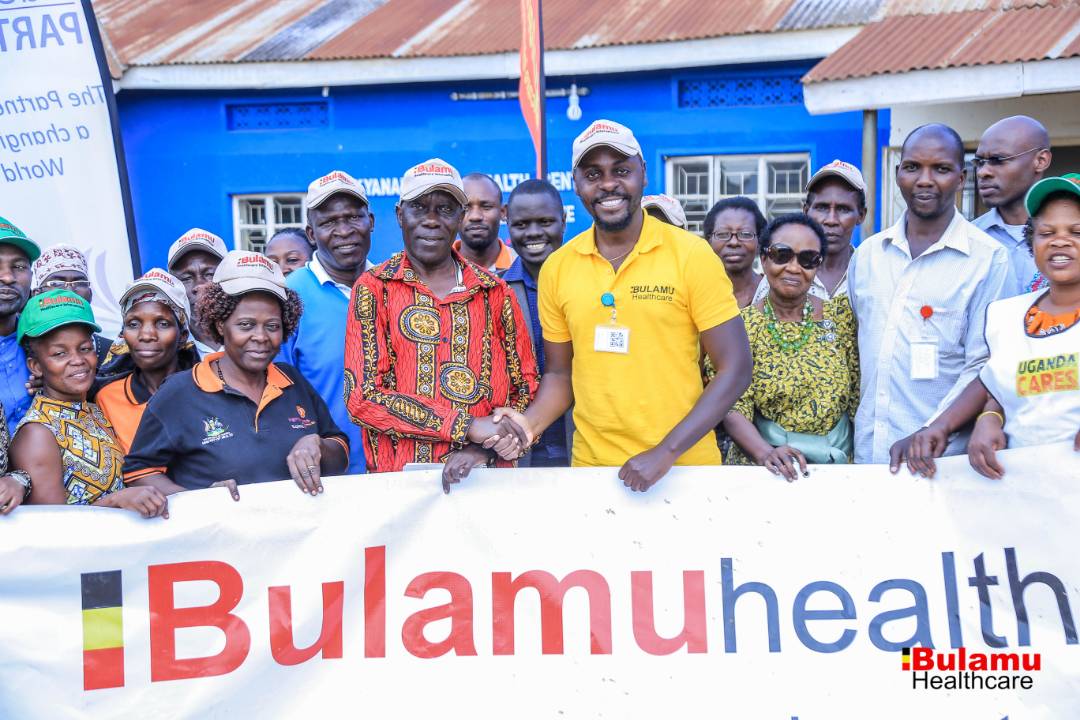
Bulamu volunteers after the camp

The medical doctors weren’t the only ones affected by the rainy season in the village, as the first two days of the camp also resulted in a poor turn up of patients; prompting the organization to plan and re-adopt other measures such as mobilization and advertisement that would ensure the camps success.

“This is the first time we have witnessed such a low turn up of patients during one of our camps but we urged the Village health teams and local government to intervene and spread word.” said Gerard Atwiine, Director-Bualmu International.

He also revealed that all camps usually run on a budget of about $40,000 and a set target number of 10,000 patients treated per camp. Given the unpredicted circumstances found in Masaka, such as weather and sabotage by rogue political agents, the results for this Health camp looked rather bleak.

Fortunately for the team and other partners the rains came to a halt and by the third day word of the camp’s unprecedented record from previous outreaches had travelled and patients begun to pour in the numbers.

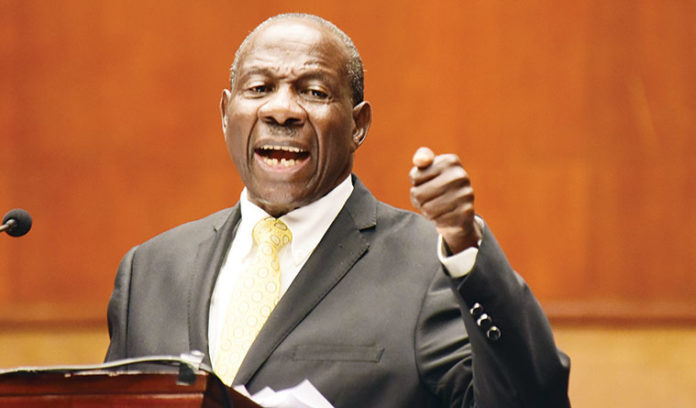
The initial planning of the medical health camp was done through invitation by the Vice President, H.E Edward Ssekandi himself, who praised the organizations work throughout the country, urging Mr. Atwiine and his team to visit his hometown and treat the people there aswell.

Like past camps, it also welcomed a variety of patients, from the elderly to secondary students and a record number of infants who received vaccination services against polio, tetanus and diphtheria including a total of 8 births recorded during the camp.

Among other services offered the populace of Kyannamukaaka and neighboring villages were; Mama-kits, vaccination, dental surgery, optical treatment as well as enrollment into the newly established Angel programme that caters for those with complicated cases such as spina bifida, hydrocephalus and other ailments that would require outside intervention and care.
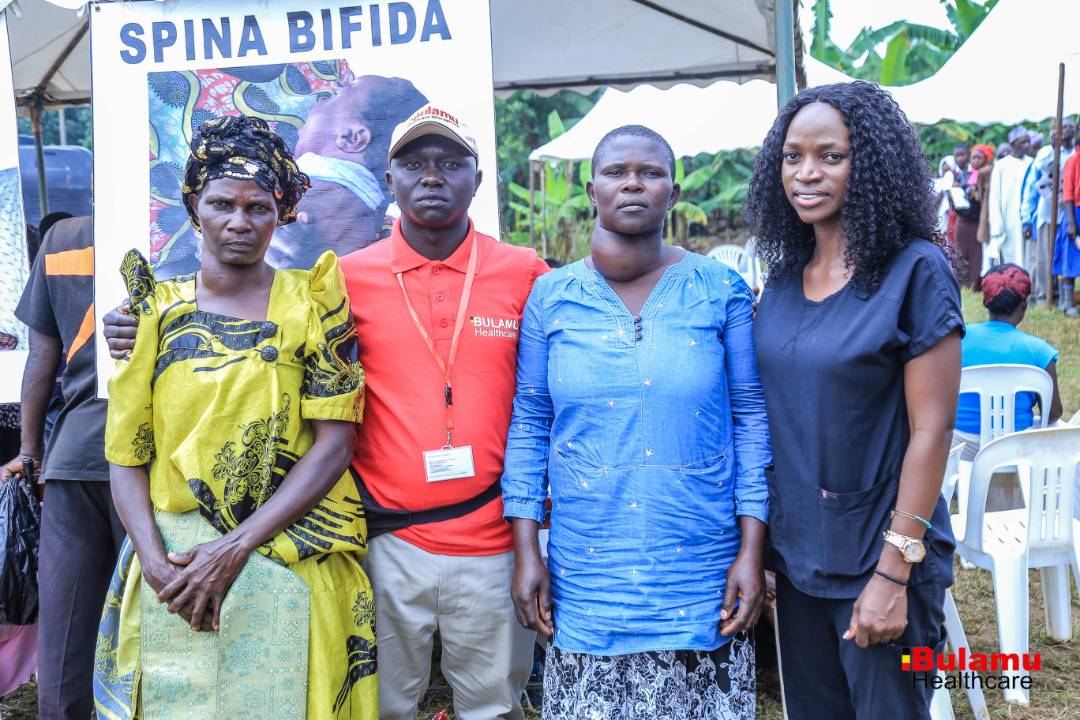
Patients taken under the Angel program

‘I have seen many camps but this one has been of a different kind; a camp that has set a standard and should continue to do so.

“We also urge that you find a way to work with Government inorder to improve our health care system.’ said Vincent Kityamusubire, Deputy Principal Private Secretary to the Vice president, at the closing ceremony of the week-long camp that saw 167 patients already surgically operated on out of the 200 who had been enrolled.

He also noted that the area had witnessed a number of camps but Bulamu International was the first of its kind to offer surgical services aswell as free eye glasses. Hon. Freda Kase Mubunda also thanked the Vice President for inviting the organization to Masaka and lauded the organization for its initiative that offered such complete and comprehensive services.

The organization aims to improve the welfare of many individuals living in the impoverished communities within Uganda and since it first camp in 2015, it has managed to treat more than 50,000 patients for free with three other camps scheduled for the remainder of the year.

With more support from government and other responsible organizations the U.S based organization believes it is more than capable of improving not only the lives of many more Ugandans but the general health care system of Uganda.


Stories Continues after ad

Kyabazinga graces Chief Izimba’s royal wedding

The Kyabazinga of Busoga, HRH William Nadiope(foreground) with the Chief Prince of Busoga, Samwiri Nkutu at a past function.

THE Kyabazinga of Busoga William Gabula Nadiope IV on July 1st, 2018 attended the first Royal wedding organised under his reign, of Prince Patrick Izimba Gologolo and his wife Rose Namulondo.

The couple walked down the aisle at St. Paul Church Nasuuti in Iganga district.

Prince Izimba and his wife Namulondo exchanged vows before the Bishop of Central Busoga diocese Patrick Wakula at Nasuuti.

After a long order of service punctuated with song and speeches, the newly wed couple entertained their invited guests at a royal reception held at Ntinda View Hotel in Iganga Municipality.

In his speech at the wedding reception, the Kyabazinga, congratulated the couple. He said he was happy that Prince Izimba and wife had joined Fathers and Mothers union respectively.

“Indeed you have set the ball rolling for other royals in our family to follow suit including myself,” Kyabazinga Gabula said.

He said “As you all know, marriage is a union of two people and it is based on the word of God and not experience. This is further experienced in Genesis 2: 18-24 and proverbs 8: 22.”

The King of Busoga, William Nadiope in a group photo with the couple

Guests were treated to an abundance of cocktails and light cultural entertainment before getting ushered into the reception area for a sumptuous dinner.

The couple also cut a cake in company of the Kyabazinga and served it to their guests at the reception.
After the Kyabazinga had left, the newly weds received gifts from their invited guests at the reception.

Present at the Prince Izimba’s wedding reception were Busoga Kingdom Prime Minister Dr. Joseph Muvawala, The Chief Prince (Issabalangira) of Busoga Samuel Zirabamuzale who is also Menha of Bugweri chiefdom, different Hereditary Chiefs from various Chiefdoms that make up Busoga, Ministers from Busoga Kingdom, Steven Kisira Napeera the Prime Minister of Bulamoji Chiefdom, Miss Tourism Busoga Ruth Kitamirike and other Queens and the Business community in Iganga.

Stories Continues after ad

2018 World Cup: England Colombia battle for quarter-finals spot

England will face Colombia in the round of sixteen with both teams aiming to reach the quarter-finals of the World Cup at the Otkrytie Arena, Moscow.

England made a positive impression in the early stages of the tournament and are now looking to reach the quarter-finals for the first time since 2006.

The South Americans started their 2018 World Cup with a 2-1 defeat to Japan, but beat Poland and Senegal in their next two Group H matches to ensure that they would qualify for the last-16 stage of the competition.

It has been 20 years since the Three Lions last faced Colombia at a World Cup, with winning 2-0 thanks to goals from Darren Anderton and David Beckham.

England are unbeaten against Colombia, having faced them five times previously (W3 D2). Their last encounter dates back to May 2005 in New Jersey. England won 3-2 with a Michael Owen hat-trick.

Gareth Southgate is expected to make changes to his starting lineup and start midfielder Dele Alli after the midfielder recovered from the thigh injury he picked up in that opening Group G win against Tunisia.

For Colombia, James Rodriguez remains a doubt after the star man went off injured during the 1-0 win over Senegal in their final group game.

The winner will face either Sweden or Switzerland in the quarter finals, with a possibility of Russia or Croatia in the semifinal.

The match will be played at 9pm Ugandan time.

Possible lineups:
England: Pickford (GK), Walker, Maguire, Stones, Trippier, Young, Henderson, Alli, Lingard, Sterling, Kane.
Colombia: Ospina (GK), Arias, Mina, Sanchez, Mojica, Carlos Sanchez, Uribe, Lerma, Quintero, Falcao, Cuadrado.

Stories Continues after ad

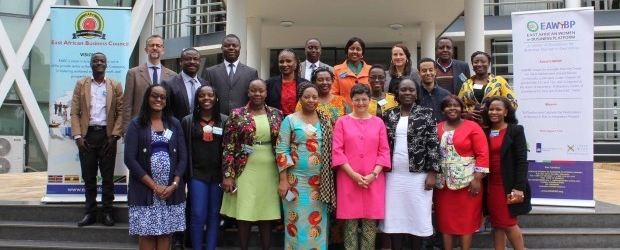
Regional business platform gets more access to EU market

The East African Women in Business Platform members have successfully negotiated an agreement with the International Trade Centre (ITC) to increase market access for their products in the European Union.

That comes after the group held a recent round-table discussion with Ms. Arancha Gonzalez, who is the Executive Director of ITC, ahead of the official launch of the Market Access Upgrade project (MARKUP) at the EAC Headquarters, reflecting on the successes, challenges, and impact of the ongoing EAC regional integration process to businesses.

The discussions highlighted the importance of harmonization of standards in the region, which the EABC has been taking lead in advocating on behalf of the Private Sector in the region, to increase intra-EAC trade, improve product quality and maintain competiveness in regional and international markets.

The roundtable attracted EABC and EAWiBP members working in different sectors and sub-sectors including technology, consultancy, transport, manufacturing, horticulture, and agro-processing, among others.

EAWiBP Regional Coordinator, Nancy Gitonga underscored the importance of linking women in business to different market opportunities and improving their skills through trainings.
She said that EAWiBP has successfully developed a contact database of 10,000 women in business in the EAC region.

The EABC Executive Director, Lilian Awinja says they have sought for practical ways of increasing market access of EAC products to the EU for EAC products like; coffee, flowers, tobacco, tea, fish, vegetables and precious metal ores among others.

According to ITC, the EAC region exported goods worth approximately US $2.5 billion in 2017, an increase of eight per cent in comparison with US$2.3 billion in 2016.

According to Gonzales, ITC has made trade more inclusive through the ‘She Trade Programme’ by connecting together over one million women in business from different countries.

The Director of Productive Sectors of the EAC Jean Baptiste says that to tap into the EU market the region needs to benchmark standards with the ones of the European Union and East African products and should meet the requirements of the European consumers.

Meanwhile, the former East African Business Council (EABC) Board says the agency has made headway in advocating for the removal of non-tariff barriers such as roadblocks, improvement of the transport network in the region and simplification of border procedures. This, he says, has facilitated cross-border trade and improved the transport sector.

Stories Continues after ad

Rating agency says Uganda has weak policies to deal with debt crisis

Finance Minister: Matia Kasaija.

Rating firm, Moody’s, has singled out weak policies, poor budget planning and implementation as factors that have made it difficult for Uganda to tackle her ballooning debt portfolio.

The agency reports that Kenya and Tanzania, Uganda’s bigger neighbours face the same challenge that limits their ability to create policy solutions to the ever growing debt.

The report on the state of debt in the region says that only Rwanda has the institutional and policy framework that is stronger thus its government should be more effective in managing risks associated with a higher debt burden.

“Weaknesses related to public financial management and shortcomings in budget planning and implementation pose challenges in Kenya, Tanzania, and Uganda,” the firm said.

The firm says that the region to curb any further rise in debt burdens in the foreseeable future, and direct limited domestic resources toward productive use.
This, it says, will be important to how creditors view their ability to repay. Debt in the region has been driven by wider gaps in revenues generated by taxes and the expenditure plans, which is normally referred to as fiscal deficits.

Moody’s says that fiscal deficits are largest in Kenya, where large infrastructure-related development spending combine with subdued revenue collection has seen rising cost of debt. “Kenya, which relies less on grant funding, has posted the widest fiscal deficits over the past five years, where they averaged close to 7 percent of GDP,” Moody’s said.

“Large fiscal deficits in Kenya also reflect a narrowing of the domestic revenue base as government revenue net of grants has declined as a percentage of GDP. Kenya is the only country of the four that has failed to grow its revenue net of grants,” the firm said.

The firm says that the erosion of fiscal metrics was a key reason behind its decision to downgrade the sovereign rating of the country to B2 in February.

An increase in commercial borrowing in Tanzania has also increased. In Uganda, external debt remains mostly concessional, but its recourse to non-concessional domestic and external sources has increased.

Stories Continues after ad

No contaminated Brazilian sugar on Ugandan market, says UNBS

Following reports about the presence of the Brazilian imported contaminated sugar in neighbouring Kenya, the Uganda National Bureau of Standards has come out to allay fears that the same product could be selling on the Ugandan market.

In the latest statement, UNBS says it has put in place measures to curb any contaminated sugar on the local market, having done inspections that failed to identify any traces of the unwanted sweetener.

“The UNBS market surveillance team has so far inspected more than 200 outlets focusing on the main sugar supply centres in and around Kampala but no sugar imported from Brazil has been found on the market,”.

UNBS says over 100 samples were randomly picked from the market and taken to its laboratories for further testing and analysis. “It was established that all the samples did not contain any contaminants or heavy metals such as copper, lead, mercury that may have adverse effects on human health,” reads part of the statement.

According to the statement, more samples have been picked from towns of Mbale, Busia, Malaba and Tororo to mention but a few and they are being assessed.

All UNBS imports inspectors at various border entry points have been carrying out regular testing of imported sugar before it is allowed on the market, the statement further says.

“Based on the results so far, UNBS would like to assure the public that the sugar on the Ugandan market meets the required standards and therefore it is safe for consumption,” it says.

The standards body has urged the public to remain vigilant and report any cases of substandard products on the market, adding that it will continue to perform its mandate of enforcing standards to protect consumer health and safety and the environment against dangerous and sub-standard products.

Over two weeks ago, samples of contraband sugar confiscated by Kenyan police in Nairobi tested positive for lead and copper while failing to meet quality standards on microbiological matter which determines the shelf life of consumable goods.

The high presence of copper and lead in the sugar means millions of Kenyans have been exposed to the harmful effects of heavy metals, which cause a wide range of diseases and disorders.

According to health experts, lead causes cancer of the kidneys, brains and lungs, affects the development of the nervous system and the brain, decreases intelligence in children, and causes anaemia and high blood pressure.

The confiscated sugar, re-packaged in Kabras packs, was determined not fit for human consumption as it had not been inspected when it entered the Kenyan market.

Reports from Kenya indicate the consignment of white and brown sugar had been milled in Brazil but packed in different countries, including the United Arab Emirates and India.

Stories Continues after ad

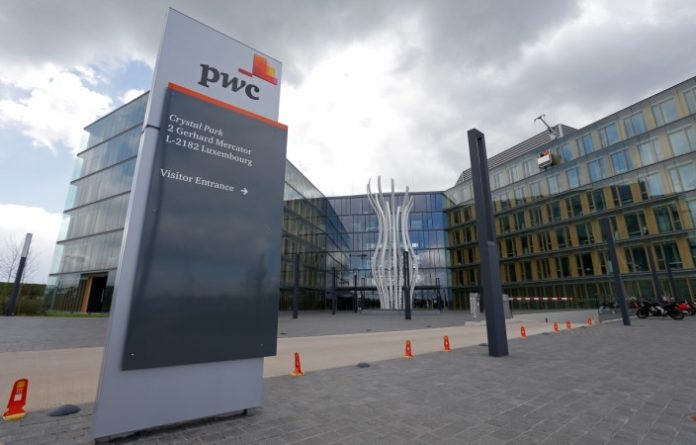
PwC must pay FDIC $625.3 million over bank’s collapse: U.S. judge

A federal judge on Monday said PricewaterhouseCoopers LLP must pay $625.3 million in damages to the Federal Deposit Insurance Corp for failing to uncover fraud that led to one of the largest bank failures of the global financial crisis.

U.S. District Judge Barbara Rothstein found it more likely than not that PwC’s negligence was the proximate cause of FDIC damages from the August 2009 demise of Montgomery, Alabama’s Colonial BancGroup Inc, once among the 25 largest U.S. banks.

Rothstein said PwC failed to uncover a multi-year fraud between Colonial, its former client, and Ocala, Florida-based Taylor, Bean & Whitaker, once the nation’s 12th largest mortgage lender and a major Colonial customer.

The FDIC sued in its role as receiver for Colonial Bank, which once had more than $25 billion of assets and 340 branches.

Taylor Bean also failed in August 2009. Its former chairman, Lee Farkas, is serving a 30-year prison term for his 2011 conviction on fraud and conspiracy charges.

Rothstein had found PwC liable for negligence in December, after a non-jury trial, and tried the damages issue in March, also without a jury.

PwC had argued that the FDIC could recover $306.7 million at most, and that no damages were justified because numerous Colonial employees had interfered with its audits.

“We intend to pursue an appeal of this matter at the earliest opportunity,” it’s outside lawyer Phil Beck said in a statement provided by PwC.

The FDIC said it does not discuss pending litigation. It previously settled with Colonial’s internal auditor, Crowe Horwath.
On Feb. 28, Taylor Bean’s former auditor Deloitte & Touche LLP [DLTE.UL] agreed to pay $149.5 million to settle U.S. government claims it also missed the fraud.

According to the FDIC, the fraud began in 2002 when Taylor Bean began overdrawing its accounts and Colonial, at Farkas’ urging, began manipulating those accounts to conceal it.

This allegedly included the sale by Taylor Bean to Colonial of mortgages that had already been sold to other investors, and Colonial receiving stakes in mortgages that had no collateral or were in default.

By the time the fraud was discovered, Colonial’s balance sheet included $1.47 billion of mortgage trades that were “fake or otherwise impaired,” Rothstein wrote.
The $625.3 million award covers PwC’s audits of Colonial from 2003 to 2005 and in 2008.

A trial for the 2006 and 2007 audits has not been scheduled because the FDIC did not waive its right to a jury trial.
The case is Federal Deposit Insurance Corp as receiver for Colonial Bank v PricewaterhouseCoopers LLP, U.S. District Court, Middle District of Alabama, No. 12-00957.

Stories Continues after ad

Produce witness in Bishop Luwalira case—Magistrate

Kaddu is accused of attacking the clergy at the alter

Mwanga II Magistrate court, Mengo has set July 20 as the last day to hear the case against Hebert Solomon Kaddu accused of trying to attack Bishop Wilberforce Kityo Luwalira at the altar.

With the aid of Reuben Wasswa Luwagga an official in Namirembe cathedral, Hebert Solomon Kaddu was arrested by police, however his relatives claime that Kaddu had a mental problem and had no intention to annoy or inflict harm on the clergy.

He was examined and produced before Grade One Magistrate Julius Mwesigye and charged with threatening violence against Bishop Luwalira and Rev. Canon Benon Kityo the dean of Namirembe Diocese and disturbing religious assemblies.

Today in court, Justice Mwesigye directed prosecution team led by Immaculate Nambaju to produce key the witness in the matter saying failure to produce them will lead to disposal of the case.

In her response, Nambaju said they had she had not summoned them and vowed to produce them in the next sitting.

Prosecution avers that during the morning service on Easter day celebrations at Namirembe Cathedral, Kaddu while armed with a stick and a backcloth attempted to attack Bishop Luwalira amidst the congregation few minutes after he had just descended from the pulpit to alter for Holy Communion.

Kaddu a driver of a one Tour and Travel Company and a resident of Mackay Zone in Mengo later remanded in Luzira prison however on my 5, he was granted bail.

Stories Continues after ad

ISO’s Kaka advised Museveni into taxing mobile money- Source

ISO Director General Col. Kaka Bagyenda

Somewhere in the course of his job of nosing into peoples’ business, Internal Security Organization’s top boss, Col Kaka Bagyenda stumbled on information showing that Shs2 trillion is transacted through mobile money annually.

He immediately rang the president and requested for a meeting. To the meeting, he went with an intelligence report showing that despite the Shs2 trillion making rounds on the mobile money platform annually, telecom companies led by MTN were having the cake all to themselves.

In that meeting, Col. Kaka suggested to the president that government should only take 1 per cent of the Shs2 trillion (Shs20 billion) and leave the rest to the telecom companies.

“They came and investigated the claims in that so called intelligence report from him and they found nothing. But they were hell bent on taxing the Shs2 trillion which they thought was being taken by us,” a top in house lawyer of one of the leading telecoms who was part of the intense meetings between government and the telecoms told Eagle Online.

He added, “They wanted to push the taxes on to us but we refused arguing that it is not our money but people’s money and that if they wanted to tax it they should tax the owners. There was no way we were going to pay tax on money we do not own.

“We told them that Mobile Money has two pools. The deductions by the telecoms and the money owned by the account holders. We pay tax on our telecoms pool. We refused pay tax on behalf of the second pool.”

According to the lawyer, government officials in the discussions failed to understand that taxing mobile money will be taxing the movement of money instead of the value that money has created.

“If I have money in my wallet and I want to put on my mobile wallet, it will be taxed 1 per cent. What value has that money created for it to deserve being taxed? If all people were keeping their money in pots at home, would government have introduced a pot tax?

“We argued against taxation on the velocity of money because you only end up hurting people’s incomes without justification. Money should be taxed because of the value it has created, not because it has been moved from one one pocket to another,” the lawyer, who spoke on condition of anonymity because he is not supposed to speak on behalf of his employer said.

Over the weekend, government activated a 1 per cent tax on Mobile money transactions and another controversial social media tax of Shs200 per day for one to access any social media platform.

Some people have resolved to challenge the taxes in courts of law.

Asked whether he sees any chance for success in the individuals petitioning the courts of law especially on the social media tax, the lawyer said it will be very big luck.

“We were involved in long hard discussions. Even the US Ambassador to Uganda personally wrote a letter to the president but it did not yield anything. For now the people will shoulder the burden,” he said.

Stories Continues after ad

Top bosses at Education Ministry fight over contracts

The Ministry of Education and Sports official has been forced out of office under unclear circumstances.
Martin Muhanga, a Senior Internal Auditor got into trouble for reportedly questioning approved payments to an unfinished World Bank funded project.

Muhanga was forced out of office on June 1 2018. “His office was broken into by senior ministry officials under the supervision of area police boss a one Sempijja,” a source told Eagle Online.

How trouble started for Muhangi
Early this year, the Ministry of Education and Sports contracted a UK firm, Mott Macdonald Limited to carry out consultancy services for the Education Sector Early Childhood Development (ECD) policy review under the Uganda Teacher and School Effectiveness Project (UTSEP) and the Global Partnership for Education (GPE) Project.

The project funded by World Bank costs US $100 million and Shs5 billion would go for the review of early childhood policy. “Government has been short in the area of childhood policy. Most of this has been in the hands of the private sector and so, this project was intended to streamline that,” said an insider at Education Ministry.

The consultancy started its work and was to have a Technical Reference Committee in place whose role was to qualify payments to be made to the contractor. The terms of reference given to the consultancy company included the review of reports and documents from the consultancy firm before submission to the relevant working groups and authority.

However, a February 2018 meeting convened by State Minister for Education, Rose Mary Sseninde discovered that whereas the inception report had been done and fully in place, the meeting realized that there was a problem with milestones 2, 3 and 4.

“Although 2 and 3 had been paid and the preparation to pay for milestone 4, the final comment of the contract manager showed that milestones 2, 3 and 4 had issues,” a source noted.

Expenditure
Whereas milestones 2, 3 and 4 were said to have had issues and did not call for payment, a letter dated Feb 26, 2018 authorized payment for the fourth installment.

“The submitted Zero Draft ECD report forms the basis upon which consultations will be made and whose input will inform the final product. This is therefore to forward the claim for onward processing for payment,” a letter by Contract Manager, ECD Policy Review at the Ministry, Assistant Commissioner Ibrahim Bigabwa reads in part. Interestingly, the requisition was written and forwarded a day before the Sseninde meeting was held towards the end of February 2018.

Insiders say Muhanga is wanted out for questioning controversial payments. Upon landing on the Milestone four requisition for payment, Muhanga wrote two letters on March 16, 2018 and March 20, 2018 to the Assistant Commissioner Internal Audit and Contract Manager ECD Policy Review respectively questioning the inconsistencies in the payments and also offered guidance.

“Payments to the consultant continue to be processed through his office and yet the clear process of paying for consultant services is not being followed,” the letter to the Assistant Commissioner Internal Audit reads in part. Muhanga added that before payment was made there was need to review the payment so that government gets value for money from the consultant.

“Refer to your report to the Minister of State for Primary Education where you highlighted the status of Milestone four as ongoing validation by the Technical Reference Committee and that was as at Feb 27, 2018 and yet you signed loose minute forwarding for payment on the Feb 26, 2018 a day earlier than your progressive report to the Minister. This confirms that you actually forwarded documents for payment for unfinished product by Mott Macdonald because by this time according to your progressive report, the TRC was still validating the Consultant’s work. One wonders what you were paying when you did not have a complete product from the Technical Reference Committee…” Muhanga wrote to Bigabwa. “In the view of the above audit observations, please clarify on why the process of payments for reviewing of the ECD policy by Mott Macdonald was handled that way. I would be glad if individual written submissions are made for final consolidation of a report on the subject.”

In what appeared to be a response to Muhanga’s letter however, Bigabwa, authored a document on March 16, 2018 reporting lost consultancy payments even upon receiving Muhanga’s.
“I allocated the payment request and all the attached documents to Mrs. Sukie Bainomugisha, SIA, to verify and revert to my office for review. I have been informed that you picked the said payment request from her desk, in her absence and without her knowledge, on Monday March 12, 2018 and went with it….” Part of Bigabwa’s letter reads.

“The purpose of this memo is double; to demand that you return the document to the officer from whose desk you picked it with minimum delay; to advise you to desist from such unprofessional conduct in furtherance of government business,” Bigabwa said.
A few days later, the office of Muhanga was broken into and some documents were taken. His lock was also changed to restrict him from accessing it.
Contacted for a comment Muhanga declined to comment on the matter, referring us to the ministry spokesperson, Muhinda.

We have however, learnt that the ministry has filed eight cases against Muhanga at the Criminal Investigations Directorate in Kibuli. The cases include; abuse of office, embezzlement, neglect of duty, theft of documents, threatening violence, disobedience of lawful orders, fraudulent recruitment and promotion and causing financial loss. Eagle Online has established that the man at the centre of the fight is PS Alex Kakooza who is trying to shield others officials at the ministry including those that sold tablets that were purchased to distribute to Uganda National Examination Board (UNEB) and other top officials. Eagle Online couldn’t reach Kakooza as his phone was off.

Stories Continues after ad