Stanbic Bank
Stanbic Bank
17.6 C
Kampala
Stanbic Bank
Stanbic Bank
Home Blog Page 1527

Freed terrorism suspects to sue DPP for wrongful detention

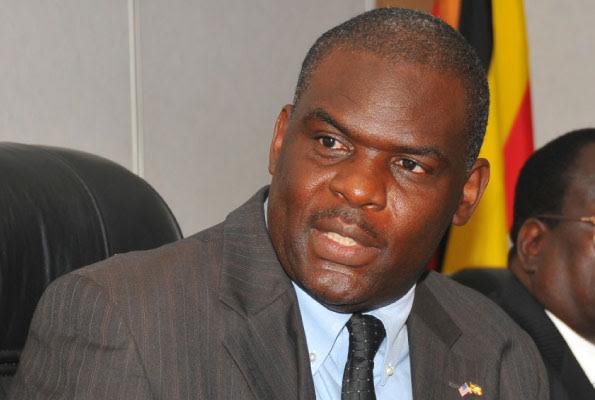
DPP Justice Mike Chibita

The Director of Public Prosecutions (DPP), Mike Chibita, could soon be aligned in court to defend himself against four former terrorism and murder suspects who intend to sue him personally for wrongful detention.

The four suspects have written to Chibita, claiming they were wrongly arrested and detained on terrorism, murder and other charges without evidence pinning them to the crimes including the killing of Muslim sheikhs Mustafa Babiga and Hassan Kirya.

They are represented by their lawyer Fred Muwema of Muwema and Company Advocates who wrote to the DDP on June 29, 2018 of the intention to sue the official personally in courts of law. The four are; Yusuf Sentamu Kasibante, Muhamadi Kalodo Kasibante, Ismail Sentongo and Musa Isa Mubiru.

Yusuf Sentamu Kasibante, Muhamadi Kalodo Kasibante were arrested in Deira Dubai by Dubai police officers on allegations of terrorism, crimes against humanity, two murder cases, attempted murder and aiding support to ADF rebels and associates in Nalukolongo, central, eastern and northern parts of Uganda between February 2014 and January 2015.

The two are accused of murdering Sheikh Mustafa Bahiga on December 28 3, 2014 and Sheikh Hassan Kirya on June 30, 2015, respectively. Sheikh Bahiga was gunned in Bwebajja in Wakiso district while Sheikh Kirya was gunned in Bweyogerere also in Wakiso district.

The duo is also accused of attempting to kill Sheikh Dr. Haruna Kirya on January 3, 2015 at Wattuba Mutugga in Wakiso district.
On the other hand Musa Isa Mubiru was arrested at Dubai International Airport on January 3, 2016 while on a business trip whereas Ismail Sentongo, who was a resident in Dubai, was arrested on December 6, 2015. The victims claim no evidence was availed to the Chief Prosecutor of Dubai Court Ismail Al-madan by the Uganda police operatives who were following up the matter in Dubai.

According to their lawyer Muwema: “The quadruplet was held in confinement in Dubai and subsequently charged in Uganda for the above alleged crimes.”

The former suspects claim they were abducted from Dubai by unknown persons who flew them to Abdu Dhabi where they were confronted by Uganda police officers namely; SSP Nickson Agasirwe Karuhanga and ASP Fred Tumuhairwe who “advised them to cooperate if they cared about their lives and freedom.”

Their lawyer Muwema has given the DPP seven days to respond or else the case will end up in court. Muwema claims his clients want the DPP to be held personally liable for what they say untold pain, suffering, loss and damage they have encountered during and after their illegal arrest, detention and sham trials.

Muwema has copied the letter of intention to sue to the Ambassador of UAE to Uganda, president of Uganda Law Society and the Chairman of Uganda Human Rights Commission.

Stories Continues after ad

NRM wins initial Butebo district LC V election

NRM Secretary General Justin Kasule Lumumba

National Resistance Movement (NRM) candidate, Samuel Keddi has this monring been declared a winner in the new Butebo district LC V chairman elections held on Thursday.

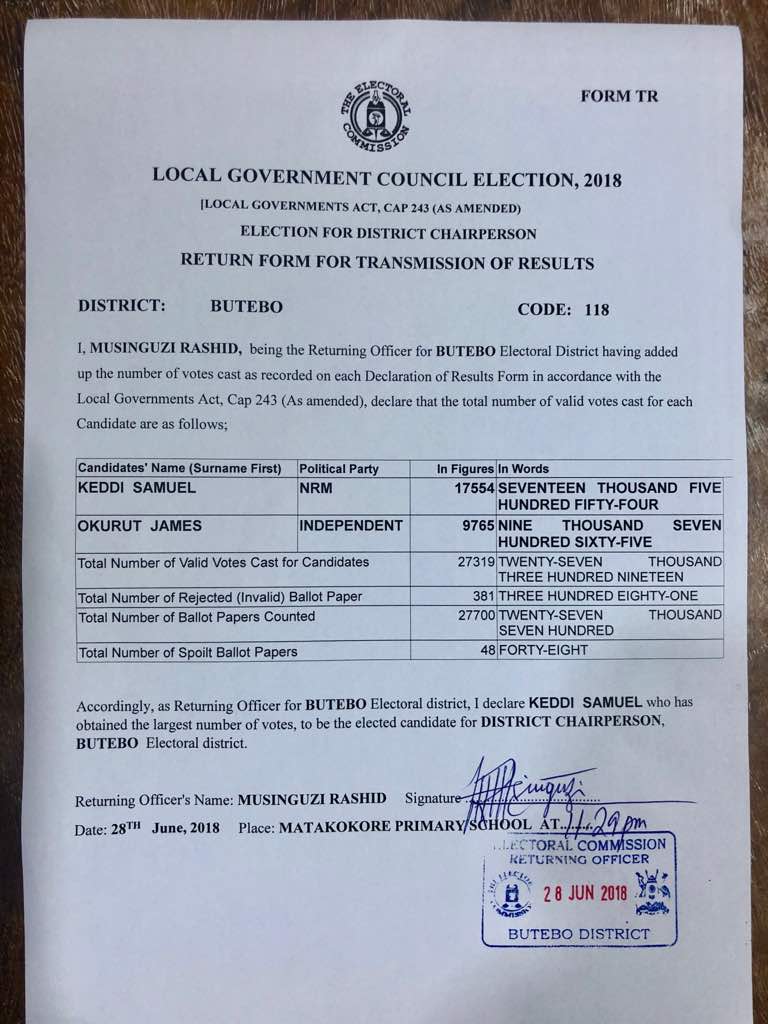
The district returning officer, Rashid Musinguzi declared Keddi with 17,555 votes beating his only opponent; the NRM leaning independent candidate, James Okurut who got 9765 votes.

By midnight when the declaration was made hundreds of Keddi’s supporters had already gathered at his home in celebrations and others held similar celebrations in differents trading centres of the new district.

The NRM national Deputy Treasurer, Dr Kenneth Omona accompanied by the NRM communication officer, Mr Rogers Mulindwa, and other party members expressed joy and most of their candidates standing on different levels won the elections

Omona applauded the people of Butebo district for entrusting NRM with that opportunity to serve them.

He said with voting NRM flager bearers, voters are assured of benefiting government program as there will be no friction between the implementers and the centre.

“Butebo being a young district, needs leaders who are determined to unify and promote development and as well promote NRM activities to make it more popular,” he said.

The Electoral Commission declaration form for Butebo

The Electoral Commission officer in charge Eastern Region, James Peter Emoru, applauded the voters and the candidates who participated in the election exercise for being calm and cooperative unlike in other previous elections.

“The elections were entirely peaceful with no major incidences and this would be attributed to the efforts done by the police. The security agencies did us a tremendous job to respond quickly to any emerging chaos,” Emoru said.

Addresing his voters at his home this morning, Keddi, pledged to unite the people of Butebo because a divided district cannot make us prosper in terms of service delivery.

“It is very important for us to be united. I therefore call upon my colleague Mr Okurut to come on board and we steer the district to a greater height because operating on divided ground will not take us anywhere,” he said.

Kedi pledged to ensure improved service delivery and more on the poor state of the road.

“Our roads have become impassable but since people have entrusted and elected me into that office definitely I will not disappoint them. What they want is better service,” he said.

Butebo was curved from the traditional Pallisa district.

Stories Continues after ad

Seven steps to building a highly engaged new venture team

Martin Zwilling

By Martin Zwilling

Entrepreneurs need to be effective team leaders, since no one can transform an idea into a product and a business without some help. Unfortunately many founders I work with as a mentor are experts on the technical side, but have no insight into leading a team. But fortunately, team building is a skill that can be learned and practiced, for those willing to put in some effort.

The only real alternative is to find a co-founder who can build and lead the team, while you focus on the product. Otherwise, in my experience, the startup will fail. The importance and the specifics of practical team leadership were re-confirmed to me recently in the classic book, “Unlocked,” by Robert S. Murray, who is a recognized expert in the field of business leadership.

I recommend his checklist as a starting point for developing team connections and building engaged team members as a key step in becoming an effective team leader, even if your team is spread all over the country:

Consciously reduce time spent on outside activities. You won’t be viewed as the team leader if you spend most of your time on activities that are not relevant to your team. Being visible and engaged on a random part-time basis, due to other jobs, won’t do it. If your team has trouble finding you, you won’t make productive connections.

Be compulsive about scheduling time for your team. Even busy entrepreneurs need to schedule regular and predictable times which will be devoted only to working and interacting with the team. Possibly an hour in the morning and an hour in the afternoon may be enough, if you make it happen consistently.

Maintain a weekly “huddle meeting” with the entire team. This can even be done remotely via Skype, but it’s important that every team member attends. You need to listen as each summarizes their accomplishments for the last week, and their plan for the week ahead. Leadership is making sure they have resources and understand the strategy.

Have monthly reviews with each team member. Team members need and crave feedback, much more frequently and informally than the annual performance review. I recommend scheduled monthly 30-minute informal checkpoints, as well as quarterly updates on objectives and performance. Ask what you can do for them in every review.

Practice leadership by walking around (LBWA). I personally have found this to be one of the most effective ways to find out what is going on, as well as an opportunity to provide feedback on strategy and direction. Go for walks every day and stop at people’s desks. Ask them what is going on, both in the team and outside of work. Listen.

Recognize team members for individual efforts. Communicate individual results as well as team results to everyone. Most leaders don’t say “thank you” enough. Recognition in front of peers is often more motivating those monetary awards. This is the time to talk about wins with customers and what is coming on the horizon, and the team role in each.

Be real and authentic in every interaction. If you are not, your team will see right through it and you will be worse off than if you stayed locked up in your office. Make sure you’re treating all team members as you would want to be treated. Be genuinely interested in learning something new every day from your team, and they will follow you.

The value of startup teams with the founder as an effective leader is many times the value of many strong individuals working independently. It’s not only your connection with the team, but their connection with each other that is critical. Only a dedicated leader can spot those special powers in each member and then build a well-oiled team which can win the startup war for you.

The result is not only more productivity, but also a startup where everyone loves to contribute, and the whole team feels the energy and satisfaction of accomplishing your dream. Now your personal leadership becomes business leadership, which can actually change the world.

The Writer is a Veteran startup mentor, executive, blogger, author, tech professional, and Angel investor. Published on Forbes, Entrepreneur, Inc.

Stories Continues after ad

Uganda’s annual coffee exports fetch US$508m

Uganda exported 4.57 million bags of coffee in the period June 2017 to May 2018, earning the country US $508 million as foreign exchange, the Uganda Coffee Development Authority (UCDA) says in its latest report.

The report shows that the coffee bags exported by the country for the period under review were higher, when compared to 4.02 million bags exported in the previous year (June 2016-May 2017), fetching the country US$ 467 million. “This was an increase of 13.68 per cent and 8.88 per cent in quantity and value respectively,” it says.

According to the report, coffee exports in the year 2017/18 were about 2.95 bags compared to 2.98 bags in the period 2016/17. The 2017/18 exports earned the country US $ 323.5 million compared to US $ 360.3 million earned in the period 2016/17, representing a 10.20 per cent decrease in revenue.

On the monthly basis, the report shows that coffee exports in May this year were 319,035 bags compared to 295,035 bags exported in April. The month of May coffee exports earned the country US $ 34.13 million.

Uganda, Africa’s largest exporter of the crop, grows both Arabica and Robusta coffee types, with the former fetching higher prices, though the latter type is exported in bigger volumes than the former.

Destination of Uganda’s coffee

According to UCDA, coffee exports to the European Union (EU) countries in the month of May were 205,215 bags higher than 183,987 bags exported in April, representing a 64.32 per cent of total exports. The EU was followed by Sudan with 34,990 bags (10.97 percent) compared to 37,714 bags (12.78 per cent) the previous month.

India imported 21,898 (6.86 per cent) compared to 12,598 (4.27 per cent), USA 16,500 bags (5.17 percent) compared to 25,133 (8.51 per cent) and Morocco 8,634 (2.71 per cent) compared to 12,797 (4.34 per cent). Coffee exports to Africa amounted to 48,095 bags, a market share of 15.08 per cent compared to 55,621 (18.84 per cent) bags that the country imported in the previous month.

Planting

UCDA says a total 240,425,353 Coffee seedlings were available for planting in the five coffee growing regions in first planting season of 2017/2018 which ran from March -May 2018. Of these, 187.4 million were allocated and 135.6 million seedlings have so far been planted.

“Comparing with the last coffee planting season September/ November 2017, a total of 131.02 million coffee seedlings were planted in 102 coffee growing districts out of the 157.06 million coffee seedlings that were available in the 2,089 nurseries,” UCDA says.

Outlook for June 2018

UCDA projects coffee exports to increase to 380 000 bags as the main season in Masaka and South Western regions peaks.

Stories Continues after ad

US trade agency connects U.S. Businesses to Energy Opportunities in Kenya

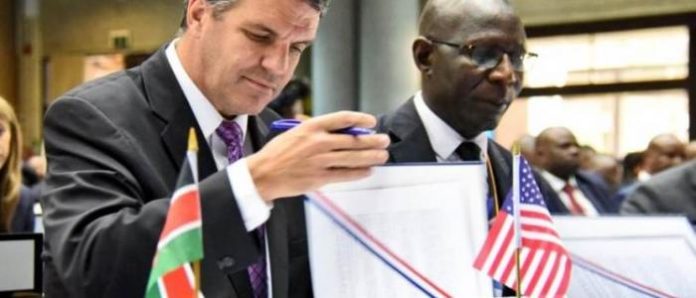
USTDA’s Director, Congressional and Public Affairs Thomas R. Hardy (Left) and Lerionka S. Tiampati

U.S. Trade and Development Agency has awarded solar power and storage systems to the Kenya Tea Development Agency Power (KTDA Power) Company Limited to high energy costs, with unreliable power at many tea factories across the country.

KTDA Power is one of the largest private tea management agencies in Kenya and is ranked among the world’s largest exporters of black tea.

A feasibility study will carry out by K&M Advisors LLC (Chevy Chase, MD) for project that will provide KTDA Power with access to an additional reliable energy source separate from Kenya’s national grid hence reducing operating costs at tea factories.

“We are pleased to continue our partnership with KTDA Power on a project that will support the goals of Electrify Africa,” said USTDA’s Director, Congressional and Public Affairs, Thomas R. Hardy. “At the same time, this project will create new opportunities for U.S. businesses looking to work in Kenya.”

“We are excited to work with K&M Advisors to bring solar renewable generation to our tea factories,” said Lerionka S. Tiampati, the CEO of KTDA Holdings Limited. “We look forward to building on our previous success with USTDA, which resulted in the development of three operational hydropower projects and an additional seven projects that are at an advanced stage of implementation.”

Alfonso Guzman, President of K&M Advisors said, “K&M is honored to have been selected as advisor to KTDA Power on this project and looks forward to helping Kenyan tea farmers expand their use of renewable energy. K&M is also pleased to continue its successful collaboration with USTDA to promote U.S. exports to Kenya.”

Mr. Hardy signed the grant at the AmCham ‘Big Four’ Summit with Japheth Bulali Sayi, the General Manager at KTDA Power. CEO of KTDA Holdings Limited, Lerionka S. Tiampati, witnessed the signing.

Stories Continues after ad

We must ensure that there is less trans-boundary corruption within Africa – UN

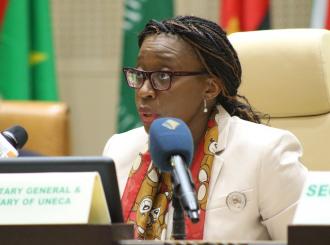
UN Executive Secretary of the Economic Commission for Africa Vera Songwe

UN Executive Secretary of the Economic Commission for Africa Vera Songwe has warned against the impact of corruption on Africa’s development.

According to an ECA’s report, “Measuring corruption in Africa, the international dimension matters”, there have been at least 1080 cases of trans-boundary corruption in Africa between 1995 and 2014, 99.5 per cent of which involved non-African companies and were mostly related to fiscal evasion issues.

Speaking in the 31st Ordinary Session of the Assembly of Heads of State and Government of the African Union (AU), Nouakchott, Mauritania Songwe said, experts fear that corruption could be having even higher costs at the less visible social level and on women.

“Corruption in public services also affects the quality of social services. In the poorest countries, half of the people pay bribes to access basic services such as education, health or water and affects more than 60 per cent of public procurement in Africa and increases the cost of contracts by 20 to 30 per cent.

She said, we need to be aware that Africa will not be able to seize the transformation opportunities highlighted by regional and global development frameworks if this problem persists.

In Africa, public expenses, women’s rights, the energy sector and intellectual property rights are among the areas suffering from the most worrying consequences, within countries, there is also a growing need to take into account corruption between countries and regions.

“As we work towards the African Continental Free Trade Area (AfCFTA), we must ensure that there is less trans boundary corruption within Africa”, Ms Songwe added, hoping that “by the time we get to Agenda 2030 and certainly Agenda 2063, corruption will no longer be Africa ’s cancer”.

Stories Continues after ad

Protocol to Eliminate Illicit Trade in Tobacco Products is on

On June 27, 2018, the conditions for the entry into force of the first legally binding instrument adopted under the WHO Framework Convention on Tobacco Control (WHO FCTC) were met, paving the way to eliminate illicit trade of tobacco products.

“The Secretariat of the (WHO FCTC) is pleased to announce that with the ratification of United Kingdom of Great Britain and Northern Ireland the necessary number of Parties to the Protocol to Eliminate Illicit Trade in Tobacco Products (the Protocol) has been reached for its enter into force in 90 days,” said the agency in a press release.

According to the press release, the achievement is a milestone in the history of tobacco control. It says the Protocol contains a full range of measures to combat illicit trade distributed in three categories: preventing illicit trade, promoting law enforcement and providing the legal basis for international cooperation.

The Protocol aims to secure the supply chain of tobacco products, through licensing, due diligence and record keeping, and requires the establishment of a global tracking and tracing regime that will allow Governments to effectively follow up tobacco products from the point of production to the first point of sale.

In order for it to be effective, the Protocol provides for intensive international cooperation including on information sharing, technical and law enforcement, cooperation, mutual legal and administrative assistance, and extradition, says the press release.

The fulfilment of the legal requirements for its entry into force, will allow 40 Parties to hold the First session of the Meeting of the Parties to the Protocol (MOP1) in Geneva, Switzerland, from October 8-10, 2018 following the Eighth Conference of the Parties (COP8) of the WHO FCTC.

WHO Director General, Dr Tedros Adhanom Ghebreyesus said: “The entering into force of the Protocol will send a clear message of the international community’s commitment to combating illicit trade in tobacco products worldwide. Its implementation will represent an important effort of the need for multilateral cooperation in order to solve international problems. The entering into force of the Protocol represents the first step in the path for the elimination of illicit trade of tobacco products worldwide”.

Commenting on the accomplishment, Dr Vera Luiza da Costa e Silva, Head of the WHO FCTC Secretariat, said: “With the entering into force of the Protocol, we have made yet another step in our global efforts in tobacco control. To tackle illicit trade is to tackle accessibility and affordability of tobacco products, to be more effective on the control of the packaging and to reduce funding of transnational criminal activities whilst protecting the governmental revenues from tobacco taxation. I am very proud of this historical achievement and also to function as Secretariat to two legal instruments.”

The Protocol is a new international treaty. It was built upon article 15 of the WHO FCTC and adopted by the Parties to the WHO Framework Convention on Tobacco in 2012. The Protocol was developed in response to the growing international illicit trade in tobacco products, which poses major health, economic and security concerns around the world. It is estimated that one in every 10 cigarettes and tobacco products consumed globally is illicit.

Uganda is not a Party to this protocol as it has not appended its signature on it. However its neignbours Kenya, Tanzania and the Democratic Republic of Congo are signatories to the Protocol though the three countries have not ratified the instrument yet.

Stories Continues after ad

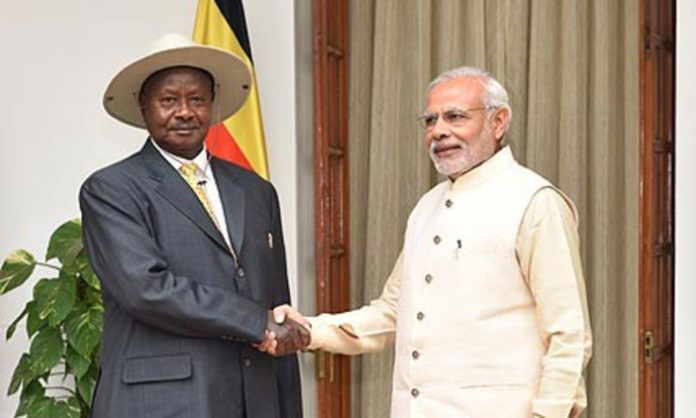
Uganda Indian community fight ahead Modi visit

A controversy has hit the Indian Community in Uganda with some members threatening to boycott the upcoming Visit of India Prime Minister Narendra Modi.

Modi is slated to visit Uganda on July 24, this Year accompanied by a huge business delegation.

At the heart of the crisis is the Indian High Commissioner to Uganda Ravi Shankar who is being accused of conniving with Former Rubaga North legislator, Singh Katongole to swindle billions raised by the community towards organising the event

The envoy is accused of causing factions in the Indian Association that has held more than 20,000 Indians in Uganda since 1922.
Eagle Online has established from credible sources that the High Commissioner is silently dealing with Singh Katongole and others members such as Pradeep Karia a Director of Property Services to deny some Indians opposed to his tendencies an opportunity to interface with some of the Multi-billionaires who will accompany Modi on a historic visit.

Modi is expected to hold bilateral talks and also open the convention Center in Entebbe.

Ravi Shankar and Singh are working secretly with Pradeep by playing politics with other Indians which this will leave Indian Association torn apart into pieces yet they are known for Unity.

What is at the heart of the bitter row is the money raised through fundraising.

Indians are also accusing them of pocketing business deals with Pradeep Karia and his Partner in business Silu Virani.

It’s not the first time for Pradeep to be in such scandals, recently he was sighted in corruption allegations and land wrangles with also Toshik Patel and the embattled Land Ministry for grabbing Indian properties.

Stories Continues after ad

Of family and tribal appointments at UETCL

The nepotism, tribal favoritism and clique-ism at Uganda Electricity Transmission Company Limited could be deeper than we had earlier wrote.

Early this week, we published a story on how, because of conflicts caused by different top bosses trying to have their relatives in lucrative projects, contractors are abandoning work and therefore stalling government targets.

Just after the story went up, a whistleblower from within UETCL texted us saying we just scratched on the surface of a very big problem.
“This article has unsettled a lot of people within the UETCL but I can give you more information if you promise to protect my identity,” the text from the whistleblower went, and a meeting was immediately arranged.

It is a story of a Chief Executive Officer apparently hiring his son, looking on as staff form cliques paying allegiance to different board members and undermining due process. It is a story of heads of departments using their positions to favor female staff they are emotionally involved with. It is a story of lucrative jobs and field trips being reserved for sons and daughters of the bosses and or those who are willing to offer emotional love portions to the bosses.

“If you want to go to a field trip which has some good per diem, you have to include a son or daughter of a boss or their girlfriend within the company so that your requisition gets processed and approved very fast,” the source said.
The identity of the source shall be protected for the sole reason that the information they shared can make them lose their job.
According to the source the Chief Executive Officer, Mr. Willy.K.Kiryahika, has a son named Henry Kamugisha who he brought in while he was serving as Deputy CEO.

He added “Ever since his father became CEO he comes to office whenever he feels like. He works as the Project community liaison officer on the Kawanda-Masaka project,” the source said adding that the Mr Edward Mutesa, the principal projects officer who is supposed to supervise him, gave up on him for fear of rattling the relationship with the Chief Executive Officer.
When contacted, Mr Kiryahika said he was out of the country but will have to involve his lawyers before he gives any further comment.
“Unfortunately I am out of the country. I cannot respond at this point. Need to consult my lawyers,” a text message he sent read.
Mr Kamugisha, on his side, said he was employed through the right procedure.
“I applied like any other. I sat the interviews and was successful,” he said adding, “It is not true that I come in whenever I want. I always report to work and the results can speak for themselves. The person who gave that information is disgruntled. There is no truth in them.”

Mr Mutesa told Eagle Online that whoever is accusing him and the top managers is frustrated after management decided to discipline errant employees at the government parastatal.
“We are tightening the nuts on errant characters,” he said, adding that he doesn’t have any sexual relationship with Ms Bekunda as alleged.

The whistleblower had told Eagle Online that Mr Mutesa’s raise was a result of cliqueism where a board member pushed to manage to create for him a position by splitting the environment section erstwhile headed by Mr John Othieno into two departments. That Mr Mutesa also has a love relationship with one of the staff who he endlessly gives trips.

At UETCL, one of the most lucrative assignments is working in projects. There is a lot of field trips and donor funding. The Mbarara-Nkenda 132kV transmission line, 160km and Tororo-Lira 132kV transmission line, 260km alone are worth $34 million (Shs122.4 billion) and $31 million (Shs111.6 billion) in donor funding respectively.

So what the bosses do, the source said, is to bring in their relatives on a less questioned six months contract and later promote them from within to three years or five years depending on what avails itself first.
A three year contract has all the benefits of medical, gratuity, and leave allowance. Whereas a six months contract does not get anything, there is no much difference in their job description.
“Deputy CEO, Mr Kalibala Valentino brought in his daughter(name withheld because we were unable to get her phone number to get her said of the story) to work as Project community liaisons officer on the Gulu Lira Agago project on a six months contract.

“When she was in the sixth month, a three year contract was internally advertised and no one else bothered to apply for the job because everyone knew it was reserved for (her) so that she is elevated for to three months, which ultimately happened,” the source said.

Efforts to reach Mr Kalibala for his side of the story were fruitless as the official could not answer our calls or respond to our messages.

UETCL’s ‎Principal Public Relations Officer Pamela Nalwanga Byoruganda said all workers at the company are qualified and that they were recruited into service via an open recruitment process.

She said those accusing management of incompetence, nepotism, favoritism and others are disgruntled fellows who want to tarnish the company’s image especially in government, donors and the like.

“Please do not run that story. It has no truth in it. They are lying,” she said.

Asked whether the company’s top executive was not competent as alleged by the complainant, Ms Nalwanga said, “Why was he selected if he was incompetent? My boss is steering the company as mandated and with competence.”

Member of Parliament and vice chair of the Equal Opportunities committee, Hellen Asamo said they have not received any complaint but if the committee receives a complaint with the supporting evidence, they will petition the Speaker of Parliament to have an investigation launched.

“There is nothing wrong if a relative of a person with required qualifications is employed in the same organization as long as they have followed the right procedures. If there is evidence to the contrary, the committee can petition the speaker for an investigation,” she said.

Stories Continues after ad

NSSF launches Shs3.2b mega building in Jinja Town

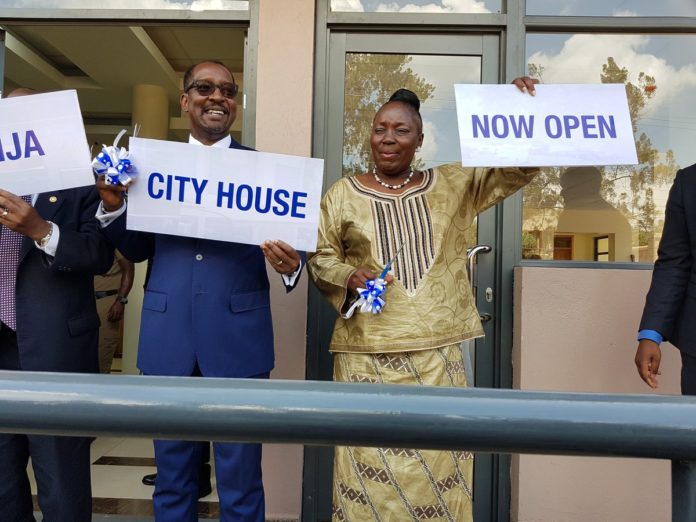
The National Social Security Fund (NSSF) development plan continues to be on track following the launch of a modern building worth shs3.2 billion in Jinja Town eastern Uganda biggest commercial city.

The three-storied building Jinja City House, located at the heart of the town has a total built up space of 1500 square meters of which 1200 square meters will be rented out with some space left for to house its offices.

It is a mixed use development with commercial facilities, office space and retail shops

The NSSF management have been investing some of its savings (6 percent) in real estate projects.

Their other real estate projects include the Mbuya 1 & 2 project valued at Shs14.9 billion which will be completed in two months, Lubowa housing project that kicked off last September, Mbarara mixed development project that is projected to be completed by end of this year.

Addressing guests at the launch, the Fund’s Executive Director Richard Byarugaba said the project “is a step towards realizing the fund’s real estate strategy, focused on creating value for its members through constructing commercial buildings and housing estates in major towns in Uganda.”

“He said NSSF despite such development continues to provide long term credit to the localprivate sector. “We are contributing to the growth of the economy by providing long term capital for the private sector,” he said.

He urged to the government and Parliament to fast track the bill that will reform the NSSF Act so that it can cover more Ugandans.

The Speaker of Parliament, Rebecca Kadaga who was the guest of honor lauded NSSF for investing and contributing to economic development of major towns especially Jinja town.

She said she would support the Social Security Bill as soon as it appears in Parliament.

“I am aware that cabinet recently passed a resolution to amend the existing NSSF act to extend social security covered to more Ugandans who are not covered under the existing law. I look forward to receiving this bill and will talk to concerned parties to make sure it is tabled in time,” she said.

The Chairperson NSSF Board, Patrick Byabakama Kaberenge said the completion of the Jinja City House and the other upcoming real estate projects would go a long way in covering the housing gap in Uganda.

NSSF is currently one of the biggest pension fund in Africa in terms of total assets, with an estimate of Shs9.498 trillion.

The Fund has invested in three major asset classes, 77 per cent in fixed income, 17 per cent inequities and 6 per cent in real estate. Currently NSSF pays 11.23 per cent in interests to its clients.

Stories Continues after ad