Stanbic Bank
Stanbic Bank
17.6 C
Kampala
Stanbic Bank
Stanbic Bank
Home Blog Page 1528

A Pass to compete in Royal Ascot Goat race

Naiya K ,Sheena Ruparelia , UBL brand Manager, Brenda Namutebi, singer Bebe Cool, and Elvis Sekyanzi pose with the Goats.

After enjoying the FIFA world Cup 2018 finals in Russia, Ugandans are preparing for this year’s Royal Ascot Goat Races on August 25 at striking Speke Resort Munyonyo on the shores of Lake Victoria.

On July 13, organisers held the official media launch of the event at Speke Apartments in Kampala. The evening fete attracted journalists and other guests such as artists and musicians including Bebe Cool who entertained guests briefly.

Babe Cool and Elvis Sekyanzi bought their goats for the races at Shs 1 million and Shs2.5 million respectively in an auction presided over by comedian Idringi Salvado, who was the d MC at the same time. Bebe Cool named his goat A Pass while Sekyanzi named his Black, the names that will be tagged on the goats during the races. Other individuals and companies are expected to buy the goats for the races.

The Royal Ascot Goat Races, have been an annual Kampala event since 1993 and Ugandans love it. The money they pay to watch the races goes to charity and for this year it will go to Kyandondo Rugby Club that is helping kids play on weekends. The money caters for the kids’ drinks and snacks.

Spectators can also bet on the goats for a chance to win some cash of their own. Goats do a preview saunter around the track so bettors can gauge potential performance.

Formerly managed by the defunct Crane Bank, the event had rapidly become popular with organisers choosing to model it after the Royal Ascot horse races in England, complete with amazing outfits and hats.

Kampala socialists and families are expected to go the races as previous events had become a favourite spot in the Ugandan sports calendar.

Sheena Ruparelia, one of the orgaisers said best dressed couple and the person wearing the classiest hats, dresses, shots stand to win various prizes. The hospitality tent, according to organisers is ready for hiring.

The day will include action packed competitions with big prizes to be won, food and drink outlets and a wide variety of other entertainment for both adults and children. An aerobatic display, fireworks display and the evening entertainment are expected.

This year’s event is sponsored by companies like Sanyu FM, Silk Events, Speke Resort Munyonyo and Tusker Malt Lager the platinum sponsor.

Watchers are expected to be amazed as goat handlers push a padded horizontal barrier on wheels around the track to keep the goats from grazing, fighting or running backwards during the race.

Stories Continues after ad

Bankers’ conference to focus on stability of financial institutions

UBA Chairman Patrick Mweheire

Uganda Bankers Association (UBA) is set to hold the second Annual Bankers Conference (ABC) 2018 under the theme: Financial Sector Stability: Managing Risk in a Growing and Fast Changing Environment”.

The one-day conference will be held on Tuesday at Kampala Serena Conference Center, where bankers will discuss strategies aimed at keeping Uganda’s 24 commercial banks stable in the fast changing environment.

The UBA Chairman, Patrick Mweheire said: “The event will bring together regulators, practitioners and various industry experts from international, regional and national spheres involved in facilitating and delivering financial and banking services, to discuss issues, trends, drivers and the dynamics that are increasingly shaping sustainability strategies in banking, finance and the overall development eco system.”

The first conference in 2017 discussed the future of banking and it is against that background that local bankers are building on for this year’s conference, said Patricia Amito Lutwama, the Association’s head for communications and corporate affairs.

“This year’s conference will aim to deliver constructive discussions and recommendations on a range of subject matters affecting the performance and stability of the financial sector at the global, regional as well as domestic level,” she said.

Mweheire said that the banking and overall financial sector environment has witnessed a number of developments, innovations and trends that present opportunities as well as risks. “It is important that in this fast changing environment, we ensure there is both growth and stability,” he said.

He said a number of recent developments emanate from both domestic and external factors. Externally, there is growing uncertainty arising from the shifting geopolitical agenda, skewed towards protectionism, creating an unpredictable environment for players in the financial sector who provide the much-needed financing for cross border operations of multinational companies.

In addition, technological innovations have aided the creation of new digital platforms that present new opportunities, enable reach to previously unserved market segments, widen choices and are available 24/7, but equally present risks that exist in the ICT space.

Mweheire said financial institutions are increasingly depending on ICT for critical aspects of their operations and risks in ICT therefore mean risks to the stability of the financial sector. Domestically, the financial sector has witnessed stress in the recent past leading to closure of some financial institutions.

The amendment of the Financial Institutions Act 2004 and other related legislation have strengthened risk management and provided the environment for the introduction of new products and services while increasing reach and penetration of financial services.

The developments, officials note, have create opportunities for growth as well as disruptions in different magnitudes. “Instability in the financial sector can have far reaching consequences to the wider economy by negatively affecting investment, trade, incomes and has the potential of exacerbating poverty and income inequality,” the UBA officials say.

Stories Continues after ad

We must strategize in line with ministry priorities- Defense Minister

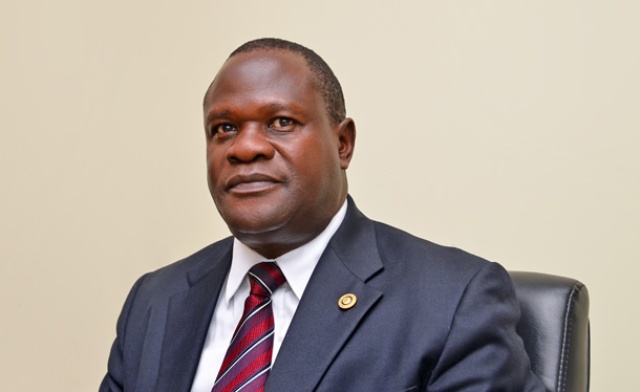
Clerk to Parliament, Adolf Mwesige.

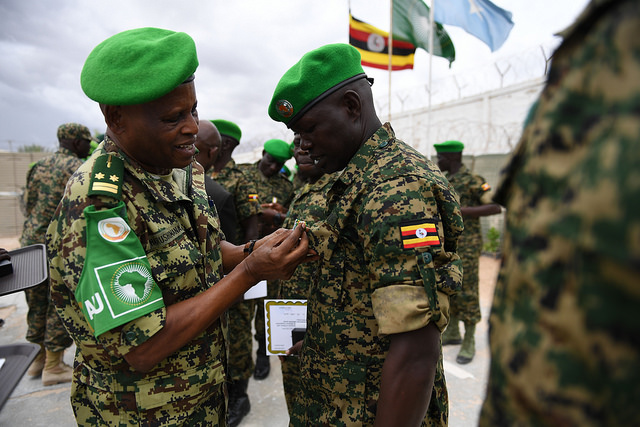
Minister of Defense and Veteran Affairs (MODVA) Adolf Mwesige has implored key leaders in his ministry and Uganda Peoples’ Defense Forces (UPDF) to deeply discuss the achievements and challenges in previous financial year with a view of adopting a planning and implementation strategy that is in tandem with priorities set within the Ministerial Policy Statement.

Speaking after the conclusion of the two days annual strategic planning retreat held in Entebbe, Mr. Mwesige said the retreat aimed at refining and communicating the Ministry’s priorities in order to guide on implementation of the annual strategic plan.

He said the retreat reaffirmed the vision of the Ministry to transform UPDF into a modern, professional, efficient and accountable force anchored on a strong civil military partnership.

The Chief of Defence Forces (CDF) Gen David Muhoozi urged all Commanders and Chiefs to ensure that their plans are aligned to the overall Defence Strategy taking into account the available resources adding that such an undertaking will enable UPDF to deliver on its mandate without going beyond the available budget.

He further called upon Commanders to maintain team spirit and good management practices as part of the UPDF tested revolutionary methods of work.

The meeting was attended by the Minister of State for Defense – General Duties Hon Col (Rtd) Sam Engola, Minister of State for Defense for Veteran Affairs Hon Lt Col (Rtd) Dr. Bright Rwamirama, Permanent Secretary Mrs. Rosette Byengoma, Deputy CDF Lt Gen Wilson Mbadi, Senior Defense staff, UPDF Service and Division Commanders as well as Chiefs.

Stories Continues after ad

KCCA FC and Esperance to face off in Tunisia

On-form KCCA striker Muhammad Shaban will be the man to watch

Kampala capital city authority (KCCA) FC has named 34 officials on the contingent to Tunisia for the CAF Champions League tie against Esperance.

KCCA FC and Esperance face off in match day three of CAF Champions League on Tuesday 17th July 2018 at Olympique De Rades Stadium, Tunis. Esperance lead group A with four points while KCCA FC are third with three points.

The contingent includes 18 players, seven coaches, two doctors, two media officers and five officials.

The team travels later in the evening aboard Fly Emirates and will make a stopover in Dubai before setting off to Tunis the final destination.

The contingent includes;

Juma Marjan Abdul Hamid (Leader of Delegation)

Players: Tom Ikara, Charles Lukwago, Bernard Muwanga, Timothy Awany, Fillbert Obenchan, Hassan Musana, Mustapha Kizza, Isaac Kirabira, Sadam Ibrahim Juma, Lawrence Bukenya, Gift Abubakar Alli, Muzamiru Mutyaba, Nunda Jackson, Steven Sserwadda, Julius Poloto, Allan Okello, Patrick Kaddu, Shaban Muhamad.

Coaches: Manager Mike Mutebi, Morley Byekwaso, Badru Kaddu, Daniel Kiwanuka, Jackson Magera, Richard Malinga, Robert Kabuye,

Doctors: Ivan Ssewanyana, Emma Tusubiira,

Media Officers: Moses Mwanje Magero (PRO), Patrick Fred Ochieng

Administrators: Ali Nganda Kasirye, Davis Othieno, Julius Raymond Kabugo, Moses Kaddu

Stories Continues after ad

History of the World Cup Trophy

The Jules Rimet trophy

Ahead of the 2018 World Cup final in Russia, we take a brief look at the history of the iconic trophy.

The World Cup is a gold trophy awarded to the winners of the FIFA World Cup association football tournament. Since it started in 1930, two trophies have been used; the Jules Rimet Trophy from 1930 to 1970, and the FIFA World Cup Trophy from 1974 to the present day.

The first trophy was named after the third FIFA President, Jules Rimet. The Frenchman was one of the key men responsible for creating a World Cup tournament, after he passed the vote to start a global football championship in 1929.

It was designed by French sculptor Abel Lafleur and made of gold-plated sterling silver on a white/yellow marble base. It stood 35 centimetres high and weighed 3.8 kilograms.

On 20 March 1966, four months before the 1966 FIFA World Cup in England, the trophy was stolen during a public exhibition. It was found just seven days later wrapped in newspaper in South London, by a dog named Pickles. The owner of the dog received £5,000 as a reward.

On 19 December 1983, the original Jules Rimet Trophy was stolen from the Brazilian Football Confederation in Rio de Janeiro. Four men were tried in absentia but the trophy was never recovered. It is widely believed to have been melted down and sold.

The World Cup Trophy since 1974

The subsequent trophy, called the “FIFA World Cup Trophy”, was introduced in 1974. Fifty-three submissions were received from sculptors in seven countries. Italian sculptor Silvio Gazzaniga was awarded the commission

Gazzaniga designed the trophy in 1971, it was worth US$50,000. Now the trophy is estimated to be worth US$10m. The trophy stands 36.8 centimetres high and weighs 6.1 kilograms with a base of 13 centimetres in diameter. It depicts two human figures holding up the Earth.

The trophy has the engraving “FIFA World Cup” on its base. After the 1994 FIFA World Cup a plate was added to the bottom side of the trophy on which the names of winning countries are engraved, names therefore not visible when the trophy is standing upright.

The original trophy is now permanently kept at the FIFA World Football Museum in Zurich, Switzerland. It only leaves there when it goes on its FIFA World Cup Trophy Tour, and it is also present at Final draw for the next World Cup, and on the pitch at the World Cup opening game and Final.

The Cup used to be kept by the winning team until the final draw of the next tournament, however, that is no longer the case. Instead the winners of the tournament receive a bronze replica which is gold-plated rather than solid gold.

Brazil have it won five times, and they are the only team to have played in every tournament. The other World Cup winners are Germany and Italy, with four titles each; Argentina and inaugural winner Uruguay, with two titles each; and England, France, and Spain, with one title each.

Stories Continues after ad

Empower refugee host communities – Minister Hillary Onek

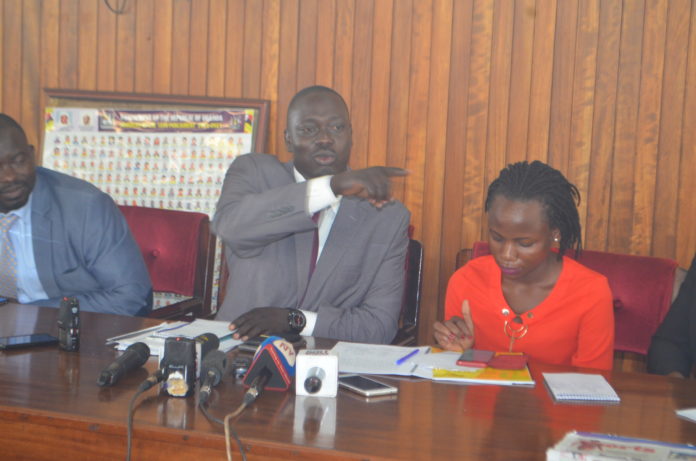
Minister Hilary Onek addresses the press at the Uganda Media Centre

Minister for Relief, Disaster Preparedness and Refugees Hillary Onek has called for empowerment of both local people and local government that host asylum seekers.

Speaking at the Dialogue on Financing Local and National Actors in Uganda’s Comprehensive Refugee Response, Mr. Onek said refugees are temporary and will eventually head back home, however their through their involvement in income generating activities, their presence should be able to transform areas that are hosting them.

Currently Uganda is hosting over 1.4 million refugees from South Sudan, Somalia, DRC and Burundi. It is estimated over 950,000 refugees arrived from South Sudan due to country’s escalating five years civil war that has left hundreds killed as others flee to save their lives.

Despite commitment to help refugees and finance local actors we have found a lot of competition from NGOs for funding; Onek said there is need to engage more local organisations to enhance funding in refugee host communities to champion the cause.

“We are re-registering the refugees so that there is no double registration, We don’t want to leave any space for corruption especially from the poorest of the poor, People who steal money for refugees deserve life imprisonment,” he said at Imperial Royal Hotel.

He retaliated that corrupt tendencies among officials especially in refugee management should stop, “I task Police to investigate and arrest those people. With permission from prime minister and the inspector general of government (IGG) we shall continue carrying out serious investigations,” he added.

State minister for local government Jenipher Namuyangu said both local communities and refugees are supported in service delivery and her ministry is committed to working with everyone to see achievement of the already set of goal of continuous support.

“Non-government organisations (NGO) help played a significant role in addressing what government can’t easily work on like disasters and emergencies,” she said.

“When refugees come, the first to welcome them are people locals, they should be helped through awareness, among other necessities,” she said.

Stories Continues after ad

Croatia Vs France: 2018 World Cup Final preview

A photo montage of Mbappe and Modric. The two will be the players to look out for in the coming final

France will take on Croatia in the showpiece of the biggest football event on earth, the 2018 World Cup final on Sunday in Russia.

This is the third all-European final in the past four World Cups, and Croatia is a debutant at this stage, being the 13th nation to reach a World Cup final. The French will be seeking for their second World Cup crown since 1998 while Croatia their first.

The two nations have met once before in the FIFA World Cup: at France 1998. It was Croatia’s first appearance at the tournament, and France’s second event as hosts. They met in the semi-final which saw Croatia take the lead through Davor Suker, only to be denied a place in the final by two goals from Les Bleus’ right-back Lilian Thuram.

They have met a total of five times since 1998. France have the edge with 3 wins to Croatia’s 0 wins and two draws between them. Their most recent meeting was an International Friendly game in 2011, which ended in a 0-0 draw in Paris.

Ivan Rakitic has set one world record already for this season. The game against England was his 70th match this season. No one in the world has played more than him! He has played 55 games for Barcelona and 15 for Croatia so far. The biggest yet is next.

Croatia’s Captain Luka Modric or France defender Raphael Varane will become only the ninth player to play on the winning team in the FIFA World Cup and UEFA Champions League finals in the same year.

Dejan Lovren is set to become only the second player to play in the Champions League final for an English club, and the World Cup final in the same year (after Thierry Henry in 2006).

This is Croatia’s first World Cup final. The 1998 tournament remains their most historical campaign at the tournament when they finished in third place and their striker Davor Šuker was the top scorer with 6 goals.

Argentinian referee Nestor Pitana, who officiated the Opening Match at Russia 2018, will be in charge of the Final at the Luzhniki Stadium.

He has already refereed four matches at Russia 2018, taking charge of Russia v Saudi Arabia (Opening Game) and Mexico v Sweden in the group stages, the Round of 16 match between Croatia and Denmark, as well as the quarter-final between Uruguay and France.

He will be assisted by fellow countrymen Hernan Maidana and Juan Belatti as the first and second assistants. Bjorn Kuipers and Erwin Zeinstra from the Netherlands will be the fourth official and reserve assistant referees respectively.

The final will take place at 6pm in Moscow’s Luzhniki Stadium on Sunday, 15 July.
Road to the final:

France: Topped Group C with 7 points. Defeated Argentina 4-3 in the round of 16. Defeated Uruguay 2-0 in the quarters and defeated Belgium 1-0 in the semifinal.

Croatia: Topped Group D with maximum 9 points. Defeated Denmark 3-2 in penalties after a 1-1 draw in the round of 16. Defeated Russia 4-3 in penalties after a 2-2 draw in the quarters and defeated England 2-1 in extra time of the semifinal.

Possible Lineups:
France: Parvard, Umtiti, Varane, Hernandez, Pogba, Kante, Mbappe, Griezmann, Giroud.
Croatia: Subasic (GK), Vrsaljko, Lovren, Vida, Strinic, Rakitic, Modric, Rebic, Kramaric, Perisic, Mandzukic.

Stories Continues after ad

After local council elections, it’s time for reconciliation

Mr. Woira

By Micheal Woira

I still continue to jubilate following the conclusion of local council (LC) elections, much as they didn’t go well in some regions of the country. Point is that at least most villages in Uganda have their own elected leaders who can mobilise them.

The election process had Ugandans exercise their right, right from the registration, the actual voting where people lined up behind their candidates, counting of voters and announcement of results.

However, the big voter turn-up on the lection day demonstrated how Ugandans value village leadership in this country. They woke up early Tuesday morning and were seen at various polling stations eager to vote. This was evidence that citizens had been longing for leaders who can serve them better.

The electoral exercise also showed that citizens can reconcile on leaders they think can serve them better, irrespective of social class, religion, tribe and political party affiliation. One psychologist says that: ‘When groups which were formally antagonistic engage in activities that are aimed at a shared future, they are more likely to develop mutual trust which is a vital step towards reconciliation in the community.’

Compromise is not a sign of weakness; it is a sign of maturity. Ugandans can now start to desist from finger-pointing, name-calling, discriminating against others and discuss how to make things better. For instance, all LCI candidates that I had chance to interact with had very good development ideas that help the country prosper. It is therefore not hard for citizens to agree on the best development ideas. We can agree on a number of them.

It is high time we realised that politics is all about compromise for the good of the country. Reconciliation is one of the core issues that all leaders must always bear in mind. All candidates irrespective of their political affiliations must avoid statements that divide the people. There is no need to play politics of hatred. Politics of hatred takes us nowhere while politics based on good ideologies builds the nation Uganda.

That said, it time to take stock mistakes during elections and chart a way forward for our destiny as citizens of Uganda. Electing leaders serves as an affirmation of the people’s right to be led by those that they choose. Those who fail to be chosen must work hard in preparation for the next election. But also have the chance to advise those in leadership.

My heart’s desire is to wish love and peace to all Ugandans. We need to move forward, get beyond the hatred and bitterness. The village elections are gone, yet still many are to be held in the near future. Those who lost in the recent elections could emerge winners in the future elections. So why hate fellow citizens for winning an election? Ugandans are one and will always remain one. That is why one of the political parties in the country has a slogan that goes: One People One Uganda…

The writer is a Media Assistant at Uganda Media Centre

Stories Continues after ad

DFCU Bank top executive resigns, poised to take over management of rival

William Sekabembe

Resignations and shareholder exits continue to wreck DFCU Bank, with the latest top executive to hand in his resignation letter being William Sekabembe, who has been the Chief Business & Executive Director since 2016.

Sources say Sekabembe tendered in his resignation letter some time back though he is waiting for the three month notice to expire before can officially move on. This was agreed as he signed his contract with employers.

Sekabembe, according to some sources could be heading to Kenya Commercial Bank (KCB) as Managing Director, even though other sources say he missed the chance in 2017 to replace Juma Kisaame, the current troubled Managing Director of DFCU Bank.

Kisaame’s contract was planned to end in 2017, but he was given more time, to align Crane Bank to DFCU operations. Sekabembe would then fully assume the top job but latest developments at DFCU Bank seem to have pushed Sekabembe away.

Sekabembe is said to have disagreed with DFCU’s purchase of Crane Bank, something that did not go well with other top managers who were in favour of the now controversial transaction that has ended in courts of law, following a suit filed by former shareholders of Crane Bank.

The last few weeks have seen Britain’s Commonwealth Development Corporation (CDC) Group Plc, the bank’s second majority shareholder seeking for buyers of its shares in DFCU Bank. Deepak Malik, the CEO of Arise B.V; DFCU’S majority shareholder with about 58 percent also resigned from the board without giving clear reasons personally.

However, DFCU says Malik chose to resign from the board, having been appointed CEO Arise B.V. and that the resignation is in fulfillment of the regulatory requirement that 50 percent of members of the board be residents in Uganda. The bank says rumours in the media are unfounded, and that the public should ignore them.

An insider in DFCU says the fight for profits and the controversial acquisition of Crane Bank are some of the reasons for the crisis at the bank. This website was told that some big shareholders are not sleeping over the suit filed by Crane bank shareholders who sued Bank of Uganda and DFCU.

Despite Elly Karuhanga, the board chairman describing the changes at DFCU Bank as normal, industry analysts say facts available paint a different picture- a bad one.

Insiders say DFCU Bank has no sufficient liquidity to lend to its clients. A source said recently managers requested BOU to lend them some cheap cash for this business but Bank of Uganda turned them down, instead advising them to borrow from other commercial banks. Analysts say that happens when the central bank is unable to lend to a commercial.

Sekabembe holds an MA, Economic Policy and Planning (2002-2004) from Makerere University. He started working at Standard Chartered Bank in 1999 as a Personal Banker. In July 2001, he joined Barclays Bank Uganda as a Prestige Banker where he rose through the ranks in nine years to become Head SME Banking in October 2008 and then was promoted to Head of Branch Distribution in December 2009.

In May 2010, he joined to Stanbic Bank Uganda as Head of Products. He joined DFCU Bank as Head Consumer Banking in May 2012. He became the Head, Corporate Banking before being promoted to Chief of Business & Executive Director in October 2016.

Sources say Sekabembe is likely to be replaced by Andrew Kabeera, the current Chief Operating Officer. Kabeera joined DFCU in May 2018 from Standard Chartered Bank Uganda. He was Head Corporate and Institutional Banking and Commercial Banking Operations.

Stories Continues after ad

July 26: Age Limit petition Judgment Day

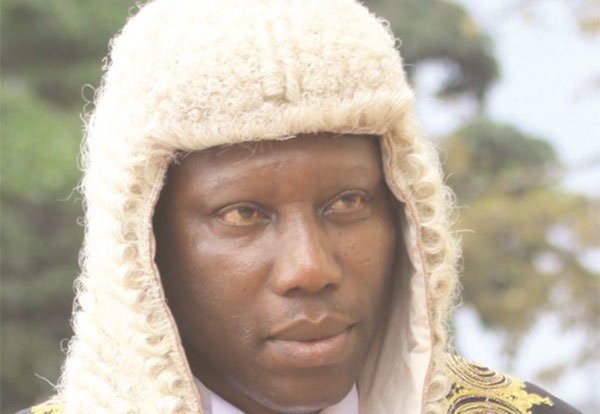
Justice Winy Dollo

Kampala: The Constitutional Court has scheduled July 26, 2018 as the date for the delivery of Judgment in the anticipated ‘Age Limit Petitions’ at the Mbale High Court situated in Eastern Uganda.

In December last year Parliament passed age limit bill lifting presidential age limit that was capped at 75 years, giving a leeway for President Yoweri Museveni who is currently 73 years to stand for presidency in 2021 and on the same day they also voted to extend their term in office from five to seven years.

Due to dissatisfaction with what transpired in Parliament, six opposition legislators led by Winnie Kiiza, Uganda Law Society, and Male Mabirizi among other concerned citizens petitioned the Constitutional Court challenging the ‘Age Limit Act’.

They argued that the process of enacting the bill was marred with violence, assault of legislators, storming of Special Forces Command (SFC) in Parliamentary chambers and violations of human rights which among others contradicts with Parliamentary rules and procedures.

It’s upon that, that a panel of five judges of Constitution Court, led by, the Deputy Chief Justice Alfonse Owiny-Dollo, Remmy Kasule, Elizabeth Musoke, Chebrion Barishaki and Kenneth Kakuru sat in Mbale and listened to petitioner’s submissions.

In court the petitioner’s layers led by Lord Mayor for Kampala Erias Lukwago, Male Mabirizi, contended that the extension of legislators tenure in office was didn’t go through legal process and thus it was uncalled for.

Stories Continues after ad