Stanbic Bank
Stanbic Bank
21.5 C
Kampala
Stanbic Bank
Stanbic Bank
Home Blog Page 1560

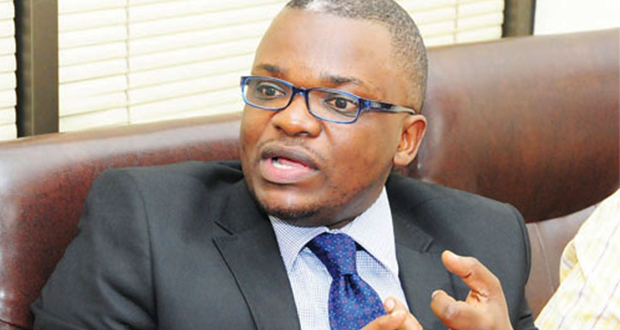
Angelo Izama calls out Lawyer Muwema on “Fakes” and “Kidnaps”

Mr Angelo Izama

Dear Editor,

When I started reading your columnist Fred Muwema’s article on “fakes” and “kidnaps” I was not expecting a tedious tour in what is at best a false equivalence between counterfeiting and the tragedy of kidnaps that is keeping families awake in Uganda.

I expected more.

The criminal economy may be similar but not the same. It may be driven by impunity and result in harm including death (as Muwema labors to point out by comparing the harm of kidnaps to that caused by counterfeit crimes) but this correlation does not draw a straight line in the sort of solutions sought to combat either. (It was not until I saw the title of Mr. Muwema at the end of the article as a Director Legal and Corporate Affairs at the Anti-Counterfeit Africa that it made sense)

Muwema does however, raise an important issue with regard to public consciousness about crime itself that is worth addressing further. He ponders some of the following questions.

If accidents like the one that ended the lives of over 22 people on the Gulu-Lira-Kampala highway kill more than kidnappers do, why are we not roused to the same anger and condemnation? Why is there a hierarchy when it comes to death that places some types of dying above others?

Muwema’s hope is that if we were all more conscious of all types of death that we would be the better for it.

Let me tackle his question first before dealing with the harm his article may have done to the criminality of counterfeit crimes and kidnaps had he treated the two separately (and dealt as a lawyer might with the complexity of the right to life and its lawful deprivation).

In the wake of the kidnap and murder of the late Susan Magara a mixture of public anger and disgust as well as the peculiarities of her case led to a tangible response by the authorities. Additional regulation of sim cards and so forth, though not surprisingly feeble, was nonetheless a real impact of that single death. Many pointed out that perhaps it was because the late Magara was a princess of the establishment with wealth and privilege that occasioned this reaction.

But the outpouring of grief from everyone recognized this disgusting crime as a stain on the public consciousness and as it turns out – most kidnaps recorded by the police affect lower income families anyway. While it holds true that there is a politics to dying, the media reporting on Magara cast her as anyone’s daughter or sister.

She was a young woman in the prime of her life whose potentially bright future was snuffed out. Ordinary people recognized this heinous crime. Magara is no different from the other (mostly female) victims since and before her death. She symbolized public anger about the evil that accompanied her last moments.

Similarly, and on occasion, ghastly sights of children, women and men entombed in burning fires of vehicles or crushed beyond recognition as motorists collide produce an outrage followed by renewed efforts to police the roads. These occasions one finds assault something about our human vulnerability that goes beyond the knowledge that death comes to us all. It is upsetting knowing that a simple act of traveling – going to work, visiting a loved one or returning home can end up in death, so abruptly.

Public consciousness it turns out is difficult to predict and does present a serious dilemma though Muwema does a poor job of problematizing it. He asks indirectly when one should summon the anger that is sufficient enough to protest or protect individuals from all types of tragedy regardless of its causes but then draws us into a comparison between deaths from kidnaps and that from counterfeit drugs. Muwema knows that our reaction is key to the response of public bodies charged with taking preventative action or investigating and punishing crimes.

Indeed however if the death of a young journalist from child birth disgusts us and causes an outpouring of grief, it does not erase the daily tragedies of mothers dying from child birth from mostly preventable causes as a result of questionable health care. And if women are dying from an act of giving life – such a twisted irony should not extirpate deaths from suicides, acts of terrorism, murder or the many ways in which life will end.

The issue raised by Muwema , in my view, is not about how we should feel when people die but what our feelings are telling us about our own views on the right to life and what we are willing to do to preserve it (through pressure on the public institutions we empower to protect us or act on our behalf). He does no favors to his cause by atomizing the victims of crime as statistics for reference in his first paragraph but while his analogy may be weak (between kidnaps and counterfeits), he raises a valuable question about individual responsibility.

As a young journalist at the height of the LRA wars it was confusing how the human tragedy that unfolded in the internment camps in Northern Uganda had little impact on the national consciousness and still does not. It seemed to me that the citizen who is untouched by the dehumanization of millions, a slow torture that continued for years, was perhaps desensitized in general to other forms of brutality committed by either individuals or the state itself. Northern Uganda was preceded by many other occasions in Luwero, in West Nile and in the over 125 conflicts documented in the country.

If collective outrage ,such as has come, on the heels of the kidnap tragedies compels public institutions into action, Ugandans are notable mostly for their lack of outrage which may explain the inertia, lethargy and general ineptitude of institutions that preserve our common humanity through protecting the right to life. To circle back to Muwema’s underwhelming analogy – the rigor mortis of public response is institutional yes, but it draws from the millions of times individual Ugandans treat the tragedies of their neighbours as not their own. In so doing they have normalized a toxic culture where the right to life is not taken seriously.

In fact one can argue they have actively endorsed it because in the absence of the outrage that Muwema seeks – a daily culture of commodifying tragedy has taken root. Desensitized citizens are focused on selfish materialism ( like the fellows who robbed the victims of the Lira bus tragedy and others) withdrawing their participation in public causes for mostly private gains. There are too many examples of this but one sees it most in how institutions respond to the occasions of public protest. Rather than mobilize individual responsibility most of the resources that go into regulation is in some form of procurement. I recall a very senior health official telling me how “cancer was the new HIV/AIDS” to explain how there was a new feeding frenzy for aid dollars going into cancer to replace the ones that were being taken away from HIV/AIDs. He saw it, like his colleagues, as a chance to eat. Public bodies when robbed of rightful protest and encouraged to focus on private gains simply become middlemen and not arbiters and protectors.

In Muwema’s case therefore while the criminal economy may appropriate similar means (like poorly regulated payment systems) I wanted to draw a more solid line between the market for criminality and the culture that feeds it. Muwema points out that buying counterfeit products aids the common market for criminals – it is tenuous, but he does make a point. A larger point here exists which is that fragility of regulation of counterfeit products is down in my book to the normalization of common assaults on our humanity to which we hardly protest. Rather than commit resources to the public interest – most regulators today are little more than a business for the industries they preside over allowing for their administrators to create a market for the extraction of rents.

It brings me to the unfortunate death of Ms Magara.

The public reaction was so intense that like others I recognized her death to be an important inflection point. I commissioned a painting with an art collective in Nalya, a portrait of her which is available for viewing ( at Fitsgerald Art Studio on the 2nd Floor of Metroplex Nalya). In the course of doing additional research about her specific case I found out that Magara senior, her father was one of the principal suppliers of ethanal (he owns and operates a large plant in Hoima). The ethanol he supplies for industrial use mostly ends up as a raw product for the multi-billion market for sachet alcohol amongst others.

When I met John Magara himself (to give him a reproduced copy of the portrait of his daughter) I pointed out this business to him as one of the sources of tension a businessman like him may face. It is a public secret in government circles that this sector like the betting industry is dodgy. He did not preclude that the industry may have contributed to the toxic terrain that forms the back drop of the tragedy that befell his family.

Courtesy Photo: Late Suzan Magara portrait, “the Lady” painted by Daniel Lagen.

Sachet alcohol is a barely concealed “illegal “market. It hides in plain sight. This year the powerful alcohol lobby managed to avoid taxes (even as the government sought to tax everything that breathes and moves) a sign of their power and influence. Regulators have failed to do the common-sense thing which is to limit or ban the sale of these products which are ravaging Ugandan communities – sold mainly to minors.

One can draw a causal link between many tragedies and this industry. The fact that it is barely legal notwithstanding the failure of effective regulation is not baffling. The choices made by public authorities not to touch the industry is because they have been so empowered by the lack of protest of the public.

So while Muwema did not drive this point home as strongly as I would have liked – individual choices do add up to pressure on regulators until they don’t.

Mr Izama is a Writer and Consultant

Stories Continues after ad

Fight fakes to fight kidnaps

Mr. Muwema

By Fred Muwema
According to the Global Kidnap index of 2014, Uganda averaged 0.6 kidnaps per 100,000 people. This is just lower than Burundi but is far lower that the kidnap rates in Belgium, Canada, UK and France which stand at between 3.5-10.0 per 100,000 people.
Each country has unique factors that account for the incidence of kidnaps. There is a lot of talk of poverty and unemployment being the cause of the recent spate of kidnaps in Uganda. I have noticed that the media is reporting many cases of kidnap the same way as it is reporting many cases of fake and substandard products. I don’t think this is a mere coincidence; there must be some relationship between the kidnaps and fakes.

The fact of the matter is that there is no difference between a person who takes a ransom from a kidnapped woman or her family and a person who takes your money and dupes you with a fake product or service. Both set of actors are perpetrators of a crime as both take your money and injure or kill you, both are indifferent to your wellbeing and safety and both are only motivated by profit.
The difference between the two is that the dangers/effects of consuming fake products are concealed. An example is a fake cosmetic which will cause cancer after two years or a fake drug which will damage your liver and put you to death in three years.
The other difference is that with fakes, you don’t lose your personal liberty even though your freedom of choice may be lost or constrained. On the other hand, the dangers/effects of a kidnap are more visible, they are felt instantly, often lead to faster injury or death, and your liberty and freedom is taken away immediately.

A death is a death howsoever, it is caused. Every death is very painful whether the bereavement is caused by contaminated meat or a kidnap. The 10 Ugandans who die every day in road accidents most of which are caused by fake brakes, tyres, adulterated fuel etc are not any less or more important than the seven women who have been kidnapped and killed in Uganda in the last four months.
I still don’t understand the modern criminal law parlance which tends to give prominence to capital offences involving murder more than the lesser offences of counterfeiting which also involve murder. According to the Global terrorism index of 2015, 38,000 people were killed around the world due to terrorist activities which included kidnaps.
A World Health Organisation report of 2011 indicated that more than 700,000 Africans, many of them Children below five years, were killed by fake anti malarials and Tuberculosis drugs. What this demonstrates is that both kidnap with murder and counterfeiting with murder are crimes against humanity which must be given equal prominence.
I think it is time we started being consistent in our condemnation of all death and all its various causes instead of cherry picking some deaths and causes over others.

As a country, we are so used to the presence of fake and substandard in all aspects of our daily lives that it is influencing the way we behave and relate with each other. Can you imagine that even in the midst of the sad tale of kidnaps, Ugandans have still managed to fake 20 kidnaps out of the 42 reported kidnaps?
Why do you still doubt that we have a fake and counterfeit culture in Uganda which again because of fakeness, we are ignoring? My sense is that it is the affinity for fakeness which is driving the kidnaps as a primary cause more than the unemployment and poverty. If anything, most of the people reported to be involved in the kidnaps are said to operate sophiscated networks which are beyond the reach of many poor/unemployed Ugandans.
For as long as being fake [which includes buying and selling fake products and services] is an accepted value, norm and way of life in Uganda, the kidnaps and other criminal activity will not surprise.

As you buy fake products for your child to go back to school, you should know that you are re-enforcing the culture of faking in Uganda which includes the new trends of kidnapping. Have you ever wondered why Uganda is flooded with fake phones which are used in the kidnaps? It is because most Ugandans have provided a big market for these fakes which are now used as a lethal weapon against them.
Why it is that ransom is paid through mobile money and yet the culprits pick it from the cash merchants undetected. It is because the necessary safeguards for mobile money payments that should be included in a national payment system are not there due to the absence of a law for the last 10 years. If it is not a spell of fakeness that has engulfed us, then what is our case?

Fred Muwema
Director Legal & Corporate Affairs
Anti-Counterfeit Network Africa
25th May, 2018

Stories Continues after ad

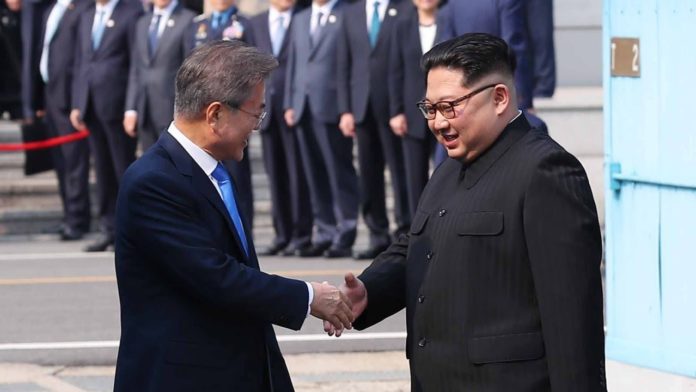
Korean leaders meet in surprise summit

Korean leaders

The leaders of North and South Korea have met in the demilitarised border area between the two countries.

The meeting is only the second between South Korea’s Moon Jae-in and the North’s Kim Jong-un.
It comes as the two sides continue efforts to put a historic US-North Korea summit back on track.

On Thursday US President Donald Trump cancelled the summit, scheduled for 12 June, but later suggested it might still go ahead.
The latest talks were held on the northern side of the Panmunjom truce village, between 15:00 and 17:00 local time (06:00 and 08:00 GMT), Mr Moon’s office said.

“Both leaders exchanged opinions… for the successful holding of the North Korea-US Summit,” it added, saying that Mr Moon will announce the outcome of the talks on Sunday morning.

 Trump hints at reinstating N Korea summit
 Rush to buy Trump-Kim coin after summit cancellation

The talks between Mr Trump and Mr Kim, if they were to go ahead, would be focused on ways of denuclearising the Korean peninsula and reducing tensions.
What has Trump said about talks with Kim?

After cancelling the scheduled summit, blaming North Korea’s “tremendous anger and open hostility”, Mr Trump tweeted on Friday that “very productive talks” had taken place with the North on reinstating the summit with Mr Kim.
“We’re gonna see what happens. We’re talking to them [North Korea] now. It was a very nice statement they put out,” Mr Trump told reporters at the White House in Washington.
He was referring to comments from the North’s Vice-Foreign Minister, Kim Kye-gwan, who said that Mr Trump’s decision was “unexpected” and “extremely regrettable”, adding that Pyongyang was willing “to sit face to face at any time”.
 Analysis: Decoding Trump’s letter to Kim
 ‘My country was trying to test Trump’
While Mr Trump said in a letter addressed to Mr Kim that he had cancelled the “long-planned” meeting “for the good of both parties”, he also said that “wonderful dialogue” had recently taken place and that he was still looking forward to meeting the North Korean leader.
What do they mean by denuclearisation?
While the goal of both sides is said to be denuclearisation, what this actually means to Pyongyang and Washington appears to differ.
US officials have said they would like to see the complete and irreversible dismantling of the North’s nuclear programme and weapons, allowing international inspectors to check every step of that process, before any talk of sanctions being lifted.

For North Korea, denuclearisation means a much more reciprocal agreement. If Pyongyang were to give up its nuclear assets, it would like to see a comparable gesture from Washington.

 North Korea’s missile and nuclear programme explained
 North Korea crisis in 300 words

The US has a large military presence in South Korea and in Japan – both of which North Korea would expect to be scaled down. It also wants assurances that its survival as a state would never be in question.

Doubt was cast over the scheduled summit when North became angered by comments from senior US officials, who made comparisons with Libya. There, former leader Colonel Gaddafi gave up his nascent nuclear programme only for him to be killed by Western-backed rebels a few years later.

What happened at the previous Kim-Moon meeting?
In April, the leaders of both Koreas held a historic meeting at the border, promising to end hostilities and work towards the denuclearisation of the Korean peninsula.

The rare dialogue – the first time the Korean leaders met to hold talks since 2007 – came after months of improving relations between the two countries.

 Five key moments from the Kim-Moon meeting

At the carefully choreographed meeting, Mr Kim said that he wanted to “write a new chapter” for the region’s troubled history. “New history starts from now, at the historic starting point of an era of peace,” he said.

Future economic co-operation between the Koreas was also discussed, and Mr Kim admitted to Mr Moon that the North’s critical infrastructure was in need of improvement.

Such projects are likely to have suffered under international and US sanctions, imposed on the North as a reaction against its nuclear programme and missile tests.

Stories Continues after ad

Special sittings for regional assembly resume Monday

Inside Kenya Legislative Assembly Chambers where the regional representatives will be meeting starting Monday for a special sitting.

Kampala: The East African Legislative Assembly (EALA) is on May 28th scheduled to resume its special Sittings in Nairobi as legislators waits for the tabling of the EAC Budget Speech for the Financial Year 2018/19.

Last EALA approved the bloc’s budget of $110,130,183million to facilitate its administrative purpose however according to sources, 2018/19 budget is expected to shoot up to $15 million, an increment of $4million.

The EAC Budget speech is expected to be delivered on June 4th, 2018 by the Chair of the Council of Ministers and Assembly is subsequently expected as is part of its mandate to debate and to approve the contents of the Budget speech, the key activity of the EAC calendar.

In the Fifth Meeting of the First Session of the 4th Assembly that is running until June 15th, 2018 in the Kenyan capital, legislators are expected to debate various bills including the EAC Community Supplementary Appropriation Bill, 2018, the East African Community Appropriation Bill, 2018 and the Administration of the EALA (Amendment) Bill, 2018.

Topping the packed agenda of the Assembly, is a Special Sitting is expected to be addressed by H.E President Uhuru Kenyatta at a later date to be communicated.

Over the three week-period, the Assembly will interact with various stakeholders and citizens in a calculated move to collect views to effectively undertake its mandate and enhance its representation mandate.

The interactions include sessions with the Kenya Private Sector Alliance (KEPSA) the International Committee on the Red Cross (ICRC) and engagements with the Civil Society Organisations within the agriculture sector as the 3rd EAC Agriculture Budget Summit, 2008 gets underway in Nairobi on May 31st, 2018.

Stories Continues after ad

Bebe hides from paparazzi after he’s found active at a beer event in Ramadan

Camera shy: The musician ducked from the flashes after he was found active at a beer event during Ramathan

Kampala: Musician Bebe Cool was one of the artistes lined up for the launch of Campari Group, a major player in the global spirits industry at Skyz Hotel, Naguru – Kampala.

After performing at the pompous party, he was swarmed by journalists for an interview as always.

Surprisingly, it wasn’t business as usual as the ‘Boomerang’ hitmaker turned down the request on grounds that he couldn’t give an interview in a place surrounded by alcoholic drinks.

He revealed that he was among the Muslims across the globe who are observing the month of Ramadan.

Nevertheless that never stopped him from entertaining his fans as guests were treated to all tribes of drinks, including Campari, Skyy Vodka, American Honey Liqueur and Bulldog London Dry Gin some of Compari Group’s products.

Speaking at the event, Campari Regional Manager Quintin Mass, said, “We are pleased to announce our entry into Uganda because Campari meets the promise of daring to be different by sharing an exceptional experience, and Ugandans will love what we are bringing to their tables in bars, restaurants, hotels and homes countrywide.”

He added that entry into Uganda aims to enhance Campari Group’s premium spirits distribution business and will reach out to new consumers of diverse adult age groups in East Africa’s most vibrant centre of entertainment and leisure.

“Campari will make use of an innovative and highly efficient national distribution system into the trade, with an extensive countrywide network of 112,000 outlets across the country.”

He further revealed that within the local market, the Group will be putting emphasis on always being adherent to responsible and sustainable behaviors and doing business with the utmost integrity and correctness.

From the invention of their iconic red Campari drink in 1860 (158 years ago) to what has become a major player in the spirits industry, Campari group, the sixth-largest player worldwide, now operates in 190 markets with leading positions in Europe and the Americas and currently carries more than 50 premium and super premium brands spreading across Global, Regional and Local priorities.

Headquartered in Sesto San Giovanni, Italy, the Group employs approximately 4,000 people and owns 18 manufacturing plants.

Stories Continues after ad

Fire guts Makerere University’s Mary Stuart hall

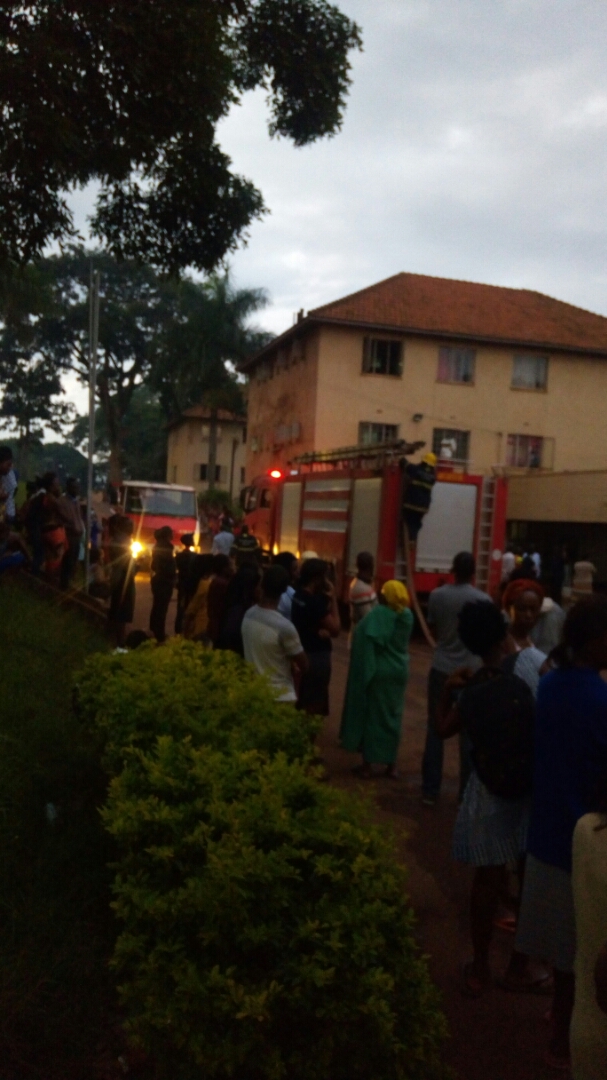
Courtesy Photo: Smoke going up Mary Stuart Hall in Makerere University Kampala

Kampala: Mary Stuart Hall, commonly referred to as Box has caught fire leaving several properties destroyed and a yet to be established number of students injured.

The fire is reported to have started at 4:00am from the ground floor of the over 14 storey building.

“The fire started from the ground floor, those in upper rooms had to just jump off! The rescuers who came first looked for ladders to bring down students who were still stuck on the upper floors. The fire started at 4;00am but police came in 6;00am,” Makerere University LC V councilor Doreen Nyanjura reported.

Courtesy Photo: A fire engine at Mary Stuart Hall, Makerere University

According to Nyanjura who is at the scene, three canteens housed on the building are completely razed down, as the ground floor where they are located in most affected.

The ground floor also houses an extension of rooms, mostly for Guild Representative Councilors, finalists and Senior Common Room members.

Mary Stuart is the biggest hall in Makerere University and accommodates only females. It was nicknamed Box because of its shape.

Mary Stuart Hall was completed in 1953 and named after Bishop Stuart’s wife, who had worked hard for the betterment of women education during her time in Uganda.

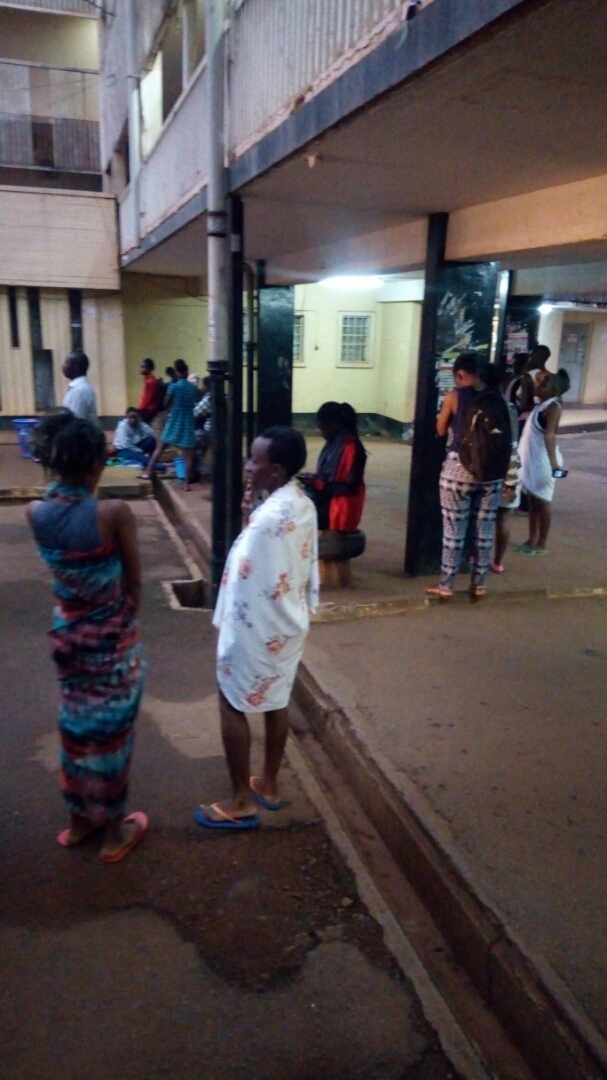
Courtesy Photo: Students standing outside Mary Stuart Hall, Makerere University

The Hall’s first extensions were completed in 1959. Extensions included an enlargement of the Dining Hall and construction of a new wing, which included a delightful Junior Common Room and a small set of rooms for research students.

Hall Culture

The hall is the biggest female hall known as “Box” due to the physical structure of the hall. It houses female students who appropriately refer to themselves “Boxers” and form the other half of the “Lumbox” solidarity with Lumumba Hall.

Stories Continues after ad

Uganda Premier League: Vipers win the league, Express survive relegation

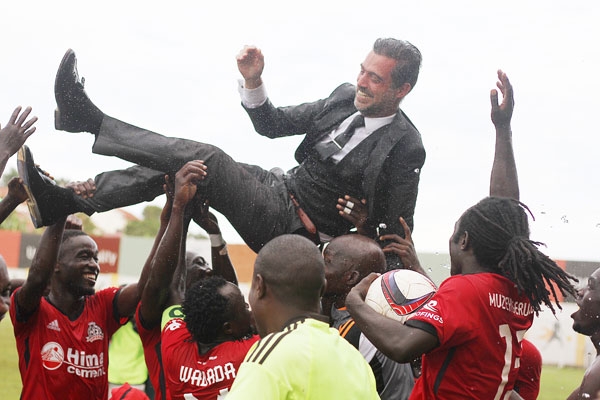
Vipers players lift manager Miguel da Costa

Kampala: There was plenty of drama on the final day of the 2017/18 Uganda Premier League season with all matches played at the same time at the different grounds.

No club had been confirmed relegated and the title wasn’t decided so this had to be settled on the final day.

Five clubs; Masavu, Express, Proline, UPDF and Soana all faced relegation while the title was to be decided between SC Vipers and KCCA FC.

All what Vipers needed was a win against UPDF in Kitende to win the title for the first time since 2015. A draw would also seal the championship for them if KCCA drew or lost against Police. UPDF needed a win to survive relegation.

In the 23rd minute, UPDF took the lead after an error from Vipers’ goalkeeper Ismael watenga for Joseph Janjali to tap it into an empty net.

Heartbreak for UPDF in the 40th minute when Julius Kisambira was shown a red card for an horrendous tackle on Duncan Seninde. UPDF were reduced to ten men, giving Vipers the advantage.

Vipers responded quickly to the offer as Yayo Lutimba equalized from Erisa Ssekisambu’s cross at the stroke of halftime. Half time ended 1-1.

In the 63rd minute, UPDF’s Othieno Deo deliberately hand-balled in the box and Erisa Ssekusambi stepped up to convert the penalty making it 2-1 to the hosts. The Venoms closed in on the title which meant UPDF’s relegation.
Daniel Mzee Sserunkuuma then scored the third after an Othieno defensive error in the 84th minute to extend the lead for Miguel Da Costa’s men.

Pius Wanji scored the fourth goal in added time putting the final nail in the coffin for UPDF and celebrations around St. Mary’s stadium began.

Vipers sealed their third title in Uganda’s top flight football, adding on those won in 2010 and 2015.

KCCA suffered a dramatic collapse after taking the lead in the 26th minute with a goal from Allan Okello before Norman Ojik leveled matters for hosts Uganda Police four minutes later. Ojik added the second and the first half ended 2-1 in favour of Police.

Patrick Kaddu equalized for the Kasasiro boys with 10 minutes from time making it 2-2 but it was late for a comeback.

Express FC beat the odds and survived relegation after their hard-fought win against Masavu away in Bugango after a horrible season.

Alfred Leku’s strike in the 55th minute was enough for Uganda’s oldest football club to secure safety. It means the Red Eagles have never been relegated to the second-tier in the history of Ugandan football.

Masavu’s defeat confirmed their relegation after just one season in the Uganda Premier League.

Proline lost 2-1 at home to Uganda Revenue Authority which means the will be playing in the FUFA Big League next season.

Daniel Isiagi opened the scoring for Proline in the 39th minute but URA made a late comeback to deny the hosts three points. Kigongo Ronald equalised in the 64 minute and Shafiq Kagimu scored the winner in the 86 minute for the tax collectors.

A goalless draw for Soana against Maroons at Kavumba Recreational Ground was enough for their survival because Proline failed to pick up maximum points.

The promoted clubs; Paidha Black Angels, Ndejje University and Nyamityobora replace Masavu, UPDF and Proline in next season’s Uganda Premier League season.

Final Matchday Results
Soana 0-0 Maroons, Kavumba Recreational Stadium
Masavu 0-1 Express, Fisheries Training Institute, Bugonga
Mbarara City 0-2 Kirinya-Jinja S.S, Kakyeka Stadium, Mbarara
Proline 1-2 URA, Star Times Stadium Lugogo
Police 2-2 KCCA, Mandela National Stadium, Namboole
SC Villa Jogoo 0-1 BUL, Masaka Recreational Stadium, Masaka
Onduparaka 2-0 Bright Stars, Green Light Stadium, Arua
Vipers 4-1 UPDF, St Mary’s Stadium, Kitende

Stories Continues after ad

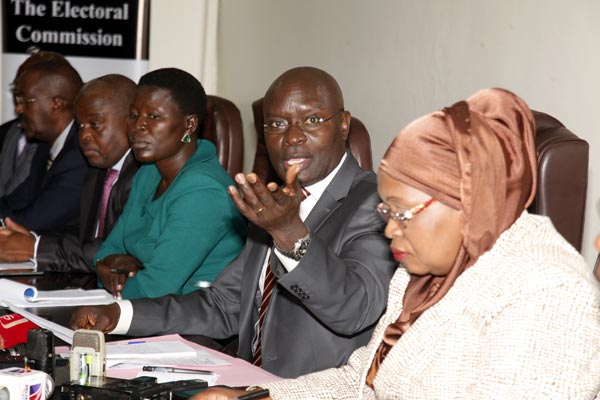
EC sets LC1 elections for July 10

Kampala: The Electoral Commission has set July 10, as the polling date for the much anticipated local council (LC 1) that were last conducted in the 2001.

In November last year, High Court Registrar Sarah Langa issued an interim order blocking the EC from organizing the LC1 elections after ‘concerned citizen’ James Tweheyo petitioned court, arguing that holding of the elections would disenfranchise O and A level students, who were are at that time sitting for their S.4 and S.6 exams.

Addressing the media today, at the commission headquarters, EC chairman, Justice Simon Byabakama asked government for declaration of July 10, as a public holiday for students and civil servants to participation in the exercise.

“Last year’s LC elections were halted for not observing and complying with the electoral laws, however, the matter was settled in court, we were availed with school calendar and ordered to organize elections within stipulations of the law,” justice Byabakama noted.

He revealed that the elections will be conducted t at the cost of Shs22.1 billion after government availed them additional funds of Shs6.2 billion.

According to Justice Byabakama shooting crime rates in the country has been linked to lack of legal LC leadership therefore, “we asked government to avail us more funds to meet public outcry of abetting crime”.

LC I elections were last conducted in 2001 and have not been held since then.

Stories Continues after ad

Pastor Kayanja speaks out on claims of fleecing Shs5b from youths

Robert Kayanja

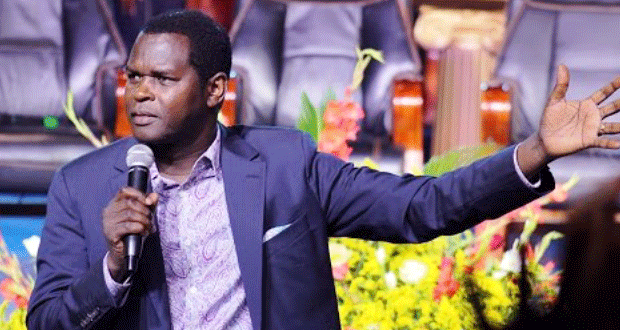
Pastor Robert Kayanja of the Miracle Center Cathedral has spoken out on allegations of fleecing over Shs5 billion from youths that are leveled against him.

Hours after a letter addressed to him over the same matter went viral on social media, Kayanja has called a hasty press conference Friday where he denied the allegations.

“I would like to refute the information projected in the document thus of malice and defamation to Robert Kayanja, Miracle center cathedral and Version 86 (youth national transformation). Version 86 is a registered youth organisation that was started to mentor, sponsor and empower youth that were born from 1986 up to date,” he said.

According to a letter dated May 15, issued by Rwakafuzi & Co Advocates on before of hundreds of thousands of youths, it’s said Kayanja mobilised them through Miracle Center Cathedral’s ‘Version 86 for Youth transformation’.

Through the initiative, Kayanja asked them to group themselves and that each group should pay Shs500, 000 contributed equally by each group member.


Many groups paid this money between May and December 2015.

In return, these groups were promised funds for the youths self-employment in the endeavour to “alleviate and eliminate poverty and bring a stop to the unemployment among the youths”.

According to the letter, over Shs5billion was collected from them by M/S Miracle Center Cathedral.

“The youths now wish to know why they have not yet received the funds for self-empowerment as promised. In the alternative, they wish to be informed if indeed preparations are in process to have funds released to the youths as promised. Otherwise, the youths concerned, who paid monies to Miracle Center Cathedral, wish to have their money refunded to them.”

Stories Continues after ad

2018 Champions League Final: Real Madrid vs Liverpool

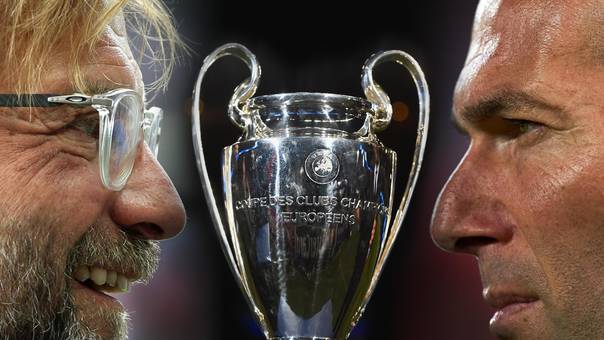
Klopp and Zidane face off in the UCL final

Two of European club football’s most famous names will face off tomorrow in this year’s Champions League final taking place in Ukraine.

The defending champions and 12-time winners Real Madrid face Jurgen Klopp’s Liverpool with both teams in search for their first trophy of this season.

Real Madrid have won the competition three times in the past four seasons and are looking forward to land their 13th European Cup while Liverpool target for the 6th in their history.

Zinédine Zidane could become the first coach to win three European Cups in a row, having become the first to win the UEFA Champions League in consecutive seasons in 2016 and 2017.
Liverpool’s last appearance in the UEFA Champions League final ended in a 2-1 defeat to a strong AC Milan side in 2007.
The two sides have previously met five times in European competitions, with Liverpool winning three of those fixtures and Real Madrid two.

Both finalists previously met in Paris for the Champions league final in 1981 where the Reds won 1-0 courtesy of an Alan Kennedy goal in the 82nd minute.

Premier League Golden Boot winner Mo Salah will be looking to prove he belongs on the big stage alongside Cristiano Ronaldo in what could be an important decider to this year’s Ballon D’or winner.

Serbian referee Milorad Mažić, 45, will officiate the match with Milovan Ristić and Dalibor Djurdjević as his assistants. Clement Turpin from France will be the fourth official.

The 2018 UEFA Champions League final will be played at the NSC Olimpiyskiy Stadium in Kiev, Ukraine at 9:45pm Ugandan time.

The probable starting line-ups;

Real Madrid: Navas (GK), Carvajal, Ramos, Varane, Marcelo, Kroos, Casemiro, Modric, Bale, Benzema, Ronaldo

Liverpool: Karius (GK), Van Dijk, Lovren, Robertson, Trent-Arnold, Henderson, Milner, Wijnaldum, Mane, Firmino, Salah

Stories Continues after ad