Stanbic Bank
Stanbic Bank
25.7 C
Kampala
Stanbic Bank
Stanbic Bank
Home Blog Page 1606

UNRA gets Shs3.2 trillion in financial year 2018/19

UNRA ED Allen Catherine Kagina

For about five years now the Uganda National Roads Authority (UNRA) continues to take a lion’s share of public resources, with Ministry of Works and Transport Budget Framework Paper indicating the roads authority will consume over 60 percent of its budget for transport infrastructure and services.

According to the ministry’s budget breakdown for the FY 2018/19, UNRA has been allocated over Shs3.2 trillion or 68.3 percent of the ministry’s budget.

The ministry itself has been allocated Shs624.632 billion (13.3 per cent), of its budget; the Uganda Road Fund has Shs623.39 billion while local governments have been given Shs22.84 billion (0.5 per cent). Also, the Kampala City Council Authority has been allocated Shs223.60 billion (4.8 per cent) of the Shs4.71 billion budget of the ministry.

The UNRA money will go for land acquisition and construction of Atiak-Moyo-Afoji; Masaka-Bukakata; Mukono-Katosi-Nyenga; Mpigi-Kabulasoka-Maddu; Kapchorwa-Suam; Kyenjojo-Hoima-Masindi-Kigumba; Nyendo-Sembabule; Ishaka-Kagamba; Kampala-Masaka-Mbarara/Busega-Mityana and Mbarara-Katuna Road.

Other roads budgeted for are Hoima-Butiaba-Wanseko; Kampala-Entebbe Express Highway; Musita-Lumino-Busia/Majanji Road; Olwiyo-Gulu-Kumi/Kamonkoli; Kyenjojo-Kabwoya, Rukungiri-Kihihi-Ishasha/Kanungu; Mbale-Bubulo-Lwakhakha and Kampala Flyover.

More roads earmarked in the budget are: Rwenkunye-Apac-Lira-Acholibur; Soroti-Katakwi-Moroto-Lokitonyala; Kibuye-Busega-Mpigi; Mukono-Kayunga-Njeru; Nakalama-Tirinyi-Mbale; Namunsi-Sironko-Muyembe-Kapchorwa; Nansana-Busunju; Nebbi-Packwach and Iganga-Kaliro.

Others to be worked on using this budget are the Kamwenge-Fort Portal and Fort portal-Kyenjojo. Also budgeted for are works for the new Nile Bridge at Jinja and construction of 66 selected bridges.


Stories Continues after ad

Funds raised for construction of genocide memorial sites in Uganda

Rwanda High Commissioner Major General Frank Mugambage addressing journalists today

The Rwanda High Commission has revealed that the construction of genocide memorial sites in Mpigi, Masaka and Kasensero, at areas in Uganda where bodies of some of the 1994 Genocide victims were found.

According to the Rwanda High Commissioner Maj. Gen. (Rtd) Frank Mugambage, the archiving of the 1994 Rwandan genocide is also to begin after his country received over $10,000 from various ‘friends of Rwanda’ toward that cause.

“Upon construction, we aim at registering them with United Nations Education and Cultural Organisation (UNESCO) for recognition and attraction of tourists from various countries,” Maj Gen Mugambage said while addressing journalists ahead of the 24th commemoration of 1994 Genocide that begins tomorrow, April 7.

The High Commissioner also noted that the government led by Paul Kagame has since 1994 endeavored to unite, reconcile and reconstruct the country. “Genocide is a threat to humanity, and we should fight against it,” Maj Gen Mugambage said, adding that over one million Rwandan nationals perished in the 100-day orgy.

“Therefore, we commemorate, mourn and reflect on the inhuman acts that were committed against the Tutsi, Hutu, among other tribes in Rwanda,” Maj Gen Mugambage added.

He also noted that the country is working hard to try suspects who engaged themselves in the killings. “When we establish a suspect in any country, we collaborate so that he or she is extradited for trial,” he added.

In Uganda the 24th Genocide commemoration will start tomorrow with public lectures and climax a week later with laying of wreaths at the different burial sites in Mpigi, Masaka and Kasensero.


Stories Continues after ad

Is all well with Mutebile and Kasekende at BoU?

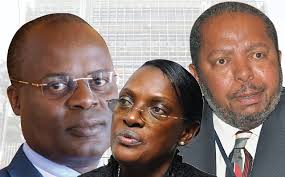
TRIPARTITE SAGA? Governor Tumusiime Mutebile, Deputy Governor Loius Kasekende and former Bank Supervision Executive Director Justine Bagyenda.

As the scandals dogging Bank of Uganda (BOU) continue to emerge in the media, a section of top managers now say the Governor Prof. Emmanuel Tumusiime-Mutebile and his deputy Dr. Louis Kasekende are responsible for the mess and the poor image of the bank. The managers also fear that more scandals are likely “to arise in the near future” unless the two men settle their ‘egoistic differences’.

Indeed, yesterday, Mutebile in media statement said he is on a good working relationship with his deputy, but insider sources say this is not true. “Our observation as workers at the bank is that they have differences, some personal, others professional,” a top BoU manager said of the two men at the helm of the central bank.

An insider further intimidated to Eagle Online that Mutebile and Kasekende have had differences as regards the recruitment of staff. “The bank is dominated by people from the central (Baganda) and those from the western part of the country. This pattern almost cuts across all departments,” the official, who seems frustrated, says. “It appears that each of them wants to bring in his own people,” he added.

Another insider told Eagle Online that Kasekende was not happy that Mutebile recruited Dr Tumubweine Twinemanzi from the Uganda Communications Commission (UCC) to replace Justine Bagyenda who the governor sacked for reasons he has never revealed, even as the former director of supervision was to officially retire in June this year. Kasekende’s view, he said, was to promote somebody from within the BoU for that post.

Mutebile’s sacking of Bagyenda and hurried up internal transfers did not go well with Bagyenda herself and some of the senior staff. They would later seek redress from the Inspector General of Government (IGG) Irene Mulyagonja. Her intervention was rebuffed by Mutebile, claiming independence, which forced President Museveni to intervene but officials at the bank say this matter is not settled.

Insiders say Mutebile, despite being a good manager, is sometimes hard to approach and advise, especially when he has made a decision he believes is the best. “Mr Mutebile doesn’t want his decision to be questioned, something that disturbs Dr Kasekende,” one of the employees told Eagle Online.

He however added that Kasekende is one of the best technical people he has worked with at that institution. He said Kasekende is a polished economist who understands the dynamics of the economy and banking industry in particular but that what undermines him is “the cliques he is part of in undermining Mutebile”.

Indeed, Kasekende is said to be annoyed with Mutebile over Crane Bank and is reportedly not in support of BoU negotiating with Crane Bank. Instead, he is reportedly in good books with ‘conflicted lawyers’ who court discontinued from being engaged by BoU. Insiders say that Kasekende hopes that the current woes faced by BoU could be a chance to have Mutebile out of the central bank.

“That is why he is sought after for knowledge sharing. He is a good researcher and presenter of papers when it comes to the issues to with the economy,” the official said. Meanwhile, Kasekende is alleged to have teamed up with Bagyenda in fighting Mutebile on the issue of Crane Bank. The same sources allege that Kasekende has also previously flown out of the country ‘his associates’ who aren’t on the travelling list and this has left some employees at BoU disgruntled about his working methods.

Kasekende has served at the African Development Bank as Chief Economist, a position he held for three and a half years. Previously, he served as Alternate Executive Director and later as Executive Director at the World Bank in charge of Africa. Mutebile, on the other hand has also worked with the World Bank and IMF in various capacities. This, analysts say is good for the country given the exposure of the two men.

Politics

Insiders say that Mutebile, unlike Kasekende, is allied to top politicians in the country and that has at times given in to demands of politicians, something they say Kasekende doesn’t like. In fact the sources say Kasekende did not like when in 2011 Mutebile sanctioned that release of money to aid NRM’s presidential candidate Yoweri Museveni to fulfill his pledges. “You remember that caused inflations afterwards,” he said.

Management

Insiders say differences among the top managers led to the poor decision on Crane Bank, which was sold to DFCU Bank. They further say information about Crane Bank was not shared sufficiently and as such BOU is paying in terms of money and loss of public trust. The reason why the Auditor General wants to investigate BOU on the matter.

But Mutebile says BOU is not incompetent. “If we are to objectively judge the competence of the BoU, we should look at how it has performed in relation to its core strategic objectives: controlling inflation and regulating the banking sector to protect depositors and the overall stability of the financial sector,” he said yesterday in the press release.

He says over the last three years BoU has contained core inflation at an average of 5.1 per cent from April 2015 to March 2018. “That hardly suggests that, in terms of macroeconomic management, the BoU is incompetent,” Mutebile says.

However. insiders argue that while it is true that inflation has been contained at single digits for that period, it doesn’t mean that the differences between two men have not impacted on the bank’s operations. “All is there for the public to see.”

But despite the criticisms, Mutebile says that he is on good terms with his deputy Kasekende.

“I would also like to refute the allegation made severally by the Independent magazine that I, my Deputy and other senior officials “fight each other”. I continue to count on the confidence and support of my Deputy and all other members of the Board of Directors, Executive Directors and staff,” he wrote yesterday.

Mutebile, meanwhile, is not happy with the information some frustrated workers at the bank are giving to the public and the media and warns of disciplinary against them. He said they should follow established procedure.

“There are set mechanisms for addressing any contradictions within the course of our public duty. Therefore, any BoU staff acting outside these avenues and is found to be culpable in fomenting allegations, intrigue or undermining established management processes, shall be subjected to the Bank’s disciplinary proceedings,” he added.


Stories Continues after ad

Grace Mugabe to be questioned by police over multi-million dollar ivory-smuggling racket

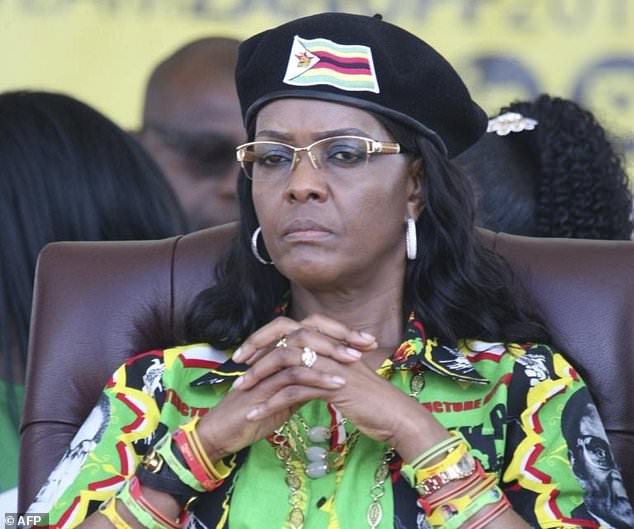
Grace Mugabe

Zimbabwean police investigating an ivory-smuggling racket will soon question former ruler Robert Mugabe’s wife Grace.
She is accused of arranging shipments abroad, a government-owned newspaper reported on Friday.
The Herald newspaper, once the mouthpiece of the Mugabe regime, said police were making progress in their probe into Grace’s role in allegedly smuggling ivory to China, the United Arab Emirates and the United States.

We are closing in with our investigations,’ a police source told the paper under the headline ‘Police tighten noose on Grace Mugabe’.
‘We have also picked up and questioned several suspects whom we believe are linked to the case.’

Documents from the Zimbabwe parks authority allegedly accuse Grace Mugabe of ordering officials to grant her permits to export millions of dollars of ivory as gifts to foreign leaders.
Once outside Zimbabwe, the ivory was routed to black markets

A police spokesman declined to comment to AFP on Friday.
Grace Mugabe had been tipped as a candidate to succeed her husband, 94, who ruled Zimbabwe since independence from British colonial rule in 1980.
But he was forced to step down in November last year following a military takeover that ushered former Vice President Emmerson Mnangagwa to power.

Grace has not been seen in public since, but she attended a press meeting her husband held at their house in the capital Harare last month.
She was known for her lavish spending habits and fierce verbal attacks on her husband’s perceived critics.

Stories Continues after ad

Ways to sell yourself in written business messages

By Martin Zwilling

Even in this age of videos and text messages, the quickest way to kill your startup dream with investors, business partners, or even customers, is embarrassingly poor writing. Being very visible in the startup community, I still get an amazing number of badly written emails, rambling executive summaries, and business plans with one paragraph per chapter.

In the competitive realm of business, you only get one chance to make a great first impression. You have to be able to communicate effectively in all the common forms, including business writing, as well as talking, presenting, and producing videos. Lack of the requisite skills or discipline will get you branded as a poor business risk before the message is even considered.

Business writing is not a skill that anyone is born with, but one that everyone can learn. Since we all lose when an entrepreneur with a great idea is held back by a failure to communicate, I would like to offer a quick summary of business writing basic strategies. Keep these in mind as you look for others to join you in supporting your idea to change the world:

Get to the point in the first sentence. In this age of data overload, everyone has learned to tune out if they can’t quickly decipher a relevant purpose and focus for your message. That context needs to be set before your sales pitch or background story makes any sense. Before you start, make sure you understand your own objective.

Plan the message flow to a logical conclusion. Random thoughts or lists of facts do not constitute effective business writing. Most commonly, your message is informational or meant to persuade, so every element should be consistent with that intent. Always include the key document elements of an opening, main body, and a conclusion.

Key points should be highlighted and positive. Action items should be underlined, or separated into bullets to provide visual recognition in a quick scan. Positive messages have more impact, so keep negative and emotional statements to a minimum. Avoid flowery language and excessive use of adjectives. Tight wording clarifies the message.

End with a clear call to action. If you are looking for an investor, a partner, or a customer, make sure the next step is clearly stated, and not just implied. Contact information should always be included. Ending with “May I ask for an hour on your schedule next week to discuss details?” is better than “Don’t miss this opportunity.”

Talk uniquely to each recipient. Generic messages aimed at groups of people do not make a good first impression, especially if the greeting is non-specific and email is directed to a long list of addresses. Smart business people tailor their conversations to each recipient, and the same consideration should be applied to written messages.

Use professional formatting. A badly formatted document, in all caps, mixed fonts, or all one paragraph will destroy even the best message. If you are asking for a million dollars, don’t send your message in smartphone or texting shorthand, ignoring spelling errors. Show your recipients professional respect, and you will get respect in return.

Keep your writing voice friendly and courteous. If your writing tone is angry, cynical, or arrogant, don’t expect any reader to be open to what you have to say. Tune your use of language to the reading level of the recipient or below. Trying to impress or intimidate the reader with technical terms or acronyms doesn’t work with confident professionals.

As a general rule, text messages or emails from a smartphone should never be used for business purposes with someone you don’t know well. Emails are acceptable, if kept to one page, with minimal attachments, addressed to a single recipient, with a relevant subject line, and professionally formatted.

If the business criticality is high, or the subject is sensitive or easily misinterpreted, skip the written communication entirely, in favor of a phone discussion or a personal meeting. Written communication can never convey emotions and body language effectively, which may be fifty percent or more of the message.

Every entrepreneur needs to remember that they are selling themselves in every written communication, even more than they are selling their idea or funding request. Poor use of the writing technology generally available, including formatting tools and spell checkers, will be read as an inconsiderate or risky partnership. You can’t afford that competitive disadvantage.


Stories Continues after ad

Ugandan private sector more vibrant – Stanbic Index

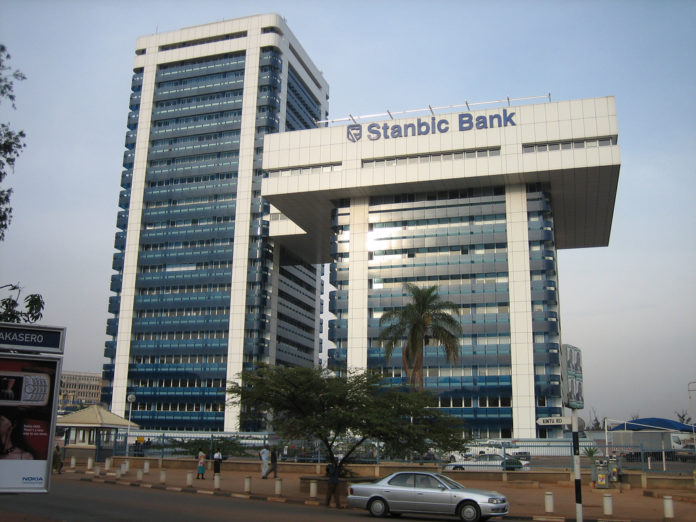
Stanbic Bank Uganda

Stanbic Bank Uganda has released its PMI index for February with the latest headline figure posting 53.2 in March, up from 51.1 in February, indicating a further improvement in the health of the private sector.


Commenting on March’s  survey findings, Jibran Qureishi, the East Africa Regional  Economist at Stanbic  Bank said: “Operating conditions in Uganda’s  private sector further improved, however the PMI average of 52.1 in the first quarter (Q1:2018)  was lower than 54.0  average recorded in the fourth quarter (Q4:2017), suggesting to us that the pace of recovery is  still sluggish.”

According to Stanbic Bank, credit growth to the private sector should broadly recover over the course of this year courtesy of the ‘accommodative monetary policy’ stance adopted by the Bank of Uganda in addition to improving domestic demand conditions.

In February 2018, the Bank of Uganda further reduced the Central Bank rate by another 0.5 of a percentage point to 9.0% resulting in the lowest CBR since the benchmark figure was introduced in 2011.

In response, Stanbic Bank which maintains a policy of matching adjustments of the CBR with equal changes to its Prime Lending Rate, announced another reduction of its PLR to 17% effective May 1.

The Bank now has the lowest shillings lending rate of all the banks active in Uganda’s credit sector.

Revealing the underlying reasons behind the PMI’s sustained upward trajectory, Benoni Okwenje, Stanbic Bank’s Fixed Income Manager, said: “Forming the basis for growth was an increase in new business.  Private sector firms reacted by expanding their workforce numbers at the end of the first quarter.  Consequently, business activity rose for the fourteenth month in succession.  Elsewhere,  output charges  continued  to  rise,  driven  in  part  by  higher  cost burdens.”

He added: “Higher  volumes  of  new  orders  spurred businesses to increase their purchasing activity in March, following  a  month  of  contraction  mid-quarter. However, due to production demands, inventories fell for the second month in succession. On the price front however, higher purchase and staff costs led to a sustained increase in overall input costs in the private sector during March. In fact, input price inflation occurred across all five monitored sub-sectors, in line with the survey trend so far. Higher raw material prices alongside fuel costs drove up purchase prices, whereas rising costs of living was the main factor influencing average wages/salaries.”

The Stanbic PMI is a composite index, calculated as a weighted average of five individual sub-components: New Orders (30%), Output (25%), Employment (20%), Suppliers’ Delivery Times (15%) and Stocks of Purchases (10%).

Readings above 50.0 signal an improvement in business conditions on the previous month, while readings below 50.0 show a deterioration.


Stories Continues after ad

Corruption, tribalism will lead to NRM ouster – Todwong

Calls for Political Co-existence: NRM's Richard Todwong

The Deputy Secretary General of the  ruling National Resistance Movement (NRM) Richard Todwong has accused party colleagues and senior civil servants for abetting runaway corruption and tribalism.

Mr Todwong, who is number three in the party structures, says these are some of the reasons the NRM party will fall out of power and crash completely.

“I’m saying this because I know and I have to be honest because my church told me to be honest. I have told this to the President. If we don’t control our greed and how we use public resources, then Ugandans will push us out of power,” Todwong, whose party has been in power for 30 years, said in an address.

He added: “We need to manage greed and during the debate of transition, those in positions of leadership might want to collect as much as they can because it’s their last chance in power.”

Mr. Todwong also expressed disappointment with religious leaders, saying they had paid little attention to the need for citizens’ participation in the proposed national dialogue to be launched later this year.

This followed a meeting by the Inter-religious Council of Uganda hosted in Entebbe to explore actions and strategies needed to fast-track the talks’ process.

The seemingly frustrated Deputy Secretary General urged religious leaders not politicize the process, stressing that it should be geared towards a peaceful transition of power.

The IRCU is a body that brings together various religious groups in the country and they have always showed interest in advising on how the country should be governed especially on peacefully transition of power, which they stress, has never happened since Independence in 1962.

However, President Museveni has always warned the religious leaders against commenting on politics.

Meanwhile, the former Forum for Democratic Change (FDC) President Mugisha Muntu wants the proposed dialogue to focus on finding lasting solutions to Uganda’s possible problems.
“There must be leaders who can start building credibility and trust in our population. What holds Ugandans together is hope,” he said.


Stories Continues after ad

Top Ministry of Health official in the spotlight over leaking Kirudu as his wealth is revealed

Dr. Henry Mwebaza,s house on Mbuya hill which people say commenced construction at the same time with the ADB projects.

Reports indicate that the recently built Kirudu hospital in Makindye leaks whenever it rains.
According to sources, engineers from Ministry of Works, responsible for building standards and Kampala Capital City Authority are investigating the constructor and those who were the in-charge of the project. According to reliable sources, investigations were triggered off by complaints from African Development Bank which funded the project.
Sources say the Acting Director General Health Services, Dr. Henry Mwebaza who formerly occupied the docket of Director Planning and head of African Development Bank project for Mulago Kawempe and Kirudu hospitals

Stories Continues after ad

Panic as URA goes for personal bank accounts to raise taxes

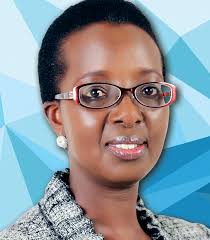
URA Commissioner General, Doris Akol

The Uganda Revenue Authority (URA) has in a new directive instructed commercial banks to furnish it with details of clients/customers who hold accounts with them, setting off a panic button for thousands with huge unexplained and illicit monies.

According to the directive, all commercial banks are supposed to send records of financial information of clients, including the names of accounts holders, Tax Identification Number (TIN), National Identification Number (NIN), Address, telephone number and email addresses.

The directive also wants banks to disclose customers’ total cash deposits into the accounts for the period January 2016 to December 2017. The directive also asks for total cash withdrawals for that period.

URA also wants the current balance on depositors’ accounts and it is relying on Section 42 of the Tax Procedure Code Act.

The directive comes at the time when a few Ugandans hold bank accounts. The findings of a recent survey carried out by MicroSave and commissioned by Financial Sector Deepening Uganda (FSDU) found that up to 58 percent of Ugandan adults that are currently unbanked.

Meanwhile, the number of accounts in commercial banks has increased from 4.5 million as at June 2015 to 7.4 million as at June 2017; while number of accounts in financial institutions licensed by the BoU (Commercial banks, Credit Institutions and MDIs) rose by 3.3 million over a two year period to 9.3 million accounts as at June 2017.

Last week, President Yoweri Museveni blamed the Ministry of Finance and URA for doing less to broaden the tax base.

This financial year, URA was tasked to collect just over 15trn to partly fund the Shs29 trn budget for 2017/18 fiscal year. However it appears the target won’t be achieved as country prepares for the new financial year that starts June. This comes up at the time when the tax body is also investigating former Executive Director in charge of Supervision at Bank of Uganda Justine Bagyenda for possible tax invasion on her properties and money laundering.


Stories Continues after ad
Bunyoro ‘radicals’ want Omuhikirwa out

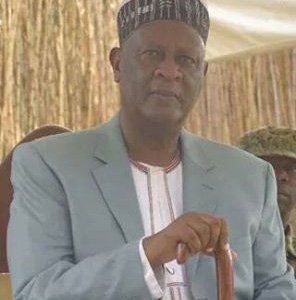
Omukama of Bunyoro Kingdom Solomon Gafabusa Iguru

A group of Banyoro allied to ousted Bunyoro Kingdom ‘Prime Minister’ (Omuhikirwa) Andrew Byakutaga have reportedly threatened to demonstrate in Hoima town, demanding his reinstatement.

Sources in Hoima have told The EagleOnline that the ‘Byakutaga group’ calling themselves Abarusura (Omukama Kabalega’s army), led by one Francis Atugonza and Ali Babi will storm the Karuziika Palace tomorrow to ensure Rukirabasaija Solomon Gafabusa Agutamba Iguru revokes his recent appointment of Norman Lukumu as Prime Minister.

By press time it was not possible to get Byakutaga for comment, but in a lengthy communication dated April 3, Omukama Iguru reiterated that Lukumu was appointed Omuhikirwa on May 1, 2016 to serve a five-year period ending in 2021.

In the same communique he named Prince Apollo Kisoro as his Principal Private Secretary, and urged the reinstated Omuhikirwa to ensure all cases he filed in court are withdrawn.

Stories Continues after ad