Kampala: Mr Edward Kisuze, a senior administrative assistant in Makerere University has been suspended over allegations of that he sexually harassed Ms. Njoroge Rachael Njeri.
His suspension follows a viral picture of him purportedly licking Ms Njeri’s southern hemisphere. Sources told this website that Mr Njoroge recorded a statement with the University Police after Mr Njeri reported accusing Mr Kisuze forced her into sex in order for to receive her degree certificate.
According to a letter signed by acting Deputy vice chancellor, Professor William Bazeyo, Kisuze who works in academic registrars department filed unsatisfactory response in relation to the matter therefore the university has decided to set up an investigation committee to establish what exactly happened.
“Accordingly, I her by suspend you from university service on half pay with immediate effect to allow a smooth investigations into the matter,” He wrote in a suspension letter.
He implored him to desist from accessing premises of senate building and interaction with Makerere University students till when investigations are done.
“You are further handover formerly any other working progress in your possessions the academic registrar,” reads in part of the letter.
The Kenyan national, Njoroge graduated in January this year with a Bachelor’s degree in computing and information science.
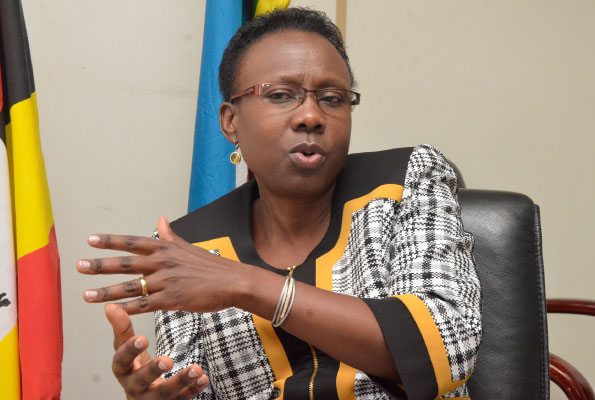
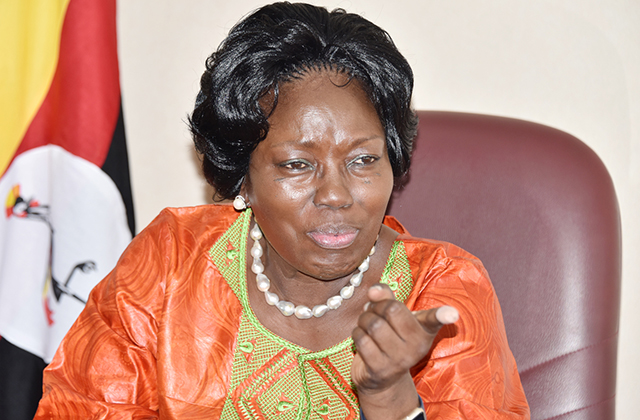
Health Minister, Dr.Ruth Aceng making a point during a past. presentation. She is reported to be against the idea by government to have companies process Marijuana here.
With the recent rise in Cholera cases across the country, the Ministry of Health has warned the public to be vigilant and report suspected cases to authorities.
According to the ministry, as part of its strategic plan to eliminate the disease in Uganda, it is set to roll out the Oral Cholera Vaccine (OCV) in Cholera prone districts of Hoima, Buliisa, Pakwach, Nebbi, Kasese, Ntoroko, Zombo, Moyo, Busia, Namayingo and Arua.
In a release the Acting Director General of Health Services Charles Olora said the vaccination will be carried out in four phases: Phase One: Hoima District in May 2018, Phase Two: Buliisa, Pakwach and Nebbi in July 2018, Phase Three: Kasese, Ntoroko, Zombo, Moyo, Busia, Namayingo and Arua in October 2018.
The ministry says the World Health Organization (WHO), UNICEF and GAVI have helped secure a total of 360,000 doses of OCV to vaccinate residents in the five sub-counties of Kyangwali, Kabwoya, Buseruka, Bugambe and Kahoora division as well as the refugee population in Kyangwali refugee settlement in Hoima district.
Oral Cholera Vaccine is administered orally for persons above one year to protect them against Cholera, a severe, potentially epidemic, life-threatening diarrheal disease. The vaccine is administered in two doses which are given two weeks apart and offers individuals protection of up to 5 years.
Dr. Olora, in a statement, says OCV will be used as part of the Ministry of Health’s Integrated Cholera prevention and control strategy (including safe water, improved sanitation, and high-quality case management) and is in line with the on-going Cholera elimination activities. The vaccine reduces the risk of an individual getting sick with or dying of Cholera.
To further arrest transmission of Cholera, the Ministry and partners continue to undertake interventions: Intensified case management and surveillance of Cholera cases, construction of new household latrines and hand washing facilities, distribution of Aqua-tablets in all affected villages and active social mobilization and sensitization of communities on Cholera and its prevention and control measures.
The ministry urges the public to be vigilant and report any suspected Cholera cases and other strange deaths to the nearest health facility or call our toll-free line, 0800-100-066.
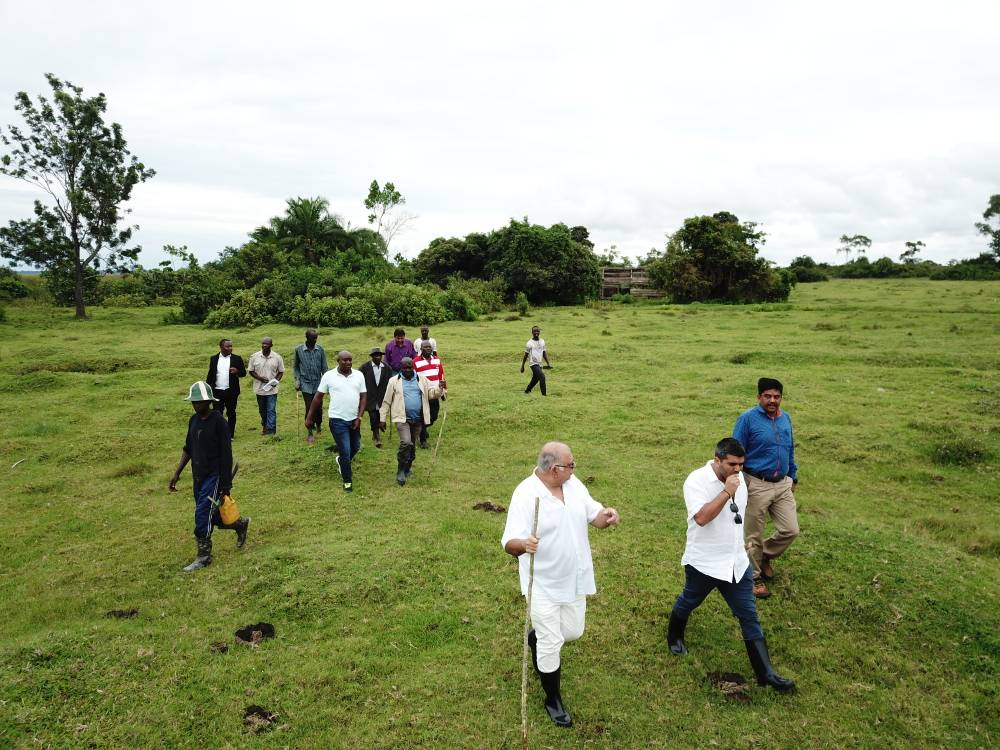
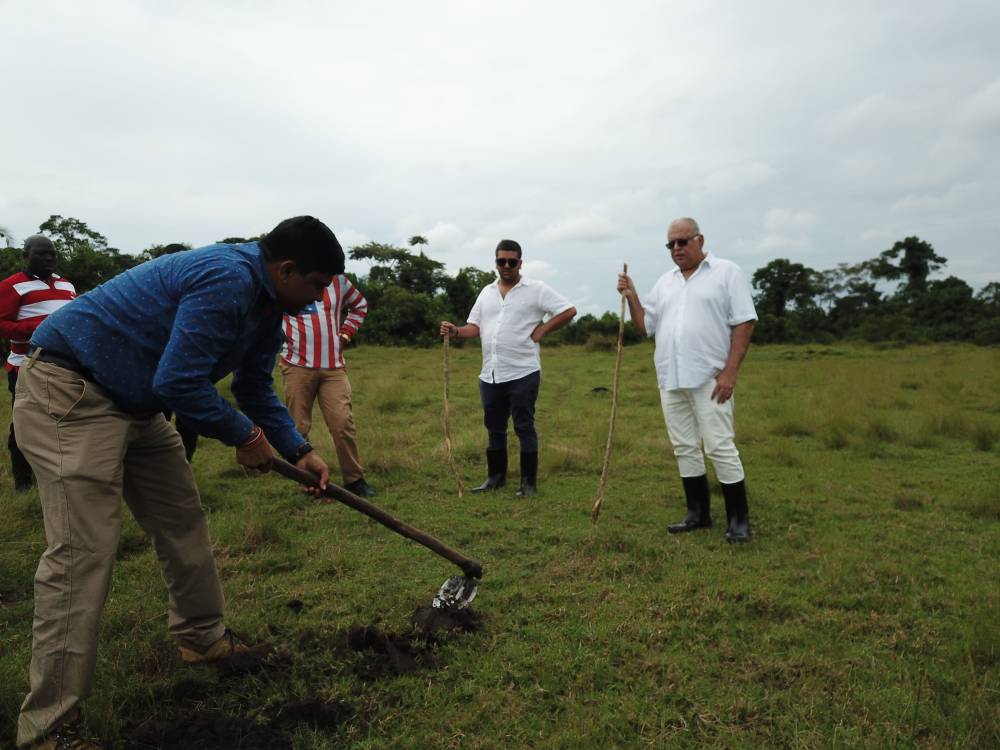
City tycoon, Sudhir Ruparelia has toured several areas in Masaka district with the intention of acquiring land to expand on his Rosebud flower business.
Sudhir also intends to use part of the land for farming venturing into vegetables.
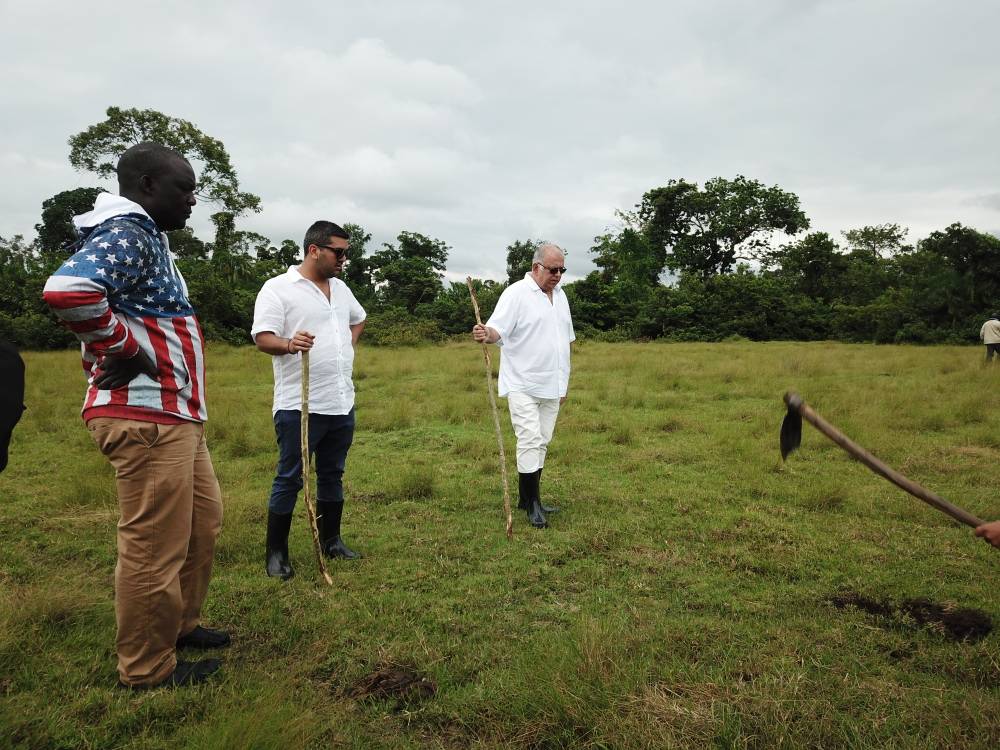
Sudhir who was accompanied his son Rajiv Ruparelia and other mangers of Ruparelia group toured several areas to find out the fertility of the soil before acquiring it.
Last month Sudhir acquired 9 square miles of land in Kayunga district to expand on his horticulture and floriculture farming business. Sudhir bought the land in Bale County as part of expansion to Masaka and Entebbe road floriculture business.
His flower businesses last year were selected the best from the East African region and top the flower exporting countries from East Africa. Sudhir flower business employs more than 50,000 people both indirect and directly.
Sudhir is one of the top tax and employers in Uganda and his expansion into the fertile Kayunga district which boarders River Nile is seen as part of his growing horticulture industry that has made Uganda one of the leading fresh flower exporting countries in the world.
An unidentified staff of Makerere University is on the spot after he allegedly sexually assaulted a former student who had gone to have her academic transcript certified.
Rachael in her normal life
It is said Rachael Njeri, a former student of the College of Computing and Information Sciences under 13/U/2348/Eve, is accusing a lecturer in the same department of caressing her breasts and fondling her nether parts.
In photos posted, the ‘lecturer is seen ‘licking’ Njeri, while the girl is taking a ‘selfie’, allegedly as proof of the sexual harassment.
Meanwhile, Makerere University students who are currently on strike have vowed to ‘teach’ the lecturer a lesson.
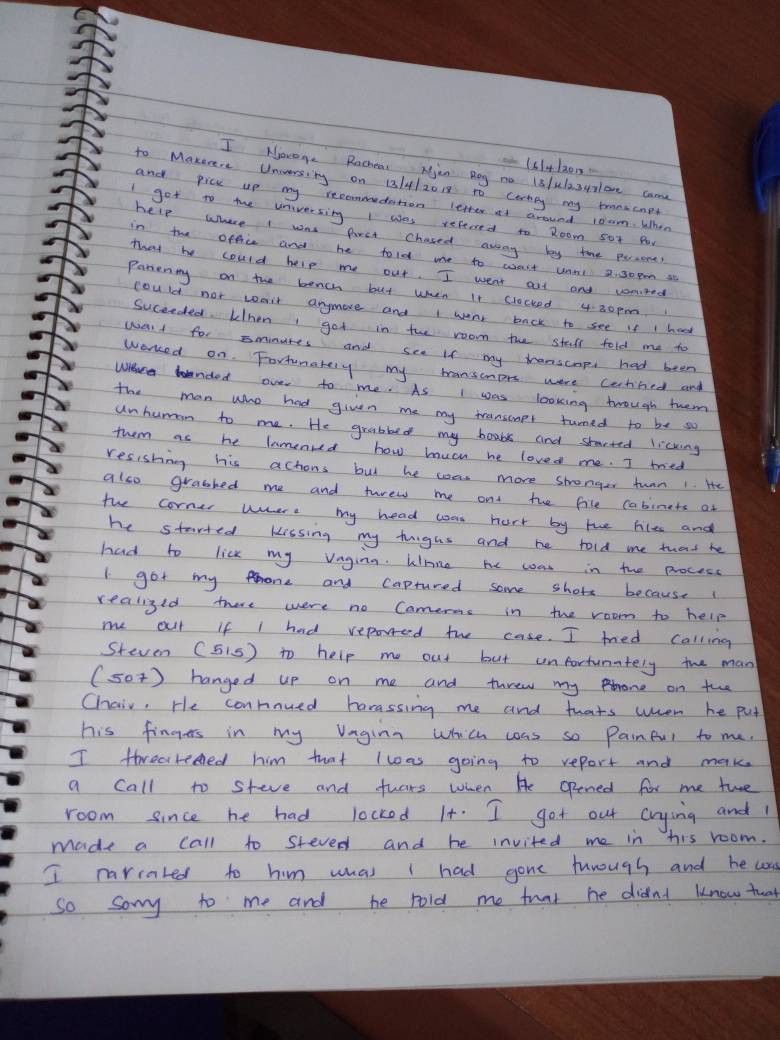
Statement made by Racheal Njoroge
Cases of sexual harassment have previously emerged at Makerere, with many being categorized as ‘sex for marks’, mostly in respect to the female students.
Tanzania’s top music star Diamond Platnumz, husband to socialite Zari Hassan, has been arrested for posting pictures that authorities say breach cultural norms.
Communications Minister Harrison Mwakwembe said in Parliament that the images of Platnumz project acts that go against a law that bans such acts.
Last month, after President John Magufuli complained about obscenity in music videos, Tanzania’s authorities banned 13 songs by local artistes including Diamond.
And recently, there was an Instagram post of Diamond playfully kissing an unidentified woman has been shared by several news sites, but it is unclear if these are the pictures that have got the artiste in trouble.
Some people on social media are speculating that the musician was getting back at his former partner who left him.
Meanwhile, police are also looking for Bongo artiste Nandi over similar claims.
Speaker Rebecca Kadaga has urged countries in the Commonwealth to empower women in a bid to close the gender gap.
According to Kadaga, there is a need to change the education curriculum so that children can be trained to appreciate gender parity at a young age.
The Speaker of Parliament made the remarks while speaking at the Commonwealth Women’s Forum in London, ahead of the 2018 Commonwealth Heads of Government Meeting.
“There’s also a need for voter education so that the electorate can appreciate the need to improve the percentage women in leadership positions,” Kadaga said.
The meeting that premised on developing a framework for action against violence against women in elections, touched on to real life experiences of female political leaders from the 53 commonwealth member states including Papua New Guinea, Pakistan and Uganda among others.
Participants at the meeting noted that female legislators had been subjects of sexualization during elections, as well as victims of slander; citing the example of former 2016 USA presidential candidate Hillary Clinton.
“Women in the Caribbean are confronted by party structures and their male counterparts look at the as threats,” noted Hon. Hazel Brandy Williams, the Junior Minister Nevis Island Administration in St. Kitts and Nevis.
Dame Carol Kidu, a former Member of Parliament and former Minister for Community Development in Papua New Guinea cited that women were increasingly expressing interest in engaging in politics but had low chances of winning.
During her presentation, Kadaga noted the need to address violence against women who express interest or engage in leadership and political positions.
“Some marriages have ended because partners support different political parties. There needs to be parity in homes despite the difference in political affiliations,” said Kadaga.
She added that there was a need to change the law to make political parties bear responsibility for the actions of their representatives in leadership positions, which would guide the crack of a whip on unbecoming behavior.
The session highlighted some of the Commonwealth’s latest publications which included a handbook titled ‘Gender and Inclusive Elections in Commonwealth Africa’, of which Kadaga is one of the authors.
During the course of the forum meetings, presenters noted the need to advocate for and encourage more women to vie for leadership positions, further noting that social media is a new powerful tool to promote gender parity.
“It is in all our interest that all women are involved in issues of national mediation, thus getting more women involved willingly in leadership is key,” noted Lord Tariq Ahmad of Wimbledon, Minister of state for the Commonwealth and UN, UK.
The Commonwealth Women’s Forum, alongside the Commonwealth People’s Forum and Commonwealth Youth Forum are raising issues to address challenges in the 53-member organisation that will supplement resolutions from the 2018 Commonwealth Heads of Government Meeting in London, UK.
Financial Service Providers [FSPs] will reach millions of smallholder farmers at low cost by leveraging alternative data, experts have noted.
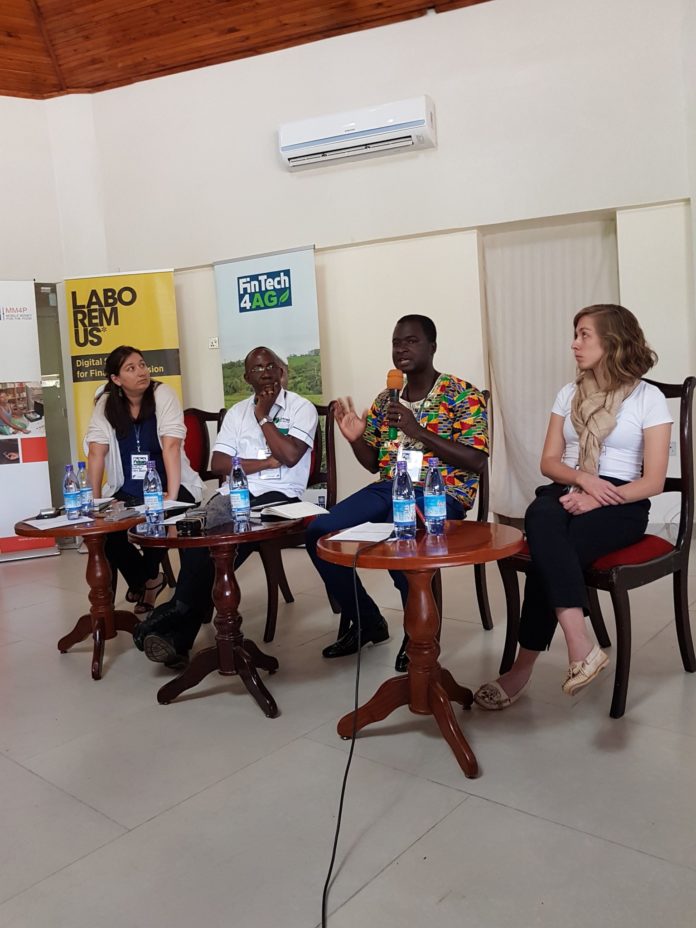
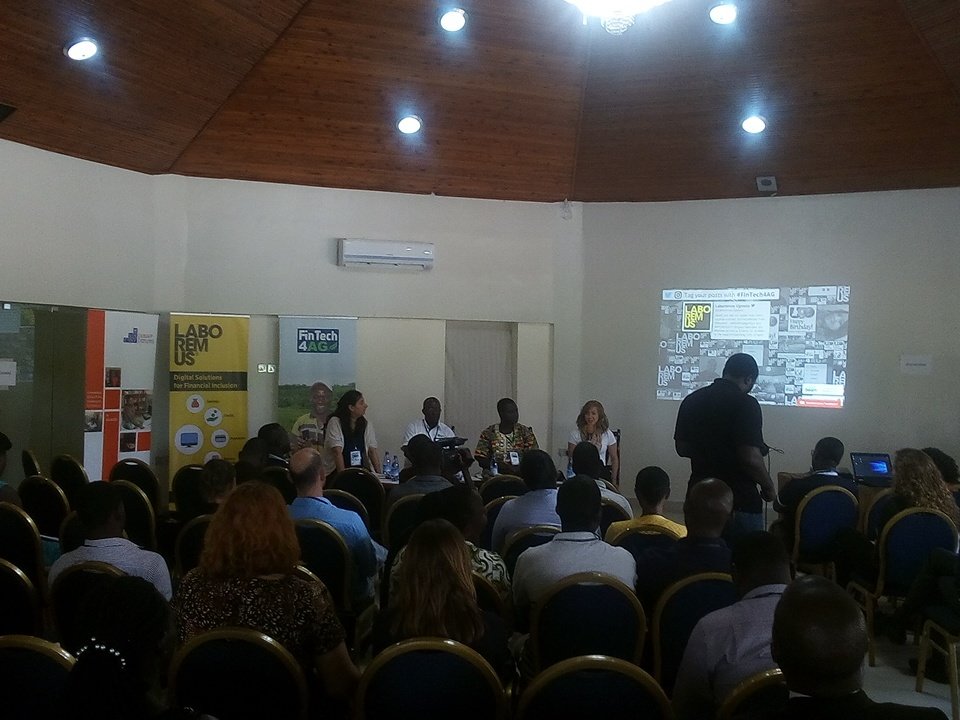
Participants and organisers at the event
Meeting at the 4th Fintech4AG at Fairway Hotel, Kampala, stakeholders from agriculture, finance and technology sectors discussed major trends at the intersection of agricultural finance and technology, and noted that smallholder families constitute the single largest client group by livelihood, living on less than US$2 a day.
They also noted that financial inclusion is constrained by the perceived risk of the agriculture sector and a lack of data that could help mitigate the risks associated with agriculture.
Without the information needed to identify high potential customers, financial institutions are unable to make lending decisions at scale, the experts argued at the four-day event where the ‘Smallholder Families Data Hub’ developed by CGAP was launched.
The initiative seeks to create synergies to extend financial services to farmers in Uganda many of which do not have access to credit, savings, money transfers and insurance today.
The CGAP data hub provides resources for stakeholders interested in developing financial products and services with a focus on smallholder farmers across several markets in Africa.
Nathan Were, the smallholder finance lead for Uganda, indicated that “this tool will help providers identify new opportunities to serve the large and diverse market in Uganda whose financial lives are often little understood”.
Were added: “Smallholder families make up one of the largest potential markets for financial services in many developing countries, but reliable data on their financial and agricultural lives are scarce. Through simple, interactive data visualizations, the CGAP Smallholder Families Data Hub puts at providers’ fingertips more than 300,000 data points from CGAP’s demand-side smallholder research, enabling them to look for promising business opportunities to develop products and serve these families”.
“This data show smallholder families in a new light and illuminate potential opportunities for providers to better serve their needs for financial solutions. For us at CGAP, they reinforce the diversity and importance of smallholder households to financial inclusion, highlighting the presence of young people, women, small- and medium-sized business owners and casual workers in this pivotal client group,” said Jamie Anderson, a senior financial sector specialist at CGAP who focuses on smallholder households.
It also provides a space for showcasing the newest technical innovations in the agriculture and finance space, such as WeFarm, TruTrade, Geo Gecko and FIT Insight Limited.
With over 100 participants, this regular event plays an important role in solidifying the importance of agricultural finance in Uganda, which will eventually play an important role in improving the livelihoods of millions of Ugandans living in rural areas.
One example is ‘Emata’, an innovative app developed by Laboremus Uganda in cooperation with UNCDF MM4P.
The app allows dairy cooperatives to improve their administration and transparency, but at the same time it collects valuable data on farmers that can be used to provide them with micro-credit as well as a number of other services.
This in turn benefits the cooperatives and the milk sector as a whole, since farmers have access to more capital to boost their productivity.
“Emata is unique in the sense that it provides much needed digitisation of cooperative records, but at the same time it gives milk farmers a credit history based on which further financial services can be provided,” said Timothy Musoke, Head of Technology at Laboremus.
“While we wait for the commercial banks to reach the remote rural areas, it is important to work through existing structures such as SACCOs and Cooperatives, and improve their management and organisation from the bottom up. Technology can make this possible,” he added.
Finance Minister, Matia Kasaija who is worried of the sinking economy.
Government’s appetite for loans continues despite warnings from those watching the rising public debt.
However, the debt has not deterred Cabinet approving a proposal to borrow Shs1.5 trillion in total to fund various projects across the country.
According to a statement released today US$200 (about Shs737 billion) will be borrowed from the International Development Association (IDA) to upgrade 331 Health Centre IIs to Health Centre IIIs as well as funding other projects.
The loans will also It will also be used to construct 373 Seed Secondary Schools in sub-counties with no secondary schools, over a period of five years (2019-2023).
Cabinet has also approved another loan of US$212.7m (about Shs784 billion) to be acquired from the Export-Import Bank of China to facilitate the on-going Rural Electrification Programme meant to connect rural areas to the electricity grid as only about 20 percent of the rural population households have electricity.
Using the China loan, 287 unconnected sub-counties in the country will be connected to the electricity grid to boost the economy and service delivery.
The loan will help government connect over 170,000 customers directly onto the grid, according to the statement, adding that this should create demand for electricity in the country. Government is nearing the completion of Simba and Karuma hydropower projects that will provide extra power.
The loan will be used to connect rural trading centres, targeting Small and Medium Enterprises (SME), government institutions, commercial centers and agro-businesses such as dairy plants.
Concerns
The State of the Economy Report March 2018, published by Bank of Uganda, indicates that Uganda’s debt burden had risen. As of December 2017, the provisional total public debt stock stood at sh37.9 trillion up from sh34.5 trillion in June 2017, signifying an increase of 9.4 percent in five months.
Analysts note that although the present value of total public debt to GDP stands at 28.1 percent, which is well below the Public Debt Management Framework (PDMF) benchmark of 50 percent, the trend of borrowing could be burdensome to Uganda. They note that the economy’s growth rates, as recorded by the World Bank, have gone down from about 7.3 percent in the early 2000s to as low as 3.5 percent in the year 2016/17, and, therefore, do not match the rising debt trends.
The report says that total public debt to GDP of around 45 percent is closer to the threshold (50 percent). This means that at the recorded rates of increase of debt, Uganda is not far from hitting and even overriding our sustainability limits, an analyst says.
While borrowing facilitates development, the resources must be put into sustainable economic activities such as agriculture, capacity development through quality education, local and international trade in order to reap quickly and support loan repayment with the accrued interest.
These productive activities, analysts say, will increase economic growth which in turn will boost re-investment to enable the expansion of sources of income to facilitate loan pay back hence reducing the burden.
The analysts argue that the debt burden is critical in a nation where unemployment rates are on a rise from 1.5 percent in 2012 to 2.3 percent in 2017, and poverty increased from 21 percent in 2013 to 27 percent in 2017 as reported by the Uganda Bureau of Statistics.
Others are worried that government continues to borrow to invest in long-term projects which do not yield immediate returns.
Former Buyende District Police Commander (DPC) Assistant Superintendent Police (ASP) Muhammad Kirumira has today refused to attend proceedings in police tribunal shortly after journalists were blocked from accessing the court premises.
As he arrived, ASP Kirumira forcefully opened the gate for journalists to access court premises but the other police officers tried block him, leading into an altercation that prompted the controversial officer to skip the proceedings.
“It is my voice that changed the administration of police that was operating against laws that govern this country,” Kirumira allegedly said as they drove him to Naguru police headquarters.
This is the second time police is blocking journalists from attending the proceedings in which Kirumira is accused of among others abuse of office and corruption.
During his trial in February, police engaged in running battles with journalists after the officers instructed them to vacate court premises.
Kirumira was arrested in February in Bulenga after he had announced his resignation from police.
Subsequently, he was sent to the notorious Nalufenya police facility where he spent three weeks.
ORGANISED PROTEST: Anselm Besigye, the only kid of FDC strongman Dr Kizza Besigye and his wife, Winnie Byanyima, the executive Director of Oxfam.
Anselm Kizza Besigye, the 21-year old son of Forum for Democratic Change (FDC) stalwart Dr. Kizza Besigye and activist wife Winnie Byanyima, has organized a protest at Harvard University.
The freshman allegedly led over 150 members of Black Law Student’s Association (BLSA) after the arrest of their colleague on Friday.
“I am helping organize undergraduates’ collective response to the arrest of fellow student. I think the University should have done more to protect the student involved in the incident,” the younger Besigye said at the venue of the meeting held at the Law School’s Wasserstein Hall.
The BLSA referred to the arrest as ‘police brutality’ against the black students and disagreed with the Cambridge police saying it was ‘incorrect’.
However, Cambridge Police Department officers said the student was arrested after a physical encounter with law enforcement on charges including indecent exposure, assault and disorderly conduct.
Meanwhile, Anselm Besigye says he does not feel safe at the Harvard campus.
“As I’ve learned more about what has happened, it’s just become more obvious to me that there is an acute and systematic failure on almost every level of administration to secure black lives on this campus,” he reportedly said.
“I don’t think the University does enough in general to protect its black students. I don’t feel safe on this campus ever. I don’t feel safe walking alone here,” the younger Besigye is quoted as further saying.
Anselm Besigye is the only child to FDC former presidential candidate Dr. Besigye and Oxfam boss Winnie Byanyima.