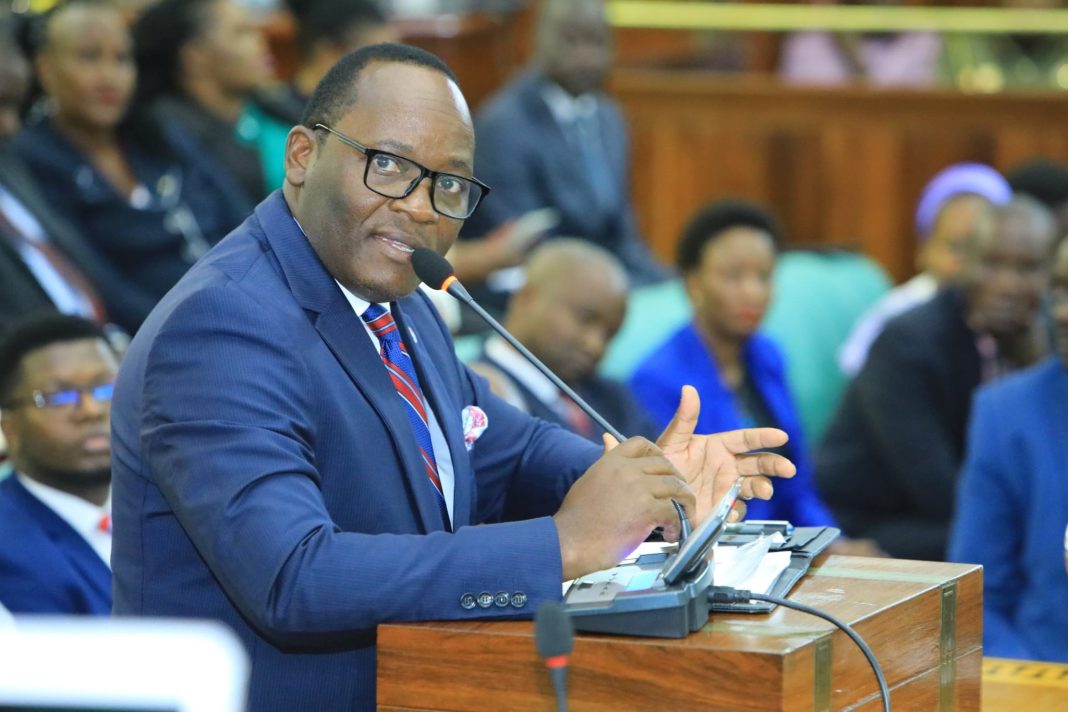
Barely three months after Uganda’s January 15 general elections, former Leader of Opposition in Parliament, Mathias Mpuuga, has taken a bold legal step that could reopen national debate over the credibility of the 2026 electoral process.
In a petition filed before the Constitutional Court, Mpuuga is asking the judiciary to declare that the 2026 general elections were not conducted in accordance with the Constitution. The filing, now under judicial review, raises questions about the conduct of the polls, compliance with electoral laws, and the integrity of key stages of the voting process.
A LEGAL CHALLENGE WITH WIDE POLITICAL IMPLICATIONS

According to the petition, Mpuuga is seeking several remedies, the most significant being a constitutional declaration that the entire electoral process failed to meet the legal standards required for a free, fair, and credible election.
While full details of the petition remain before the court, sources familiar with similar electoral filings indicate that such cases often hinge on claims of procedural irregularities, administrative failures, or alleged breaches in electoral management.
However, at this stage, the court has not made any determination on the merits of the allegations.
WHAT IS AT STAKE
If the Constitutional Court agrees to entertain the arguments and finds merit in the petition, the implications could extend beyond individual constituencies. A ruling questioning conformity with the Constitution could trigger political and legal consequences that affect the legitimacy of the electoral outcome.
Conversely, if dismissed, the petition would reinforce the legal standing of the current election results and close one of the emerging post-election disputes.

A PATTERN OF POST-ELECTION DISPUTES
The petition adds to a broader wave of legal and political challenges that have followed the 2026 general elections. In Uganda’s electoral history, courts have often been called upon to arbitrate disputes arising from contested results, reflecting recurring tensions between political actors and the electoral framework.
COURT EXPECTED TO SET TIMELINES
The Constitutional Court is expected to first determine whether the petition meets the threshold for constitutional interpretation before proceeding to a full hearing. No hearing date has yet been publicly confirmed.
For now, the petition places renewed scrutiny on Uganda’s electoral system and sets the stage for a potentially significant constitutional interpretation case—one that could shape how future elections are assessed and contested.