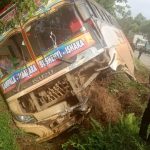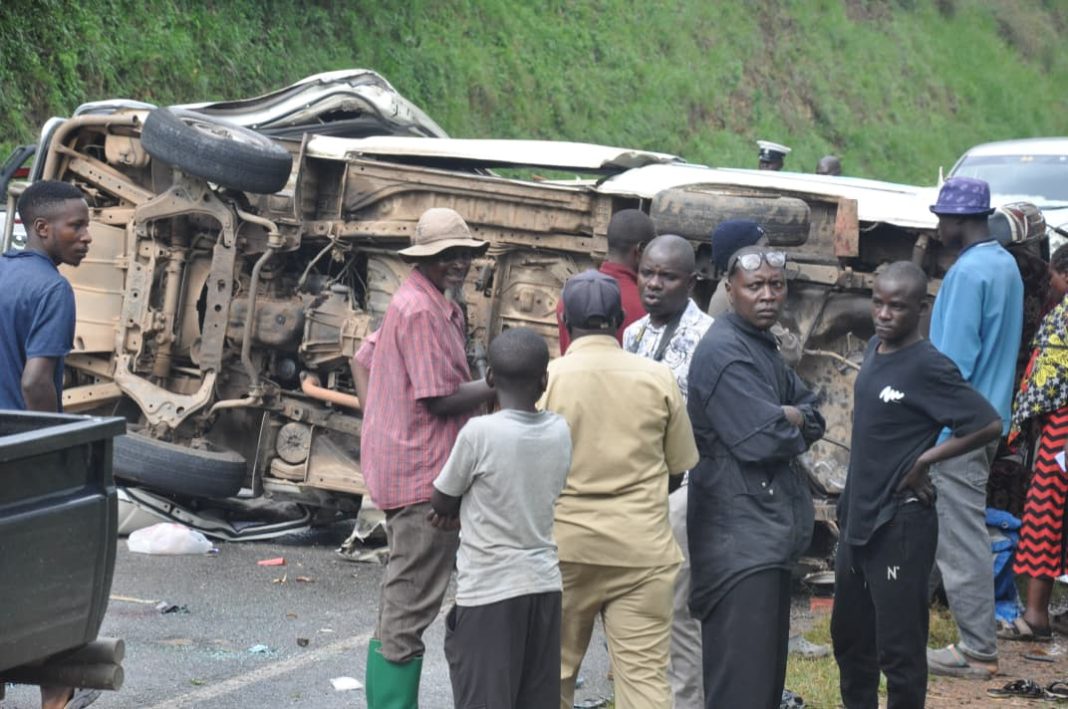
Investigative Desk Sunday, May 3, 2026-As investigations continue into Sunday’s fatal crash on the Mbarara–Bushenyi Road, a different line of inquiry is gaining ground: the human pressures behind the wheel.
Beyond the collision between a passenger taxi (UBE 047S) and a heavy truck from the direction of Mbarara, transport insiders say the tragedy reflects a deeper problem—a system that pushes drivers to the edge.
One person has been confirmed dead, while several others remain hospitalized in and around Bushenyi.
Racing the clock—and each other

In Uganda’s public transport sector, time is money. Taxi operators often work under informal but intense expectations to maximize trips and revenue within a day.
“If you delay, you lose passengers to another driver. So people speed to stay competitive,” said Mr. Patrick Turyamureeba, a taxi driver who frequently operates along the route.
Drivers describe a system in which earnings depend on how many trips they complete—creating incentives for risky behavior.

“You are judged by how fast you return for the next trip. That pressure is always there,” he added.
Fatigue behind the wheel
Long hours and limited rest are another growing concern. Some drivers operate for extended periods with minimal breaks, especially on busy corridors like the Mbarara–Bushenyi Road.
“A driver can start very early and continue late into the night. Fatigue is real, but there is no proper monitoring,” said Mr. Wilson Byaruhanga, a transport union member.
Fatigue slows reaction time, impairs judgment, and increases the likelihood of deadly errors—particularly when combined with speeding or poor road conditions.
The truck factor
Heavy trucks, often moving goods across long distances, are also part of the equation. Industry observers say driver fatigue is equally common among truck operators, many of whom travel overnight to meet delivery deadlines.
“Truck drivers are under pressure from employers to deliver on time. Some drive for hours without proper rest,” said Ms. Harriet Nambooze, a logistics sector analyst.
Eyewitnesses in Sunday’s crash claim the truck was moving at high speed before impact, though this has not yet been officially confirmed.
Enforcement gaps
The Uganda Police Force maintains that traffic laws exist to regulate speed and driver conduct—but enforcement remains inconsistent.
“We conduct operations to curb speeding and reckless driving, but compliance is still a challenge,” said ASP Samson Kasasira, police spokesperson.
Transport stakeholders argue that enforcement often comes in bursts—leaving long stretches of highway effectively unmonitored.
“Drivers know where enforcement is likely to happen and adjust temporarily. Once past those points, they revert to risky behavior,” said Mr. Stephen Rwomushana, a road safety advocate.
Economics vs. Safety
At the heart of the issue is a difficult trade-off: livelihood versus safety.
Many drivers operate under financial pressure—vehicle owners demand daily remittances, fuel prices fluctuate, and competition remains high.
“If a driver slows down too much, they may not meet the owner’s target. That’s the reality,” said Mr. John Kato, a taxi stage coordinator.
This creates an environment where cutting corners becomes normalized, even when the risks are well understood.
Human toll
For passengers, these invisible pressures can have deadly consequences.
“We trust drivers with our lives, but we don’t know what they are going through,” said Ms. Doreen Kyomuhendo, a frequent traveler on the route.
Families affected by Sunday’s crash are now confronting that reality firsthand, as loved ones fight for survival in hospital.
Rethinking the system
Experts say reducing accidents on routes like the Mbarara–Bushenyi Road requires more than blaming individual drivers.
Proposed solutions include:
Regulating driver working hours to prevent fatigue
Reforming payment structures to reduce pressure for excessive trips
Strengthening continuous speed monitoring, not just spot enforcement
Expanding driver training and mental health support
“We must address the system around the driver—not just the driver,” said Eng. David Tusingwire, a transport policy expert.
A familiar tragedy
As investigators work to determine the exact cause of Sunday’s crash, one thing is becoming clear: the incident reflects patterns that have played out before—and may happen again.
Unless structural pressures within Uganda’s transport sector are addressed, roads like the Mbarara–Bushenyi Road will continue to carry not just passengers and goods, but risk, fatigue, and preventable loss.