Stanbic Bank
Stanbic Bank
21.2 C
Kampala
Stanbic Bank
Stanbic Bank
Home Blog Page 1622

US $591m returned to Zimbabwe coffers from the corrupt as Mnangagwa releases list of defaulters

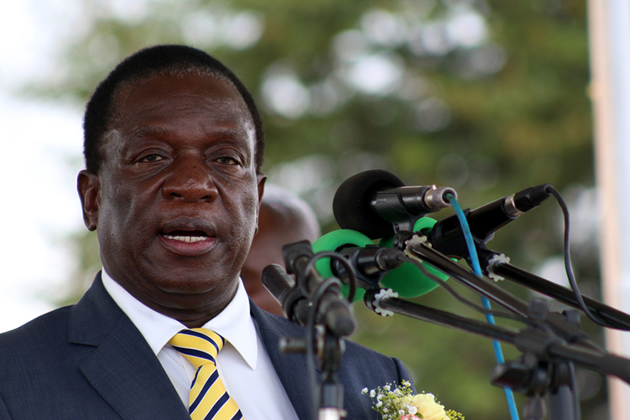
TEAM LACOSTE BOSS: Vice President Emmerson Mnangagwa

Zimbabwe’s President Emmerson Mnangagwa has released the names of hundreds of companies and individuals who failed to return $827m (£590m) illegally stashed abroad despite an amnesty.
After taking office last year Mr Mnangagwa gave individuals and companies 90 days to give up the funds.
He said on Monday it had resulted in $591m being returned, less than half the funds believed to be held abroad.
He has warned that those who fail to comply are at risk of prosecution.
Mr Mnangagwa, who promised to crackdown on corruption after being sworn into office last year, said he had been left with no choice but to release the 1,800 names, which include manufacturers, miners, small businesses, state-owned entities and even churches.
The list of names is divided into three separate groups: export earnings which were kept offshore, companies which owe money for imports which never arrived and people and businesses which have allegedly put funds into foreign banks “under spurious circumstances”.
Mining companies dominate the top the first: African Associated Mines, Marange Resources, Canadile Miners, Mbada Diamonds and Jinan Mining are alleged to collectively owe more than $150m to the Zimbabwean government.
Leading the second list is the Ekusileni Medical Centre, an upmarket hospital facility in Bulawayo which closed just a few days after its opening more than a decade ago. According to the list, it is accused of owing more than $3m to the government.
The third list is dominated by people who have allegedly moved money to China.

Stories Continues after ad

National schools championship attracts 6000 students

FLASHBACK: Patrick Mweheire  Stanbic Bank  CEO (centre), Barbara Kasekende Stanbic CSI Manager (4th left) and Brian Mulondo, Quiz Master of the National Schools Championship pose for a group picture with students at the launch of the 2018 Stanbic National Schools Championship. 

Stanbic Bank Uganda, in partnership with the Ministry of Education and Sports, have launched the 2018 ‘Stanbic National Schools Championship’ that has attracted over 6000 students.

This year’s competition will include a class room test, oral quiz, essay competition, debate competition and a business skills challenge, and six thousand students from 60 schools, both government and private, are expected to take part, with 15 schools participating in each of the four regional heats.

Set to run under the theme ‘Empowering the job creators of tomorrow’, the competition will seek to nurture entrepreneurship, creativity and long term business thinking.

Speaking at the launch event Patrick Mweheire, the SBU Chief Executive explained the genesis behind this year’s theme.

“Uganda’s labor market cannot absorb the huge influx of graduates looking for jobs. 400,000 students graduate from university every year yet only 13,000 formal jobs are available. This tells us we have a real and urgent problem that needs to be addressed by training the youth not only how to do a job but how to create one and if possible more for others,” Mr. Mweheire said.

He added: “Uganda has one of the fastest growing populations in the world with 1.2 million babies born every year. As a bank we feel that education as a sector does not get the love it deserves. Which is why we have these championships. This year we have increased the number of schools to 60 from 40 last year but this isn’t good enough. We want to be able to reach over 250,000 students. We also want to demystify education as cramming and passing of exams. Soft skills are just as important as the hard skills. It is in being able to communicate properly as well as debate and have their opinions heard, that students can be propelled to achieve greater things.”

The Guest of Honor Martin Osuban, Assistant Commissioner for Secondary Education, Ministry of Education and Sports said youth unemployment is a serious problem on the African continent.

“Uganda as a case study has one of the youngest and most rapidly growing populations in the world and preparing them to become productive members of society is a national priority for the government. We are therefore honored to be part of this visionary initiative which we believe will go a long way towards changing the current status of our job market long term,” Mr. Osuban said.

Talking about the increase in the participation numbers and major changes to the competition, Stanbic Bank’s CSI Manager Barbara Kasekende said the level of interest in this year’s championships was extraordinarily high.

“As a bank, we felt it would only be fair to not only increase the number places in the competition but to make it more exciting by adding new challenges, to that end,” she said.

This year 15 schools will be given the opportunity to participate in the regionals compared to 10 last year.

“In a major development, we will be hosting business training boot camp for the finalists which will equip the students with business planning, marketing and the management skills they will need to succeed in the real world.”

The four schools that succeed in representing their regions will be tasked with developing business plan and executing it in their respective schools. The school that presents the best plan at the finals to be held in Kampala will be crowned 2018 Stanbic National Schools Champions.


Stories Continues after ad

Kitatta appears in Makindye GCM, sent back to prison

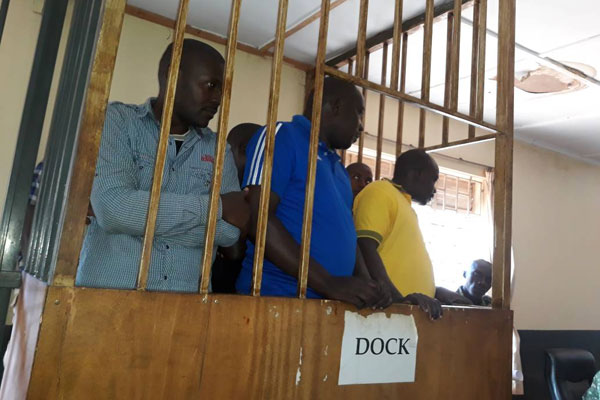
Abdallah Kitatta with his co-accused in the dock at Makindye

Abdallah Kitatta, the patron for Boda Boda 2010 motorcyclists, has today appeared before Makindye General Court Martial (GCM), charged with the illegal possession of ammunitions.

Kitatta is currently facing five counts including failure to protect war material and being in unlawful possession of military stores contrary to the UPDF Act.

His co-accused include Sowali Ngobi, Amon Twinomujuni, Joel Kibirige, Matia Ssenfuka, Hassan Ssebata and Johnson Kayondo. The others are Hassan Ssengoba, Sunday Ssemogerere, John Ssebandeke, Hussein Mugema, Fred Bwanika and Ibrahim Sekajja.

Kitatta was arrested by a joint force of Uganda People’s Defence Forces (UPDF) and Internal Security Organization (ISO), and appearing before the GCM chaired by Lt Gen Andrew Guti, prosecution led by Staff Sergeant Raphael Mugisha sought adjournment to April 23.

Earlier, Shaban Sanywa, appearing for Kitatta, asked for transfer of his client from military barracks where he is detained to Luzira prison, arguing that his client is not receiving treatment.

But GCM chairman Lt Gen Guti said that due to the nature of Kitatta’s case, the latter is supposed to be detained in a military prison.

Stories Continues after ad

Mowzey Radio suspect killer remanded

Mowzey Radio suspected killer Godfrey Wamala aka Troy in the dock

Entebbe Grade One Magistrate’s court has for the third time been remanded Godfrey Wamala aka Troy, the prime suspect in the murder of slain music icon Moses Nakintijje aka Mowzey Radio.

Appearing before GI magistrate Mary Kaitesi, suspected killer Troy was remanded to Kigo prison till April 9, 2018 after prosecution led by Resident State Attorney Julius Muhiirwe asked for more time to gather substantial evidence.

In a full court attended by Mowzey Radio’s mother among other relatives, defense lawyer Ladislaus Rwakafuuzi didn’t not show up as magistrate Kaitesi remanded his client remanded for third time.

Prosecution averred that between January 27 and February 1, Troy hit Mowzey Radio during a bar brawl in which the latter sustained injuries on brain leading to his death at Case Hospital.

Troy, a former employee at the Da Bar, a hangout place in Entebbe, was arrested in February from his friend’s home in Kyengera where he was hiding.

Stories Continues after ad

Sadolin gives winner Shs5m paint

Officials of Sadolin at the handover of paint to Omar

Tom Edwards Omar, a teacher at Seeta Parents school Mukono, was the overall lucky winner of Sadolin Paint makeover worth Shs5 million.

At a function, the Sadolin head of public relations Felix Adupa Ongwech handed over the paint to Omar, whose house get a new coat.

Tom Edwards Omar, a teacher at Seeta Parents Mukono receiving Sadolin Paint products worth 5million from Adupa Ongwech

“I am really very happy for emerging winner of the Sadolin draw. My six roomed house was only lacking paint to get finished but now Sadolin is going to paint it for me,” an excited said.

According to Adupa Ongwech, Ugandans appreciate Sadolin Paints for being involved in community activities.

“The company has partnered with a number of non-governmental organisations to refurbish schools and health centres in several parts of Uganda. Indeed, Sadolin Paints is aware of global CSR,” Adupa Ongwech, said.

He added:  “Those wishing for its closure can go and hang. For now, despite some challenges it has faced in the recent past, Sadolin Paints remains the market leader in Uganda.”


Stories Continues after ad

Giants qualify for CAF Champions League group stages

KCCA captain Timothy Awany in action in the 1-0 win against St. George

A total of 59 teams competed in the qualifying rounds from February 10, 2018 to March 18, 2018 to decide the 16 places in the group stage of the 2018 CAF Champions League.

KCCA FC, which won US$550, 000 (Approx.Shs2 billion), became the first Ugandan club to reach the CAF Champions League group stage following a 1-0 aggregate win over Ethiopian giants St. George in the qualification round.

Muhammad Shaban scored the only goal two minutes into the second half heading home from a Mustafa Kizza cross, and reports indicate individual players got Shs20 million.

For the first time in the history of the Caf Champions’ league, Botswana, Guinea, Swaziland, Togo and Uganda will have a representation in the knockout tournament.

Holders Wydad Athletic Club of Morocco remain on course to defend their title after they eliminated Williamsville of Cote d’Ivoire 7-2 on aggregate.

Former winners AS Vita of DR Congo, Ivorian gaints ASEC Mimosas and regular participants El Hilal of Sudan are some of the teams that fell along the road.

Kenyan champions Gor Mahia were eliminated by Tunisian side Esperance as they lost 1-0 on aggregate after the return leg of their second round clash at the Stade El Menzah in Tunisia.

Record winners, Al Ahly will carry high the flag of Egypt whilst TP Mazembe of DR Congo stages a comeback after missing out on the competition last year.

The group stage draw will take place on Wednesday, 21 March 2018 in Cairo, Egypt. The First group stage matches will be played on 4 May 2018.

The first leg of the final will be played on 3 November 2018 while the second leg will take place on 10 November 2018.

The winners of the 2018 CAF Champions League will qualify as the CAF representative at the 2018 FIFA Club World Cup in the United Arab Emirates, and also earn the right to play against the winners of the 2018 CAF Confederation Cup in the 2019 CAF Super Cup.

Qualified teams:

KCCA (Uganda), Mamelodi Sundowns (South Africa), Difaa El Jadidi (Morocco), Zesco (Zambia), AS Togo (Togo), Etoile du Sahel (Tunisia), Esperance (Tunisia), ES Setif (Algeria), Primeiro de Agosto (Angola), TP Mazembe (DR Congo), Township Rollers (Botswana), Horoya (Guinea), MC Alger (Algeria), Al Ahly (Egypt), Wydad Casablanca (Morocco), Mbabane Swallows (Swaziland).

Stories Continues after ad

Barclays apologies to Bagyenda over leaked bank details

Barclays Bank has apologized to former Executive Director in Charge of Supervision at Central Bank Justine Bagyenda over the leaked details of her fat accounts she holds at the bank.
Barclays is the second bank to apologise to Ms Bagyenda after Diamond Trust Bank (DTB) came out first and issued the apology regarding similar issue.
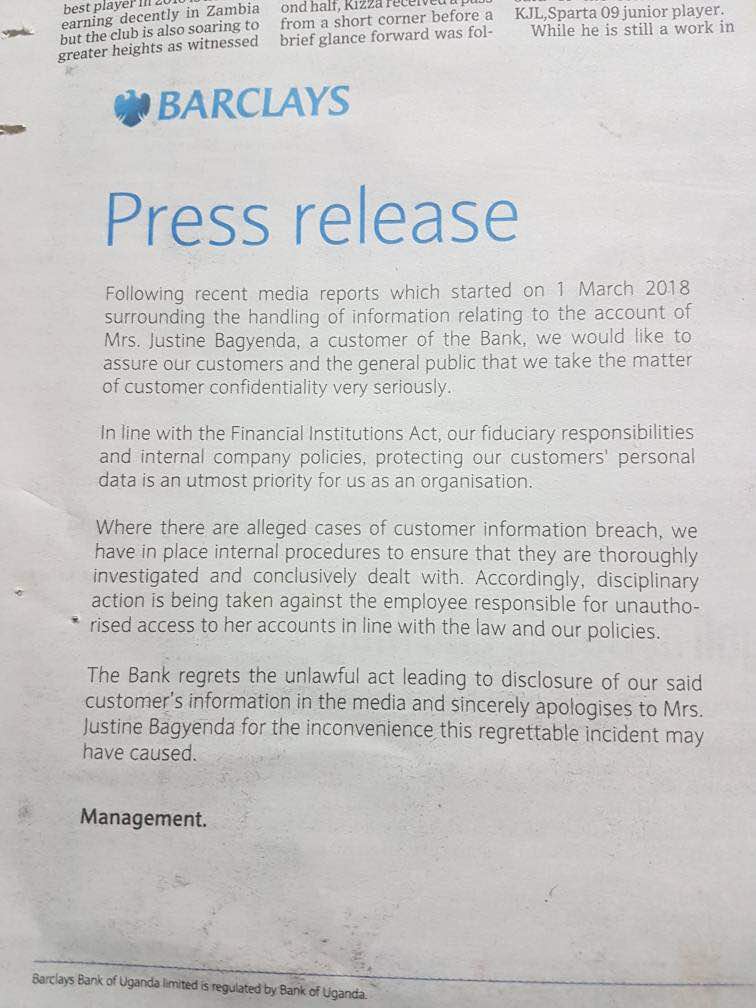
In a press release, Barclays says in line with Financial Institution’s Act, their fiduciary responsibilities and internal company polices is protecting their customer’s personal data is the utmost priority for them as a bank and therefore, internal disciplinary actions are being undertaken to address the leaks.
“The bank regrets the unlawful act leading to disclosure of our said customer’s information in the media and sincerely apologies to Ms Justine Bagyenda for the inconvenience this regrettable incident may have caused” reads the press released.

It further adds “Following recent media reports which started on March 1, 2018, surrounding the handling of information relating to the account of Ms Justine Bagyenda, a customer of the bank, we would like to assure our customers and the general public that we take the matter of customer confidentiality very seriously” reads the statement.
The bank further said that whereas, there are alleged cases of customer information breach, Barclays has in place internal mechanism to ensure that they are thoroughly investigated and conclusively dealt with.
“Accordingly, disciplinary action is being taken against employees responsible for unauthorized access to her accounts in line with the law and our polices”
The leadked bank documents show that Ms Bagyenda in the last six years, her account balance was Shs20 billion.
Last three weeks, Eagle Online published a series of stories detailing the depths of Ms Bagyenda’s bank accounts she has with the bank, including one about how she has a whopping Shs20b sitting on two different accounts.
The stories have prompted DTB and Barclays to investigate the source of information in the bank, and the investigation, reportedly led them to one of their staff who, the Bank leadership claims, was ‘compromised’ and actively participated in leaking account details of their client.
Bagyenda, whose contract at BoU was supposed to end June 2018, went on annual leave on January 22, but in a reshuffle announced by BoU governor Emmanuel Tumusiime Mutebile, she was retired. In her place Prof. Mutebile appointed Dr Tumubweine Twinemanzi the new Director in charge of Supervision.

Stories Continues after ad

Burundi’s Nkurunziza sets May for referendum

ANNOUNCED DATE FOR REFERENDUM: President Pierre Nkurunziza

Burundi’s President Pierre Nkurunziza has set May 17 as the date for a referendum that could extend his rule for at least a decade.

The small and impoverished Central Africa nation has been unstable since 2015, when Nkurunziza decided to seek a third term in office that his opponents said was unconstitutional.

The referendum will decide whether to amend the Constitution to extend presidential terms to seven years from five.

The proposed changes would limit the president to two consecutive terms but would not take into account previous terms, potentially extending Nkurunziza’s rule to 2034.

“The draft constitution submitted to the referendum will be adopted if the absolute majority of votes or fifty percent plus one vote, approve it,” Nkurunziza said in a statement issued by his office announcing the date.

Several leaders around Africa have sought to void laws or use other tactics to thwart opponents and prolong their reigns beyond constitutional limits, sometimes for decades.

Those who opposed Nkurunziza’s third five-term launched an armed struggle against his government, and the resulting violence has left hundreds dead and forced at least 400,000 people into exile.

Regional efforts to find a peaceful resolution to the conflict have dragged on without results so far.

This month, the ruling CNDD-FDD decided to give Nkurunziza the title of ‘CNDD-FDD Party Visionary’ after appraising his ideas and teachings.

The title has no specific role attached to it and appeared to be aimed at shoring up support for the president ahead of the referendum.


Stories Continues after ad

Opportunity Bank rebrands, gets new home

Officials from BOU and Opportunity Bank during the rebranding launch

With the rise of digital innovation and changing consumer expectations, the financial services landscape is rapidly changing in Uganda. And with this in mind, Opportunity Bank, a leading microfinance institution with over 20 years’ experience announced a new brand the includes moving to a new and improved Head Office.

These changes will elevate Opportunity Bank’s focus on the ability to provide a strong customer experience and technology-led financial services offering to well serve their existing customers and potential target market in the small and mid-sized businesses (SMEs).

Opportunity Bank Uganda Limited is a Tier 2 financial institution licensed by the Bank of Uganda to offer savings, training, remittances and loan products to its customers across the country.

“There are still many people who are unbanked and have fettered access to loans for developing their businesses. Being able to provide a strong customer experience while exhibiting our unique brand values and financial solutions can be a key differentiator to enable the local market access to turn-key banking products and services,” Tineyi Emmanuel Mawocha, Chief Executive Officer of Opportunity Bank said at the launch.

He added: “With our rebranding efforts, Opportunity Bank has been empowered to offer banking solutions and experienced customer support services that SMBs need to grow.”

Speaking at the function, the bank’s acting Board Chairperson Mrs Winnie-Lawoko-Olwe, noted that the institution has a unique banking platform that is able to effortlessly meet consumer needs.

“Opportunity Bank continues to develop its multi-functional platform, helping our local markets grow one business at a time. The innovative banking solutions that a small business owner will need to grow their business is extensive. We knew that a unique approach was needed, and we have moved to tailor our products and services specifically to meet our client’s needs,” Ms. Lawoko-Olwe remarked.

The Executive Director-Supervision at Bank of Uganda Dr. Tumubweine Twinemanzi, who officiated at the launch, said that increased confidence in banking benefits will see the move of the ‘unbanked funds’ from under the mattress to commercial banks.

“It is, therefore, a real pleasure for me to officiate at the launch of yet another milestone for Opportunity Bank Uganda Limited,” Dr. Twinemanzi added.

Meanwhile, Opportunity Bank officials say the new branding further enables the bank to stand out, not only within the expansive financial sector industry, but also within the ever-growing mobile money banking sector technology ecosystem.

Small business owners will enjoy the ease-of-use of Opportunity Bank’s sophisticated technology, along with the human touch that is delivered through superior customer service, the officials add.

Established in 1995 as Faulu Uganda and acquired by Opportunity International in 2006, the Bank has evolved from a Tier 3 Micro Finance Institution to a Tier 2 Micro Finance and Deposit Taking Institution over the years.


Stories Continues after ad
Manufacturing driving Kampala GDP growth- WB report

Part of Kampala's Industrial Area. Photo/pinterest

Kampala’s annual Gross Domestic Product (GDP) growth of 6.7 percent is being driven by its manufacturing and other tradable goods and services sector, according to a World Bank report released recently in Kampala.

According to the report titled: ‘Role of City Governments in Economic Development of Greater Kampala’, the contribution of manufacturing representing a growth of 31.1%, was greater than its share of 27.7 of GDP in 2008, indicating an expansion of the sector.

The report indicates that tradable goods and services drove two thirds of GDP growth, indicating that Kampala is on the way to transitioning from a ‘market town’ producing local services towards being a ‘production center’ which produces tradable goods and services.

 “This pattern was similar for transportation, storage and ICT, which drove 26.2% of growth, off a base of only 11% of GDP, indicating a rapid expansion of the wholesale trading sector,” the report states in part.

On the other hand, non-tradable services contracted as a share of GDP, indicating a decreasing reliance on local demand. Consumer services, for instance, which includes mostly retail trade, comprised 39.4% of GDP in 2008 fell to 29.5% of growth between 2008 and 2012.

Nonetheless, the report notes that Kampala’s structural transformation is still at an early stage when compared to other African cities for manufacturing, tradable services, non-tradable services and agriculture. It says Kampala has the third lowest share of output in tradable goods, agriculture, manufacturing or tradable services.

 “It is thus at the beginning of its transition away from a “market town,” to a “production center with a higher share of tradable, high value-added output,” it says. According to the report, the only two cities below it in structural transformation, Addis Ababa and Kigali, have much lower per capita income.

The report says 56% of the firms are primarily engaged in trading and services within which the most common occupation is shopkeeper or street vendor. The next sector, hotels, bars and restaurants, comprises 26%. The report says manufacturing, which includes primarily tailoring and woodwork, comprises just 13%.

‘Not surprising for an urban area, agriculture comprises only 4% of firms,’ it adds.

Employment

The report says job creation in formal employment is not keeping pace with Kampala’s growing population. Current evidence, according to the report, indicates that Kampala’s unemployment is currently 10%, which while concerning, is not considered high relative to comparator cities in East Africa.

According to the report, underemployment and informality is the primary concern for the Greater Kampala, and that underemployment estimated at 23% and informal firms account for 57% of the city’s employment. The majority of Kampala’s employment is in micro or small firms. It says employment growth has dramatically increased in micro firms and reduced in large and medium firms. In particular, it says large firms in the tradable sector have lost five thousand jobs during 2001-2011 in Greater Kampala (four times more than that in the non-tradable sector).

‘Kampala will not be able to keep pace with its population growth and satisfy the expectations of its population for better quality jobs unless it is able to create more formal jobs in sectors which will encourage further industrialization and economies of scale,’ it warns.

Uganda has the third fastest growing population in Africa, with the population doubling around every twenty years, with young people joining the workforce at a rate of 4 million people per year, which is forecasted to increase to over 8 million by 2040.

Stories Continues after ad