Stanbic Bank
Stanbic Bank
24.5 C
Kampala
Stanbic Bank
Stanbic Bank
Home Blog Page 1632

Bulamu medical camp puts a smile on the sick in Sheema

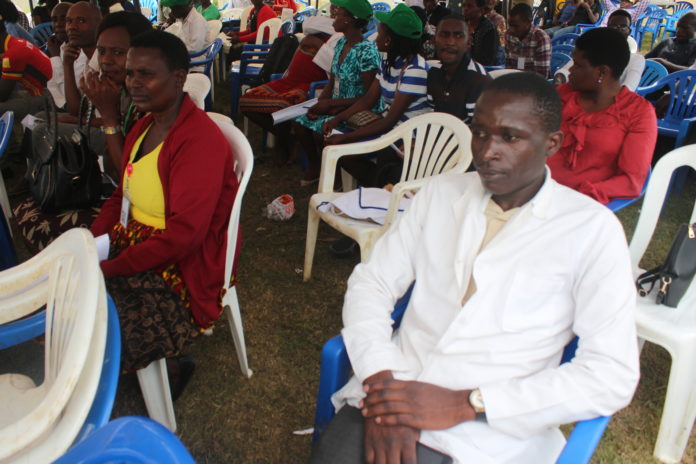
Medical personnel at the Bulamu International camp in Sheema

Bulamu Health International recently wrapped up its seventh medical camp held in Sheema District, the place where it all started way back in February 2015, when the organization officially launched its first-ever medical camp in Uganda.

Bulamu Health medics interact with Sheema locals during the camp

The organization’s second outreach in Sheema was nothing but successful, bringing together a record number that by far surpassed that of its initial camp held here two years ago.

Despite unfavorable conditions such as heavy rainfalls, long distances and poorly accessible roads, medics in the camp treated up to 7740 patients in rural Shema at the Shuuku Health Centre IV, through joint undertakings by the area local government and the Bulamu team.

The camp, like several others before, was teeming with life as nurses, volunteers and doctors run to and fro, providing medical care and aid to the many patients that thronged the venue; about 1500 a day, with some being helped to give birth.


Other services provided to the area locals included post and antenatal care, male circumcision, dental surgery, health education including cervical cancer screenings and the introduction of rumps (homemade sanitary pads) among others.

“I know people’s lives have been impacted greatly, especially those patients with chronic conditions that were demystified by the likes of Dr Babu Nganwa, who cured these complications and restored many lives through the countless surgeries performed here. People have been tested and have finally found out their statuses which also gives them confidence. We also have had some complicated cases that have been referred to Entebbe or Mulago for further treatment all at the expense of the Bulamu organisation that has taken responsibility for the travel and care of these patients and through this it has also decongested the health centres in the district.” Canon David Kabigumiira, the LC5 chairman of Sheema District, said.

He urged organizations like Bulamu to fight the stigma, saying many are ‘fearful of their statuses during diagnosis’.

“Most people don’t attend these camps because they consider them curative and not preventive; this makes it quite hard to convince many people to attend these camps or volunteer to participate,” Mr. Kabigumiira added.

Jordan Cowan, 27, a Peace Corps volunteer, advised girls to adopt the use of Rumps, saying it will help many girls stay in school and complete their studies.

“We need to be able go back to these communities to ensure that they are taking up the use of these homemade rumps. It is easy and very convenient for people living in rural areas,” Cowan said.

The rump, a homemade sanitary pad is not only easy to make (fabric, needle, thread and absorbent) but also reusable therefore making it very cost effective and reliable, Bulamu officials say.

Also, of import to note, during the camp in Sheema, the ‘Angel Programme’ was launched, to facilitate critical cases that require treatment outside the camp such as referrals to Mulago Hospital and Entebbe.

And as the ambulances the patients boarded ambulances destined for Mbarara or Kampala for further treatment and diagnoses, Prof Richard Chandler, a Director at Bulamu International, walked the media through the new initiatives that include among others, the introduction of Village Health Teams (VHTs) that will follow up special cases in need of further treatment or checkups.

The VHTs, Prof. Chandler said, would also be in charge of data entry and management during these follow-ups, allowing the easy access to medical records of the various patients treated at the camp.

“We want to introduce digital records and software that would be able to transfer information to other health facilities where these patients are admitted after the camp. This is our first demonstration camp and we hope that it will greatly improve with checkups or monitoring and follow ups of these patients, especially the VHTs that will be out in the field,” Prof. Chandler said.

Meanwhile, as the Bulamu organization continues to grow, so does it’s outreach, a development proved by the increased number of camps it holds each year.

Staff of EKM Hope Foundation at the camp

The organization, that was joined for the Sheema assignment by teams from EKM Hope Foundation, the Red Cross and the area local authorities, will hold the next camp in March.


Stories Continues after ad

US company awarded US$32m water and sanitation contract

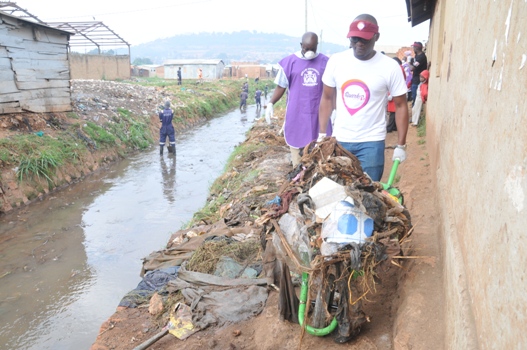
People clean a channel in Kampala as part of keeping clean sanitation standards

The United States Agency for International Development has awarded Tetra Tech, Inc. a USD 32m contract to expand the delivery of water, sanitation and hygiene (WASH) services in Uganda.

Under the five-year Uganda Sanitation for Health Activity contract, Tetra Tech will provide technical services to increase household access to sanitation and water services and improve health through evidence-based behavior change campaigns in homes, schools, and health facilities. To effectively document behavior change, Tetra Tech will collect data using innovative methods such as sensors, water usage information, and mobile texting surveys.

Tetra Tech will support USAID to build the capacity of local government partners and will work with the Ugandan Ministry of Health and Ministry of Water and Environment to support WASH sector policy reforms. To help ensure long-term sustainability of project outcomes, Tetra Tech will also collaborate with local, private sector service providers to encourage investment in WASH facilities, facilitate public-private partnerships, and develop innovative financing arrangements for sanitation and hygiene services.

“Tetra Tech has been working with USAID for more than 20 years to develop technical solutions to improve access to water and sanitation services in developing countries,” said Tetra Tech Chairman and CEO Dan Batrack.

He added: “We are pleased to continue to support USAID’s efforts to improve health outcomes through the Uganda Sanitation for Health Activity.”

Tetra Tech is a leading, global provider of consulting and engineering services. It provides innovative technical solutions to our clients. It supports global commercial and government clients focused on water, environment, infrastructure, resource management, energy, and international development.


Stories Continues after ad

Wildlife diversity can make Uganda top tourism destination in Africa-Minister

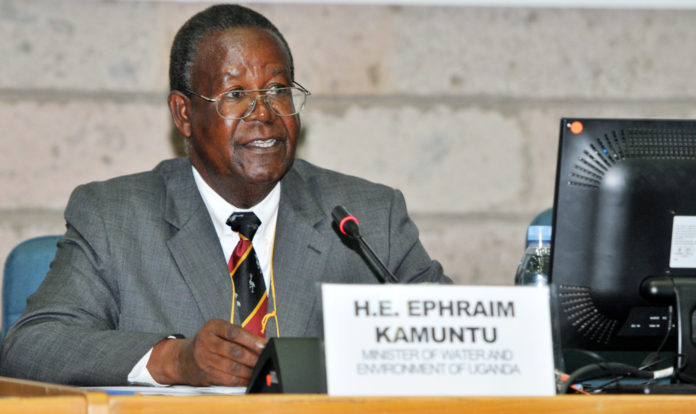
Tourism and Wildlife Minister Prof Emphraim Kamuntu

The rich wildlife endowment is the number competitive edge to develop Uganda into a top tourism destination in Africa, the Minister of Tourism Wildlife and Antiquities, Professor Ephraim Kamuntu, has said.

According to Prof. Kamuntu, Uganda has 18,783 species of flora and fauna and ranks among the top ten most biodiversity-rich countries globally.

Records show that Uganda is host to 53.9 percent of the world’s remaining population of mountain gorillas, 11 percent of the world’s recorded species of birds (50 percent of Africa’s bird species richness), 8 percent of the global mammal richness (39 percent of Africa’s mamma richness), 19 percent of Africa’s Amphibian species, 14 percent of Africa’s reptile species and recorded 1,249 species of butterflies.

The above specie are the major sources of tourists coming to Uganda, making the tourism sector a leading foreign exchange earner in the country, bringing in US$1.37b annually. This is about 23 percent of the total exports annually, according to available official statistics.

According to the minister, tourism, which is largely wildlife based contributes Shs7.27 trillion to GDP annually as it attracts over 1.3m international tourists.

Official records show that wildlife protected area-based tourism alone generates over Shs70b annually in direct fees. The big cats – lions, leopards, spotted hyena, Cheetah and African wild dog, alongside gorillas are the biggest tourist attractions in Uganda.

Currently, the minister says, about 10 percent of Uganda’s land surface is conserved as wildlife protected areas comprising 10 national parks, 12 wildlife reserves, 10 wildlife sanctuaries and community wildlife areas.

He says the sector provides over one million jobs in Uganda, which is 7.8 percent of total employment.

“Uganda Wildlife Authority alone employs over 2000 staff,” Prof. Kamuntu said in a statement to mark World Wildlife Day celebrated annually on March 3.


Stories Continues after ad

Former MP Kipoi extradited

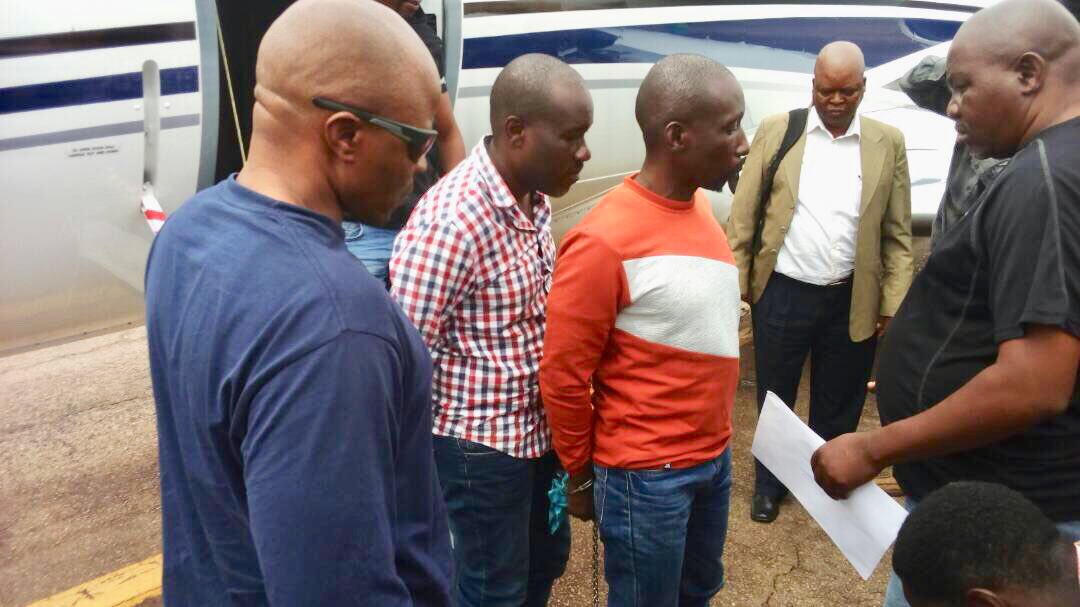
Former Bubulo West MP Tony Kipoi Nsubuga on arrival at Entebbe International Airport, from Botswana where he was arrested.

Former Bubulo West Member of Parliament Tony Kipoi Nsubuga, who was arrested in Botswana last week has been extradited this morning, and handed over to the military, sources at the airport have said.

Former MP Tony Kipoi being ‘received’ by the Military Police

In December 2012, the controversial former MP was arrested in Fort Portal, and charged with treason. He was subsequently granted bail and has since been playing a hide and seek game with authorities, while oscillating between countries in the region, till his arrest in Botswana last week.

Also to haunt Kipoi, 40, who was a member of the Ninth Parliament between 2011 and 2014, were allegations drug trafficking and car theft, ostensibly carried out in South Africa.

Former MP Tony Kipoi Nsubuga (in checkered shirt) and his co-accused Robert Kitale at Entebbe airport

And today Kipoi was extradited alongside Robert Kitale, a man who has reportedly been helping him acquire passports, and also coordinate his other activities in Uganda and other countries.

By press time the EagleOnline could not get comment from the Police Spokesperson Emilian Kayima, but other sources, speaking on condition of anonymity, said Kipoi will later be handed over to police and likely be charged with treason, the charge he earlier faced before jumping bail.


Stories Continues after ad

Obituary: Cheeye, he of the ‘Feet of Clay’

RIP Teddy Seezi Cheeye

By Julius Mwesigye

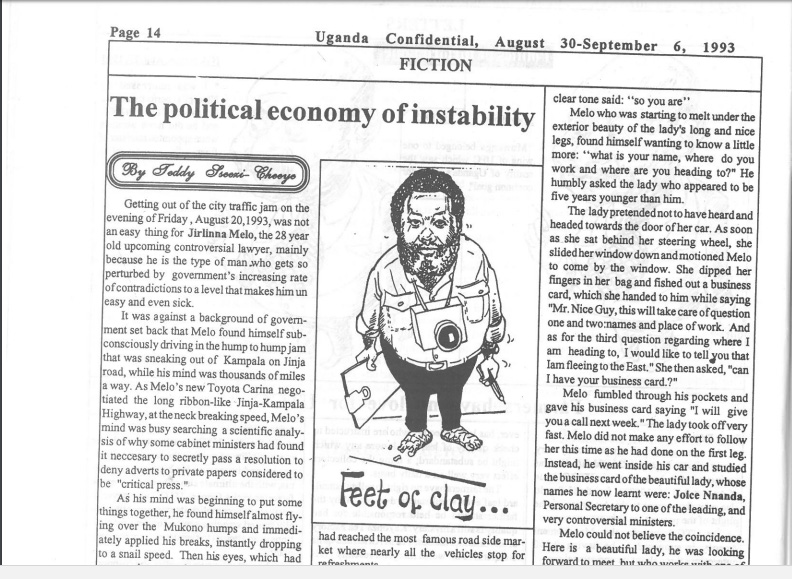
Teddy Sseezi Cheeye had a column in his Newspaper Uganda Confidential. Feet of Clay, it was called, was a fiction column through which he spoke frank to those in power on issues of public policy.
In the August 30- September 6 1993 issue, he described, as hump to hump and annoying, the traffic situation along Jinja-Kampala highway—the road where he lost his life to a speeding Boda Boda on Thursday March 1,  2018.
He was a rather feisty man in his writing. Just like most Uganda journalists who have scaled the heights, Cheeye showed up from a poverty stricken and obscure background with his only trait being that he was enduring.
Though I never interacted with him in close quarters, I ‘knew’ Cheeye in a number of ways, having worked with him in the Ministry of Information and Broadcasting, where he was deployed as the first ‘Cadre’ in the National Resistance Movement (NRM) regime after the January 1986 overthrow of the short-lived Tito Okello regime—when the current government came to power, it deployed cadres in most government offices to ‘check’ on the excesses of public servants.
Despite his ‘high-profile job’ as a Cadre, when the plump Cheeye joined the ‘Ministry’, he was allocated a small bedsitter on Block 1 in the staff quarters, a block he shared with four other families: that of Henry Mugisha, John Ekodai (Film Department), Peter Sebatta (Copy Typist) and Eddy Ndyanabo, a very light-skinned and comic Accounts Assistant seconded to the ministry from finance— As of March 1 Cheeye was one of the last two surviving, the other being Mr. Mugisha.
Cheeye rarely interacted with neighbors. He kept most of his talking to his wife, Anne Kayiranga and baby (I don’t remember the sex) and younger brother.
This, probably, had to do with politics of the time; the North-South divide (tribal or otherwise), the poster boy of post-Independence Uganda, which gave rise a suspicious society that created the ‘we’ against ‘them’ scenario.
When Cheeye joined the Ministry and given the politics of the time, he was regarded as one of the topmost four people after the Minister, at the time Al Haji Abubaker Kakyama Mayanja (RIP), Deputy Minister Jack Maumbe Mukhwana (RIP) and Permanent Secretary, either Wilson Wanyama or Ben Otto. That was how ‘powerful’ the Cheeye of 1986 was.
It is this ‘power’ that made him to allocate himself a car, a Subaru Reg. No. UI 0095, at the time driven by one Mzee Kiggundu (Fumuka), a former driver to the Obote II Minister of Information Dr. David Obiara Anyoti, to the inconvenience of the majority of the ministry staff that worked the night shift.
The Subaru, allocated to transport night shift staff staying in the Ministry quarters in Ntinda and Naguru, was one of the few in the fleet and it being taken by Cheeye meant that staff had no means of heading home after work, usually at 11pm. But who would dare Cheeye? He was an NRM Cadre, considered a ‘spy’ by workmates and therefore, a ‘approach-him-at-your-peril’ kind of guy.
Few fraternized with him except when in line of official duties, most of which he, as Cadre in charge of the Ministry, supervised.
It was while in line of his supervisory role that staff knew about how Cheeye had actually spent some time in the NRA bush war but magically disappeared when the gun fire intensified.
“You, weren’t you with us and you abandoned us,” the four star General, Elly Tumwine, at the time the Army Commander, who had come for an interview, asked him on the sidelines.
Just like that, the story about how the man had spent some time in the bushes of Luweero spread like a bush fire and by evening had people’s tongues wagging! Many thought he was going to be arrested-for desertion- but that never happened. He remained boss, feared by many!
We somehow both left the ministry. He had fallen in love with the art of journalism and I kept following him through his works in the Uganda Confidential, the cyclostyle printed newspaper which was loathed and celebrated by those in power and the random street reader, respectively, because of its boldness and deep throat exposes.
One such expose was splash he published in the August 30- September 6 1993 issue with a carefully crafted headlined’ State House: implicated in the murder of Kagondoki?
He basically accused the first lady, Janet Museveni, of having a hand in the then third year Makerere University student’s life over a land dispute.

The story prompted President Museveni to issue a stern warning against journalists with the now famous phrase, “you can write and say anything you want about me but leave my wife and family out.”
That is how Cheeye’s journalism was: Bold. Indeed, he together with people like Major Kakooza Mutale (as Editor of Economist and Mulengera newspapers in the early 1980s) and the late James Namakajjo, in various ways changed the perception of the media industry in Uganda, with some like Cheeye brazenly reporting about the miscreant activities of government and its officials. Previously, this was unheard of because almost all journalists were employees of the few existing State-owned media outlets then.
Bold to the hilt, Cheeye did not only raffle feathers in Uganda; he ventured into post-Genocide Rwanda, starting a publication that did not live beyond its first issue! The name of the publication was as fast forgotten. Very few people know about this exploit, and even fewer know why the publication was stopped!
But never unwavering, Cheeye ‘returned’ to Uganda and continued with his journalistic work through the Uganda Confidential.
On his return, theories were abound among journalists over rounds of frothy drinks at the at the Press Club, a journalists watering hole opposite YWCA on George Street near CPS, about the extent of Cheeye’s support to the Rwanda Patriotic Front/Army (RPF/A) cause.
It was at the Press Club, then owned by Irene Kwera, and her husband Herbert Muntuyera, an elder brother to then Army Commander Major General John Mugisha Muntu, that most journalists working with the Ministry of Information hang out at the time and engaged in whiskey spiced discussions.
Some of the patrons included Alfred Wasike, formerly of New Vision, Charles Ochola aka Ocholimana (because of his Rwandan like looks) and James Opoka, a sports journalist.
Kwera, the joint proprietor of Press Club, was sister to two, now deceased, senior NRA officers, Major General James Bunanukye Kazini and Lieutenant Colonel Jet Mwebaze.
Therefore, the place was the natural hangout joint for several senior NRA officers including Lt. Col. Julius Aine and presidential Aide-de-Camp (ADC) Maj. Robert (Bob) Kabura, among many others and since journalists love information, they had to keep in ears distance from the new guys in town.
Indeed, before the RPF/A attacked Rwanda, some of its ‘planning meetings’ were held at Press Club, at times chaired by Major General Fred Gisa Rwigyema.
Cheeye never came to the Press Club albeit being a renowned tough scribe. This prompted many a patron to conclude that his ‘non-participation’ in planning for the RPF/A war was responsible for his subsequent ‘rejection’ in Rwanda. Needless to say, his ancestral place was in Rwanda.

A Pioneer of modern media

To the many who knew or heard about Cheeye, he was a man of ‘nine lives’ like the proverbial cat, and his transmutation and survival instincts seemed almost natural. He would later in life, just last year, confess that prison life humbled him. That was after serving ten years for graft.
Nevertheless, he was one of the pioneers of the modern media industry in Uganda, alongside the founders of the Monitor newspaper like Wafula Oguttu and Charles Onyango-Obbo, and Wiliam Pike at the State-owned New Vision.
And, through his ‘Clay of Feet’ editorial, Cheeye exposed the ‘mighty’ that were linked to corruption. He stared them in the face. It was thus not surprising that many, including one time Vice President Dr. Samson Babi Mululu Kisekka and several ministers, some of who are still serving in Cabinet, sought for his blood and downfall.
The sword was drawn and the Uganda Confidential wound up unceremoniously. Cheeye went into oblivion but not before courts had slapped him with heavy fines arising out of the many court cases involving big shots, many of who sought to have him declared bankrupt!
His life took a temporary beating, coming amid allegations of some miscreant acts including one that he had an insatiable appetite for members of the opposite sex who already belonged to other people. He was jailed, but somehow survived the onslaught against him that, needless to say, seemed fictitious, fabricated by his many ‘enemies’.
It is not that everybody hated Cheeye, and true to that in 2002 President Yoweri Museveni came seeking his ‘James Bond’ expertise in exposing the rot the public domain. Mr. Museveni appointed Cheeye the Director of Economic Monitoring in the President’s Office, attached to the Internal Security Organization (ISO), and his life changed in an overnight as the job came with the perks, including armed guards.
Now, Cheeye the journalist-turned-spy went to work, and in process once again, stepped on many toes, unfortunately what to him tasted like Kool-Aid was actually coming from a poisoned chalice.
He was to be accused of the same crime he had spent years condemning in his black and white newspaper—corruption.
The theatre piece that brought him down was linked to the Global Fund, where he—court found—fingered a public kitty with him over Shs100 million that was supposed to treat HIV/Aids and Tuberculosis, patients.
Cheeye was sentenced to 10 years in prison, and ordered to refund the money.
He returned just year and declared that prison life had humbled him and likened his jail sentence to a funeral.
Out, he went straight to his known craft, journalism. The new Uganda Confidential was less stinging. Pessimists claimed he had been bought. This was not until he wrote an open letter to General Caleb Akandwanaho aka Salim Saleh, dubbed ‘High Table of Poverty grows Operation Wealth Creation can never create wealth’, and an earlier article dubbed ‘President Museveni should take General Saleh and ISO report with a pinch of salt’. The pessimists started thinking otherwise, and sales reportedly rose.
But that was to be his last hit. Last month’s issues was headlined, “Why Muhoozi Project has always been a hoax.”
Survived by a wife, Anne and children, the Feet of Clay was a colossus in journalism. Unlike in Shakespeare’s world where ‘the evil that men do lives after them and the good is oft interred with their bones’, Teddy Sseezi Cheeye will be long be remembered for his boldness and exposing the shenanigans of the regime; his arguments against governments affront on media freedom by banning advertising will forever live through ‘the Political Economy of Instability’, an article he published in the August 30- September 6 1993 issue in his column the Feet of Clay”

RIP Teddy SseeziCheeye.

Julius Mwesigye is the News Editor, Eagle Online

Stories Continues after ad

URA blames low tax collections to slow court processes

DCJ Alphonse Owiny Dollo

The Uganda Revenue Authority (URA) has said the slow disposal rate of cases in local courts has led to low revenue collection and affected taxpayers’ businesses.

Acting Commissioner General, Henry Saka says over Shillings one trillion in taxes is held up in numerous tax lawsuits pending before courts of law.

“Expeditious disposal of cases will reduce URA’s arrears in collectable taxes, pending adjudication in the courts and Tax Appeals Tribunal, from over Shillingh1 trillion to a lower figure,” he said Thursday at the opening of a two-day taxation training for judges of the High Court and members of the Tax Appeals Tribunal (TAT). The training that ended this evening at Lake Victoria Serena, Kigo, Wakiso District.
The judges’ conference was organised by URA in partnership with the Judicial Training Institute under the theme: ‘Current Developments in Tax Law, Practice and Administration.’
Areas discussed included; illicit financial flows and their impact on the economy, the role of the Financial Intelligence Authority in combating crime, offence management under the customs processes, Value Added Tax fraud and invoice trading among others.

According to Saka, there is an increase in the number of ex-parte and inter-party interim orders issued against the tax body. These have delayed revenue collection and service delivery.

Saka at the meeting said from January 2016 to date, URA has been served with several interim orders that have halted the collection of over Sh550.2 billion, adding that the institution’s bank accounts have been attached, affecting work and remittance to the consolidate fund.

He said URA has also received numerous orders instructing them to release uncustomed goods or lift third party agency notices without any form of security for the unpaid taxes deposited with URA or the court.

“Many times such taxpayers eventually go underground and are hard to trace in case of future collections,” he said adding that it was concern given that URA collects revenue to support government programs and budget.

Saka also said taxpayers are now devising new ways of evading tax. Some file cases and later abandon them after achieving their goals, while others rush to the High Court for injunctions instead of following the normal procedure of first petitioning the TAT.

The last financial year saw URA collect Sh12.7 trillion in taxes and so far it has collected Shs8 trillion out of a target of Shs15.4trillion for the current financial year that ends in June 2018.

Justice Henry Peter Adonyo, the director Judicial Training Institute, said there was need for key stakeholders in the taxation sector to understand the role of Uganda’s tax system and the role of it plays in economic development.

A country’s ability to realise its own revenue is one of the key tenets of independence and economic development, he said.

Deputy Chief Justice, Alfonse Owiny-Dollo said the tax challenges that URA faces are a challenge to tax authorities worldwide. Judges, he said, could reduce URA’s burden by expediting court cases.

The role of courts of law, he stressed, is to contribute to the realisation of tax compliance through development through development of tax jurisprudence and sanctioning of tax evaders, while also having the insight to detect aggressive tax planning bordering on tax evasion.

“To do that, all judicial officers must not only have a sound understanding of the tax laws of Uganda, but must keep themselves abreast with developments in tax jurisprudence here and in other Commonwealth countries,” he said.

Justice Owiny-Dollo said that although judges are expected to be knowledgeable on every subject, not all are grounded on taxation matters and the tax system and hence need training.

Stories Continues after ad
You are blaming Lecturers over sex for marks, what about the students?

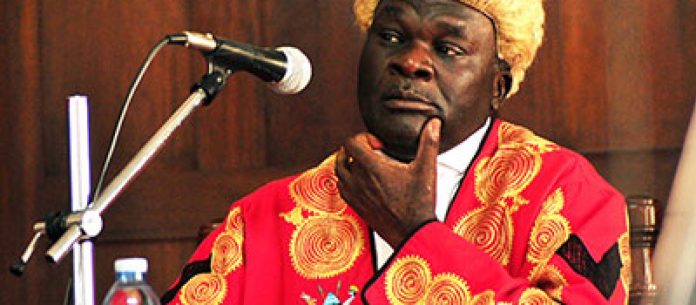
David Serumaga

By David Serumaga
Dear Editor: Education is one of the core values that the Government of the Republic Uganda, parents, caretakers, sponsors and teachers aim to give the growing generation such that in future, the nation can have a society that is knowledgeable and can transform the communities or the world.
Currently the society has changed and a few individuals are weakening this goal including the students themselves. With the current criticism from the civil society members, religious leaders, parents and other activists over ‘sex for marks’ saga at Makerere University, lecturers or teachers from any other institutions of higher learning are not different from the rest of society.
Astonishingly, critics have put their focus only on teachers, lecturers and tutors forgetting that there is another group that is fully involved in this saga yet it is not challenged.
I do not support sex for marks scenarios or any other type of sex that compromise anyone be it a girl or a boy. The main issue here is that the behavior is real; some students are engaged in sex for material gains, marks and money from their teachers which is a bad habit which the government, university or school administration plus the parents should act on seriously until it is curtailed.
Stories have been circulating about how girls mostly in universities, high schools and other institution of learning have been paying a price in form of bedroom meetings over their marks but nothing is done to curb this conducts.
Yes, we have known the problem but the way we are reacting to it is still wanting. If some concerned members from the civil society, parents and other activists change their campaigns from not only concentrating on lecturers and teachers and shift to the students as well, then this sex for marks trend will be no more.
Why does someone blame a lecture yet you have not laid a strong moral foundation on the girls you have stayed with for years?
To some universities, students mainly girls do not practice good ethical moral values which affects the society they live in. If a student decides to face a lecture in a room, dressed like a prostitute, what do you expect? I am not defending teachers or lecturers who request to have sex for marks but our sisters, daughters and friends should also stop tempting them.
It is nonsensical for a girl to boldly say that she did not know that she was going to have sex with a lecturer yet the appointment location was a lodge or in a room of a certain hotel. Information coming from some students shows that some girls negotiate with lecturers such that they cannot get bad results, dead semesters, dead year or even miss out on the graduation list.
Together we need to think twice because this behavior seems to eat our nation. Let the responsible people play their part. If a parent or a caretaker did not guide his or her child on know how to dress up without upsetting others, such cases will increase.
Teach your child the African ethical morals which will not lead her or him into troubles. I want to thank some organizations like Compassion International Uganda that gives career guidance to the children it sponsors because such great talks sharpen the minds of the children on how to protect him or herself from such traps.
Other NGO’s and civil society members should borrow this idea from Compassion International Uganda in order to give a strong foundation to the young generation in Uganda.
We have been hearing about several parents quoted to have bribed for admissions positions in schools and universities for their children who did not make up to the pass marks of the school, institution or university they wanted. This is one of the factors why students go for the red carpet negotiations with their lecturers or teachers for marks because they believe that they cannot fail to get what they expected or else they use other options.
Let us work together to fight these lecturers who get sex from students for mark at the sometime give career guidance to the students or even try to supervise them.
David Serumaga
President, Buganda Youth Wing
serumagadavid916@gmail.com.

Stories Continues after ad
US warns its citizens in Uganda

The United States of America recently cautioned its citizens to watch their movements while in Uganda.

According to message on the US State Department website, the American government warned against travel to and movement in Uganda, ostensibly due to the existing security situation in the country.

“Violent crime such as armed robbery, home invasion sexual assault which they say is common in larger cities including Kampala and Entebbe,” the message states in part, adding: ‘Local police lack resources to respond effectively to serious crime’.

The US also issued guidelines, advising its citizens against ‘resisting any robbery attempt’, leaving unattended to food and drinks in public especially in local clubs, and being cautious when walking or driving at night.

Other guidelines issued on the website include ‘keeping a low profile’ and carrying a copy of passports and visas (if applicable), while leaving the originals in hotels or homes safe.

They are further advised to enroll in the smart Travel Enrollment Program (STEP) to receive alerts and make it easier to locate them in emergency.

This follows a wave of murders which started last year with the numerous women mysteriously being killed in Wakiso and Entebbe.

Since then there have been other kilings that have shocked the country including that of former Case Hospital Accountant Francis Ekulungat, and the recent gruesome killing of  Susan Magara, the middle-aged lady who  was kidnapped and held for twenty days before her tormentors demanding for  ransom and killing her after receiving US$200, 000 (UgShs.700 million).

Pundits say such incidents could have prompted the US to worry about the safety of its citizens in Uganda.


Stories Continues after ad

Search on Bagyenda properties reveals she owns 15 plots in city

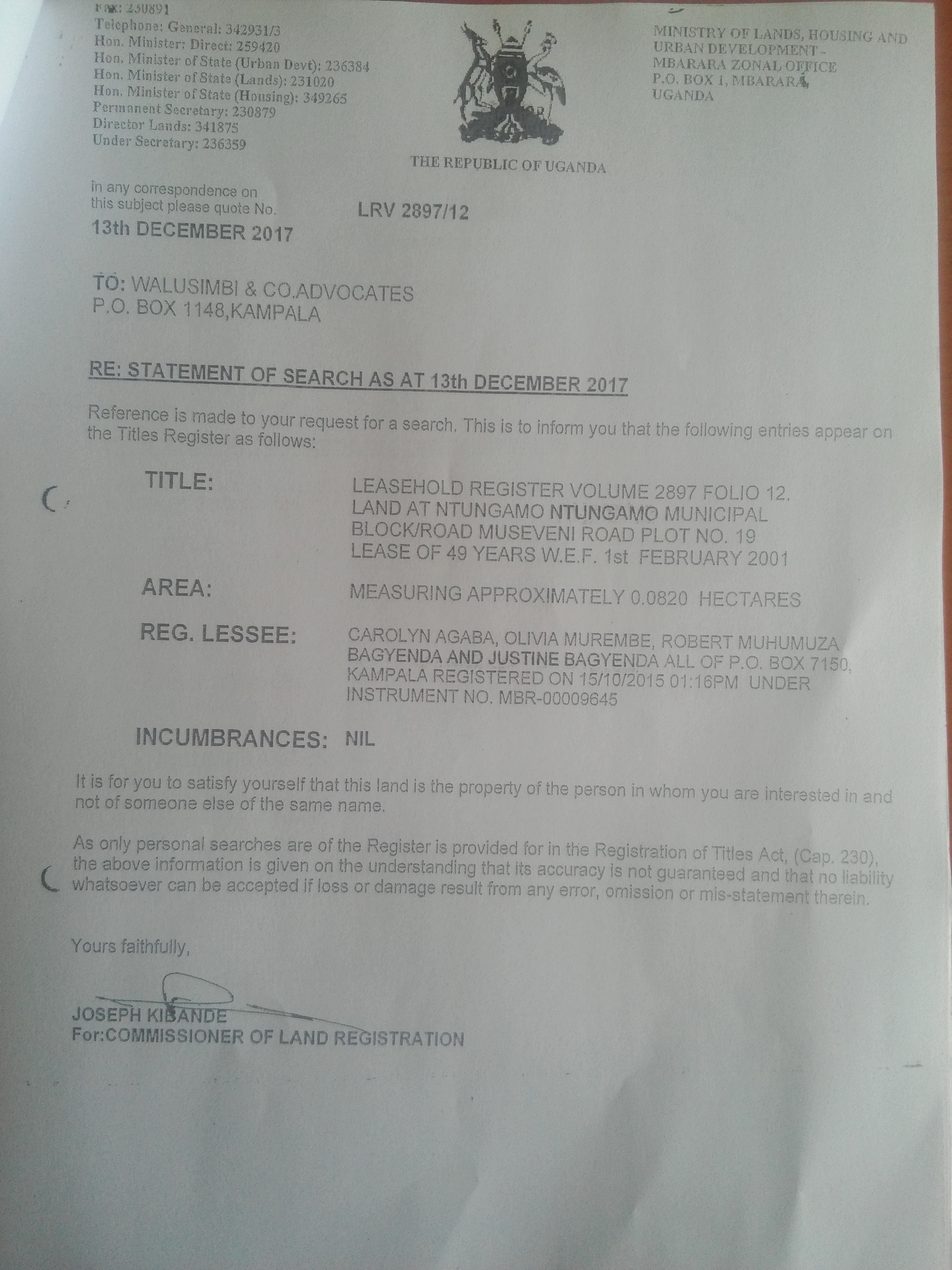
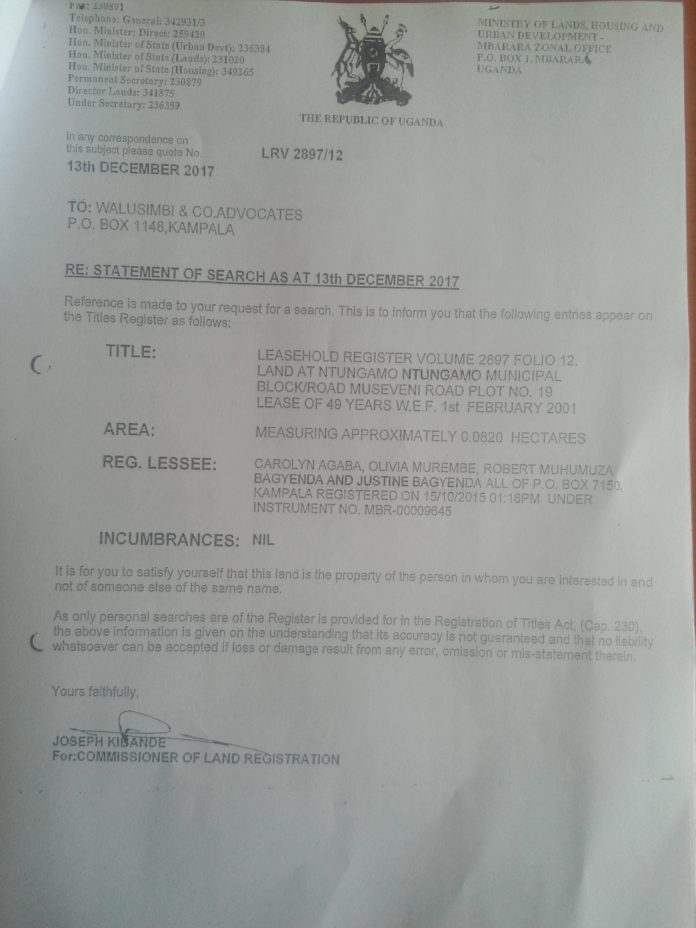
One of the letters detailing the findings of a search on properties owned by Justine Bagyenda, the immediate former Director of Bank Supervision in BoU

In the third and last part of series by the EagleOnline Investigations Desk into the immense wealth of Justine Bagyenda, the immediate former Director for Supervision at Bank of Uganda, a property search carried out by the Lands ministry revealed she owns fifteen prime plots of land in Kampala city.

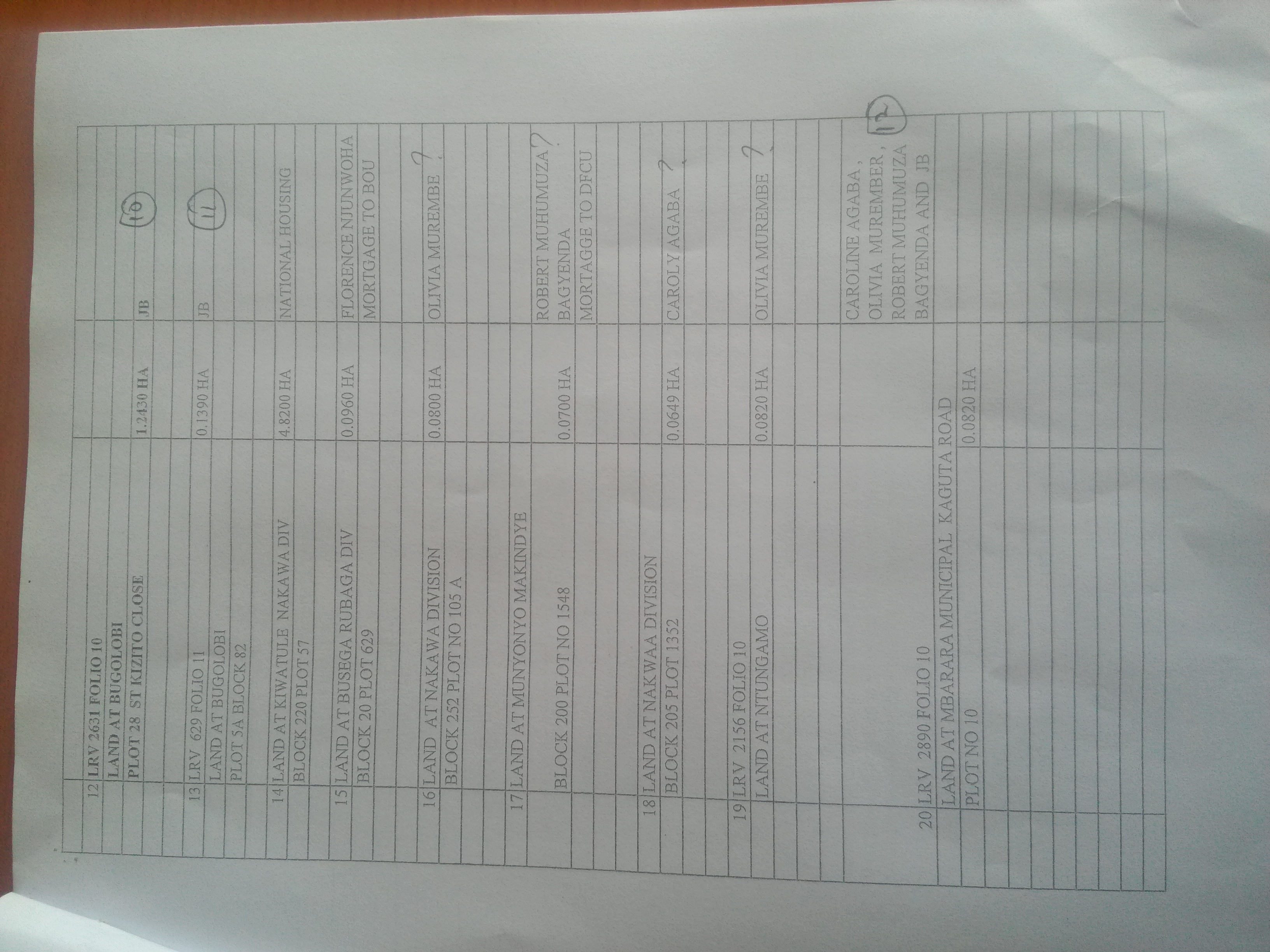
One of the logs detailing properties owned by Justine Bagyenda, as established by the Ministry of Lands

According to the Ministry of Lands Statements of Search signed on behalf of the Commissioner for Land Registration by Martha Komugisha on August 7, 2017; Diana Nambi on July 31; Joseph Kibande on December 13, 2017 and Elizabeth Kwesigabo on December 8, 2017, it was established that the pieces of land are in areas like Bugolobi, Makerere Hill Road, and the city center among other areas.

The statements also indicate she owns more prime plots in Ntungamo and Mbarara. Almost all the plots, with a total acreage of the land is 2.2719 hectares; 313.01sq ha in Kampala and 1.724 hectares located outside Kampala, have buildings on them.

The document also indicate how some of the properties are registered in her own names while others are registered in different names, but said to be of her children and relatives.

Among people mentioned by the Lands team as registered property owners are Caroline Agaba, Olivia Murembe, Robert Muhumuza Bagyenda for land at Mbarara Municipal on Kaguta Road, Olivia Murembe for land Ntungamo and Caroly Agaba for plot 1352 block 205 in Nakawa, while Justine Bagyenda was also named as the owner of Plot 5A Sunderland Avenue.

The search was requested from the above by among other interested parties, law firms Walusimbi and Co. Advocates and Anguria and Company Advocates, and individuals Jacob Katimbo, John Byarugaba, Paul Mugambe.

According to the statements, in Kampala the largest property owned by the embattled Bagyenda is 4.82 hectares in the National Housing Estates of Kiwatule at Block 20, plot 629 in Nakawa Division.

This is followed by land in Bugolobi totalling 1.243 hectares located at plot 28 on St. Kizito Close, also in Nakawa Division.

Further, according to the documents, the smallest properties are plot No. 410 to 411 Block 82 and plot No.1-7:053 both located in Bugolobi, in Nakawa Division, while others include prime plots 1547, Block 200 located in Munyonyo in Makindye Division.

Meanwhile, she also owns 1.724 hectares of land outside Kampala with 0.084 Plot No. 21 in Ntungamo along Museveni Road; 0.082 ha also in the same district and Plot No. 10 in Mbarara along Kaguta Road.

Bagyenda has been serving as the Director in charge of Supervision at Bank of Uganda and was recently retired from office which came alongside staff re- deployments.

Upon being sacked she was replaced by Dr Tumubweine Twinemanzi, who prior to that was serving as the Director of Industry Affairs and Content at Uganda Communications Commission (UCC).

Ms. Bagyenda, however, is said to have written to Prof. Emmanuel Tumusiime Mutebile, the BoU Governor protesting the manner in which she was laid off. In the letter, the sources say, Ms. Bagyenda told Prof. Mutebile she would return to BoU and continue with her work.

Recently, this newspaper reported about Bagyenda’s bank balance of Shs19, 302441,183, money she made in just six years from 2013 to 2018.

Yesterday, we also published another story of how Ms. Bagyenda, between 2015 and 2017, transacted Shs2bn on her account in Barclays Bank Kampala Road branch, with a serial beneficiary, one Kenny Muwonge.


Stories Continues after ad
Kisamba Mugerwa’s team replacing Bagyenda at MSC unveiled

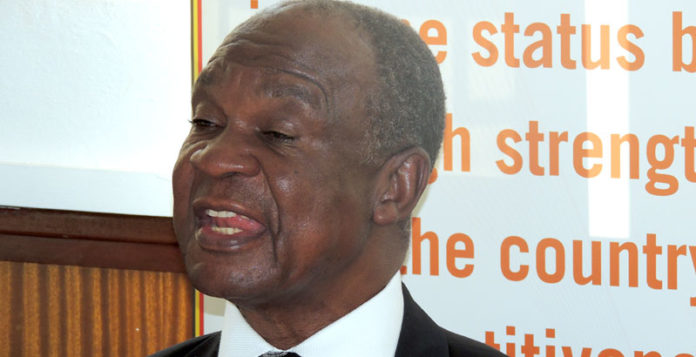
NPA CHAIRMAN: Dr. Kisamba Mugerwa wants more effort for Uganda to gain middle income status by 2020.

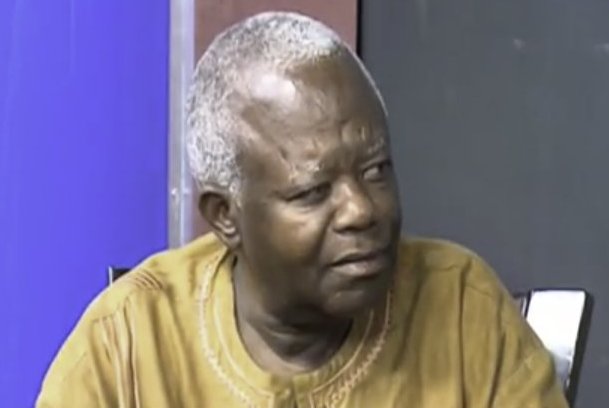
Kisamba Mugerwa, who recently replaced former bank of Uganda Director of Supervision Justin Bagyenda as Chairman of Board of Directors of the Microfinance Support Centre Ltd (MSC), has announced the new members of his team.

Among the five member team that will join four others to work with Dr. Kisamba Mugerwa are Mayanja Gonzaga, Ruth Musoke Biyinzika, Juma Yusuf Kigozi Walusimbi and Robert Bariyo Barigye.

Mayanja is the Ag. Commissioner for Monitoring and Evaluation (Local Government) in the Office of the Prime Minister, and holds a Masters degree in Economic Policy; with a wide range of experience in decentralization, local government planning and budgeting, and monitoring and evaluation of development programs gained over 22 years of working with local and central government agencies.

He has coordinated several donor-funded programs in Northern Uganda and has conducted trainings on numerous subjects for both government and civil society organizations. He also an exemplary farmer in Masaka district.

Ms. Biyinzika is a member of the Senior Management Team at Private Sector Foundation Uganda, and has over 10 years proven working experience in project design, implementation, monitoring and evaluation; and has worked extensively on complex development programs in Uganda, Kenya, Tanzania and Ghana for international donor organizations including European Union, African Development Bank and USAID.

She also has considerable experience in microfinance, having been involved in the set-up of 38 SACCOs for which she designed financial services products targeting SMEs.

Juma Walusimbi has over thirty-six years of illustrious central banking career with Bank of Uganda where he held several positions including Director Communications, Director External Debt Management and Deputy Head Banking Supervision.

He has extensive international exposure gained at negotiations on behalf of Uganda with various Development Partners and Multilateral Financial Institutions. He played a key role in the reduction and re-scheduling of Uganda’s external debt. He also engages in farming in Luwero district.

Barigye is the Assistant Commissioner of Cooperative Development and Policy in the Ministry of Trade, Industry and Cooperatives, and holds a Master of Business Administration degree majoring in Financial Management and has close to seventeen (17) years of practical experience in capacity building across the economic and demographic stratum.

He has been instrumental in building and strengthening strategic partnerships between SACCOs, Unions and Area Marketing Enterprises to promote agricultural credit to farmers along the value chain.

He is a passionate farmer and environmentalist and is presently spearheading interventions to mainstream climate change mitigation and sustainable land use management in cooperatives.

The new directors embody the spirit of agricultural development and financial inclusion; and bring talent, expertise and energy to the table.

They join four other Directors Mr. Albert Odoi, Mr. Vincent Ssemakula, Dr. Birungi Korutaro and Mr. John Peter Mujuni (MSC Executive Director) – whose tenures are still running.

As for Dr Kisamba Mugerwa, who leads the team currently, serves as the Executive Chairperson of the National Planning Authority, a position he has held since 2008.

Prior to that, he was the Minister of Agriculture, Animal Industry and Fisheries; State Minister for Finance and Economic Planning and Member of Parliament from 1980-2004.

In 2009, he was appointed visiting professor for International Studies Rural Development at Williams College, Massachusetts USA and Senior Research Associate with Makerere Institute of Social Research (MISR). He has a PhD in Agricultural Economics from Makerere University and vast practical experience in various fields both locally and internationally. He is also a farmer in Luwero district.

The Microfinance Support Centre Ltd is a Government institution that was set up in 2001 with a dual mandate of offering affordable credit and business development services to Ugandan enterprises.

MSC boasts of a client database of over 5000 institutions and a disbursement of 324b to SACCOs, Groups, SMEs and MFIs across the country as at December 2017.

The Minister of Finance, Planning and Economic Development Matia Kasaija appointed a new board following the expiration of the tenure of five (5) members of the previous Board of Directors who have served two terms of three years each.


Stories Continues after ad