Stanbic Bank
Stanbic Bank
26.4 C
Kampala
Stanbic Bank
Stanbic Bank
Home Blog Page 1637

Uganda in second place after first round of 2019 FIBA World Cup qualifiers

Ugandan star Robinson Odoch in action against Rwanda. Uganda won the game against Rwanda

Uganda defeated neighbours Rwanda 79-63 in the third game of the FIBA 2019 World Cup qualifiers at the Palais Des Sports Salamatou Maiga Stadium in Bamako, Mali.

The win moved the Silverbacks to second in Group B behind leaders Nigeria after completion of the first round of games, and pushed Rwanda to the bottom of the group.

Uganda lost the first two games, 86-102 to Nigeria on Friday and 76-79 to the hosts Mali on Saturday and had to win against Rwanda to keep the qualifying hopes alive.

Uganda need to be in the top three of the group to advance to the next stage of the qualifiers.

The second round of the games will be played in June this year, with Uganda hosting the games.

Africa is represented by five teams in the international tournament.

The first round sees four groups of four teams each, face one another over the course of two legs.

The top three teams from each group advance to the Second Round, where the 12 qualified teams are divided in two groups (E and F) of 6 teams each. The top two teams from groups E and F and the best third-ranked team will secure their tickets for the FIBA Basketball World Cup 2019.

The 2019 FIBA Basketball World Cup will be the 18th edition and China are the hosts. It will take place from August 31 to September 15, 2019.

Uganda’s next game will be against Nigeria on Friday, June 29, 2018.

Stories Continues after ad

Kayihura warns police against giving information to sister security agencies

Former Inspector General of Police-Gen. Kale Kayihura who is already on the list

The Inspector General of Police General Kale Kayihura has warned his officers against revealing the force’s secrets to other sister security agencies.

In a message to all heads of units, departments and directors dated February 21, 2018, Gen. Kayihura expressed concern that of recent many police officers have been involved in giving information to various sister security agencies without authorization.

‘It has been established that police officers conspire on their own or are summoned by sister security agencies and divulge information without official authorization from the police forces’, Kayihura communicated in his message.

According to Gen. Kayihura, sharing information with other agencies not only undermines the authority of the force but also contravenes the disciplinary code of conduct and the oath of secrecy that officers swear to abide by.

“All directors, heads of department and unit commanders should ensure strict compliance to this circular,’ Gen. Kayihura wrote, warning that ‘disciplinary action will be taken against all of those involved in such acts’.

The rift between the police and other security agencies has been in the public domain, and was made worse by the recent arrest of suspected criminals like the Boda Boda 2010 ‘patron’ Abdallah Kitatta and his brother by ISO operatives.


Stories Continues after ad

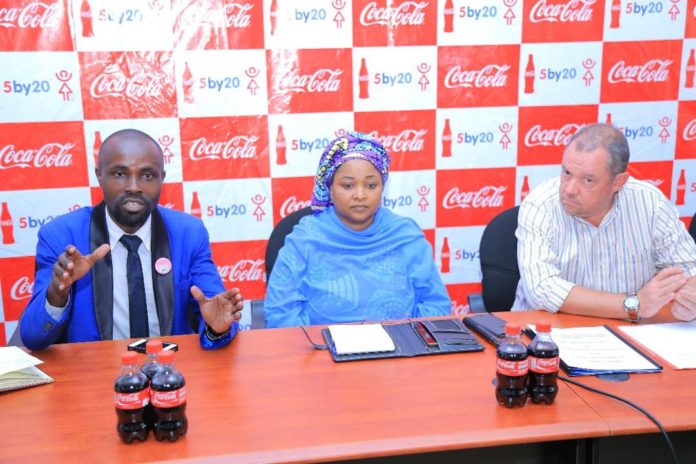
Coca-Cola to help 10,000 women refugees in business skilling

Coca Cola Africa Beverages boss van Niekerk with REHORE officials including Executive Director Joseph Rwamihigo (extreme left).

Coca-Cola Beverages Africa (CCBA) Uganda has today signed a Memorandum of Understanding (MOU) with REHORE, a local NGO that will see over 10,000 women refugees in Bidi bidi, Kiryandongo and Nakivale camps empowered for improved livelihoods.


Through this programme, REHORE will identify women refugees in the three camps who will be beneficiaries of a skilling programme using locally available resources in addition to retailing Coca-Cola products and establishing plastic collection initiatives in the camps.

The activities will include bee keeping, backyard gardening, echo bag production, candle making,  hair and beauty skills, catering, sewing and tailoring, soap making, colouring and painting as well as art and craft.

“Women around the world are already pillars of our business system and as part of our Women Economic Empowerment Program; we shall this time round empower refugees in camps in partnership with REHORE which will be the NGO that will actually do the day to day running of the project in the camps. By doing this, we affirm our need to build both our business and the communities in which we operate,” said Conrad Van Niekerk, Managing Director, Coca-Cola Beverages Africa Uganda.

This initiative is one of the several that Century Bottling Company in Uganda has embarked on under the Global 5 by 20 Coca-Cola pronouncement over the years.

5by20 is the Coca-Cola Company’s global commitment to enable the economic empowerment of five million women entrepreneurs across the company’s value chain by the year 2020.

“In Uganda, running successful businesses is mainly a male domain. Through 5by20, we address the most common barriers women face when doing business which include lack of basic business skills, financial services or assets, and lack of access to peer networks and mentorship,” Van Niekerk noted.

“This initiative offers women access to business skills training, linkages to financial services and connections with peers and mentors, along with the confidence that comes along with building a successful business. I am glad that we are able to support women through this initiative and our value chain,” Van Niekerk added.

On his part REHORE founder Joseph Rwamihigo, expressed optimism with the Coca Cola partnership, said it would make an important contribution towards realization of the government Vision 2020.


Stories Continues after ad

Take your idea to the next level with a DIY prototype

By Martin Zwilling

These days, everyone wants to be an entrepreneur, pitching their latest and greatest new idea, and looking for someone to give them money. Angel investors, like me, have long figured out that asking to see the prototype is a quick way to separate the ‘wannabes’ from serious players. Talk is cheap, but entrepreneurs who show you a working model of their idea know how to execute.

In reality, it doesn’t take a huge investment of money and time to build a prototype today. If it is hardware, look for one of the ‘makerspace’ such as ProtoStripes, with all the tools you need to prototype almost anything yourself. Software products and apps can be quickly wire-framed with free tools such as MockFlow, or even Microsoft Powerpoint to lay out the key screens.

Here are six results that you can achieve by building a prototype, which are really the reasons that investors and partners will give you a whole new level of credibility as they evaluate your startup for potential funding:

Something you can touch and feel helps validate opportunity. When you wave your arms and describe your future product, everyone sees what they want to see, and it looks great. With a realistic prototype, you can get more accurate feedback from customers on their real need and what they might pay, before you invest millions on the final product.

Quantify the implementation challenges. Many ideas I hear sound great, but I have no idea if they can be implemented. Building a prototype at least allows both of us to ask the right questions. Visions and theory are notoriously hard to implement. A prototype has to be real enough to be convincing, without looking like science fiction.

Give yourself time to pivot without dire consequences. It doesn’t matter how certain you are of your solution, it’s probably not quite right. Every entrepreneur has to deal with the realities of constant change in today’s market, and it’s much easier to pivot the pre-production prototype than to dispose of unsellable inventory.

Show investors that you are committed, and past the idea stage. Without a prototype, most professional investors won’t take you seriously. In reality, the process of designing, building, and validating a prototype does dramatically reduce the risk, and allows everyone to hone in on the real costs of going into production.

Reduce the time to production and rollout. For both software and hardware technology, multiple iterations are usually required to achieve production quality and performance. Time is money, and may be your primary competitive advantage. Don’t spend your whole development budget, before finding that you need another iteration.

Support early negotiation with vendors and distribution channels. A three-dimensional prototype is always better than just a documented specification when negotiating contracts for manufacturing, support, and marketing. As a startup, you need all the leverage you can get.

If you are not comfortable or skilled enough to build a prototype yourself, it’s time to find and engage a co-founder who has the interest and background to at least manage the work. You should never outsource the management of your core technology. At worst, maybe you can find a trusted friend to guide you, or a nearby university with expert professors and the proper tools.

Of course, there are many commercial resources available on the Internet, including the Thomas Registry, which is an online database of 500,000 specialty manufacturers, distributors, and prototype developers, across every state and country. There are also a wealth of invention support sites, such as InvestorSpot and IntellectualVentures.

Unfortunately, working with any of these outside services is hard to manage, risky in results, and some have developed a reputation for taking advantage of unsuspecting entrepreneurs. The amount of money you spend on their services is never an indication of potential success. There is no magic formula for success while inventing. Proceed with your wits about you.

Overall, building a prototype is still a great way to bring your idea to life, for yourself, your team, investors, and future customers. Your target cost expectation should be one-tenth of the total commercialization cost, with the assumption that it will be throw-away. Even still, I can’t think of a better way to validate your solution early, and get credibility with the people who count.


Stories Continues after ad

Malaba OSBP boosts business, saves US$70m in annual costs

The Malaba One Stop Border Post has cut cost of doing business (1)

The conversion of Malaba into a One Stop Border Post OSBP has resulted into substantial time saving for cargo processing from 24 hours to four hours only, leading into cost savings amounting to more than US$70m per annum.

According to a new report, the development at Malaba and other border posts that were turned into OSBPs in East Africa has been driven by improved information exchange and working environment for border officials and improved safety and security for border traffic.

Further, the report indicates that twelve out of fifteen OSBPs earmarked years ago for development in East African Community (EAC) have been completed, 10 of them operational and cutting the cost of doing business in the region.

The 12 OSBPs, representing 80 per cent completion are: Gasenyi/Nemba, Ruhwa, Rusumo, Lunga Lunga/Horohoro, Holili/Taveta, Kagitumba/Mirama Hills, Mutukula, Kabanga/Kobero and Malaba. Others are Isebania/Sirari, Busia and Namanga.

The construction for Katuna/Gatuna OSBP is ongoing, and the report further indicates that efforts are underway to embark on phase two for additional OSBPs with the EAC and with the neighbouring non-EAC regional economic blocs (RECs).

Also, the report indicates several instruments and frameworks have been prepared to support the OBSPs and that these include the East African One Stop Border Posts Act 2016; The East African One Stop Border Post Regulations 2017.

The EAC OSBP Procedures Manual, the OSBP Performance Measurement Guide; the OSBP training curriculum and OSBP Source Book are all under preparation.


Stories Continues after ad

Bridge Academies, UNATU square off

Mr Morrison Rwakakamba of the Bridge International Academies with pupils of Bridge International Academies (BIA).

The management of Bridge International Schools has refuted claims by the Uganda National Teachers Union that their schools have failed to safeguard pupils’ rights and ensure minimum educational standards.

According to Bridge International Academy (BIA) Country Director Morrison Rwakakamba says the UNATU claim is baseless given that they have ensured that their schools have hygiene and security among other precautions of having a conducive learning environment for the children.

Further, Mr. Rwakakamba, said the BIA management has followed all the procedures laid by the ministry of education in running their schools, a development he said, has helped children from poor families access quality education at the lowest fees charged by a private primary school.

He also said that in last Primary Leaving Examinations (PLE), all candidates in Bridge schools passed to join secondary school.

Mr. Rwakakamba’s remarks come in the wake of UNATU Acting General Secretary Philip Duluga Buni backing the Ministry of Education and Sports’ decision to halt the operations of BIAs.

According to Mr. Buni, the BIAs ‘seek to profit off children, exploiting the hopes and dreams of their families’.

“Contrary to claims of affordable education, an average family in Uganda would have to spend about half of its income to send two children to a Bridge School,” Mr Buni said, but failed to prove how UNATU arrived at the conclusion.

Mr. Buni further accused BIA in Uganda and other private schools of ‘disregarding the Education Act 2008’ which among others stipulates that schools should hire qualified and registered teachers.

Mr. Buni also urged funders of schools like BIAs to shift their support to public schools. “UNATU appeals to companies and individuals funding profit oriented organizations such as BIA to cease such support. Should you wish to support the provision of quality education in Uganda, you are advised to instead support our public education system-Universal Primary Education and Universal Secondary Education among others,” he says.


But contacted, an influential retired educationist-turned-consultant said it is wrong for Mr. Buni to have a negative attitude towards private schools in Uganda.

“They (private schools) have helped government educate most Ugandans. Tell me where would pupils left out of government education system go if private schools were not there?” he asked, preferring to remain anonymous.


Stories Continues after ad

Uganda to host regional Accountants conference

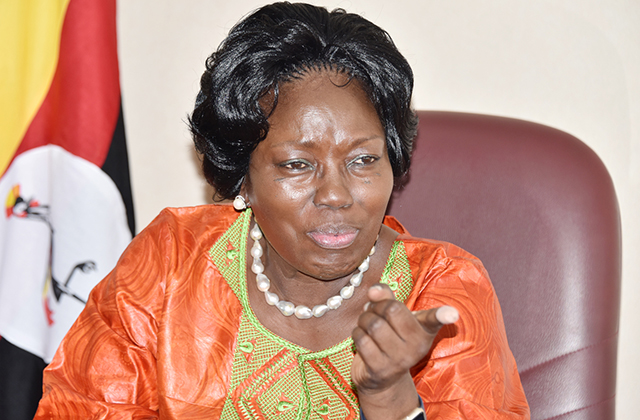
Speaker Rebecca Kadaga

The East and Southern African Association of Accountants-General (ESAAG) is to hold its 25th Annual International Conference in Entebbe, Uganda from February 26 to March 2, 2018.

According to a statement by ESAAG, the conference that will among others be addressed by the Speaker of Parliament Rebecca Kadaga and finance minister Matia Kasaija, will be held under the theme: ‘Public Management Reforms, An engine for Sustainable Development Goals and Economic Growth’, and will bring together 1000 delegates from 14 member states.

The conference will particularly attract delegates such as national legislators, permanent secretaries, heads of institutions, civil society and Public Finance Management (PFM) experts, among others, the statement adds.

According to officials, ESAAG Conference serves as a knowledge sharing platform for PFM practitioners on their organizational as well as country specific experience regarding the direct role of PFM in the region.

ESAAG is a non-profit association that was formed in 1995. It brings together Accountants General from East and Southern Africa. Its core objective is to support offices of the Accountants General to develop sound PFM practices by among others providing; knowledge base, networking and information sharing, capacity building and bench-marking best practices across the region.

Uganda’s Accountant General Lawrence Semakula says the conference will provide an opportunity to showcase the country’s culture, heritage and tourism potential.

Stories Continues after ad

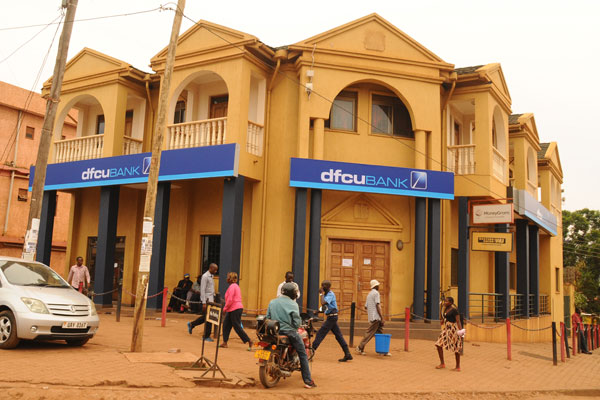
Crane Bank saga: DFCU Bank rent arrears case takes new twist

The Former Crane Bank Ntinda branch, which DFCU took over and illegally rebranded in its name, was ordered by the court to vacate and compensate Meera Investments because the property belongs to Meera.

Crane Management Services, a real estate company that lets out properties on behalf of Meera Investments Limited, is now demanding over Shs4 billion from the DFCU Bank as rent arrears accruing from 13 properties, some with multiple units, which were being rented by Crane Bank, now in receivership.

In the plaint filed by Messrs. Magna Advocates dated February 15, the Bank of Uganda is also dragged into the picture for transferring the assets and liabilities managed by Crane Management Services including the 13 properties to DFCU Bank on January 25, 2017, in error.

‘On the 25th day of January 2017, the Bank of Uganda as a Receiver represented that it had transferred the assets and liabilities of Crane Bank Limited to the Defendant (DFCU Bank)’, Magna Advocates aver, adding that the latter also acknowledged acquiring the properties now under contestation.

The various rent obligations claimed by the plaintiff, all in one-year pre-paid contract in the period between March 2016 and July 2021 and now being demanded are US$385, 728.54 (approx. 1.15 billion) and UgShs 2, 998, 558, 624, and for Plot 9 Market Street (Crane Bank branch and ATM); Plot 1-13 Jinja Road (Crane Bank branch); Plot 47 Republic Road Mbale (branch); Speke Hotel (ATM); Plot 9 Cooper Road (Crane Plaza/branch) and Plot 20 Kampala Road (branch).

Other rental arrears being demanded include those for apartments on Bombo Road, Kira Road, William Street, Market Street and Nkrumah Road; Plot 28 Luwum Street, and eight staff apartments on Snay Bin Amir Street and several flats on Plot 22/24/26 on Kampala Road.

According to the plaint, the DFCU Bank, as acknowledgment that it had taken over tenancy from Crane Bank, made a series of payments among them that of US$81, 408 and UgShs219, 210, 728 to Crane Management Services.

Other payments made include that of UgShs410, 303, 436 for utilities; US$531.000; US$362, 524 and US$168, 476.

‘Subsequently, by a letter dated 4th May 2017, Bank of Uganda as the receiver of Crane Bank Limited (in receivership) informed the plaintiff as the duly letting agent of Meera Investments Ltd that BOU in its capacity as the receiver had transferred the right to and benefit of the pre-paid rent in respect of some of the suit properties formerly occupied by Crane Bank Ltd (in receivership) and managed by the Plaintiff to the Defendant as at the 25th of January 2017’, the plaint states in part.

In a related development, yesterday the EagleOnline reported that last week Meera Investments Limited, also through Magna Advocates, sought to recover US$8, 660, 462 from DFCU Bank, money the plaintiff said had accrued from rent arrears of two prime properties on Kampala Road after the Bank of Uganda took over management of Crane Bank, in October 2016.

Crane Bank, now in receivership, was a tenant of Meera Investments Limited, and the latter was making rent arrears claim in respect of Plot 38 Kampala Road, covering the Basement, Ground, 1st, 2nd, 3rd and 7th floor, and Plot 40 on the same road.

Since the takeover of Crane Back in 2016, businessman Sudhir Ruparelia, one of the shareholders in the CB and the Bank of Uganda have been engaged in a series of court battles, one of which saw the High Court Commercial Division bar city lawyers Timothy Masembe Kanyerezi of Ms. MMAKS Advocates, and David Mpanga of AF Mpanga Advocates from representing BoU.

By press time efforts it was not possible to get comment from the DFCU Bank.


Stories Continues after ad

Uganda’s corruption record still pathetic – TI

Transparency-International logo

Uganda was among the most corrupt countries globally in 2017, an index published by Transparency International, indicates.

In the survey, the internationally recognized Non-governmental Organization ranks Uganda, also known as the ‘Pearl of Africa’, as the 151st on the list of the top corrupt 180 countries.

Corruption is a common vice in Uganda especially among officials in government ministries, agencies and parastatals, and previously Uganda has been ranked 25th in 2016, 25th in 2015, 26th in 2013 and 29th in 2012, according to Transparency International’s index.

And much as there is an Inspectorate of Government (IGG) mandated with combating corruption, the vice keeps biting deep and recent reports by the World Bank estimate that the country loses US$500m per year in corruption related deals.

As result, many commissions have been put in place by President Museveni to investigate matters of corruption, the latest being the probe committee into land matters headed by Lady Justice Catherine Bamugemeire.

It should be noted at times donors have had to cut or completely withdraw aid to Uganda as a result of corruption.

Some years back there was a remarkable cut of financial aid to Uganda as a result of the Global Fund scandal where funds meant for the treatment of Malaria, Aids and Tuberculosis were reportedly diverted to private use.

Also, currently four senior officials in the Prime Minister’s office have been indicted over the manner in which they handled refugee aid, with claims that they inflated numbers to attract more funding, part of which they also reportedly diverted for personal benefit.


Stories Continues after ad

Government to lose billions in tea seedlings distribution – AG

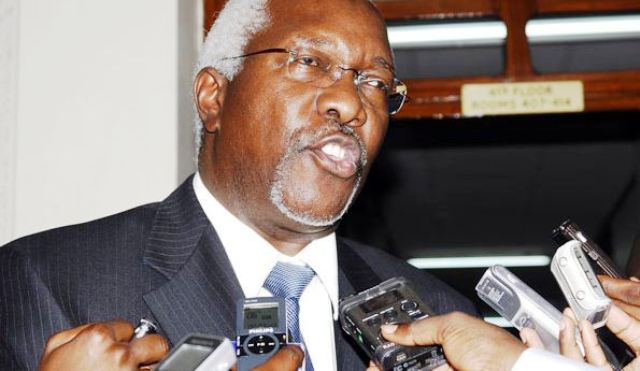
Auditor General, John Muwanga

The Auditor General John Muwanga has said that about Shs100 billion could be lost through a tea seed distribution exercise carried out in the financial year 2013-2014.

In an audit that focused on the preparation and distribution of tea seedlings and farm management practices of farmers in the five districts of Kisoro, Kanungu, Kabale, Buhweju and Kabarole, the AG, among other anomalies, said the land topography was inappropriate for tea growing and would lead to the multi-billion loss.

‘According to best agronomical practices, the recommended slope should range between 10 to 20% and slope below 10% risks heavy water logging while any slope above 20% risks severe loss of soil by erosion which is detrimental to the proper growth of tea seedlings,’ the AG wrote in his audit report of 2017.

He said that the issue of topography was not considered at all in selecting sites for tea growing, adding that at the 94 farms visited in the five districts, it was established that the gradient was too steep in some areas whereas some farms were located in deep swamps that were prone to water logging.

‘There appears not to have taken technical consideration in the growing of tea in the region which is likely to affect the success of the programme which could lead to a substantial loss of investment in excess of UGX.100Bn so far invested into the programme since 2013/14 to-date,’ the AG notes.

He added: ‘It was as well noted that the gradient slope of the sampled farms ranged from 2.53% to 78.38% which indicated that some farms had a gradient exceeding 20% which in this case was not suitable for tea growing.’

Further, according to the AG: ‘Out of a sample of 94 farms, 53 farms (representing 56%) exceed 20% acceptable gradient while 19 farms (representing 20%) were located in low lying areas that were prone to water logging (below 10% gradient). 22 farms (representing 24%) were in the acceptable range’.

In the report the AG recommends that there should be training and supervision of the new extension workers to ensure that in future the tea seedlings are planted on suitable slopes and terrain for proper growth.

The AG also discovered that there was unaccounted for acreage and seedlings, after reviewing the supply of tea seedlings vis-a-vis the acreage planted.

It was discovered, he said, that a total estimated acreage of the 64 farms sampled was 937.517 acres in the five districts although the measured acreage of these farms was 473.581acres, resulting into additional acreage of 463.936 acres that could not be traced.

Further, he noted that 4,440,507 seedlings were supplied instead of the recommended 2,369,333 seedlings resulting into excess supply of 2,071,174 seedlings valued at Shs932 million at a market rate of Shs450 per seedling.

The AG further noted that 27,000 seedlings supplied to Bukinda Seminary and Bukinda Parish, could not be traced to particular tea farmers in Kabale District.

“There was no proper mechanism to verify the acreage prior to supply of seedlings which is a risk that seedlings were supplied to non-existent farms,” he noted.

“Management is advised establish a mechanism of verifying actual acreage of land prior to distribution of the tea seedlings, he says.

According to the report, this should be a basis for determination of number of seedlings supplied to the farmers and paid to the suppliers.

Meanwhile, it was noted that NAADS paid UGX.1, 402,483,859 to two lead agencies in the Districts of Kisoro and Kanungu to provide extension services to farmers, including among others land preparation, planting of tea seedlings, weeding and pruning and water control, harvesting and transporting tea leaves.

However, the AG’s report indicates that all the farmers interviewed indicated that no extension services were provided during the planning period.

The report noted that because of inadequate extension services, the quality of planting materials greatly deteriorated at the time of planting due to poor handling and long distances of transportation of tea seedlings in Buwheju, Kanungu and Kabale Districts.

In most cases the nurseries were very far from the farms where the materials were to be planted leading to delays in delivery of seeds.

‘There is need for the programme to review its approach to providing extension services with a view to targeting the single spine programme under MAAIF which is aimed at providing extension services to the country,’ the AG noted.


Stories Continues after ad