Stanbic Bank
Stanbic Bank
21.2 C
Kampala
Stanbic Bank
Stanbic Bank
Home Blog Page 1648

How to win key decision points with today’s customers

Today’s customers are much more in control of their buying decision, as they have more choices and more information than ever before. Almost instantly, via the Internet or on their smartphone in the store, they can find the lowest price alternative or their favorite features, without waiting for push marketing or listening to your best sales person.

This can be an advantage to startups who don’t have the resources and brand awareness of mature businesses, if they understand and position themselves to win in the decisive moments of the new customer buying process. These decisive moments, and how to respond, are outlined in Robert H. Bloom’s classic book, ‘The New Experts: Win Today’s Newly Empowered Customers’.

Bloom is a widely known expert on managing business growth, and he starts by summarizing the three key weapons of current customers, which include an instant summary of choices, prices, and features. His research indicates that they don’t have any old-fashioned customer loyalty, and they want precisely what appeals to them at the moment, preferably customized just for them.

New startups actually have a flexibility advantage over more mature businesses in anticipating and reacting to the four key decisive moments that Bloom outlines and I have observed in the new customer buying process:

Survive the now-or-never moment. You only get one chance to make a great first impression. If you can’t get a positive customer perception at this first moment, you will likely never get another chance – with so many other alternatives. The key to winning in that moment is to think like a buyer, not the seller. Build a relationship and trust quickly.

Win the make-or-break moment. You win here by getting the customer immediately engaged, and keeping him there, by knowing their interests and expectations better than any competitor or alternative. Avoid the extended period of evaluation and negotiation during which the customer will likely move to other transaction alternatives.

Sustain the keep-or-lose moment. The buying process is just the beginning of the customer experience, and it has to remain a good one throughout the time that your customer actually uses your product or service. Great startups manage to continually improve the relationship through outstanding follow-on support and service.

Capitalize on the multiplier moment. Of course you want your customer to come back, but the best ones also become your evangelists in bringing their friends to you, and broadcasting their positive experiences to the world through social media. This is a key moment where your customer acquisition costs go way down, and your profits go way up.

This new world is all about empowered customers. As an entrepreneur and startup, you should love this environment and cater to it. Many existing businesses see it as a big problem, and can’t adapt easily. That’s your chance to step in and compete at every moment of the customer buying process, usage experience, and follow-on events.

As you bring on employees to facilitate your growth, they have to embrace the new reality. Empowered customers required empowered employees, and your internal business processes have to be aligned with the same principles and the same smartphone and Internet technologies. Make sure you adopt the right hiring practices and training to keep your team responsive.

Then you have to trust the team to think and act proactively on behalf of your vision and mission. Of course, both you and they will make mistakes, which are the best learning experiences. Continuous innovation and change are the keys to staying current, reducing complexity, and delivering the winning customer experience to keep you ahead of the competition.

What most companies don’t realize is that businesses don’t drive customer trends anymore, customers drive business trends. Consumers are well aware of the latest technologies, and their expectations are usually ahead of even the most forward-thinking startups. It’s up to you to understand and capitalize on the decisive moments of empowered customers, or you will become a “has-been” before you even start.

 

Stories Continues after ad

Investments in infrastructure to boost Ugandan economy – finance

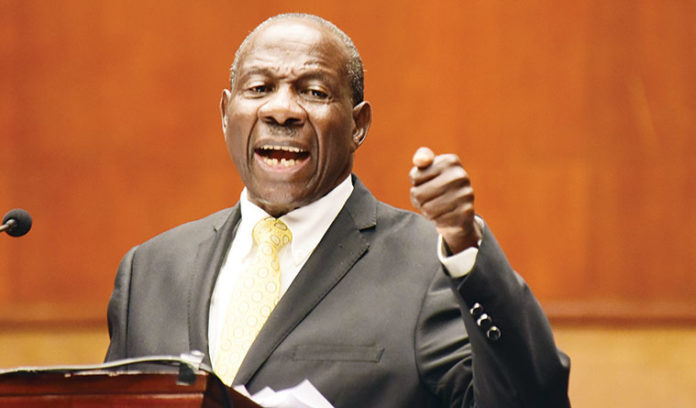
Finance Minister: Matia Kasaija.

Uganda’s economy is projected to grow by five percent in financial year 2017/18, above the 4 percent growth registered in fiscal year 2016/17, according to the latest Debt Sustainability Analysis Report released by the Ministry of Finance Planning and Economic Development (MFPED).

According to the report, the 5 percent growth will be driven by higher growth rates in agriculture and services, supported by improved implementation of infrastructure projects and a return to normal weather conditions.

“Real GDP growth is expected to average at about 5.9 percent in the medium-term and 6.7 percent in the long-term,” adds the report which continues that this growth will be supported by enhanced productive capacity from the completion of infrastructure projects, investment in agriculture, regional integration and oil production, as well as enhanced efficiency in resource allocation.

Meanwhile, the ministry reports that the annual headline inflation is expected to drop to an average of 4.9 percent in financial year 2017/18, from 5.7 percent in financial year 2016/17. According to the report, this is to be achieved on account of low food crop inflation supported by normalization of weather conditions; low demand pressures and a relatively stable exchange rate.

In the medium term, the report indicates, headline inflation is projected to average 5.3 percent, rising to 6.1 percent in the long term. “Core inflation is expected to stabilize around the BOU’s 5 percent target in the medium to long term,” it says.

Further, financial year 2017/18, the Ugandan Shilling is expected to depreciate against the US Dollar by an average of 4.1 percent, compared to 2.7 percent in financial year 2016/17. “This will be driven by Government dollar demand arising from infrastructure investments, the expected monetary policy tightening in the USA and a rise in international crude oil prices,” says the report.

However, in the medium term, the exchange rate is projected to depreciate by an average of 3.7 percent and 0.3 percent in the long-run as the country is expected to start earning oil revenues.

Tax revenue

The report says that like in financial year 2016/17, tax revenue as a percentage of GDP is expected to increase by 0.3 percent, to Shs.14, 403bn in the current financial year. In financial year 2018/19, it is projected to increase by 0.7 percent to Shs.16, 692bn on account of a combination of improved tax administration and new tax measures.

“Specific attention will be paid to: expansion of withholding tax agents; determination of rentable values for commercial properties; improving on data analysis (audit information), improving VAT compliance of the telecom sector by enforcing the commission model rather than the discount model; debt recovery; and engaging the Judiciary to expedite tax cases, among others,” says the report.

However, the ministry projects that in the medium term, tax revenue will grow by 0.5 percent of GDP to reach a peak of 18.4 percent in the long term; driven by reforms in the tax system and efficiency in tax administration.

‘This will also require investments in tax collection systems, equipment and human resources’, it says.


Stories Continues after ad

BoU reduces February Central Bank Rate

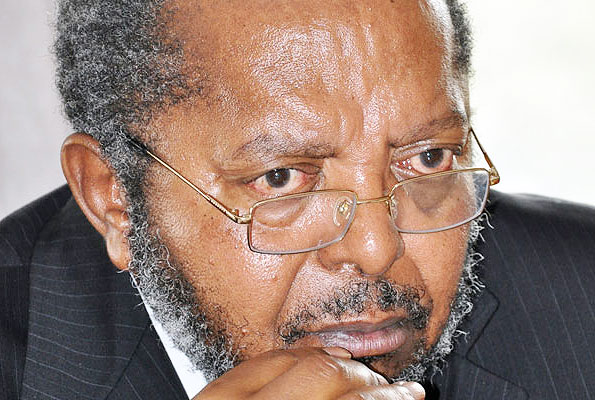
BoU Governor Prof Emmanuel Tumusiime Mutebile.

The Bank of Uganda (BoU) has reduced the Central Bank Rate (CBR) by 50 basis points to 9.0 percent. The band on the CBR will be maintained at +/-3 percentage points and the margin on the rediscount rate at 4 percentage points on the CBR, the bank says.

‘Given the objective of keeping inflation close to the target and the estimated spare capacity in the economy, a cautious easing of monetary policy is warranted to further boost private sector credit growth and to strengthen the economic growth momentum’, the Governor Bank of Uganda, Professor Emmanuel Tumusiime-Mutebile, wrote in the Monetary Policy Statement for February 2018 issued to the press in Kampala.

Further, Prof. Mutebile said the Bank has consequently reduced the rediscount rate and the bank rate to 13.0 percent and 14.0 percent, respectively.

Mutebile said there are indicators of a revival in private investment activity as reflected by the recovery of Foreign Direct Investment, which grew by 18.5 percent in 2017 compared to a decline of 30.5 percent in 2016. He added that shilling credit extended by 10.8 percent in December 2017 compared to 7.9 percent in December 2016.

There was also an increase of imports of raw materials and capital goods, which grew by 17.4 percent in 2017 compared to a decline of 21.1 percent in 2016.

‘These developments, coupled with an improving global economic outlook, could strengthen domestic economic activity,’ he noted.

Economic growth for Financial Year 2017/18 is now projected in the range of 5.0-5.5 percent, a positive payoff for the current stimulatory monetary policy,” he said.

Prof. Mutebile said non-performing loans as a percentage of gross loans have declined from a peak of 10.5 percent in December 2016 to 5.6 percent in December 2017, which he said should support credit extension.

However, he said that although public investment programmes could substantially raise output and be self-financing in the long run, ‘transitional challenges of funding these investments can be formidable, and may crowd out private sector borrowing, thus delaying the growth benefits of public investment’.

According to Prof. Mutebile, in the next five years, economic growth is projected to average 6.3 percent, boosted by public investments, increasing growth in consumption, and improved agricultural productivity.

There are nonetheless downside risks to this outlook, he says adding that  the growth of private sector credit remains below historic levels and that the cost of credit remains relatively high for micro and small loans while the cost to ‘corporates’ have declined.


Stories Continues after ad

KCCA kick starts Boda-Boda registration

DIPLOMAS FOR BODA BODA! Tibihika's letter on streamlining boda boda industry in Kampala

The Kampala Council City Authority (KCCA) has embarked on the registration process of all riders in the city.
Accordingly, the Authority has embarked on a recruitment drive for registration staff, and applicants are required to  among others possess a Diploma as minimum qualification and be aged below 35 years.

In a letter signed by the Kampala Central Division Town Clerk Theo Tihibika, the new regulations are aimed at streamlining the boda boda industry that employs over 20.000 people in the city.

‘This is therefore to seek for suitable applicants in the following qualifications to carry out the following exercise in the central division: below thirty five years of age, at least, a minimum qualification of a diploma level, possess a NIN (National Identification Card), have a bank account’, reads Tibihika’s February 9 letter in part.

The deadline for applications is Thursday, February 15, 2018 at 4.00pm.

Boda-Boda industry has come under public scrutiny in the recent years over the conduct of various people linked to the business like Abudallah Kitata of Boda-Boda 2010.

Stories Continues after ad

FDC’s Mwiru nominated for Jinja East by-election

Winner of Jinja East parliamentary bye-election Paul Mwiru.

The Jinja East Forum for Democratic Change (FDC) candidate Paul Mwiru has today been nominated by to compete in the by-election that is slated for March 15, 2017.

“I take this opportunity to declare Paul Mwiru as a duly nominated candidate in Jinja East by-election,” the district returning officer Rogers Sserunjogi said.

The Jinja East parliamentary seat fell vacant after a panel of three appellant court judges threw out Nathan Igeme Nabeta, who was wrongly declared Member of Parliament by then Jinja district returning officer Anthony Mwaita in 2016. Consequently, the judges ordered for a fresh elections.

Igeme Nabeta and another contestant Faisal Mayemba have also been nominated.


Stories Continues after ad

Retailers ration milk amid scarcity

Fresh Diary milk products

As the scarcity of milk intensifies, agents and retailers have resorted to rationing in order to a serve as many customers.

Usually, in January and February there is a shortage of unprocessed milk as a result of the dry spell. However, this time round the production of processed milk has also been affected.

Indeed, the Eagle Online is reliably informed by a source that there was no milk supply and distribution by Sameer Agriculture and Livestock Company, a subsidiary of Brookside in Kenya, since there was no production the last night.

Further, the source said, even other milk producing companies like JESA, LATO and Mega are experiencing the problem of less production.

The Eagle Online was unable to get comment from the Diary Development Authority (DDA) Executive Director Dr. Jolly Zaribwende, as she was reportedly in a meeting.

This is a body that is mandated to regulate milk production and supply in the country and when we called the ED’s office we were able to speak to lady who identified herself as Phiona, a Secretary to the ED.

“As far as I am know, Sameer Agriculture and Livestock Limited and to the best of my knowledge they are still in production,” she said on phone.

However, a visit to various supermarkets, retail shops and other outlets, told a different story as one could not get the amount of milk sought.

One person I spoke to at the Master Supermarket in Ntinda, speaking on condition of anonymity, said they had received lesser milk over the last days “and it keeps reducing as days go by”.

“It is JESA which we have always been receiving in plenty but today we but for today, we got less of JESA and nothing at all from Brookside,” said the supermarket attendant.

Also, the price of processed milk has hiked over the last few days, with half a litre of JESA Long Life milk now sold at Shs2500, up from Shs2000.

A source from Brookside that spoke to Eagle Online, said the company would soon come up with a new price list.


Stories Continues after ad

Uganda Cup round of 32 draws held

FUFA and Stanbic officials after announcing the sponsorship deal

The Federation of Uganda Football Associations (FUFA) Competitions Department has today held the draws for the 44th edition of the Uganda Cup for the round of 32 stage.

The draw took place after unveiling a Shs300 million sponsorship deal with Stanbic Bank at the headquarters in Nakasero.

“We are proud to have found a partner (Stanbic UG) with such a long and proud sporting heritage. The Uganda Cup is steeped in history having been played since 1971 and as FUFA we are excited to have found a sponsor who appreciates the history scale of the comp,” FUFA president Eng. Moses Magogo said after signing the deal.

Thirteen Uganda Premier League sides are still part of the knockout competition, 12 FUFA Big League teams will also participate, while the other seven are regional sides.

Kampala Capital City Authority FC won the 2017 Uganda Cup with a resounding 2-0 performance over Paidha Black Angels. The tie was played at the Green Light stadium in Lira.

This year’s final will be played during the last weekend of June in Kumi district.

Winners of the Uganda Cup represent the country in the CAF Confederation Cup as per the rules of the competition.

The dates for the matches will be confirmed later by the FUFA communications department.


Full draw:

Synergy Vs Masavu Football Club

SOANA FC Vs Onduparaka fc

Busula FC Vs Amuka BS

Viper SC Vs Police FC

UPDF FC Vs Rushere FC

Ndejje University Vs Ntinda United

SC Villa Vs Bright Stars

Mbarara City Vs Nabitende Utd

Water FC Vs Seeta United

Kansai Plascon Vs Doves All Stars

Simba FC Vs KCCA FC

Proline FC Vs Luweero United

Bul FC Vs Namityobora

KJT Vs Arua Tigers

Kitara FC Vs Express FC

Lira United Vs Kira United


Stories Continues after ad

Marry more than one wife to end prostitution-Magufuli

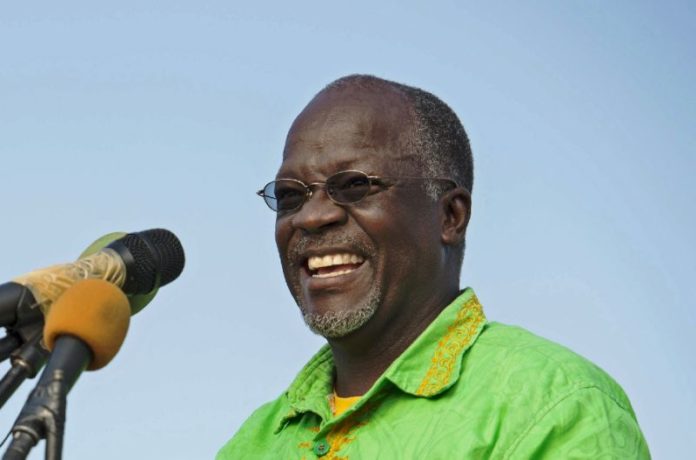
President John Pombe Magufuli.

Tanzanian President, John Magufuli, is encouraging men to practise polygamy and reduce prostitution in the East African country.
Speaking in the commercial capital, Dar-es-Salaam, he disclosed government will be giving some incentives to men that married more than one wife.
The leader argued promiscuity was also fuelled by imbalances around population in a country with 40 million women and 30 million men.
“Our women are crying every day due to lack of men to marry and support them economically hence they engage in prostitution,” Magufuli said.
“So please try to work hard and be productive so that you can help our women by marrying two or more wives provided you are able to provide for their basic needs,” he told thousands of men attending a conference.
Prostitution is illegal but quite widespread in Tanzania.
Poverty, lack of job opportunities, culture and the disintegration of family unit are blamed for the trend.

Stories Continues after ad

Kitatta appears before court martial amid tight security

Kitata escorted by military Police at court martial

The embattled patron the of Boda Boda 2010, Abdallah Kitatta  has this morning appeared before the General Court Martial (GCM) in Makindye, where he is expected to be charged with cases related to illegal possession of fire arms among others.

Clad in a yellow t-shirt and navy grey pair of trousers, Kitatta and his co-accused were escorted into court by military police personnel. Other suspects charged with Kitatta are Sowali Ngobi, Amon Twinomujuni, Joel Kibirige, Matia Ssenfuka, Hassan Ssebata, Johnson Kayondo, Hassan Ssengoba, Sunday Ssemogerere, John Ssebandeke, Hussein Mugema, Fred Bwanika and Ibrahim Ssekaja.

On Friday last week, the Unit Disciplinary Court (UDC) at the Chieftaincy of Military Intelligence (CMI) at Mbuya chaired by Colonel Tom Kabuye committed Kitatta and his co-accused to the GCM for trial, after the UDC chairman ruled that his court does not have the jurisdiction to try capital offences.

However, earlier through his lawyer Joseph Kiryowa, Kitatta had applied for bail but he was instead sent to Kigo prison on remand.

Kitatta’s woes began on January 20 after his young brother Huzairu Kiwalabye was arrested in connection with the gruesome death of Francis Ekalungar, then an Accountant with Case Hospital.


Stories Continues after ad

Kampala hotel summoned over racial discrimination

Serene Suites and Hotel is at the centre of racial discrimination.

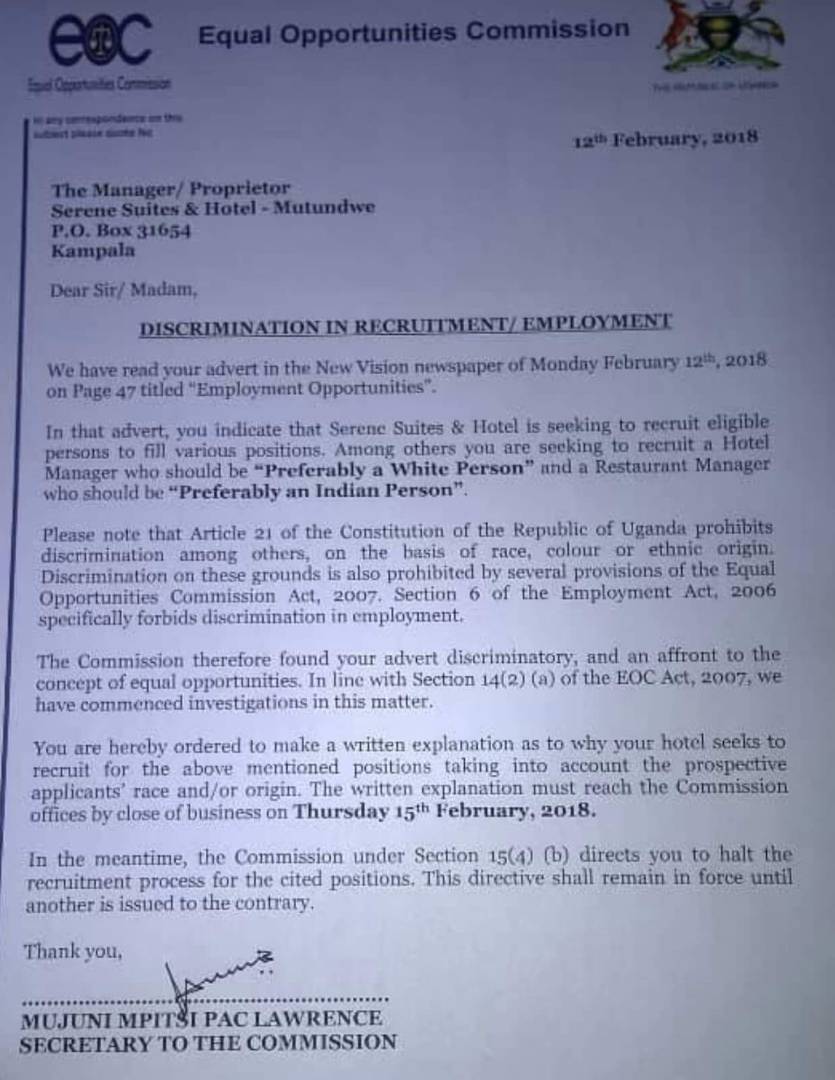
Serene Suites and Hotel has been summoned by Equal Opportunities Commission over racial discrimination.

The leisure facility advertised on February 12 New Vision newspaper among others calling for applicants to fill the vacant posts available at the hotel.

In the advert, the hotel indicated it was looking for a hotel manager who should be a white person while restaurant manager who should be an Indian.
However, according to the Ugandan Constitution, any employment based on tribe and race is prohibited and is considered discriminatory.

“We have read your advert in the New Vision of Monday February 12, 2018 on page 47 titled ‘employment opportunities’. In that advert, you indicate that Serene Suites and Hotel is seeking recruit eligible persons to fill various positions. Among others you are seeking a Hotel manager should be preferably a white person and a restaurant manager who should be preferably an Indian person. You are hereby ordered to make a written explanation as why your hotel seeks to recruit for the above mentioned positions taking into account the prospective applicants’ race and /or origin. The written explanation must reach the commission’s offices by close of business on Thursday February 15, 2018.” Reads the summons.

It continues “In the meantime, the commission under section 15 (4) (b) directs you to halt the recruitment process for the cited positions. This directive shall remain in force until another is issued to the contrary” reads the statement signed by Lawrence Mujuni Mpitsi Secretary to the Commission.
Under article 21 of the constitution of Uganda, it prohibits discrimination based on colour, race and ethnic backgrounds.

Stories Continues after ad