Stanbic Bank
Stanbic Bank
18.8 C
Kampala
Stanbic Bank
Stanbic Bank
Home Blog Page 1654

Unexpected burdens that come with outside investors

As an angel investor to startups, I’m still surprised to find entrepreneurs who expect investors to give them money, and assume no strings attached. Would you do that if it was your money? If the entrepreneur wants total control of their own venture, with no one looking over their shoulder, they should work within the limits of their own resources, a process called bootstrapping.

Angel and venture capital money always comes with ownership and management implications, starting with the obvious ones outlined in the term sheet for the deal. These normally include what percentage of the company the investor now owns, how and when tranches of money will be delivered, and even how and when you can sell your own shares (liquidation preferences).

Finally, entrepreneurs should never forget that investors really believe that they are there to help (not like “I’m from the IRS and I’m here to help”). In fact, they usually invest because they have extensive experience in your business domain, often have strong convictions on what it takes to succeed, and probably would like you to do it their way.

In any case, your startup is now part of some investor’s portfolio, so you need to treat the situation like reporting to a new boss, and not like a new freedom. That means listening to investor expectations, communicating regularly and effectively, and assuming that all your efforts will now be monitored in the following ways:

You now must have a Board of Directors. As an early-stage startup, you may have some hand-picked mentors as an Advisory Board, but now you need a formal Board with approval rights on all your strategic decisions and pivots. Investors will expect at least one seat on the board, and expect a board report from you each month on key items.

Progress milestones become management objectives. Every funding term sheet is followed by a set of milestone commitments, which should not be considered optional suggestions. Funding can be pulled, and future distributions withheld, if objectives are not met. Your very role as CEO is at risk if the Board is not satisfied with your progress.

Your time is no longer your own. Many investors will feel the need to visit your office, or just call you to chat, for a personal update on how things are going. They see you as working for them, as opposed to them working for you, so these calls, visits, and questions are not something you can delegate, or postpone repeatedly.

Communication to investors must be regular and proactive. A quick way to lose support of investors is to wait for prodding from them before providing communication updates, or answers to changes in status or direction. On the other hand, calling them on every minor issue, or asking them to make decisions for you is equally bad.

You can’t keep bad news secret. Most entrepreneurs try to keep team morale high by limiting and editing the flow of information downward, so they try to do the same thing upward to their investors. Unfortunately, this practice can get them fired quickly, due to the legalities of the shareholders rights agreement on what must be shared and when.

Cash flow tracking is even more important with someone else’s money. Since they now have money in the bank, entrepreneurs sometimes start delegating spending decisions, or they decide that it’s time to make that trip to Paris that they couldn’t justify before. You must be even more strict with investor cash than with your own.

If you haven’t done this before the investor deal was signed, now is the time to talk to each of your peers who may have received money from the same investors. These peers can tell you what works and what doesn’t work with a given investor. Also, these peers are now your competition in a portfolio ranking, so you need to know to stay ahead of them in the pack.

If your startup is one of the high fliers in the portfolio, be aware that investors may ask you to take even bigger steps into the unknown, hoping you can be the next Google. Certainly you don’t have full control, but don’t get talked into taking unnecessary risks just to make the investor’s portfolio a leader among their peers.

In reality, when you take someone else’s money, your job as an entrepreneur gets even tougher and riskier than before. I’ve seen many startups that might well have succeeded, if only they had not attracted all the money they wanted. In the startup world, hardship and struggles are often your best teachers. If you do take investor money, do it with your eyes open. It can disappear quickly, leaving you with just some heavy strings.

 

Stories Continues after ad

Makerere don selected for 2018 TWAS fellowship

Prof. Emmanuel Kasimbazi lectures at School of Law Makerere University

Makerere University’s Professor Emmanuel Kasimbazi is among ten African academics of the 55 new Fellows of The World Academy of Sciences (TWAS), the second-best showing by scientists from the continent in nine years.

Available information related to the programme indicates that four South Africans and one each from Cameroon, Kenya, Morocco, Sudan, Uganda and Zimbabwe were elected TWAS Fellows for excellence.

According to TWAS, the showing by the African continent was achieved once before in 2004, although it fared better in 2009 when 11 fellows from the continent were chosen.

Prof. Kasimbazi has an extensive research experience in Environmental law and policy, and has authored Environmental and Energy monographs for Uganda, book chapters and journal articles on Oil and Gas, Wildlife, Water, climate change, forestry and energy management and regulation.

He is also a member of the Uganda National Academy of Sciences, and has received the Golden Key International Honour, the Hon. N.D. McDermit Graduate Scholarship, the Alberta Law Foundation Graduate Scholarship and the Graduate Research.

Based in Trieste, Italy, TWAS is a global science academy uniting 1,228 scientists in 70 countries with the goal to promote scientific capacity in developing countries. Sixteen of the new members are women – an unprecedented 29% of the new class.

China and India dominated for the latest intake, while South Africa has four candidates, compared to 2016 when it had only one, with Kenya, Uganda, Zimbabwe, Cameroon, Sudan and Morocco having one each. Other top performers globally were Brazil with five and Taiwan, which has three fellows.

However, the number of African Fellows is lower than that of China, which has 12 members in the 2018 class, and India with 11 scientists elected.

Among the prominent Africans picked in the latest round is the president of the African Academy of Sciences, Felix Dapare Dakora, who has been recognised for his research in grain legumes.

Idah Sithole-Niang of the University of Zimbabwe was praised for her role in the global research network for the genetic improvement of cowpea for Africa, which led to the development of insect-resistant cowpea varieties.

University of Cape Town professor and president of the Organisation for Women in Science for the Developing World, Jennifer Thomson, was recognised for her role in developing maize resistant to the African endemic maize streak virus.

TWAS Executive Director Romain Murenzi said the academy was aware of the membership gap between the more developed countries, such as China, India and Brazil, and the much poorer countries, with the majority of them found in Sub-Saharan Africa.

The academy’s council was working hard to ensure that membership of TWAS was as diverse as possible, and was confident that this would be possible following policy adjustments initiated in 2016.

Even more efforts are being made to identify excellent scientists in countries where the academy needed more representation, mainly in low-income countries of Africa.

“For the TWAS council, it is a top priority to make sure that our membership is as broad and diverse as possible. Following policy adjustments approved in 2016, we are working harder than ever to identify excellent scientists in countries where the academy needs more representation,” Murenzi said.

“Our membership committees are giving careful consideration to candidates from these countries and as a result, we have elected a very strong, diverse class of fellows for 2018,” he added.

China and India continue to dominate TWAS membership each year, mainly due to their strong policies and sustained investment in science, technology and innovation, Murenzi said, explaining the dominance in the number of fellows from Asia each year.

“The common denominator for progress is strong policy on science, technology and innovation, backed by sustained investment in science and technology, including basic sciences,” Murenzi said.

Fellows must also be scientists whose contribution to their respective fields meets internationally accepted standards of excellence, and they may be working or living anywhere in the world, but if based in a developed country, must demonstrate efforts to promote science in developing countries.


Stories Continues after ad

EU gives COMESA €7.1m grant for climate change

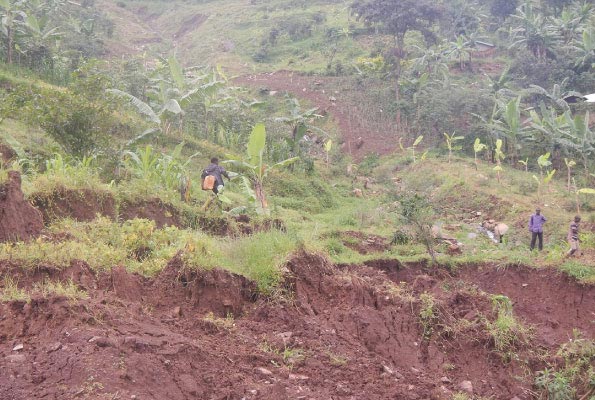
Scientists-say-the-landslides-that-hit-some-parts-of-Uganda-recently-are-a-result-of-climate-change.

The Common market for Eastern and Southern Africa (COMESA) has signed a grant agreement with the European Union worth 7.1 million Euros to implement one of the regional components of the Intra-African Caribbean and Pacific (ACP) Global Climate Change Alliance (GCCA)+ programme financed by the 11th European Development Fund (EDF).

According to a media statement, this is part of the larger Intra-ACP GCCA+ Programme worth €70 million, to be dispersed among ACP countries and regions. The programme succeeds the Intra-ACP GCCA Programme also funded by EDF from July 2010 to December 2014.

The funding will help increase the resilience of the COMESA member states to climate change and achieve the UN’s sustainable development goals in particular Goal 13 which is “Take urgent action to combat climate change and its impacts” in order to reduce poverty and promote sustainable development.

The media statement says the programme is expected to improve regional and national adaptation and mitigation responses to climate change challenges faced by COMESA countries at operational, institutional and financial levels.
The programme interventions will also contribute to the conservation of biodiversity by applying ecosystem-based solutions to climate change adaption and disaster risk reduction.

Some of the result areas in the regional component of the Programme include; utilizing the Secretariat’s dedicated operational and institutional capacity to support the needs of Member States in relevant Intra-ACP GCCA+ priority areas, climate change negotiations and implementation of the Paris Agreement.

COMESA will also ensure that regional and national climate change strategies and priorities that contribute to the implementation of the Paris Agreement have been strengthened and supported in their implementation.
This programme will also ensure that strategic dialogue between COMESA countries is strengthened, and negotiation capacity built, to share information and knowledge about climate action with the aim of promoting cooperation between COMESA countries.

The programme will contribute positively to the mitigation and adaptation efforts of COMESA Member States and ensure their full participation in regional and global efforts to combat climate change. Furthermore, the programme will strengthen the capacity of Member States to access climate finance for their mitigation and adaptation projects.

In implementing the programme, COMESA will work in close collaboration with its Member States, government agencies, Non-state actors, Community Based Organizations, academia and other key stakeholders. Uganda is a member of the COMESA bloc.

Stories Continues after ad

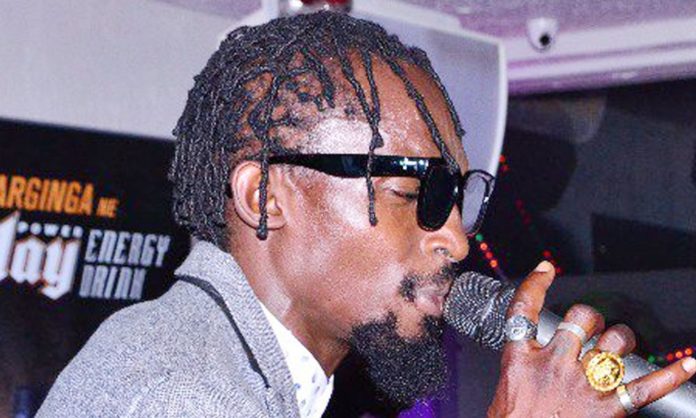
Rest well Mowzey Radio

RIP Moses Ssekibogo aka Moze Radio.

Moses Nakintijje Sekiboga aka Mowzey Radio has today been laid to rest at his Nakawuka on Kampala Entebbe highway by thousands of people following his death at cases hospital.
The music giant is reportedly to have succumbed to major injuries on his brain after being beaten by a bouncer at the De Bar in Entebbe where he had gone to meet one Pamela who was managing his construction site.
Radio was rushed to Nansabya hospital which deferred them to another healthy facility due to his deteriorating condition.
He was admitted to Case Hospital where he almost spent two weeks before he died.
Since his death thousands of people thronging several places where the body was taken for public vigil with the climax yesterday at Kololo Independence grounds where the body and mammoth crowds gathered until morning to bid him a befitting farewell.
At his sendoff Joseph Mayanja aka Jose chameleon vowed to wage a war against anyone who will intends to attack any artist following mysterious killings of musicians.
‘’We are tired of losing our colleagues under such circumstances, this has become ‘a war’, we are tired of this, enough is enough, anyone who crosses us again, we shall also burry him’’.
Lillian Mbabazi.
Musician and also Radio’s girlfriend Lillian Mbabazi with who they have two children Said ‘’I don’t know where to start, we have lost a friend, a father and one of the best musicians, You have left a big hole and I don’t know who will fill it’’
Jaguar
However music artist and a legislator from Kenyan Parliament Charles Njagua Kanyi aka Jaguar said “I have seen people on social media saying Weasel without Radio, there is no Good life, I want to tell you that this is a new beginning and the music you did with Radio will never die’’
He extended his condolences to the family and friends of Mowzey Radio asserting that today is a sad day for Africa, ‘’we have lost a beloved music icon and a legend’’ he added.
Musician Juliana kanyomozi
‘’You said we don’t cry, we are sorry we will cry, you wrote a lot of good songs to me, My condolences to mummy, I have gone through the same, God will be by your side’’.
Muhoozi kainerugaba
The first son and Senior Presidential Advisor on Special Operations to the president, Muhoozi Kainerugaba In his condolence message read by Balaam Barugahara, Muhoozi Kainerugaba said the circumstances involving radio’s death are annoying.

Stories Continues after ad

Land grabbing: Kayihura suspends senior police officers in Mubende district

Gen.Kale-Kayihura-middle-attending-a-meeting-with-Ministers_-Namuganza-and-Namugwanya-in-Mubende-district.

The Inspector General of Police, Gen. Kale Kayihura has suspended four senior police officers in Mubende district for their involvement in land grabbing scandals.
The officers include the Regional Police Commander (RPC) for Wamala, Christopher Barugahare, the Officer-in-charge of Criminal Investigations (OC CID), Dauda Swalit, the Officer-in-charge (OC) of Lands, Hakeem Mukama, and the Acting District Police Commander (DPC), Charles Magola.
Gen. Kayihura was Friday attending a meeting called by State Minister for Kampala Capital City Authority, Benny Namugwanya and the State Minister for Lands, Persis Namuganza at Butorogo, Buwekula sub-county to seek solutions to the growing cases of illegal land evictions.
The villagers who attended the meeting accused a woman known as Princess Naava of illegally evicting them from their land with the support of some of police officers. The land is located in Kilwanyi village in Butorogo sub-county.
Having listened to the villagers’ pleas, Gen. Kayihura immediately suspended the officers and promised to remain in the area for all next week to apprehend culprits.
A recent report on land grabbing in the district accused some officers of the army, police and the judiciary as perpetrators of violent displacement of residents and land grabbing in the district.
The report conducted by WitnessRadio.org, a non-governmental organisation documented land conflicts in Uganda and said that UPDF officers and police connived with private investors to evict people from the sub-counties of Kitumbi, Bukuyu, Madadu and Nalutuntu.
The authors said money, guns and power were responsible for the grabbing of over 1,975, 834 hectares of land affecting 265, 502 households in Mubende between September 2016 and November 2017.
Mubende district, endowed with minerals like gold is among the districts in Uganda with the most cases of land grabbing. Some cases are currently before the ongoing commission of inquiry set up by President Yoweri Museveni last year.

Stories Continues after ad

Uganda companies to import 324.5MT of Sugar

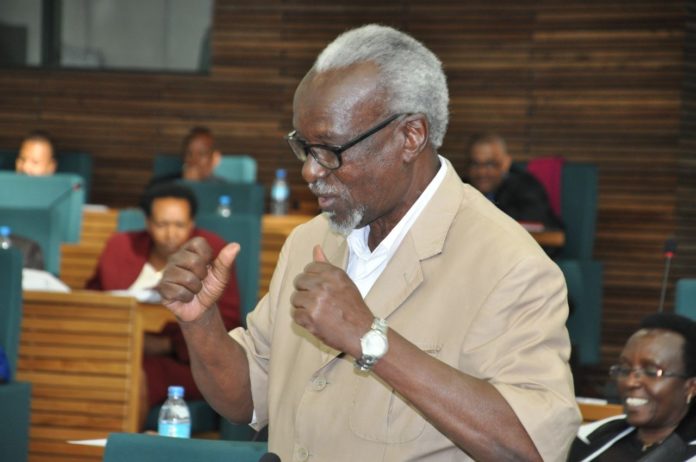
Kirunda Kivejinja

Fifteen local companies have been allowed to import 10 per cent duty-imposed 324,555MT of the sweetener for industrial use, according to the East African Community (EAC) Gazette published in Arusha Tanzania January 3, 2018.
The 15 companies had their requests to import sugar for industrial use approved by the Council of Ministers under section 140 of the EAC Customs Management Act 2004. The companies will import the sugar for the next twelve months only under the duty remission scheme.
“The Council of Ministers has approved the following manufacturers to import the specified quantities of raw materials at the specified duty rate under the Duty Remission Scheme,” Al Hajj Kirunda Kivejinja the Chairman of the Council of Ministers wrote.
Some of the companies to import sugar include Century Bottling Company Ltd., Britania Allied Industries, Nile Breweries and Uganda Breweries. They are to import 22,165MT, 3000MT, 1000MT and 200MT of sugar respectively.
Some of the other companies poised to import large volumes of sugar apart from the above mentioned include Lakeside Dairy Ltd (252000MT), Marika Africa Sweets Ltd (22,165MT), Bukonzo Mixed Farmers (20,000MT) and Balaji Group (EA) Ltd (12,000MT).
The Gazette also has allowed companies in the other EAC Partner states like Kenya and Rwanda to import sugar. But Rwanda will have to import sugar up to June 30, 2018.
The latest Gazette also allows other EAC companies to import duty-free items for specific periods.
However, the EAC Council of Ministers decision to allow companies import sugar means sugar manufacturers in the region are not producing enough sugar for domestic and industrial use.
The umbrella association of the Uganda Sugar Millers Association (USMA) chairperson Mwine Jim Kabeho says lack of mature cane for crushing has led to low production and low factory recovery.
Uganda has over 20 companies manufacturing suagr led by Kakira Sugar Works, Sugar Corporation of Uganda Limited (SCOUL) and Kinyara Sugar Works. The companies produce about 500,000MT annually as of May 2017.
“The recommended retail price by the millers is Shs3600 and some areas Shs3400, therefore, on average retail prices should not go beyond Shs.4, 000 for premium or packed sugar,” Kabeho said in December as USMA were meeting Trade Minister Amelia Kyambadde to discuss escalating sugar prices then.
At the time Kyambadde said government position was that the price of sugar per kilogram should not exceed Shs4, 000 for domestic consumption.
The factory prices had reduced from shs.198, 000 per bag in June 2017 to Shs170, 000 in December.

Stories Continues after ad

Uganda has second most crowded prison system in Africa

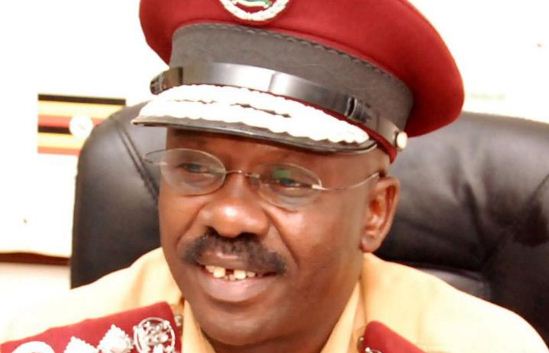
Uganda Prisons Commissioner General Dr. Johnson Byabashaija

Uganda has the second most overcrowded prison system of any country in Africa just behind Zambia, with its institutions operating at 293.2 percent capacity, according to data by the World Prison Brief.

Such a severe level of overcrowding, the Brief says, can result in malnutrition and the spread of disease in prisons where over 50 men are crammed into a cell at a time, many of whom have not even been convicted of a crime.

Worldwide, Uganda is the sixth in the top ten behind Haiti, Philippines, El Salvador, Zambia and Guatemala which have operating capacity of 454.4 per cent, 436.0 per cent, 348.2 per cent, 303.0 per cent and 296.2 per cent respectively.

According to the Brief, Uganda has prison population rate of 129 per 100,000 of national population 41.99 million at October 2017. Prison population total, including pre-trial detainees / remand prisoners was 54, 059.

The Brief shows that female prisoners as percentage of prison population made 4.4 per cent by end of December 2014 whereas foreign prisoners comprises of 0.5 per cent. The number of established institutions was 249 by 2016.

Other African countries with high concentration of prisoners in rooms are Sudan, Comoros, Benin, Burundi and Chad.

Stories Continues after ad

Chaos as Bryan White is blocked from Mowzey’s vigil

Brian Kirumira aka Bryan White

The was a stampede at Mowzey Radio’s home in Makindye as city socialite Brian Kirumira aka Bryan White was blocked from accessing the vigil of the fallen celebrity singer.

Sources at the vigil said Bryan White, who gave Shs30 million towards settling Mowzey Radio’s bills at Case Hospital, was in the company of several bouncers and another man identified only as Meddie, reportedly a brother to be the deceased singer, when all hell broke loose.

“Bryan White with his bouncers and the brother to Radio (Mowzey) called Meddie where pushed and Bryan was slapped as he forced his way in,” the source said, adding that the socialite had vowed not to attend any impending functions of the deceased singer.

However, on hearing the news Mowzey Radio’s mother reportedly apologized to Bryan White, and implored him to ignore the mistreatment and instead attend the burial ceremony of his friend.

In a related development, Bryan White has reportedly bought 5000 T-shirts which he will distribute as he mourns Mowzey Radio for three days.


Stories Continues after ad

UPDF set to construct referral hospital

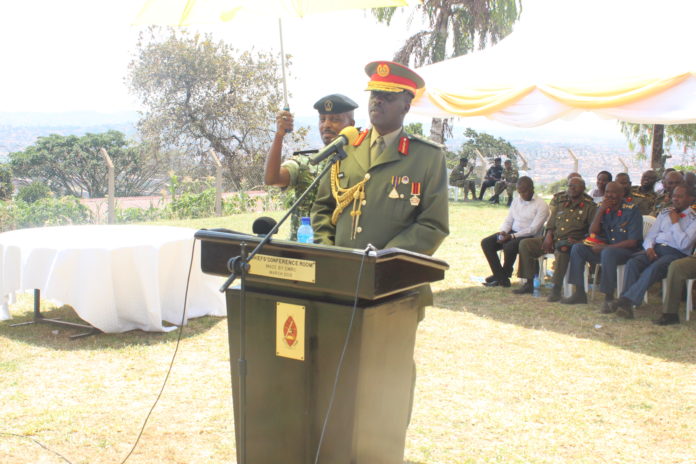
CDF General David Muhoozi

Uganda Peoples Defence Forces (UPDF) is in advanced stages to begin the construction of the UPDF Diagnostic Centre and Dental Unit at lower Mbuya barracks.

According to sources, the facility will serve as a referral hospital within the UPDF’s health system, where both civilian and military personnel will be attended to.

In February last year, the Chief of Defence Forces (CDF) General David Muhoozi presided over the ground breaking ceremony of the facility that is expected to cost the UPDF US$35 million.

In the same year the Commander-in-Chief of armed forces General Yoweri Museveni donated dental machines to the facility.

‘Due to high costs charged by private medical facilities, the hospital will not only avail services to security operatives but to also to civilians,’ the sources said.

Efforts to contact Army Spokesperson Brig. Richard Karemire over the development were futile by press time.

Currently, UPDF’s Bombo Hospital is one of the prominent medical facilities that offer quality services to Ugandan nationals irrespective of whether they are soldiers or civilians.


Stories Continues after ad

US condemns Odinga ‘presidential inauguration’

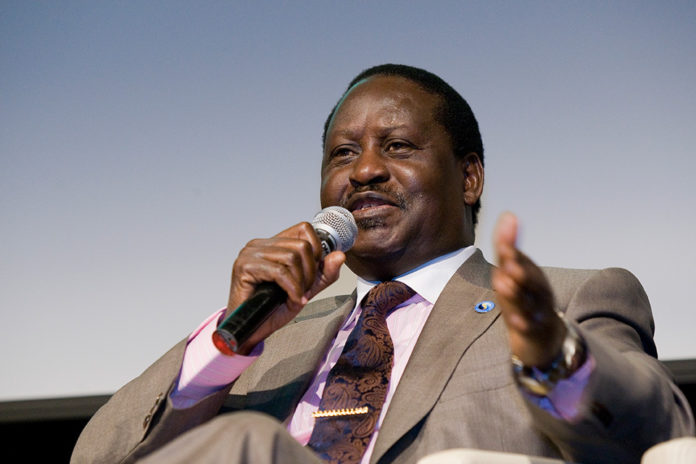
Raila Amollo Odinga

The United States has criticized last week’s swearing in of Raila Amollo Odinga as ‘President of Kenya’.

‘The United States is gravely concerned by Kenyan opposition leader Raila Odinga’s self-“inauguration” on January 30. We reject actions that undermine Kenya’s Constitution and the rule of law. Uhuru Kenyatta was elected as President of the Republic of Kenya on October 26, 2017 in a poll that was upheld by Kenya’s Supreme Court. Grievances must be resolved through appropriate legal mechanisms’, the US wrote in a statement.

The development comes in the wake of Odinga, a National Super Alliance (NASA) candidate in the August 8 2017 elections, saying he was robbed of victory by President Uhuru Kenyatta.

The opposition candidate then boycotted a repeat election ordered by the Supreme Court, but Odinga vowed he would swear in as President.

In the statement, the US also takes swipe at President Uhuru Kenyatta’s government for shutting down media houses on January 30, the day Mr. Odinga was ‘sworn in’ at Uhuru Park in Nairobi.

‘We are also deeply concerned by the Government’s action to shut down, intimidate, and restrict the media. Freedom of expression, including for members of the media, is essential to democracy and is enshrined in Kenya’s Constitution. We urge the Government and all Kenyans to respect freedom of expression and implement court orders calling for the restoration of television broadcasts,’ the statement adds.

The US also urged the Kenyan government to allow the citizens ‘express their views freely’, further calling for a ‘national conversation to build cohesion and address long-standing issues’.

Stories Continues after ad