Stanbic Bank
Stanbic Bank
28.7 C
Kampala
Stanbic Bank
Stanbic Bank
Home Blog Page 1657

Primary school staff held over ivory smuggling

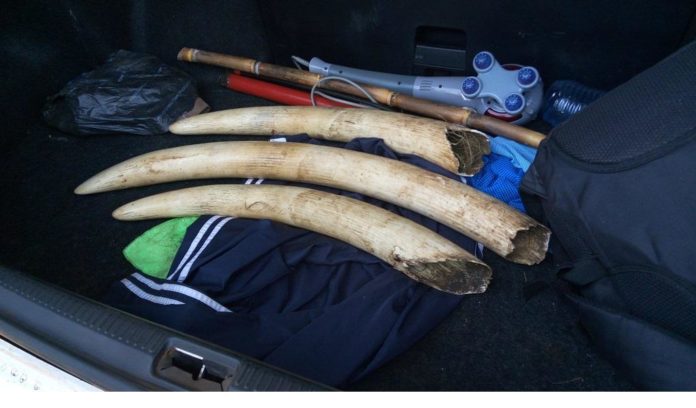
The ivory tusks recovered

A few days ago, Vera Akech was a free woman. She was a kids’ caretaker at a school in Kitgum, Northern Uganda.

But that was before she crossed paths with criminals. Currently, she is detained awaiting possession of prohibited goods charges.

Akech’s troubles started on January 22, 2018 when she allegedly attempted to sell three tusks of Ivory.

She was netted by the Uganda Revenue Authority (URA) Enforcement teams based at Corner Kamdini and Karuma check point following a tip-off.

A day earlier, according to a team member, a tipster alerted them about a person who was selling Ivory.

The sale of Ivory is banned internationally; it is listed on the Convention in International Trade in Endangered Species (CITES).

“A meeting to plan how to execute the mission was convened. It was agreed that the one team member would arrest the suspects while another would masquerade as Jefferson Olindi, an Ivory dealer,” Vincent Seruma stated.

Before she was arrested, the ‘tools of trade’- vehicles, plain clothed security personnel and Olindi – the buyer, were assembled.

In a vehicle without a URA logo, the team set off for Kitgum, Northern Uganda where the seller awaited them, Seruma, the spokesperson said.

‘Olindi’ had travelled earlier to meet the seller, who it later emerged, was a woman. Four hours later, they were in Kitgum.

Smelling a rat, Akech reportedly took “Olindi” on a “tour” of Kitgum. Realising her trickery, one of the officers was asked to follow the vehicle she and “Olindi” traveled in.

Moments later, following assurance by “Olindi”, the vehicle halted at a secluded spot in Oryang Ojuma where the transaction would occur.

There, said Seruma, “Olindi” was taken to a thicket where he beamed on seeing the goods-Ivory.

Due to lack of a weighing scale, “Olindi” and the seller estimated the weight to be 15 kilograms and the cost US$ 700.

“Soon, one of the security personnel signaled colleagues that the exchange was ongoing,” Seruma stated, adding that “Olindi’’ gave Akech sh500, 000 in denominations of sh5, 000.

No sooner had she began to count the money, than she was surrounded. Realizing that she was in trouble, Akech fled but could not outrun the URA team.

On searching the thicket, three pieces of ivory weighing nine kilograms were recovered.

Akech is a caretaker in a primary school in Kitgum. According to her statement, she got the Ivory from criminals said to be based in Kidepo, North Eastern Uganda. There is a National Park in Kidepo.

According to Seruma, a file regarding the matter was sanctioned and awaited court allocation. She will face charges of possession of prohibited items under the East African Community Customs Management Act.

The incident was the second in a month. Earlier, the same URA teams impounded two tusks of Ivory.

URA has severally thwarted the sale, importation and exportation of Ivory at borders including Entebbe International Airport.

By Herbert Ssempogo, Media Unit & Corporate Affairs-URA

Stories Continues after ad

URA collects Shs1.4b in December 2017

The Uganda Revenue Authority (URA) collected taxes worth Shs 1.487 billion in December 2017, making a shortfall of 114.5bn representing a seven percent less than the monthly target, the latest Performance the Economy Report indicates.


The report released by the Ministry of Finance states that the shortfalls mainly arose from direct domestic taxes, in particular on corporate tax, tax on bank interest and presumptive tax.

‘Corporate tax was affected by low sales and profits by key tax payers in sectors such as energy and construction.  Tax on bank interest was on the other hand affected by reduction in fixed deposits with the commercial bank on which it is imposed’, the report states in part.

Further, according to the report, taxes on goods and services, and taxes on international trade also performed below their monthly targets at 89 percent and 94 percent, respectively.

‘Taxes on goods and services were affected by VAT on beer, sugar and cement due to the lower than anticipated production while the performance of international taxes was affected by lower than anticipated dutiable imports’, the report adds. That meant that petroleum duty, excise duty, VAT on imports and surcharge on imports attracted less than the anticipated receipts.

However, the report says compared to December 2016, tax revenue collections in December 2017 grew by 9.1 percent.

The Uganda Revenue Authority (URA) is tasked to collect taxes of over Shs15 trillion in the financial year 2017/18 which will end in June when the new national budget is expected to be read.


Stories Continues after ad

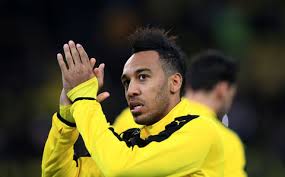
Aubameyang £60m Arsenal deal to be concluded today

Pierre Emerick Aubameyang

The signing of Pierre Emerick Aubameyang by Arsenal in a deal worth £60m is expected to conclude today, manager Arsene Wenger has indicated.

Previously, it was announced that Aubameyang had been signed based on a video clip that was uploaded by an Arsenal player, in which an interviewer was asking Arsenal Manager Wenger: “Aubameyang is an Arsenal player, you must be delighted to get the deal done?”

Wenger reportedly replied: “Yes its good news. We need people who can give us more offensive power, we aren’t efficient enough going forward. He has a big challenge in front of him, I want him to win the premier league. It’s absolutely good news for us.”

However, the video has been lately been deleted and Wenger insists that today is the deadline to complete the capture of the striker in a multimillion deal.

Should the deal go through the 28-year old Aubameyang will be Arsenal’s second signing of the month following the arrival of Midfielder Henrikh Mkhitaryan from Manchester United.

Stories Continues after ad

Controversial DPC Kirumira ‘resigns’ from police

RIP: Kirumira, former Buyende District Police Commander (DPC).

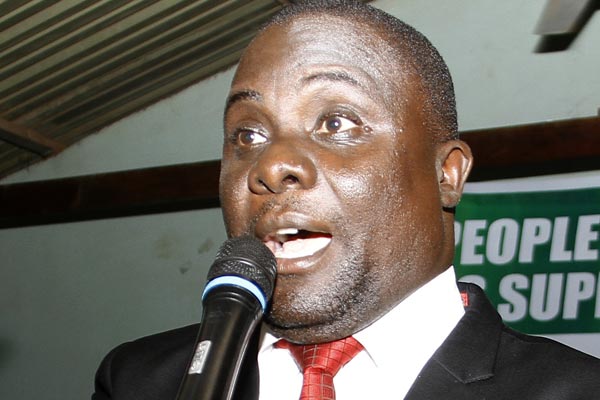
Controversial Buyende District Police Commander (DPC) Assistant Superintendent of Police (ASP) Muhammed Kirumira has today ‘resigned’, to give room for police investigations into various charges that were slammed against him while he worked in Nansana, Wakiso District.

Last week ASP Kirumira was arraigned before the Police Tribunal at Police Headquarters in Naguru and charged with among other crimes torture, extortion, corruption, bribery, unlawful arrests and excessive use of authority.

He is alleged to have committed the offences when he was in-charge of Nansana Police Station in Wakiso District in 2013 and at Old Kampala where he was Division Police Commander in 2014.

In his statement as the tribunal is set to start the hearing his case tomorrow, ASP Kirumira said the police has persistently regarded him as a criminal, adding however, that the force is only trying to find ways of undermining his reputation.

‘I want to leave the police since it’s clean and I am branded dirty; this is my decision, I shall not change permanently’, Kirumira wrote, and added that the police administration decided to charge him with old and trumped up criminal charges.

Further, he vowed to hand in his official retirement application, ‘to earn my discharge letter in case court delivers its verdict’.

‘Therefore, as a senior officer who has labored to wipe out crime without any special facilitation, I have realized that my image before the administration shall never change given the fact that I am still a young man’, Kirumira added.

According to Kirumira, he now awaits handing over. ‘I now await for an official message replacing me so that I can hand over office to whoever is deemed fit’.

By press time it was not possible to contact Police spokesperson Emilian Kayima about the developments, but Kirumira’s ‘resignation’ might prove a gargantuan task, given that there are stringent laid down procedures on how one can join or leave the police force.

ASP Kirumira came to the limelight after reports emerged that he was carrying out various operations in Nansana to crack down on hard core criminals that were terrorizing Kampala.

However, sections of the populace instead implicated him in various crimes, leading the police administration to suspend him pending investigations.

His suspension was however, short-lived as the President Yoweri Museveni reportedly accorded him an ear, something that prompted his return to the force and subsequent deployment to training.

On completion of the course, ASP Kirumira was deployed to Kasese and then transferred to the Old Kampala Police Station as Officer in Charge, before being posted to Buyende as District Police Commander.

It should be recalled that while serving as DPC Old Kampala, ASP Kirumira displayed over 1000 phones he said had been stolen by criminals in his operational areas.

Interestingly, after his transfer to Buyende, nothing much was heard of the phones.


Stories Continues after ad

Opposition MPs want army’s OWC disbanded

WANTS OWC DISBANDED: Muwanga Kivumbi

A group of legislators have called for the immediate disbandment of Operation Wealth Creation arguing that the Standing Orders of Procedure for OWC creates conflicts of with other Ministries, Departments and Agencies (MDAs).

The calls to disband UPDF’s involvement in agriculture are contained in the Minority Report by the Parliament Budget Committee that was signed by Muwanga Kivumbi (Butambala County), Cecilia Ogwal (Dokolo Woman) and Robert Centenary (Kasese Municipality) after they disagreed with opinions of the Majority Report.

The trio has instead made proposals for Operation Wealth Creation (OWC) to build on the ongoing work under the Agricultural Cluster Development Project to curtail the mismatch of mandates of the institutions involved.

The Legislators are also discontented with the performance of OWC, which they argue, is dismal despite the fact that the body has continued to draw billions from the Consolidated Fund account.

The UPDF that is overseeing the activities of OWC has also been put under the spotlight, with MPs questioning why the Army is engaged in facilitating production, particularly the distribution of inputs contrary to engaging in production activities as required under Section 7(d) of the Uganda Peoples’ Defence Forces Act 2005.

UPDF has also been blamed for placing emphasis on quantity of distribution rather than focusing on output from the agricultural inputs given to farmers, an action the MPs argue has made the UPDF incapable of providing extension services to beneficiaries because the Army lacks the requisite skills.

“Many formers hove since complained of poor selection of beneficiaries as well as low productivity of crops attributed to poor quality inputs and inadequate extension services,” the report read in part.

The report also noted that although many people meet the OWC beneficiary selection criteria, only a few people benefit, which has raised concerns with equity and fairness risks in terms of national development.

Now, the MPs want the UPDF to engage in production activities like raising production in livestock and crops for the development of Uganda as required under Section 7(d) of the Uganda Peoples’ Defence Forces Act 2005.

As such, the Legislators also want to see the distribution of farming inputs and provision of extension services solely left to the Ministry of Agriculture and to also leave other MDAs to fulfill their mandates.


Meanwhile, the MPs also took exception with NAADS, saying that it is engaged in planning and budgeting for distribution of farming inputs contrary to promotion of modern farming inputs as required under Section 5(b) of the NAADS Act 2001.


Stories Continues after ad

Six RUFORUM universities among top 17 ranked in Africa

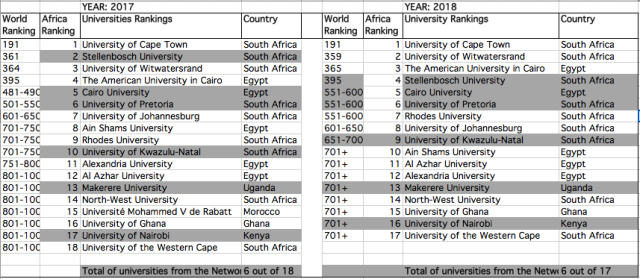
African universities ranked in 2018

Six universities that are members of the Regional Universities Forum for Capacity Building in Agriculture (RUFORUM) were among the 17 top ranked universities in Africa, according to the latest 2018 QS World Universities Rankings.

“We are pleased to note that six RUFORUM member universities were ranked among the top 17 African Universities according to the recently released 2018 QS World Universities Rankings,” RUFORUM says in the latest press release accessed by Eagle Online.

Makerere University Main Building

According to the rankings, the six RUFORUM member universities including Makerere University were among the top 18 African universities that made the list of 1000 top universities worldwide in 2017 and have maintained the prominence in 2018.

The University of Nairobi and University of KwaZulu-Natal improved rankings from last year whereas Stellenbosch University dropped from the 2nd to 4th position.

However, Stellenbosch University still leads the RUFORUM Network of 85 member universities followed by Cairo University and University of Pretoria which retained their positions of 5th and 6th, respectively, while the University of KwaZulu-Natal moved a position higher to 9th, as Makerere University retained its 13th position.

According to the press release, only 18 and 17 African universities were ranked in 2017 and 2018, respectively. University of Cape Town continues to dominate the top position in Africa.

The 2018 QS report lists the world’s top 959 universities and is based on  metrics such as: Academic reputation, Employer reputation, Faculty/Staff ratio, citation per faculty, International Faculty ratio and International Student Ratio. Below is a table for the comparison of rankings of RUFORUM member Universities for the top 18 in Africa for 2017 and 2018. 

University ranking, though controversial, remains the common means of informing the public where they should get the ‘best’ education. To this end, RUFORUM strives to build capacity of its member universities to deliver quality education through cutting edge research and Innovation, and academic mobility,” says the press release.

With increasing pressure from university stakeholders and beneficiaries for universities to demonstrate value for money invested in higher education, universities are consistently striving to do their best to visibly show their relevance to the public.

RUFORUM, whose mandate is to oversee graduate training and networks of specialization in the countries and universities where it works, has its head offices at Makerere University.


Stories Continues after ad

Top ‘Battle for Cash’ Clubs off to Nairobi

The flag off was presided over by Mr. William Sekabembe, dfcu Chief of Business and Executive Director.

The top twenty investment clubs in the recently concluded dfcu ‘Battle for Cash Investment Clubs Competition’ flew out late last week for a study tour in Nairobi. The flag off was presided over by Mr. William Sekabembe, dfcu Chief of Business and Executive Director.

The three-day study tour will cover areas like investment club formation, set up and management; Designing and Executing a Successful Investment Strategy; Compliance with laws and regulations; Funding your investment project and practical tips from the top four investment clubs in Kenya.

Between June and August 2017, dfcu Bank had teams going round the country carrying out regional saving and financial literacy workshops.

Some of the topics covered included; Why and how to save; where to invest money so it can grow, things to think about when thinking of investing and so much more. This was aimed at changing the perceptions and attitudes about money, savings and investments.

dfcu Bank received applications from close to 200 Investment clubs across the country. The applications were independently vetted by PwC who were able to zero down to 20 clubs that entered the TV competition.

As part of the application process, clubs were tasked to develop a business plan for an innovative investment project. So at the start of the show all shortlisted 20 clubs had to defend the business plan they wrote before a panel of judges to make it to the next show.

The clubs were trained in different aspects and assigned weekly tasks to demonstrate their ability to put into practice what they had been taught.

Geneber Outspan Organic Farmers, who were the overall winners in the competition, walked away with Shs25 million and coming in second, the Peak Investment Club won Shs15 million. The third winner Sikyomu Development Organisation got Shs10 million while the fourth and fifth clubs both got Shs5 million each.

In recognition of the role of women and youth in development there was a special category for women and youth. The best youth club prize was scooped by Plus Save Group and Soroti Women Cooperative Union were awarded in the best women club category. Both clubs walked away with Shs7.5 million each.

dfcu Bank introduced the Investment Clubs program in 2007, providing a conducive platform to foster group savings. The program has since grown with over 10,000 Investment Clubs that cut across all segments including students, the professionals, women and youth holding a savings turnover in hundreds of billions of shillings.

“It is not enough to simply save money if it is not growing so the Investment Club challenge was also about challenging the investments clubs and the public to think through how to grow and multiply their savings,” Sekabembe said.

An amount totaling to Shs100 million in prize money was set aside for the Investment Club challenge including monies spent on regional draws carried out in different parts of the country.


Stories Continues after ad

Investing in Africa: Bill & Melinda Gates, EU commit €100 million

PHILANTHROPISTS: Bill and Melinda Gates

The Bill and Melinda Gates Foundation will contribute $50 million (€40.9 million) in financing, and an additional $12.5 million (€10.2 million) in technical assistance to investment projects in the health sector in Africa through the EU’s framework to improve sustainable investments in Africa, a statement from the European Union (EU) indicates.

The pooling of resources with the European Union is designed to encourage additional private investment towards achieving the Sustainable Development Goals and will allow successful projects to be scaled up more rapidly.

According to the statement, the European Commission has welcomed the support to its efforts towards sustainable development in Africa and will match the contribution with another €50 million.

‘The EU accounts for a third of foreign direct investment into Africa – this is now helping create jobs and growth on both of our continents. But we must do more to improve the business environment and provide a platform for African innovators to grow,’ EU President Jean-Claude Juncker said.

He said the effort requires the full involvement of the private and philanthropic sectors.

‘I am grateful to the Bill & Melinda Gates Foundation for their much-needed engagement. This is an investment in our shared future,’ Juncker said, adding that Europe’s partnership with Africa is one in which we support each other, help each other to prosper and make the world a safer, more stable and more sustainable place to live.

The statement also quotes Bill Gates as saying: ‘Improving health outcomes allows a society to become more prosperous and productive. There has been a lot of progress in this area in sub-Saharan Africa since 2000, but we need to do more to incentivize research and innovation that benefit the poor’. 

According to the statement, the European Commission, in partnership with African countries, is leading the way in reducing deep-seated inequities in global health. ‘This commitment will create opportunities that will help people lift themselves and their communities out of poverty’.

This new partnership on health follows a first joint initiative with the EU, announced on 12 December 2017 at the One Planet Summit in Paris, to support the development of tools and techniques to benefit smallholder farmers in developing countries.

Through that initiative, the Commission will provide €270 million, and the Bill & Melinda Gates Foundation $300 million (€244.7 million), to finance agricultural research to help the world’s poorest farmers better adapt to increasingly challenging growing conditions brought about by climate change.

France, Germany, Italy, Spain and other EU Member States will also take part in this programme.


Stories Continues after ad

‘Mbuga currently not on our radar’ – Interpol Uganda

'Tycoon' SK Mbuga with his fleet of luxurious cars

The police has dispelled reports doing rounds on social media and some news publications that socialite Sulaiman Mbuga Kabangala (SK Mbuga) had been arrested and repatriated to Sweden, where he is allegedly wanted to answer to fraud charges.
According to Vicent Sekatte, the Interpol Uganda National Central Bureau spokesperson for international relations, the police has not received any request to arrest Mbuga, who is linked to a Shs23 billion fraud case that involves his wife Vivienne Chebet Birungi aka Jalia Mbuga and a Swedish politician Sten Heinsoo.
According to Swedish media, Ms. Birungi allegedly obtained over Euros 6 million from Heinsoo, ostensibly to deliver gold to the latter in Sweden.

SULTAN’S WEDDING: SK Mbuga and Jalia Mbuga on their wedding day

However, it is said that on getting the money, Ms. Birungi, a former girlfriend of Heinsoo, relocated to Uganda and allegedly used part of the money to fund her lavish wedding to Mbuga.

Stories Continues after ad

Gender ministry automates external employment services

The Permanent Secretary of Labour, Gender and Social Development (MLGSD) Pius Bigirimana

In a bid to curb instances of human trafficking in the external employment services, the Ministry of Gender, Labour and Social Development has developed a digital system to host all processes involved in labour exportation.


According to the Ministry’s Permanent Secretary Mr. Pius Bigirimana, the External Employment Management Information System (EEMIS) has been designed to manage the entire application workflow ranging from submission of an application to go work abroad to approval.


“The current system largely involves the use of papers that are transited through the approval process. However with the new Information System we shall be able to do everything online including licensing of recruitment companies and handling applications for persons wishing to go and work abroad,” Mr Bigirimana revealed at a press conference held at the Ministry’s headquarters in Kampala.


He said the system will manage secure registration of users; application submission for license and job orders; managing the multi-agency vetting, inspection and approval workflows, training, monitoring, billing, user reports and auditing logging features.


The development is ongoing in stages and so far the Application Management Module that handles the initial expression of interest application, full license applications as well as processing of individual’s applications, has been completed.

“The benefits are enormous because we shall be able to electronically track every individual’s working contract, power of attorney letters, signed agreements, letter of demand and recommendation letter from the Uganda Association for Employment Recruitment Agencies (UAERA),” Bigirimana observed.

The same portal will detail a position the person is supposed to serve in, the responsible recruitment agency, category of service, salary payable, location of work station, all critical dates as well as extra benefits including medical insurance, food and accommodation, transportation, and life/accident insurance.

“The portal has provided for a possibility for applicants to monitor online the level at which their applications are and the status on whether it has been approved, rejected or pending” Mr. Bigirimana added.

He revealed that the Ministry has already signed a Memorandum of Understanding with the NITA-U to securely host the External Employment Management Information System. Another will be signed with the National Identification and Registration Authority (NIRA) to match personal details of applicants.

The Ministry will also sign a Memorandum of Understanding with the Uganda Revenue Authority (URA) to track payments that will be made in the processes. Currently payments are made at the bank and hardcopies of receipts are transited through the process which slows down the turnaround time.

The Ministry is optimistic that the entire system development will be completed by the end of February, and Mr. Bigirimana noted that the processing time had improved, bringing down the vetting period from 21 to 14 days.

“Once the system is fully operational, the vetting period will further come down to a maximum of five days from the current fourteen”  Mr Bigirimana noted.

Andrew Tumwine Kameraho, the Chairman of Uganda Association of External Recruitment Agency (UAERA), commended the Ministry of Gender for the innovation saying it would greatly facilitate monitoring.

“I would like to thank the Permanent Secretary and the Ministry at large for putting in place this system which we are optimistic will enhance monitoring and improve efficiency,” Kameraho noted.


Stories Continues after ad