Stanbic Bank
Stanbic Bank
28.7 C
Kampala
Stanbic Bank
Stanbic Bank
Home Blog Page 1659

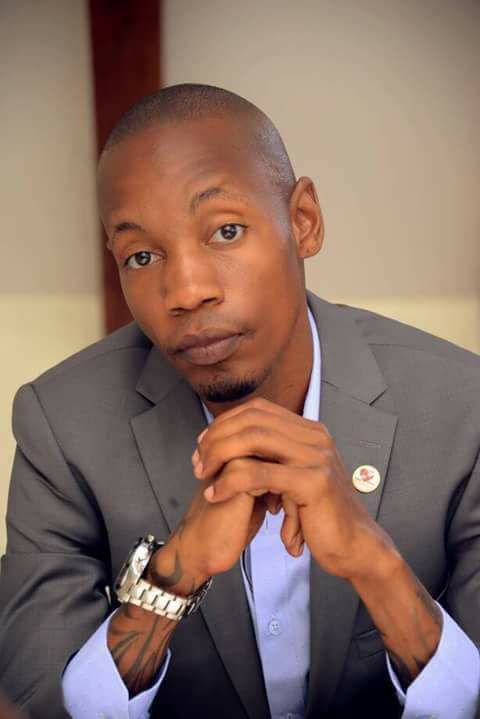
Brian White ‘reveals’ source of huge fortune

Brian White

Several Ugandans have been awed by the riches of Brian Kirumira aka Brian White, with many questioning the source of incredible wealth.

However, in what appears to be efforts at ‘clearing’ the mystery surrounding his riches, the 33-year old Brian White said he inherited the fortune.

‘When I was in school, my mother, who was married to an Italian rich man left with my sister to stay in Italy. It was three years ago when my big sister Sara Nakakande called me to go and help manage some of the businesses in Italy since my mother had passed on. Shortly, my step father also passed on and I was surprised that he had made me his heir. His son Emmanuel Claudio, whom he had with my mother had also passed on so they left me to take care of his riches,’ Brian White reportedly posted on Facebook.

According to Brian White, his biological father abandoned their family when he was a kid.

‘I do not always want to talk about my father because he left my siblings and I with my mother and then went to stay with his other family. I went to Mityana Public School for my primary education then joined Central College School for my secondary before I joined Makerere University for a Bachelor’s degree in Law but I studied for just one semester,’ Brian White is quoted as saying.

He added that he returned to invest in Uganda, and that he was in the process of setting up two factories in Luwero.

‘I have just settled in Uganda but I am setting up a juice manufacturing factory in Kapeeka and I have a tile manufacturing company coming up. All these are going to be in Kapeeka,’ Brian White said.

Since his return to Uganda Brian White joined the social scene with a bang, but was shortly to land in trouble with the law when he allegedly tried to kill a one Bitwire. He was arrested and remanded to Luzira where he spent the 2017 Christmas, before being released on bail early this year.

Stories Continues after ad

Kadaga faults judiciary over court summons

Speaker Rebecca Kadaga

The Speaker of Parliament Rebecca Kadaga has today called for mutual respect from the judicial arm of government, criticizing the summons issued to her office, which she said interrupt parliamentary work.

Kadaga’s remarks come in the wake of  the various court summons she has received, the latest being the December summons by Justice Margaret Oguli, after the suspension of six anti-age limit bill legislators who included among others Allan Ssewanyana, Mubarak Munyagwa, Ibrahim Ssemujju Nganda, Gerald Karuhanga, Jonathan Odur and Anthony Akol.

“I think there is a need for arms of the state to give each other space; a court cannot order the Speaker to close the House and come and attend a court session,” Kadaga said at the opening of the New Law Year event at the Kampala High Court.

She noted that parliamentary privileges and immunities should be protected and added that no Member of Parliament should be served over civil matters within House precincts or during sittings.

The current bickering among the three arms of government brings back memories of two court orders issued in 2014 by then Deputy Chief Justice Steven Kavuma, to the effect that four National Resistance Movement (NRM) ‘rebel MPs’ including Theodore Sekikubo, Barnabas Tinkasiimire, Wilfred Niwagaba and Muhammad Nsereko, be kicked out of Parliament because they had been expelled from their party.

In the other case, in January 2017 Justice Kavuma issued an interim order blocking Parliament from investigating the Shs6 billion that was shared by out by top officials from various government institutions after they reportedly won a Capital Gains Tax case for Uganda against two oil prospecting companies, Heritage Oil and Tullow Oil.

“I direct the Attorney General to move to Court and have this stupid order vacated, I will adjourn the committees and plenary until the Court order is vacated”, Kadaga reacted to Justice Kavuma’s interim order.

Meanwhile, in his remarks at the opening of the New Law Year, the President of Uganda Law Society (ULS) Francis Gimara called  for mutual respect between Judges and Lawyers, noting that  the latter are sometimes humiliated before their clients, public and media by tough judges.

“We want an end to the patterns of impunity and recklessness we saw in 2017 stopped. Non-judicial officers shouldn’t block enforcement of court orders and decisions,” he added.


Stories Continues after ad

Leaders meet over Ethiopian dam construction on River Nile

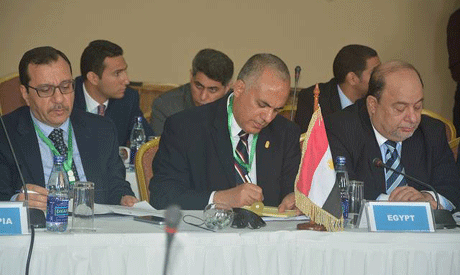
Officials at a meeting over the River Nile

The leaders of Egypt, Ethiopia and Sudan are meeting today in a bid to break a deadlock in negotiations over a hydroelectric dam Addis Ababa is building along its share of the Nile river, two official sources said on Sunday.

Cairo – solely dependent on the Nile for its water – is at odds with Ethiopia over the construction of the Grand Renaissance Dam, which it fears could reduce waters cascading down from Ethiopian highlands and through the deserts of Sudan to its fields and reservoirs.

Ethiopia says the $4 billion-dam will have no such impact.

“The aim is to agree on the resumption of the consultations,” said a diplomat attending an African Union summit in the Ethiopian capital Addis Ababa, where the three leaders are gathered. The diplomat was speaking on condition of anonymity.

An Egyptian government source confirmed that Egypt’s President Abdel Fattah al-Sisi would participate, saying he extended his stay to do so.

Sisi will meet Sudanese President Omar Hassan al-Bashir and Ethiopian Prime Minister Hailemariam Desalegn, according to the diplomat.

Discussions have been deadlocked for months over the wording of a study on the dam’s environmental impact. In December, Egypt proposed that the World Bank be allowed to help settle the dispute, a call dismissed by Ethiopia.

Countries that share the Nile River have argued over the use of its waters for decades – and analysts have repeatedly warned that the disputes could eventually boil over into conflict.

A bone of contention for both Ethiopia and Egypt is the speed at which the dam’s reservoir would be filled.

The Grand Ethiopian Renaissance Dam – now over 60 percent complete and which will churn out 6,000 MW upon completion – is centerpiece to the country’s ambitious power exporting plans.


Stories Continues after ad

Carnegie Corporation gives US$1.5m to African universities

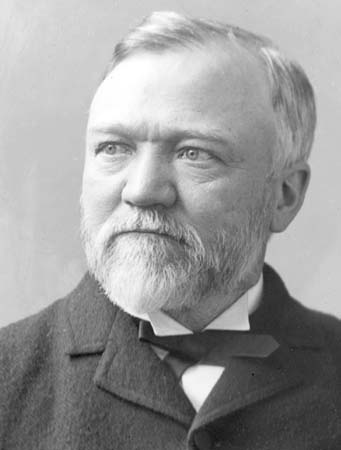
Andrew Carnegie is said to be the father of modern philanthropy

The Carnegie Corporation of New York has given the Regional Universities Forum for Capacity Building in Agriculture (RUFORUM) a US$1.5 million grant to support its post-doctoral fellowship programme on the continent.


Established in 2004 and hosted by Makerere University, RUFORUM is a network of 85 universities in Eastern, Central, Western and Southern Africa (ECWSA) supporting capacity-building for agricultural training in Africa.
The two-year grant will support a total of 19 post-doctoral fellows who have completed their studies over the past five years with financial support from the Forum and the New York charity.

The selected beneficiaries will get an opportunity to start building their scientific careers, lead research teams and acquire international exposure, as well as receive training and mentorship under the initiative.

“The two years are expected to allow fellows time to transition, settle down, and find their level and sense of direction in their new career path. This will allow them to quickly become leaders and also initiate support for training of a new generation of African scientists,” a statement by the Carnegie Corporation reads in part.

According to the statement, beneficiaries of Carnegie PhD grants between 2012 and 2017 and who are working as university academic staff or attached as post-doctoral fellows in any of the RUFORUM member institutions can apply for the fellowships.

Each fellowship has been allocated a total of US$60,000 that will include US$26,400 as a living stipend, US$26,700 to support research work, and US$3,600 to facilitate mentorship of the Fellow.

Stories Continues after ad

Avoid competitor bashing in your pitch to investors

By Martin Zwilling

Don’t bash the competition. Every investor knows how vulnerable a new startup is to competitors, so investors always ask about your sustainable competitive advantage in the marketplace. How an entrepreneur answers this question speaks volumes about their knowledge of business realities, customers, confidence, and their ability to handle investor funding.

There is no perfect answer to the competitive advantage question, but investors are looking for how your offering will keep ahead of competition, not just at this moment, but throughout the life of their three to five-year investment. They are also seeking to find out how you handle one of the many tough questions that a new founder will get in today’s market.

A strong answer should be something like “Our product introduces a new lower-cost technology, which we have patented and trademarked, that makes us very attractive today, and will provide a wealth of additional products as we move forward.” That says you are competitive today, have a real barrier to entry, and the potential to remain ahead of the competition for a long time.

Based on my own experience as an angel investor, and feedback I get from many other investors, here are a collection of answers that we often hear instead, from the least credible to at least reasonable:

Insist you have no competitors. Leading with this answer will likely terminate any further investment opportunity with this investor. He or she will assume your comment means there is no market for your product or service, or you haven’t looked. Neither speaks well for you or your startup. Even if you hedge by saying no direct competitors, we all know that existing cars are still big competition to your new flying automobile.

Claim the first mover advantage. This is one of the most frequent responses I hear, and is rarely convincing. The problem is that startups have limited resources to keep them ahead of big companies. If your early traction highlights an opportunity they have missed, they can mobilize their huge resources and run over you. First mover advantages are only sustainable by large companies, or founders with deep pockets.

Proclaim your solution as a paradigm shift. If you insist that your technology is so new and unique that it will disrupt your competitors and the whole market, investors will fear that neither they nor you can afford the time and marketing required to weather the change. They will likely decline on the basis that historically, pioneers get all the arrows.

Highlight your world-class team as the secret sauce. Insisting that your team is better than any other, giving you a sustainable competitive advantage for the long term, will likely come across as naiveté or arrogance. Investors know that no startup has a lock on the best people and processes, and investors don’t deal with unrealistic founders.

Declare that you will offer the product or service free. Free is a dirty word to investors, since they need a return on their investment. Perhaps you intend to collect money from advertisers, but this requires a large investment to get the audience you need before monetization can work. Facebook spent over $150 million before revenue.

Intellectual property as barrier to entry. I like patents, trademarks, and trade secrets, so this answer is a better sustainable competitive advantage than the other five answers. Now all you have to do is defend your position, and we all know that patents can break a startup in court battles, and will have alternative implementations if the price is right.

Thus, there is no perfect answer to this question, so the best entrepreneurs see it as an opportunity to highlight their own advantages, rather than put down a competitor. Being negative is never the answer. For example, it’s tempting to say that your worst competitor has poor quality products, requiring costly maintenance, but it’s much better to say that you provide a five-year free warranty that no competitor can match.

After highlighting your best competitive features and your intellectual property barriers to entry, I encourage you to put on your humble face, and proclaim your determination to never stop improving your products and processes to out-distance competitors. You want investors to believe that you are a realist, but have the confidence and determination to win.

Investors know that winning in today’s highly competitive environment is more a mindset than a product feature. Competitor bashing is not a skill that you need to hone. I look for entrepreneurs that can sell themselves and their offering to discerning customers. Money from customers and investors is the same color.


Stories Continues after ad

Ugandan youth should wisely engage in political activities

Makerere University students on strike.

By Michael Woira

There is something that often strikes me when I attend some events including government functions, local council meetings at our town hall and radio talk shows on local stations.

I sometimes think that I am one of the youngest people around attending; I always do this because my interest is in submitting comments as a member of the interested public.

But I can’t actually vote on the different issues being deliberated upon, making me powerless to actually vote on things that affect me like increases in the various taxes by the town council, mistreatment of taxi drivers by the taxi park operators and many other things that hurt me.

I always attend such important sessions because all issues that are discussed are important and as a citizen I always feel like taking an active role in my community because I want to represent voices that might otherwise go unheard.

Many at such meetings include people in their 40s and 50s, but few in their 20’s like me, and even fewer under 30.

There aren’t many youth and young adults, and even though I can hardly be classified as ‘young’, people still take me for a young person who doesn’t add value to anything and this is because the youth of Uganda have always decided to engage in non-issues.

The age difference between me and the next youngest person is apparently significant enough to merit a second glance and a confused expression. People find it perplexing that a ‘young’ person would be interested in national affairs — and on more than a few occasions, my suggestions have been ignored, with some calling me a bootlicker because I espouse divergent ideas.

It is worth noting that many decisions made by Parliament, local councils and various municipal agencies have a direct effect on the youthful population. But it is also true that young adults work and pay taxes which in turn, help their communities. Some don’t leave in those communities where they are born and raised, but they may return to reinvest in their communities at some point in their lives.

Indeed, they have an interest in what happens where they live and that interest should be cultivated and rewarded instead of being thrown out to dry. Moreover, youth often have interesting, thoughtful and innovative ideas because they’re approaching situations from new perspectives. That means they are of immense value.

I see many youth who can do good things for this country but they are instead being used by politicians to fulfill their selfish interests. I have always felt sorry for some youth at Makerere University who are always arrested because of organizing strikes; they are always arrested and their being in prison has never been a solution to any problem in this country.

And one wonders whether these youth cannot involve themselves in politics by contesting rather than joining political strikes and riots in the city.

Indeed, as the youth of this generation, we seriously need to involve ourselves in clean politics, not the politics of blackmail, intrigue, fights, strikes and the politics of propaganda because those we call our mentors like Mandela, Museveni, Obama, Trump and many others have no record of ever being bad politicians in their youthful years.

Patriotic Ugandan

Stories Continues after ad

URA in blood donation drive to save patients in hospitals

URA Commissioner General, Doris Akol

The Uganda Revenue Authority (URA) has organized a week-long blood donation drive through which the tax agency hopes to collect 1000 units of blood from Kampala residents and visitors.

URA Manager Public and Corporate Affairs, Ian Rumanyika said the drive which begins from February 5-9, 2018 is a response to an acute shortage of blood in public health facilities countrywide.

According to Rumanyika, two collection centers will be set up at the URA headquarters in Nakawa and the agency’s Crested Towers office, Kampala.  The centers will open at 8:00am and close at 5:00pm daily for the planned period.

The drive will be a joint activity with the Nakasero Blood Bank, which will send teams to the two locations to collect the blood.

Uganda needs about 340,000 units of blood annually but collects about 200,000 annually, with students among the regular donors. But this time Rumanyika has urged taxpayers and stakeholders among them clearing agents to also donate blood at the two locations.

Following the shortage, a countrywide blood donation campaign was launched by the Health Ministry on January 16, 2018.

Other agencies like the National Social Security Fund (NSSF) have been involved in the same activity aimed at collecting blood to save patients in hospitals.

Stories Continues after ad

Techniques for avoiding entrepreneurial blind spots

By Martin Zwilling

Every entrepreneur has blind spots which limit their effectiveness and success, but due to ego, over-confidence, or deferential subordinates, many live totally in the dark. Some are smart and humble enough to assume that they don’t know what they don’t know, but lack an effective process for shining a light on their blind spots. Both are equally surprised by their every setback.

I recently found some real insight on this subject in a classic book by Robert Bruce Shaw, aptly named “Leadership Blindspots.” Shaw specializes in organizational performance and has helped a wealth of business leaders identify and overcome their weaknesses. He provides a detailed analysis of the blind spots of many well-known business powerhouses.

Shaw argues that every successful leader balances two conflicting needs. The first is to act with a confidence in their abilities and faith in their vision for their organization: The second is to be aware of their own limitations and avoid the hazards that come with overconfidence and excessive optimism. That means that they have to see themselves and situations accurately.

I agree with him that the best way to do this is to continually ask the right questions, in the right way, to avoid and identify blind spots. Here are some key guidelines that we both offer to entrepreneurs to drive this process:

Avoid yes-or-no questions. Closed-end questions (yes-no) are efficient, but don’t surface data that may be critical to a leader’s understanding. Questions are called open-ended when they allow for a variety of responses and provoke a richer discussion. These allow a leader to know what he doesn’t know, and ultimately make a better decision.

Don’t lead the witness. Hard-charging leaders often push to confirm their own assumptions about what is occurring in a given situation and what is needed moving forward. This can result in questions that are really disguised statements, like “doesn’t this mean that we really don’t have a quality problem?” These usually prevent contrary points of view and further data from surfacing.

Beware of evasive answers. All too often, people will avoid giving direct answers to direct questions. They may not know the answers or not want to provide the answers, to appear smart, or not want to offer incriminating data. Leaders need to keep coming back with directed questions until they get a straightforward answer or “We don’t know.”

Ask for supporting data or examples. Leaders need to ask questions that surface points of view and, at the appropriate time, also clarify which answers are based on fact and which are based on speculation. They should encourage people to say what they know from data and what they think they know, and make sure they clarify the difference.

Paraphrase to surface next-level details. One technique to push people to provide more information is to paraphrase what you are hearing. While this may result in a yes or no response, proceeding to next-level questions opens up the dialogue. Smart leaders sometimes mis-paraphrase what they are hearing in order to provoke a richer dialogue.

Ask for alternatives. Another approach to surfacing non-confirming data is to overtly ask for an opposing point of view. A related line of questioning is to ask the respondent to alter his or her fundamental position, like “You are asking for $10 million to grow this brand. What more could you do if we gave you $25 million?”

Give an opening for additional input. Leaders also need to provide an opportunity for others to offer additional input and, in particular, dissenting views. Often, the final moments of discussions are the richest, as people will wait until that time to surface what is really important to them. Ask if there is anything left unsaid that should be heard.

In today’s global business world, you should assume that all your peers are smart and experienced, but have blind spots just like you. These are automatic behaviors that are not flaws, but they do need to be identified and mitigated by continually asking the right questions as outlined here.

Otherwise they will undermine your organizational performance and may well destroy your legacy when you least expect it. Early learning is a lot easier than a later recovery.


Stories Continues after ad

Dollar rise tilts fuel pump prices up in Uganda

The relaes by the Uganda National Oil Company (UNOC).

The price of a barrel of crude oil has gone up by US18 dollars over the last four months, leading to an increase in the pump prices in Uganda.

According to the Uganda National Oil Company (UNOC), the prices have gone up from US$50 to US$68, while locally the cost of a dollar has gone up by Shs 100, from Shs3550 to 3650, factors that have contributed to the increased prices.

Meanwhile, the UNOC says that apart from the increase in dollar rates, there are two other factors that have contributed to increased prices: delayed Open Tender System (OTS) in Kenya and the commissioning of the Mombasa-Nairobi ‘line 5’.

‘The OTS has had to deal with one cancelled tender while another one has been delayed. This has contributed to low supply volumes. Fortunately, this issue has been resolved,’ UNOC wrote about the supply chain.

On commissioning of the Mombasa-Nairobi Line 5 UNOC wrote: ‘This section of the KPC is being developed to address logistics constraints of supplying a market which is growing at 6 percent per annum. Therefore, there is increased demand in volumes outstripping supply’.


Stories Continues after ad

Zim varsity releases Grace Mugabe ‘PhD thesis’

DURING THEIR HEYDAYS: Robert Mugabe and his embattled wife Grace Mugabe

The University of Zimbabwe has published former First Lady Grace Mugabe’s PhD thesis after an anti-corruption watchdog said it was investigating whether the wife of ousted President Robert Mugabe was wrongly awarded a doctorate three years ago.

Grace graduated in 2014, the same year she launched her career in the ruling ZANU-PF party, a power push that led ultimately to November’s de facto coup by political rivals worried she was set to take over from her husband.

In contravention of its normal practice, the university did not publish her 226-page thesis, entitled “The changing social structure and functions of the family: The case of children’s homes in Zimbabwe”, until this week, when it was released on its website (http://ir.uz.ac.zw/handle/10646/3463).

It was not clear why Grace, who runs a children’s home near her family dairy farm outside Harare, used her second name and maiden surname – Ntombizodwa G. Marufu – for the paper.

University of Zimbabwe vice chancellor Levi Nyagura did not respond to calls for comment.

There had been widespread speculation that Grace had been fraudulently awarded the doctorate, which was dedicated to her husband “because of his dedication and commitment to the well-being of the people of Zimbabwe”.

But Grace, who was lauded as “learned mother of the nation” by adulating followers, defended her academic record, telling a ZANU-PF rally in September that she had earned her PhD when her detractors thought otherwise.

In its abstract, Grace acknowledged that one weakness of her research was that “some interviewees tended to tell me what they thought I wanted to hear”.

Goodson Nguni, lead investigator at the Zimbabwe Anti Corruption Commission, could not be reached for comment on whether the anti-graft agency would continue with its probe.

New President Emmerson Mnangagwa has made fighting corruption a top priority. Mnangagwa, 75, told the World Economic Forum in Davos this week Mugabe and his wife Grace had not been granted immunity from prosecution


Stories Continues after ad