Uganda’s economic performance generally remained strong despite the recent slowdown in real GDP growth, which is projected to reach 5.9% in 2018, up from 4.8% in 2017 and 2.3% in 2016, the Uganda Economic Outlook 2018 indicates.
According to the report, the increase in economic growth in 2018 is expected to be driven mainly by public infrastructure investment; recovery in manufacturing and construction and improvements in the services sector, particularly finance and banking, trade, transport, and information and communication technology services.
Macroeconomic evolution
The Economic Outlook report says Uganda pursued a cautious expansionary fiscal policy stance to support key infrastructure projects in transport and energy, while keeping recurrent expenditure under control. The overall budget deficit was slightly high in 2016, improved in 2017, and is projected to increase in 2018 and 2019.
It notes that Uganda’s balance of payments deteriorated, mainly as the result of external economic headwinds, including low commodity prices due to slow growth in Europe and China and tightening global financial and monetary conditions. “The macroeconomic policy stance remains focused on containing inflationary pressures, enhancing exchange rate stability, and stepping up domestic resource mobilization growth by 0.5 percentage point of GDP,” it says.
It says that Uganda continues to have a low risk of debt distress. However, the debt-to GDP ratio is increasing and is projected to reach 38.6% of GDP in 2016 and 45% by 2020 from 34.1% in 2014. “At these growth rates, the debt burden is growing faster than government resources; the revenue-to-GDP ratio stands at only 13.4%,” it warns. It however, says the most recent International Monetary Fund and World Bank Group debt sustainability analysis in 2016 gives Uganda’s risk of debt distress a low rating.
Tailwinds
Meanwhile, the report indicates that Uganda’s main tailwinds for the 2018 Economic Outlook include increased agricultural production due to better weather conditions; higher foreign direct investment (FDI) flows following the recent issuance of oil exploration licenses; and the expected decision by the government to invest in oil infrastructure development in early 2018, given the projected increase in oil prices to an average of $55 a barrel in 2017–18 from $43 a barrel in 2016.
Headwinds
It adds that the major external risks to Uganda’s economic performance include low commodity prices and demand for the country’s exports in major markets, appreciation of the U.S. dollar due to expected monetary tightening by the United States, tightening of global financing conditions that could discourage FDI and development assistance, adverse spillover shocks from fragile regional neighbors, and adverse environmental shocks.
“Major internal risks include reduced domestic revenue mobilization and higher public spending on contingencies, poor institutional capacity and governance, and weak public financial and investment management systems,” the report indicates.
Uganda’s debt-to-GDP ratio remains above 50 percent, the report says, warning that unless measures are implemented by government to curtail growth in debt, the country could face an implosion in the stock of external debt and servicing costs.
The AfDB report says Africa needs to build infrastructure including roads
Uganda and other African economies have been resilient to negative shocks, but poor infrastructure is a serious impediment to inclusive growth, the 2018 edition of the African Economic Outlook (AEO) indicates.
The African Economic Outlook – the African Development Bank’s flagship analysis of the state of African economies – was Friday presented to key stakeholders on the sidelines of the ongoing 30th Ordinary Session of the Assembly of the Heads of State and Government of the African Union in the Ethiopian capital, Addis Ababa.
As a leading African financial institution, AfDB is the first to provide headline numbers on the continent’s macroeconomic performance and outlook.
The Bank’s Chief Economist and Vice-President for Economic Governance and Knowledge Management, Célestin Monga, said the report was presented in January in a bid to give policy-makers enough time to reflect on the recommendations for economic planning and transformation.
The report puts average real Gross Domestic Product (GDP) growth in Africa at 3.6 percent in 2017 − a good recovery from the 2.2 percent recorded in 2016. The 2017 figure is projected to grow by 4.1 percent a year in 2018 and 2019.
Growth was driven by improved global economic conditions, better macroeconomic management, recovery in commodity prices (mainly oil and metals), sustained domestic demand (partly met by import substitution), and improvements in agriculture production.
However, Africa is still experiencing jobless growth due largely to limited structural change. Consequently, sustained high growth has not had substantial impact on job creation. However, about two thirds of countries in Africa have experienced growth acceleration.
“Basically, a growth acceleration period is one in which the average growth rate of GDP per capita over a period of eight years is at least 3.5 percent per annum,” the report notes.
The Commissioner for Economic Affairs at the African Union Commission, Victor Harrison, endorsed the report, urging African countries to adopt the recommendations for inclusive growth.
“These studies present the behaviour of African economies in the face of difficult external conditions and announce the revival of growth with an estimated rate of 4.1 percent in 2018. We all know that growth is not yet inclusive in Africa, and unemployment affects more women and young people,” he told the audience.
Harrison urged member states to improve the business climate and stimulate the private sector to participate in the development.
According to the Outlook’s findings, Africa’s infrastructure is still behind those of other regions in quantity, affordability, and quality due to lack of investment. At the same level of GDP per capita, South Asia, East Asia and Latin America have higher access to electricity and water than most African countries.
It observed that Africa needs higher growth and investment rates, but debt levels must be monitored closely. Public debt ratios are rated to be on the rise, stocked by appetite for infrastructure spending.
Details provided by the Outlook indicate that 40 countries in the region recorded increases in external debt from 2013-2016. Nine countries experienced a decline.
Though there are growing concerns about the debt levels in Africa, the report indicates that if used productively, debt may be necessary to unlock long-term growth potential.
“Tackling poverty will need efforts to increase employment elasticity of growth. The employment elasticity of growth of 0.41 in Africa is below the desirable 0.7 for all developing countries. Pressing policy concern is therefore to ensure that growth is reflected in creation of high and quality jobs,” according to the Outlook.
The report notes that Africa could be the next investment frontier and recommends three options for the international financial community to resolve the savings glut: the adaptation of a policy of more negative real interest rates in high-income countries; the use of excess savings to finance public investment in rich countries; and the facilitation of the flow of capital to developing countries.
Estimates show that investment needs for infrastructure will be in the range of US $130–$170 billion a year.
The problem with the infrastructure-deficit approach is the underlying assumption that one day Africa and the world might be able to resolve it. Yet, throughout history, infrastructure deficit has been a perpetual policy problem and solving this remains a work-in-progress, said Abebe Shimeles, Acting Director for Macroeconomic Policy, Forecasting and Research Department at the African Development Bank.
The Bank proposed that many new financing mechanisms could be implemented in all African countries, taking into account the specific economic circumstances and the productive structures of national economies.
The report urged countries to better leverage public funds and infrastructure investments, while encouraging private-sector participation.
“But the different stages of development of African countries mean that the policy approaches need to be country specific. Universal access to high-quality infrastructure is likely to be a long-term goal,” Shimeles said.
Strategic targeting will be essential. Trying to achieve development with limited resources has led governments to spend too much on too many projects with low economic returns and little impetus for industrial growth and employment creation. But African countries do not need to solve all their infrastructure problems before they can achieve sustained and inclusive growth, the report said.
Instead, African countries should focus on how to best use scarce infrastructure budgets to achieve the highest economic and social returns. One pragmatic approach, the report notes, is the creation of industrial parks.
The AEO also called for infrastructure in special economic zones and industrial parks and the mobilization of domestic resources through well-targeted subsidies and rigorous collection of fees using technology.
It urges Africa to attract more private funding to infrastructure projects, focusing on risk mitigation; to creating an infrastructure asset class to attract institutional investors; choosing appropriate financing instruments to develop infrastructure.
The African Economic Outlook bridges a critical knowledge gap on the diverse socio-economic realities of African economies through regular, rigorous and comparative analysis.
The report is produced annually by the African Development Bank and provides short- to medium-term forecasts on the evolution of key macroeconomic indicators for all 54 regional member countries, as well as analysis on the state of socio-economic challenges and progress made in each country.
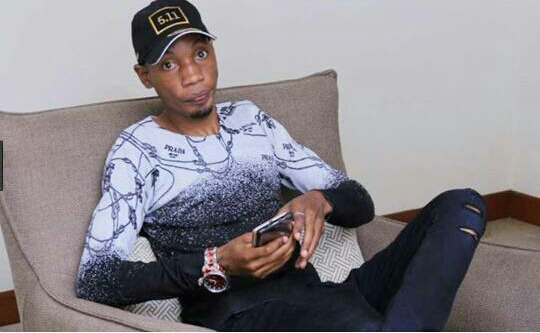
City socialite Brian Kirumira aka Brian White has given Shs25 million to singer Moses Nakintije Sekiboogo’s mother Kane Kasuubo to cater for his medical bills at the Case Hospital.
Sekiboogo aka Mowzey Radio was recently involved in an altercation at the De Bar in Entebbe, and sustained grave injuries that saw him admitted to the Intensive Care Unit of the upscale hospital in the leafy Nakasero area.
The singer has since shown signs of improvement. “Radio is off life support and can at least make some body movements to show that he can recognise the people around,” his mother was quoted as saying.
Meanwhile, Brian White, whose source of ‘wealth’ is scanty, also gave Shs5 million to the medical personnel attending to Radio, as appreciation of their services.
Brian White was last year arrested on charges of attempted murder, and while on remand in Luzira threw a multi-million Christmas party for fellow inmates.
President Yoweri Museveni makes an address at the Liberation Day celebrations in Arua
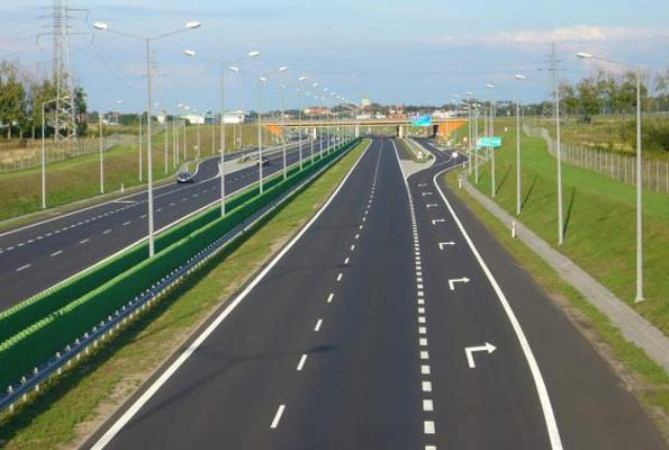
President Yoweri Museveni has decried the poor usage of roads in Uganda, majorly blaming taxi drivers and boda boda riders for the mischief.
Museveni, who was speaking at the 32nd NRM Liberation Day celebrations at Boma grounds in Arua, said he had received complaints regarding gross road indiscipline from some foreigners living and working in Uganda.
“If you are in Kampala and you see how recklessly the boda boda guys ride, and the taxi drivers drive you are now going to undermine our efforts to bring in more people to Uganda,” Museveni said, and instructed police to address the challenge in order to save the country’s image abroad.
“The police must insist on the proper road code,” he ordered, and cautioned drivers and motorcyclists against driving/riding on the pavement.
“Neither bodaboda nor anybody should drive on the pavement. The side walk is for pedestrians. That will enhance our reputation internationally that Uganda is safe,” Mr. Museveni said.
Mr. Museveni further Uganda is one of the most peaceful communities in the world, and that the few criminals are going to be eliminated.
The President also urged Ugandans to stop using imported goods in order to create market for locally produced goods.
“You are giving away jobs and money by buying clothes, cars, computers, mobile phone and others from other countries,” he said
“We Ugandans have a lot of wealth and we must not use our purchasing power to help others,” Museveni said.
Meanwhile, a total of 200 Ugandans received medals of different categories in recognition of the roles they played in the liberation and transformation of the country.
Notable among the people decorated was the Arua Municipality MP, Ibrahim Abiriga, Bishop Sabino Ochan Odoki, retired Bishop Dr Joel Samson Obetia, Brigadier Dick Olum and several other senior army officers.
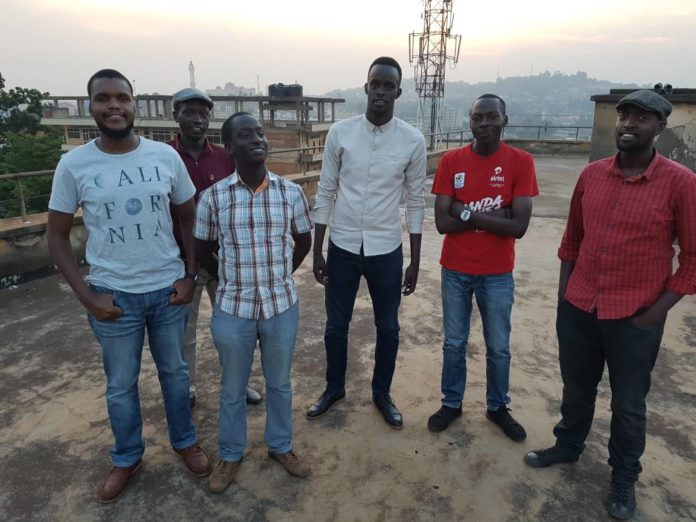
ARTS4HART: Derrick Muhanguzi (Co-founder & Lead Act), Pius Andru’da, Migisha Boyd, Roland Aruho and Bijojji Elijah
Moses Nakintije Ssekibogo aka Mowzey Radio was this week reported to have been in a coma for a couple of days after being involved in a scuffle with patrons at De Bar, a local night club in Entebbe.
Although details as to what caused the fight are still unclear, what is clear is that the musician faces an uncertain future as doctors work around the clock to save his life at Case Hospital where he is currently in the ICU, fighting for his life.
Despite the artiste’s profound success and notable achievements, Mowzey Radio’s confrontational nature is as equally responsible for his fame as his talent and recent footage of his drunken skirmish with a traffic police officer made rounds on social media, raising concerns amongst many of his fans and well-wishers who implored him to sober up.
However, the tendency to be reckless and destructive is not purview to just this artiste as household names such as Jose Chameleone, Bebe Cool and Eddy Kenzo all continue to harangue us with their own weaknesses for the dramatic enterprise.
Indeed, Uganda’s entertainment industry is never short of drama as the artistes constantly bid to outdo each other in recycled, frivolous and petty media wars which occasionally turn physical.
Social media recently witnessed a strong verbal outcry from spited artistes such as Kenzo, Radio and Weasel after a one Moses Ssali aka Bebe Cool released a list of names he deemed the most influential within Uganda’s music industry according to rank. This led to a bitter exchange of words between Bebe Cool and some artistes who dubbed the ‘Kasepiki’ star as childish and arrogant. They even challenged him to present his studio as proof of his dedication and passion for his music as an artist.
Anyhow, with many of these musicians claiming to be Uganda’s greatest export since Philly Bongole-Lutaaya, lines are bound to be crossed and offenses taken, bringing most local artistes such as Jose Chameleon and Bebe Cool to loggerheads in one of the most enduring entertainment feuds to determine ‘who might actually be the most prominent/influential in shaping and promoting Uganda’s Music and entertainment Industry.’
That said, as the Industry grows, so does the controversy that surrounds it as in the past, Ugandans have suffered a number of bizarre, vulgar and grotesque misdemeanors at the mercy of some of their favorite artistes as musicians, particularly the female ones such as Desire Luzinda and Sheebah Karungi.
These two among others, continue to release inappropriate visuals such as nudes, which in turn promote various forms of socially unacceptable issues like promiscuity and use of recreational drugs, especially amongst the youths.
Despite efforts by the government and concerned parties to prohibit the promotion of such lewd and inappropriate behavior by putting in place certain measures, particularly the Anti-pornography Act, the entertainment industry is still riddled with dark and underlying proponents that not only affect the masses but even worse, destroy and claim the lives of so many artistes.
This begs the question: “Is there still hope for the entertainment industry in Uganda? And what does this mean for young artistes in Uganda?”
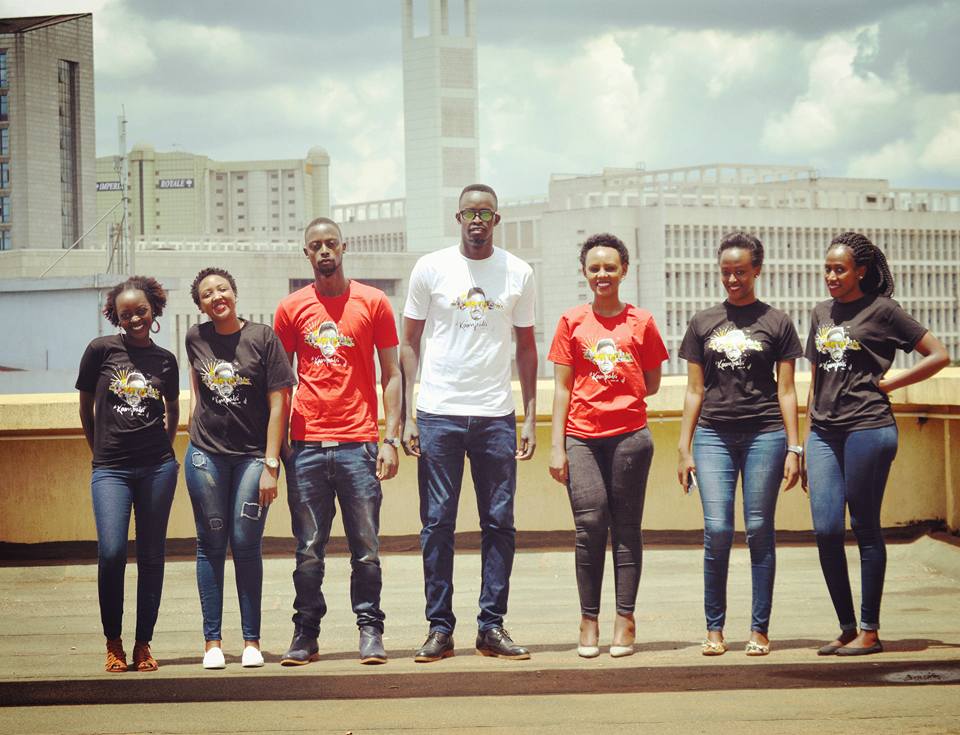
The group members pose for a photo
So, as the government grapples with the quagmire that is Uganda’s entertainment industry, a select number of youths have decided to take matters into their own hands by offering Ugandans an alternative source of entertainment.
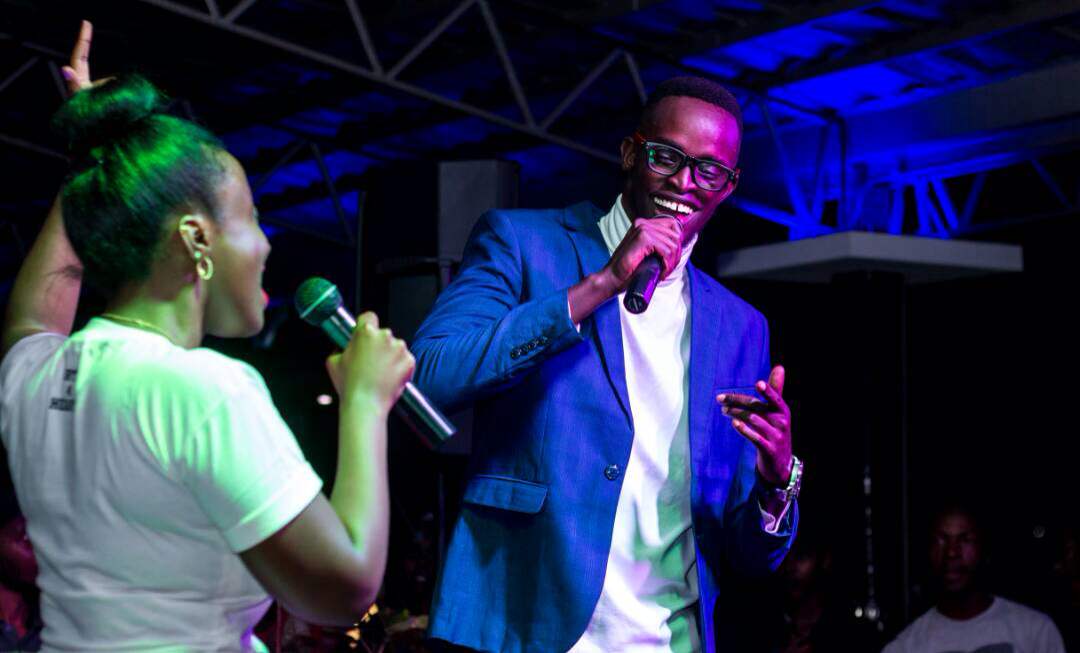
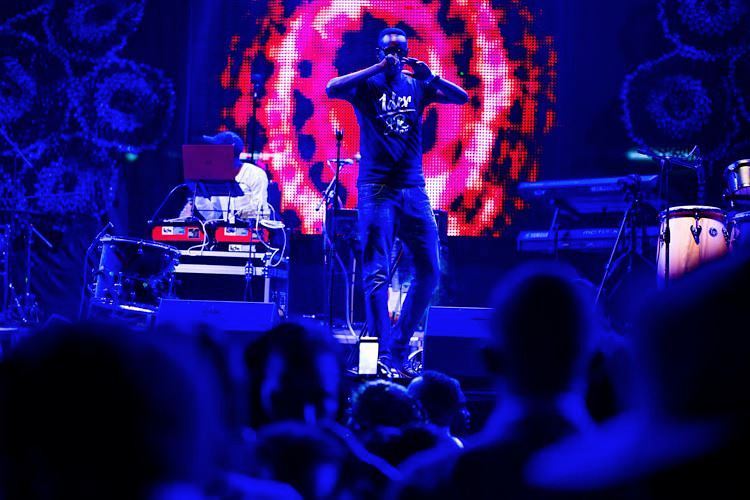
In that respect Eagleonline caught up with the artistes of the Arts4harts initiative to better understand their unique approach to this industry. Derrick Muhanguzi(Co-founder & Lead Act), Pius Andru’da, Migisha Boyd, Roland Aruho and Bijojji Elijah, all representative of the different specialties they brought to the table, explain in an interview reproduced below.
EagleOnline: What is Arts4Harts and what do you guys do?
Derrick: Arts4Harts is an organization or faculty that has been running for a year now and hopes to embody music and art by providing a platform that brings about the creativity of the arts as it was intended to be.
EagleOnline: And how is art originally intended to be?
Derrick: God is the creator of all things on earth and therefore all that we do must in most ways mirror his image. Therefore, arts and music must be a depiction of his goodness as well. By mirroring God through our work we are able to also affect the culture around us.
Boyd: We are giving the world what they are generally not accustomed to but it is good to be different/unique: it is how you standout.
EagleOnline: So how did you guys come up with the Arts4Harts idea?
Derrick: It happened randomly actually, I was having a chat with Boyd about all the negativity that has infiltrated most of the mainstream media, be it the art/pictures or even the music and how people have failed to perceive it and the danger it poses. Infact, the first time I met Boyd he was a bit dejected and he told me “I have one last card to play, if I fail-I am off to Miami to start strip-dancing.” I guess the fact that he is here means that it went through.
EagleOnline: Why would you even consider strip-dancing yet you are already talented as an artist?
Boyd: As an artist, to find a place readily accepting of your own unique style and brand is very hard. Especially with us artists since people rarely value your work and expect you to even do things for free. So you find that it is twice as hard for an artist to make it in society, more so here in Uganda.
EagleOnline: Why Art?
Boyd: Because Art puts us in a position in which we can understand life; life is art itself, it exists in every form and aspect of life: from food being cooked to the way someone decided to dress or behave. So, if the art is corrupted or dirty, then the surroundings to will be dirty, for example you can take life as a prism, if it is dirty the light it will project will also be dull. That is why we have charged ourselves with the task of cleaning this prism because for us God is art.
Ronald: We have talent that pushes people to think deeply about their lives and its decisions, it is sort of reflective. People tend to overlook the extents to which art can go but the brain is usually accessed through intellect and art is always able to touch someone emotionally even if it is a song or just a fine drawing, it can speak volumes to someone! I believe that Art, if used properly, has the ability to shake culture more than logical reasoning.
Pius: Art is able to have a long-term effect on people compared to other forms. Achilles is remembered through his art even after he died a long time ago. Even culture is learnt through art and if you consider the Egyptians and their hieroglyphics, art can be used to create, teach and preserve culture.
EagleOnline: What are some of the challenges you guys have faced embarking on this journey?
Derrick: I think the biggest and most obvious battle we face comes from within; tapping into our full potentials has become quite hard due to skepticism amongst us given the Ugandan market and how they will receive us. We tend to doubt ourselves based on past experiences and often have to remind ourselves of: who we are, where we are going and what we are doing. However, I have learnt that if you look at something spiritually and tackle it in the same manner, it will eventually come together. We believe we are a new living, fresh and talented group working in an already dead industry.
Ronald: Yes, we occasionally fight and disagree amongst each other but we are more than sure that we can accomplish all through God. Christian art is not generally a big thing in entertainment but while most people choose to look to other sources for power like calling witchdoctors before a big concert, we as Christians need to properly organize ourselves because despite us being the lowest ranking in this industry, we have the most power, look at the recent Power FM celebrations that hosted almost 30,000 attendees to celebrate Christian music. We have the ideas, we have to just study them, we are a body and we need to fully understand the different functions each one of us plays. For example the eyes are different from the mouth but if I lose an eye the whole body will be affected in terms of sight and judgment; we need to learn how to really work together.
EagleOnline: Derrick, recently you realesed a video where you talked about the lack of authenticity in today’s media, more specifically, the music industry! Can you elaborate abit more on that!
Derrick: When I first started out in the music industry I was met with a lot of resistance, and today I’m still facing resistance! Why? Because I’m bringing something different to the table: I am actually being creative when I speak and you will realize that a lot of people today cannot handle that!
People are so used and comfortable with mediocre state of the industry: artist don’t create content but simply copy from other artists! So when you bring something new to the table they begin to worry and fear that you have come to change things.
When we decide to do something we don’t just do it and say it is ‘just a song’ or ‘just a poem or play’, we want to carry meaning and touch someone. Another thing you need to know is that times are changing and therefore people are also looking for something different. The other day Makerere released 13,000 graduands, where is the government going to put all those people, where shall the jobs come from? It is why we also decided to come up with Arts4Harts, we want to give people an opportunity to discover themselves and God’s purposes for their life. We cannot just sit down and let the kids suffer, we must take matter into our own hands and use what God has given us.
Pius: One thing we don’t want is for the market to influence us but make decisions based on how God leads us; we want the market to understand us and consume us as we are. One thing I appreciate about President Donald Trump is that, because of his decisions and remarks artists are now producing music with a conscience like the recent Eminem album, and that is how I believe it should be: you shouldn’t buy your goods because they look good but because it adds value to you. In Uganda only Christians don’t have standards; you listen to a poem and wonder if the artist can read or write, and that is why we want to raise a standard for everything we do here at Arts4harts.
EagleOnline: Thank you so much for your time guys! Last question is: What are your future plans for Arts4Harts? Where do you see yourselves in a few years’ time?
Derrick: Our work is primarily targeted at the Ugandan youths since it is easier to teach the younger generation than it is the older ones. Their views are far different from ours in some aspects especially in terms of the arts, in that it is hard for them to unlearn what they know to be true and accept these new forms and concepts of our generation (laughs).
Boyd: We are also actually planning for an event for early March; we want to officially launch this initiative and get more people involved by putting the word out there, by taking the creativity back to the people, back to schools and promoting talent in these places so people can own it.
Elijah: We hope to take it worldwide eventually but we want to start by also tapping into the talent outside of Kampala, going to the villages and giving these kids an opportunity to express themselves and cultivate their talents. We are also looking to put up a website and connecting with the world out there as much as possible.
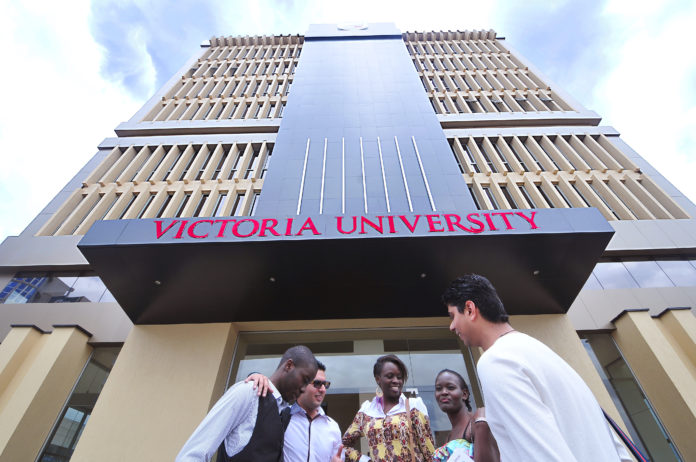
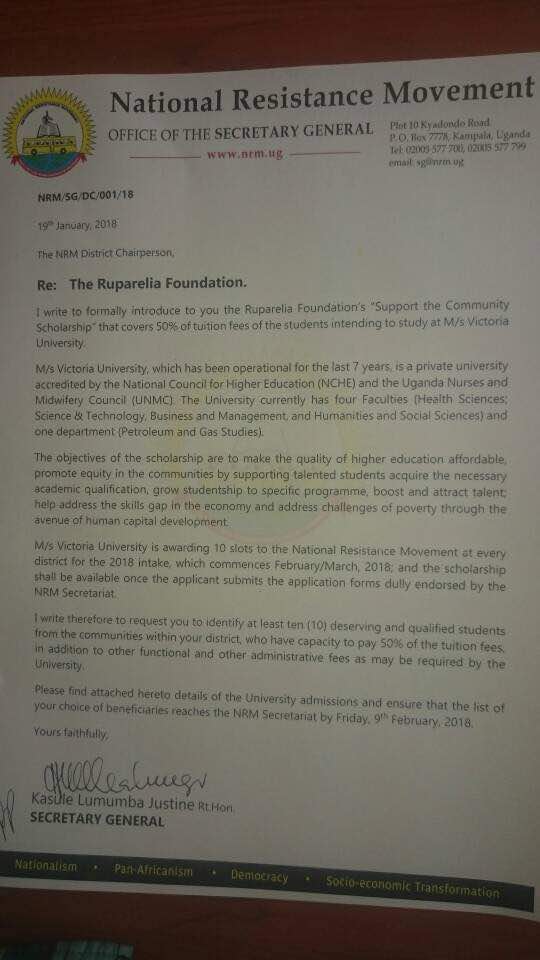
The Ruparelia Foundation has announced it will pay 50 per cent of the tuition for 10 students from each district of Uganda that want to study at Victoria University owned by tycoon Sudhir Ruparelia.
Known as the ‘Support the Community Scholarship’, the initiative which does not cover functional and administrative fees, begins with the 2018 intake in February.
Victoria University has been in operation for the last seven years, and is accredited by the National Council for Higher Council (NCHE) and the Uganda Nurses and Midwifery Council (UNMC).
The university has four faculties-Health Sciences; Science and Technology, Business and Management, Humanities and Social Sciences as well as the Department of Petroleum and Gas Studies.
According to Victoria University officials, the objectives of the scholarship include making the quality of higher education affordable and promoting equality in communities by supporting talented students acquire the necessary academic qualification.
Other objectives include growing studentship to specific programmes, boosting and attracting talent, helping address the skills gap in the economy and addressing the challenges of poverty through the avenue of human capital develop.
The university which runs market-driven courses is part of the Ruparelia Group.
After the Cranes team dropping out of the CHAN tournament with one point from three games played, the players’ focus now shifts to the Azam Uganda Premier League.
The Cranes players returned from another underwhelming CHAN tournament on Tuesday to join their clubs ahead of the league, whose second round has been scheduled to kick off in a fortnight’s time, on February 10.
The UPL CEO Bernard Bainamani confirmed the development and the second round fixtures are expected to be released anytime now.
Sixteen time record champions, SC Villa still top the table with 32 points while defending champions KCCA are second with 29 points from fifteen matches played.
Coach Wasswa Bbosa’s Blues are looking for the club’s first league title since 2004 which was won by former Cranes coach, now the Orlando Pirates boss, Micho Sredojevic.
Masavu, Express and UPDF are at the bottom fighting relegation with 14, 11 and 10 points respectively.
The transfer window is still open for clubs to strengthen their squads and will end on January 31.
For the meantime, clubs will be involved in friendly matches to keep themselves in shape for the upcoming fixtures.
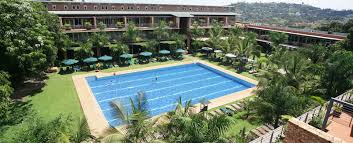
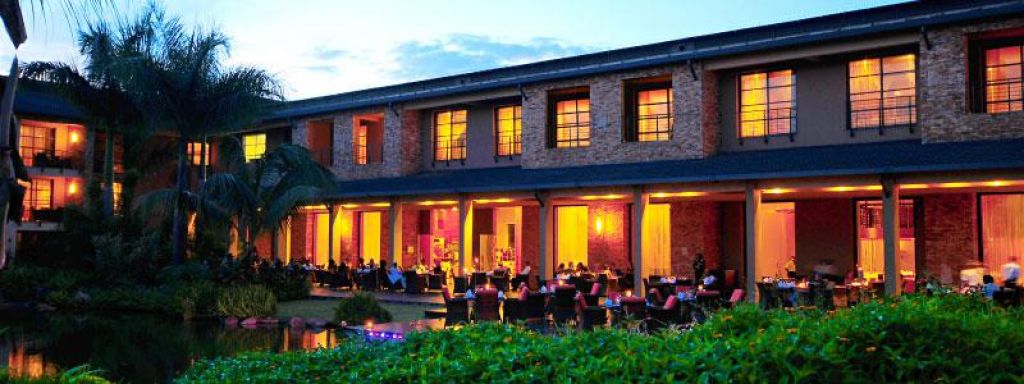
Speke Resort Munyonyo and Kabira Country Club emerged winner in the categories for Customers’ Favorite Hotel and Best Business Hotel in Uganda 2017, respectively, during the second edition of the Africa Travel Awards held on January 25, 2018 in Kampala.
The awards aim at promoting Uganda’s tourism sector, and respond to the need of encouraging hoteliers to improve the quality of their services for further advancement of their respective destinations.
Speke Resort Munyonyo
The two hotels, which are part of the Ruparelia Group of tycoon Sudhir Ruparelia, emerged winners having garnered votes online from the public on top of the judges’ votes. A jury made up of high-level tourism professionals in the country judged the nominated hotels and ultimately decided on the winners.
The hotel category had Speke Resort Munyonyo, Urban By City Blue Kampala, Forest Cottages, Protea Hotel By Marriott Kampala, The Haven, Lake Victoria Serena Golf Resort, Malakai Eco Lodge, Chobe Safari Lodge, Paraa Safari Lodge and Arcadia Lodge Lake Bunyonyi.
Seven categories awarded including: Customer’s Favourite Hotel 2017, Customer’s Favorite Airline Company 2017, Best Destination Website 2017, Jumia Travel’s Booking Award 2017, Traveller’s Choice Hotel 2017, Best Leisure Hotel in Uganda 2017, and Best Business Hotel in Uganda 2017.
Chobe Safari Lodge emerged as best leisure hotel, beating rivals such as Paraa Safari Lodge and Arcadia Lodge Lake Bunyonyi.
In the media category, Eagle Online, was among the nominees for the Best Destination Website 2017, while in the airlines category, Emirates Airlines emerged the best beating Fly Dubai, Kenya Airways, KLM, Turkish Airlines, Brussels Airlines Rwandair and Etihad Airways.
For the 2018 edition of Jumia Travel Awards, the ceremony was held simultaneously in 8 countries: Uganda, Algeria, Cameroon, Ivory Coast, Ghana, Nigeria, Senegal and Tanzania. Kenya will celebrate its Awards on February 1, 2018.
Uganda Country Manager Timothy Mugume said The Jumia Travel Hotel Awards (Uganda Edition) was aimed at recognizing and bringing together key stakeholders in the Uganda Tour and Travel Sector including our Hotel, Flight, Corporate and Media Partners”.
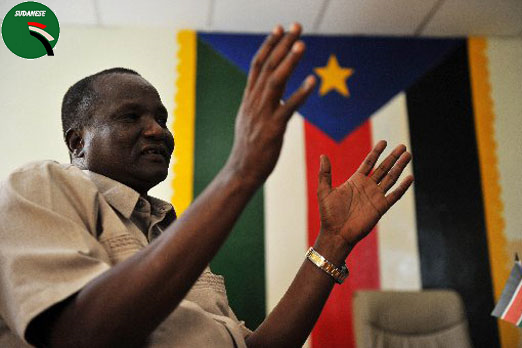
RENEGED ON PROMISE: South Sudan First VP Gen Taban Deng Gai. Photo/sudaneseonline.org
South Sudan First Vice President Taban Deng Gai said he will not step aside if rebel leader Riek Machar returns to Juba, reversing his earlier stance to step aside in case his predecessor Riek Machar returned.
During Gai’s swearing-in ceremony in 2016, he said he would gladly step aside in favor of Machar, who had fled Juba after his forces clashed with government troops in the capital that July. “I am only filling a vacancy according to directives and dictation of my leadership. If situation dictates itself again, that Riek Machar comes back to this position, I don’t think it will be me … to be an obstacle if that can bring peace to my country,” Gai said at the time.
However, on Wednesday Gai told journalists in Juba that former VP Machar is not interested in bringing peace to South Sudan.
“I don’t think Riek Machar has a place in the Transitional Government of National Unity. He will say that he wants to come back with a huge army, he wants to have two parallel armies in Juba,” said Gai.
Critics have suggested both President Salva Kiir and Machar should get out of politics, arguing that is the only way to restore lasting peace in the country. Gai doesn’t see it that way.
“I don’t predict Salva Kiir leaving power because he is the equilibrium of the SPLM [ruling] party. He is the equilibrium of the nation,” said Gai.
Gai called a news conference in Juba to talk about his recent tour of five South Sudanese states, which he said was aimed at convincing communities in the region to end child abductions and cattle raids.
He said the national government is determined to put an end to such violence in 2018.
“Let us use a maximum force of the government to stop these criminals from not allowing our citizens to be peaceful,” he said, adding: “Actually we may even use the gunship, even the planes, we can bomb them. And we are going to do this.”
The SPLM In Opposition (SPLM-IO) has accused Gai of violating last month’s cease-fire agreement by traveling to Jonglei state with a large number of troops two weeks ago. The government has denied Gai was in violation.
Meanwhile, the east Africa bloc IGAD has urged all parties in South Sudan’s conflict to comply with the Agreement on the Cessation of Hostilities (ACOH) signed last month in the Ethiopian capital Addis Ababa.
The IGAD Council of Ministers, meeting on the sidelines of the African Union summit, released a statement Thursday calling on the warring parties to acknowledge the ongoing violations, including killings, sexual violence, recruitment and deployment of child soldiers, and looting by both government troops and rebels in various parts of South Sudan.
The ministers urged warring parties to take immediate action to demobilize all child soldiers and return them to their homes.
The Washington-based Enough Protect released a report Thursday criticizing the African Union for repeated lack of action against what the activist group called ‘spoilers of the peace process in South Sudan.”
It argued the lack of action against violators of peace agreements have emboldened the leaders of the warring parties to continue the escalation of armed conflict.
The Enough Project recommended the African Union impose sanctions on the chief of defense staff for the South Sudan army, Lieutenant General James Ajongo, and the SPLM-IO’s chief of defense staff, Lieutenant General Simon Gatwech Dual.
‘Beyond these two figures, other military and political officials who share decision-making responsibilities with Ajongo and Gatwech should also be subject to targeted sanctions, visa bans, and investigations into money laundering through regional banking institutions,” the Enough Project said.
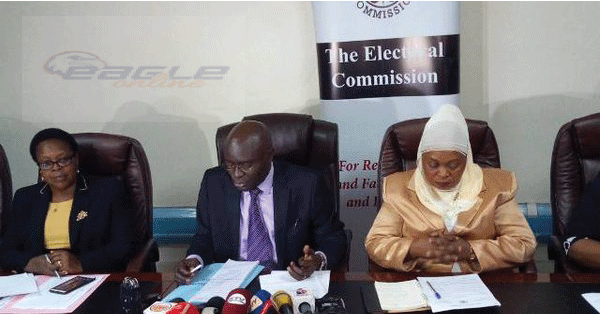
EC chairperson Justice Simon Byabakama Mugenyi with his deputy Aisha Lubega (R) and other EC officials
Electoral Commission has set March 15 as the polling dated for Jinja East by-election, chairman Justice Simon Byabakama Mugenyi has said.
The Jinja East parliamentary seat fell vacant after a panel of three appellant court judges threw out Nathan Igeme Nabeta, who was wrongly declared Member of Parliament by the Jinja district returning officer Anthony Mwaita. Consequently, the judges ordered for a fresh elections.
“All the necessary logistics have been assembled for the polls, I urge you to observe law and order during the exercise, campaign meetings should be conducted in accordance with the harmonized EC program and no fundraisings will allowed for a leveled ground of the by-election,” Justice Byabakama Mugenyi said at a press briefing held at EC headquarters.
Currently Jinja East constituency has 28,493 registered voters and 47 polling stations.