Stanbic Bank
Stanbic Bank
18.8 C
Kampala
Stanbic Bank
Stanbic Bank
Home Blog Page 1717

NRM’s Lumumba speaks out, contradicts party

NRM Secretary General Justin Lumumba's tweet

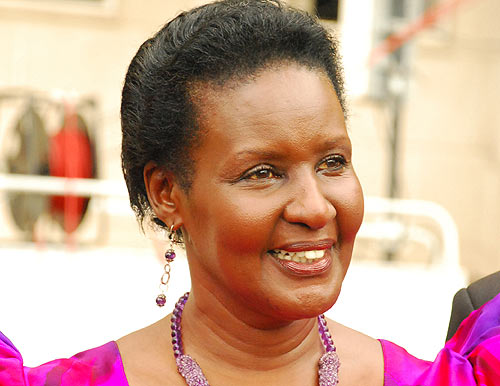
Following our story questioning the whereabouts of Ms Justine Kasule Lumumba, the NRM Secretary General has spoken out saying she has neither resigned nor left the country for medication.

NRM Secretary General Justine Kasule Lumumba

In a tweet sent out on her official handle, Ms Lumumba wrote: “Hello everyone I’m fine and well. I’m not bedridden anywhere as reported. I’m safe and well just home for my annual leave. Good day everyone.”

Her tweet, however, is in sharp contradiction from what her office’s spokesperson Rogers Mulindwa had said as the reason for her being out of office.

Two days ago, Mr. Mulindwa questioned the sanity of our reporter when he inquired as to whether the voluminous NRM Secretary General had ditched the party for a job with a Catholic charity organization. At the time Mr. Mulindwa said his boss was out of the country on official duty, executing the party chairman Yoweri Museveni’s assignments.

“Whoever says that (resignation of SG) has a mental problem. Even if it is you, I repeat you have a mental problem. The Secretary General is out of the country on official duty. The Party Chairman sent her and Mr Todwong is now the acting Secretary General,” he said then.

Interestingly, on the same day, NRM election commission boss, the acerbic Dr. Tanga Odoi, who is Kasule Lumumba’s known nemesis at the party headquarters, had earlier told our reporter amidst laughter that: “She told us she is in London for treatment. For now we know she is getting treatment and that’s the little I know. I don’t know if she is doing other things.”

However, amid all the contradicting stories emerging, impeccable sources had intimidated to Eagle Online that Ms Lumumba tendered in her resignation to the party chairperson after ‘increasingly growing frustrated with intrigue at the Plot 10 Kyadondo, the party headquarters, and the lack of funding and support from the top party leadership’.

The source said the party leadership is handling the matter as a ‘top secret’ as they believe it came at a bad time when they are trying to justify the amendment of Article 102 (b) that engenders the 75-year age limit cap enshrined in the 1995 Constitution.

Letting the resignation news out, observers say, would therefore be a double jeopardy for the party as it may easily be interpreted that officials are split over the possibility of President Museveni ruling beyond 2021, in what opposition politicians have since dubbed the ‘life presidency project’.

On Twitter her Lumumba’s followers welcomed the update wishing her a good recovery.

“As long as you are safe and the leave is not forced leave. @AmamaMbabazi went on leave and remained in leave. You are our pillar in Busoga. Get back to office our sister, we need u working,” one Mboode Willy wrote in response to the SG’s tweet.


Stories Continues after ad

Former Mugabe Minister warns of coup in Zimbabwe

Zimbabwe's former home affairs minister, now the leader of the opposition Zapu party, Dumiso Dabengwa

Zimbabwe’s former home affairs minister, now the leader of the opposition Zapu party, Dumiso Dabengwa, has reportedly said that a military coup “cannot be ruled out” in the country following the sacking of former vice president Emmerson Mnangagwa.

According to VOA, Dabengwa said that it was likely that most Zimbabweans could back this move “as they are tired of President Robert Mugabe’s rule”.

Dabengwa said this at the launch of the Dumiso Dabengwa Foundation in Bulawayo.

FIRED: Zimbabwean former VP Emerson Mnangagwa

Mugabe on Monday fired his deputy as tensions between Mnangagwa and the veteran leader’s wife Grace to succeed him intensified.

Grace declared over the weekend that Mnangagwa should be gone from both the government and Zanu-PF before the party’s extraordinary congress in December.

‘Democratic elections’

Addressing thousands of indigenous church followers during what was termed a ‘Super Sunday Rally’ at a stadium in Harare, Grace described Mnangagwa as a ‘liquidator’, and ‘ravisher’ whose coup plots could be traced to 1980. According to the state-owned Herald newspaper, that was the time when he reportedly “unsuccessfully attempted to wrestle power from President Mugabe soon after the country’s democratic elections”.

Mnangagwa was the leading contender to succeed Mugabe, 93, but his abrupt removal appeared to clear the way for Grace to take over.

The government-owned Chronicle newspaper published an excoriating editorial on Tuesday, accusing Mnangagwa and his supporters of being “prepared to stampede President Mugabe from power”.

“The President had warned his deputy time and again to desist from having grand designs to seize power unconstitutionally,” the Bulawayo-based paper said.

It accused Mnangagwa of “running parallel structures within the ruling Zanu-PF party and fomenting divisions”.

Mnangagwa, 75, a veteran party loyalist who had strong ties to the military, had not yet commented on his dismissal.


Stories Continues after ad

Gen. Malong ally defects from SPLA

DURING HAPPIER TIMES: President Salva Kiir with former SPLA commander Gen. Paul Malong Awan

A South Sudanese military commander said he had defected with more than 200 soldiers to the country’s largest rebel group, amid a showdown between President Salva Kiir and his former military chief General Paul Awany Malong.

Lieutenant Colonel Chan Garang, an ally of former army chief Gen. Malong, defected to join the largest rebel group fighting Kiir, he said. All three men are ethnic Dinkas and any split within the powerful group could represent a threat to Kiir.

The four-year civil war has split the country into a patchwork of fiefdoms, created Africa’s biggest refugee crisis in two decades and led to ethnic cleansing. A third of the 12 million-strong population has fled their homes and half are dependent on food aid.

In May, Kiir fired Malong, whom U.N. investigators accused of directing ethnic militias responsible for the rape, torture and murder of civilians. Malong, who is also on a U.S. sanctions list, briefly fled north but returned to the capital, where he has been under house arrest ever since.

Over the weekend, Kiir’s troops surrounded Malong’s house in Juba and unsuccessfully attempted to disarm his bodyguards. An armed standoff continues outside his house.

Garang is the first Malong loyalist to join the rebels. Garang said he defected because allies of Malong’s were being badly treated, troops had not been paid for seven months and other tribes were being discriminated against.

“I left Juba because when are you are a supporter of Paul Malong, you will be arrested,” Garang told Reuters via satellite phone.

“We are preparing our army so that we can launch an attack on Juba. Salva Kiir divided the tribes so we need him to go.”

Garang said he took more than 200 soldiers with him, although a rebel press release put the number at 150. A photo provided by the rebels showed more than 30 armed men but their identities were unclear.

Army spokesman Lul Ruai Koang said they were not aware of any defection from their ranks.

Malong was unreachable by phone, but his wife Lucy Ayak distanced her husband from the defected commander.

    “[Garang] is not happy with the government and he has deserted. Why is he saying it is the issue of General Malong?” she asked Reuters.

South Sudan’s war began in December 2013 between troops loyal to Kiir and rebels of former vice president Riek Machar, a Nuer.

Oyet Nathaniel, a senior rebel official, told Reuters that Garang had brought 150 men with him and that anyone deciding to join them against Kiir is a “welcome development,” regardless of their background.

There are several rebel groups, but none of them is well-funded or well-armed.

Stories Continues after ad

The festive and holiday season is here!

Begin booking flights to avoid last minute cancellations

By Cynthia Tumwine


November is here, which means Christmas holidays are right around the corner. The Philly Bongole Lutaaya and Boney M music has already started playing in some shops across town and the grasshoppers are back! People are constantly looking at their calendars, counting down the days when they’ll be able to take time off work and spend time with their loved ones.

Festive season necessities

For the international residents, this is when they start making their flight bookings to return back home. Christmas season is an amazing time: families get together, companies plan massive end of year parties and it is the time of giving so it is characterised by a lot of shopping and everyone is generally taking stock of what they did with their lives all through the year. A quick piece of advice: whatever it is you need, whether transport upcountry, flights, hotels, clothes, gadgets (gifts in general) buy or book them while it’s still early because the prices always skyrocket during the festive season.

The swimming pool at Paraa Safari Lodge


Vacations in Uganda are slowly becoming popular with people planning to head out to upcountry Getaways such as Chobe, Paraa, Mweya and Kidepo; while there are those who prefer to fly out the country to Mombasa, Zanzibar, and Dubai, which are some of the most popular travel destinations currently. Speaking of which, you can now get the best rates in town on flights on Jumia Travel. The online site allows you to put in your flight dates and gives you the flight options from the different airlines at the best prices. It also shows the fastest one, so now you don’t have to call several agencies looking for the best deal!

All this being said, it’s time to dust off the Christmas tree and get the lights out. For hotel options across the country do not hesitate to visit Jumia Travel today. The season to be merry is here and hopefully you have a lot to celebrate!


The author is the PR Manager Jumia Food and Travel


Stories Continues after ad

Post-crisis restrictions on international banking can blunt growth prospects in developing countries – WB

One of Africa's leading banks

Growing restrictions imposed on foreign banks operating in developing countries since the 2007/9 global financial crisis are hampering better growth prospects by limiting the flow of much-needed financing to firms and households, a World Bank report has warned.

International banking can have important benefits for development, but is no panacea, and carries risks. Developing economy policymakers would do well to consider how to maximize the benefits of cross-border banking while minimizing its costs, the World Bank’sGlobal Financial Development Report 2017/2018: Bankers without Borders says.

The 2007-2009 crisis and economic downturn prompted an extensive re-evaluation of the benefits and costs of international banking and led to restrictions that brought a decade-long surge in financial services globalization and cross-border lending to a halt. However, developing countries may need to reconsider the value of international banks as critical gateways to global credit and faster economic growth, even as they continue to manage risks, the report says.

“As aspirations continue to rise all over the world, and the banking sector evolves, there is a critical question: will finance be a friend or foe in the fight to end poverty?” World Bank Group President Jim Yong Kim said.

He added: “International banking does create risks of exporting instability, especially for countries with poor regulations and institutions, and those risks need to be mitigated. But without a competitive banking sector, the poor will not be able to access basic financial services, many businesses will be locked out of markets, and growth in developing countries will stall.”

Bank finance is essential for a vibrant private sector, particularly for nurturing small and medium – sized businesses. Developing countries can maximize benefits from a stronger banking system while shielding against risks through improving information sharing through credit registries, vigorously enforcing property and contract rights, and guaranteeing strong supervision of banks.

Rise of Developing Economy Banks as advanced economy banks retrenched after the crisis, developing country banks stepped into the void and expanded across borders, accounting for 60 percent of new bank entries since the downturn.

The result has been an increase in banking relationships between developing countries and regionalization of international banking operations.

For example, Africa’s Ecobank started in Togo and now has operations in 33 countries across the continent. It also has offices in Paris, Beijing, Dubai, Johannesburg, and London, which allows it to attract capital from wealthy countries to invest across Africa.

At the same time, the total asset size of the world’s largest banks increased by 40 percent, raising concerns that regulatory efforts since the crisis have failed to address the risk of banks that are too big to fail. In the face of greater uncertainty about the benefits of openness, many countries have viewed the recent expansion of the world’s largest international banks with alarm and have restricted foreign banking.

Nearly 30 percent of developing countries have put in place restrictions on foreign bank branches, and such curbs are depriving many economies of opportunities to access global credit that could benefit businesses and households.

“Openness to international banking is no guarantee of financial development or stability,” said World Bank Research Director Asli Demirguc-Kunt, adding: “But a wealth of research shows how the right policies and institutions can ensure that openness leads to greater competitiveness, smoothing of local economic shocks, and increased access to the scarce capital needed to spur growth.”

Done right, enabling foreign bank entry and improving financial openness –alongside well-functioning capital markets –can offer systemic benefits, including improved financial stability, greater competition, and improved resilience to economic shocks.

The report also examines both rewards and risks of rapidly expanding financial technology that works globally and across borders through digital products , with examples ranging from companies like Kenya’s mobile money platform, M-Pesa, to the Peer-to-peer Lending Club.

These technologies can speed transactions, lower costs, improve risk management, and extend financial services to underserved populations.

However, they also pose risks through a lack of safety nets, potential abuse of personal data, and electronic fraud.

“While developing countries suffered collateral damage from the global financial crisis, the benefits of openness are too large to ignore,” said Shanta Devarajan, World Bank Senior Director for Development Economics.

Mr. Devarajan added: “Achieving the levels of economic growth needed to end poverty depends on a competitive and stable financial sector.”


Stories Continues after ad

Ways to survive and prosper around negative people

By Martin Zwilling

To be an entrepreneur, you have to have a thick skin and not be defensive to customer feedback and constructive criticism. On the other hand, no entrepreneur should tolerate negative vibes and complainers on their own team. The challenge is to understand the difference between these two situations — and to respond effectively to both. You can’t reinforce negative thinking and stay positive.

Even active listening to negative team members and partners, as you would with customers, will perpetuate the toxic habit. In addition, the other members of your team may become infected with the same negativity and will erode the passion and innovation that you need to compete and survive. In my experience, good entrepreneurs proactively minimize negativity as follows:

They stifle their own occasional negativity in front of the team. We all get frustrated when the economy turns against us, investors can’t be found or a customer turns into a nightmare. In these cases, you must keep your thoughts to yourself, and be the role model for positive creative solutions. Your team will practice what they see and hear.

Extract and highlight potential positives from every negative. If your team is struggling with quality problems before shipment, remind them that it’s great to have found these problems before customers could be impacted. The alternative is that everyone, including yourself, will eventually feel defeated and de-energized.

Turn responsibility back to the complainer and ask for solutions. Sometimes, team members are frustrated and just want to vent, so asking them to bring you solutions, not just problems, will set a more positive tone and may circumvent future negative outbursts. For those who don’t learn, it’s time for swift job reassignment and performance counseling.

Don’t accept excuses for any negative outcomes. Excuses are a way of not accepting full responsibility for actions, if there is a negative outcome. Even worse, some people believe negativity is a way of impressing everyone with their wisdom. Make sure that complainers understand from your reward system that excuses don’t mitigate failures.

Restrain from engaging complainers at their level. If none of these approaches work, it’s better to defer the discussion to another time and place with no emotion. Trying too hard to convert people to the positive view will likely result in you becoming the target, or permanently breaking the relationship. It’s better to listen in silence.

Remove yourself physically from a toxic environment. Presence without engagement may be taken as tacit concurrence, so it’s best to exit the situation to somewhere neutral and quiet. The last thing you need is to be brought down to the same level, and lose your ability to provide positive leadership to the team.

Overlook occasional lapses in yourself and others. Even the best professionals and leaders find themselves being negative occasionally. It’s human nature, in times of stress, when people are physically or mentally exhausted, or multiple deadlines loom. The challenge is to make lapses less frequent as a habit rather than more frequent.

Build a personal negativity shield from your confidence and passion. All business leaders as well as innovative thinkers learn to deflect negative energy with an invisible cloak that allows them to move forward despite negative feedback from the crowd. They continually remind themselves of their vision to make the world a better place.

When negativity is positioned by team members as constructive criticism, be sure to ask for the constructive positive part of the message, offered in a friendly manner. Living with complainers in any business is a burden you don’t need, and it impacts everyone’s performance and mindset. Just as a positive mindset is infectious and brings the whole team up, a few negative ones will sicken your whole team and jeopardize your business. You can’t afford that kind of help.

Martin Zwilling is Founder & CEO, Startup Professionals, Inc


Stories Continues after ad

Government urged to establish fund for oil industry local suppliers

Oil industry infrastructure like pipelines should be developed

The Uganda government should urgently establish the National Content Development Fund to boost local companies, before it can embark on the drilling of crude oil, a local NGO, the Africa Institute for Energy Governance (AFIEGO), has said.

“In both the National Content Policy and the oil laws, government committed to establish the National Content Development Fund. To date however, government has failed to establish the Fund despite the oil laws having been enacted in 2013,” AFIEGO says.

According to AFIEGO CEO, Dickens Kamugisha, government must immediately mobilise funds to support local companies with affordable financing to compete in the oil sector in areas such as health, safety, environment protection, procurement, records keeping, certification and technology.
“Consequently, Ugandan companies continue to borrow capital from traditional banks at high interest rates of 20 to 30%. These companies are expected to compete with Indian, Chinese, American and other multinational companies that access capital at interest rates of 2 to 4% from their home countries,” Kamugisha notes, adding that three years to the oil production target of 2020, the Suppliers Fund that would enable the above does not exist.


Further, Kamugisha implores the Petroleum Authority of Uganda (PAU) to establish a National Suppliers Database and a National Oil and Gas Talent Register, a development that will lead to the realisation of intended benefits.

Kamugisha also urged government to empower institutions such as the Uganda National Bureau of Standards with relevant skills to ensure that no substandard goods are allowed in the oil sector.

He says the national content legal regime should be used to increase the participation of women in the oil sector across the entire value chain. “While the policy identifies that there is limited women participation in the sector because of financial and socio-cultural barriers, the implementation plan ignores putting in place interventions or actions to address this,” he says.

Uganda has proven crude oil reserves of 6.5 billion barrels in Hoima district, western Uganda, about 1.7 billion of which is recoverable. The country is to build and operate a 60,000-barrel-a-day refinery and is also in the final stages of the construction of the US$3.5 billion oil pipeline that will deliver refined oil for export at Tanzania’s port of Tanga.


Stories Continues after ad

Age limit bill: DP’s Mao accuses police for disrupting opposition consultative meetings

Mao, flanked by officials of JEEMA and John Ken Lukyamuzi of the Conservative Party (CP), addresses the legal and parliamentary committee members

The police have made it difficult for the opposition Members of Parliament to hold consultative meetings with the electorate over the age limit bill, Democratic Party President General Norbert Mao has said.

Addressing members of the legal and parliamentary affairs committee at Parliament, Mao, who was flanked by officials of JEEMA and John Ken Lukyamuzi of the Conservative Party, said opposition leaders meetings are often disrupted following heavy police deployment, tear gas and use of live ammunition.

“I would like to report to this committee that the environment for this conversation is very hostile,” Mao said, adding: “Some parties are given chance to give their views without interruption.”

Mao, who introduced himself as the leader of   Democratic Party ‘which  resolved that Article 102(b) should not be amended’, said the premise of ‘discrimination’ as fronted by the proponents of the age limit bill is not the legal position of the laws of Uganda.

Last month speaker Rebecca Kadaga flagged off MPs to their constituencies to gather  people’s views about private members bill being peddled by Igara West legislator Raphael Magyezi, aimed at expunging the 75-year age limit cap enshrined in the 1995 Constitution. Those opposed to the amendment of Article 102 (b) say the move by Magyezi and some other members of the National Resistance Movement (NRM) is aimed at paving the way for a Museveni life presidency.

And making his submission, DP deputy president Fred Mukasa Mbidde, an anti-age removal proponent, noted that the provisions of the Constitution ‘were not to discriminate but to qualify one as president of Uganda’.

“It’s preamble gives very clear picture of the history of Uganda with peace as the key, Mukasa Mbidde, an East African Legislative Assembly MP said, adding: “This is not the only country where limitations are provided for in the Constitution; once age limits are removed, the constitution will lose all the good qualities and become the 1966 constitution.’’.

According to Mbidde, there has been a record of violence in Parliament owing to efforts to amend Article 102 (b), “therefore it should not be amended for peaceful transition of power to happen.”

CP’s John Ken Lukyamuzi told the committee to discard the ‘Magyezi Bill’ on grounds that the 1995 Constitution ‘has not been tested to see its quality’.

“The Magyezi Bill is a ploy to make Museveni a life President; the attempt to amend Article 102 (b) on the basis of bribery is absurd and Ugandans are not prepared to allow,” he said.

Lukyamuzi also castigated some MPs who took the Shs29 million for ‘consultative meetings’, saying they were ‘unpatriotic’.


Stories Continues after ad
Emirates celebrates milestone of owning 100th Airbus

Airbus and Emirates officials at the ceremony to celebrate the 100th Airbus A380.

Emirates airlines has celebrated the milestone delivery of its 100th Airbus A380 aircraft at a special ceremony at the manufacturer’s delivery centre in Hamburg, officiated at by His Highness Sheikh Ahmed bin Saeed Al-Maktoum, Emirates’ Chairman and Chief Executive.

He was joined at the event by Sir Tim Clark, President Emirates Airline; Tom Enders, Airbus Chief Executive Officer; Dominic Horwood, Rolls-Royce, Director – Customer and Services; His Excellency Ali Al Ahmed, UAE Ambassador to Germany and Frank Horch, Senator for Economy, Transport and Innovation of the Free and Hanseatic City of Hamburg.

Powered by Rolls-Royce engines, Emirates’ 100th A380 is configured in three cabin classes, with 14 private suites in First class, 76 seats in Business and 426 seats in Economy.  It also features the airline’s newly revamped Onboard Lounge. It will be on display at the upcoming Dubai Air Show and will enter service afterwards.

During the ceremony Sheikh Ahmed said: “This is a tremendous moment for Emirates, for Airbus and for our many partners involved in the A380 programme. There is no doubt that the A380 has had a big positive impact on aerospace manufacturing and the broader aviation industry, supporting hundreds of thousands of jobs and stimulating innovation and new product development in many related areas such as ground handling, catering, airport facilities and cabin products, to name a few.”

He added: “Importantly, the A380 also brought the flying experience for our customers to the next level. The aircraft itself is a showpiece of engineering. It is the world’s largest commercial passenger jet but it is quiet and efficient and at Emirates we’ve utilised the onboard real estate to redefine the thinking around inflight products and experience. Our flight crew love to fly it and our customers love to fly in it.”

According to Sheikh Ahmed, the Emirates is awaiting the delivery of 42 more Airbus A380. “We’ve been able to utilise it at slot-constrained airports, as well as at regional and ‘secondary’ airports where we have grown passenger demand. Each time we deploy an A380 onto a route, it typically stimulates further traffic and demand as travellers are attracted by our flagship A380 experience. We remain committed to the programme and will work closely with Airbus and our partners to continually enhance our A380 product as we look ahead to receiving our remaining 42 aircraft on order,” he said.

Tom Enders, Airbus Chief Executive Officer, lauded the long-standing relationship with Emirates – a partnership he said, has been integral to the A380 programme.

“It is a source of immense satisfaction for everyone at Airbus that such a visionary airline has believed in the A380 from the beginning and chosen it as its flagship and the backbone of its operations. And, of course, it is always exciting to hear positive feedback from our customers and passengers about the aircraft, while associating it with Dubai’s success as the world’s most dynamic air transport hub,” he said.

Dominic Horwood said: “We would like to congratulate Emirates on this momentous occasion. We are very proud to be powering their 100th Airbus A380 and look forward to building on our strong relationship in years to come.”

Stories Continues after ad

NBS Live Coverage producer Chrismel rejoins NTV

East or West, home is best, so goes a common saying. After over two years away, talented producer Chrismel Harris Wasswa is back at NTV, this just less than a week after resigning his job at NBS TV.

Sources say Chrismel spent most of his Tuesday at NTV station and he is set to start working tomorrow.

Chrismel together with other NTV employees left for NBS TV in 2015 after they were offered what they saw as a better deal. However, the group has been slowly quitting NBS TV, with the latest being Chrismel and and Godfrey Badebye, a cameraman.

Chrismel was the brain behind the much cherished NBS Live, however, he fell out with his boss Kin Karisa over newer changes that the station is set to undergo.

It is said Kariisa wants to phase out the Live Coverage desk so as to strengthen his news department to match that of his biggest rival, NTV.

And by phasing out the Live Coverage, he had offered Chrismel a position of news director, a position he declined thus tendering in his resignation.


Stories Continues after ad