Stanbic Bank
Stanbic Bank
18.9 C
Kampala
Stanbic Bank
Stanbic Bank
Home Blog Page 172

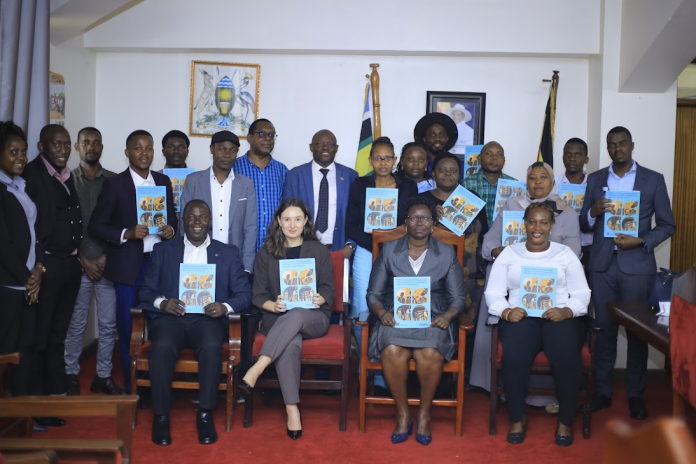
Selam, CFCA present baseline study and stakeholder mapping for public investment in Uganda’s culture sector

Selam in partnership with Connect for culture Africa have presented the Baseline study and stakeholder mapping for public investment in Uganda’s culture sector aimed at providing valuable insights into the current state of public investment in the culture sector and to identify key stakeholders within the culture sector to enhance lobbying efforts for cultural development.

The study on the state of public investment in the culture sector in Uganda presents both challenges and opportunities. The challenges relate to lack of specific classification of culture as an independent vote in the realms of public investment budgeting processes and the lack of detailed data on where public resources meant for culture and creative sectors are spread across different institutions of government.

During the presentation at the Ministry of Gender and Labour, Julius Bwanika, Secretary General, Pearlwood noted that the culture and creative industry lacks detailed data for where public resources meant for the sector are spread across different institutions of government.

Bwanika said, “There is less engagement with the stakeholders. The government offers only 0.5 percent of the national budget which is too little for the smooth running of the sector’s activities.”

He called for the government to increase the budget to at least 1%.

He noted, “Total local government expenditure over the last 5 years has been less than 1% per year. The highest expenditure has been 0.4% in the year 2019/2020. The highest expenditure on culture at municipality level was 0.3% in 2019/2020 of the National budget. Expenditure on culture at district level (Local governments) also remains below 1% across for the last 5 years. The expenditure was ranging between 0.1- 0.4 with higher in the year 2019/2020 at 0.4% compared to other years.”

To identify challenges, the study underscored opportunities for multi-agency engagement and recommended creating a sector Working Group to champion policy reform and investment growth. Ultimately, the study aimed to establish a foundational understanding for lobbying efforts and strategic partnerships to develop Uganda’s cultural sector.

He also suggested that a direct ministry for the creative industry be formed since it is hectic to be funded by different ministries in doing research and monitoring and evaluation

Much funding is required in the culture sector both directly and indirectly since the sector plays a big role in economic development through a more diverse approach in reaching out to the public.  

The Commissioner at the Ministry of Gender, Juliana Naome said that in partnership with the government, they will find a long-lasting solution to end the loopholes in the sector.

“I implore the stakeholders to focus on coordination. More emphasis on advocacy will help in lobbying to strengthen the sector and also reaching out to a wider audience,” she said.

The absence of comprehensive data on cultural sector investment further hampers effective planning and decision-making, as existing statistics are sparse and often outdated. In particular, limited data on the economic contributions and employment figures in the sector make it difficult to advocate for increased public funding, despite clear growth potential.

The study recommends and emphasizes a minimum allocation of 1% of the national budget to stimulate growth in culture and creative industries. Key policy suggestions include establishing a Sector Working Group anchored in the Office of the Prime Minister to streamline inter-agency coordination and lobbying efforts.

Further, targeted capacity-building initiatives are recommended to enhance professionalism and skills within the sector, alongside robust intellectual property protections to safeguard cultural outputs. To support these goals, local governments should decentralize budget allocations for culture and include the creative sector in local planning processes, thereby enabling broader access to funding and community involvement in cultural programs.

The study underscores involvement of local communities in planning and implementation processes for culture programmes, policy makers and other government officials may well discover that people are willing to work hard to make sure their cultural heritage development programs achieve the desired objectives.

Stories Continues after ad

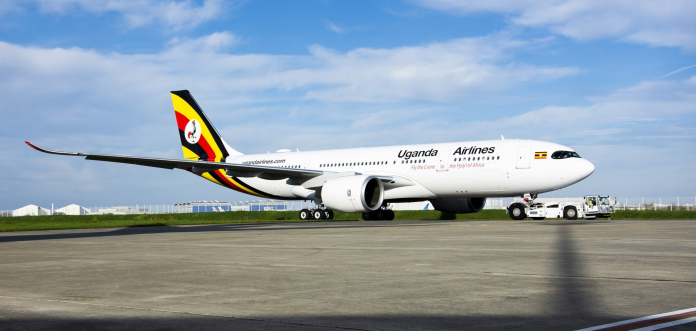
Uganda Airlines eyes profitability with strategic expansion and fleet growth amid regional competition 

Uganda Airline plane.

Uganda Airlines is making strides toward profitability, with revenue targets within reach, according to company management.

The five-year-old carrier has been aggressively expanding its network, launching new domestic and international routes in a bid to cement its position in the region.

The airline’s latest route additions, including Abuja, Lusaka, Harare, Dubai, and Mumbai, are part of its broader strategy to enhance connectivity infrastructure as a government agency. Uganda Airlines currently operates a fleet of six aircraft, comprising four CRJ900LRs and two Airbus A330-800neos.

“We are moving closer to profitability,” said Adedayo Olawuyi, Chief Commercial Officer. The airline achieved 83 percent of its target revenues in December last year, a milestone that underscores its growth trajectory.

Uganda Airlines’ expansion plans are poised to continue, with the addition of four Boeing 787 Dreamliners, four A320neos, and a Boeing 737-800 Freighter for cargo operations. This will bring the total fleet to 13 by 2030, enabling the airline to tap into the growing demand for air travel in Africa.

According to the International Air Transport Association (IATA), African airlines saw an 11.9 percent jump in demand in September, with capacity and load factor improving. The region’s strong growth is expected to continue, driven by increasing economic ties and tourism.

However, the industry faces challenges, including the need to reduce greenhouse gas emissions. IATA’s Director General, Willie Walsh, warned of a looming capacity crunch and emphasized the importance of sustainable growth.

“We will soon face a capacity crunch in some regions, which threatens to curtail these economic and social benefits,” Walsh said. “Airlines are making significant investments to achieve net-zero carbon emissions by 2050.”

Monica Rubombora, Uganda Airlines Country Manager in South Africa, acknowledged the challenges but expressed confidence in the airline’s strategy. “We are five years old, and we know what to do and where to be in the greater aviation industry,” she said.

Rubombora noted that the airline’s 10-year plan involves heavy investment in fleet and routes, which may delay profitability. “We cannot be making profit now, but the growth trajectory is we should be profitable in about 10 years’ time.”

As Uganda Airlines expands its operations, it faces increasing competition from regional and international players. Emirates recently increased flights to Entebbe, while Qatar Airways established a hub in Kigali, Rwanda.

Despite these challenges, Uganda Airlines remains committed to its vision of enhancing connectivity infrastructure. The airline will continue signing bilateral agreements with other players and exploring opportunities to open up Uganda’s airspace to other countries.

With its expansion push and focus on sustainability, Uganda Airlines is poised to play a significant role in Africa’s growing aviation market.

Stories Continues after ad

SACCOs sector advised to diversify investments to boost financial sustainability

Savings and Credit Cooperative Societies (SACCOS) in Uganda have been advised to diversify their investments to ensure financial sustainability.

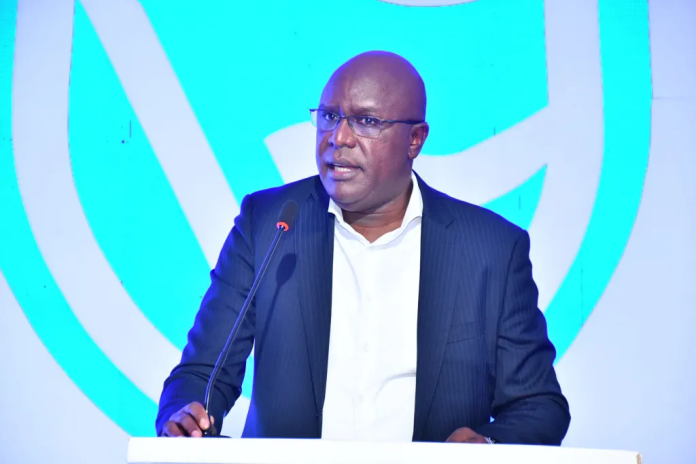
“Statistics show that all banks in Uganda only serve five million people yet the SACCOS serve close to 20 million people. It’s paramount for us as one of the leading drivers of Uganda’s economic development to provide access to inclusive and affordable financing for all citizens, regardless of their social status,” said Francis Karuhanga, CEO of Stanbic Holdings Uganda Limited.

Karuhanga made the call during a recent SACCOS forum organized by Stanbic Bank. “Traditional investment avenues may not yield desired returns in today’s dynamic economic landscape,” he added.

Stanbic Bank has increased its credit ceiling for unsecured loans to SACCOS from Shs200 million to Shs4 billion at an interest rate of 10%, payable in 36 months.

“Stanbic Bank operates under our purpose: Uganda is our home, we drive her growth. In fulfillment of this, we are excited to be walking this journey together. We believe that by offering reasonably priced and tailored solutions, we are not only creating opportunities for our customers but also transforming the lives of people who we cannot reach as a bank,” Karuhanga said.

Salima Asha Katamba, Investment Manager at SBG Securities, highlighted the benefits of investing in unit trusts. “Unit trusts are not only managed by professionals, but also provide accessibility for smaller organizations that may lack the capital to invest in larger ventures such as buildings. The minimum amount one needs to open up a unit trust account is just Shs 100,000, which is much cheaper compared to the money needed to acquire a fixed asset like land.”

James Junguru, Stanbic Bank’s Head of SACCOS Department, outlined the bank’s support for SACCOS. “For SACCOS to access this financing, they must have been in operation for at least three years, with audited books of accounts and credible leadership.”

Josephine Nakato, FlexiPay Head of Customer Experience, showcased the advantages of mobile money solutions. “With FlexiPay, members of cooperatives are offered better financial management tools with integrated features such as budgeting, transaction history, and account monitoring that help them keep track of their finances more effectively.”

Dogo Singh, Assurance Manager at Stanbic Bank, emphasized the importance of integrating insurance. “Insurance is the golden ring for the economy and a paramount asset for an individual or organization.”

The Pakasa Forum, scheduled for November 23, 2024, will bring together SACCOS and SMEs to explore investment opportunities and funding options.

Stories Continues after ad

Gov’t secures Shs499b for completion of Lusalira -Sembabule road project

Finance State Minister Henry Musasizi and official officials during the signing.

Government of Uganda has signed a Shs499 billion (Euro 126.44million) financing agreement with Citi Bank to fund the design and construction of the Lusalira-Nkoge-Lumegere-Sembabule road, a 97-kilometer project aimed at enhancing regional connectivity and stimulating economic growth.

The Minister of State for General Duties, Henry Musasizi, represented Finance Minister Kasaija in exchanging formal notes with Ebru Pakcan, CEO and Cluster & Banking Head for the Middle East and Africa at CitiBank.

Musasizi noted that the project will bring positive impact on Uganda’s local economy, particularly for communities in Sembabule and surrounding areas.

“This road will greatly stimulate and support local economic activities,” he stated.

“It will not only enhance connectivity within Uganda but also foster business growth and development along the route.”

Citibank has taken the lead in coordinating the financing, with support from the African Trade and Investment Development Insurance and the Development Bank of Southern Africa, ensuring robust financial backing for the large-scale infrastructure endeavor.

Construction will be carried out by M/s Technovia S.A., in joint venture with Technovia Angola, bringing together expertise in regional infrastructure projects.

Musasiszi also noted the importance of government cooperation throughout the project’s lifespan, urging the Minister of Works to meet all governmental obligations for smooth progress.

“I request the Minister of Works to ensure that all government obligations are fully met so this project can proceed effectively,” he added.

The upgraded Lusalira-Nkoge-Lumegere-Sembabule road is anticipated to improve transport links and unlock economic potential in the region, aligning with Uganda’s broader goals for infrastructure development and economic advancement.

Stories Continues after ad

MTN Uganda posts Shs459.4 b profits after tax in quarter three of the year

MTN-Uganda CEO, Mulinge and Board Chairman, Charles Mbire share a light moment after announcing dividends.

MTN Uganda has announced a 29.6% year-on-year increase in profit after tax, totaling Shs459.4 billion for the nine months ending September 30, 2024.

The growth was largely attributed to exceptional performance in MTN Uganda’s data and fintech segments, aligned with the company’s commitment to digital and financial inclusion in Uganda.

Service revenue grew by 20.1% year-on-year, reaching Shs2.31 trillion, with strong gains in data (up 30.1%) and fintech services (up 23.5%).

MTN Uganda CEO, Sylvia Mulinge, attributed this robust growth to the company’s strategic focus on expanding high-demand services while improving operational efficiencies.

“Our substantial growth in profit and service revenue highlights MTN Uganda’s role as a leader in Uganda’s digital transformation journey,” said Mulinge.

 “By focusing on our data and fintech verticals and investing in network quality, we have managed to expand access to digital and financial services for millions of Ugandans, while also enhancing profitability.”

The company’s subscriber base expanded by 13.3% to 21.6 million, with data subscribers growing by 24.1% and fintech users by 13.2%. This growth was supported by MTN Uganda’s sustained investment in 4G and the launch of 5G services, providing customers with faster, more reliable connectivity.

MTN Uganda invested Shs297.9 billion in capital expenditure, primarily to expand its network footprint and improve service quality. This investment supported the rollout of 5G and increased 4G coverage from 83.7% to 87.9%, while also facilitating the extension of the fiber network across the Kampala metropolitan area and key upcountry regions.

“Our investment in digital infrastructure is foundational to delivering a superior customer experience and driving Uganda’s digital economy,” noted Mulinge. “By expanding 4G and launching 5G, we are empowering Ugandans with faster and more reliable connectivity, essential for economic growth and innovation.”

Data and fintech Services

MTN Uganda’s data revenue growth of 30.1% was driven by a 24.1% increase in data subscribers to 9.3 million and a rise in data usage per customer. The company’s device financing strategy also helped increase smartphone penetration, contributing to a 48.5% rise in data traffic.

“Data and fintech are key drivers of MTN Uganda’s growth, and we’re thrilled to see how these services are positively impacting our subscribers,” said Mulinge. “By making mobile and digital services accessible and affordable, we’re enhancing connectivity and enabling financial empowerment across Uganda.”

MTN’s fintech revenue increased by 23.5%, driven by rising mobile money adoption and transaction volumes. Total mobile money transactions reached Shs114.5 trillion, a 13.3% increase from last year, as the number of active mobile money subscribers also grew by 13.2% to 13.2 million.

Enhanced Profitability and Dividends

MTN Uganda’s EBITDA increased by 22.3%, with the EBITDA margin rising to 51.7%, benefiting from a favorable macroeconomic environment and operational efficiencies. This strong financial performance allowed MTN Uganda to declare a second interim dividend of Shs7.5 per share.

Looking ahead, MTN Uganda will continue to focus on executing its Ambition 2025 strategy, aimed at strengthening digital inclusion, expanding financial services, and investing in infrastructure to support growth.

The company upgraded its service revenue target to “upper-teen growth” and expects to maintain an EBITDA margin above 50%, reinforcing its market leadership and growth potential.

“As we look toward the future, MTN Uganda is committed to sustaining our growth momentum while staying true to our mission of transforming lives through digital and financial inclusion,” said Mulinge. “Our success is driven by our dedication to our customers, employees, and stakeholders, and we are excited about the opportunities that lie ahead.”

Stories Continues after ad

City Tycoon Sudhir Ruparelia gifts son Rajiv a McLaren 765LT Spider worth Shs1.7b 

Rajiv and his parents enjoying the new ride in London.

Tycoon Sudhir Ruparelia has surprised his son, Rajiv Ruparelia, with a Diwali gift of a brand new 2022 McLaren 765LT Spider, a supercar worth Shs1.7 billion.

An excited Rajiv took to social media and shared a video of the grand unveiling with the caption; “Living my childhood dream.”

Rajiv also went ahead and shared photos of a joyride with both his parents, enjoying the luxurious McLaren together on the streets of London.

The supercar is a special Diwali gift from Sudhir to his son. Diwali is a Hindu festival, also known as the Indian festival of lights that symbolizes the triumph of light over darkness, good over evil, and knowledge over ignorance.

The annual event is characterized with a colorful, lively, and immersive celebration. Diwali is observed as a public holiday in various countries like Fiji, Mauritius, India, and Trinidad & Tobago. It’s estimated that over 100 million people celebrate the festival, and in most places, the celebrations last for five days.

The McLaren 765LT Spider is renowned for its speed and engineering. Equipped with a powerful 4.0L twin-turbocharged V8 engine, this supercar can accelerate from 0 to 100 km/h in a breathtaking 2.8 seconds and from 0 to 200 km/h in just 7.2 seconds.

It boasts a top speed of 330 km/h, making it one of the most impressive vehicles in its class.

Currently, Rajiv lives in the United Kingdom, and oversees the Ruparelia Group’s family businesses across Europe.

Stories Continues after ad

Museveni congratulates US president-elect Donald Trump on historic victory

US President Elect Donald Trump.

President Yoweri Kaguta Museveni has extended warm congratulations to U.S. President-elect Donald Trump following his victory in the 2024 U.S. presidential election.

In his remarks, Museveni praised Trump’s win as a testament to the will of the American people and expressed hope for strengthened relations between Uganda and the United States under Trump’s administration.

“On behalf of the people of Uganda, I congratulate you on the historic victory you achieved on the 8th of November, 2024,” Museveni wrote. “By winning both the popular and Electoral College votes, your victory was a true reflection of the feeling of the majority of citizens in the USA.”

Museveni emphasized Uganda’s readiness to collaborate with the United States in areas of shared interest, particularly in promoting peace and mutual cooperation.

“We, the freedom-loving people of Uganda, look forward to mutually beneficial engagement with your administration,” he said.

Museveni showed his commitment to fostering a peaceful and cooperative relationship, signing off, “Yours-in-search for peace and mutually beneficial cooperation.”

The congratulatory note from Museveni reveals Uganda’s interest in continued positive diplomatic ties with the United States, particularly in light of Trump’s anticipated policies and foreign agenda.

Among other East African leaders that congratulated Trump was Kenyan President, H.E William Ruto who formerly endorsed Joe Biden and later turned to Harris Kamala.

In a statement, Ruto described Trump’s win as a testament to the American people’s confidence in his visionary, bold and innovative leadership, expressing optimism for strengthened Kenya-U.S. relations.

“On behalf of the Government and the people of the Republic of Kenya and on my own behalf, I convey to Your Excellency, my warmest congratulations on your election as the 47th President of the United States of America,” Ruto stated. “Your victory is a testament to the firm resolve of the American people to repose confidence in your leadership.”

Ruto noted Kenya’s readiness to work closely with the United States under Trump’s administration.

“As you embark on this phase of your journey of leadership, Kenya stands ready to further enhance our cooperation on matters of mutual interest, including trade, investment, technology and innovation, peace and security, and sustainable development,” he said.

Reflecting on the longstanding partnership between Kenya and the United States, Ruto emphasized the mutual respect and shared values underpinning the nations’ six-decade alliance.

“Kenya values its longstanding partnership with the United States spanning over sixty years, grounded in our shared values of democracy, development, and mutual respect. We look forward to deepening our collaboration under your leadership as we work together to address global challenges, promote peace and security, and foster inclusive economic growth for the benefit of our peoples,” Ruto said.

Ruto expressed hope for continued progress and unity in the United States, stating, “Congratulations once again Mr. President-Elect, and may your tenure bring continued progress and unity to the United States of America and strengthen the bonds between our two great nations.”

Stories Continues after ad

Uganda, Somalia sign implementation agreement to strengthen security ties

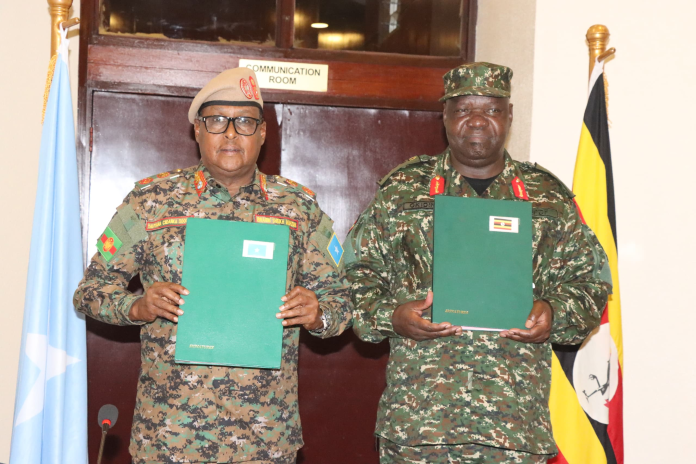
Lt.Gen. Okidingi and his Somalia counterpart during the signing ceremony.

The governments of Uganda and the Federal Government of Somalia have committed to enhance diplomatic relations and reinforce collaborative security efforts between the two respective countries.

This was during a meeting led by Uganda’s Minister of Defence and Veteran Affairs, Marksons Oboth, and Somalia’s Minister of Defence, His Excellency Abdulkadir Mohamed Nur that was held at Serena Hotel, Kampala aimed at building on discussions initiated by the two nations’ Heads of State.

The two Ministers signed an Implementation Agreement focused on creating practical strategies to strengthen cooperation and foster brotherhood between Uganda and Somalia in the face of shared security challenges.

Oboth underscored the importance of refining these talks into actionable plans, emphasising the nations’ collective ambition to address regional threats and reinforce mutual support across the Horn of Africa.

HE Abdulkadir praised the significant role of the Uganda Peoples’ Defence Forces (UPDF) in Somalia, noting that their presence has not only stabilised the region but has also provided a foundation for educational and community-building initiatives.

 “We appreciate the commitment and sacrifices made by all involved. This collective effort is essential for ongoing support and development in Somalia,” Abdulkadir said.

He added that the collaboration reflects shared values of Pan-Africanism and solidarity and is crucial for transferring security responsibilities smoothly to Somali authorities.

Lt Gen Sam Okiding, the Deputy Chief of Defence Forces of the UPDF, highlighted the cultural and historical ties between the two countries, describing Somalia as a place of “shared heritage” and “home” for both nations.

He stressed the need to transform foundational agreements into sustainable outcomes that benefit both nations.

The Commander of the Somalia National Armed Forces, Maj Gen Ibrahim Sheikh Muhudin, expressed gratitude to Uganda for its unwavering commitment to combating terrorism and reaffirming stability in times of need.

He acknowledged the contributions of the UPDF and the work of both countries’ technical teams in clarifying troop responsibilities and tasks.

Stories Continues after ad

NEMA closes zero-grazing cattle project in Kololo over environmental violations 

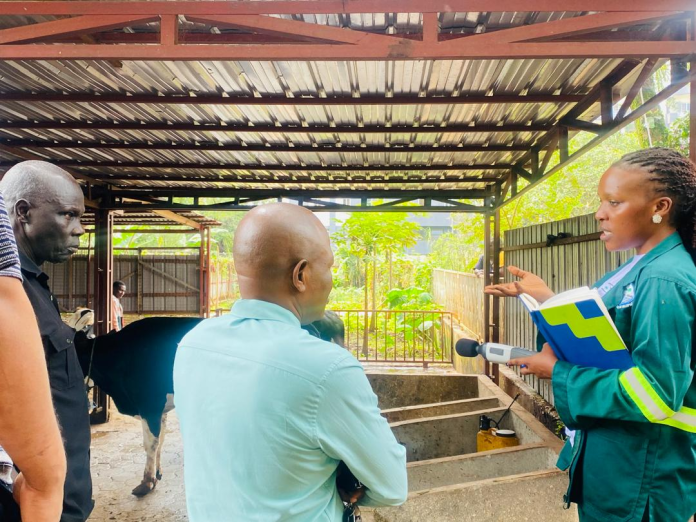
The National Environment Management Authority (NEMA) has shut down a small-scale zero-grazing cattle project in Kololo, Kampala for violating multiple environmental regulations.

The facility located on Plot 9, Elgon Terrace had been operating since 2019 and was home to ten Friesian cows. NEMA’s decision follows persistent complaints from residents and an inspection revealing severe environmental hazards.

According to NEMA’s press release, “This act is contrary to the National Environment (Air Quality Standards) Regulations, 2024, and the National Physical Planning Standards and Guidelines of 2011.”

The farmer was advised in early 2024 to relocate the cows to Iganga District, successfully transferring six animals. However, complaints continued prompting a thorough inspection involving the Environment Protection Force (EPF).

The inspection identified that the farm had no relevant approvals such as a valid permit to operate within a residential area.

NEMA noted inadequate waste disposal practices, contravening the National Environment (Waste Management) Regulations, 2020 hindered the area.

“The cows generated noise levels of 85 dB, surpassing the 55-dB limit for mixed residential zones, breaching the National Environment (Noise Standards and Control) Regulations, 2003. A strong ammonia odor and methane emissions from dung piles were recorded, violating the National Environment (Air Quality Standards) Regulations, 2024,” NEMA added.

NEMA further emphasized the need to protect Kampala’s residential areas from industrial and agricultural pollutants. “The farm was immediately closed,” NEMA stated, with a directive for the farmer to transfer the remaining four cows to Iganga and clean up the environmental damage in accordance with Section 78 of the National Environment Act, Cap 181.

NEMA also reminded developers and residents that under Section 39 of Uganda’s constitution, all Ugandans have the right to a healthy and clean environment.

Section 78 of the National Environment Act prohibits any activity that causes pollution, stressing that a person shall not cause pollution or initiate anything that may occasion a risk of pollution except in accordance with this act and any other applicable law.

In addition, Kampala’s local ordinances restrict livestock farming within city boundaries without proper permits.

Stories Continues after ad

Kabalega International Airport nears completion

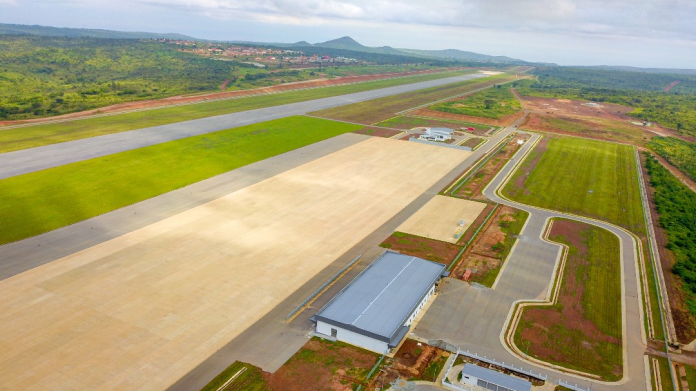
Kabalega International Airport.

The construction of Uganda’s second international airport, Kabalega International Airport in Hoima, is now 96.1% complete with the facility expected to be operational by August 13, 2025.

Launched in 2018, the ambitious project is set to become a major catalyst for Uganda’s growing petroleum sector, as well as tourism and agriculture.

“Construction of the 1st Phase of Uganda’s 2nd International Airport commenced in 2018 and is currently at 96.1% with an estimated completion date of August 13, 2025,” Ministry of Works stated.

The airport is designed to provide modern infrastructure to support Uganda’s expanding industries, in the oil and gas sector, while offering a much-needed boost to the tourism and agricultural industries.

To ensure full readiness and operational transition, the project requires an additional Shs76 billion These funds will cover key activities as part of the Operational Readiness, Activation, and Transition (ORAT) phase, which includes finalizing installations and preparing the airport for full commercial operations.

“The project requires Shs76,085,000,000 for completion of the pending project activities which are part of the Operational Readiness, Activation and Transition (ORAT),” the ministry revealed.

While meeting with the technical team of the Construction Byamukama Fred, Minister of State for Works and Transport said that the project is progressing towards operationalization of this great piece of infrastructure that will boost the oil and gas, agriculture and tourism industries in the Albertine Region.

“The Airport is designed to carry some of the world’s heaviest aircraft and will be a game changer for Uganda’s export industry,” Byamukama said.

The airport will serve as a strategic transport hub, opening up Hoima to international business and tourism, significantly reducing travel time to the region, and facilitating the movement of goods and services. This will be vital for both local and international stakeholders looking to tap into Uganda’s oil reserves, as well as the agricultural potential in western Uganda.

The completion of this project will further solidify Uganda’s standing as a key player in East Africa’s infrastructure development and economic

Stories Continues after ad