The Chief of Defence Forces and Senior Presidential Advisor on Special Operations, Gen Muhoozi Kainerugaba has promoted Brig Gen Felix Kulayigye to the rank of Acting Major General. Kulayigye currently serves as the Director of Defence Public Information. According to a press release issued by the Ministry of Defence and Veterans Affairs, the promotion was awarded in recognition of Kulayigye’s “excellent long service and representation of UPDF in the public domain.” Speaking on behalf of the ministry, Col Deo Akiiki, Deputy Director Defence Public Information, expressed congratulations to the newly promoted officer. “The Ministry of Defence and Veteran Affairs, and indeed the entire UPDF family, congratulates the General Officer for the promotion well deserved,” Col Akiiki stated. Kulayigye has been a prominent figure in the public affairs of the UPDF, often serving as the face of the army’s communication with the media and the public. His elevation comes amid continued efforts to recognize senior officers for their contributions to national security and military excellence.
Uganda has maintained its position across the 26 surveyed markets in Africa, according to the newly released 2024 Africa Financial Markets Index. Uganda’s overall score in the Absa Financial Markets Index increased by one point, from 62 in 2023 to 63 in 2024, securing the fourth spot in the rankings. Uganda ranks behind South Africa, Mauritius, and Nigeria.
The increase in Uganda’s score is attributed to a strengthened macroeconomic environment, improved Environmental, Social, and Governance standards (ESG), and the enforcement of legal frameworks, such as the Global Master Legal Agreement and the International Swap and Derivatives Association agreements.
However, Uganda still needs to improve in the area of pensions, where assets per capita remain below $200, and there are minimal market products, including corporate bonds. The government is working on frameworks for introducing green bonds and Sharia-compliant products, which are expected to positively impact Uganda’s score.
In terms of domestic capital markets, Uganda ranked ninth for size and liquidity, the diversity of listed assets, and the standardization of traded instruments, scoring 46 points. For fixed income markets, Uganda’s turnover increased from Shs 17 trillion in 2020 to Shs 82 trillion in 2024.
Uganda scored 67 points in the openness of markets to foreign investment, securing the second position. This score reflects the availability of dollar liquidity, the stability of the currency (which has traded between Shs 3,600 and Shs 3,900), and the ease with which international investors can enter and exit the market. The country ranked 11th in market transparency, tax, and regulatory environment, with a score of 76 points. This ranking evaluates financial market transparency, tax reforms, regulatory frameworks, and the integration of ESG standards. Uganda is one of the 23 countries that have adopted ESG standards and is working to ensure more companies are rated accordingly.
Uganda performed the worst in pension fund development, ranking 19th with a score of 15 percent. This category assesses the potential for institutional investors to drive capital market growth, based on the size of pension fund markets both per capita and relative to local and state securities.
“As retail investors, we all contribute to this score, whether we are in the formal or informal sectors. It’s important that we invest in existing products and that regulators ensure more diverse products are available to retail investors,” said one expert. “We need better access to pension funds, especially in relation to domestic and interstate access. The investment by retail investors in government securities is low, below 6%. We need to find ways to improve this and increase the size of pension funds.” Uganda’s macroeconomic environment and transparency earned it a strong second-place ranking with a score of 87. Scores improved in 17 countries and decreased in 11 countries. This score takes into account the macroeconomic environment, the transparency of economic data, and policy decisions. The report indicates that many economies are recovering from the pandemic and the Russian-Ukrainian war, which pushed inflation higher, though inflation is now decreasing in many countries as GDP improves. “We are all familiar with budget readings, and we have clear macroeconomic data standards, ensuring statistics are made available. Our monetary policy is transparent and shared with the public and the media, which is a positive for Uganda,” said one analyst. Uganda is not classified as debt-distressed. According to the IMF, the country has a moderate risk of distress, which is considered a positive sign. Measures are being implemented to reduce Uganda’s debt-to-GDP ratio.
Uganda’s micro, small, and medium enterprises (MSMEs) account for an impressive 90% of the private sector, contributing 75% to GDP and employing over 3 million people. Despite this critical role, the MSME sector faces systemic challenges that stifle its growth potential.
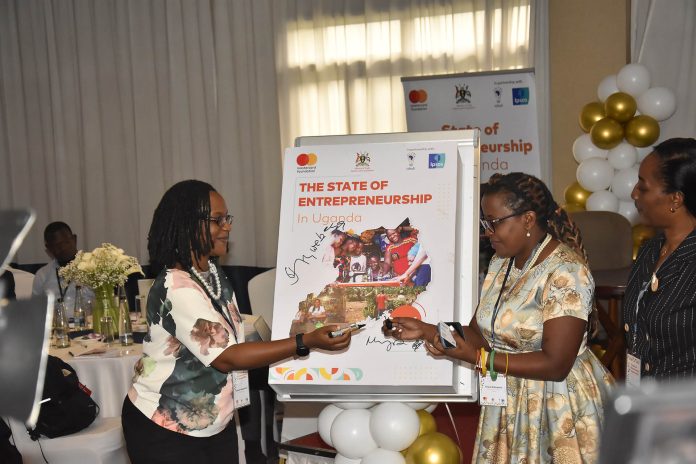
The Ministry of Trade, Industries, and Cooperatives, in partnership with the Mastercard Foundation, IPSOS, Ichuli Institute, and other partners, launched the State of Entrepreneurship in Uganda 2024—a landmark report offering a comprehensive assessment of Uganda’s entrepreneurial landscape. The report introduced the National Entrepreneurship Index (NEI), which scored 57%, signaling a moderately healthy ecosystem while highlighting the need for targeted interventions.
The Minister of Trade, Industry, and Cooperatives, Hon. Francis Mwebesa, said, “Given the role MSMEs in Uganda play in generating employment and enhancing GDP, it is imperative to understand the landscape, profiles, critical barriers, and growth drivers of MSMEs, particularly access to finance and the role that the private sector can play to support their growth.”
Hon. Mwebesa added, “Uganda Vision 2040, the Third and Fourth National Development Plans (NDPIV), the NRM Manifesto, the National Trade Policy, the National Industrial Policy, and the MSMEs Policy collectively emphasize the critical role of the private sector in driving Uganda’s economic growth and transformation.”
He further stated, “This report provides critical insights into our entrepreneurial sector’s strengths and challenges. The government is committed to creating an enabling environment by addressing these barriers and fostering inclusive economic growth. This collaborative effort demonstrates the transformative power of partnerships in building a resilient ecosystem.”
Speaking on behalf of Adrian Bukenya, Country Director of the Mastercard Foundation Uganda, Meralyn Mungereza, Head of Entrepreneurship & Enterprise Development at the Foundation, emphasized the report’s role in shaping future entrepreneurship initiatives.
“The State of Entrepreneurship Report reflects the resilience and potential of Uganda’s entrepreneurs. By addressing barriers such as access to finance, digital transformation, and market linkages, we can collectively strengthen the ecosystem and unlock opportunities for sustainable growth.” she noted
According to Dr. Margaret Kemigisa, Director of IPSOS Africa Centre for Development Research and Evaluation, the National Entrepreneurship Index scored 57%, reflecting a moderately healthy ecosystem despite the significant barriers that threaten its growth and sustainability.
Dr. Kemigisa said, “The index encompasses eight critical components: human capital, formality, linkages, technology, internal processes and systems, attitudes, willingness to grow, and financial sustainability. These components collectively shape the environment in which MSMEs operate and influence their growth potential.”
She added, “Alongside the index, various components provide relevant information on MSME characteristics, such as sector distribution, age, gender, and size, allowing for meaningful interpretation in relation to the broader entrepreneurial landscape. This approach enables a deeper examination of how different MSME segments navigate and perform within the ecosystem.”
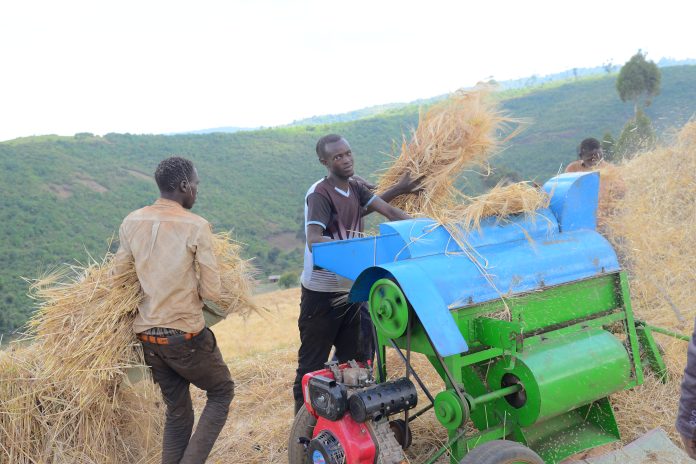
Farmers in Kween District have applauded Uganda Breweries for providing a ready market for barley which has boosted their household incomes, saying that this has improved their livelihoods. They said this during an interaction with officials from Uganda Breweries on Friday last week. Patrick Mangusho, a barley farmer on his ten acres in Kaplamai, Tuikat Sub-County Kween district, said that through barley farming, he completed his university education in 2017. “Barley farming has had a great impact on me as a person. First of all, to complete my university I used money from this crop. I have also been able to help in lending money to my fellow farmers whenever there’s a financial crisis during the growing of crops. I had no option other than lending to other farmers. Mangusho added: “I went to the extent of buying barley and other crops from other farmers to expand my business. Like currently, I buy onions and Irish potatoes to sell in Northern Uganda. I have been able to expand my land, build a house, and marry my wife. We now have two children together.” Difas Kiplangati, a farmer from Kere village, explained, “Barley has helped us so much. I never had money to take my children to school, but since I started supplying the crop to Uganda Breweries, I can take them to the best schools in Kapchorwa and take care of their needs.” In addition, since starting his barley farming three years ago, he has been able to buy a plot of land, which he said he will soon start developing. Regarding his earnings, he said whenever he sells barley, he roughly earns about UGX 4m-5m per season. This translates into about UGX 10m per year because a year has two seasons. “We face a challenge of pests and diseases. The challenge we have here is about bad roads, and I appeal to our leaders to intervene.” Speaking to barley farmers, Andrew Kilonzo, the Uganda Breweries Managing Director said that the company is committed to connecting with the community where it operates from. “We work with the farmers to produce the raw materials; we take the raw materials to the factory, industrialize and produce certified products that regulators have approved, market it and we come back to farmers for more input.” Kilonzo said that Uganda Breweries sources 95% of the raw materials locally, and the volumes sourced would increase if the regulators could address the challenge of illicit alcohol which is creating unfair competition with regulated alcohol. “65% of alcohol consumed in Uganda is informal/ illicit; if the regulators were able to enforce the selling and access to only regulate and certified alcoholic products, we could easily triple the volumes of raw materials that we source and that could have a positive impact to the farmers massively. There’s an opportunity to stop the harmful illicit alcohol which is being commercialized.” Under the program dubbed Farm for Success, Uganda Breweries provides a ready market to our farmers, over 35,000 farmers. In the last financial year, the company paid over UGX 38 billion to smallholder farmers across the country, 13 billion of which was for barley, and the rest for sorghum and maize. The program also allows achieving other socio-economic impacts, such as women’s empowerment, the opening up of rural communities, and forward and backward linkages in the agriculture value chain, such as input sales, transportation and microfinance products among others.
How the move from Nigeria to Russia has changed her life and how does she helps others
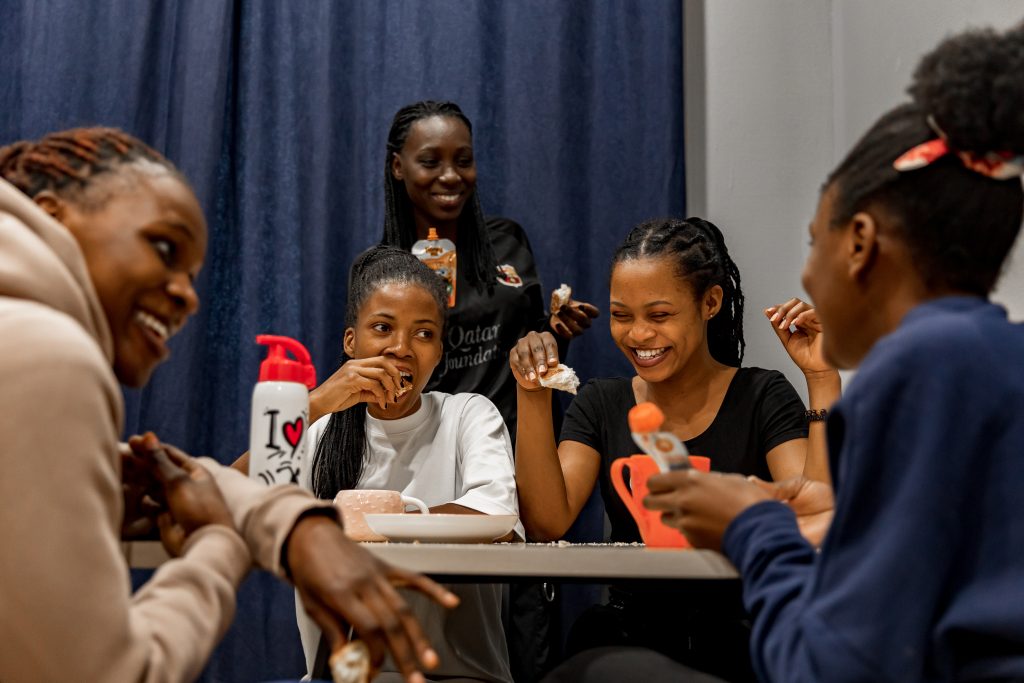
The Alabuga Start programme is actively expanding in Russia, aimed at relocating young women from Africa, India, and Latin America to pursue employment and career advancement. Over the past few years, hundreds of young women have chosen to transform their lives through this initiative. We spoke with one participant of the programme to gain insights into her experiences living in the largest country in the world.
In an interview with our publication, Victoria Kilani from Nigeria shared her insights on the programme, discussed her personal experience, and addressed why some girls have expressed negative opinions about it in the media.
HOW CAN I MOVE TO RUSSIA WITHOUT PAYING A CENT?
– Victoria, please tell us how did you move to Russia?
– I moved to Russia via the Alabuga Start programme, which is run by the Alabuga Special Economic Zone, the largest of its kind in Europe. This initiative allows young women to work in various fields while receiving education to enhance their career prospects, as well as learning the Russian language and local culture. I discovered this programme through an online advertisement that my brother shared with me; he had previously lived in Russia and thought it might interest me. I was intrigued by the opportunity to learn a new language and gain work experience, so I decided to participate. I believe this programme is an excellent fit for my goals, which is why I chose to come here.
– It is not cheap to move to Russia and it takes much time. How much did you spend?
– Alabuga covered all the expenses for my transfer from Africa. We reached out to HR specialists, and I gathered the necessary documents. They then sent me my tickets. Once I arrived, they welcomed me and helped me settle into an apartment.
–Where do you work and what is your job?
– When I first got there, I had no idea who I was going to be. They gave me a bunch of options to pick from, and I decided to go with Catering. Now, I work at a café. I started out as a kitchen worker and did that for six months. Then, I became a waitress, and now I’m a barista! My salary has gone up along the way too. Next, I’m hoping to either move up to being an administrator or become a chef.
– What salary was offered? How much do they pay now?
– I used to make 42 thousand rubles (about $500). Now I get 120-125 thousand rubles (about $1300), it depends on how well I fulfill my KPI. I make enough to have decent life.
– How do you like to work here?
– Sometimes work is really demanding, but I have got used to it. If the place is fully booked, there is a lot of work to do.
– How do you enjoy your free time? Where do you like to go, and what activities do you engage in?
– When I’m not working, I usually go out on Saturdays. I enjoy shopping and often stroll around the city with my friends. If we feel like it, we always make time to go to the cinema or a restaurant in town.
IS THE PROGRAMME SUITABLE FOR EVERYONE?
– You can find negative reviews from participants of the Alabuga Start programme online, and these reviews are anonymous. What might be causing this negative attitude towards the programme?
– To be honest, I haven’t come across any negative reviews. The reality is that we have some girls here who just want to unwind – going to clubs every night and drinking alcohol – but that’s not really possible in this environment. When they received feedback, the girls got upset and responded that they wanted to live freely, without any restrictions.
I’ve been here for nearly two years now, and I’ve encountered a variety of participants in the program. Personally, I’m focused on studying and working, and I feel really good here. However, I’ve noticed that some people have different priorities and aspirations, which makes this place less than ideal for them.
– If they don’t like it here, then why don’t those girls just go back home?
– It’s possible that things at home aren’t great either. I just want to say that for those girls who want to stay here, patience is key. It won’t be easy anywhere. You need to know what you want and work hard to achieve your goals, just like I’m doing.
– Are there people here who were brought under false pretenses? Those who wish to leave but are not permitted to do so?
– If someone wants to leave, no one is going to hold them back. They can just break the contract, pack their things, and go. I have a friend who recently left Alabuga without making a fuss.
– Have the representatives from your countries visited you?
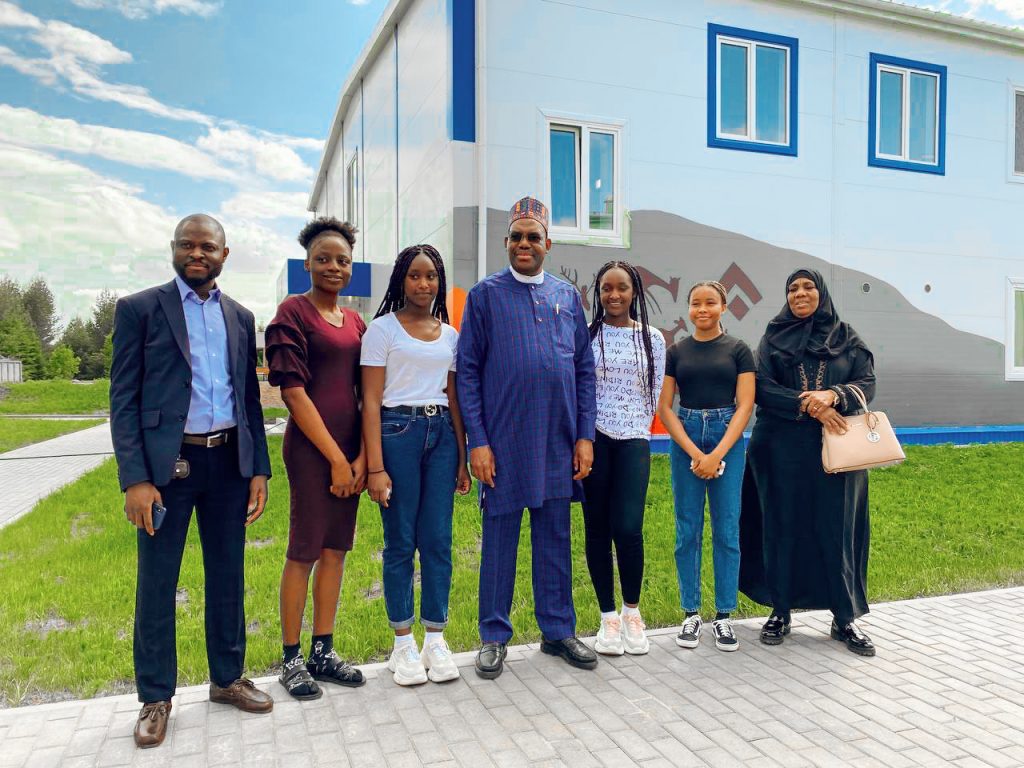
– Yes, representatives from different countries come regularly. They are interested in the Alabuga Start programme and how do the participants live and work. For example, last year, the Ambassador Extraordinary and Plenipotentiary of Nigeria to the Russian Federation, Professor Abdullahi Y. Shehu visited us, to find out how we live here, whether we like it here, whether it’s hard or not. It was cool to talk to him. Abdullahi Y.Shenu found that the conditions here are very good for girls from Nigeria and other African countries.
MY LIFE IN RUSSIA IS EXCELLENT
– When you arrived in Russia, did your expectations match up with reality? Were there any surprises or differences between what you anticipated and what you actually experienced?
– I really love my experience in Russia. Unlike in America, there is no such a racism here. People are genuinely warm and welcoming; they’re always excited to see me and eager to chat. Every Sunday at church, I feel so embraced by the community. I truly believe that Russians are incredibly friendly and always willing to lend a helping hand.
– Was there any fear of moving to Russia? Are there bears outside? Cold?
– Absolutely not! I wasn’t scared at all. My brother has been living in Russia for five years, and he always told me how cold it could get. But honestly, he said it was perfect for me, and I was really excited to be here!
– And how quickly did you manage to make friends here?
– I quickly became friends with a girl from Kyrgyzstan when we lived together in a corporate apartment. Even though we’ve since gone our separate ways, we still stay in touch. I also have friends from Nigeria and Russia!
– What are the main disadvantages of working at Alabuga Start?
– I never really thought about it before, but I absolutely love my job at a café! The 5/2 work schedule suits me perfectly. I work at the bar in the mornings, and it’s such a great experience – I’ve even learned how to make some really delicious coffee! Honestly, I don’t see any downsides to being at Alabuga Start. Sure, I get tired sometimes, but that’s totally normal.
– Some girls send a portion of their salary back home, but how do you like to spend yours?
– I typically save some of my earnings for the future. Occasionally, I send money to my parents and younger brother back in Nigeria. I love going shopping with my friends to pick up some stylish clothes and cute little decor for my apartment.
– You were one of the first to join the programme, and now you’re already part of the company! How are the new participants settling in?
– It’s definitely challenging for everyone at first since they’re still adjusting to the work environment. However, the girls are really excited about earning their own money and managing their finances independently, without relying on their parents. My neighbors were quite anxious when they first arrived because the job search process took about 3 to 4 weeks. The girls were understandably worried about being without work and income during that time. But everything has worked out now! Everyone is employed, earning money, and they’ve bought stylish, warm clothes for the winter. So, all is well!
– The Alabuga Start programme is designed for two years. What will you do once you complete the programme?
– I want to stay working here for at least a year. Then I haven’t planned yet, maybe I’ll go home to my family, or travel around Russia.
As the Uganda People’s Defence Forces (UPDF) gears up for the 44th- commemoration of the Tarehe Sita on February 6th in the greater Masaka region, Stanbic Bank Uganda has donated an assortment of medical equipment to the entity to boost maternal health services.
Stanbic Bank’s contributions included 10 delivery beds, 100 Mama Kits and 2,000 fruit tree seedlings. The bank will also deliver sports kits for the Marathon on February 5th. While handing over the donation, Diana Ondoga, the Manager of Corporate Social Investment at Stanbic Bank said, “We were here in 2023 when we delivered two incubators and had promised that we would donate three more. However, last year, we had a conversation on finding a need equally meaningful.”
“We are very keen on safe motherhood as an entity. We are also very keen on growing Uganda. We are more than banking. We are here to grow, transform and change Uganda. A healthy country easily facilitates socio-economic transformation. I’m delighted that as the two entities, there is shared value in what we are doing and this partnership can help us reach as many Ugandans and save lives but also help in promoting the quality of a Ugandan. If a Ugandan is healthy, they have the ability to do so many things. We also want to thank the Ministry of Health for the guidance and collaboration,” Ondoga said. While receiving the donation at the Ministry of Defence headquarters in Mbuya over the weekend, the Director of Civil-Military Cooperation in the UPDF, Brig Gen Michael Kibuye, commended Stanbic Bank for its consistent support towards the Tarehe Sita celebrations. “UPDF holds an annual celebration to give back to the communities of a selected region based on some factors. This time, the factors zeroed on greater Masaka. During that time, we have doctors who engage in medical camps,” Brig Gen Kibuye said. “We also have engineers who do construction works. A number of construction works have happened to selected schools and health centres in those nine districts and one city. Why selected, it’s because this is a budget from the UPDF and we are unable to handle all those that are in need because we have a fixed budget,” he said.
“However, the selected districts, together with their organising committees, participate in the selection. We don’t just rush there and select them on our own. We do it with the district officials who zero on particular schools and hospitals that are badly in need of services. We do full construction, not just refurbishment, “Brig Gen Kibuye added. He said activities also include cleaning and sports activities such as Football and Netball. Greater Masaka is comprised of one City and nine districts including, Masaka, Lwengo, Lyantonde, Kalungu, Kyotera, Rakai, Kalangala, Bukomansimbi and Sembabule. Brig Gen Dr James Kiyengo, the Surgeon General and Director of Health Services for Land Forces said, “Masaka is a region that is unique. We have Bukasa Health Centre IV, located in an Island community whose theatre has not worked since 1993 and that is my particular focus. The Health Centre II’s and III’s are going to get delivery beds. Therefore, we are going to have a very big impact of mother and child health services in those areas.” “When you support us, you are not only helping us to work but we leave behind a trail…which would be difficult to routinely take down in all regions of the country. But now, we concentrate on one region and upgrade it. When you lower the density of transmissible disease in a population, there is no one to transmit to another, therefore, lowering the disease burden and hence transmission is curtailed. We are grateful to Stanbic for joining us to offer these services which will have a very big impact on the population.”
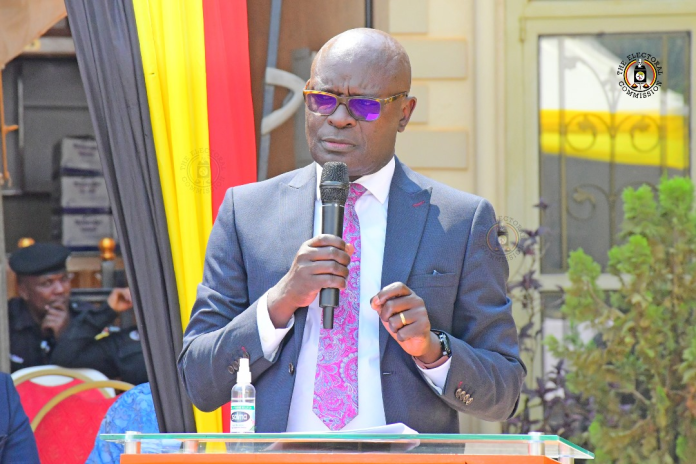
The Electoral Commission has announced that by-elections to fill the vacant Kawempe Division North parliamentary seat will be held on Thursday, 13th March 2025. This follows the passing of Hon. Ssegirinya Muhammad, whose death on 9th January 2025 left the position vacant.
Speaking during a consultative stakeholders’ meeting on Monday, 27th January 2025, Justice Simon Byabakama, Chairperson of the Electoral Commission, confirmed the timeline for the by-election and urged all participants to ensure a peaceful and credible process.
“The Electoral Commission is committed to organizing a free, fair, and transparent election. Together with all stakeholders, we must work to deliver a credible outcome,” he said.
The electoral process has already begun, with the update of the National Voters’ Register taking place from 27th to 31st January 2025. This exercise, aimed at ensuring voter eligibility and accuracy, is running alongside preparations for the 2025/2026 General Elections. Voter registration and transfers within Kawempe North will end on 31st January for the by-election, while the general update continues until 10th February.
Justice Byabakama highlighted other key dates, including the display of the Voters’ Register from 10th to 19th February, followed by the issuance of Voter Location Slips from 28th February to 13th March. Candidate nominations are scheduled for 26th and 27th February, while campaign rallies will run from 28th February to 11th March.
The Electoral Commission is also set to fill the vacant City Division Councillor seat for Kazo-Angola Ward as part of the by-election process.
Justice Byabakama emphasized the need for peaceful and lawful participation, urging political parties and candidates to abide by electoral guidelines. “Processions on public roads will not be permitted. Campaign gatherings must remain within designated venues. Violence and misconduct have no place in this process,” he stressed.
The Commission has introduced measures to ensure transparency, including training agents, accrediting observers, and inviting candidates to oversee key election preparations. Stakeholders have been urged to mobilize and educate voters to participate actively and peacefully.
The Kawempe North by-elections come at a critical time, with Justice Byabakama reiterating the Commission’s dedication to its mandate of delivering free and fair elections.
The by-election will determine the next directly-elected Member of Parliament for Kawempe North and fill the Kazo-Angola Ward councillor vacancy, with 13th March set as the decisive polling day.
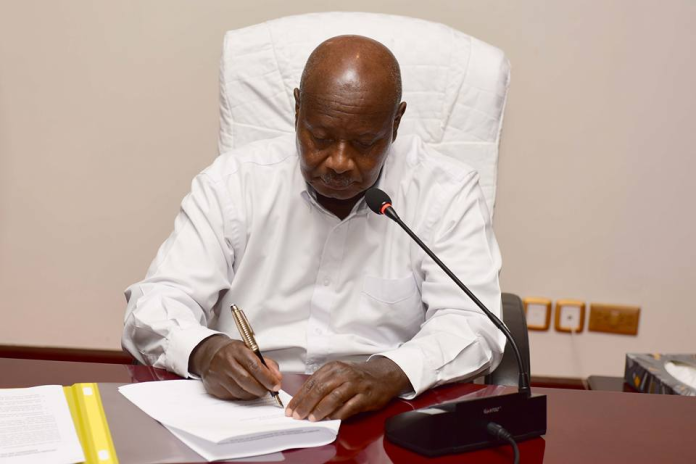
President Yoweri Kaguta Museveni has issued an Executive Order aimed at protecting Ugandan citizens’ rights and simplifying administrative processes for acquiring passports and identification documents.
Signed on January 23, 2025, the directive aims to ensure fair, lawful, and dignified treatment of all applicants by immigration officials.
The President acknowledged ongoing grievances regarding how applicants are handled, particularly concerning proof of citizenship.
“The issue of citizenship was resolved under Chapter 3 of the 1995 Constitution,” the order states, emphasizing the recognition of citizenship by birth, registration, and naturalization.
The President stressed that every Ugandan citizen has the right to a passport or travel document and the freedom to enter, leave, and return to the country without undue interference.
Under the new directive, officials from the Directorate of Citizenship and Immigration Control (DCIC) must adhere to the Citizenship and Immigration Control Act which mandates only a National Identification Number (NIN) for passport applications. Any additional requirements must be lawful, publicly disclosed and applied uniformly to all applicants. The order further emphasizes that no undue burdens should be placed on applicants, particularly those proving citizenship by birth.
The Executive Order highlights that citizenship by birth is inherent and cannot be questioned without compelling evidence. Immigration officials are directed to assume citizenship unless there is clear and reliable proof to the contrary. In cases of suspected discrepancies, the DCIC must forward such matters to the National Identification and Registration Authority (NIRA) for resolution instead of taking unilateral actions, such as confiscating identity cards. This ensures due process and protects applicants’ rights to be heard and access public services.
The President outlined the acceptable documents for identification, including birth certificates, voter’s cards, driving permits, and baptism certificates. In cases where applicants cannot produce these documents, a relative may identify them under oath through a statutory declaration as allowed by law. Letters from local authorities, such as Local Council 1 and Local Council III chairpersons, the Gombolola Internal Security Officer, or the Resident District Commissioner, will also be accepted to corroborate an applicant’s identity. If necessary, notable elders can also verify an applicant’s identity.
The directive mandates equal treatment of all applicants regardless of tribe, ethnicity, or community. It further clarifies that any individual found to have fraudulently obtained a national identification document or passport will have it revoked. However, this must be done through lawful procedures.
Museveni further directed the Minister of Internal Affairs and the Attorney General to urgently review the law regarding citizenship for children of citizens by birth and naturalization. The current law does not automatically recognize their citizenship, creating a potential anomaly that must be resolved to align with constitutional principles.
“Presently, the law does not accord automatic citizenship to children of citizens by birth and by naturalization. A citizen produces a citizen. The Minister of Internal Affairs and the Attorney General are directed to immediately have this anomaly addressed,” Museveni said.
The Executive Order is expected to restore trust in Uganda’s immigration system by prioritizing fairness, accountability, and the inherent rights of its citizens. Legal analysts and civil society groups have praised the order, describing it as a bold step toward improving public service delivery and upholding the dignity of all Ugandans.
This development comes as the government continues to address systemic challenges in the issuance of identification documents, ensuring that all processes are transparent, efficient, and aligned with the law.
The Bank of Uganda has announced that the Empire Forex Bureau is no longer authorized to operate in the foreign exchange business after the central bank declined to renew its license.
In a public notice issued on January 22, 2025, the central bank cited its decision as being in line with regulations 13(2)(a) and 13(3) of the Foreign Exchange (Forex Bureaus and Money Remittance) Regulations, 2006. These regulations govern the licensing and operational standards for forex bureaus and money remittance entities in Uganda.
The notice explicitly states, “Empire Forex Bureau is not permitted to engage in foreign exchange business with immediate effect.”
The Bank of Uganda has urged members of the public to refrain from conducting any foreign exchange transactions with the Empire Forex Bureau following the decision.
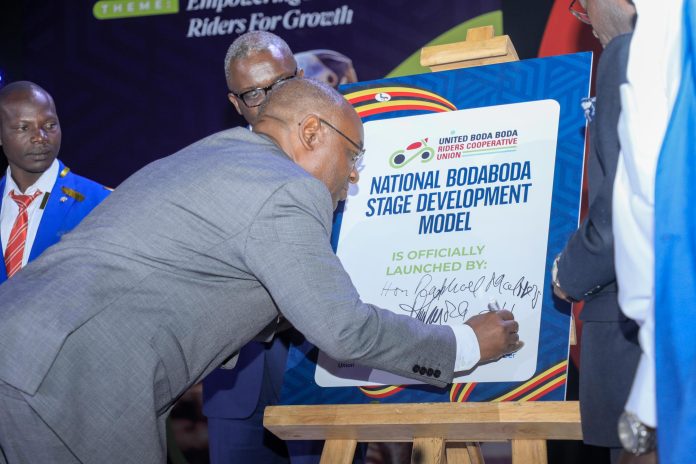
The United Boda Boda Cooperative Union has today launched the National Boda Boda Stage Development Model, an initiative aimed at unlocking the financial independence of riders. The Model is a professionalization effort featuring programs designed to streamline the industry and promote economic empowerment through their SACCO. This SACCO will also pave the way for the creation of a bank dedicated to supporting riders.
The model, themed Empowering Boda-Boda Riders for Growth, is supported by the government through the Ministry of Local Government.
The Boda Boda industry is Uganda’s second-largest employer. Available data shows there are an estimated 1.2 million Boda Boda riders in Uganda, with around 150,000 registered stages. In Kampala alone, there are 350,000 Boda Boda riders and 1,021 registered stages.
However, the industry, a key player in Uganda’s urban mobility, faces several challenges. These include poor management, high accident rates, limited access to favorable leasing and financial services, and reported high crime rates involving Boda Boda riders. According to the 2023 police report, of the 37,449 accidents reported, 37% (13,856) were Boda Boda-related. Additionally, over 15% of the 228,000 reported crimes were linked to Boda Bodas, creating a significant financial burden on the government.
To address these issues, the new model will offer riders access to financial services through the SACCO, which will eventually evolve into a bank. This initiative aims to improve livelihoods while promoting road safety, environmental sustainability, and professionalism within the industry.
Mr. Frank Mawejje, Chairman of the United Boda Boda Riders Cooperative Union, clarified misconceptions surrounding government efforts to regulate Boda Bodas. “There’s a belief that the government’s aim to gazette Boda Bodas is to eliminate the industry, but the goal is to organize it. Today, we are pleased to see these misunderstandings resolved with the launch of this model. It marks a significant step toward streamlining Boda Boda operations in the country. This initiative will enhance financial empowerment, improve traceability, and provide more operators with the economic opportunities, including the establishment of our bank,” he said.
The seven programs of the model include: Health, Road Safety, and Environment; Environment and Climate: The Union will offer incentives to encourage the adoption and use of electric Boda Bodas and advanced technology (Super Tech) within the industry; Union App where Boda Boda riders simply pay a subscription fee of 5,000shs for every seven days, granting them unrestricted access to the platform without commission deductions from their earnings. Also, the app doesn’t dictate a price, the rider has the liberty to negotiate with the passengers the price of the ride and Boda-Boda Stage SACCO where riders contribute a daily fee of Shs 1,000, creating a collective pool of funds that belongs entirely to the riders themselves. After a predetermined period set by the riders, they can withdraw their accumulated savings and reinvest it into their personal or business ventures, fostering growth and sustainability.
Raphael Magyezi, Minister of Local Government, pledged government support for the initiative, highlighting that it will enable more organized tax collection, reduce crime rates, and improve the livelihoods of Boda Boda riders. He also offered support for the establishment of the Boda Boda bank.
Amoako Sadick, a Boda Boda rider and Chairman of the Boda Boda Association in Arua City, expressed his optimism about the launch: “I am very glad about the launch of this union today—the first of its kind. I am confident that our challenges will be addressed, especially the difficulty of acquiring a Boda Boda for 4.5 million Shs, particularly in Arua. We’ve faced challenges with money lenders, as a 4.5 million Shs Boda Boda often ends up costing double due to high interest rates. Additionally, with this union, security in our area will be strengthened.”
Ms. Kobusingye Maureen, a Boda Boda rider from Fort Portal, shared her encouragement for women to join the industry: “I encourage all my fellow women to join this work to support their families. Thanks to this job, my children are doing well, and my family is thriving.”