Stanbic Bank
Stanbic Bank
18.5 C
Kampala
Stanbic Bank
Stanbic Bank
Home Blog Page 1737

Plascon Paint manager arrested

MARKET LEADER: Sadolin Paints products

Kansai Plascon Paints Sales Manager Moses Kato has been arrested by detectives in charge of media crimes, for allegedly tarnishing the image of another paint-manufacturing company, Sadolin Paints Uganda.

Police arrested Kato and interrogated him at Kabalagala police station over the weekend for spreading harmful propaganda against the oldest paint-manufacturing company in Uganda.

It is said that Kato placed adverts in the media and on social media with a message intimating that Sadolin Paints had ceased existing and instead resorted to packing paint manufactured by another company, Regal Paints.

Sadolin head of public relations Felix Adupa Ongwech, told the EagleOnline that Mr. Kato has been at this for long and that he will have to answer charges related to tarnishing the reputation of Sadolin.

“We asked police to assist us with investigating those responsible for maligning our products and indeed police took time doing their work until they arrested Kato. He will have to prove that our products are fake and are not ours as he has been alleging,” Mr Adupa said.

Sadolin is owned by AkzoNobel and was under Sadolin Paints East Africa Limited.

However, under a now contentious agreement, Kansai Plascon acquired the Sadolin East Africa Limited but the former was not supposed to manufacture, sell, market or trade until January 2018.


Stories Continues after ad

Ugandan legislator urges governments to enhance youth involvement in politics

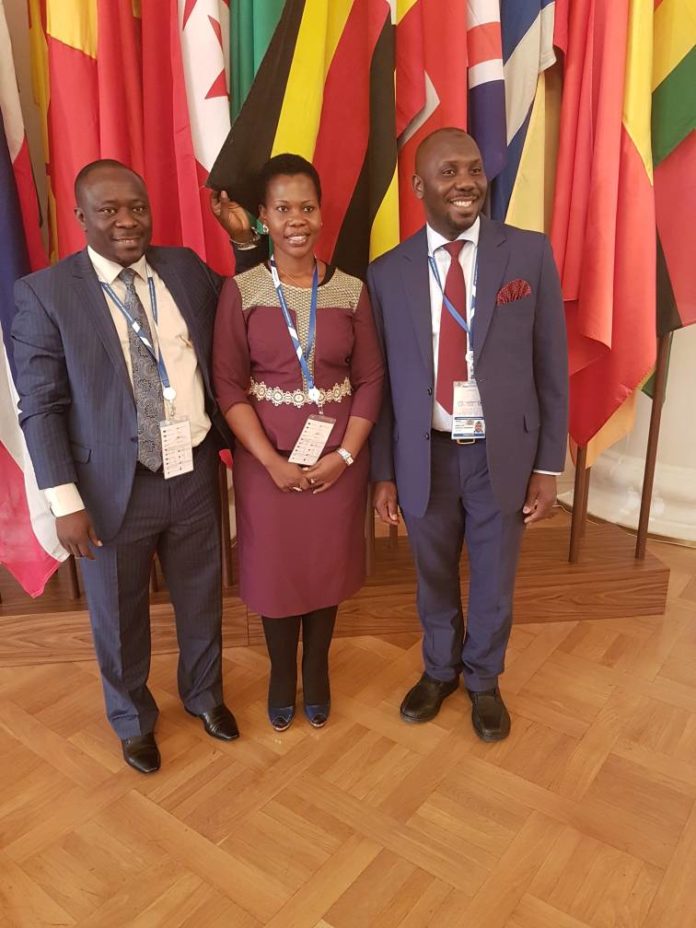
Some MPs on Uganda’s delegation to the 137th IPU Assembly in Russia

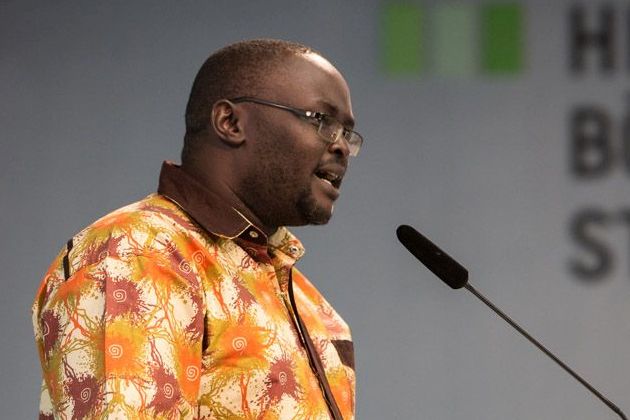
The President of the Forum of Young Parliamentarians at the Inter-Parliamentary Union, Mourine Osoru, has called on governments to provide young people with the best conditions under which they can participate in politics in order to promote social cohesion in conflict areas.

Osoru, the Arua District Woman Member of Parliament, made the call during the general debate at the ongoing 137th Inter Parliamentary Union (IPU) in St. Petersburg, Russia, that was officially opened by Russian President Vladmir Putin on Saturday..

“Governments, parliaments and international organizations are increasingly using young MPs as mediators to resolve community and other conflicts, including inter-faith and inter-ethnic conflicts,” said Osoru adding that, “here we are as young parliamentarians of the IPU, ready to work together with all of you to advance peace and harmony.”

Osoru’s presentation was in line with the theme: “Promoting cultural pluralism and peace through inter-faith and inter-ethnic dialogue.”

She said that media content showed lots of inter-ethnic and inter-faith conflict – all of which is fueled by intolerance, discrimination and inequalities in different parts of the world. Osoru recommended that governments use dialogue, tolerance, empathy, knowledge and equality as “weapons” to advance harmony in the conflict areas.

“Providing equal opportunities to all is an antidote to marginalization, alienation and radicalization. It is also a warranty of fair and sustainable development that is centred on people and that benefits all of them,” Osoru said.

She said that tolerance was not only a behavior, but a way that needed to be taught and experienced and practiced in the family and community.

“No one should be punished or abused for having a belief that is different from that of the majority. The fact of belonging to a certain ethnic group should not pre-determine a person’s place in society,” she said.

The legislator said that conditions provided by government for young people to participate in political life, should be able to make them feel that they have a voice and place in society.

According to the IPU, inter-faith and inter-ethnic dialogue is an essential component of respect of diversity and promotion of sustainable peace. According to the UNESCO Universal Declaration on Cultural Diversity, respect for the diversity of cultures, tolerance, dialogue and cooperation, in a climate of mutual trust and understanding, are the best guarantees of international peace and security.

Uganda’s delegation was led by the Speaker of Parliament Rebecca Kadaga, and included MPs Francis Mwijukye (FDC, Buhweju), Raphael Magyezi (NRM, Igara West), Judith Mukoda (Ind., Mayuge district) and Latif Ssebaggala (Ind., Kawempe North).


Stories Continues after ad

Global parliamentary meeting calls for respect of opposition’s rights

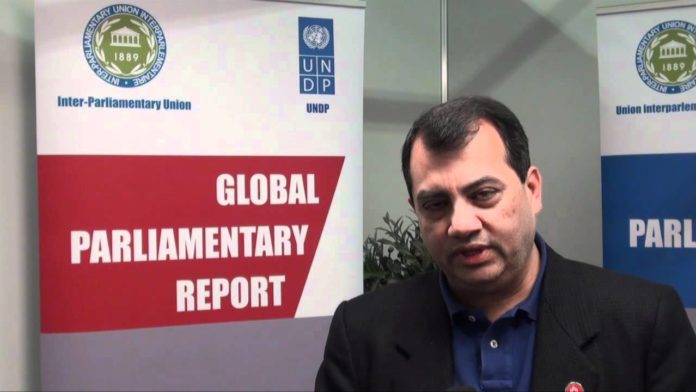
The President of the IPU, Mr. Saber Chowdhury from Bangladesh

The 137th Inter-Parliamentary Union (IPU) Assembly has opened with a call to governments to respect the rights of minorities and the Opposition.

The President of the IPU, Mr. Saber Chowdhury (Bangladesh), decried the practice of governments marginalising the Opposition and said that in some countries, other institutions or arms of government were taking on the functions of Parliament.

Citing Venezuela, Mr. Chowdhury said that the Judiciary was taking up the work of Parliament there.

“In many countries, the Opposition is marginalised. We must protect institutions and also protect the rights of minorities and the Opposition,” he said.

Russian President Vladmir Putin opened the Assembly at the ExpoForum, in St. Petersburg, Russia on Saturday, 14th Oct. 2017. The meeting attracted over 2,000 legislators, 96 Speakers/Presiding Officers and 14 Deputy Speakers.

The Speaker of Parliament, Rt. Hon. Rebecca Kadaga, led a Parliament of Uganda delegation to the 137th IPU Assembly and Related Meetings. Other MPs on the delegation include Francis Mwijukye, Maureen Osoru, Latif Ssebagala, Raphael Magyezi and Juliet Mukoda. The Clerk to Parliament Mrs. Jane Kibirige and Deputy Clerk (Parliamentary Affairs), Mr. Paul Wabwire, are also attending IPU related meetings.

Without mentioning names, Mr. Chowdhury said the IPU was grateful that the Russian government had accepted to grant visas to all participants including those from countries that have no relations.

“This is great victory for Parliamentary relations. When governments stop talking to each other, it’s important that parliamentarians continue to talk to each other (through the IPU),” said Mr. Chowdhury adding that “How can we dialogue if we cannot visit each other?”

President Putin said that the use of international law and dialogue in resolving conflict had disappeared and that imposing sanctions against legislators was counterproductive.

“Unfortunately, we see that the attempts to limit the direct contacts and communication among  lawmakers  has been made more and more often,” he said adding that “The practice of imposition of discriminatory restrictions and sanction lists, which includes lawmakers, is inadmissible and harmful.”

The 137th IPU Assembly and Related Meetings is being held in St. Petersburg, 14 – 18th Oct. 2017. At the end of the meetings, a new President of IPU will be elected to replace Mr. Chowdhury.


Stories Continues after ad

Kadaga calls for legal protection of minorities

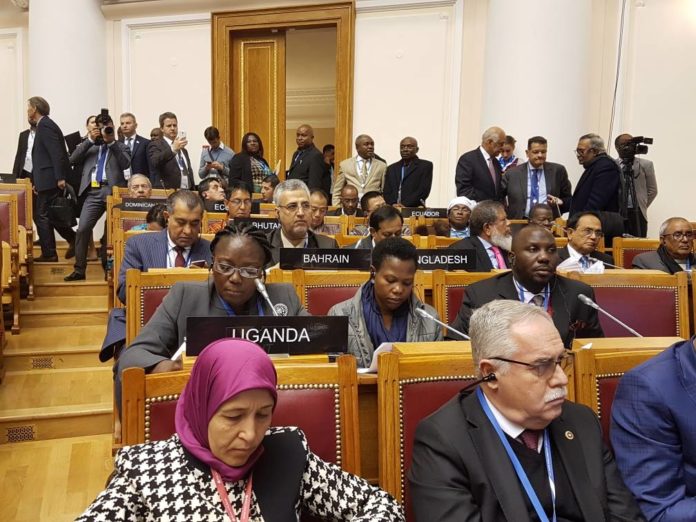
Delegates to the 137th IPU meetings in St. Petersburg, Russia, between October 14 – 18, 2017

The Speaker of Parliament, Rebecca Kadaga, has called for political and legal protection of minorities so as to ensure harmony between different faiths and ethnicities.

Speaking during the general debate at the ongoing 137th Inter-Parliamentary Union (IPU) Assembly in St. Petersburg, Russia, Kadaga said that there was need to ensure the implementation of national and international human rights instruments on equality and non-discrimination on the basis of religion and ethnicity.

Kadaga’s presentation was themed: ‘Promoting Cultural Pluralism and Peace through Inter-ethnic Dialogue: the Role of Parliaments’.

“For successful dialogue to take place, I suggest that parliamentarians remain ideal go-betweens and mediators. I think we have not exploited the full potential of inter-parliamentary democracy to resolve conflicts among our countries, beyond the initiates of the Inter Parliamentary Union,” said Kadaga, who is leading a delegation of MPs to the meetings in St. Petersburg, Russia, between October 14 – 18, 2017.

The Speaker emphasized that conflicts and violence are a function of poor and bad governance and supported the argument that conflict is inevitable in any society where some people are denied their basic human rights for identity, equality, security, dignity, participation and autonomy.

Citing Uganda’s examples, the Speaker said that the Ik, a minority group of people, is now represented in Parliament; and that there is freedom of worship in the country even when there is no state religion. She said that religious bodies had formed the Inter-Religious Council of Uganda to collectively dialogue on matters of common interest and to engage government on economic and political decision making in the country.

She also said that the Public Finance and Management Act passed by Parliament in 2015 requires government to demonstrate, through a certificate of compliance, that the national budget has been prepared and will be implemented to ensure that no body, group or community will be left behind in the delivery of services.

“Political representation of these marginalized ethnic and religious minorities must be prioritized and political and legal mechanisms for quotas and other means for the inclusion of these minorities in the political process must be ensured,” she said.

The Speaker also said that minorities should not be discriminated against during the allocation of economic opportunities, jobs and licences and that their land and settlements must be protected from encroachment by governments and big corporate firms in the name of development projects.

Kadaga also said that the Equal Opportunities Commission, a national body, was created to promote equalization of opportunities without any negative discrimination.

“It is our responsibility as leaders to use our parliamentary platform to ensure that discrimination of people on the basis of ethnicity and faith is stopped through law making and budget allocation processes,” said Kadaga.

She asked parliamentarians to recall that people with different ethnic and religious backgrounds can peacefully co-exist the way legislators assembled had co-existed. She urged parliamentarians to cherish their differences as “natural and beautiful and encourage dialogue and cross-fertilization of our various civilizations.”

The other MPs on the Parliament of Uganda delegation are: Mourine Osoru (NRM, Arua district), who is also the President of the Forum of Young Parliamentarians at the IPU; Francis Mwijukye (FDC, Buhweju), Latif Ssebaggala (Ind., Kawempe North), Juliet Mukoda (Ind., Mayuge district) and Raphael Magyezi (NRM, Igara West).


Stories Continues after ad

ActionAid to drag government to court over frozen accounts

TO DRAG GOVERNMENT TO COURT: Arthur Larok, ActionAid’s country director for Uganda

ActionAid, an international NGO whose accounts were frozen by the Bank of Uganda (BoU) on allegations of money-laundering, has vowed to drag government to court.

The BoU confirmed the closure through a statement signed by the Deputy Governor Louis Kasekende but Arthur Larok, the ActionAid Country Director for Uganda said today the organization would consider a number of options including seeking legal redress.

“We shall have a number of responses; legal response, political response and diplomatic consultation,” Arthur Larok, the ActionAid Country Director for Uganda said today.

According to Larok the freezing of the organisation’s accounts is politically motivated; a punishment for opposing the plan to have Article 102 (b) removed from the Constitution to allow anyone above 75 years to run for Uganda’s presidency.

According to Larok, security agencies have grilled him multiple times over ActionAid’s activities ever since the organisation gave opposing views on the proposed removal of age limit from the Constitution. “From all the interviews I have done with the police, that is an area they stressed,” he said, referring to the planned scrapping of the age cap. Some time back police raided the organisation’s offices, disorganizing work there. The force, which many people accuse for being partisan in favour of the NRM regime, also raided the offices of the Greal Lakes Institute for Strategic Studies (GLISS) recently.

GLISS boss Godber Tumushabe, is a government critic and strongly opposed to the removal of presidential age limit from the constitution. The bill now awaits approval of the legal committee of parliament for debate, as MPs go back to villages to consult with the electorate on the same issue.

Authorities have cracked down on the media, charities, rights activists and political opposition who have resisted the bid to amend the constitution to remove an age cap. News Editors of the Daily Monitor and Red Pepper have been summoned by police CID office over stories related to Age Limit. They are expected to appear there on tomorrow.

Recently, NRM MPs met president Yoweri Museveni in Kampala and according to the Government Chief Whip Ruth Nankabirwa, the president has rallied behind his Cabinet’s decision to have the age limit cap removed from the constitution. Opposition MPs say the move could benefit Museveni who is serving his last term office.

Museveni, 73 and in power since 1986, is inelligible to stand at the next polls in 2021, if we are to go with the current constitution.

Meanwhile Uganda’ elders recently met in Kampala and called for the respect of the Constitution, particularly Article 102 (b), saying it should be left untouched. The elders included former Prime Minister Prof. Apollo Nsibambi, former Chief Justice Samuel Wako Wambuzi, former Principal Judge James Ogoola and former minister Matthew Rukakaire.

Prof. Nsibambi while briefing the press said he expected Museveni to stand by what he said some time back that he would seek for re-election as president of Uganda when the current term ends.

Founded in 2010, the Elders Forum of Uganda (TEFU) was officially launched by Museveni in 2015.

The Forum which comprises of 13 eminent Uganda elders was founded to provide an impartial space for dialogue particularly during electoral seasons. It is envisioned as a non-state platform providing a neutral space for citizens and political actors to exchange ideas and build consensus on issues of national importance.


Stories Continues after ad

Apaa land handed over to Adjumani

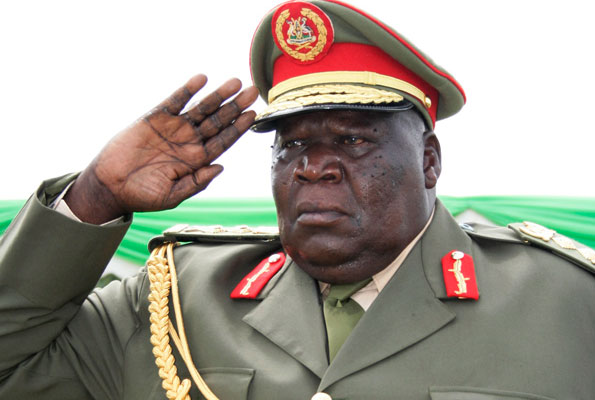
BLAMED: Gen. Moses Ali

Government has handed over the disputed 40 square kilometers of land in Apaa to Adjumani district, with sources saying the move would help ease the differences between the Acholi and Madi.

However, Gilbert Olanya, the Kilak South MP said they would reject the handover, that was officiated at by Local Government Minister Tom Butime and the State Minister for Lands Jennifer Namuyangu.

“We are not accepting the pronunciation of the minister. The decision is null and void. He should follow history,” Olanya said.

In June this year the long-running and deadly dispute saw Acholi MPs led by Olanya blame the First Deputy Prime Minister General Moses Ali, for being behind the ‘scheme’ to re-draw the boundaries of the contentious land.

Stories Continues after ad
ActionAid USA demand unfreezing its Ugandan affiliate bank accounts

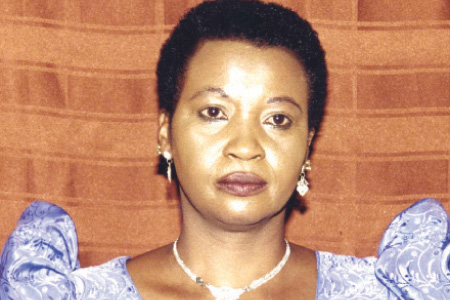
ActionAid USA Executive Director, Marie Clarke

ActionAid USA has demanded that Ugandan authorities unfreeze its affiliate ActionAid Uganda bank accounts and also end acts of intimidation against civil society in the country.

“On Thursday the Ugandan authorities closed down the bank accounts of ActionAid Uganda, preventing the organization from doing its vital work tackling poverty and injustice. The authorities also sent a letter to 25 other non-governmental organizations demanding their bank account details,” ActionAid USA Executive Director, Marie Clarke.

She added: “We will not be silent in the face of this latest attempt to suppress civic engagement, and we invite all of our allies and organizations to join us in expressing solidarity with Ugandan civil society.

According to Ms. Clarke, all Ugandans must be allowed to freely express their views for or against issues of national importance to them.

“The actions the government is taking in this case amount to criminalizing dissent and go against both Ugandan and international law,” she added.

On his part ActionAid Uganda Country Director Arthur Larok, said: “It seems that the Ugandan authorities are willing to sacrifice the needs and rights of its own citizens in order to maintain their grip on power. We must be allowed to continue to assist people living in poverty and facing marginalization. We cannot allow harm to come to ordinary people.”

The ruling party, the National Resistance Movement (NRM) wants to amend the constitution to remove the presidential age limit of 75 years of age. The move is widely seen as a way of allowing incumbent President Yoweri Museveni, 73, to stand for President again in 2021. President Museveni has already ruled Uganda 31 years.

Many individuals, organizations and MPs have themselves been protesting against this move – the authorities have responded by cracking down on civil society and preventing vital poverty reduction and civic engagement work in the country, Ms. Clarke said in press release yesterday.

She said that without access to funds, ActionAid Uganda will not be able to continue its essential work, which includes efforts to protect women against violence. This is particularly important because of a series of unexplained murders of women in and around Kampala.

This is not the first time that ActionAid has been targeted in Uganda. On September 20 and 21, approximately 20 police and state security officials entered the ActionAid Uganda Head Offices in Kansanga, Kampala. All staff in the office were prevented from leaving for several hours as the police thoroughly searched the premises. They removed some documents and confiscated the personal cell-phones of some staff and official laptops. They also raided the offices of two of ActionAid Uganda’s local partners.

Mr Larok and Director of Finance, Bruno Ssemaganda were summoned by police for interrogation on October 10 and 11. Although both were released without charge, ActionAid subsequently found that its major bank accounts had been closed down. “The personal bank accounts of some of its staff have also been frozen,” she says.

The police claim that ActionAid Uganda has been involved in ‘illegal activities’ including money laundering. “ActionAid believes that the office raid, police interview and the freezing of its bank accounts are part of a wider crackdown against legitimate protests against the plan to remove the presidential age limit from the Ugandan Constitution, which would allow the current president to remain in power indefinitely,” Ms. Clarke said.


Stories Continues after ad

Onduparaka FC sign Shs390m sponsorship deal with MTN

Val Oketcho, the MTN Corporate Communications Manager, with Ayivu County MP Bernard Atiku and club official Benjamin Nyakuni ( in green T-shirt).

Onduparaka Football Club has today signed a Shs390 million sponsorship deal with MTN Uganda.

Val Oketcho, the MTN Corporate Communications manager who represented MTN Chief Executive Officer Wim van Helleputte, said the company is committed to supporting sports development in Uganda, adding that MTN logo will appear on the new Onduparaka FC jerseys.

“It gives us great honour to be part of Onduparaka FC because we believe that sports shouldn’t only concentrate in Kampala,” Oketcho said at Desert Breeze Hotel in Arua before announcing the sponsorship deal. He added: “The Sponsorship we are offering today is an Investment for us and for you as Onduparaka FC.”

Recently, MTN signed a Shs430 million sponsorship deal with KCCA for the 2017/2018 season, and the Onduparaka FC deal brings the total sponsorship to the two teams stands at Shs820 million.

At the signing Onduparaka patron, Ayivu County MP Bernard Atiku applauded MTN for the ‘generous sponsorship’, adding that the partnership will ‘bring out the best of West Nile’.

Meanwhile, the Arua-based football club will today face Soana in the Azam Uganda Premier League at the Onduparaka’s Green Lights Stadium in Arua.

The club has only played two seasons in the AUPL after it was promoted from the FUFA Big League in the 2015/ 2016 season.


Stories Continues after ad

African women parliamentarians should task governments to eliminate FGM

Anifa Kawooya, the Deputy Chairperson of the PAP Women’s Caucus

Women legislators in Africa have been urged to step up advocacy and oversight efforts to eliminate Female Genital Mutilation (FGM). Given their representative, legislative and oversight roles, legislators are seen as better placed to mobilise communities to stop the vice.

Statistics indicate that more than 200 million girls and women have undergone FGM and an estimated 86 million girls worldwide are at risk of undergoing the practice by 2030.

“As elected leaders, we are at the forefront of finding solutions that afflict the continent, in particular those related to peace, security and female genital mutilation,” said Baleka Mbete, the Speaker of the National Assembly of South Africa. Baleka said FGM is a form of gender based violence that infringes on rights and freedom of girls and women.

She tasked legislators to hold their governments to account so that they take up measures to eliminate FGM. Baleka was the guest of honour at the 10th Pan African Parliament Annual Women’s Conference taking place in Midrand, South Africa from 12-13 October 2017. The women’s conference is running under the theme: “The role of parliamentarians in promoting international and regional human rights instruments relating to women and youth, peace and security, and female genital mutilation, to achieve the demographic dividend.”

In his opening remarks, PAP President Roger Nkodo Dang said various instruments have been put in place to address human rights and gender equality for example the Universal Declaration of Human Rights, the Convention on the Elimination of all forms of Discrimination Against Women, the Convention on the Rights of the Child among others.

Nkodo said engaging men and boys in the elimination of FGM is key. He was glad to note that 24 African countries had adopted national laws that penalise the practice of FGM.

He was quick to highlight however, the challenges the continent has to grapple with in regard to enforcement of laws.

“Gender based discrimination and violence continues to plague most societies and too often laws are not enforced or fail to protect women and girls from harmful practices such as child marriages and FGM,”Nkodo said.

According to Hon. Anifa Kawooya, who is also the Deputy Chairperson of the PAP Women’s Caucus, while Uganda is one of the 29 African countries where FGM is practiced, it has enacted a law criminalizing FGM.

“The only concern now is the low levels of implementation. There is need to involve everybody including our cultural leaders to stop this vice and we should complement this through advocacy and raising awareness about this vice,” she said, adding that “Men are still the decision makers in most of the African communities and play a big role in ending this negative cultural practice against women.”

The annual women’s conference brought together national and regional women parliamentarians, civil society groups and other stakeholders to deliberate and identify possible strategies and measures to fast track the ratification and domestication of the African Union legal instruments, particularly the Protocol to the African Charter on Human and Peoples Rights on the Rights of Women in Africa.


Stories Continues after ad

Age Limit debate: BOU freezes ActionAid bank accounts

TO DRAG GOVERNMENT TO COURT: Arthur Larok, ActionAid’s country director for Uganda

The Bank of Uganda has frozen bank accounts of ActionAid Uganda, a prominent non-government organisation on allegations that its officials are involved in money laundering.

The Bank of Uganda confirmed the closure through a statement signed by the Deputy Governor Louis Kasekende.

However, Arthur Larok, ActionAid’s country director for Uganda, says the closure is politically motivated; a punishment for opposing the plan to have Article 102 (b) removed from the Constitution to allow anyone above 75 years to run for Uganda’s presidency.

“There are allegations that we are conspiring to commit a felony and that we are involved in money laundering,” said Arthur Larok, ActionAid’s country director for Uganda.

According to Larok, security agencies have grilled him multiple times over ActionAid’s activities ever since the organisation gave opposing views on the proposed removal of age limit from the Constitution. “From all the interviews I have done with the police, that is an area they stressed,” he said, referring to the planned scrapping of the age cap.

After freezing the accounts, Larok said Standard Chartered Bank told them it was acting on orders from the central bank.

The StanChart brand and marketing, manager Cynthia Mpanga, when asked about the development, confirmed the ActionAid accounts had been blocked for reasons ‘Bank of Uganda can better explain’.

Some time back police raided the ActionAid offices, disorganizing work there. The force, which many people accuse for being partisan in favour of the NRM regime, also raided the offices of the Greal Lakes Institute for Strategic Studies (GLISS) recently.

GLISS boss Godber Tumushabe, is a government critic and strongly opposed to the removal of presidential age limit from the constitution. The bill now awaits approval of the legal committee of parliament for debate, as MPs go back to villages to consult with the electorate on the same issue.

Authorities have cracked down on the media, charities, rights activists and political opposition who have resisted the bid to amend the constitution to remove an age cap. News Editors of the Daily Monitor and Red Pepper have been summoned by police CID office over stories related to Age Limit. They are expected to appear there on Monday.

Yesterday NRM MPs met president Yoweri Museveni in Kampala and according to the Government Chief Whip Ruth Nankabirwa, the president has rallied behind his Cabinet’s decision to have the age limit cap removed from the constitution. Opposition MPs say the move could benefit Museveni who is serving his last term office.

Museveni, 73 and in power since 1986, is inelligible to stand at the next polls in 2021, if we are to go with the current constitution.

Meanwhile, Uganda’ elders met in their forum yesterday in Kampala and have urged for the respect of the constitution, particularly saying Article 102 (b) should be left untouched. They included former Prime Minister Prof. Apollo Nsibambi, for Chief Justice Wako Wambuzi and former Principal Judge James Ogoola. Others included former minister Matthew Rukakaire.

Prof. Nsibambi while briefing the press said he expected Museveni to stand by what he said some time back that he would seek for re-election as president of Uganda when the current term ends.

The Elders Forum of Uganda (TEFU) was officially launched by Museveni in 2015 much as it was founded in 2010.

The Forum which comprises of 13 eminent Uganda elders was founded to provide an impartial space for dialogue particularly during electoral seasons. It is envisioned as a non-state platform providing a neutral space for citizens and political actors to exchange ideas and build consensus on issues of national importance.


Stories Continues after ad