Stanbic Bank
Stanbic Bank
18.8 C
Kampala
Stanbic Bank
Stanbic Bank
Home Blog Page 174

Why Trump announced US’ withdraw from World Health Organization

President-Donald-Trump

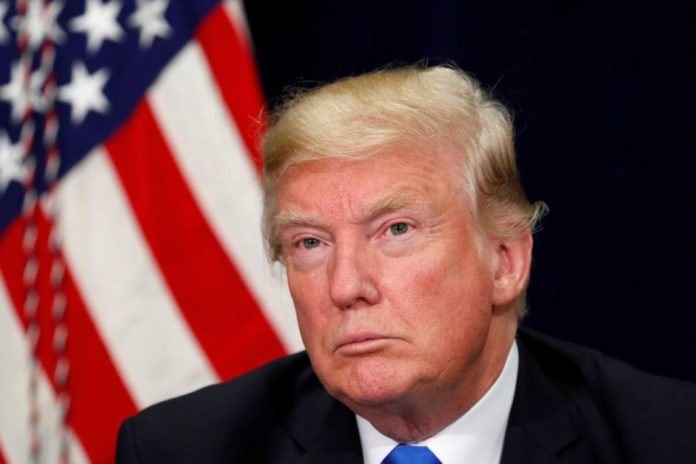
The United States will leave the World Health Organization, President Donald Trump said, noting that the global health agency had mishandled the COVID-19 pandemic and other international health crises.
Trump said the WHO had failed to act independently from the “inappropriate political influence of WHO member states” and required “unfairly onerous payments” from the U.S. that were disproportionate to the sums provided by other, larger countries, such as China.


“World Health ripped us off, everybody rips off the United States. It’s not going to happen anymore,” Trump said at the signing of an executive order on the withdrawal, shortly after his inauguration to a second term.


The WHO said on Tuesday that it regretted the move from its top donor country.
“We hope that the United States will reconsider, and we really hope that there will be constructive dialogue for the benefit of everyone, for Americans but also for people around the world,” WHO spokesperson Tarik Jasarević said.
The move sets a 12-month notice period for the U.S. to leave the United Nations health agency and stop all financial contributions to its work. The United States is by far the WHO’s biggest financial backer, contributing around 18% of its overall funding. WHO’s most recent two-year budget, for 2024-2025, was $6.8 billion.
The U.S. departure is likely to put at risk programs across the organization, according to several experts both inside and outside the WHO, notably those tackling tuberculosis, the world’s biggest infectious disease killer, as well as HIV/AIDS and other health emergencies.
Trump’s order said the administration would cease negotiations on the WHO pandemic treaty while the withdrawal is in progress. U.S. government personnel working with the WHO will be recalled and reassigned, and the government will look for partners to take over necessary WHO activities, according to the order.
The government will review, rescind, and replace the 2024 U.S. Global Health Security Strategy as soon as practicable, the order said.
The next-largest donor to the WHO is the Bill and Melinda Gates Foundation, although most of that funding goes to polio eradication. Its chief executive Mark Suzman said on X that the foundation would continue to make the case to strengthen not weaken the WHO. The next-largest state donor is Germany, which contributes around 3% of the WHO’s funding. Germany’s health minister said on Tuesday Berlin hoped to talk Trump out of the move.
When asked about Trump’s decision and remarks, China’s foreign ministry told a regular press briefing on Tuesday that the WHO’s role in global health governance should only be strengthened, not weakened.
“China will continue to support the WHO in fulfilling its responsibilities, and deepen international public health cooperation,” said Guo Jiakun, a ministry spokesperson.
Trump’s withdrawal from the WHO is not unexpected. He took steps to quit the body in 2020, during his first term as president, accusing the WHO of aiding China’s efforts to “mislead the world” about the origins of COVID.
WHO vigorously denies the allegation and says it continues to press Beijing to share data to determine whether COVID emerged from human contact with infected animals or due to research into similar viruses in a local laboratory.
Under U.S. law, leaving the WHO requires a one-year notice period, and the payment of any outstanding fees. Before the U.S. withdrawal could be completed last time, Joe Biden won the presidential election and put a stop to it on his first day in office on Jan. 20, 2021.

Stories Continues after ad

WHO support for Tanzania’s response to suspected Marburg virus disease outbreak

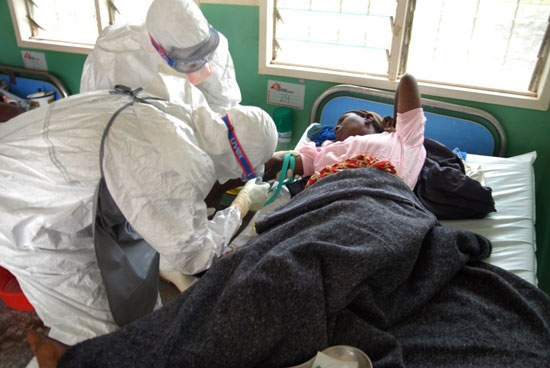
Following reports of suspected cases of viral haemorrhagic fever in Tanzania, World Health Organization (WHO) has enhanced its readiness to support the government as it takes measures to investigate and respond swiftly to the situation.


The national health authorities have deployed a team of experts to Kagera region, in the north-west of the country, where the suspected cases have been reported. WHO is mobilizing technical expertise and logistical supplies to support these ongoing efforts. Early notification of the outcome of the investigation is crucial in facilitating swift response.


“We stand ready to support the government in its efforts to investigate and ensure that measures are in place for an effective and rapid response,” said Dr Matshidiso Moeti, WHO Regional Director for Africa.
“With the existing national capacities built from response to previous health emergencies, we are able to swiftly scale up efforts to protect communities as well as play our advocacy role for international support and solidarity.” he said.


WHO does not recommend any travel and trade restrictions with Tanzania at this time.
Tanzania previously reported an outbreak of Marburg in March 2023  the country’s first  in Kagera region. Strong measures enabled the outbreak to be controlled and declared over in less than two months.
Marburg virus disease is highly virulent and causes haemorrhagic fever. It belongs to the same family as the virus that causes Ebola virus disease. Illness caused by Marburg virus begins abruptly. Patients presents with high fever, severe headache and severe malaise. They may develop severe haemorrhagic symptoms within seven days.


The virus is transmitted to people from fruit bats and spreads among humans through direct contact with the bodily fluids of infected people, surfaces and materials. Although several promising candidate medical countermeasures are currently undergoing clinical trials, there is no licensed treatment or vaccine for effective management or prevention of Marburg virus disease.

However, supportive care rehydration with oral or intravenous fluids  and treatment of specific symptoms, improve survival.
In the African region, previous outbreaks and sporadic cases have been reported in Angola, the Democratic Republic of the Congo and Rwanda.

Stories Continues after ad

EACOP Signs MoU with Kyambogo University to Offer Specialized Training in Oil and Gas

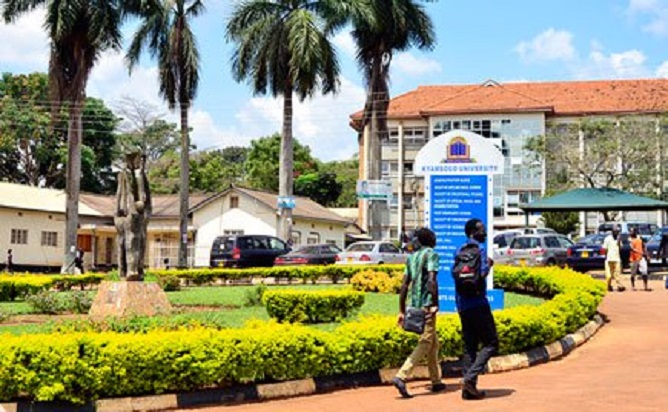
Kyambogo University main building.

The East African Crude Oil Pipeline (EACOP) has signed a Memorandum of Understanding (MoU) with Kyambogo University to provide specialized training in oil and gas. The MoU aims to establish a framework for collaboration between the two parties, supporting the realization of National Content Capacity Building initiatives.


To date, at least 128 graduate trainees from Uganda and Tanzania have benefitted from tailored training, exposure, and on-the-job experience through the Graduate Training Program. Additionally, 13 “Train the Trainer” sessions have been conducted, both virtually and in-person, by EACOP and its contractors.
EACOP Ltd. is the project company established to develop, build, and operate a pipeline system that will transport crude oil from Kabaale in Uganda to the port of Tanga in Tanzania. Due to the scale and complexity of the project, multiple national and international contractors and suppliers are involved in various aspects of construction and the provision of specialized equipment for the pipeline.


To promote National Content, all EACOP's Tier-1 contractors and suppliers are committed to collaborating with EACOP to support capacity-building efforts among Ugandan recent graduates, technicians, instructors, professors, and lecturers from tertiary and vocational training institutions.
These commitments will be realized through two main Capacity Building initiatives: Internship and Graduate Training Programs: Trainees will receive training and work exposure with EACOP’s suppliers and contractors, gaining hands-on experience in various aspects of the project aligned with their disciplines.


Train the Trainer Programs: These sessions will be delivered by EACOP’s contractors and suppliers to share knowledge across various engineering disciplines and vocational skills related to the project.
The MoU also highlights EACOP’s prior collaborations with institutions such as UPIK and Makerere University, as well as professional bodies like the Institute of Surveyors of Uganda, to support the onboarding of graduate trainees and interns with EACOP’s contractors, suppliers, and internal departments.

Stories Continues after ad

NUP Drops Mpuuga as Vice President for Buganda Region

Mr Mathias Mpuuga.

The National Executive Committee (NEC) of the National Unity Platform (NUP) has appointed Butambala County MP Muhammad Muwanga Kivumbi as the new Deputy President for the Buganda Region, replacing Mathias Mpuuga. Mpuuga’s removal from the position comes after he was reportedly involved in a corruption scandal. According to NUP Secretary General, Mpuuga has since left the party.

On March 15, 2024, NUP President Robert Kyagulanyi Ssentamu, also known as Bobi Wine, publicly addressed the issue, stating that Mpuuga, along with Speaker Anita Among and other parliamentary commissioners, had been implicated in a scandal involving the misallocation of Shs 500 million. “It was an allegation that Mpuuga, together with Speaker Anita Among, among other commissioners, wrongfully awarded himself Shs 500 million. This was disturbing. After what I considered credible evidence came to light, I convened a meeting with all my deputy presidents and party leadership, including the Secretary General, Deputy Secretary General, and other prominent leaders,” Bobi Wine explained.

During this meeting, Mpuuga admitted his involvement in the wrongdoing, acknowledging that he had wrongfully awarded himself the funds. He also recognized that this money was supposed to be passed to the holder, not to individuals before or after him. “We advised him to honorably return the money, as it is dirty money, apologize to the nation, and resign from his commission role to demonstrate goodwill and integrity. We await to see whether Mpuuga will heed this advice and take the moral action recommended,” Bobi Wine added.

The meeting resolved that should Mpuuga do the right thing by dissociating from corruption, apologizing to the Ugandan people, and resigning from the commission, the party would consider rehabilitating him and reassessing the situation. However, the decision ultimately rests with Mpuuga’s actions.

On March 18, 2024, NUP Secretary General Lewis Lubongoya formally petitioned Speaker Anita Among regarding the party’s decision to recall Mpuuga. He noted that although Mpuuga had responded to NEC’s request to explain why he should not be recalled, his explanations were insufficient and did not address the serious accusations against him.

“NEC has resolved to recall Mathias Mpuuga from the Parliamentary Commission on the grounds of corruption, dishonesty, and abuse of office, and to notify Parliament accordingly. NEC further resolved to nominate Zaake Francis Butebi as a new Parliamentary Commissioner,” Lubongoya said.

In response, Speaker Among clarified that Parliamentary Commissioners are elected by Parliament, and parties only play a role in nominating candidates. Once elected, commissioners no longer represent party interests but serve Parliament as a whole. “Once elected by Parliament, the commissioners cease to serve individual party interests and instead serve Parliament. They can only vacate their positions or be removed in accordance with the law,” Among said. She further explained that the process of removing a commissioner requires a motion initiated by at least one-third of the voting members of Parliament. Given the total membership of 529, this would require the support of no less than 177 MPs.

She also stated that Mpuuga had neither vacated his seat as an MP nor been found guilty by Parliament of misconduct, incompetence, or any other reasons that would warrant removal from the commission. Since the controversy, Mpuuga and the NUP leadership have been at odds.

Stories Continues after ad

DPP rejects proposal to take over cases in General Court Martial

DPP, Justice Jane Frances Abodo.

The Director of Public Prosecution (DPP), Frances Abodo, has rejected proposals from some Members of Parliament (MPs) to consider taking over cases of civilians charged before the General Court Martial.


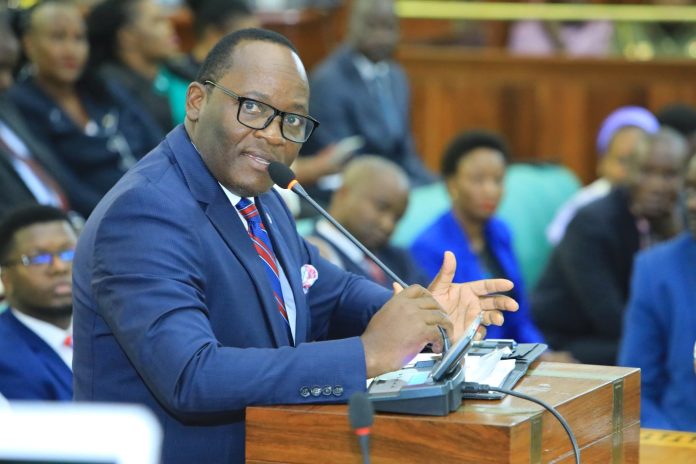
While appearing before the Legal and Parliamentary Affairs Committee to present the 2025/26 Budget Framework Paper for the Directorate of Public Prosecution, Abodo stated that the Constitution prohibits her from intervening in proceedings at the Court Martial.


“I can’t institute or take over cases under the Court Martial. We have reviewed this, and I just want to stay in my lane. Please forgive me, but I cannot comment on this case, as it is currently before the Supreme Court. Any comment I make might result in misquotation, and the subjudice rule would apply,” Abodo said.
Abodo's comments came in response to a query from Bugiri Municipality MP Asuman Basalirwa, who had asked the DPP to consider taking over cases involving civilians charged before the Court Martial. Abodo firmly rejected the suggestion, citing Article 120 of the Constitution, which outlines the duties of the DPP.


Basalirwa, however, expressed a differing interpretation of Article 120. “While the Constitution stipulates that the DPP can institute cases in all courts except the Court Martial, we believe that the Constitution permits the DPP to take over and discontinue proceedings at the Court Martial. We invited her to reconsider this provision and see whether her office can intervene in cases involving civilians,” Basalirwa said.
This request comes at a time when former presidential candidate Dr. Kizza Besigye and his co-accused, Hajj Obedi Kamulegeya, are facing treason and terrorism charges in the General Court Martial. Dr. Besigye and Kamulegeya are also charged with unlawful possession of firearms at Riverside Apartments in Nairobi, Kenya, as well as allegedly holding meetings in Greece and Switzerland with the intent to undermine the security of the Ugandan army.
The two men were reportedly abducted in November while in Nairobi, where they had attended a book launch hosted by Kenyan opposition politician and lawyer Martha Karua. Karua is currently in Uganda, leading a team of 50 lawyers defending Dr. Besigye and Hajj Kamulegeya.

Stories Continues after ad

Finance Ministry releases shs15tn for third quarter gov’t expenditure

The Ministry of Finance, Planning and Economic Development has released Shs15.64 trillion as the government’s expenditure for the third quarter of the current 2024/25 financial year.

Finance Ministry Permanent Secretary Ramathan Ggoobi, revealed that by end of December 2024,the government had collected domestic revenues amounting to Shs 15.33 trillion against a target for the half year of Shs 15.01 trillion, implying a cumulative surplus of Shs 326.83 billion.

Ggoobi said that the ministry is finalizing full transfer of budget functions for institutions affected by the RAPEX process and upon approval by Parliament; the budgets will be transferred to the host institutions.

He also said the Q3 Expenditure Limits for FY 2024/25 were derived from the quarterly Work Plans and Procurement Plans of Ministries, Departments, and Agencies, taking into consideration the projected resource inflows.

“For this Quarter (January — March 2025), Shs 15.64 trillion, has been released representing 21.68% of the approved budget,” he said.

Of this, Shs 2.044 trillion to cater for wages and salaries across Government, Shs 283.28 billion for Pension and Gratuity and Shs 308.75 billion to Local Governments.

Of this, Shs 112.28 billion is Education Capitation grants to cater for the first term of the school year and Shs 36.6 billion for health institutions under the Local Governments.

For Wealth creation funds, Shs 529 billion is for Parish Development Model (PDM), Shs 30 billion for Uganda Development Bank and Shs 31 billion for Uganda Development Corporation.

A total of Shs 92.75 billion has been released to all Public Universities, Uganda Management Institute and Law Development Centre in line with Semester two requirements.

 Shs 45.77 billion has been allocated to the Ministry of Gender, Labour and Social Development to cater for the operational budget as well as subventions under the Ministry including the Social Assistance Grants for Empowerment.

For Health institutions,  Shs 35.9 billion is for Referral Hospitals including Mulago and Butabika Hospitals Shs 6.84 billion for Uganda Cancer Institute; Shs 7.52 billion for Uganda Heart Institute; Shs 5.78 billion for Uganda Blood Transfusion Services; Shs21.85 billion is to cater for subventions under Ministry of Health; Shs 110.65 billion has been released to National Medical Stores (NMS) for the purchase of essential drugs and medicine. Cumulatively, this brings the amount so far released to NMS to Shs 584.08 billion (85% of the approved budget).

For Security institutions, the Ministry of Defence and Veteran Affairs takes Shs 348.3 billion;  Uganda Police Force — Shs 83.38 billion; Uganda Prisons Services — Shs 40.11 billion; the Internal Security Organisation — Shs 28.08 billion; and, External Security Organisation — Shs 18.71 billion.

For ATMS votes under Agro-industrialization, Shs 15.73 billion is for interventions under the Ministry of Agriculture, Animal Industry and Fisheries (MAAIF), National Agricultural Research Organization (NARO) and National Animal Genetic Resource Centre and Data Bank (NAGRC&DB). Of this Shs 3 billion is for Dairy Development Authority (DDA), National Agricultural Advisory Services (NAADS), Cotton Development Organization and Uganda Coffee Development Authority (UCDA) but await Parliamentary approval for more the funds to MAAIF.

For Tourism development, Shs 34.05 billion has been released for Ministry of Tourism, Wildlife and Antiquities and Uganda Tourism Board; Mineral-Based Industrial Development including oil and gas (M): Shs 63 billion is for Uganda National Oil Company (UNOC) and Shs 4.65 billion under Petroleum Authority of Uganda.

For Science, Technology and Innovation including ICT, Shs 85 billion is for interventions under Science, Technology and innovation, Ministry of ICT and National Guidance and National Information Technologies Authority.

Parliament has been allocated Shs 166.51 billion,  Judiciary — Shs 58.23 billion; Auditor General — Shs 16 billion; and Missions Abroad — Shs 115 billion (this brings their total release to 100%).

National Citizenship and Immigration Control has been allocated  Shs 16.05 billion; Uganda Registration Services Bureau —Shs 5.26 billion; National Lotteries and Gaming Board — Shs 2.08 billion; and Uganda National Bureau of Standards — Shs 1.64 billion.

A total of Shs 3.314 trillion has been provided to cater for the development requirements i.e. both GoU and External financing.

For ATMS  Agro-industrialization — Shs 52.30 billion is for interventions under the Ministry of Agriculture, Animal Industry and Fisheries, National Animal Genetic Resource Centre and Data Bank (NAGRC&DB) and under National Agricultural Research Organization (NARO). Funds meant for Dairy Development Authority (DDA) and Uganda Coffee Development Authority (UCDA) will be transferred to MAAIF after Parliamentary approval.

For tourism development — Shs 4.66 billion is for ongoing projects in Ministry of Tourism, Wildlife and Antiquities i.e. development of Source of the Nile project; for Science, Technology and Innovation including ICT, Shs 40.92 billion is for interventions under Ministry of ICT and National Guidance and National Information Technologies Authority.

Ministry of Defence and Veteran Affairs will get Shs 469.16 billion; Uganda Police Force — Shs 78.89 billion for construction of new apartment blocks in Naguru and Kotido, contractual obligations for intelligence systems and classified assets; State House — Shs 5.43 billion; Uganda Prisons Service — Shs 3.54 billion for seed production, completion of two silo storage facilities and construction of prisoners and staff accommodation; while the Directorate of Government Analytical Laboratory (DGAL)  has been allocated Shs 3.93 billion for the completion of the DNA bank and pending certificates.

For the Ministry of Works and Transport — Shs 396.55 billion is for the implementation of Standard Gauge Railway, Meter Gauge Railway, Kabalega International Airport and Bukasa Port projects.

The Ministry of Energy and Mineral Development has been allocated Shs 243.34 billion to cater for Rural electrification, transmission lines, capacity charges for ElectroMax (Shs 5.5 billion) and mineral development.

The Ministry of Kampala Capital City and Metropolitan Affairs has been allocated Shs 111.58 billion for the implementation of the Greater Kampala Urban Development Project.

A total of Shs 124.45 billion has been allocated to Ministry of Education and Sports for the Uganda Secondary School Expansion Project (USEEP), refugee skilling project and other contractual obligations; while Shs 15.95 billion for capital development under universities;

Shs264.71 billion will go to the Ministry of Health. Part of these funds will support Global Alliance for Vaccines and Immunization (GAVI), Global Fund and outstanding contractual obligations.

 Shs43.42 billion is for contractual obligations under Uganda Cancer Institute and Uganda Heart Institute. Regional hospitals have been allocated Shs 6.85 billion; Local Governments — Shs 231.64 billion to support the upgrading of Health Centre Its to Health Centre Ills; completion of seed secondary schools and micro scale irrigation projects.

Accounting Officers have been directed to prioritise payment of service providers on time. “Accounting Officers should stop committing to the government without a budget and businesses should not provide a service to any government entity without a budget,” Ggoobi said.

Stories Continues after ad

Ministry of Health Destroys COVID-19 Vaccines, ARVs, and Test Kits Worth Shs 316.65 Billion

Belgium donates 153,900 Covid-19 vaccines to Uganda

The Auditor General, Edward Akol, has raised concerns about the overpayment of pensioners in both pension and gratuity schemes. He issued this warning while presenting the 2023/24 Annual Auditor General’s Report to Parliament this morning, revealing that the government overpaid several pensioners by approximately Shs 31.2 billion in pension and gratuity.
“The pension system audit has uncovered significant issues that require immediate attention. I noted that 1,502 pensioners were overpaid gratuity benefits amounting to Shs 22.3 billion. These overpayments occurred in 19 Ministries, Departments, and Agencies (MDAs), as well as 115 Local Governments. Additionally, 2,193 pensioners were overpaid pension benefits by Shs 8.9 billion across 23 MDAs and 104 Local Governments,” Akol said.


The Auditor General also warned that without reforms in the government’s pension sector, Ugandan taxpayers could be burdened with a pension and gratuity bill of over Shs 4.5 trillion by 2034.
The report further revealed that the Ministry of Health destroyed COVID-19 vaccines, ARVs, and test kits worth Shs 316.65 billion in the 2023/24 financial year. This marked a significant increase from the Shs 33 billion worth of drugs destroyed in the previous financial year (2022/23).


“In the health sector, there are serious challenges related to the expiration of medical supplies. The government had to write off Shs 316.65 billion worth of COVID-19 vaccines, ARVs, and test kits, a sharp rise from the Shs 33 billion last year. This represents a substantial waste of resources that could have been better utilized to address other urgent healthcare needs,” Akol noted.

Stories Continues after ad
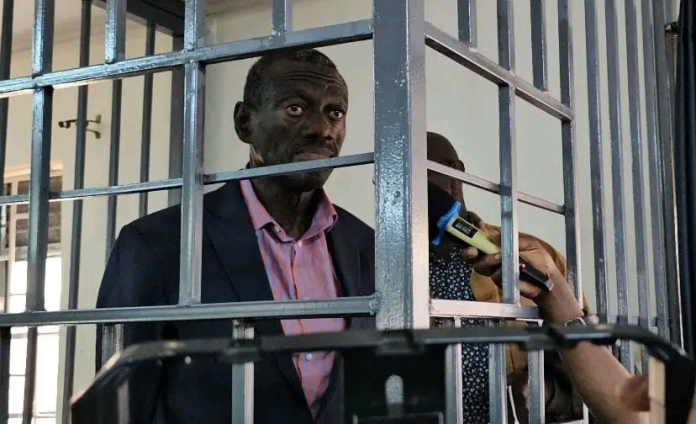
Besigye declines to plead in new charges against him

Kizza Besigye at court martial.

Former presidential candidate Dr. Kizza Besigye and his co-accused, Hajj Obedi Kamulegeya, have declined to take a plea on the treason charges against them.
Dr. Besigye and Hajj Kamulegeya are facing multiple charges, including possession of firearms at Riverside Apartments in Nairobi, Kenya, as well as allegedly holding meetings in Greece and Switzerland with the intent to undermine the security of the Ugandan army.


The two were reportedly abducted last month while in Nairobi, Kenya, where they had attended a book launch hosted by Kenyan opposition politician and lawyer Martha Karua. Karua is currently in Uganda, leading a team of 50 lawyers defending Dr. Besigye and Hajj Kamulegeya.


On Monday, during their appearance before Brigadier General Freeman Mugabe, the prosecution, led by Colonel Raphael Mugisha, sought to amend the charge sheet to introduce new charges, naming Captain Denis Ola, a serving officer attached to the Armoured Brigade, as a suspect.
When Dr. Besigye and his co-accused appeared before Brigadier General Robert Freeman Mugabe, Chairman of the General Court Martial, they declined to enter pleas on the charges of treason. Besigye also requested that his case be referred to the Constitutional Court, arguing that the matters involved are already part of a pending appeal before the Supreme Court.


During the trial, Dr. Besigye sought clarification on why he is being tried in a military court and questioned the court’s jurisdiction over cross-border offenses. Despite these concerns, the court, chaired by Brigadier General Freeman Mugabe, ruled that Dr. Besigye and Hajj Kamulegeya must enter pleas on the treason charges.
The court ultimately recorded a plea of not guilty, noting that proceedings will continue despite objections from Besigye’s lawyers, who argue that the move is unconstitutional.

Stories Continues after ad
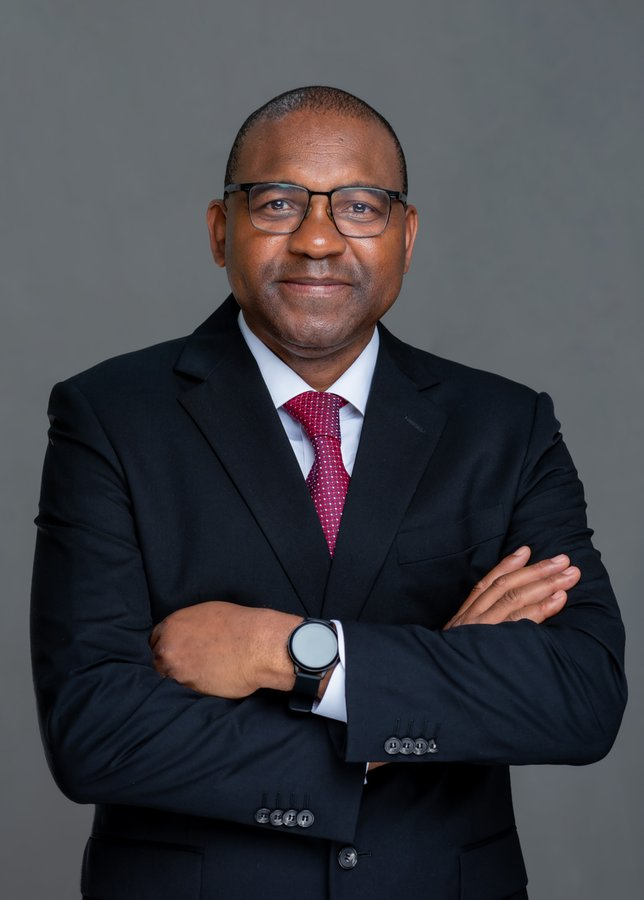
Gift Shoko Appointed Managing Director of Equity Bank Uganda

Equity Bank Uganda has announced the appointment of Gift Shoko as its new Managing Director, subject to the approval of the Bank of Uganda. This appointment was confirmed by Mark Ocitti, Board Chairman of Equity Bank Uganda Limited.


Shoko takes over from Anthony Kituuka, who resigned from the position. Ocitti expressed confidence in Shoko’s leadership abilities, stating, “On behalf of the Board and Management of Equity Bank Uganda, I am pleased to announce the appointment of Gift Shoko as the new Managing Director, subject to regulatory approval.”


Ocitti further emphasized Shoko’s extensive experience, noting his proven track record in banking, corporate strategy, and digital transformation. “Shoko’s expertise aligns perfectly with our mission to deliver innovative and inclusive financial solutions to our customers. We are confident that under his leadership, Equity Bank Uganda will strengthen its commitment to enhancing customer experience and expanding our reach across Uganda,” Ocitti added.
Shoko is a seasoned banker with over 26 years of experience in the industry. He brings a wealth of knowledge in commercial banking and leadership, having worked across Southern and Eastern Africa. Before his appointment as Managing Director, Shoko served as the Executive Director of Equity Bank Uganda.


He holds a Bachelor of Business Studies and Computer Science degree from the University of Zimbabwe, as well as a Master’s in Business Administration (Banking and Finance) from CIMA in Nicosia, Cyprus. In addition, Shoko holds several certifications in banking, finance, and leadership, and is a certified Executive Coach and a certified Genos Emotional Intelligence Coach.
Prior to joining Equity Bank, Shoko was the NCBA Group Director for Regional Business, overseeing banking subsidiaries across East Africa. Earlier in his career, he served as the CEO of Commercial Bank of Africa (Tanzania) Limited for five years, where he played a key role in driving the bank’s growth.
Shoko’s banking career began at Nedbank Zimbabwe, where he participated in the graduate management training program before advancing through various senior management roles. He also served as Group Chief Operating Officer at a Zimbabwe Stock Exchange-listed diversified financial services group, where he successfully reorganized the company and led its re-listing on the stock exchange. With a wealth of experience in corporate governance, Shoko has also served on various boards in Zimbabwe, Zambia, and Malawi.

Stories Continues after ad
Why CAF Postponed CHAN Games in Uganda, Kenya, and Tanzania

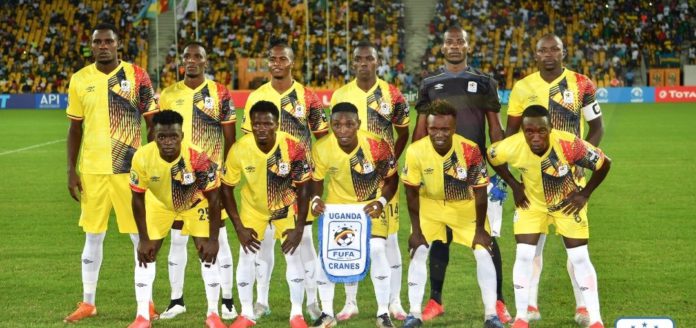
2021 Cranes CHAN team

The Confederation of African Football (CAF) has announced the postponement of the TotalEnergies CAF African Nations Championship (CHAN) 2024, originally set to be hosted by Kenya, Tanzania, and Uganda. The tournament will now take place in August 2025.


According to a statement released by CAF, significant progress has been made in the construction and upgrading of stadiums, training fields, hotels, hospitals, and other infrastructure in Kenya, Tanzania, and Uganda. These efforts are aimed at ensuring the successful hosting of the TotalEnergies African Nations Championship (CHAN).


However, CAF’s Technical and Infrastructure experts, some of whom have been working on-site in the host countries, have advised that more time is needed to ensure the facilities meet the necessary standards for hosting a successful tournament.


CAF President Dr. Patrice Motsepe expressed his gratitude to the heads of state for their leadership and commitment to the development of the required infrastructure. He thanked President William Ruto of Kenya, President Samia Suluhu Hassan of Tanzania, and President Yoweri Museveni of Uganda for their ongoing support in building and upgrading facilities for the tournament.


Dr. Motsepe said, “I am impressed with the ongoing construction and renovation of football infrastructure in Kenya, Tanzania, and Uganda. I am confident that by August 2025, the stadiums, training fields, hotels, hospitals, and other facilities will meet CAF’s high standards, ensuring a very successful TotalEnergies African Nations Championship (CHAN).”


CAF will conduct the draw for the TotalEnergies CAF African Nations Championship (CHAN) 2024 in Nairobi on Wednesday, January 15, 2025. The exact start date of the tournament in August 2025 will be announced by CAF in due course.

Stories Continues after ad