Stanbic Bank
Stanbic Bank
23.9 C
Kampala
Stanbic Bank
Stanbic Bank
Home Blog Page 1759

I will not return to CID – MP Sewanyana

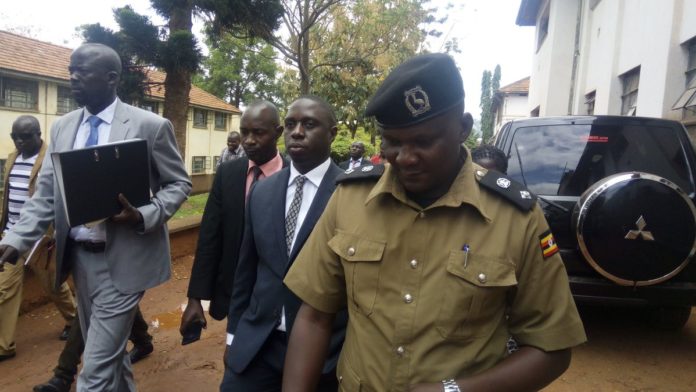
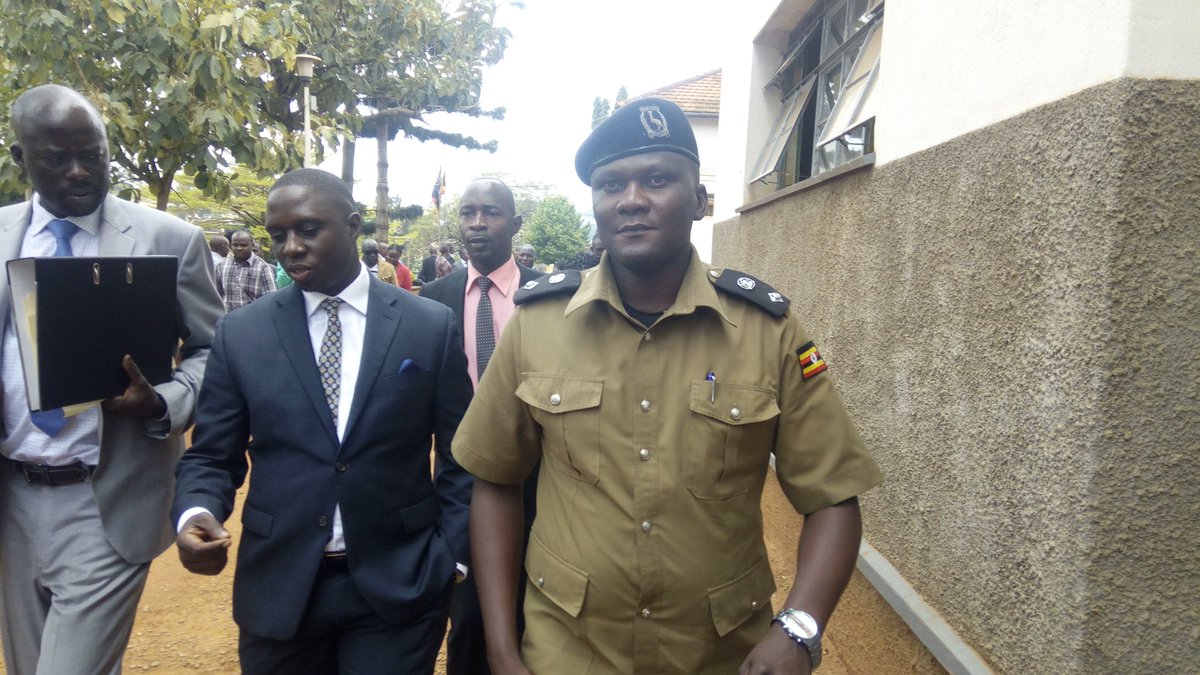
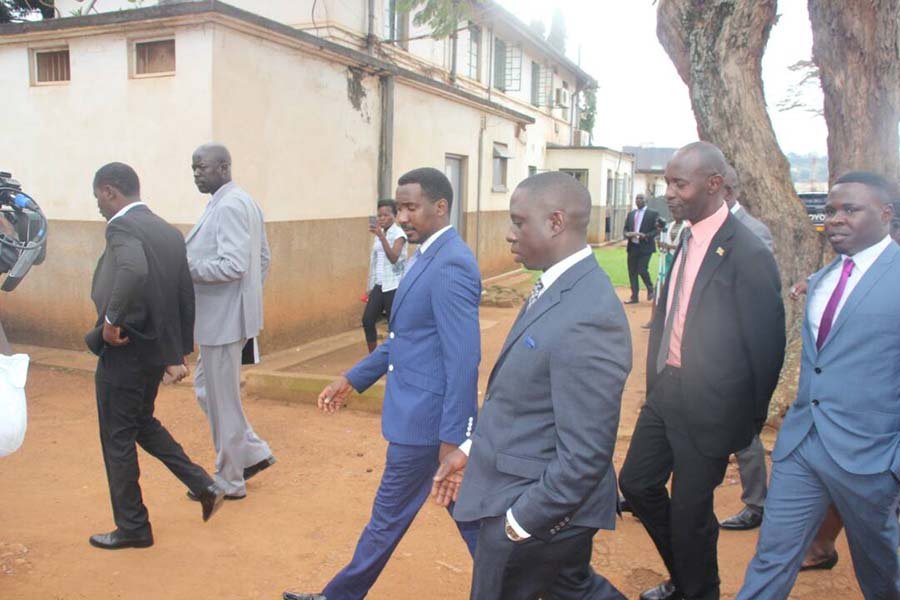
The MPs arrive at the CID in Kibuli

Makindye East legislator Allan Sewanyana has vowed never to go back for interrogations at the Kibuli-based Criminal Investigations Directorate linked to lifting of the age limit.

According to Sewanyana, the police today got enough information from him during interrogation. “What is important is I will not come back to CID on Thursday; they have asked me whatever they wanted,” the legislator said.

Sewanyana is part of a group of MPs that are opposed to amending the Constitution to remove the 75-year presidential limit cap, and he together with colleagues Muhammad Nsereko (Kampala Central) Winfred Niwagaba (Ndorwa East) and Barnabas Tinkasimire (Buyaga West) were yesterday issued summons to appear at the CID for alleged ‘offensive communication’ and ‘inciting the public’.

And today Sewanyana and Nsereko accompanied by colleagues Samuel Odonga Otto (Aruu County), and MPs Kato Lubwama (Lubaga North), Lutamaguzi Semakula appeared in Kibuli, and after interrogation, vowed to resist any move aimed at lifting the age limit cap.

Their two colleagues, Niwagaba and Tinkasimire did not turn up, but this did not stop Sewanyana and Nsereko from voicing out their concerns, even as the police stood watching nearby.

Sewanyana shot the first salvo, warning he stop block the moving of a private members bill by Igara West MP Raphael Magyezi, come Thursday.

Then Nsereko also shot from the hip, vowing to resist ‘intimidation by partisan people’. According to Nsereko, “freedom of expression is enshrined in the Constitution, and not offered by anyone.”

“I don’t know why police are so concerned with what we say; we are standing our ground no matter what,” Nsereko said at Kibuli CID headquarters.

‘’Our colleagues who have everything including the support of the army are scared, what is making them panic?’’ Nsereko wondered.

Earlier before being summoned Nsereko, who vowed to ‘tear the bill to pieces’, had implored the public to snub those MPs supporting the lifting of the presidential age limit.

“Detest them, disassociate from them and isolate them,” Nsereko said.

However, during a press conference held at Parliament this afternoon, Magyezi vowed to move the motion seeking an amendment of Article 102 (b).


Stories Continues after ad

Rage as money collected for ailing producer Danz Kumapeesa is ‘stolen’

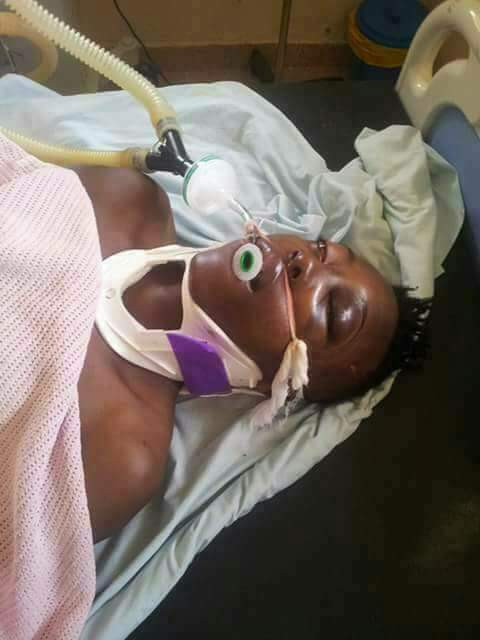
RIP: An ailing Danz Kumapeesa in Hospital

Musicians that performed at the just concluded ‘Danz Kumapesa Charity Concert’ to raise money for the treatment of the renowned producer are furious.

Following an attack by thugs, Dan Kumapeesa has been battling for his life for the past five months at Nsambya Hospital; he feeds through a tube and wears pampers to control his stool.

So the concert was intended to raise funds to clear his medical bill that has since accumulated to millions, and over 50 artistes including Bebe Cool, Eddy Kenzo, Rema, Ykee Benda, Nutty Neithan among others performed at the concert they deemed a success.

However, not all seems to be fine with the accountability and the artistes are angry, with MC Kats, singer Fille’s manager, saying the concert was well attended and that the organisers hardly incurred any costs.

“Really hurt. Really pissed. I was contacted to help Danz Kumapeesa did my best and just now  calling Danz mum to check on her and she says she received 1.5m from the concert. Waat bull crap is this?

With all artistes that performand last nite you people are heartless,” MC Kats begins his rant.

“Laftaz gave us a free venue, free sound and free adverts on Bukedde you refused this was all your plan sh..t oohh God. We need Danz Kumapeesa money for whatever it will take…” MC Kats added.

After turning down the free offers at Laftaz, the concert was held Sunday at Calendar Hotel in Makindye, Kampala. The organisers, who reportedly are the owners of Calendar Hotel, claim to have raised over six million from ticket sales though just Shs1.5million was handed to the ailing producer’s mother.

Some of the artistes that performed at the concert have since joined Kats to demand for the money.

“They are joking, they will bring that money. How heartless can people be really! Without shame someone hands over 1.5m yet it was a full house,” musician Lydia Jazmine, who was among the performers, fumed.

“There is a lot of foolery in this business. It’s the same thing I told my manager yesterday that it might happen….” Rema remarked.


Stories Continues after ad

Lifting of presidential age limit: DP warns police over harassment

DP President Norbert Mao

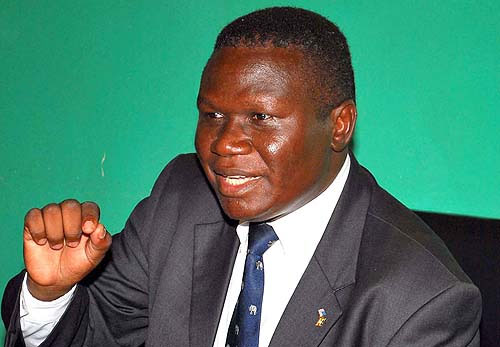
The police should stop confronting and intimidating Ugandans who are against lifting the presidential age limit cap that was set at 75 years in line with Article 102 (b) of the 1995 Constitution of Uganda, Democratic Party President Norbert Mao has warned.

According to Mao, the police and army have become hostile to democratic debate involving the lifting of the presidential age limit, in the process acting in contravention of the Constitution.

“The District Police Commander for Kampala Siraje Bakaleke escorted NRM supporters to Parliament; he should protect and escort us other than interfering with our activities,” Mao told reporters at a press conference at DP headquarters today.

Mao’s outburst comes in the wake of police summons issued to ‘NRM rebel MPs’ Winfred Nuwagaba and Barnabas Tinkasimire and, Kampala Central legislator Muhammad Nsereko and his Makindye East counterpart Allan Sewanyana, to report to Kibuli Criminal Investigation Directorate to be interrogated over allegations of offensive communication and in inciting the public.

The summoned MPs are part of a group of legislators leading the campaign against the lifting of the presidential age limit.

In a related development, the chairman of the Inter-religious Council of Uganda (IRCU) Sheikh Shaban Mubajje yesterday implored security agents to desist from siding with one group against the other in the age limit debate, and also appealed to legislators to approach the issue with nationalistic and non-partisan lens.


Stories Continues after ad

Judge to rule on Kanyamunyu fourth bail application on Oct 4

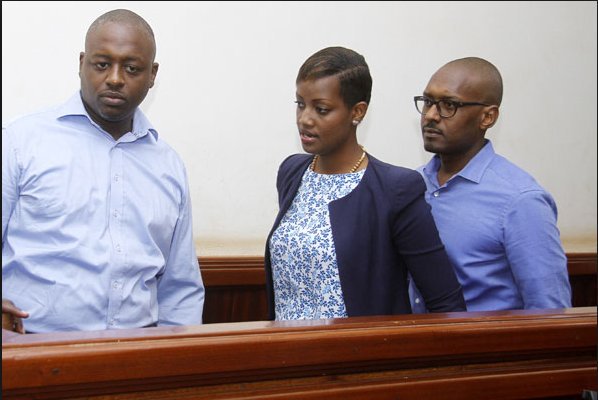
FLASHBACK: L-R Joseph Kanyamunyu, Cynthia Munangwari and Mathew Kanyamunyu in the dock.


High Court Judge Wilson Kwesiga has set October 4, 2017 as the date for the hearing of murder suspect Mathew Kanyamunyu’s bail application.  This was after the state prosecutor today objected to Kanyamunyu’s release, arguing that ‘nothing has changed to compel court to change its earlier decision’.

And when he appears on October 4, it will be the fourth time Mathew Kanyamunyu is applying for bail, after Justice Yasin Nyanzi earlier denied him bail three times, arguing that he had the capacity to interfere with the proceedings.

Mathew, his brother Joseph Kanyamunyu and his girlfriend Cynthia Munwangali are accused of killing social worker Kenneth Akena Watmon on November 12 last year.

The three were committed to the High Court by the Nakawa Grade One Magistrate Noah Sajjabi, following submissions by the prosecution, which averred that there was enough evidence to prosecute them.

Subsequently, Joseph Kanyamunyu and Ms. Munwangari were granted bail on March 28 this year but Justice Nyanzi remanded Mathew Kanyamunyu, the prime suspect in the case. At the time the suspect had presented Moses Karuhanga, Julius Kanyamunyu, Timothy Tumusiime, and Stella Barungi Karuhanga, as his sureties.

Mathew Kanyamunyu allegedly shot Akena around Lugogo after a feud over an accident involving the former’s car, and Akena died at Norvik Hospital along Bombo Road, a day after.


Stories Continues after ad

Uganda to continue receiving US HIV/AIDS financial support

Under a strategy unveiled today, the United States will concentrate its resources on Uganda and 12 other African countries with high levels of HIV that have the best chance of controlling the AIDS epidemic.

US Secretary of State Rex Tillerson outlined the priorities of the multi-billion President’s Emergency Plan for AIDS Relief (PEPFAR), a cornerstone of US global health assistance, which supports HIV/AIDS treatment, testing and counseling for millions of people worldwide.

PEPFAR will continue to operate programs in more than 50 countries. To maximize its impact, however, it will focus much of its efforts on 13 countries that are nearing epidemic control – the point where there are more deaths each year from AIDS than there are new HIV infections.

Those countries include Uganda, Kenya, Zambia, United Republic of Tanzania, Zimbabwe, Malawi, Lesotho, Ivory Coast, Botswana, Namibia, Swaziland, Haiti and Rwanda.

“We’ve really focused on accelerating in these countries that we can get over the finish line, together with communities and governments,” Ambassador Deborah Birx, the US global AIDS coordinator, said.

The work would be done in collaboration with the Global Fund to Fight AIDS, Tuberculosis and Malaria, UNAIDS, and others.

Five of the target countries – Lesotho, Swaziland, Malawi, Zambia and Zimbabwe – are already nearing control of their HIV epidemics, based on national surveys from the Centers for Disease Control and Prevention, Columbia University and local governmental and non-governmental partners.

President Donald Trump’s administration requested the program be cut by $1 billion earlier this year but the Senate Appropriations Committee voted last week to keep funding largely unchanged at roughly $6 billion.

“The Trump Administration remains deeply committed to the global HIV/AIDS response and to demonstrating clear outcomes and impact for every U.S. dollar spent,” Tillerson said in the report.

The administration did not disclose which programs were being cut, but the State Department has stressed that it will continue offering treatment to people who are already receiving it.

Last May, Republicans balked at the Trump administration’s proposed $5 billion budget for PEPFAR, a $1 billion cut from the current budget of $6 billion.

The Bill and Melinda Gates Foundation last week warned that even modest cuts in HIV/AIDS funding could reverse dramatic gains in curbing the global AIDS epidemic.

In the past five or six years, presidents have proposed PEPFAR cuts and Congress, which controls the budget, has restored the funding, Birx said.


Stories Continues after ad

Former MP Wakayima arrested, detained at Naggalama

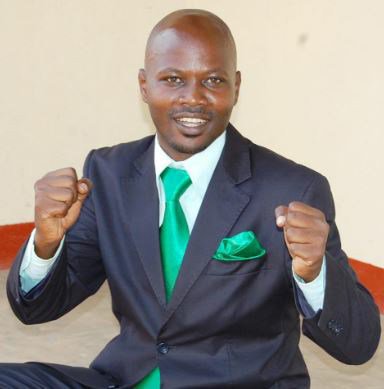
Former Nansana Municipality MP Nsereko Wakayima Musoke

Former Nansana Municipality MP Nsereko Wakayima Musoke, who recently lost a court petition, has been arrested and detained at Naggalama Police Station for allegedly holding a ‘press conference’ this morning, without police permission, the area District Police Commander (DPC) Bernard Kawalo said.

Wakayima, a Democratic Party (DP) member, had called the press to pronounce himself on the Court of Appeal ruling which upheld an earlier High Court decision nullifying his election on the grounds that he did not have minimum qualifications to stand for a parliamentary seat.

Following the High Court ruling, three appellate court judges led by former deputy Chief Justice Steven Kavuma, Chebrion Barishaki and Hellen Obura also dismissed Wakayima’s appeal and instead declared Robert Kasule Sebunya of the National Resistance Movement (NRM) as the duly elected MP for the area, even when the latter emerged third in the 2016 parliamentary elections.

Stories Continues after ad

Former Minister Kiyonga presents credentials to Chinese President

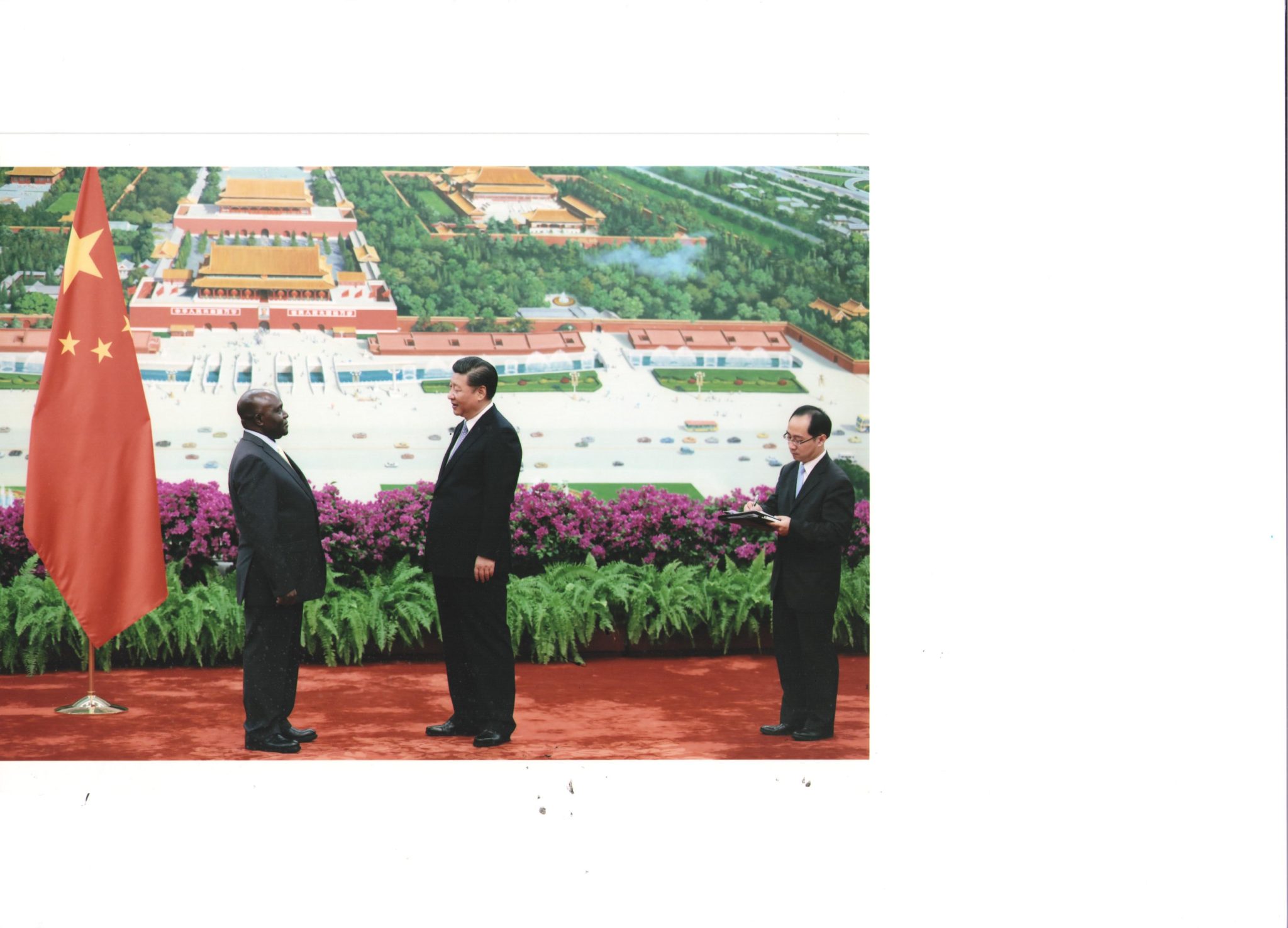
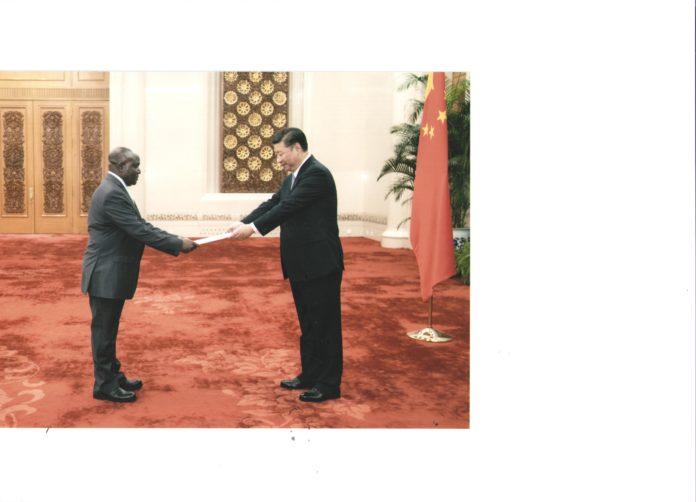
Uganda’s Ambassador Extraordinary and Plenipotentiary to China Dr. Crispus Kiyonga, has presented his credentials to President Xi Jinping, at a ceremony that took place at the Great Hall of the People in Beijing on September 13 2017. Photo Credit: Ministry of Foreign Affairs, People's Republic of China, Beijing.

Uganda’s Ambassador Extraordinary and Plenipotentiary  to China Dr. Crispus Kiyonga, has presented his credentials to President Xi Jinping, at a ceremony that took place at the Great Hall of the People in Beijing on September 13 2017.

In his speech, President Xi Jinping welcomed Amb. Kiyonga to China and noted that the relationship between the two countries has grown and will continue to make further progress with the contribution of Amb. Kiyonga.

President Xi Jinping observed that the appointment of Amb. Kiyonga, a senior and experienced person, demonstrated the importance President Yoweri Museveni and the Government of Uganda attach to the relationship with China, and pledged that his Government would ensure Amb. Kiyonga succeeds in his mission.

On his part Amb. Kiyonga conveyed warm greetings from President Museveni, and noted that Uganda had benefited from the partnership with China in several areas including infrastructure development.

Amb. Kiyonga expressed the desire of Uganda to link the Forum for China Africa Cooperation (FOCAC) plans to the national development plans and vision 2040 of Uganda.

Amb. Kiyonga, who has previously served as Minister in several dockets, arrived in Beijing – China on August 20, 2017 to assume his duties as Head of Mission. He was accompanied at the ceremony by his spouse, Mrs. Alice Kiyonga. Other Uganda Embassy officials at the ceremony included the First Secretary Nelson Kasigaire and Ms. Laura Kahuga, Third Secretary.


Stories Continues after ad

New global coalition to boost treatment for chronic diseases

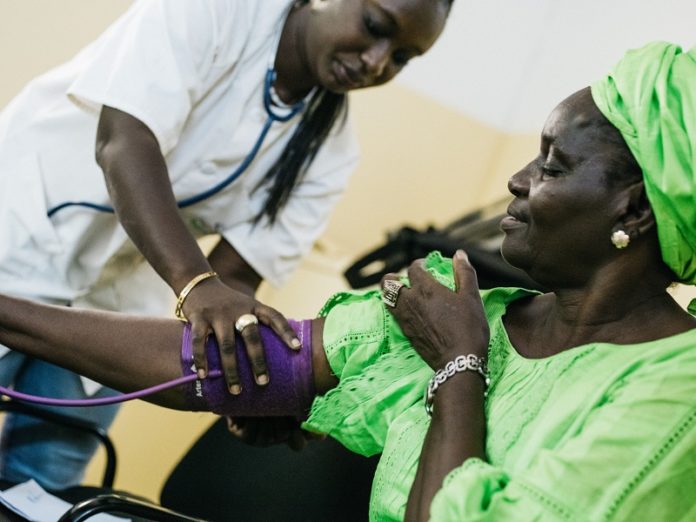
A doctor meets with a diabetes patient for a routine check-up.

A multi-sectoral partnership yesterday launched a first-of-its-kind global coalition dedicated to increasing access to essential medicines and health products to prevent and treat non-communicable diseases (NCDs) and conditions, including diabetes, hypertension, and cardiovascular disease.

The new Coalition for Access to NCD Medicines and Products brings together governments, the private sector, philanthropic and academic institutions, and nongovernmental organizations to tackle barriers countries face in procuring, supplying, and distributing essential medicines and technologies and ensuring they are used effectively.

The coalition will partner with countries to help them achieve the World Health Organization target of 80 percent availability of affordable technologies and essential medicines, including generics, required to treat NCDs in both public and private facilities.

The coalition includes the Ministries of Health in Uganda, Kenya, Senegal and NCD Alliance, Novo Nordisk, PATH, Pfizer, Inc. and RTI International, with PATH serving as the Coalition Secretariat.

The launch event, alongside the United Nations General Assembly in New York, features an interactive panel of global health leaders and influencers from across sectors sharing their perspectives on the opportunities ahead to reduce the toll of NCDs.

Panel speakers include Peter Singer, CEO of Grand Challenges Canada; Sir George Alleyne, director emeritus, Pan American Health Organization; Khawar Mann, partner with the Abraaj Group; Rebecca Martin, director of the Center for Global Health at the US Centers for Disease Control and Prevention; Jean Claude Mbanya, professor of medicine and endocrinology at the University of Yaoundé in Cameroon; and Sania Nishtar, founder and president of Heartfile.

“Medicines and technologies for chronic diseases are less available and less affordable for people in low-resource countries,” said Steve Davis, PATH president and CEO. “That equity gap leaves the most vulnerable people at greater risk for complications and death from NCDs. We can close the gap by ensuring that innovative new tools and existing technologies are within reach for people who need them, regardless of where they live.”

NCDs are the number one cause of death and disability worldwide. About three-quarters of NCD-related deaths occur in low- and middle-income countries, and it is estimated that 100 million people in low-resource settings are forced into poverty each year by the costs associated with managing chronic diseases.

The coalition is unique in several ways, from its multisectoral approach of engaging stakeholders across sectors at all levels to its focus on increasing access to medicines and products and providing technical and advocacy expertise both at the country and global levels.

“We know from our work with health facilities, pharmacies, care providers, and patients that many people with diabetes and cardiovascular disease are not able to access the medicines and products they need at a price they can afford,” said Dr. Joseph Kibachio, head, non-communicable disease unit, Ministry of Health, Kenya.

“This coalition will add great momentum to the government of Kenya’s ongoing efforts to ensure that people can access the treatment they need,” he added.

Progress on reducing the burden of NCDs has been slow and uneven within and across countries. Some of the issues affecting access to medicines and products include inefficient procurement practices, inadequate funding models, and pricing mark-ups along the supply chain.

Coalition members will focus specifically on strengthening health systems and the supply chain for essential medicines and products, financing and costing issues, and advocacy.

“By leveraging the skills, resources, and expertise of members, the coalition will complement existing initiatives, create new opportunities, and raise awareness about the importance of ensuring equal access to health commodities for NCDs,” said Helen McGuire, leader of PATH’s NCD program.


“Together, we can identify and address barriers to access, strengthen supply chains, control the risk of interruptions or delays, and efficiently get products to market,” Ms. McGuire added.

The work builds on efforts by PATH and other founding members that have been laying the groundwork for the coalition for several years. Health coalitions on reproductive health, tuberculosis, and HIV/AIDS have successfully used a similar approach to strengthen supply chains and reduce financial burdens on individual and national budgets.

Stories Continues after ad

Over 80 Makerere staff face prosecution for degree forgeries

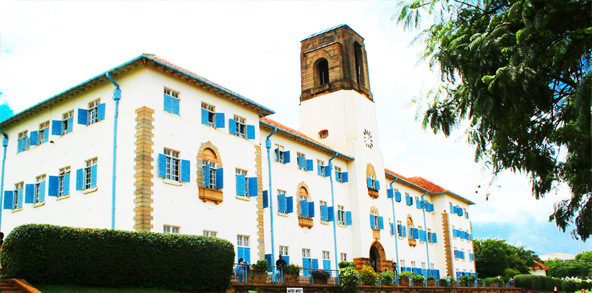
Makerere Main-Building

Reports indicate that 88 people at Makerere University, one of East Africa’s premier universities, have been apprehended for possible prosecution over the alteration of student marks in an investigation that is expected to see the withdrawal of some of the university’s law degrees dating back to 2011.

A preliminary report compiled by an investigation committee, has raised the possibility of marks being altered at Senate level – after submissions by lecturers and college or school registrars.

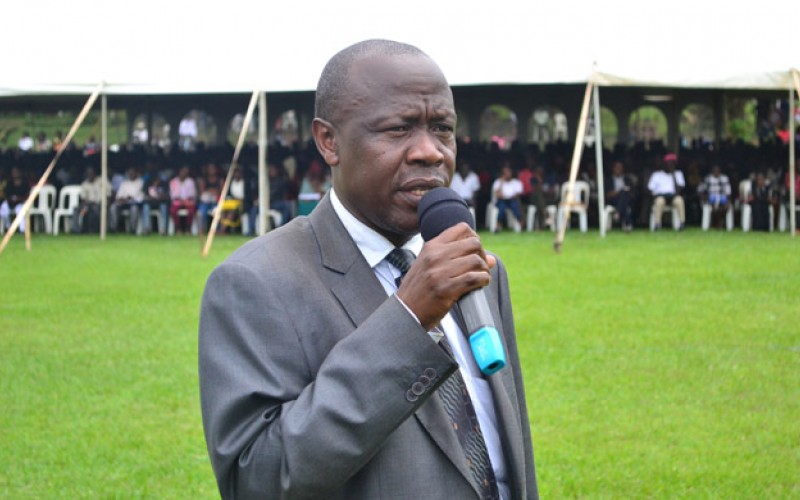
Mr Alfred Masikye Namoah, Academic Registrar- Makerere University

In a letter dated September 7, from Makerere University’s Academic Registrar Alfred Masikye to the university’s Chief Security Officer, Johnson Mucunguzi, the registrar requests the apprehension for prosecution, in liaison with the director for legal affairs, of those involved in the alteration of marks on the Results Management System.

“You are requested to make progressive reports on the action taken on each of the listed people within a period of one month,” warned Masikye in the letter.

The development comes after the university administrators said recently that would recall law degrees awarded irregularly to students over the past decade amid claims of forged and altered results.

The university is in the process of undertaking a comprehensive audit of the marks of students who graduated from 2011 with a view to recalling those degrees illegally awarded.

Makerere University Vice-Chancellor Barnabas Nawangwe told University World News that the university is investigating the people suspected to have changed the results.

“There are some people who have been identified to be responsible for tampering with the results system and they are being pursued for investigation and the students’ degrees have been withheld,” said Nawangwe.

“The suspected staff have already been suspended and security measures are now in place to ensure that this does not occur again.”

An audit committee began its work last November after the Senate, the institution’s highest academic body, discovered that forgery of results was a “widespread problem”.

Back to 2011

The senate ordered an investigation in all colleges and schools to verify the marks of all students who had graduated since 2011 to ascertain the authenticity of their results and class of degrees awarded.

The investigation committee is led by Dr Damalie Naggitta-Musoke, the former dean of the university’s School of Law.

“The audit will compare questionable degrees with students’ result papers and exam results submitted by lecturers and colleges to their deans from 2011. It will also look at the academic registrar’s records,” said Nawangwe.

The process will include the cross-checking of the academic registrar’s entries against scores on examination scripts, the marks sent by lecturers to the school or college examination board and the published semester-by-semester results of each student.

It is unclear how long the exercise will take, but Nawangwe said the aim is to ensure sanity at the university and to restore the integrity of the academic awards of the country’s largest and oldest public university.

“Forgery is a widespread problem. Nobody will graduate with forged results,” said Nawangwe.

Nawangwe, who took office this month as the university’s new vice-chancellor, vowed in an interview withUniversity World News a few months ago to position the Ugandan university as the leading institution for academic excellence and innovation in Africa.

He has also vowed to deal with any staff involved in asking for sex in exchange for marks.

Preliminary report

A preliminary report by the investigation committee that is not yet available to the public found a mismatch between results submitted by colleges and schools and final scores released by the Academic Registrar, which prompted the university to stretch the investigation to cover the past years.

The preliminary report also raised the possibility of marks being altered at senate level – after submissions by lecturers and college or school registrars.

For other colleges like the School of Law, results awarded even a decade ago are being reviewed.


Makerere University is one of the oldest and largest universities in Africa, founded in 1922. It accounts for 60% of all university enrolments in Uganda, 90% of graduate training and 80% of professional degree enrolment. It is the largest research institution in Uganda and accounts for 90% of research publications.


Stories Continues after ad
Ghanaian men are afraid to propose to us – military women cry out

Ghana-military-women say men fear approaching them for marriage

A group of military women have blamed their singleness on the timidity of some Ghanaian men, saying they (men) lack the courage to propose to them.

According to them, their statuses as military women mostly strikes fear into men, and that is the reason why they find it difficult to marry. This, they believe, is the main reason for their singleness, adding that in terms beauty, they can match any civilian lady in the country.

“When we took the hard decision to defend and serve mother Ghana we never anticipated that it was going to cost us an opportunity to find our life partners,” one of the military women who spoke on condition of anonymity is quoted as saying.

Another woman added: “It has been more than 4yrs in the service and not a single man has made an attempt to approach me not to talk of proposing to me. Apart from being a military woman, I am human too with needs.., how do you expect me to give out my best when those needs are not met?”

It is unknown if the complaints of these military women at Burma Camp could be taken as general for all military women in the country.


Stories Continues after ad