Stanbic Bank
Stanbic Bank
18.1 C
Kampala
Stanbic Bank
Stanbic Bank
Home Blog Page 1760

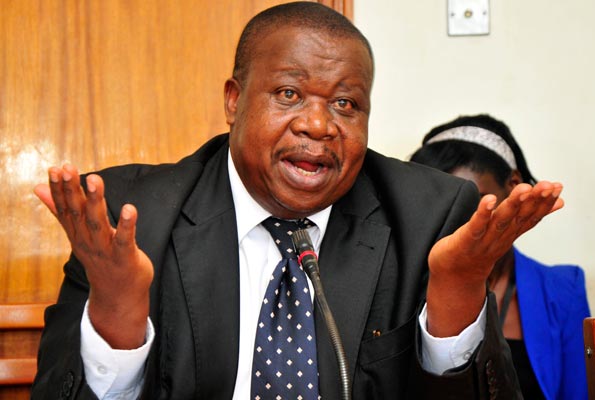
Otafiire urges prosecutors to return to work

Maj Gen Kahinda Otafiire.

The Minister of Justice and Constitutional Affairs Major General Kahinda Otafiire has appealed to prosecutors to suspend their strike, giving a three-month period in which he said government will respond to their grievances.

Yesterday, the prosecutors, through their umbrella body, the Uganda Association of Prosecutors (UAP) resumed their strike after the elapse of 90 days ultimatum when they voted to suspend industrial action, following government’s pledge to increase their salaries and improve on their working conditions.

In a press statement, Otafiire said Prosecutors aren’t the only government workers waiting for improved payment.

“This matter has to be approached scientifically. My fellow workers go back to work. ’We have seen medics’ strikes, lawyers, teachers, everybody in government service is jittery and they are right,” Maj Gen Otafiire said, adding: “We are all waiting to know how much the government will be paying us, Let us just be patient.”

According to Otafiire, the performance of Uganda’s economy will determine the payment scale of government workers.

“Industrial action is not a new phenomenon, the reason being we have not improved prosecutors and other workers welfare, taxes are not enough,” he added.

Currently, the bill to harmonise worker’s salaries is before parliament and Otafiire said that government will respond to the Prosecutors’ grievances in a period of three months.

Under the current salary structures, the lowest ranking prosecutor earns a gross salary of Shs644, 963 a month while the highest paid prosecutor, at the rank of Senior Principal State Attorney, takes a gross monthly pay of Shs2.1 million. The Deputy DPP is paid Shs2.9 million while Assistant DPP earns Shs2.4 million.


Stories Continues after ad

Age Limit: Magyezi wants committee disbanded

Local Government Minister, Raphael Magyezi

The debate into lifting the presidential age limit 75-year cap has reached a crescendo, with protagonist Raphael Magyezi making fresh demands to have the assigned Committee disbanded.

While addressing journalists this afternoon, a furious Magyezi, the Igara West MP attacked some Committee members for being biased, fearing he may not receive a fair hearing when he appears before the committee.

“The members should have the intuition to say let me reserve my fears and expressions. But if you have come out in the public and you are a member of the Committee, then they should withdraw or let the Committee be reconstituted so that we have an objective Committee,” Magyezi said.

It should be recalled that after tabling the Constitutional Amendment Bill No2 2017, Speaker Rebecca Kadaga referred the Bill for processing to the Legal and Parliamentary Affairs Committee.

The ruling party NRM boasts of 13 MPs, the highest number on the committee, while the Independent MPs are 6, with FDC and Democratic Party MPs have two members each.

But already a number of Members on the Committee have already taken their stand on the Bill with most of the opposition and independent MPs coming out to vehemently oppose lifting of the presidential age limit.

The decision by the Committee to exclude Jackson Kafuuzi from the Committee proceedings, yet he is a member of the Legal Committee, was what sparked off the bickering between the two sides.

The Committee reached this decision after Kafuuzi stood up to second Magyezi’s bill and motion, with the rules barring MPs with personal interest from taking part in Committee proceedings.

However, Magyezi has objected to the decision he also reserves the right not to appear before the same Committee with members biased against his Bill.

“I demand that there is independence of the Committee. I demand neutrality, objectivity, non-bias of the Committee,” Magyezi argued.


Stories Continues after ad

Ugandans in Malaysia celebrate Independence

Uganda’s Ambassador to Malaysia Dorothy Samali Hyuha and other Ugandans cut the cake during celebrations to mark Uganda's 55th Independence Anniversary

Uganda’s Ambassador to Malaysia Dorothy Samali Hyuha, hosted a dinner to celebrate 55th Independence Anniversary at Intercontinental Hotel, Kuala Lumpur, the first such celebration since the mission was established in the Asian economic giant in 2015.

In her speech, Amb. Hyuha welcomed all the guests and urged them to bask in the jubilation mood as Uganda celebrates Independence Day. She introduced this year’s theme “Uganda’s freedom must be anchored in the spirit of hard work, resilience and commitment” stating that, “I am delighted to serve in Malaysia where the Government of Uganda has cordial bilateral relations which have existed for a long time. This long existing relationship and cooperation must be enhanced from strength to strength in economic, commercial and public diplomacy.”

Amb Hyuha stated that she wished to specifically recognize MAPE, Cloud 10 and the tourism sector in Malaysia and thank the business community present who have honoured the invitation and turned up to celebrate with the Embassy;. “You have energized me and our business trajectory between our two sister countries to grow from strength to strength” she said

Addressing the large turn-up of Ugandan diaspora, she said “I am impressed with your active participation in the national event as evidenced here today. Most Ugandan diaspora possess impressive knowledge, skills, talents and financial resources that have already significantly contributed to the host country and home. I encourage all the Uganda Diaspora to register with the Uganda High Commission”

In further  recognition of Diaspora contributions to National Development, she informed the gathering that the Ministry o Foreign Affairs had recently undergone a restructuring exercise which saw the establishment of a Diaspora Services Department.

Speaking at the occasion the Malaysian foreign minister Dato’Sri Anifah Aman said: “I have the honour to extend my warmest congratulations and best wishes to Your Excellency, On this joyous occasion of the 55th Anniversary of the Independence Day of the republic of Uganda. I sincerely hope that our two countries would continue to be engaged in achieving mutually beneficial cooperation, for their well-being and prosperity of our people”.


Stories Continues after ad

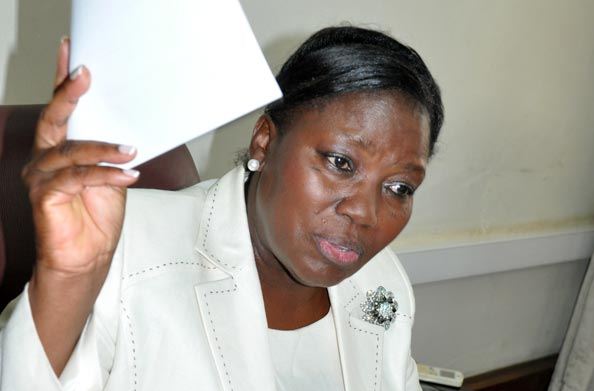
Kadaga hails NWSC on tree-planting initiative

Speaker Rebecca Kadaga.

Speaker Rebecca Kadaga has today implored government institutions and corporations to embark on planting trees to protect and conserve the deteriorating environment.

Speaking at the launch of one million trees campaign at National Water and Sewerage Corporation Resource Centre in Bugolobi, Kadaga said the campaign is aimed at promoting environmental conservation and catchment protection.

In her remarks the speaker vowed to push the ministry of finance to start a ‘Tree Fund’ in the budget for conservation of the environment.

She lauded NWSC for embarking on protecting and conserving as well as providing clean water to millions of Ugandans.

The National Water (Sewerage Corporation) has energized me and it has worked as an example, the Speaker said, and hailed the NWSC managing Director Dr. Eng. Silver Mugisha for the initiatives.

In his speech Eng. Mugisha called for government’s support among non-government organisations and implored them to use social occasions to increase tree cover in Uganda.

Under the theme: ‘The best time to plant a tree is 20 years ago, the second best time is now’, Eng. Mugisha said all the 218 NWSC branches in Uganda are to plant over 2000 trees each.


Stories Continues after ad

Somali Prime Minister lauds Uganda for enhancing peace

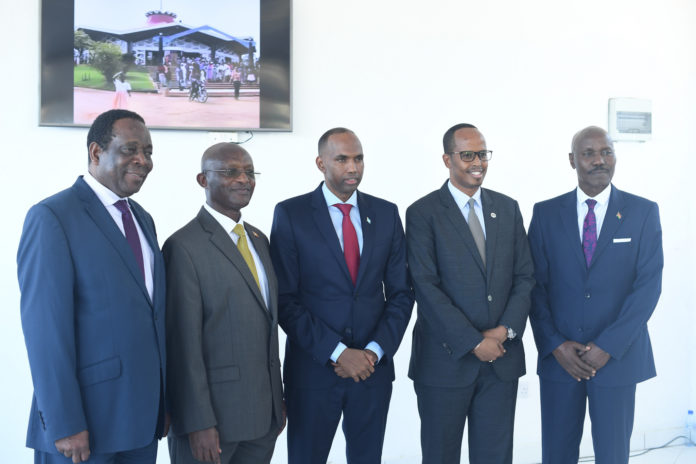
Prime Minister Ali Khayre and AMISOM Force Commander and other guests

Somali Prime Minister Hassan Khayre has commended the Ugandan government for contribution made in ending the decade-long civil war and bringing back hope for peace and security in the horn of Africa country.

Mr. Khayre made the remarks at a ceremony hosted by the Ugandan embassy in Somalia, Monday, to mark 55th Independence Anniversary of the East African Nation. He noted that the two countries had strong historical relations, which had seen them help each other in times of need.

“Uganda led the rallying call to deploy forces to Somalia in 2007. These brave forces, working together with our Somali troops, and other Troop Contributing Countries have facilitated the return of hope for the Somali people; given them an opportunity for freedom and prosperity that they have not experienced for many years,” the Prime Minister stated.

Somalia plunged into civil war in 1991 after the collapse of President Siad Barre’s government, leading to the deaths of hundreds of civilians before the intervention of the United Nations and the African Union.

The ceremony held in Mogadishu was attended by representatives of Troop and Police Contributing Countries in Somalia, United Nation officials and members of the diplomatic corp among others.

The Prime Minister, who was accompanied by senior government officials, paid tribute to all African soldiers who have lost their lives in the quest for peace in Somalia, saying their efforts have not been in vain.

He praised AMISOM for the progress made, including the holding of successful elections and the eventual establishment of an independent government under the leadership of President Mohamed Abdullahi Farmaajo.

Mr. Khayre, however, noted that a lot more needs to be done to ensure the country achieves lasting peace and security.

“While immense gains have been made, a number of tasks still remain.  We ask Uganda and our other African brothers and sisters and AMISOM for your continued support. Your support at this point is very crucial not only to build on our successes so far but also to address the outstanding challenges and build further on the gains we have made together. We know the Mission in Somalia is not without its challenges but we are confident that we will together soldier on,” he added.

The Prime Minister commended Africa’s founding fathers whose sacrifices, he noted, had made it possible for the people not only to rule themselves but also determine their destiny and values.

On his part, the Ugandan Ambassador to Somalia, Major General Nathan Mugisha, congratulated the people and government of Somalia on the gains made in the past years.

Maj. Gen. Mugisha reiterated Uganda’s commitment to continue helping Somalia stabilize by ensuring, among others, training and mentoring of its security forces.

“Uganda congratulates the Federal Government leadership, the Somali National Forces, AMISOM, the people of Somalia and the international community for the hard earned security gains,” the Ambassador said.

Maj. Gen. Mugisha, nonetheless, cautioned that there was need to ensure the sustainability of the achievements made through enhanced support of AMISOM, securing predictable funding and building the Somali National Army and Somali Police.

He appealed to the international community and stakeholders to continue supporting the Somali people, to enable them build on the socio-economic and political progress so far achieved.

Uganda has the highest number of troops in Somalia and was the first country to heed to the international community’s appeal to intervene and help bring back peace and stability in Somalia.


Stories Continues after ad

Spice Diana cancels shows, as police plan to charge her for ‘assaulting’ officer

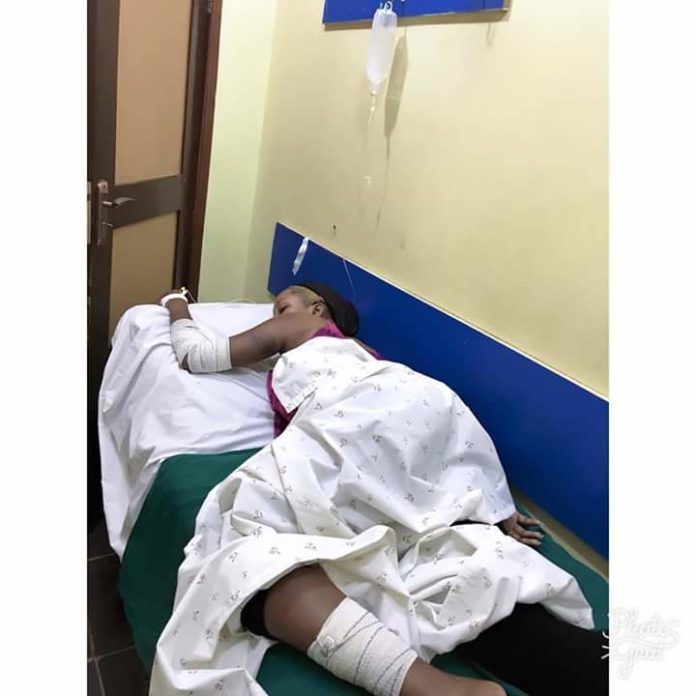
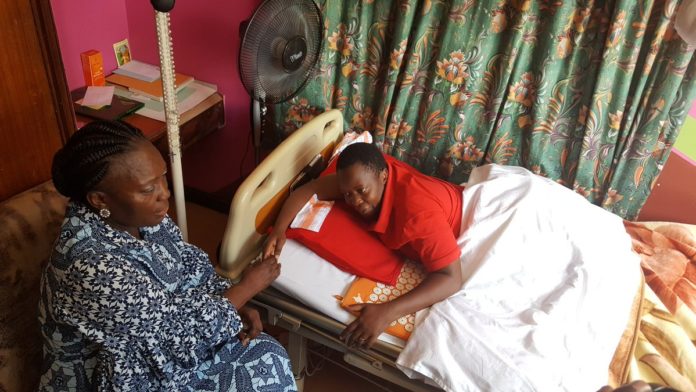
Spice Diana on her hospital bed

Spice Diana has cancelled her upcoming after she was beaten at the KCCA carnival by people she says are policemen.

Speaking from her sickbed, Spice Diana announced that she had cancelled all her upcoming shows because of her current health state.

“Am so sorry to announce that will not be able to perform in some places I am supposed to be because of my condition,” she wrote on social media.

Meanwhile, we have learnt that police has opened up a case against her, accusing her of beating up a police officer.

According to police spokesperson, Emilian Kayima, Spice Diana and her manager assaulted a Police officer on duty after they were refused access to the City Carnival.

It is alleged that following the incident, Spice Diana was arrested and briefly detained at Nkrumah Police post. She was later released on police bond. But on the contrary, Spice Diana says it was police that beat her up.

“Today, after my first performance at the carnival I was beaten so badly and disrespected by ruthless so called police officers and I am nursing wounds.  We give you power to protect us, keep law and order but ts you the same people that go against the law and do vice versa. Why should we be treated like strangers in our own country,” she bemoaned.


Stories Continues after ad

Kadaga: The Speaker epitomises the politics of tolerance

FLASHBSACK: Speaker Rebecca Kadaga visits Mukono Municipality MP Betty Nambooze, who was injured when SFC officers stormed the August House to forcefully evict opposition MPs.

So many ‘bad’ things have been said about the Speaker Rebecca Alitwala Kadaga, in respect of her decision to suspend Members of Parliament after the fracas in the August House two weeks ago, during which some opposition members were injured.

Speaker Rebecca Kadaga visiting Kampala Central MP Muhammad Nsereko

However, what most of her critics have missed is the clear demonstration of statesmanship and patriotic endeavor Kadaga exhibited when she visited the hospitalized MPs, and promised them better security.

It is no secret that Kadaga subscribes to the ruling National Resistance Movement (NRM), and that those injured are from the opposition. But Kadaga’s gesture is that of a mature politician, who looks at Uganda beyond the present and photographs of the Speaker in a deep hug with Betty Nambooze at Bugolobi Medical Centre are tear-rending, to say the least.

Without doubt, Ms. Kadaga, a seasoned legislator, is an inspiration to most MPs, both NRM and opposition, and this was captured in the words of another injured MP, Francis Zaake Butebi, who said of the Speaker thus: “Kadaga has been a source of inspiration to most of us from across the political divide.”

It is such confidence in the person of the Speaker that she has managed to rise to the highest legislative post in the country, in the process stamping her name on Uganda’s posterity.

That said, the current political trends in the country do not put many Ugandans at ease, a regrettable development at this time when all people should be engaged in debate aimed at ensuring that the country is stable.

Indeed, the circumstances dictate that Ugandans must endeavor to tolerate even those with whom we disagree, as symptomized by Kadaga’s multiple visits to the injured MPs.

In Busoga where she hails from, Kadaga has exhibited political maturity, one of the reasons she has always been returned to Parliament over the last 20 years.

In her role as a leader from the area, Kadaga’s wise counsel in regard to the Kingdom and Kyabazingaship on diversity and inclusion has been invaluable, leading to stability across Busoga.

So, as the country grapples with the debate on the age limit, Ugandans can only pray that the Speaker is exposed to conditions that are conducive for her to carry out her constitutional mandate of steering the legislature for the betterment of all Ugandans.


Stories Continues after ad

PAP set December deadline for Malabo Protocol ratification

Prof. Ogenga Latigo, one of the Ugandan representatives to PAP.

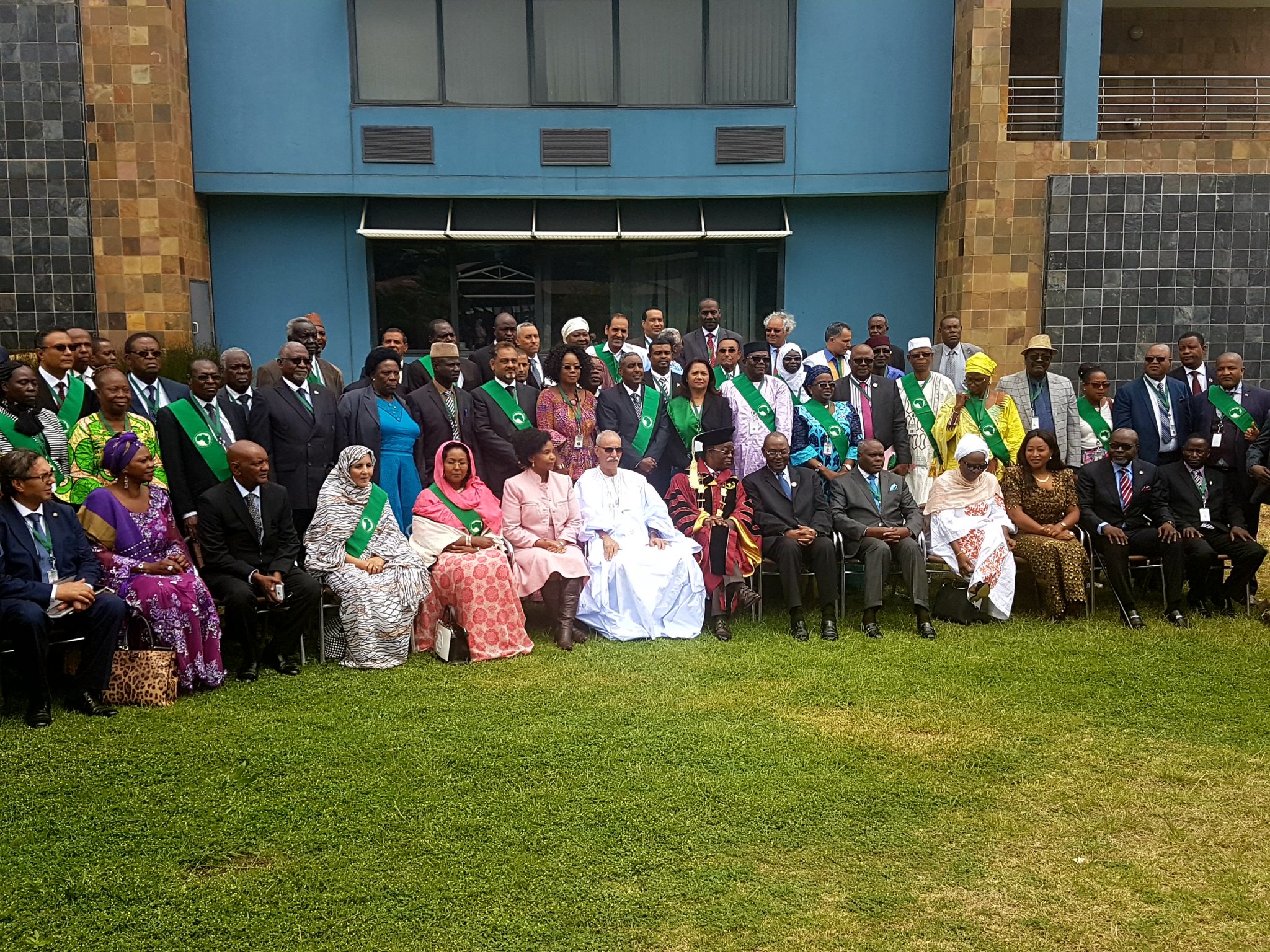
African Legislators are concerned that given the slow pace of ratification of the Malabo Protocol, the Pan African Parliament (PAP) might never acquire full legislative authority and only remain as an advisory organ.

With only five ratifications since its adoption in 2014, out of

PAP MPs in a group photo

28 ratifications needed for the Protocol to come into force, the legislators say states are reluctant to endorse the protocol in its current form.

They have now set December 31, 2017 as the deadline for nation states to ratify the Malabo Protocol. Benin, Guinea Bissau, Kenya, Mauritania and Sierra Leone are the only countries that have ratified the Protocol, which was adopted by the African Union Assembly in Malabo, Equatorial Guinea. Ratification is a sovereign act by a state to submit to an international text.

While debating the activity report of the Pan African Parliament on October 10, 2017, in Midrand, South Africa, the legislators suggested revising the Protocol again and removing parts considered unpalatable to nation states. The current Malabo Protocol is a revision of the original Protocol of 2001.

The Malabo Protocol provides for the election of MPs to the continental assembly from outside the membership of national parliaments. It also provides for representation of two women out of five designated members per country. Currently, the PAP is only a consultative and advisory organ, but the Protocol seeks to give it full legislative authority to make laws for the continent.

“In our own countries Parliaments are suppressed. Can you imagine a Parliament that doesn’t belong to you legislating for you? It will not happen in Africa,” one of Uganda’s PAP representatives Prof. Morris Ogenga Latigo, said.

According to Prof. Latigo, prior to the development of the Protocol, there ought to have been consensus generated from all the countries as to what the countries aspired for PAP to be.

“Protocols are normally done in offices and Presidents just come and sign,” he said. Latigo proposed that PAP should instead debate and pass resolutions on specific issues that they see as contentious in the Protocol and forward it to the Heads of State so that it is amended.

Chief Fortune Charumbira (Zimbabwe) concurs that African presidents are unwilling to cede legislative authority to a foreign Parliament and suggests reviewing the advocacy strategy on ratification of the Protocol.

“The strategy isn’t effective and countries are not happy with some aspects of the Protocol. I suggest amending it so it takes everybody on board,” he recommended.

Sidia Jatta (The Gambia) argues that it is not only ratification where the problem lies but implementation of the protocols too. He said many protocols have been ratified and then shelved. He proposed that questions should be raised and directed to the Executive so they are put to task to explain why they haven’t ratified the Protocol.

In a bid to mount more pressure to their states to ratify the Protocol, Nyiko Shivambu (South Africa), suggested that positions of leadership of the Assembly, such as that of President, Vice Presidents and Committee Chairpersons be ring fenced for those countries that have ratified the Protocol.

He also added that since PAP doesn’t have legislative powers, the Assembly could as well be referred to as the Pan African Forum until such a time that it gets the requisite ratifications for it to have full legislative authority.

The Fifth Ordinary Session of the Pan African Parliament is taking place in Midrand, South Africa from 9-20 October 2017 and will discuss Africa and European Union relations; debate reports of the African Peer Review Mechanism (APRM) for Chad, Djibouti and Senegal. The PAP will also discuss peace and security in Africa and the need to accommodate peacebuilding and peacemaking in conflict prevention and resolution in Africa among other issues.

Uganda’s Members to PAP include: Jacquiline Amongin (NRM, Ngora), Prof. Ogenga Latigo (FDC, Agago North), Anifa Bangirana Kawooya (NRM, Ssembabule), Felix Okot Ogong (NRM, Dokolo South) and Babirye Kadogo (Ind. Buyende).


Stories Continues after ad

Investors laud conservation finance forum as investment discussions begin

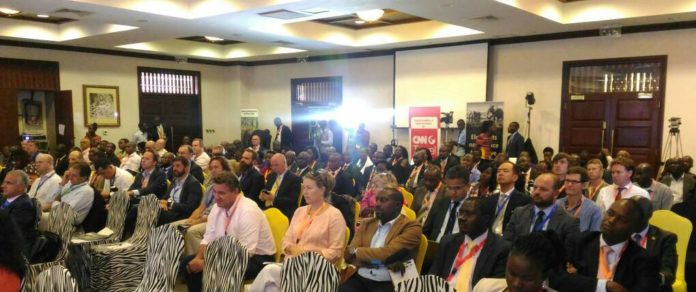
Delegates attending the just concluded forum at Lake Victoria Serena Hotel Kigo

Leading global tourism firms are preparing detailed discussions about new deals to drive private sector profit to protect Uganda’s wildernesses, following a hugely successful conservation finance forum.

The unique approach of the Giants Club Conservation and Tourism Investment Forum, the first of its kind in Africa, was to link the Ugandan Government with some of the world’s premier tourism firms and conservation-compatible businesses.

“I’ve seen quite a lot of these sorts of things over the years, and I was hugely impressed,” said Patrick Fitzgibbon, senior vice-president for development for Europe and Africa for Hilton, the global hotel and hospitality group.

“What was probably most impressive was the top-level government sponsorship, which you really need, and the consistency of messaging that was really positive.”

How responsive key Ugandan government figures were in the coming weeks would ‘speak volumes’ about the long-term success of the Forum, held on October 6, Fitzgibbon said.


“If you were thinking about investing in travel and tourism in Uganda today, after Friday you have to be more confident,” he added.


President, Yoweri Museveni hosted the event and told the close to 200 delegates that Uganda was ‘open for business’ for responsible tourism investment.


Central to new contracts will be rules ensuring businesses protect Uganda’s environment and drive greater benefits from conservation to local people. These are key aspects of the work of the Giants Club, the initiative of the conservation organisation Space for Giants that organised the Forum in conjunction with UNDP and the African Wildlife Foundation.

The managing director of Governors Camp Collection, Dominic Grammaticas, said that “as potential tourism partners we are very excited by the possibilities”. His collection of seven luxury safari camps and lodges are in Uganda’s neighbours, Kenya and Rwanda.

“Uganda is clearly saying it’s open for business as far as tourism investment is concerned,” he said. “It’s difficult to see how the government could have done more to demonstrate political will at the highest levels.”

Karim Wissanji, CEO of Elewana, an exclusive collection of boutique safari camps and beach hotels in Tanzania and Kenya, signed a Letter of Intent as a result of the event that states his organisation “wishes actively to explore investment opportunities”.

“We recognise that the Ugandan Government has seen the increasing opportunity for responsible tourism to support the protection and management of its natural assets, to build elements of a ‘nature-based economy,” it said. “We’re interested in exploring ways to undertake investment.”

The Forum focused on opportunities for sustainable eco-tourism ventures, but also widened its net to include investors from different enterprises whose business models would include conservation dividends.

One was Solarcentury, which plans to develop large solar power plants feeding electricity into Uganda’s national grid, creating stable conservation funding from selling solar power.

Its East Africa director, Guy Lawrence, said the forum was “excellent for a number of reasons”, including the new special Delivery Unit at the Uganda Investment Authority.

“I was impressed that the Uganda authorities have set up a one stop shop for external investors in the tourism conservation circuit,” Mr Lawrence said. “This is a major step towards securing investment from overseas and has been created due to the Giants Club’s engagement with the Uganda Government.”

“To have the President also not merely turning up to ‘cut a ribbon’ but to be actively engaged in the conservation discussion demonstrated his absolute support for promoting conservation tourism, and that gives investors confidence, too.”

While many of the sites available for fresh investment were ‘tourism-ready’, others would first require philanthropic attention and long-term funding to rehabilitate them, the Forum heard. That money was most likely to come from impact investors like Wild Philanthropy.

“I thought the Forum was extremely well timed in terms of a confluence of a growing impact investment model alongside more traditional philanthropy and travel arms,” said Will Jones, Wild Philanthropy’s founder and managing director of safari operator Journeys by Design.

“We have an impact travel model that fits very neatly with the Ugandan motivations of philanthropy, enterprise and travel. We are excited by the idea of working alongside the Uganda Wildlife Authority and the investment bureau to study further the opportunity. There is a neat overlap with our East Africa plans.”

George Osborne, Britain’s former Chancellor of the Exchequer (Finance Minister) and the editor of London’s Evening Standard newspaper, attended the Forum and in his speech praised the “very specific investment propositions” presented to delegates.

“I have been to a large number of conferences and heard a large number of investment pitches, and I have to say what I’ve seen here was pretty good,” he said. “We have heard how the Ugandan Government will cut through a lot of red tape and bureaucracy for investors. What is so important now is implementation. This is a great initiative and deserves a great deal of support.”


Stories Continues after ad

Odinga quits Kenya presidential race

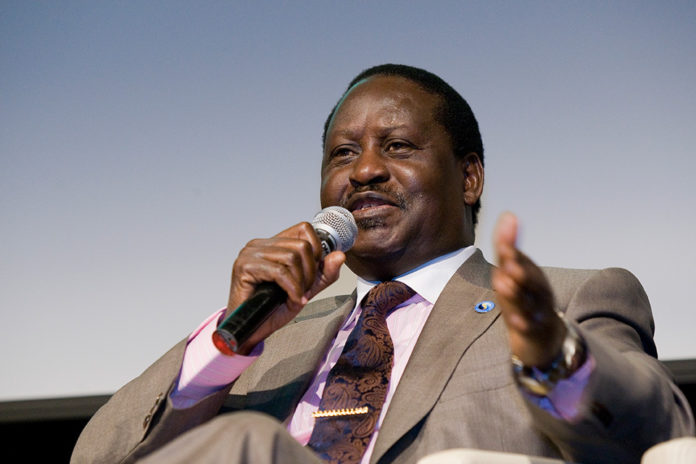
Raila Amollo Odinga

Kenya’s leading opposition alliance, the National Super Alliance (NASA), has pulled out of the repeat elections slated for October 26.

NASA supremo Raila Amollo Odinga announced today the he and running mate Stephen Kalonzo Musyoka, would not take part in the elections.

‘After deliberating on our position in respect of the upcoming election, considering the interests of the people of Kenya, the region and the world at large, we believe that all will be best served by Nasa vacating its presidential candidature in the election scheduled for 26 October 2017,’ said Mr Odinga.

In August this year Kenya went to the polls and incumbent President Uhuru Kenyatta was announced victor. However, the election results were contested by NASA, and consequently the Supreme Court led by Chief Justice David Maraga, annulled the elections citing irregularities occasioned by the Interim Electoral and Boundaries Commission (IEBC).


Stories Continues after ad