On September 24 this year, Kenya were stripped of the right to host the 2018 African Nations Championship (CHAN) during a Confederation of Africa Football (CAF) executive committee meeting in Accra.
The decision was made after an investigation by CAF revealed there was lack of adequate preparations and also that the political situation in Kenya was not conducive.
Since then Morocco, Equatorial Guinea and Ethiopia all bid to substitute Kenya and now CAF will decide the new CHAN host on Saturday 14, 2017.
Despite CHAN matches only featuring locally-based footballers, the games have full international status and count toward the monthly FIFA rankings.
Previously, Uganda has played in the CHAN competition in Sudan 2011, 2013 in South Africa and Rwanda 2016, every time failing to leave the group stages.
The tournament involves 16 teams including the host nation and will take place from January 11 to February 2 next year.
Meanwhile, CAF President, Ahmad Ahmad, who was present at the Wednesday meeting, reaffirmed that Cameroon are still set to host the 2019 Africa Cup of Nations.
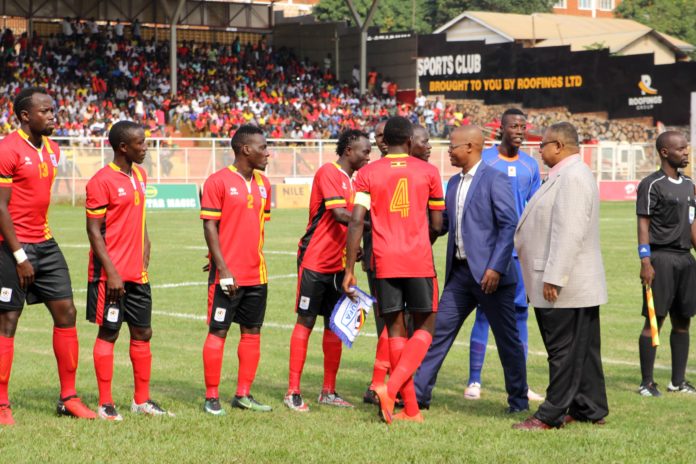
Some of the locally-based players expected to take part in CHAN 2018
With Uganda’s hopes for qualifying for the 2018 World Cup buried, the team may decide to give a chance to the local based players in their last World Cup qualification match against Congo Brazzaville.
Sources indicate Cranes interim coach Moses Basena may give opportunity to the local based players as he aims to help them build confidence ahead of the 2018 CHAN tournament.
Only two local-based players started in the goalless draw against Ghana on Saturday, Derrick Nsibambi and Nicolas Wadada. Muzamiru Mutyaba later replaced Farouk Miya in the 60th minute.
The Cranes consisting more locally-based players than foreign-based players is scheduled to travel to Brazzaville on 6 November and according to officials, the match will help Uganda’s CHAN team (which consists of Azam Uganda Premier League players) get exposure to international matches before their friendly matches.
The 16-team tournament for locally-based players only is scheduled to take place between January 12 and February 4 2018.
Kenya was stripped of hosting rights for CHAN 2018 last month and CAF is yet to decide the country to host the tournament.
After a qualification process involving 209 national football teams and lasting for more than two years, the list of 32 sides to take part in the FIFA World Cup 2018 in Russia is beginning to take shape.
Each continent gets to be represented at the tournament with 5 teams from Africa, 13 form Europe, 4 from Asia, 5 from South America, 1 from Oceania, 3 from North and Central America and Caribbean and the host nation.
Twenty three out of the 32 of those have already been confirmed in the tournament and the remaining nine will be known by November. Only four places remain in Europe, three in Africa, one in Oceania and one in South America.
Nigeria and Egypt are the two African sides that have already qualified and the remaining three teams will go all the way to the final day of the qualification campaign.
Morocco lead their group, one point ahead of second placed Ivory Coast, and the two face-off in the decisive match on November 11. The Moroccans only need a draw while the Ivorians need a win to qualify.
Morocco last competed at a World Cup in 1998 and are banking on former Ivory Coast coach Herve Renard to end a run of four failed qualifying campaigns.
Tunisia need one point from a home fixture against North African neighbors Libya to secure a fifth World Cup appearance and their first since 2006, while DR Congo will need a win against Guinea to qualify, should Tunisia lose.
Algeria, Cameroon and Zambia in Group B all have a chance to qualify and will be settled on the final day.
Meanwhile, elsewhere the USA failed to qualify for the first time since 1986 after a shocking 2-1 defeat to 99th ranked Trinidad & Tobago.
The Netherlands, 2010 runners-up, also missed out on a second successive major tournament despite beating Sweden 2-0 in their final game of the qualifiers.
Argentina needed Messi’s hattrick to book a place in a 3-1 comeback against Ecuador.
Europe gets 13 places but they will be 14 due the hosts Russia. 10 nations are already confirmed and the other 4 slots will be determined by paly-offs.
Switzerland, Italy, Denmark, Northern Ireland, Sweden, Republic of Ireland, Greece and Croatia still have a chance to qualify through the play-offs.
The play-off draw will take place on Tuesday 17 October. The first legs will be played on 9-11 November, with the second legs on 12-14 November.
Australia will face Honduras next month in a final two-legged playoff tie to confirm a team from the Oceania region.
The final draw for the tournament will be held in Moscow on Friday 1 December.
Qualifiedteams:
Africa: Nigeria, Egypt.
Europe: Russia (hosts), Belgium, Germany, England, Spain, Poland, Serbia, Iceland, France, Portugal.
South America: Brazil, Uruguay, Argentina, Colombia.
North, Central America and Caribbean: Costa Rica, Mexico, Panama.
Comedian Alex Muhangi’s comedy outfit, Comedy Store returns today, following a week’s hiatus after his departure from his former ‘home’, Diners Lounge.
However, the good news is, he has found a new home; 400 Bar & Restaurant is his new home and he is set to launch his fun-filled show today.
Among the artistes lined up for his ‘new maiden’ show include MC Mariach, T-Amale Mirundi, Ssenga Justine Nantume, Godi Godi, Dhikanio among others.
There will also be performances from the undercover brothers and Winnie Nwagi. The show, as always will kick off at 6pm.
Speaking out on why he left his former home, Muhangi said he had outgrown the venue.
“The venue was no longer enough for us. We had to shift to this spacious 400 bar which commands a nice ambiance and enough parking space,” Muhangi intimated to EagleOnline.
Muhangi also laughed off reports that he parted ways with the management of his previous home due to mismanagement of funds.
“How could that be?! All funds I was handling were my funds. And I duly paid my rent for using the venue, so what do they mean I mismanaged funds…they were all my funds.”
Esther Namazzi, not real name, graduated five years ago with a bachelors degree in community psychology from one of Kampala’s universities but has since then failed to find to work because her qualifications are currently not so marketable in Uganda.
Needless to mention, Ms Namazzi is just one of the many Ugandan graduates who have failed to find jobs because their training did not equip them with the necessary skills demanded on the local and regional markets. Such a scenario has put Uganda’s higher education institutions on the spotlight, with some parents questioning why they have to spend on courses that are not rewarding.
ICT is an important ingredient of learning at the Victoria University
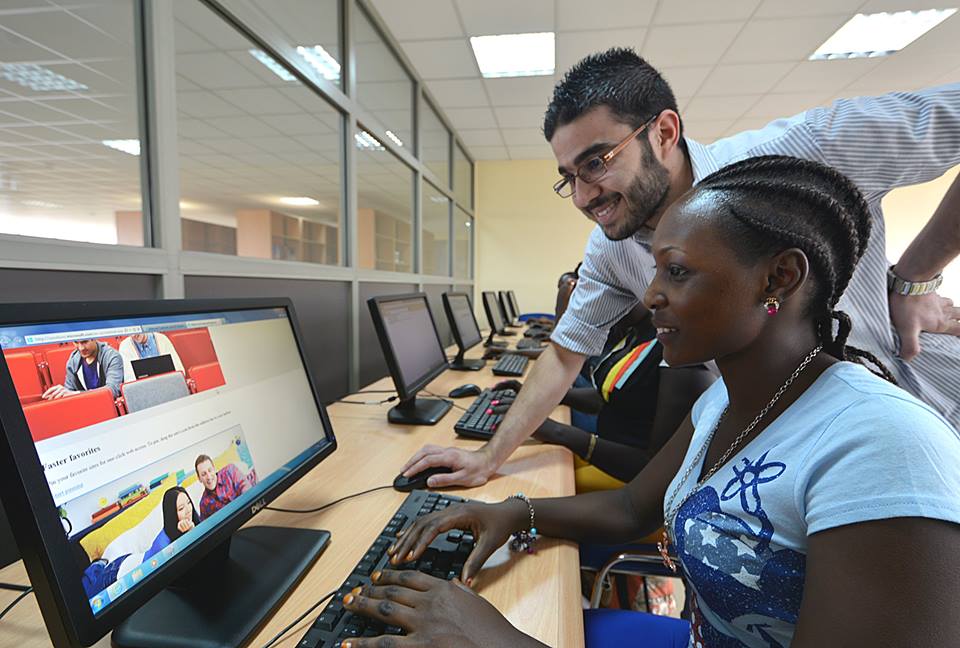
And this is where Victoria University Kampala, a dynamic Institution of higher learning comes in to make a difference. The university provides market-oriented training to its students in a conducive environment characterised by fully-fledged ICT equipment.
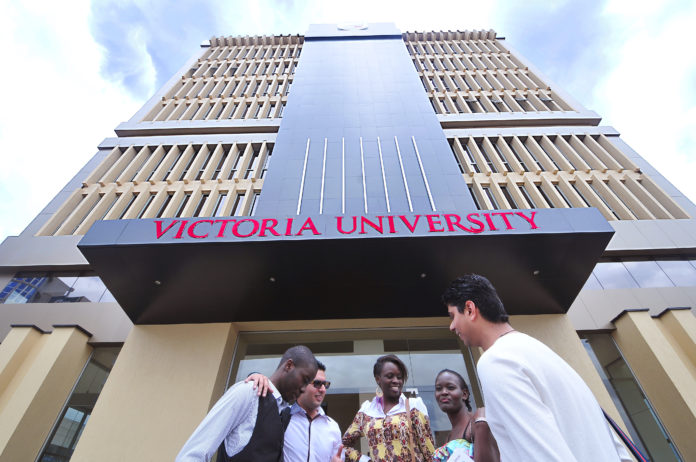
Located in the heart of Kampala, Victory University (VU) is licensed by the National Council for Higher Education. It is an internationally recognised institution that is committed to excellence in research and education, and offers an outstanding campus-based student experience.
Indeed, over the past three years the university has registered exponential growth while maintaining a supportive social and academic community, making VU a great place to study, research and work.
Success around the world
“Our graduates are successful around the world and in East and Central Africa in terms of securing and creating employment. This is due to the dynamic, employment-facing learning experience facilitated by dedicated and committed lecturers and modern, fully equipped facilities,” says one of the officials at the campus.
Diverse culture
As a cosmopolitan university with students of diverse nationalities, VU prides itself in in being the only university located right in the heart of Kampala, a hub for a good night life, amazing food, access to stress-free shopping and several options for recreational activities, all important ingredients of social life, which is part of the learning experience.
The university also offers an exciting cultural experience for many foreign visitors, making it easy for all the non-Ugandan students to study, stay and live comfortably within Kampala.
“Well being a student at VU has had a bigger impact compared to any other ever received. And place is so conducive however much in the heart of Kampala,” says one of the students, Andrew Marvin Wavamuno.
VU has endeavored to ensure that all facilities, whether educational or recreational, are set up to provide its students with the most conducive environment in terms of learning, recreation and relaxation.
“We understand that it is a combination of all these factors, and the opportunity to engage fully with other students, that create a fully holistic environment for learning, self-development and social interaction,” he adds.
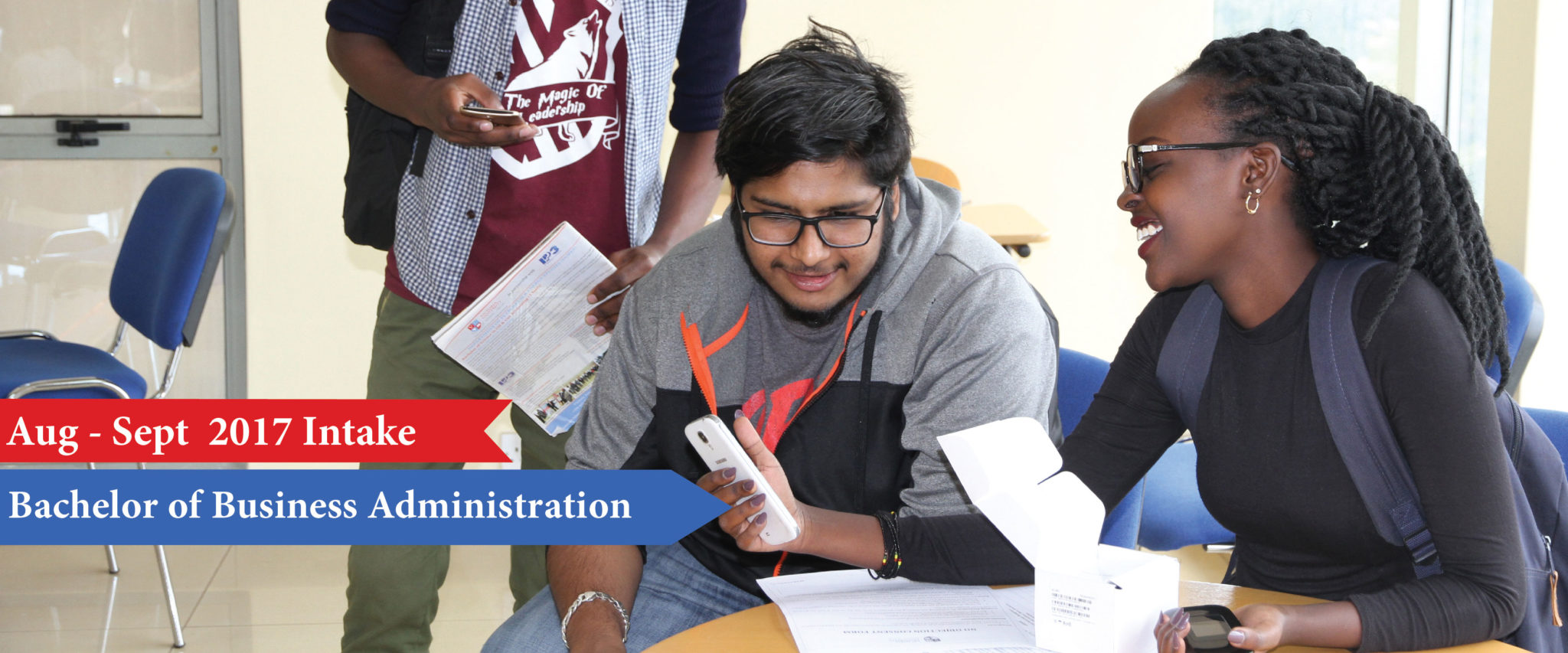
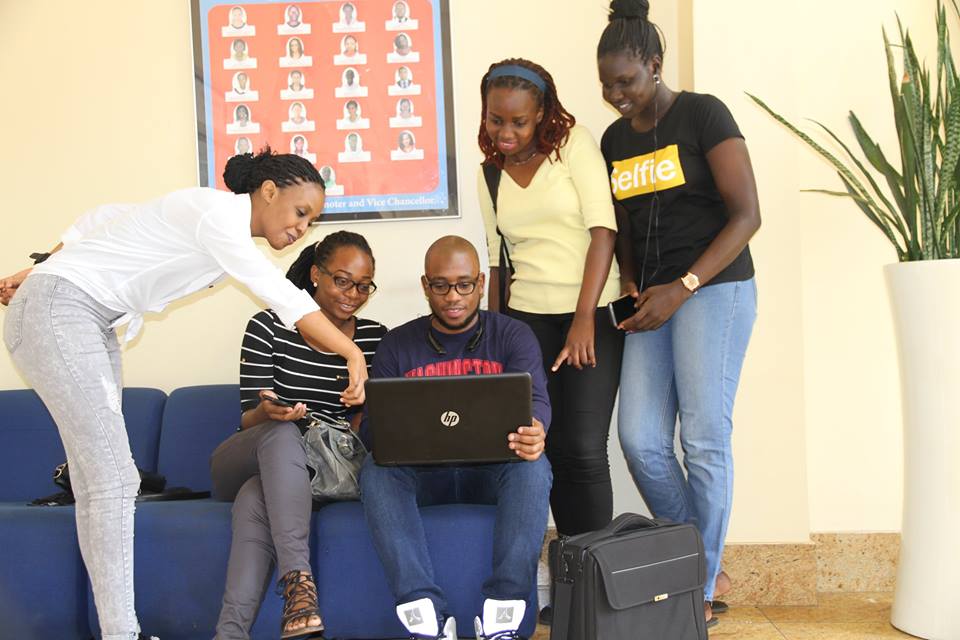
Victoria University students sharing experiences, while learning from each other
The university provides such facilities because officials there expect a lot from the students and continue to invest in an academic environment which will help them succeed.
The Computer lab is well-quipped and spacious
Meanwhile, students benefit directly from a range of learning technologies, including among others the virtual learning environment.
According to one of the lecturers, VU admits talented students to take up world class degrees and diplomas. The university, he says, sources for mature students who possess good matric results, portray positive attitude and willing to give back to the community. As way of keeping the standards, the admitted students must maintain a GPA of minimum 3.5 throughout the programme, the lecturer adds.
The Victoria University Library is well-equipped
As one of the top universities in Uganda, Victoria University stands out as a pivot of academic excellence offering fresh and intellectually thriving environment that nurtures critical and progressive thinkers and pushes pedagogical boundaries. The university offers a wide range of marketable courses tailored for the market.
The University is also committed to the advancement of higher education in the country and the East African region by establishing exemplary, specialized and employment-oriented education.
Career choices
The university does not only admit students; it also gives them tips on making career choices to get them started. The tips relate to personal values, interests, soft skills and aptitudes, goals, occupations and action plans among others.
Girl child
IMPORTANT: Girls groomed by Victoria University
VU pays special attention to women and girls in particular and provides special incentives to the girls at the campus. During the recent celebration of the International Day of the Girl Child, one of the officials at the university had this to say: “Girls are the pillars of the society. Life is not possible without them. A small girl child can be a good daughter, a sister, a wife and a mother in future. Education is the key. We encourage you to grow every girls’ spirit and hunger for knowledge to build tomorrow’s future; as we celebrate the International Day of the Girl child.”
In-takes
Dr Sudhr Ruparelia Scholarship Grant
The university management realises the economic situation in Uganda and as such has extended a helping hand to parents by establishing a grant – The Dr. Sudhir Ruparelia Scholarship Grant aimed at enabling students from low income homes access higher education. For those interested, details can be accessed at the university’s website.
Academic programmes
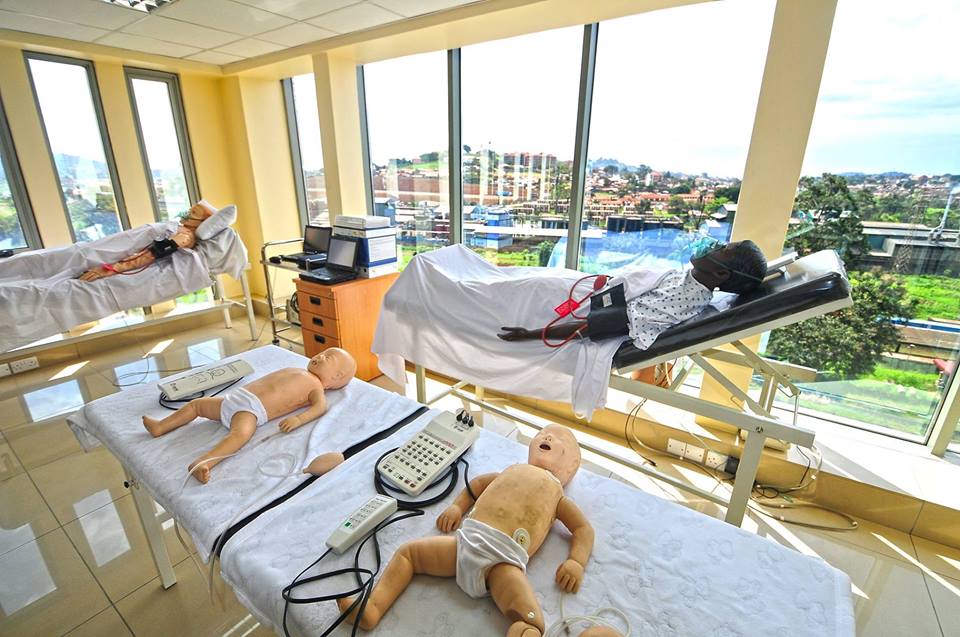
At Victoria University health training is accorded priority status to allow students gain the relevant experience in handling patients
The university offers dynamic courses at diploma and degree levels under themes such as: Business and Management, Humanities and Social Sciences, Science and Technology as well as Health Sciences. Other courses include Business Administration, Banking and Finance, Computer Science, Information Technology, Business Information Systems, Journalism and Media Studies and Tourism and Hotel Management. There is also training in Oil and Gas management, an important course as the country prepares to produce oil in the near future.
Intakes
Students wishing to join the university can opt for October or January intakes. The arrangement is flexible and allows students to engage in other important activities or look for school fees and other necessities. Further, it also brings onboard more students than if it were only one intake.
Research-led teaching
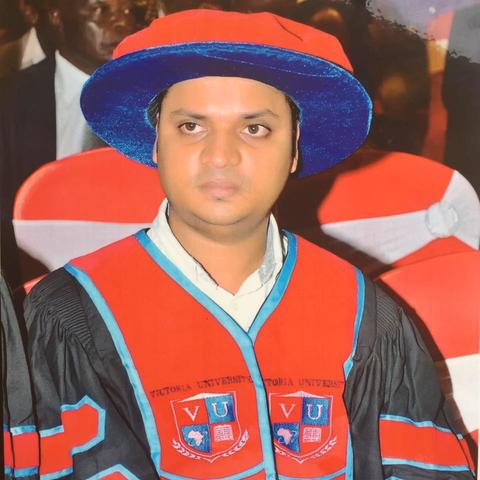
Victoria University Vice Chancellor Dr. Sharma Krishna
According to the Vice Chancellor Dr. Krishna N Sharma, the university takes research-led teaching seriously and staff are encouraged to research and teach with dedication.
“Our curriculum is regularly updated by the latest research and our students undertake research themselves. Because our University is on a human scale, there is also a very strong sense of community,” he says.
Enhancing university’s intellectual community
Further, Dr. Sharma says students enhance the university’s intellectual community through contributions in lectures, conferences and research symposia.
“It is immensely gratifying that they are proud to be associated with Victoria University,” he adds.
According to Dr. Sharma, management is determined to achieve its mission of being a research-driven University motivated by societal needs, whilst creating scholars who are empowered to provide cutting edge solutions.
“The best way to truly appreciate that Victoria University has a lot to offer is to visit, but until you are able to do that I hope our website will give you all the information you need; whether you are looking for a place to study or work, want to find out more about our research and Public engagement, or reconnect with our alumni community,” the Vice Chancellor says.
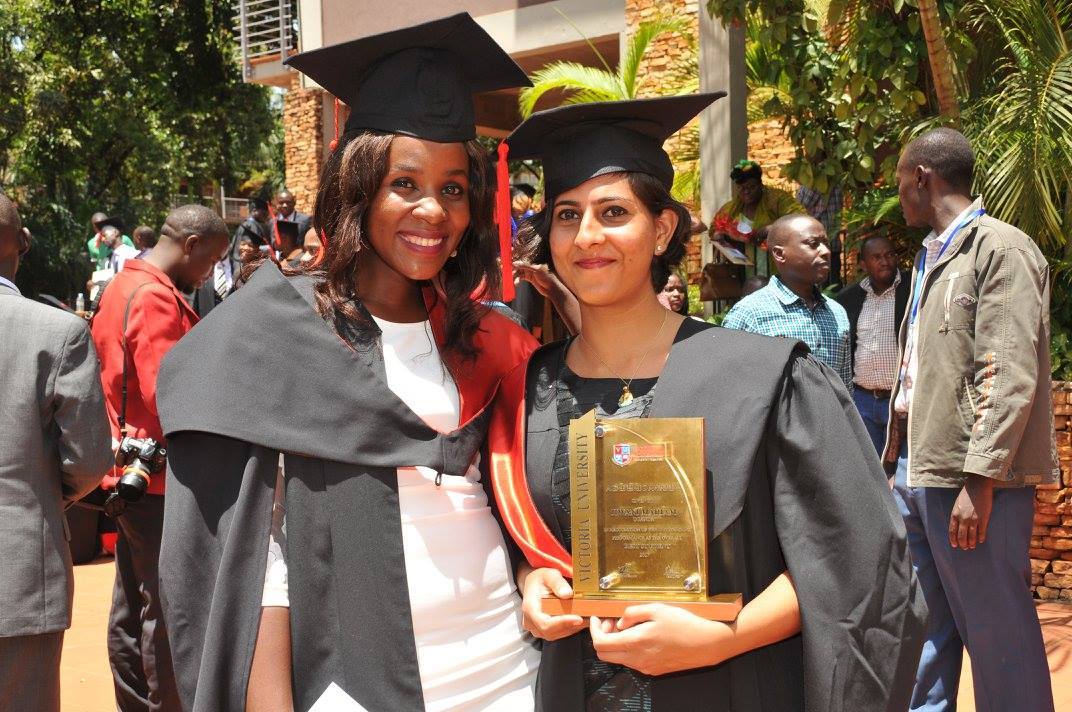
Victoria University graduates are successful around the world
Recognising the Alumni
Whether you’ve just arrived on campus or you’ve been VU for years, the university is the place to connect with all professional and career stakeholders.
At VU students can socialize, network, share news, and get involved with fellow alumni, students, parents, faculty, staff, and friends. The University community is also very strong and it comes together through an online community free and open to all.
“You can get access to the people, events, ideas, and resources that matter to you, and help strengthen the University,” the VC notes.
WANTS 'SMART AGRICULTURE PRACTICES': Agriculture Minister Vincent Ssempijja.
The Minister of Agriculture, Animal Industry and Fisheries Vicent Sempijja has implored Ugandan farmers and other land users to adopt practices of smart agriculture.
In a statement issued ahead of the 35th National World Food Day on October 16 2016, the Minister said that on that day Uganda, just like other countries, will focus on the status of food security, hunger, malnutrition, poverty and agricultural development.
To be held under the theme: ‘Change the future of migration, invest in food security and rural development’ the celebrations at Kachwekano Zonal Agricultural Research Development Institute in Rubanda district, will be graced by President Yoweri Museveni.
The theme, Sempijja said, recognizes the negative effects on migration on food security and rural development, adding that over the medium term his ministry will continue pursing policies and interventions that promote increased value addition in order to improve our foreign exchange base.
To augment his statement, Sempijja, listed soil and water conservation, conservation agriculture, agro-forestry, manure management, irrigation, mechanization of production systems and integrated nutrient and pest management, aquaculture development, forestation, wetland, sustainable pasture and rangeland management as some of the practices that will boost Uganda’s agricultural output.
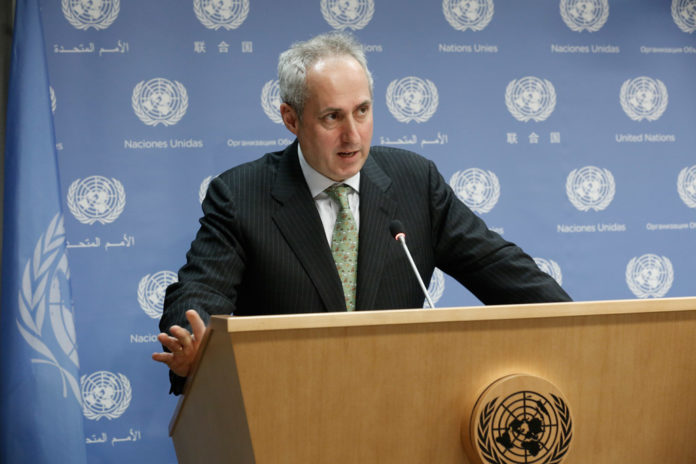
Spokesperson for the Secretary-General, Stéphane Dujarric. UN Photo/Evan Schneider
The United Nations Spokesman Stéphane Dujarric has said that the UN Mission in the Central African Republic (MINUSCA) reported it had received an allegation of sexual abuse of a minor that took place in Bambari by UN peacekeepers.
“The alleged victim was immediately referred to our humanitarian partners on the ground for appropriate medical and psychological assistance,” said the Spokesman, adding that the UN Office of Internal Oversight Services has carried out a verification of information inquiry and preserved evidence, which will lead to the matter being referred to the Member State for further investigation and action.
Last month, during a high-level event on the margins of the UN General Assembly’s annual general debate, Secretary General António Guterres announced the appointment of Jane Connors as the first-ever UN Victims’ Right Advocate, who, he said would develop system-wide mechanisms and policies to promote reliable gender- and child-sensitive processes for victims and witnesses to file complaints.
He also announced the creation of a ‘Circle of Leadership’ for Heads of State and Government to demonstrate resolve and commitment at the highest political level to eradicate sexual exploitation and abuse.
Countries in Sub-Saharan Africa have invested heavily in skills building, with public expenditure on education increasing sevenfold over the past 30 years, the latest World Bank report – Africa’s Pulse – indicates.
The report released in Kampala yesterday by World Bank’s Economist for Africa Region Albert G. Zeufack, indicates that education absorbs about 15 percent of total public spending and nearly 5 percent of GDP, the largest spending ratios among developing regions.
“There is of course variation across countries, in the range of about 11 to 28 percent of total government spending, and from 2 to 15 percent of GDP In addition to public resources, it is estimated that households contribute around 25 percent of the total national education expenditure,” the report indicates.
Further, according to the report, more children in the region are in school today than ever.
‘Over the past half-century, primary completion rates have more than doubled, while completion of lower secondary has increased more than fivefold,’ the report adds. Still, the report says, almost one in every three children fails to complete primary school. In most countries, far less than 50 percent of all children complete lower secondary education, the equivalent of middle school in some countries and fewer than 10 percent make it to higher education.
The report notes that although gender gaps in both primary and secondary school have narrowed in most African nations, there remain significantly more girls than boys out of school. In some countries, it says, there are fewer than three girls for every four boys.
It points out that for children in school, learning outcomes have been persistently poor, leading to huge gaps in basic cognitive skills (literacy and numeracy) among children, young people, and adults. “The literacy rates of the adult population are below 50 percent in many countries, and functional literacy and numeracy are lower.
“Even at recent rates of progress, in the decades to come, the region will continue to fall behind other regions in the world in educational attainment at all levels,” says adding that child stunting rates remain stubbornly high, leading to adverse impacts on all future skill investments.
Meanwhile, according to the report, Sub-Saharan Africa has the youngest population in the world but the region’s working-age group is the least skilled globally, constraining economic prospects.
It states that despite economic growth, declining poverty, and investments in skills-building, too many students in too many countries in Sub-Saharan Africa are not acquiring the foundational skills they need to thrive and prosper in an increasingly competitive global economy.
‘Building the skills—cognitive, socio-emotional, and technical, of today’s workers and those of future generations will be vital for realizing the development potential of the region’, the report states in part.
The report recommends that countries’ skill-building efforts must strive to make spending smarter, to ensure greater efficiency and better outcomes. “But smart investing in skills is more difficult than it looks Sub-Saharan African countries face two difficult choices in balancing their skills portfolios: striking the right balance between overall productivity growth and inclusion, on the one hand, and investing in the skills of the workforces of today and tomorrow, on the other hand. “In both cases, these choices are particularly salient with the use of public resources for skills investments,” it says
To attain both growth and inclusion in the region, the report urges governments to invest in strong foundational skills that can close significant gaps in education and training. It says there is need to tackle child stunting and build the literacy, numeracy and socio-emotional skills of children, youths, and adults.
‘This strategy requires focusing on investments in the early years and inputs that matter most for education quality, specifically investing in effective teaching, not merely hiring more teachers or building more buildings. It requires training that draws on the latest evidence, and creating incentives for the best to become teachers, the report says.
Equal access to quality services
According to the report, particular attention must be paid to ensuring equal access to quality services for the poor and to closing gender gaps, especially in high-inequality contexts. It also requires supporting youth and adults who have missed out on foundational skills. Such support would include interventions that build basic literacy and socioemotional skills among those employed in farm and nonfarm rural activities and low-productivity urban self-employment.
The PPPs
The report calls for renewed public-private partnerships (PPPs), with a strong regulatory role for the state as way of expanding basic education skills. It says support should target demand-driven technical and vocational education and training (TVET), higher education, entrepreneurship, and business training programs tied to catalytic sectors. Such support, the report says, should incentivize more on-the-job training, especially in smaller firms.
It says special attention should be paid to science, technology, engineering, and mathematics (STEM) fields, focusing on the transfer and adoption of technology in economies with an enabling policy environment for these skills investments to pay off.
Economic inclusion
The report says economic inclusion requires investing in labor market training programs focused on disadvantaged youths, and improving the skills of workers in low-productivity activities in urban areas for instance, through informal apprenticeships and comprehensive livelihood programs and agricultural extension services in rural areas.
Adaptability
For adaptability, the report says reforms should be introduced in secondary and tertiary education to delay the tracking of students into technical education and vocational streams, at least until the upper secondary level. In addition, education systems should create effective pathways between academic and technical tracks, and introduce more active and work-based learning practices.
The report urges families to invest and nurture children’s cognitive and socio-emotional development through quality care and parenting, and by engaging with schools to hold them accountable for effective service delivery.
According to the report, the private sector can participate effectively in the provision of services to enhance access and quality, invest in on-the-job training, work with education and training providers to ensure programs are aligned with their needs, and engage in national social dialogue to prioritize skills development and reforms, to create a policy-enabling environment for skills investments to pay off.
Budget When picking a hotel room this is always the first factor to take into consideration. What can you afford? If you are using Jumia Travel for example one way to make sure you do not exceed your budget is by looking at the deals page. Every week they have great discounts that could save you a buck or two. This could also help you get an amazing room without having to break the bank.
Number of guests
Next thing to consider is how many people you are booking for or with. This determines whether you should get a single, a double room, a suite or family room.
Specifications based on preference
Different people have different things they consider important for example size of bathroom, room with a balcony, the room that faces the most scenic view, a room with a television or mini bar.
Amenities
Several facilities are very important in this day and age, most important of them being Wifi especially if it is a business trip. Most people need to be able to stay online to send emails, have skype calls and generally get work done. Other amenities like laundry services, sauna and steam bath and swimming pool.
Distance from reception/Intercom provision
Lastly this is not something people consider and this mostly applies to the walk in customers. However, it is important to be as close to the reception as possible or make sure there is an intercom in the room in case you need something.
Stay Adventurous!
The writer is the PR Manager at Jumia Travel Uganda
It was an action packed rugby tournament as the Guinness-sponsored Rugby Cranes Sevens team retained the African trophy, with Adrian Kasito scoring a marvelous try in the dying minutes of the game to ensure the Ugandans remained champions.
Already having qualified for the 2018 Rugby World Cup in San Francisco, US, the Rugby Cranes were to face Zimbabwe in the finals. The Ugandans needed their classical passing game to beat their opponents on 10-7 and no sooner had Kasito scored his try, than the game ended leaving the Zimbabwe players in tears.
This means that the Rugby Cranes Sevens team also qualifies to play in the HSBC World Sevens series tournaments in Dubai, Cape Town and Hong Kong.
Speaking to media, Uganda Breweries Limited Head of Beers, Estella Muzito said: “We’re ecstatic about the latest achievement by our national team. They showed great zeal and spirit as they fought to retain their trophy. As Guinness, our support for the national team and the sport will continue to grow. The team will be carrying our flag to the Rugby World Cup next year and we will be right there with them all the way. Once again, I would like to congratulate the Uganda Rugby 7s Cranes, the Uganda Rugby Union, and all supporters of Uganda Rugby for a job well done.”
The Rugby Africa Mens Sevens tournament is an annual tournament organized by the African governing body, Rugby Africa that draws together the top playing nations in Africa.
The teams that took part in this year’s tournament are Uganda, Madagascar, Zimbabwe, Senegal, Zambia, Morocco, Tunisia, Botswana and Ghana.
Guinness came into partnership with the Uganda Rugby Union and took on the sponsorship of the national team by contributing Shs200 million to the development of the team and sport. Of the contribution, Shs100 million was made in cash.
The renewed partnership is running for the next three years.