Stanbic Bank
Stanbic Bank
19.8 C
Kampala
Stanbic Bank
Stanbic Bank
Home Blog Page 1763

Japan music star Piko Taro to write song about Uganda’s tourism

President Museveni meets Piko Taro in Kampala

Japanese YouTube star, Piko Taro, has promised to write a song to promote Uganda’s tourism, having been appointed by the Ugandan government as a tourism ambassador to help boost the number of Japanese travelers to the country.

At the just-concluded Giants Club conference in Kampala, President Yoweri Museveni asked Piko Taro, best known for his hit viral song ‘Pen-Pineapple-Apple-Pen’, if he is a ‘Samurai’ (a member of a powerful military caste in feudal Japan). The Japanese responded that he is a ‘singer-songwriter’ and drew laughter from the attendees with a performance of the song, also known as ‘PPAP’.

Piko, who will serve in this capacity over the next year said: “Uganda has fantastic weather and tasty food. It is a great country to visit for those who want to spend a relaxing time.”

According to the singer, he met with members of the Ugandan national soccer team on Thursday and taught them how to do the PPAP dance so they can perform it after scoring a goal.

The singer is popular in Uganda, with PPAP topping the local charts in October last year, said an official from Piko Taro’s management office Ave.


Stories Continues after ad

Sudan, Ethiopia foreign ministers meet Machar

Foreign Affairs Ministers of Ethiopia and Sudan with former South Sudan First Vice President Riek Machar. Photo/africanews.

Foreign Affairs Ministers of Sudan and Ethiopia have met with former South Sudan First Vice President Riek Machar.

Ethiopia’s Workneh Gebeyehu and Sudan’s Ibrahim Ghandour met with Machar in South Africa as part of efforts by the Intergovernmental Authority on Development (IGAD) to maintain peace in South Sudan.

Machar, who leads the Sudan Peoples Liberation Movement – In Opposition (SPLM – IO) has been in exile in South Africa since renewed clashes between his forces and those of the government erupted earlier this year.

Reports last month indicated that Machar and other opposition elements had responded positively to a national dialogue body constituted by President Salva Kiir.

Machar’s forces have battled soldiers loyal to Kiir for more than three years. The country plunged into civil war just two years after independence from Sudan in 2011 after President Salva Kiir fired his then deputy Riek Machar.

The East African regional bloc, IGAD, at its 2017 Extra-Ordinary Summit in Ethiopia’s capital Addis Ababa called upon both parties to return to the 2015 peace agreement whose implementation was abandoned following renewed violence. The agreement faltered after renewed conflicts in 2016 between the two parties.

Kiir declared ceasefire and launched the national dialogue body to organise the national peace dialogue expected to include the armed opposition to address the root causes of the conflict.


Stories Continues after ad

UPDF denies bombing SPLM-IO positions in South Sudan

ISSUED STATEMENT: UPDF Spokesperson, Brig. Richard Karemire

The Uganda Peoples Defence Forces (UPDF) has denied bombing South Sudan rebel positions.

The denial by UPDF Spokesperson Brigadier Richard Karemire came after the Sudan Peoples Liberation Movemnet – In Opposition (SPLM-IO) accused the Ugandan army of deploying helicopter gunships and war planes in Waat, an area the rebels say is under their control, on Saturday morning.

“That is not true; we encourage dialogue among all the parties in South Sudan,” Brig. Karemire said on phone today, following the accusations contained a statement signed by SPLM-IO spokesperson Brig. Gen. William Gatjiath Deng, today.

According to Brig. Gatjiath, the attacks came after a high-level meeting in Kampala between Lieutenant General James Ajonga Mawut, the South Sudan Chief od Defence Forces, and senior Ugandan military officers.

In the statement Brig. Gatjiath further says: ‘the ongoing air raids and joint operations are altogether intended to frustrate IGAD, counter and undermine the ongoing consultations on the resuscitation of the Agreement on the Resolution of the Conflict in South Sudan (ARCISS) under the auspices of the Inter-Governmental Authority for Development (IGAD) High Level Revitalization Forum (IGAD-HLRF)’.

THE SPLM-IO Full Press Statement

UPDF bombing SPLA (IO) Positions in Waat;

At around 10:00am Saturday morning of October 07, 2017, Ugandan helicopter gunships and war planes indiscriminately bombed SPLA (IO) positions and civilian targets in and around Waat, 90 per cent of which SPLM-SPLA (IO) now control. The Ugandan People’s Defence Forces (UPDF) gunships have so far targeted Waat airstrip which SPLA (IO) solidly controls and other SPLA (IO) positions around the trenches where Juba regime soldiers, wounded or otherwise, are being confined and dying from lack of food, water and medical attention.

Indeed, the UPDF bombing of SPLA (IO) positions in and around Waat followed a three-day meeting in Kampala, Uganda, between Lt. General James Ajonga Mawut, Juba regime’s Chief of Defence forces, and very senior Ugandan military officials on launching further joint operations against SPLA (IO) forces across South Sudan.

In particular, another meeting between UPDF and Juba regime military officials on a joint military operation against SPLA (IO) bases and positions in Imotong and Yei River States was also held between October 05 and Saturday October 07, 2017 at the border town of Nimule, and this joint operation is just about to be carried out in the name or under the extremely dubious cover of extending Ugandan electricity to Kaya, Yei, Kajo-Keji and other areas.

Indeed, more than eleven UPDF security and intelligence officers have been deployed to Bentiu, Unity, to assess the situation, map and locate the advancing SPLA (IO) bases and positons to be bombed in the coming days or weeks.

Some other UPDF security and intelligence operatives have also been deployed in Torit to coordinate the bombing of SPLA (IO) forces under Cdr Major General Anthony Osuru Ongwajja, Sector Nine (9) Deputy Commander, Eastern Equatoria, Cdr Major General Patrick Ohiti Chapuho, Anyanya Division Commander, and Cdr Brigadier General George Onek Lam, Anyanya Division Deputy Commander, Imotong State.

No doubt, while the gallant and brave SPLA (IO) forces of Division Eight (8) under the command of Cdr Major General Otong Liak and Cdr Major Michael Nyak avoided the UPDF air raid and repulsed Juba regime’s desperate attempt to retake Waat airstrip and evacuate the notorious General Johnson Gony Beliew and the Bieh state deputy Mr.Teah Gatjiak Wiek to Juba, SPLA (IO) is also fully aware of the fact that the ongoing air raids and joint operations are altogether intended to frustrate IGAD, counter and undermine the ongoing consultations on the resuscitation of the Agreement on the Resolution of the Conflict in South Sudan (ARCISS) under the auspices of the Inter-Governmental Authority for Development (IGAD) High Level Revitalization Forum (IGAD-HLRF).

The SPLA-IO therefore would like to once again remind the people of South Sudan, the Troika, United Nations (UN) and indeed the international community that the Ugandan military re-intervention and meddling in South Sudan’s internal affairs will not only escalate the ongoing conflict, prolong the suffering of South Sudanese, cause more deaths, displace more, but also exacerbate and worsen the already very dire humanitarian condition in South Sudan.

The Ugandan re-intervention, if not stopped immediately, may soon provoke a regional war, since Uganda is not at all the only country in the region that has vested in South Sudan.

Brig. Gen. William Gatjiath Deng,

SPLA (IO) Military Spokesperson

Pagak, South Sudan

Sunday October 08, 2017


Stories Continues after ad

Mugabe set to make Cabinet changes next week

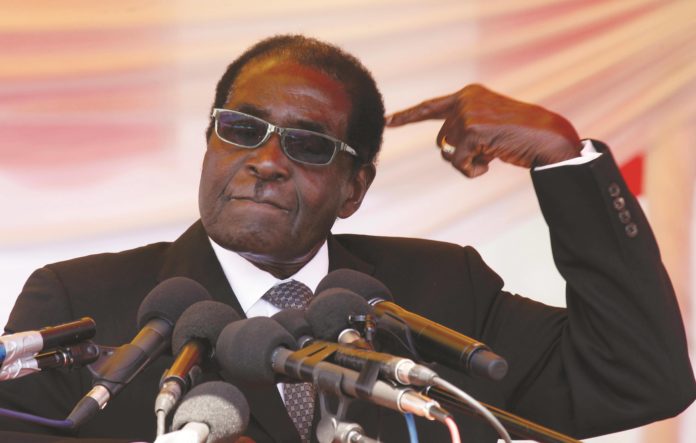
EMBATTLED AND IN TROUBLE? Former Zimbabwe President Robert Mugabe

Zimbabwe’s President Robert Mugabe has said he may make changes to his cabinet next week, at a time of rising tensions within his ruling party over who will eventually takeover from him.

Mugabe told a meeting of the ruling ZANU-PF youth wing in Harare that it was time to review the performance of his cabinet ministers.

The last cabinet reshuffle was in September 2015 when Mugabe was removing allies of his former deputy Joice Mujuru, whom he fired in December 2014 over accusations that she was plotting to topple him. She denied the allegations.

“Next week there might be some changes in government. Should we remain with the same team or we make changes or even discard some. So that exercise I will be doing it and early next week you will get the results,” Mugabe told a meeting of his ZANU-PF youth wing.

Vice President Emmerson Mnangagwa, a frontrunner to take over from Mugabe, said on Thursday he had been poisoned in August when he fell ill and was airlifted to South Africa, which earned him a public rebuke from First Lady Grace Mugabe.

ZANU-PF is divided into two camps, one supporting Mnangagwa to succeed Mugabe and another rallying behind Grace Mugabe.

Mugabe also castigated his senior party officials for fighting in public, saying this would weaken ZANU-PF and embolden the opposition ahead of elections next year.

“And the public insults, its a shame. A shame even to our legend because our party was not built on that basis. A party which has learnt that if we are divided then we become the food of vultures outside,” Mugabe said.


Stories Continues after ad

Nigeria first African country to qualify for Russia 2018

Nigerian star striker Alex Iwobi

A 57th minute goal by Nigerain striker Alex Iwobi against the Chipolpolo of Zambia has ensured that Nigeria becomes the first African country to qualify for the 2018 World Cup in Russia.

Nigeria’s qualification on Saturday, October 7, with a game at hand, sent the country in wild excitement, with President Muhammadu Buhari describing the Super Eagles win as a ‘very sweet, soothing and a 57th Independence Anniversary gift to the nation’.

This is the sixth time the Nigeria has qualified for the World Cup. The match was played at the Godswill Akpabio International Stadium, Uyo, Akwa Ibom state.

Meanwhile, the Uganda Cranes yesterday drew 0-0 with the Black Stars of Ghana and now await results from the Egypt-Congo game to know their fate.

Already Ghana and Congo are out of contention for Russia 2018, but a win or draw for the latter in today’s game in Egypt will keep Uganda’s hopes for its first-ever World Cup qualification, alive.

Stories Continues after ad

Kenyan activists take on President Kagame’s daughter

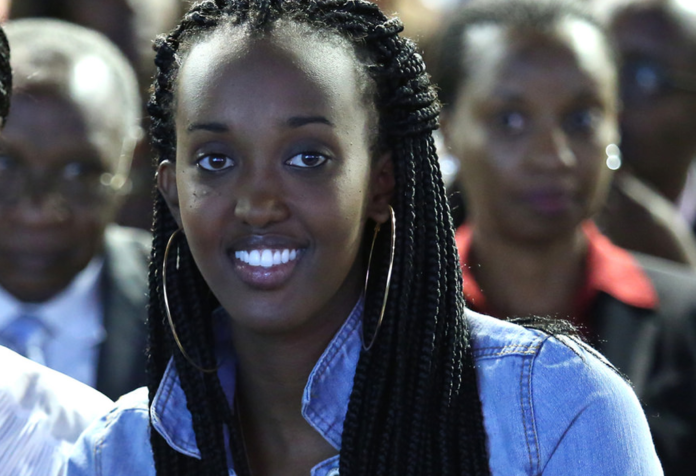
Ange Kagame, Rwanda President Paul Kagame's daughter

Recently, when a Kenyan political activist took to air his ‘grievances’ with the Rwandan government, the party at the receiving end of the rather daring rebukes was not a politician but rather Ange Kagame, President Paul Kagame’s daughter.

It all began when the active and vocal First Daughter of Rwanda sought to engage a one Robert Alai, who felt that the penalty of 20 years behind bars for Diane Rwigara, the politician who dared contest against President Kagame in the recent presidential elections in Rwanda were too high a price to pay, especially in a country that claims to uphold democracy.

The First daughter was quick to point out the ‘redundancy’ of his tweet and said she would hold him in her prayers, while alluding to his mental capabilities.

“Praying for your critical thinking….& that you stop regurgitating headlines & information,” Ange Kagame tweeted, prompting quick responses by the Kenyans, who made known their qualms with the current government of Rwanda.

Another social media influencer known as @Lord Mutai immediately jumped on the thread and rebuked the first daughter; calling out her sense of self entitlement.

He said that President Kagame would eventually have to leave power and that his family would suffer.

“Your reply @AngeKagame is utterly stupid and smells ‘entitlement’. You dad can’t stay in power forever. He will leave and you shall cry,” Lord Mutai wrote.

But the First Daughter was not to be outdone, quickly pointing out the media  personalities’ grammar errors and lack of judgement.

“Lol. I think you meant *smells of* & *your*. 24 hrs in your day, though. Don’t spend them hurling insults at strangers. God Bless,” she fired back.

It was at this point that the Kenyans on Twitter, notorious for their ever ongoing social media wars decided to take their gloves off, calling the president of Rwanda a dictator and repressive leader.

isaac ombati‏ @caspher4

Replying to @AngeKagame

@PaulKagame is slowly mutating into a dictator. Power corrupts. though his leadership ain’t bad, Even Hitler never had bad intentions.

Geoffrey Nyakang’o‏ @Nyakango

Replying to @AngeKagame

The kind of political repression in Rwanda will at the end of the day result to armed struggle. Without freedom all other efforts are useless

Tom JM‏ @TomJMO

Replying to @akady1 @floriane27071 @AngeKagameKagame must respect the Constitution. Not changing it however/whenever, like a baby changes diapers. He must let divergent opinion prevail.”


Stories Continues after ad

BOU Director Bagyenda on the spot over tax evasion

Embattled former Executive Director in charge of Supervision at Bank of Uganda Justine Bagyenda.

The Bank of Uganda Executive Director in charge of supervision Justin Bagyenda is on the spot again for evading taxes estimated in millions of shillings.

According to a source, the said money accrued due to non-payment of Income Tax from Bagyenda’s apartments in Naguru, rented by top managers of the now-closed Crane Bank for 10 years.

Further, according to the source, the Uganda Revenue Authority (URA) has already began investigations into the said tax evasion.

Mid this year Ms. Bagyenda came under criticism for allegedly failing to enforce her mandate, something her critics said had led to the closure of a couple of commercial banks including the Crane Bank, that is now under receivership.

Also, at about the same time reports indicated that the Inspectorate of Government (IGG) was set to begin investigations into allegations that Ms. Bagyenda made incorrect declarations contrary to the Leadership Code, 2002.

According to sources speaking on condition of anonymity, officials from the IGG’s office were set to meet with city lawyer Dennis Nyombi, to ascertain whether Ms. Bagyenda made false declarations about her assets including land and houses.

Among the property she allegedly falsely-declared are houses in the leafy suburbs of Ntinda, Naguru, Bugolobi and Kulambiro.

“When I wrote the letter I got confirmation from the IGG and I was to get an appointment with the official handling the matter but later on the person went abroad and we have now scheduled between 10th and 20th to meet,” lawyer Nyombi, who is representing ‘whistleblower’ Dick Kimeze, said.

In his allegations, Mr. Kimeze also avers that the properties owned by Ms. Bagyenda are way above what she has earned during her employment over the years.

Contacted at the time the IGG spokesperson Ali Munira confirmed their office had received the petition against Ms. Bagyenda.

“Some lawyer wrote requesting for a meeting to discuss the wealth of the lady (Bagyenda); the meeting has not taken place,” Ms. Munira said on phone then.

By press time it was not possible to get Ms. bagyenda for comment, and also to ascertain whether the said meeting at the IGG’s had taken place.


Stories Continues after ad

Bobi Wine responds to Museveni’s letter

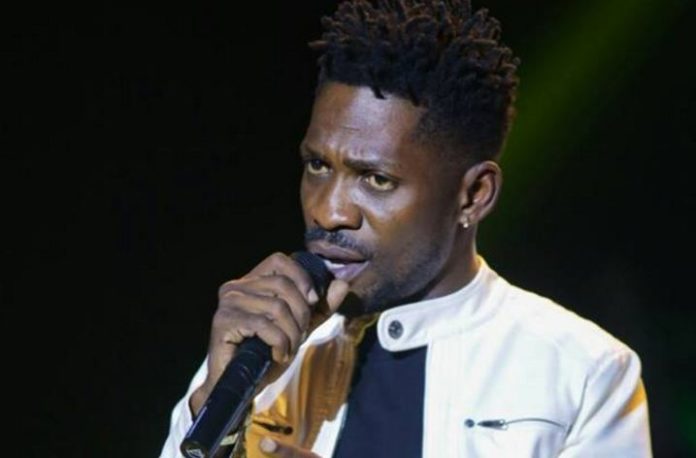
Bobi Wine

Kyadondo East Member of Parliament Robert Kyagulanya a.k.a Bobi Wine has responded to President Yoweri Museveni’s letter to him, appreciating the president for taking time off to respond to the national issues the MP has raised earlier.

On his twitter handle, Bobi Wine had this to say.

I have read President Yoweri Museveni’s response to my recent statements and audio recording on the state of our Nation. The statement contains many errors- factual and in terms conclusions (the obvious one being that am an MP for Kyadondo East NOT KYADONDO NORTH), (which actually symbolises the mistakes and failures in the governance of our country)

Nonetheless, I thank you Mr. President for taking time to respond. I wish we would at all times engage intellectually and in a civil manner- other than the state resorting to the use of force, violence and other machinations. An article should be responded to with an article and not with an arrest or intimidation.

I will respond to the other mistakes, inconsistencies, contradictions and wrong conclusions at an appropriate time- actually, WE AS A GENERATION shall respond, because I don’t speak for myself but for millions of Ugandans, young and old- men, women and children, who want nothing but a better Country for themselves, their children and the generations to come.
Let’s now get into the market of ideas.

Stories Continues after ad

President Museveni responds to Bobie Wine

90 per cent of Ugandans want to criticize President Yoweri Museveni.

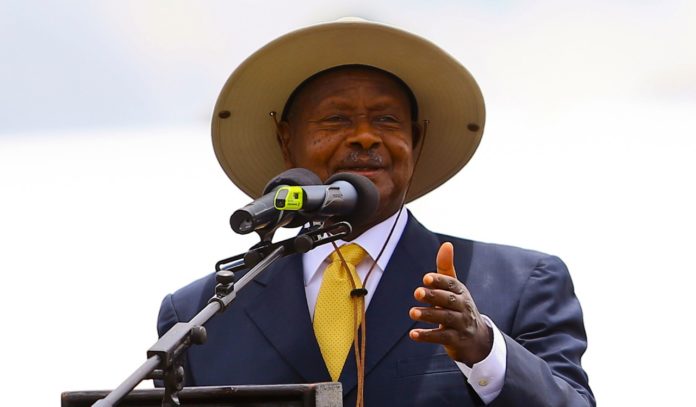
President Yoweri Museveni has written an article responding to the issues that the Kyadondo North Member of Parliament Robert Kyagulanyi a.k.a Bobie Wine raised earlier in his statement.

Museveni responded to number of issues such as the age limit debate, unemployment, infrastructure development, among others.

Below is Museveni’s full statement:

Again, I congratulate our young friend, the Hon. Kyagulanyi, Bobie Wine, for his recent elections in Kyaddondo North.  I also notice that he is quite active in sending out messages about what he thinks should be done in our country, Uganda.  He had issued a statement some time ago in response to my article of 16th July, 2017 in the New Vision Newspaper.  When we were at Makerere, he, again, was part of the group that tried to hijack the Mzee Mandela Memorial Day into an anti-NRM, anti-Museveni forum. I ignored them and focussed on Mzee Mandela and on Africa. I, nevertheless, noticed the indisciplined, uninformed but arrogant way in which that group was conducting themselves.

The Security Services have now shown me a statement ascribed to the Hon. Bobie Wine when the Age Limit Debate started recently.  It is very good when the opponents of the NRM put in writing their views.  We are, then, able to demolish them because the NRM, right from the 1960s as a Student Movement, is a solid force as far as both ideology and action are concerned.  There is nothing we cannot answer because there is nothing we cannot address. Even when we under-perform, it is not for lack of knowledge but for lack of means or lack of devotion by our cadres.

In his latest statement, the Hon. Bobie Wine, referring to the NRM Caucus position on the issue of Age Limit, he shamelessly wrote: “They did this at a time when our Nation has been bleeding for the past 31 years.  Our country’s former glory is all gone.”

The Hon. Bobie Wine, you are either uninformed or you are a liar, a characteristic you so liberally apply to me.  Where was the “former glory” of our country when people had no salt, no sugar, no paraffin, no security of life or property?

It is, actually, only in the last 31 years, especially after 2007 when we finally defeated the ADF in the Semliki valley, that Uganda has had peace for the first time in the last 500 years.  I have made this statement before and I, hereby, repeat if for the benefit of the Bobie Wines.  Before colonialism, we had endless tribal wars; during colonialism, after a lot of bleeding,  there was, eventually, peace in much of Uganda, but not in Karamoja; after colonialism, there was chaos and collapse until the NRM restored stability to the whole country about 10 years ago, after we defeated ADF, Kony etc and disarmed the Karimojong.

It is true that there has been a spate of murders and other crimes some of whose perpetrators have not been brought to book.  However, crime is not the same as war and terrorism – both being the big problems the UPDF has defeated.  Secondly, some of the murderers of the young women have been arrested and charged in Court.

Examples are:

  1. Nansana: 10 women were killed.  16 Suspects were arrested and charged in Court;

  2. Kawempe: 1 woman was killed.  2 Suspects were arrested and charged in Court;

  3. Entebbe: 11 women were killed.  13 Suspects were arrested and charged in Court;

  4. Wakiso Bulago: 1 woman was killed.  2 Suspects were arrested and charged in Court.

Then, he lunges into social and economic issues.  He writes: “Our children face an uncertain future where unemployment is the order of the day.  The National Debt has turned us into slaves and the gun has become master.”  There are three issues here:  unemployment; the National Debt; and the gun.  Yes, there is unemployment but the NRM, long ago, laid out the way to resolve it.  It is through the four sectors: commercialized agriculture; industries, services; and ICT.  As of today, commercial agriculture employs 9.6 million people; industries employ 1.2 million people; services employ 4.6 million people; and ICT employs 30,000 people from our country’s work force.  However, for these sectors to employ more people, produce more goods and services, pay more taxes, they need better infrastructure (electricity, roads, the railway, the ICT backbone etc.)  Why?  It is because better and cheaper electricity will mean lower costs for the producers in the four sectors.  Lower costs will mean better profits for companies.  Better profits for companies will attract more companies, thereby creating more jobs and producing more goods and services.

Does the Hon. Kyagulanyi agree with this diagnosis and prescription or does he not?  If he does not agree, how else will he create jobs?  Apart from attracting investors with their own money to invest in the four sectors, we also empower our own youth, with Government money, to enter into the four sectors.  Kyagulanyi was in one of the sectors – music.  Entertainment is part of the services sector.  The funds that have been set up, if enhanced, can enable our people to enter into any of these sectors. The other sector is Public Service.  This employs 415,000 persons.  It is a bit bloated, it could do with less.

What is amazing is the opposition, to which Bobi Wine apparently belongs, is always opposing new industries (e.g. sugar in Amuru, they delayed Bujagali dam in the 6th  Parliament (1999) etc.)  Recently, they have been opposing the Land Amendment Bill which aims at, on the one hand, quickening the process of getting land on which to build the very infrastructure (especially the roads, the railway and the electricity) that is crucial for attracting industries, services companies etc that are necessary for solving the unemployment problem and, on the other hand, stops the squandering of Government money in fictitious compensations.  How can you undermine the base of the industries and service companies that helps you to create jobs and then you claim to talk about jobs?  Opposing the Land Amendment Bill also means that the opposition, to which Bobie Wine belongs, is in cahoots with the corrupt Government officials or the greedy private citizens who use land compensation to Kwaaya (loot) the Government.  In my radio talk shows recently, I quoted two examples.  An example in Ntungamo, where the market price of land is between Shs.13m to Shs. 20m per hectare, but where one of the people demanded Shs.1.5bn per acre!!  The East African electricity line project was delayed for 5 years!!  In Kamwengye, the very important Nyakahita-Kazo-Ibanda-Kamwengye-Fort Portal Road (209.2 kms long), at a total cost of Shs.425bn, had to be diverted because one greedy claimant demanded Shs.1.2bn for a quarter of an acre when the fair compensation was only Shs.89m.  This means that the Government will stop tarmacking roads, building power lines because of this kwaaya (looting) by the collusion of Government officials.

The opposition do not only oppose the infrastructure projects.  They also oppose factories like the one of Amuru etc.   How will they create jobs?

Then Bobie Wine talks of the Public Debt that has made “us slaves”.  False, Mr. Bobie Wine. True, some of the debts are contracted carelessly by Civil Servants.  However, two things.  First, much of the debt has helped us to build roads – that is why Bobie Wine is able to zoom around the country in his vehicle with ease.  Secondly, we are careful with the level of borrowing. When you include the borrowing for the Standard Gauge Railway and all the other projects, the debt level will not exceed 41.7% nominal debt to GDP.  The danger level is 50% of GDP and we are far away from that.

Then Bobie Wine goes on to talk about the “Sale of Public Assets” – probably referring to privatization.  Hon. Bobie Wine, this was good for the economy.  It injected a lot of efficiency in the economy.  Look at transport, for instance.  There were two Government Transport Companies: UTC and People’s Bus.  They were dissolved.  What has happened in the Transport Sector?  A lot of private bus companies have come up, a lot of taxis, boda boda etc.  Privatization created economic space for the private sector in the transport sector.  The same for the hotels, education (allowing private schools), health (allowing private hospitals).

What is amazing is that Bobie Wine does not refer to East Africa, does not refer to the Great Lakes, does not refer to Africa.  He seems not to be aware of the vital crucialness of regional integration.  We cannot sustainably create jobs if we do not create more market space for our entrepreneurs.  To see young people who are oblivious of this issue but in positions of leadership is not good for the country.  We had a Pan-Africanist stand when we were in our early twenties.  That is how we were able to push Uganda so far and for so long.The Age Limit Debate is starting.  I will give my views at the right time.  What is not acceptable, however, is intimidation and violence.  Those are fascist methods.  Let everybody speak his mind freely and without threats.  We shall confront and defeat anybody who intimidates or threatens our peace.

Yoweri Kaguta Museveni

PRESIDENT OF THE REPUBLIC OF UGANDA

Omugurusi/Jajja/Kwaro/A’bi/Papa Kus

Stories Continues after ad

Why digital banking services are vital to reduce poverty in the developing world

Kaiser Naseem
By Kaiser Naseem
We may live in the 21st century and the age of technology but access to basic banking and financial services is still remarkably low around the world. Latest figures show that about 2 billion adults remain outside the formal financial system globally, many of them in the developing world.
The World Bank data showed that only 14 percent of adults in the Middle East, for example, have a banking account.
Poor access to these services hinders growth because it limits opportunities to start and grow a business, create jobs, and gain access to skills and knowledge.
One way to overcome the problem is by expanding branchless and digital banking and financial services. Given their ability to transform the way low-income people can access these services and manage their money, and gradually move them to full financial inclusion, such services have started to generate substantial interest.
Over the past five years, digital or mobile money has enabled the previously unbanked in many emerging markets to access banking and financial services like remittances, savings, and loans that were previously impossible. In Sub-Saharan Africa, for example, the number of African adults with an account at a formal financial institution has increased from less than a quarter to more than a third of the population since 2011, thanks to digital services. The use of mobile accounts, meanwhile, stands at 11.5 percent, by far the highest in the world and far above the world average of 2 percent.
M-Pesa, a mobile money transfer service launched in Kenya back in 2007, is a good example — it has revolutionized the country’s financial services landscape and made Kenya one of the continent’s leading emerging financial technology (fintech) hubs.
Clearly Digital Financial Services (DFS) have huge potential to extend banking and financial services to the poor, un-banked and under-banked. Despite these developments, however, the vast majority of countries are still undeveloped when it comes to adopting and leveraging technology for financial inclusion.
Regulators remain generally conservative, with little or no regulation developed. Many central banks also adopt a cautionary approach, restricting all types of financial activities to prudentially regulated entities.
Even if they are in favor of allowing digital operations, many of these countries are at a loss to know where to begin. This not only restricts the development of digital product offerings but also the use of digital product/services and alternative distribution channels (ADC).
Given the reluctance of banks — or should we say lack of vision — to embrace technology, the past several years have also seen the rise of financial technology companies, or fintechs, as they are now known. The advent of such platforms has challenged banks into action and many now want to rethink their strategies.
For traditionally conservative banks carrying the burden of legacy systems, however, this is not an easy task. Leveraging technology becomes even more difficult given that the legal and regulatory framework surrounding it is still evolving.
Fortunately, banks are now looking at the possibility of working together with fintechs to use their technology base to enhance their product offerings, including customer experience. Meanwhile, fintechs are also realizing that they’re unable to attain scale without a banking license and outreach to a huge client base, both of which banks can offer. Hence, a natural alignment has started to take place.
Regulators have now also started designing and implementing regulations to encourage the use of technology and digital finance services, especially with financial inclusion becoming critical for many governments around the world. They realize that DFS allows the delivery of financial services at a reduced cost to people who remain unreachable through the traditional banking system.
For banks struggling to survive under the current economic conditions, where capital is tied up owing to tighter regulatory controls and non-performing loans (NPLs) are on the rise, the use of technology provides an opportunity to increase revenue streams. This can be done both by reaching out to a wider number of clients using digital banking and ADCs, and by improving the quality of their portfolios and thus reducing NPLs.
Like the regulators, however, banks are also struggling with how to embrace technology and which part of the DFS value chain they should work in to create the most value for themselves. They need assistance in formulating a digital strategy, designing relevant products and digitizing their risk assessment methodologies.
Several institutions are supporting banks in the adoption and use of DFS to enhance financial inclusion. As the largest development finance institution in the world targeting the private sector, International Finance Corporation (IFC), a member of the World Bank Group, works with banks and other financial institutions to assist them in their journey towards digitalization.
Based on the successful experiences in Africa, IFC is now working in other regions of the world to promote digitalization. It works both with regulators on creating an enabling environment to introduce DFS, and with individual banks to help them formulate a digital strategy, develop ADC and products and roll these out, and partner with relevant fintechs. IFC also assists the broader sector by commissioning research on strategy formulation and product design; educating the market and end-users; and sharing knowledge based on its global experience.
Increasing access to finance for the unbanked and underbanked and promoting financial inclusion is vital to reduce poverty and enhance shared prosperity around the globe. Leveraging technology to enhance outreach, better assess risk, and facilitate digital payments can now enable this to happen.
Offering digital financial services could provide nearly 2 billion more individuals with better access to banking and financial services, thus bringing us closer to ensuring better living standards for all.
Kaiser Naseem is head of IFC’s digital finance advisory services
Stories Continues after ad