Stanbic Bank
Stanbic Bank
28.6 C
Kampala
Stanbic Bank
Stanbic Bank
Home Blog Page 1765

Age Limit Saga: Don’t intimidate us, we have the army Minister Anite warns opposition

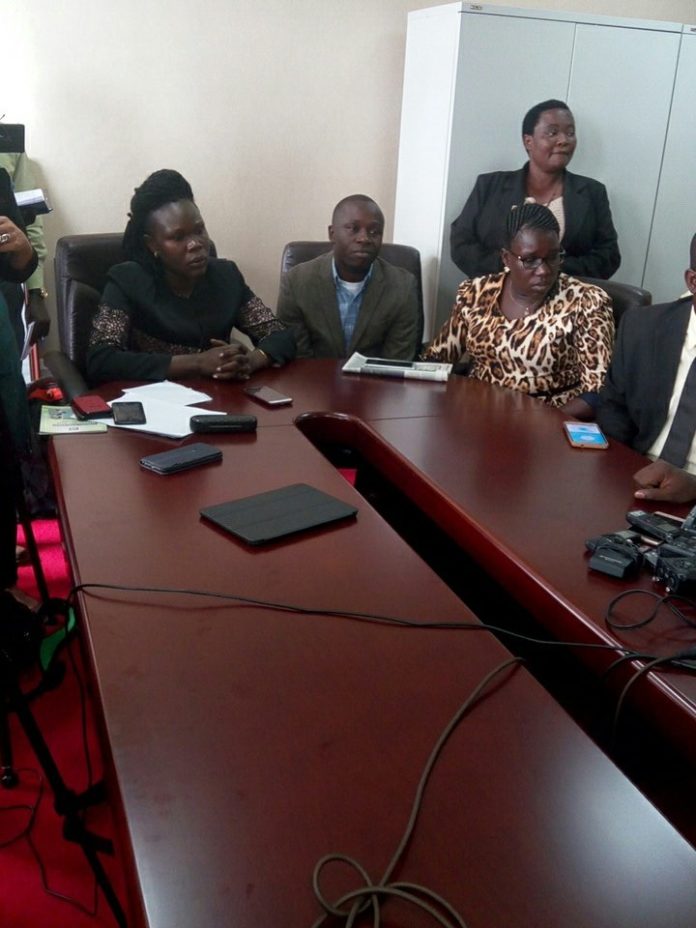
Anite and Peter Ogwang of Usuku County at Parliament today.

The State Minister for Investment and Privatization in the Ministry of Finance, Planning and Cconomic Development Evelyn Anite has this morning expressed her desire to push the lifting of the age limit.

Anite has also warned her colleagues on the opposition side that the army is on their (NRM) side and therefore, any opposition to the amendments will be dealt with.

“I heard Ssekikubo, Tinkasimire and other MPs threatening us, we are not intimidated, we shall not succumb to intimidation; we have the support of the army’’. She confidently said.

On Tuesday NRM legislators convened at parliament and agreed to table a motion advocating for removal of the presidential age cap. Their idea attracted a lot of mockery   from the general including NRM rebel MPS led by Mohamed Nsereko, Barabbas Tinkasimire, Winfred   Nuwagaba among other MPs.

‘Rebel’ NRM MPs led by Kampala central MP muhamed Nsereko, Barabbas Tinkasimire, Winfred Nuwagaba, vowed to fight against Removal of the presidential age limit.

‘’Disown those MPs, detest them, disassociate them and isolate them’’. Nsereko encouraged the public

In a press conference held at Parliament, Koboko Municipality legislator said they have so far attained 265 signatures form 265 legislator out of the 300 supporting the removal of the presidential age cap yet they only require three thirds majority of legislators to push successfully motion.

Anite who became famous after present the idea of a single candidate at Kyakwanzi  and eventual endorsement sole candidature of President Museveni warned a section of MPs who threatened them about moving a private members bill.

“Those MPs should know that we are the ones in charge, you can’t tell us ‘Tojjikwatako’ (don’t dare amend article 102 b) when it’s our job, It is like telling us not to do our job’’. She said.

Yesterday at State House the President Yoweri Museveni gave MPs green lights to go on with the age limit discussion indicating that they are free to debate age-limit.


Stories Continues after ad

Democracy prevents conflict among nations

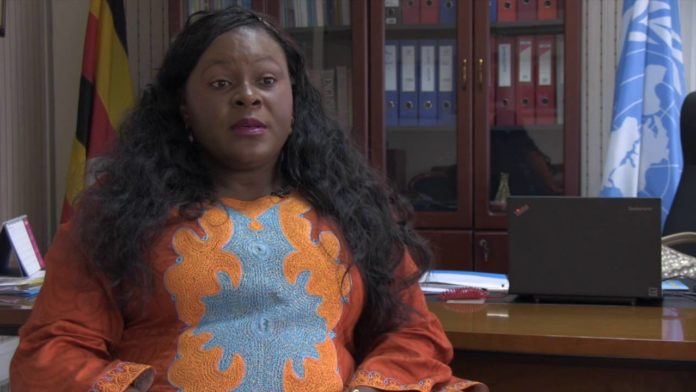
By Rosa Malango,

UN Resident Coordinator|UNDP Resident Representative

Today, Uganda joins the rest of the world to commemorate the International Day of Democracy.  This year’s theme, Democracy and Conflict prevention, highlights the critical need to strengthen democratic institutions as a foundation for promoting peace and stability. This is an opportunity to reinforce the realization of SDG 16, “Milaala, na Bwenkania Na Bitongole Binhwevu, as it would be stated in one of the local dialects, Lusoga.  These values are also enshrined in the United Nations Charter and the aspirations of Uganda’s Vision 2040.

Recognizing the indivisible link between conflict prevention and peaceful societies, the 2030 Global Agenda addresses democracy in Sustainable Development Goal 16. The goal calls for the promotion of peaceful and inclusive societies for sustainable development, access to justice for all, and building of effective, accountable institutions at all levels.

State of Democracy in Uganda

Uganda’s Vision 2040 underscores good governance as the backbone of transformation. Since 1992 Ugandans have been reaping the fruits of decentralization as a form of governance. This governance system brings services and government closer to the people, enabling representation, participation and involvement in decision making. It also provides an opportunity to invest in communities and their ability to be resilient in their pursuit of sustainable economic development.

The space for civil society contribution and engagement with Government on development initiatives is also evolving.  Over the years, a cross-section of Civil Society Organizations and non-state actors, have led the effort to mobilize greater civic participation and debate on topical issues.  Key among these has been the first ever issues based Presidential debate which took place in 2016 transmitted by TV led by the Elders Forum of Uganda and the Inter Religious Council of Uganda with support from United Nations Development Programme.

Like most nations, Uganda still faces a number of challenges in galvanizing democracy. The 2016 Democracy Index that measures dimensions such as Electoral processes and pluralism, Functioning of Government, Political participation, Political culture and Civil liberties, places Uganda in the hybrid category.  The other categories are: full democracy, flawed democracy and authoritarian.  The hybrid categorization for Uganda means that there have been significant gains and there is room for improvement.

For instance, whereas Uganda has extensively established democratic structures and proposed several political reforms, a shift from highly commercialized politics to issue based politics remains desirable. Similarly, cost effective democracy and a highly civic conscious public would be of benefit to the democratization and development of Uganda.

Opportunities for strengthening democracy

There are several opportunities for Uganda to continue making strides toward realization of full democracy that ensures peace and development; they include upcoming key processes such as the envisaged Constitutional Review Commission, Local Council 1 and 2 elections, electoral reform proposals, regular reviews of the decentralisation architecture, among others. These present opportunities for the government, parliament and citizens in general to strengthen Uganda’s democracy.  On the other hand, the upcoming National Dialogue is an opportunity to reinforce indigenous conflict transformation capacities as a foundation for consolidating democracy, resolving grievances and enabling a developed and resilient Uganda.

The affirmative policies in the area of women and youth empowerment as well as the inclusion of marginalized groups are another opportunity to ensure the advancement of the principles of democracy and conflict prevention in line with Uganda’s vision.

UN contribution to democratisation in Uganda

 The United Nations is working with the Government of Uganda on a number of interventions to improve the state of democracy, reinforce conflict prevention and accelerate sustainable development. Inspired by Uganda’s National Development Plan II and based on the United Nations Development Assistance Framework (UNDAF) as well as the 2030 Global Agenda, UN agencies in Uganda (UNDP, OHCHR, UN WOMEN, UNICEF, ILO, UNESCO and WFP, IOM, WHO, UNICEF, UNESCO, FAO, UNHCR) are working to consolidate rule of law, constitutional democracy, peace and justice.

For economic development and transformation to become sustainable, there should be full confidence in democracy, rule of law, justice delivery systems, effective institutions and a peaceful environment. The United Nations remains committed to walk shoulder-to-shoulder with Uganda on its path to full democracy and sustainable development. Together we can leave no one behind!

About Democracy Day

On November 8, 2007 the United Nations (UN) general assembly passed a resolution for the annual commemoration of September 15th as the Democracy Day.  The UN called upon all governments to use the day to reflect on the development of national programmes aimed at promoting and consolidating democracy. Several international instruments such as the United Nations Charter, The Universal Declaration of Human Rights, The International Covenantion on Civil and Political Rights, The Convention on the Elimination of All Forms of Discrimination against Women, to mention a few, speak to the centrality of democracy in the well-being of Society.  This is in view of the fact that democracy facilitates legitimacy of sovereign states, effective participation, inclusion, protection of rights, the common good and therefore advancement of any nation.  The 1995 Constitution of Uganda also recognizes the importance of democracy in Uganda’s social and political order and underscores the commitment to building a better future based on the principles of unity, peace, equality, democracy, freedom, social justice and progress.

Observing the International Day of Democracy therefore goes beyond celebrating democracy in itself, but also includes reflecting on how the promotion and upholding of the core aspirations of democracy can be realized without leaving anyone behind: national governments, cultural leaders, civil society, individuals and international community. Today is an opportunity to raise public awareness about achievements in democracy, its meaning and importance in Uganda’s history. It is also an opportunity for Ugandans to renew their commitment to contribute to the various initiatives to promote democracy informed by your values and aspirations.


Stories Continues after ad

Lukwago scoffs at NRM MPs over age limit saga

Lord Mayor Erias Lukwago

Lord Mayor Erias Lukwago has condemned the step taken National Resistance Movement (NRM) Members of Parliament plans of moving private members bill aimed at scraping Article 102 (b) of the constitution

The 1995 Ugandan constitutions bar any person beyond the age of 75 years from contesting for presidency. Yoweri Museveni who has ruled the country for more than three decades and by end of this current term will be above 75 years could benefit from the lifting of the proposal.

On Tuesday NRM legislators convened at parliament and agreed to table a motion advocating for removal of the presidential age cap. Their idea attracted a lot of ridicule   from the general public including NRM ‘rebel’ legislators led by Mohamed Nsereko, Barabbas Tinkasimire, and Winfred   Nuwagaba among other MPs.

Addressing the press at City Hall, Lukwago said history will stand harshly to judge all those supporting the removal of presidential age limit adding that the 1995 constitution was meant to open up a new chapter in the politics of the country.

“The act of NRM MPs that resolved to table private members bill to parliament is compared to treason’’. He said alleging that the constitution says that when you see someone committing treason, he must be fought fiercely. ‘’We are going to fight them’’. He said.

Adding “Tinkering with the constitution will cause political and constitution crisis, President Museveni should respect the constitution as it is his brainchild’’.

Lukwago further called for equal protection from the Inspector General of Police Gen. Kale Kayihura in their struggle against the lifting of the presidential age limit rather than interfering with their activities.

“All people in Kampala should join us when we hit on streets in the campaign against treason’’.


Stories Continues after ad
Malawi’s best in Uganda for video shoot with Bebe Cool

Barely a week after Africa’s music legend Bebe Cool “Big Size” released his world class video Pass n Go, he is now embarking on another massive video project with Malawian Hip Hop star ‘Tay Grin’.

Tay Grin linked up with Bebe Cool upon arrival in Kampala – Uganda over the weekend and the two are set to shoot the new video of their collabo titled ‘One more touch’ in the district of Gulu (Northern region) this week.

Bebe Cool’s latest release Pass n Go shot in Miami -USA by Nigerian producer ‘Patrick Ellis’ of Konvict Muzik Label, is evidently getting great reviews from the audience across the continent.

On the new project with ‘Tay Grin’, Bebe Cool says th; “Northern Uganda specifically Gulu district and the neighboring districts was for several years destructed by the Kony rbellion which stagnated the social, political and economic development of the Northern region from late 1990’s – early 2000.

“I felt that drawing my fan’s (Uganda, Africa & worldwide) attention to Gulu district would be recognition of the massive infrastructural and social transformation taking place ever since the rebellion was defeated,” Bebe Cool said.

“Uganda is a peaceful country where any investor or vacationist can come and live or work without any trouble,” he added.

Tay Grin is the leading Malawian hip hop artist who in 2014 won the Black Entertainment Film Fashion Television and Arts (BEFFTA) award for Best International African Act. In 2016, he won the BEFFTA Star Award in the music category.

He also won the 2016 WatsUp TV Africa Music Video Awards Best Traditional Video award with the Video Chipapapa featuring 2baba.

The collabo ‘One more Touch’ will be shot by MTV MAMA’S 2017 Nominees


Stories Continues after ad
Auditor General reminds accountants of their role

Accountants in the country have been urged not to forget their roles, which include advisory.

Speaking at Imperial Resort Beach Hotel at the just concluded seminar for accountants organised by the Institute of Certified Accountants of Uganda (ICPAU), the Auditor General, John Muwanga emphasised the need for accountants to play their advisory role in organizations.

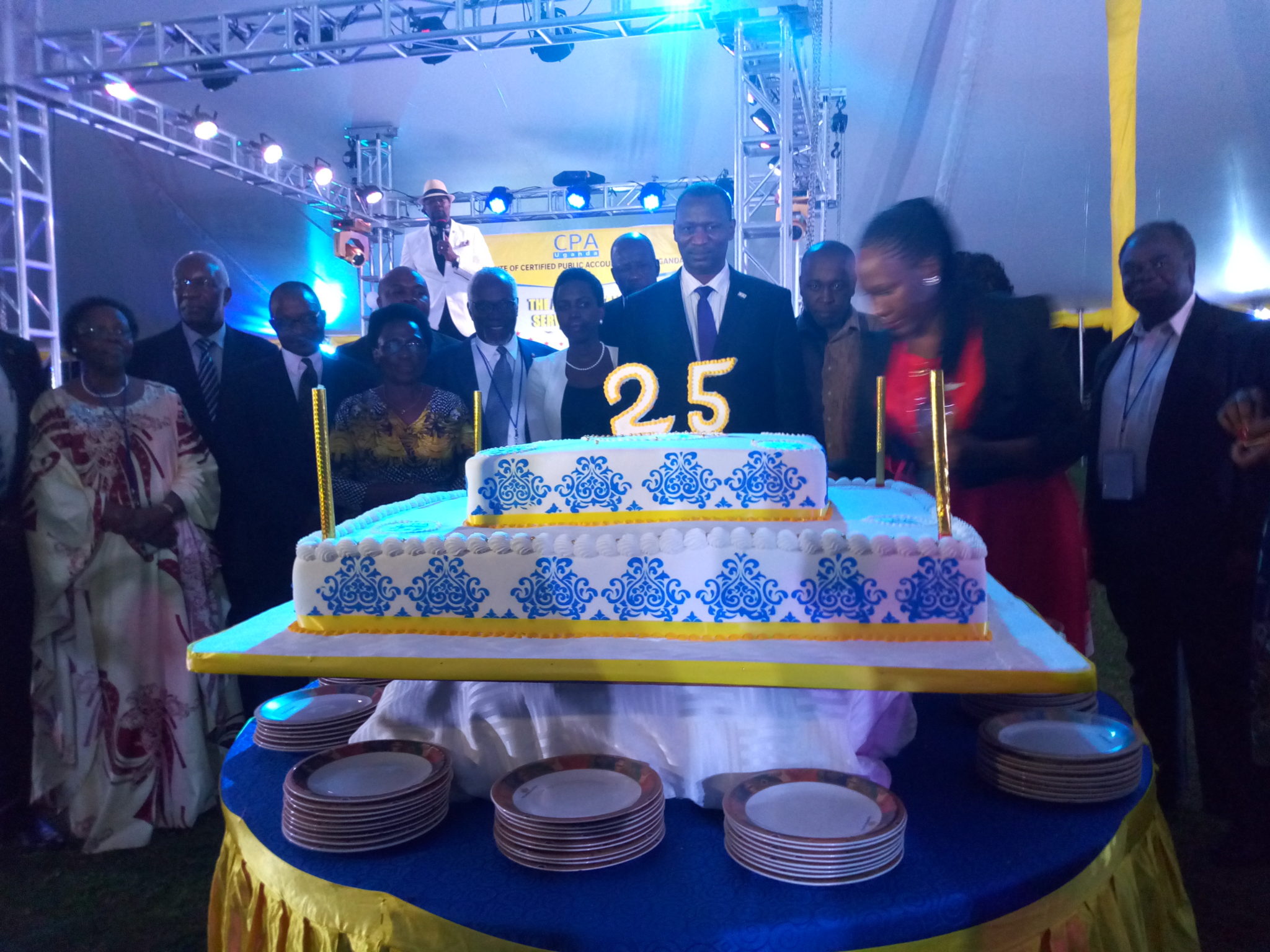
He noted that many organizations are facing challenges partly because accountants did not play their key role of advising management and the board on what is right for the institutions’ health. The same function, marking ICPAU’s 25 years of existence saw the institute reward the best performers since it was founded.

Held at a dinner gala, among those recognised included; Gerald Kasanya, the second Chief Executive  Officer of ICPAU who was recognized and awarded the Gold Services award.

The others were; Betty Kiganda, the first secretary to the CEO (The late P.K. Bahemuka). She was recognized as a Gold Award winner.

Catherine Asiimwe the Auditor of Uganda National Roads Authority was awarded as Young Accountant of the year. The CPA of the year was won by Selestino Babungi, the Managing Director of UMEME.

John Muhaise was recognized with the accountancy services award for his virtual contributions to the profession.

The ICPAU Annual seminar which brings together over 1,200 accountants is a flagship event for Certified Public Accountants and senior business professionals in Uganda.The three-day seminar focuses on essential insight into the current issues surrounding the accountancy profession.


Stories Continues after ad
Uganda moves up in latest FIFA rankings

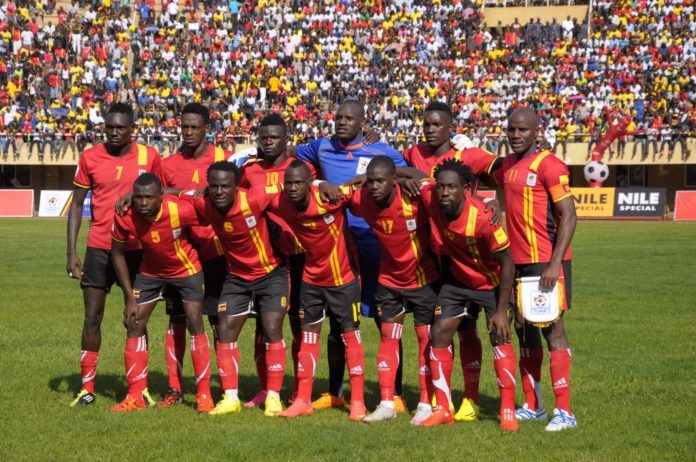
Uganda Crane Team

Football governing body FIFA have announced the latest rankings with Uganda climbing up 2 spots to the 71st place and moved one place up in Africa to the 14th.

Following the Cranes’ 1-0 win over Egypt, the 3-0 win over Rwanda as well as their 1-0 loss to Egypt in the return leg during the recent international break, Cranes now have a total of 486 points from the 464 last month.

Uganda remains the best in East Africa with Kenya dropping 6 places to 88th, Tanzania (125th), Rwanda at 118th, Burundi (129th), while Sudan stands at 134th.

Africa’s highest ranked nation Egypt dropped five place and now appear in 30th spot, while South Africa fell to 80th position following their two defeats against Cape Verde.

Cape Verde, Uganda’s group D opponents in the AFCON 2019 qualifiers were the biggest climbers moving 47 places to 67th.

Guatemala was the worst mover falling 31 slots to 131.

Egypt maintains the top spot in Africa at 30, Tunisia follows closely at 31st, Senegal at 33rd, Congo DR at 42nd, while Nigeria stands at 44th, completing the Africa’s top five countries.

At the top, Germany has leapfrogged Brazil to the top of the rankings. Portugal are right behind the top two, while Argentina and Belgium follow them completing the best 5 countries worldwide.

Copa America champions Chile as well as Colombia continued their downfall and now only sit in ninth place and tenth place respectively.

The next Coca-cola FIFA rankings will be released on 16th October 2017.


Stories Continues after ad
Uganda cargo highest at Mombasa Port-KPA

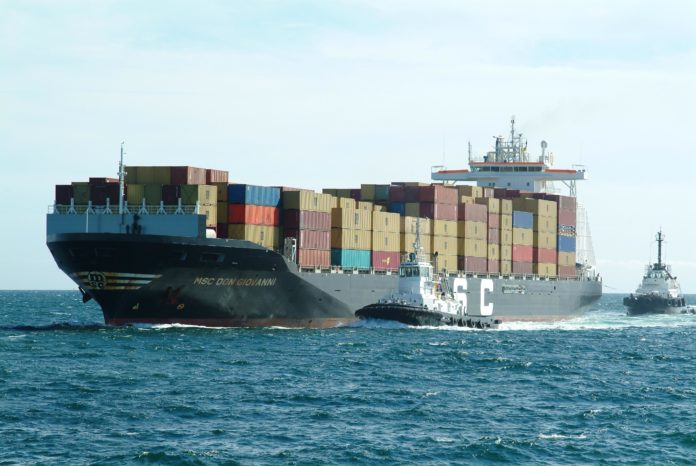
Ship about to dock at Mombasa Port

New data from Kenya Ports Authority shows that Uganda’s cargo through the Indian Ocean Port of Mombasa hit 4,218 TEUs, in the first week of the nullifying of the Kenyan presidential election, beating other landlocked countries in the region.

TEU stands for Twenty-Foot Equivalent Unit which can be used to measure a ship’s cargo carrying capacity.

Uganda, according to the report was followed by South Sudan (698 TEUs), Rwanda (372) TEUs), DRC (302 TEUs), Somalia (42 TEUs), and Burundi (13 TEUs).

The Mombasa Port, the busiest on the east Africa coast, registered an 11.9 per cent growth in the cargo it handled in the first six months of this year, according to new Kenya Ports Authority data.

The port management attributed the growth to recent expansion activities, including the construction of a second container terminal last year.

It provides an additional cargo-handling capacity of 550,000 TEUs (twenty-foot equivalent units) annually.

The report says the port handled 15 million tonnes of cargo between January and June compared with 13.4 million tonnes in the same period last year.

Despite election uncertainties that have previously seen landlocked countries take a more cautious approach while importing through the Mombasa port, KPA said none of the countries reduced their operations in the run-up to the August 8 polls.

That aside, Kenya and Tanzania have long competed to have the most important port in East Africa and their rivalry continues as they build much bigger ports targeting landlocked countries in the interior.

The Port of Mombasa and Tanzania’s Dar es Salaam port are the traditional competitors. Kenya is now planning a larger new port at Lamu, while Tanzania is building Bagamoyo.

Both ports will be larger than any other port in sub-Saharan Africa if completed as planned. They will also be at the centre of much bigger developments, with industrial zones being laid out and intensive farming being proposed.

The Tanzania wants Bagamoyo to handle 20 million containers a year, which is 25 times larger than the port at Dar es Salaam. Kenya’s planned Lamu port is expected to be just as big.


Stories Continues after ad

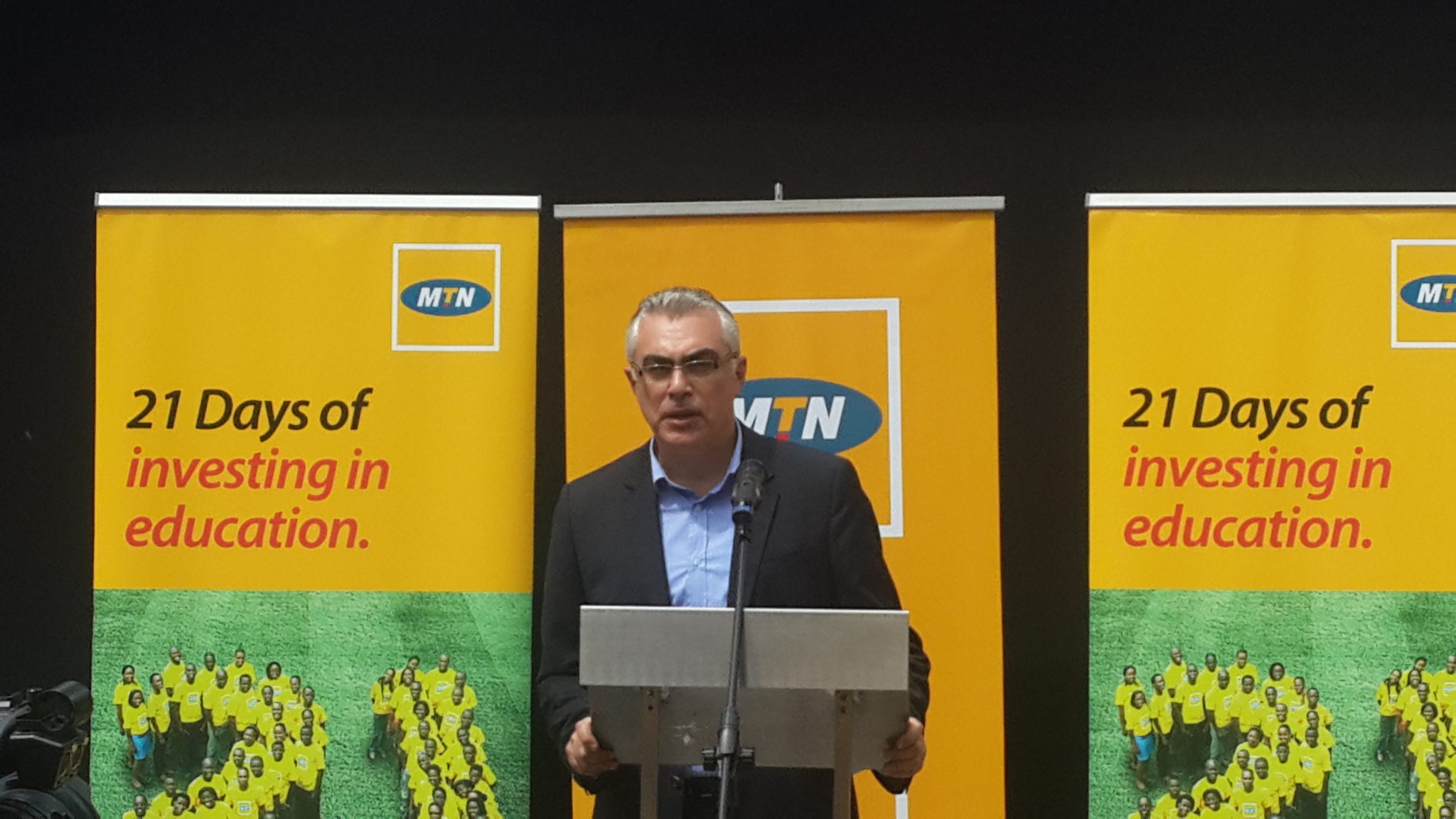
MTN finally wins Shs5b case against rival UTL

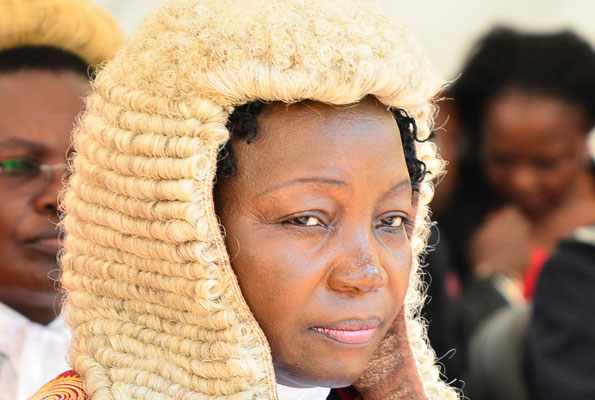
RIP Justice Stella Arach Amoko.

The bad  business deals of Uganda Telecom (UTL) continue to haunt it, the latest being the September 12, 2017 Supreme Court’s upholding of the earlier ruling that UTL pays its rival MTN Uganda Shs5 billion as ruled by the Commercial Division of the High Court in 2011.

MTN Uganda sued UTL in the Commercial Court in 2009 under High Court Civil Suit No.297 of 2009 to recover over 3.4billion as local interconnect fees debt for the period March to December 2007.

However, UTL put in a defense saying that the traffic in contention was international traffic to Gemtel South Sudan through code +256-477xxx which the government of Uganda through Ministry of Works and Transport had authorized Gemtel to use.

That much as the code +256-477xxx was owned to by UTL locally the traffic it carried was international traffic to Gemtel and not local interconnect traffic.

But the High Court in 2011 ruled in favour of MTN awarding over Shs5 billion including interest, damages and costs. UTL’s loss stemmed from the fact that code +256-477xxx was the locally assigned numbering property of UTL for use as a local operator in the northern region districts and could not be used by Gemtel in South Sudan which had its own country code +249xxx. Therefore court ruled that the traffic carried on code +256-477xx was local interconnect traffic and not international traffic as claimed by UTL.

UTL was not done as it ran to the Court of Appeal which dismissed the Appeal on October 28, 2014 with costs and maintained the High Court decision. UTL further appealed to the Supreme Court in 2015.

Having listened to all sides over time, Justice Stella Arach Amoko saw no reason to overturn the decisions of the High Court and the Court of Appeal. “I decline to overturn the finding by the two Courts. I find no merit in the appeal and dismiss it with costs to the Respondent (MTN Uganda Limited),” Justice Arach said.

The ruling means UTL cannot appeal any further as the Supreme Court is the highest appellate Court in Uganda.

According to the ruling, the struggling UTL now under receivership has to pay MTN Uganda over Shs5 billion in interest, damages and costs of the case in all the three courts where it has lost the case. Should UTL fail to pay MTN, the latter can execute the judgment against any of UTL’s assets to recover the amount in question.

Justice Arach’s ruling brings to an end the almost 10-year litigation battle between UTL and MTN Uganda.


Stories Continues after ad

Is the history of Uganda’s debt burden repeating itself?

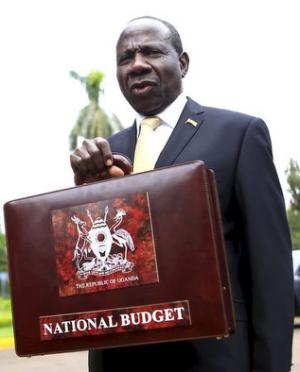
Uganda Minister of Finance Matia Kasaija displays the briefcase carrying National Budget.

By Julius Kapwepwe et al

The debt stock, service, rate of acquisition, and many other aspects threaten to raise the bitter experiences of debt burden that heavily undermined service delivery, growth and eradication of poverty.

The current conditions do not mirror what led to debt forgiveness under Highly Indebted Poor Countries (HIPC) and Multilateral Debt Relief Initiative (MDRI).

Accordingly, countries like Uganda have to be quite realistic in both acquisition and use of debt. When a government runs deficits for a long time, it builds up a stock of debt, which affects the economy’s output and wealth that are dependent of the available stock of capital. Since deficits reduce investments they generate a slower growth rate of capital stock. The economy’s capacity to produce goods and services is therefore, reduced even further.

Changing debt structure
The changing structure of the debt, whereby the domestic, short-term and non-concessional debt is dominating the portfolio, should be a concern. Already, the current structure shows that nearly 85 per cent of the debt service is on non-concessional domestic debt. Prudent debt management for sustainability demands that interest rates are far below the real economic growth rate.

Uganda has an average growth rate of less than 6 per cent over the last decade, from 2005, yet the weighted interest rate on its debt profile, given the increase in domestic debt, is skewed above 10 per cent.

Uganda’s past debt was more sustainable when the country was still committed to acquiring concessional debt, and evidence shows that the debt is still highly sensitive to non-concessional debt. In this regard, the government should not only be concerned about the debt to GDP ratio but also on the structure in terms of what portion of the debt portfolio is concessional or otherwise.

Disaggregation between external and domestic
The structure of the debt in terms of disaggregation between external and domestic as well as time to maturity raises concerns given the increasing volume of domestic short-to medium-term debt. For purposes of debt sustainability, it is often better to have a larger component of long-term debt that offers less stress on the economy in terms of repayment of both interest and the principle.

Uganda’s external debt stock amounted to US$ 87,389,458,000 between 1970 and 2014 with 26 per cent Grants
and the rest as Loans. Multilateral Donors have contributed 77 per cent of the total debt stock- with World Bank’s IBRD and IDA credit windows having constituted USD 49,936,615,000 (57 per cent). Over 50 per cent of that total External debt has been incurred by Uganda over the last 14 years (2001 to 2014).

Domestic debt costing
Not only is domestic debt costing the country much more, it is also growing very fast. In the last two financial years, when the government officially introduced domestic borrowing as a form of budget financing, borrowing through government/ treasury bonds has amounted to Shs3,161 billion (4 per cent of GDP).

A total of Shs1, 775 billion was borrowed in 2013/14 and Shs1,386 billion in 2014/15. An additional Shs1,384 billion is due to be borrowed in 2015/16, which will raise the portion of domestic debt from issuance of treasury bonds to Shs4,545 billion or 6.1 per cent of GDP in just three years. Going forward, as the proportion of domestic debt increases, debt sustainability will become a serious concern for the country.

Much as the Government recognizes the need to maintain a large component of debt under concessional terms, it seems to disregard its importance. Government has indicated that, over the medium-term, more non-concessional borrowing is going to increase and will dominate in the long-term due to the need to scale -up public investments.

The government needs to fully respond and implement the recommendation that it should define the acceptable level of non-concessional borrowing.

This article was compiled by analysts from Uganda Debt Network (UDN)


Stories Continues after ad

Bukedde TV workers ‘disappear’ in America

It’s over ten days since the Uganda North America Association (UNAA) convention came to an end, however, most of the people who went to attend the event are not yet back.

Among these are journalists who went to cover the event.

Well, we can confirm that most of Bukedde’s team that travelled to cover the event won’t be returning.

According to our reliable sources in the US, Robert Kalibala, Abdu Kamulegeya, Denis Josiah and a one Pamela, who has been presenting a kid’s programme reportedly, disappeared when the event came to an end.

Kalibala has been a producer of ‘Luyimba Lwo’ while Kamulegeya has been a presenter of ‘Wujjala’, a love program.

Denis Joshua has been a producer at the same station.

This is not the first time that people who travelled for the same event disappeared on getting in the US.

Over ten people who went for last year’s UNAA convention disappeared from their camps. Majority of these were from ‘The Ebonies’ and NTV.

In fact, it’s the reason why many people who had been invited were denied visas by the American Embassy. The UNAA convention is an annual event that brings together Ugandans in North America.


Stories Continues after ad