Stanbic Bank
Stanbic Bank
18.5 C
Kampala
Stanbic Bank
Stanbic Bank
Home Blog Page 1781

BOU Governor urges EAC central banks to fight money laundering

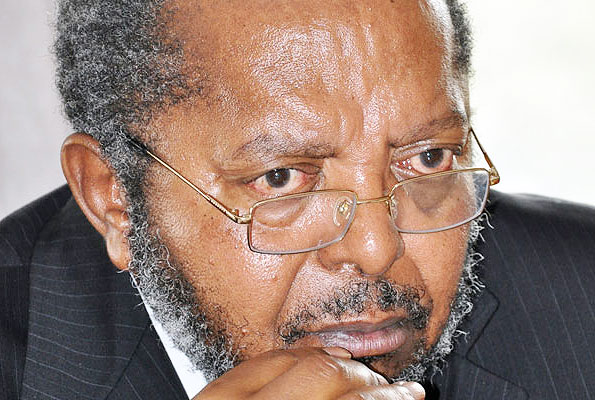
BoU Governor Prof Emmanuel Tumusiime Mutebile.

The Governor Bank of Uganda Prof. Emmanuel Tumusiime-Mutebile, has urged the East African Community (EAC) central banks to put in place measures that can effectively check money laundering scams in the region.

“There is need for EAC Central Banks to work together to counter terrorist financing and ensure compliance of anti-money laundering efforts,” Mutebile said Friday in Kampala during the 21st Ordinary EAC Monetary Affairs Committee (MAC) Governor’s meeting at the Kampala Serena International Conference Centre.

The MAC is composed of central bank governors from the EAC Partner states of Kenya, Rwanda, Burundi, Uganda, Tanzania and South Sudan. The officials are one of those in the EAC bloc tasked to steer the states into a single monetary union that should, if achieved, establish one currency to be used as a means of exchange in all the partner states.

Gov. Mutebile also while speaking said central banks needed to address the challenge of e-currency. “There is concern of growing usage of E-currency in the region which has been hard for central banks to regulate,” he said.

Talking of the EAC integration challenges, Mutebile said the slowdown of economic growth characterised by slow private sector growth and the non-performing loans were some of the factors responsible.

“There are a number of issues that have challenged our integration efforts such as slowdown of economic growth, slow private sector growth and increase of non-performance loans,” he said.

But he said MAC meeting on-going in Kampala gives an opportunity to officials to take stoke of progress attained in steering progress of East African monetary union.

While highlighting on the progress so far, the Central Bank of Kenya (CBK) Governor, Patrick Njoroge said: We have made great strides towards ensuring harmonisation of our regional frameworks. Significant progress has been made on the front of establishing the requisite institutions in particular the establishment of the East African Monetary Institute and Statistics Bureau.”

Njoroge said the two institutions have been forwarded to the E.A legislative Assembly for further scrutiny, adding that CBK is remains committed to the integration process to ensure successful harmonisation of the creation of the creation of the East African Central Bank with a single currency.

John Rwangombwa, the Governor, National Bank of Rwanda said there was good cooperation among the EAC central banks in fighting cybercrimes. He said: “I’d like to appreciate the co-operation we have had as central banks in dealing with challenges such as cyber security and crypto currencies.”

The First Deputy Governor, Bank of Burundi while speaking of the monetary union progress  said his country is “engaged in the modernisation of monetary policy to align it with price based monetary policy framework.”

 

Stories Continues after ad

Thousands fail Parliament job interviews

The Parliament of Uganda

Thousands of candidates who were a few months ago listed for aptitude tests for different jobs at Parliament failed miserably, inside sources indicate.

The tests which were done from Makerere University about three weeks ago were highly technical and candidates would get their results immediately.

The online aptitudes attracted thousands of jobless people who included top city journalists from different media houses.

However, our sources reveal that about 70% of the candidates did not even manage to score 40% from the one-hour exam.

So far no candidate has been called for oral interviews as the 50% pass mark is expected to be revised, the sources said.

Parliament Director of Communication Chris Obore

Efforts to contact the Parliament’s Communications Director Chris Obore over the matter were futile by press time.


Stories Continues after ad

Kabushenga fired for giving country economic hit

Robert Kabushenga

President Yoweri Museveni has directed Vision Group Chief Executive Officer Robert Kabushenga to step down, for publishing some stories that are giving the country an economic hit.

Sources say that President Museveni expressed his bitterness with Kabushenga during one of the cabinet meetings held two weeks ago.

It is alleged that the President was not happy with the way the government-owned The New Vision was giving a lot of space to the coverage of Sudhir Ruparelia’s woes that saw Crane Bank change hands.

Furthermore, the coverage of the legal war between Bank of Uganda and Sudhir by New Vision did not go down well with Museveni, the sources said, adding that Kabushenga now has up to December to pack his bags and leave after 10 years at the helm of the Vision Group.

It should be noted that during the 2016 presidential campaigns, it was rumoured that Kabushenga was supporting candidate Amama Mbabazi.

To make matters worse, recently The New Vision reportedly wrote to the NRM Secretariat threatening to sue the ruling party over printing debts to a tune of shs900m. It seems the legal document did not go down well with President Museveni, who is the chairman of the ruling party.

We shall keep you posted on updates but meanwhile, the mood in The New Vision newsrooms is all somber, with many of the high-earners fearing for their jobs.

It said so many millions are given out in salaries to idle editors while the foot soldiers remain on peanuts.

Red Pepper last year broke a story of many of the senior editors at Vision taking home tens of millions.

By press time it was not possible to reach Kabushanga on phone.


Stories Continues after ad

Kenya’s IEBC urges court to throw out Odinga petition

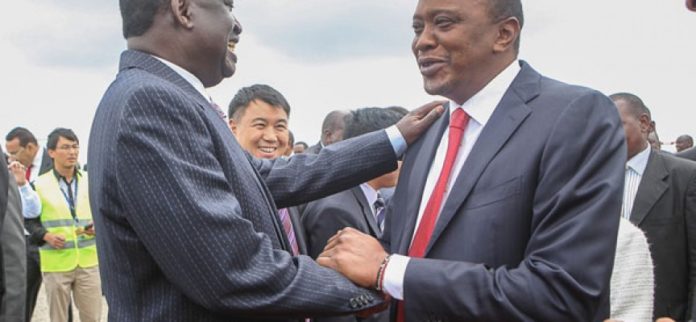
FRIENDS? Kenyan President Uhuru Kenyatta and Raila Odinga

Kenya’s election commission urged the Supreme Court to uphold the results of this month’s vote that returned President Uhuru Kenyatta to power and dismiss a legal challenge by his political opponents, saying the process was ‘impartial, neutral and accountable’ to the Constitution.

The Independent Electoral & Boundaries Commission called on the court to throw out a petition filed by the opposition National Super Alliance challenging Kenyatta’s win against former Prime Minister Raila Odinga in the Aug. 8 vote. That petition ‘lacks merit and should be dismissed’, the commission’s lawyers said in opposing papers filed at the Supreme Court.

The elections were conducted according to the constitution and the president was ‘validly elected’ the IEBC’s lawyers said. ‘Discrepancies’ cited by the opposition ‘did not materially affect the outcome of the presidential elections’.

Kenyatta, 55, won a second term with about 54 percent of ballots cast while Odinga, 72, garnered almost 45 percent, according to the IEBC. A panel of judges will rule on the opposition’s challenge on Sept. 1 and, should Kenyatta’s victory be nullified, the East African nation would have to hold new elections within 60 days.

Odinga has failed in three other attempts to win the presidency in Kenya, and a dispute over the outcome of a 2007 election triggered two months of violence that left more than 1,100 people dead and forced 350,000 to flee their homes.

Clashes between security forces and supporters of Odinga’s five-party political alliance have claimed 24 lives since the result was declared, according to the Kenyan National Commission on Human Rights. The opposition says security forces killed more than 100 people during protests, while police have confirmed 10 deaths in Nairobi and say they are still investigating reports of fatalities in the rest of the country.

The Supreme Court comprises seven judges. The opposition alleged in a petition filed at the weekend that the election was marred by ‘massive, systemic, systematic and deliberate non-compliance with the constitution’ and such flaws ‘significantly affected’ the result.

“There is no point in holding elections if the law, procedure and regulations to govern their conduct will not be respected and adhered to,” the opposition’s lawyers said in the petition. “Instead of giving effect to the sovereign will of the Kenyan people, the IEBC delivered preconceived and predetermined computer-generated leaders.”


Stories Continues after ad

UNBS raid, close unhygienic soft drinks manufacturer’s premises

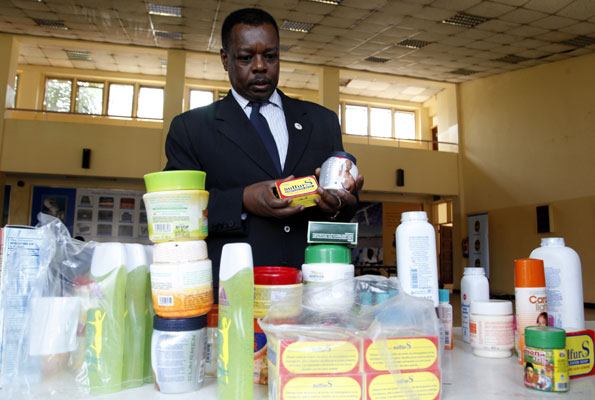
FLASHBACK: UNBS Executive Director Ben Manyindo verifying the quality of cosmetics on Ugandan market. The agency has stepped up the certification drive for manufacturers

The Uganda National Bureau of Standards (UNBS) Market Surveillance team has seized a range of flavoured drinks from Mob Investment, the producers of Maisha Mango Juice, Kigezi Bushera, Real flavored Mango Drink, and Real Flavored Orange Drink from the manufacturer’s premises along Kamuli Road in Bweyogerere.

“The UNBS team inspected the manufacturer’s premises and discovered that the conditions under which the flavored drinks were being produced were unhygienic posing a health risk to consumers and were in complete violation of Uganda Standard (US) 28:2002 on code of practice for hygiene in the food and drink manufacturing industry,” the UNBS Deputy Executive Director in Charge of Compliance John Paul Musimami said, adding that the team acted on a tip-off from a concerned consumer.

According to Mr Musimami, such acts are criminal and endanger human health. “I would like to urge the public to remain vigilant and report any suspicious elements,” he said, adding: “We shall continue to monitor the products on the market and confiscate such products from the market.’’

Meanwhile, the UNBS has confiscated 369 cartons of suspected expired confectioneries with altered expiry dates, worth Shs70 million.

The confectioneries were seized from a warehouse belonging to Luck Star Business Link in Ntinda Industrial area and the premises were sealed off, pending further investigations.

“UNBS market surveillance team seized the suspected expired confectioneries in line with our mandate to protect the public from consuming products that are likely to be harmful to their health,” Mr. Musimami said.

He added: “Besides having labels in a foreign language, which is not acceptable as per the Uganda Standard (US) EAS 38:2013 on labelling of pre-packaged foods, their products were also found with conflicting expiry dates, raising the suspicion of our market surveillance team about their actual shelf life of the products”.

He said the original expiry dates were removed using thinners and replaced with locally printed stickers, which is an offence under the UNBS Act.

“Our officials recovered locally printed stickers that were being used to re-label the packaging from the proprietor’s premises,” Mr. Musimami said.

He added: “Some other products had conflicting shelf lives. For instance, we found conflicting shelf lives of 12 months and 2 years on the same products.”

Stories Continues after ad

Ugandan young entrepreneur to share experience at US global summit

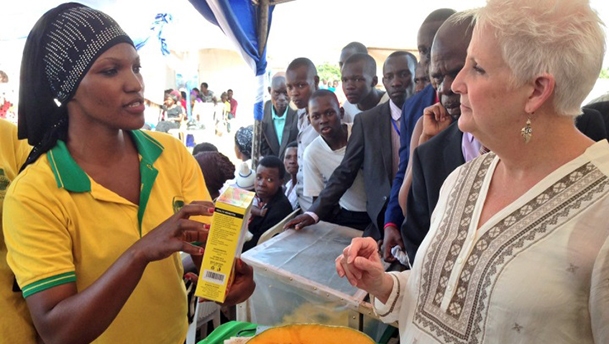
Fatouma Namatosi, 27, explaining Byeffe’s pumpkin-based products to Uganda’s U.S. Ambassador Deborah R. Malac at AgriKool-Youth in Mbale, Ugand

After graduating from college in Uganda, Fatuma Namutosi focused on self-employment and entrepreneurship. She considered several agribusiness ideas, and decided on a product she believed would be profitable and nutritious—pumpkin.

Namutosi’s business acumen has caught the eyes of world leaders who have invited her to share experiences as an entrepreneur at the Global Youth Economic Oportunities Summit in Washington in September.

In 2015, Namutosi established Byeffe Foods Ltd. and began selling a variety of pumpkin-based products: pumpkin millet, pumpkin seeds, pumpkin leaves, and combination soy and rice flours that include pumpkin. Since pumpkin was a traditional source of medicine in Uganda, Namutosi had to re-establish pumpkin as a nutritious and affordable food choice to build demand for her company’s products.

In June 2016, Byeffe found the perfect opportunity to do so at AgriKool-Youth, an event organized by the Feed the Future Uganda Youth Leadership for Agriculture (YLA) Activity, where ‘agripreneurs’ showcase their business models and products.

After gaining exposure through this event, Namutosi’s business boomed. Pumpkin richness in zinc and Vitamin A led to partnerships with primary schools to supply meals.

But with growth came new challenges: Byeffe Foods was unable to meet high demand due to a limited supply of fresh pumpkins.

To address this constraint, Feed the Future partnered with Namutosi to mobilize 1,280 young contract farmers. Due to pumpkin’s low production costs and high yields, as well as Byeffe’s commitment to provide seeds and extension services, these farmers were eager to participate. At this year’s summer harvest, Namutosi expects a minimum yield of 384,000 pumpkins, which would more than quadruple her company’s supply.

Namutosi started her company with just US$140 and has transformed it into one of Uganda’s leading pumpkin producers with a net worth of US$28,000. She also employs 20 young people.

“People have changed the way they look at us. The Feed the Future project has helped us sell our name and product,” Namutosi said. “The consumers now treat us differently. Before we didn’t have big consumers, but through YLA activities we’ve been able to book those big customers,” she adds.

She next plans to purchase equipment to tap into new markets for other high-value pumpkin-based products including wine, juice, and pumpkin seed oil. From humble beginnings to great success, Namutosi’s entrepreneurial spirit will continue to serve her well as she grows her business.


Stories Continues after ad

Police officers stone journalists covering staff quarters on fire

FEIGNED INGNORANCE: Police publicist for Kampala Metropolitan, Emillian Kayima

Police Officers at Katwe Police Station stoned five journalists who were covering staff quarters that had caught fire at the station.

The journalists who were stoned are Joweria Nassaka (Kingdom TV), Ivan Mbadhi (BBS TV), Rachel Mabala (Daily Monitor) Carol Nakibule (Delta TV) and Julius Muhumuza of Dream TV.

It is alleged that the fire which started at about 9:30am burnt six units and was as a result of one electric coil that was being used for cooking in one of the houses.

Joweria Nassaka, told HRNJ-Uganda that they received information that fire had gutted staff quarters at Katwe police station, and upon arrival, were denied entrance into the station by police officers at the main entrance.

This prompted them to go behind the police station where they climbed on top of a nearby house so as to be able to cover their beats.

“We were on the roof covering, then one of the officers who was not dressed in a uniform commanded other officers who were also not dressed in uniform to throw stones at us. One stone hit me on the fore head and it is swollen,” Nassaka said.

Nassaka, who received treatment from Doctor’s Clinic in Mengo said that she was still in severe pain.

“When the police officers started throwing stones at us, I jumped from the roof and fell down, my leg got injured in the process… the Kingdom TV journalist was hit on the head and it is swollen.”Ivan Mbadhi, told HRNJ-Uganda.

When contacted on phone, Emilian Kayima, the spokesperson Kampala Metropolitan Police, feigned ignorance and said, “I have not heard that, we have a communication gap and nobody has told me anything like that,” Kayima said.

‘We highly condemn the actions by the police officers whose core mandate is to keep law and order and ensure that Ugandans are protected. Police officers are expected to be exemplary. Such actions would not differentiate trained police officers from criminals,” HRNJ-Uganda National Coordinator Robert Ssempala, said.


Stories Continues after ad

UN accuses South Sudan leaders of fanning conflict

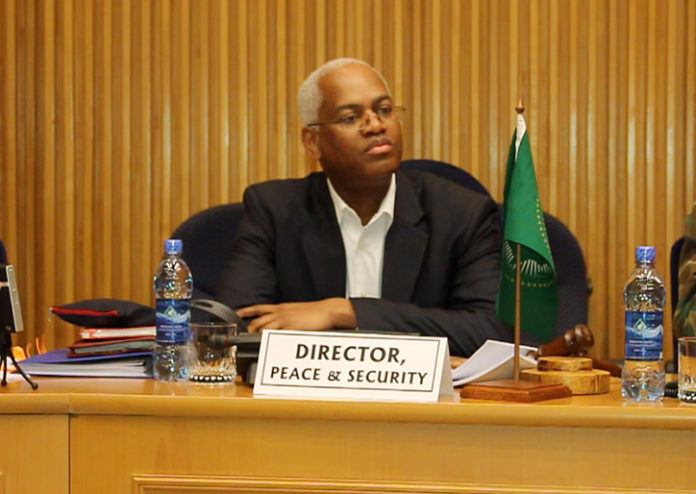
El-Ghassim-Wane

A senior United Nations peacekeeping official today called on the leaders of South Sudan to show genuine political will to achieve sustainable peace in the strife-riven country, stressing that those whose long-time rivalry sparked the ongoing conflict can be the ones to resolve it.

“The conflict in South Sudan is a man-made conflict for which the leaders of South Sudan bear a direct responsibility,” Assistant Secretary-General for Peacekeeping El-Ghassim Wane told the Security Council. “But the same leaders can also bring the country back from the impending abyss.”

He noted that the dire economic situation and continued conflict in the country have combined to create a dangerous and precarious situation for its citizens, and all that is needed is genuine political will to halt military operations, peacefully negotiate and make the necessary compromises.

“I would also urge the Security Council to pronounce itself in this regard. It is critical that the leaders of South Sudan hear the international community’s unified demand of what is expected of them,” he stated.

Tomorrow marks the second anniversary of the signing of the South Sudan Peace Agreement between warring parties – the Sudan People’s Liberation Army (SPLA) loyal to President Salva Kiir and the SPLA in Opposition backing then First Vice-President Riek Machar.

South Sudan, the world youngest country, which gained its independence from Sudan in 2011, has faced ongoing challenges since a political face-off between the two leaders erupted into full blown conflict in December 2013.

Despite the August 2015 peace agreement that formally ended the conflict, fighting and instability have persisted.

According to Festus Mogae, Chairman of the Joint Monitoring and Evaluation Commission (JMEC), ‘little meaningful progress’ has been achieved in the implementation of the agreement, Mr. Wane said.

“More than ever before there is a critical need for continued and close coordination” between Intergovernmental Authority for Development (IGAD), the African Union, the UN and the larger international community to leverage collective influence to bring an end to the suffering of the civilian population and help put South Sudan on a more positive trajectory, he stated.

IGAD comprises Djibouti, Eritrea, Ethiopia, Kenya, Somalia, South Sudan, Sudan and Uganda.

Mr. Wane said the security situation in South Sudan remains a cause for “very serious” concern. The expected ceasefire remains elusive as military operations continued during the reporting period, mostly in Upper Nile.

In July, 136 access incidents were reported by the humanitarian community – the highest number recorded in any one month since December 2013.

Incidents of looting also spiked during July, with 15 incidents reported across the country. Of particular concern were the six major looting incidents of warehouses and trucks in transit leading to the loss of 670 metric tons of food meant for vulnerable communities in Eastern Equatoria, Lakes, Upper Nile and Warrap.

In meetings between UN Under-Secretary-General for Peacekeeping Operations Jean-Pierre Lacroix and South Sudan’s key government officials earlier this month, President Salva Kiir and his cabinet members expressed reservations on the inclusion of some personalities such as Riek Machar in any dialogue process, Mr. Wane said.

But there was, however, an acknowledgement that sizeable communities cannot be left out of a process just because they were led by or that they supported a particular individual, he added.

While the National Dialogue has made some progress, it continues to be criticized for its lack of inclusivity.

Briefing the Council via videoconference, Nicholas Haysom, Special Envoy of the Secretary-General for Sudan and South Sudan, also expressed concern about the security situation and the trajectory and depth of the crisis.

Calling for a ‘clear commitment’ to an inclusive and credible peace process, he described several recent international and regional support efforts – including Uganda’s initiative to reunify factions of the Sudan People’s Liberation Movement and Kenya’s initiative to host opposition parties – which had achieved varying levels of success.


Stories Continues after ad

Angola’s ruling party claims victory

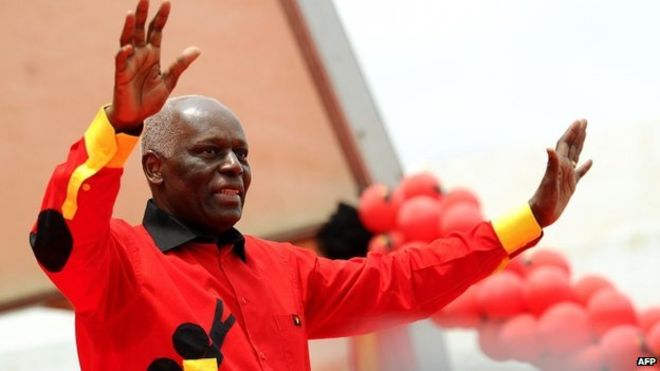
Former Angola President Jose Eduardo dos Santos.

LUANDA – Angola’s ruling MPLA party said it was on track to win a two-thirds parliamentary majority, based on its own numbers, as votes were still being tallied ahead of an expected release of official results later on Thursday.

Angola, home to sub-Saharan Africa’s third-largest economy, held a smooth national election on Wednesday with the MPLA’s former defense minister Joao Lourenco expected to be voted in as the OPEC-member’s first new president for 38 years.

In Angola, political parties are allowed to observe the elections by posting party members at every polling station and by assimilating results, the parties attempt to foretell the election outcome.

The People’s Movement for the Liberation of Angola (MPLA) calculated that after 5 million votes had been checked it was on course for a two-thirds majority, João Martins, MPLA secretary for political and electoral affairs, told reporters.

“We can affirm that the future president will be comrade João Manuel Gonçalves Lourenço,” Martins said.

However, the main opposition, National Union for the Total Independence of Angola (UNITA), said it had counted 2 million votes and the MPLA had won 47.6 percent and UNITA 40.2 percent. There were 9 million Angolans registered to vote.

“Looking at the trend, the MPLA won’t have a majority at all,” UNITA’s parliamentary head Adalberto Costa Júnior told Reuters.

Should the MPLA win, Lourenço, a quiet 63-year-old more used to army barracks and the closed doors of party politics than the public spotlight, would replace veteran leader. He will remain as head of the party, however, giving him potentially sweeping powers over decision-making.

DOS SANTOS DYNASTY

Dos Santos, 74, Africa’s longest-ruling president behind Equatorial Guinea’s Teodoro Obiang Nguema, steps down after guiding Angola from Marxism to capitalism while embracing Chinese oil-for-infrastructure investment.

His daughter Isabel heads national energy company Sonangol, which runs Africa’s second biggest oil industry. His son, José Filomeno, is in charge of the $5 billion state investment fund.

The MPLA, which has ruled Angola since independence from Portugal in 1975, has lost some support due to political cronyism, though many Angolans remain loyal to the party that emerged victorious from 27 years of civil war in 2002.


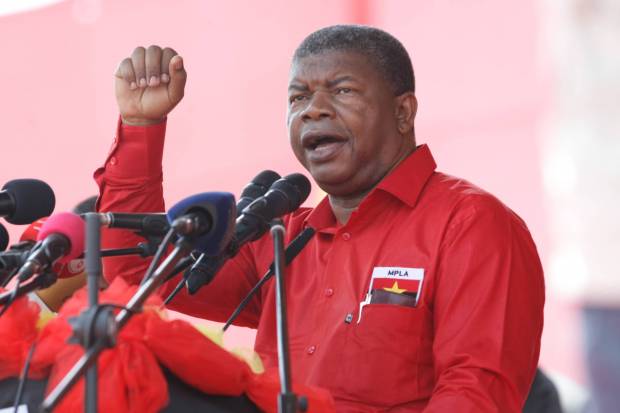
presidential candidate for the ruling MPLA party.

Lourenço has promised to focus on fixing Angola’s economy which has been devastated by the fall in the price of oil. The economy contracted 3.6 percent last year and is expected to post only minor growth in 2017.

On Tuesday, Lourenço said he did not rule out negotiating with the International Monetary Fund or the World Bank as he sought to establish an “economic miracle” in Angola.

“We assess that the next president will seek closer cooperation with the IMF,” Robert Besseling, analysts at Exx Africa, said in a note on Thursday.

“It is likely that Lourenço’s presidency will be marked initially by continuity and moderate changes in policy.”

In the early hours of Thursday morning, the National Electoral Commission said that 15 polling stations failed to open on Wednesday due to transport issues and that about 1,300 people would vote on Saturday instead.

The commission spokesperson said the incident would not impact on the release of partial results.

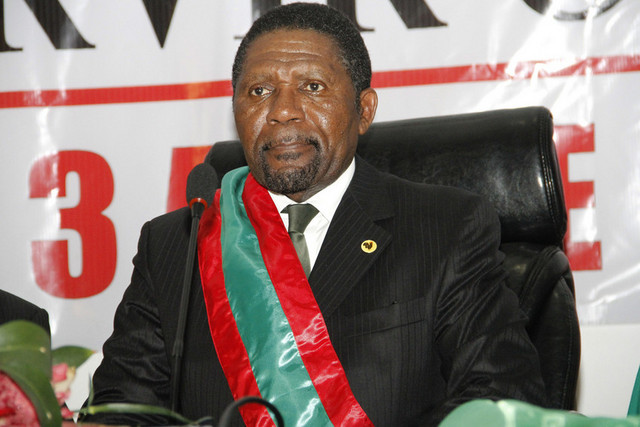
Isias Samakuva of UNITA

An unofficial result is expected by Friday. But there may be no formal announcement for two weeks as ballot boxes wend their way along pot-holed roads and dirt tracks in a country of 28 million spread across an area twice the size of France.


Stories Continues after ad

KCB trains SME entrepreneurs on access to finance

TRAINING: KCB Uganda has trained over 800 SMEs across the country in Jinja, Mbale, Lira, Gulu, Arua, Hoima, Fort Portal and Mbarara.

In a bid to ease access to finance among SMEs in the country, KCB Bank Uganda in partnership with the European Investment bank has carried out a financial training forum among local Small and Medium Enterprises (SMEs) in Kampala.

The training is aimed at helping SMEs understand key aspects of accessing finance from financial institutions including how to get a loan, how to package their loans application, and how well they can manage the funds to avoid defaulting.

Speaking during the training session at Hotel Africana, Joram Kiarie, the KCB Managing Director, noted that the trainings will bridge the gap between the bank and the SMEs.

“We have noticed first-hand the difficulties SMEs face while applying for loans,” noted Kiarie, adding: “Majority of our clients, especially first time borrowers do not know how to package their applications,” noted Kiarie.

“We are here to train our SMEs so that they can have the requisite information and knowledge to enable them access quick and affordable financing,” he further said.

Early this year, the European Investment Bank extended a 10M euros (Shs38b) loan facility to KCB Bank to lend to SMEs. The credit facility ensures that SMEs now have access to long-term loans ranging from 5-7 years to fund expansion of their business in terms of additional projects.

Brian Mwesigye, the CEO of Bravo Shoes, noted that one of the key challenges faced by SMEs is lack of books of account,.

“Most of our businesses are informal, we are trying to formalize them to ensure effective credit analysis,” he noted.

According to KCB, the EIB credit facility will benefit over 380 SMEs across the country with an average loan of Shs100 million.

So far, the bank has trained entrepreneurs from over 800 SMEs across the country in Jinja, Mbale, Lira, Gulu, Arua, Hoima, Fort Portal and Mbarara.


Stories Continues after ad