Stanbic Bank
Stanbic Bank
20.7 C
Kampala
Stanbic Bank
Stanbic Bank
Home Blog Page 1782

Gomba, Singo to battle for Airtel-Masaza Cup trophy

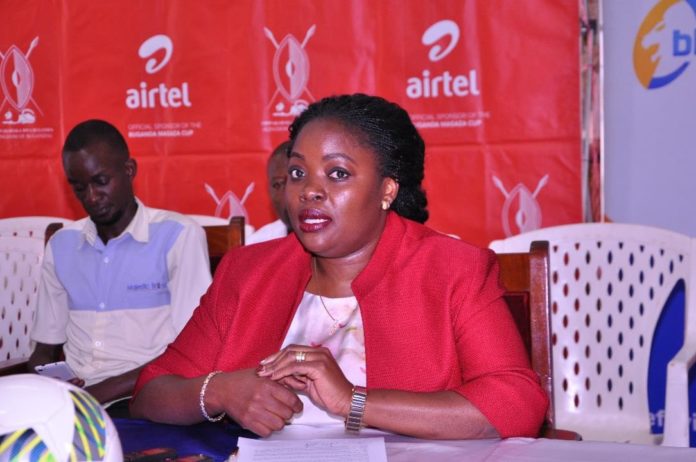
Airtel Uganda Head of Brand and Communication, Remmie Kisakye, addressing the press

All roads will this weekend lead to Mandela National Stadium – the venue for the much-anticipated Airtel-Masaza Cup tournament finals – where local teams Gomba and Singo will battle for the trophy and the right to be called the best football team in Buganda.

Gomba qualified for the final after defeating the defending champions Buddu in a thrilling and dramatic semi-final game that ended in penalty shootouts at fully packed Masaka Recreational Grounds.

Singo defeated opponents Busiro 1-0 in the first leg and registered a 1 – 1 tie in the second leg, automatically pushing them into the finals.

The exciting finals will also see the tournament’s leading scorers – Jjanjali Joseph from Gomba with 8 goals and Mukwala Steven from Singo with 8 goals – try to outclass each other in a bid to become the tournament’s top scorer.

Commenting about the upcoming Airtel-Masaza Cup tournament finals, Airtel Uganda Head of Brand and Communication, Remmie Kisakye, said; “Hundreds of people have been turning up to support their teams during the games and I encourage them to come out in large numbers and watch these two top teams play.”

“At Airtel Uganda, we aim to make a positive impact on the lives of Ugandans, not only through our excellent telecommunications services but also by investing in activities that bring people from all different walks of life together. Football is one example of those activities,” she added.

Kisakye concluded by thanking the Buganda Kingdom for the ‘good cooperation’ and wishing the teams in the finals ‘good luck’.


Stories Continues after ad

Manchester United re-sign Zlatan Ibrahimovic on a one-year deal

Zlatan Ibrahimovic

English club Manchester United have re-signed striker Zlatan Ibrahimovic on a free transfer.

Ibrahimović, 35, made 46 appearances and scored 28 goals for the club during the 2016/17 campaign before suffering a knee injury, which ended his season prematurely.

Zlatan has won championships in four different leagues since beginning his professional career with Malmo in 1999.

In an interview on the Man United website, Jose Mourinho said: “We are delighted Zlatan is on the road to recovery and we are equally delighted to have his ambition and experience back with us. After his contribution last season, he deserves our trust and we will be patient waiting for him to return. I have no doubt that he will be important in the second part of the season.”

The former PSG striker has amazed the Man United medics by his rapid progress from his injury and is now fully recovered and he is planning proper ball work in the next few weeks.

The Swedish international will wear the No. 10 shirt this season after the number 9 he wore last season was taken by Romelu Lukaku.


Stories Continues after ad

‘National Theatre’ Shs3b renovations in high gear ahead of regional festival

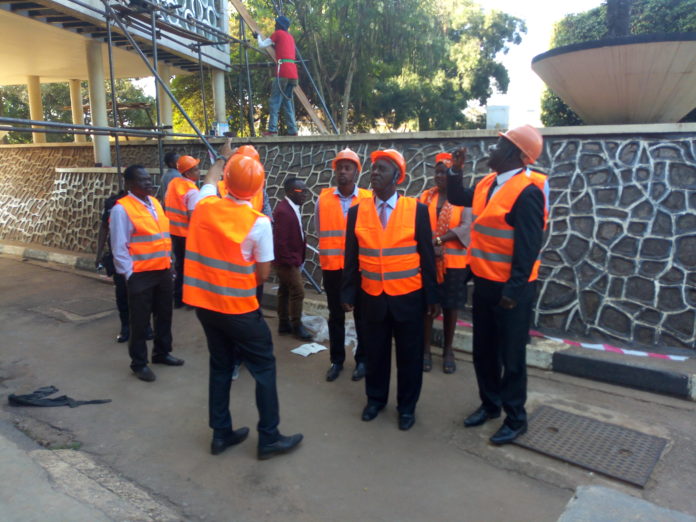
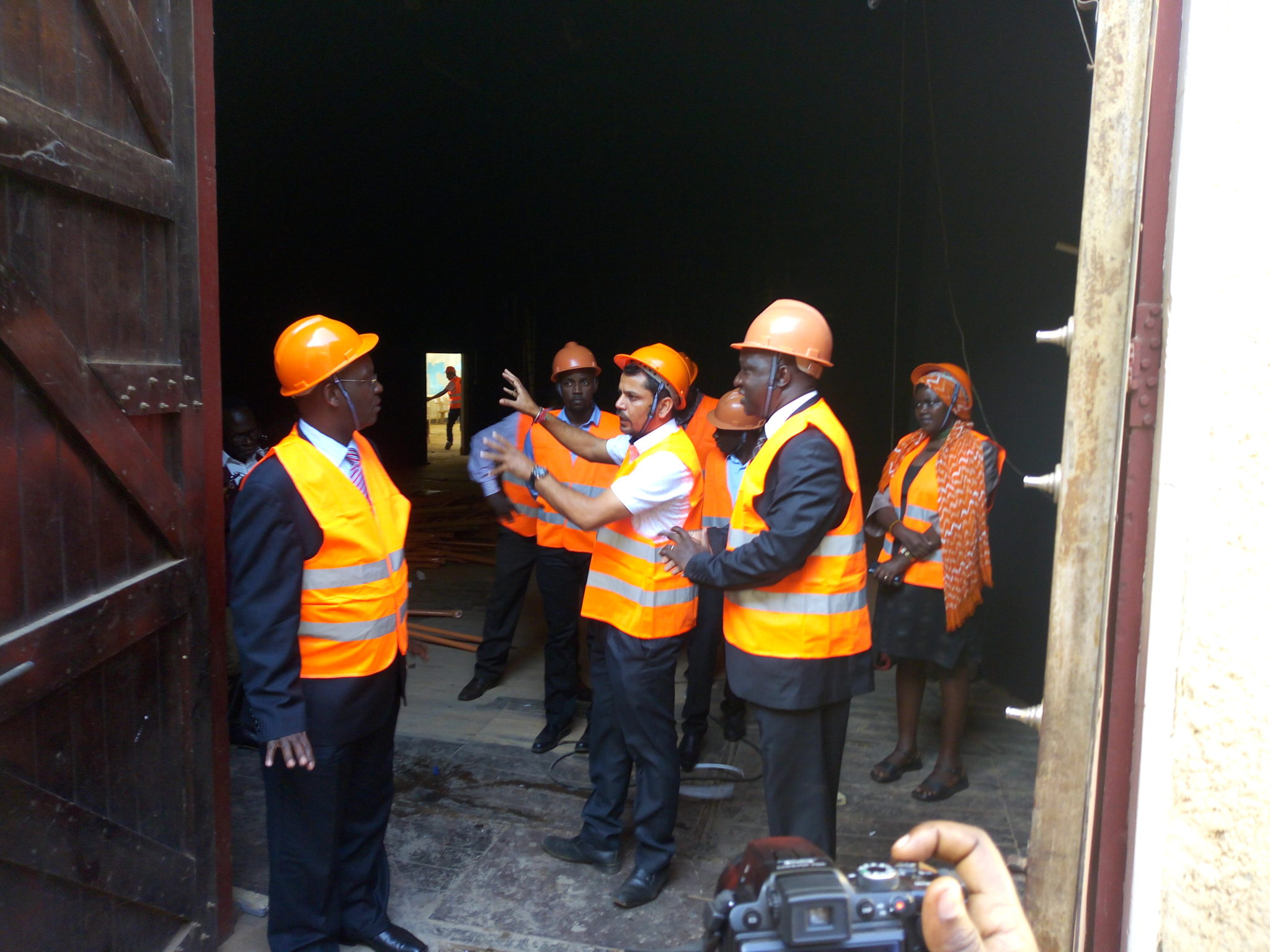
GETTING READY FOR JAMAFEST: The Permanent Secretary in the Ministry of Gender and Labour and Social Development Pius Bigirimana checking on the progress of the ongoing works at the National Theatre

The rehabilitation of the Uganda National Cultural Center (UNCC) popularly known as the National Theatre are in high gear ahead of the Jumiya ya Afrika Mashariki Utamaduni Festival (JAMAFEST).

Checking on the progress of the ongoing works at the theatre on Thursday, the Permanent Secretary in the Ministry of Gender and Labour and Social Development Pius Bigirimana, gave the management of UNCC just this month to complete all the renovations.

“You have just this month to complete; we want it ready for the Jamafest,” he told UNCC Executive Director Francis Peter Ojede, who took him around the place that is receiving the first facelift since its inception in 1959.

So far, the place has already started getting a fresh look with the exterior undergoing painting. Inside, the old carpets have been removed and the toilets have been dismantled to increase on their numbers. However, the seats will have to wait for more time to be changed.

“All these works will have been completed before the Jamafest festivities. However, the seats will be changed after the event. We’ll just clean them up for the event because we don’t have enough time for removing and installing new seats,” Ojede informed Bigirimana.

He also informed journalists that government had handed Shs3billion to UNCC purposely for the ongoing renovation.

The JAMAFEST is biennial event hosted on a rational basis by each EAC Partner State and this year Uganda is hosting the events under the theme: ‘Culture and creative industries: An Engine for unity and employment creation’.

Set for September 7 to September 15, the event is to be hosted at three venues: the Kololo Ceremonial Grounds, the National Theatre and at Hotel Africana.

The festival was mooted after the 20th and 23rd meeting of the Council of East African Community (EAC) Ministers held in March and September 2012, respectively, which requested the EAC Secretariat to organise regular EAC Arts and Culture Festival in the EAC States on rotational basis.

The first festival took place in Kigali-Rwanda in February, 2013, while the second festival took place at KICC Nairobi, Kenya between August 2 and 9, 2015.

Among the events expected include Cultural performances, Exhibition, Market place, film festival, comedy and drama, Symposium, Fashion show and Dinner Gala.


Stories Continues after ad

Legislators push for common mining laws in Africa

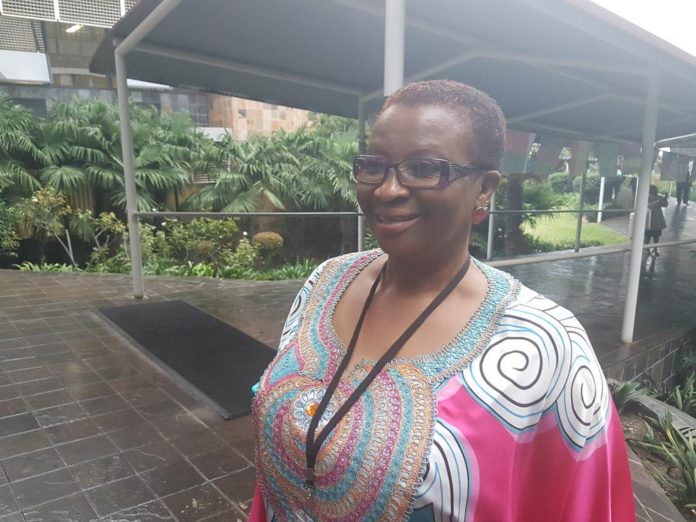
Anifa Kawooya

There is renewed interest by academics, civil society and legislators over the continent’s extractive sector and they want a common mining law.

The legislators are concerned over natural resource governance and economic development on the African continent and are pushing for legislation that addresses issues of transparency and accountability by the governments and mining companies.

They noted that Africa finds itself in a paradox of plenty where its abundant endowment in natural resources does not lead to equivalent levels of prosperity, development and industrialisation.

Meeting in a continental conference in Yaounde, Cameroon, on Thursday, African legislators sought to adopt and ratify a model law on a new development approach to natural resource governance in Africa.

“The model mining law would give pointers that would, for example, strengthen the negotiating capacity of Parliaments; ensuring meaningful collaboration between key players and providing support for the required social dialogue,” Dr. Paul Jourdan, one of the panelists, said.

He elaborated that the African Mining Vision, adopted by African heads of state during their July meeting in 2009 in Kigali, is seen as a solution to the poor governance, lack of strong institutions and weak policies in African states. He explained that the AMV framework is currently being used in several countries such as Mozambique, Ethiopia, Lesotho, Tanzania and provides for a transparent, equitable and optimal exploitation of mineral resources to underpin broad-based sustainable growth and socio-economic development.

Jourdan noted that AMV is also supporting countries to develop world class geological survey system so that they can negotiate from a point of knowledge. He said they hope to work with the Pan African Parliament to train parliamentarians on contract negotiations.

While legislators appreciated the need for a model law to regulate mining on the continent, they noted that there are some hurdles that need to be overcome.

Geoffrey Lungwangwa (Zambia) was concerned that some colonial land laws still obtain in Africa.

“If you have title to land, you are only confined to the surface and anything under the surface belongs to the state. That land law still prevails in our countries today and it is a contributing factor to poverty,” he said. “Many of our people are being removed from land once minerals are discovered. They are not even given shares in the mining companies. Is this really socio-economic transformation?”

He said there is need to have a model law that eventually will empower local communities to have shares in the mining companies so that they are economically empowered.

According to Hon. Bernadette Lahai (Sierra Leone), who comes from a diamond mining area, exploitation and child labour is rampant in mining areas and legislators often have no information on agreements entered by the mining companies and the state.

“Children as young as six years work in the mines. We don’t want mining to affect education,” she said adding that “Mining agreements are conducted between government and the mining companies leaving MPs and the local population in the dark.” She argued that there is need for capacity building for MPs to monitor and oversee the mining activities in their countries so that they can approve or reject mining deals that come to Parliament.

According to the African Development Bank, minerals account for an average of 70 percent of total African exports and about 28 percent of the gross domestic product. It notes that earnings from the recent oil, gas and mineral discoveries in Uganda, Mozambique and Tanzania could lead to an increase in government revenues of between 9 percent and 31 percent in the first 10 years of production.

Legislators noted that because of the structure of Africa’s extractive industries, most countries remain exporters of unprocessed commodities. They proposed that Africa needs to add value to her exports so as to unlock the full economic potential of its natural resources.

According to Hon. Anifa Kawooya (Uganda), the diversity in Africa may not be in asset in having a uniform law.

“We have different land laws and policies. Having one unified model will be complicated,” she said. “There is also the issue of who owns the land where the minerals are found. The land tenure in African countries in different. Some land is owned by the government, individuals, and others owned customarily. We also don’t know how much of our natural resources we have,” she added.

In an attempt to reverse the curse of resources, the East African Legislative Assembly is in the process of adopting a mining law for the East African region. The East African Mining Bill, 2017 will provide a legal framework to harmonise and regulate mining operations in the region and ensure environmentally friendly and sound mining practices. The bill was presented for First Reading in March this year.

The four-day conference on the theme “The issue of political and socio economic integration of the African continent: The role of the Pan African Parliament” is taking place in Yaounde, Cameroon from 22-25 August 2017 and has attracted legislators, civil society and academics from Africa.

Stories Continues after ad

Prioritise maternal and child health for future human capital

Dr Peter Waiswa

By Dr. Peter Waiswa

There has been a lot of discussion in Uganda on economic transition from low to middle income status by 2020 according to government projections. My guess is that with current per capita income of about $770, achieving per capita income of above $1,070, which is required for a middle-income status in the next three years will be a challenge.

Where should Uganda invest her money to achieve and guarantee sustainable economic growth and shared prosperity? It has been said that human capital is the engine of economic growth and development, even beyond natural resources – oil, gas, and other minerals. Indeed, countries such as the Asian tigers did not necessarily develop on the basis of natural resources, but invested heavily in human capital development. To this, add trade.

Achieving middle income status will require that every Ugandan is working at their full potential in a conducive and supportive environment. But it is critical that the human brain is developed to be exploited to its fullest. Scientists argue that most brain development occurs during the first 1,000 days of life, which is literally from conception to the end of the first two years. If brain potential is lost during that time, it may be impossible to recover in later years. As a country, we must reflect on what programmes are being implemented and what policies exist to ensure child development that would guarantee a people who can fully engage in economic activity in future.

The latest Uganda Health Demographic Survey (UDHS 2016) shows that Uganda has made major improvements in child health, with child deaths reducing from 151 to 64 deaths per 1.000 live births over the last 15 years (2001-2016). However, the burden of child deaths and illness remains high. Indeed, during the 15 years, Uganda did not make a single reduction in newborn deaths. It is estimated that Uganda loses nearly 80,000 babies at birth (39,000 as neonatal deaths and 40,000 as stillbirths) per year.

Another 6,000 lives are lost as maternal deaths. Health economists compute this as loss of future economic gain and opportunity. The actual situation may be worse as we do not have any estimates of illness around the time of birth. Surprisingly, the highest numbers of neonatal and stillbirth loss are in the presumably well off regions of Uganda, namely Buganda and Ankole, followed by Lango and Acholi.

The story is beyond the mothers and babies that are lost within the first 1,000 days. Again, according to the UDHS 2016, Uganda has very high rates of malnutrition. It is estimated that almost one in three children (29 per cent) under five years are stunted, and another 4 per cent have severe wasting. The highest rates of these conditions are around age one and a half years, most likely related to a period when many mothers conceive again and the care for the baby worsens.

Scientists have shown that children who are stunted or wasting have less brain matter, and may never recover from it later in life to achieve their full potential even if comprehensive interventions are done after two years. Research has also shown that children who stay in institutional centres for abandoned children or so called babies’ homes, have similar bad outcomes.

It is unimaginable that we still lose so many mothers, newborns and children below five years to preventable deaths. I know that government and development partners are investing a lot in interventions such as immunisation and malaria control but …we may need to invest more.

So back to the question: Where should Uganda invest her money to ensure a sustainable and prosperous future society? It seems clear to me that care during pregnancy, at birth and the first two years should be the area of priority focus. As a country, we should not be having 29 per cent stunted children yet we are a food basket.  It is unimaginable that we still lose so many mothers, newborns and children below five years to preventable deaths. I know that government and development partners are investing a lot in interventions such as immunisation and malaria control but as seen from the demographic survey statistics, we may need to invest more.

The government has presently prioritised infrastructure – roads, the energy sector – as well as security and politics. While these are important areas, they require people who are alive and healthy enough to support the economy.

As Stenberg and colleagues wrote and ably noted in the Lancet Series (2014), it is the investment in women’s and children’s health that will secure high health, social, and economic returns to any nation. They further estimated that increasing health expenditure by just $5 per person per year up to 2035 in 74 high-burden countries could yield up to nine times that value in economic and social benefits.

These returns include greater Gross Domestic Product (GDP) growth through improved productivity and prevention of the needless deaths. Yes, Uganda needs more money for health, but within health, we must prioritise maternal, newborn and child health, if we are to guarantee future sustainable economic growth and development.

Dr Waiswa is an Associate Professor and member of the SPEED project and the Director, Makerere University Maternal and Newborn Centre of Excellence.  


Stories Continues after ad
EC issues LC1 elections roadmap: voters to queue behind candidates

EC Chairman Justice Byabakama addressing journalists in Kampala recently

The Electoral Commission (EC) has released a roadmap to the local council and women council elections set for later this year, with voters having to line up behind their preferred candidates.

Addressing journalists in Kampala Thursday, the EC Chairperson Justice Simon Byabakama said the election program will kick off in October while the polling will take place in November.

“The election shall be by voters lining behind the nominated candidates or their representatives, “Justice Byabakama said, referring to Section 111 (2) of the Local Government Act, adding: “Elections for the LCI will be held on November 21, 2017.”

He said the polling would follow registration of residents into a voters’ register scheduled for November 26 and 30; followed by the display of voter’s register, nomination and campaigning.

Justice Byabakama said that from 7am to 11 am, there will be assembly and verification of the voters by the village presiding officer followed by voter education, before the actual polling and counting of votes kicks off at 11am to 11:30am. The Electoral Commission estimates that the lining, voting and actual vote counting will only take 30 minutes.

Asked whether the 30 minutes will be enough for the entire process, the Electoral Commission boss said the process cannot take the entire day but a limited period of time.
“We thought 30 minutes will be enough to avoid people keeping in the line for long.”He added,” Thirty minutes is reasonable time.”

Speaking about a scenario when the entire village council committee comprises of illiterates, Justice Byabakama said that at least one of the members should know how to read and write. “The committee is comprised of 11 members and among them is secretary and my understanding is that villagers know themselves well and will choose one who is literate, “Byabakama said.

On whether the day will be declared a public holiday, Justice Byabakama said the EC will work it out with government so as not to disenfranchise those who might be working.


Stories Continues after ad
‘Lucky winner’ bags over US$750m jackpot in Powerball lottery

One Powerball ticket among the millions sold across the country has made someone in Massachusetts a very rich person.

The winning ticket for Wednesday’s $758.7 million Powerball jackpot is the largest haul in North American history for a single winning ticket.

The ticket was sold in Massachusetts, lottery officials have confirmed. It was sold at Handy Variety in Watertown, located about 20 minutes west of Boston.

“There was one Powerball jackpot winner Wednesday and 9,397,723 additional players won prizes totaling more than $135 million,” according to the Powerball website. “The estimated jackpot will be reset to $40 million.”

The numbers for the jackpot — the second-largest Powerball jackpot in history — were drawn Wednesday night. The numbers drawn were 6, 7, 16, 23, 26. The Powerball was 4.

The $758.7 million jackpot is second only to a $1.6 billion prize shared by three people in January 2016.

The current jackpot refers to the annuity option, doled out in 30 payments over 29 years, increasing 5 percent annually. Nearly all winners favor the cash option, which would now be $443.3 million.

Powerball officials said they expected to sell 170 million tickets between last Saturday and tonight’s drawing.

The odds of matching all six numbers are only one in 292.2 million — but the odds of winning another prize are a bit more encouraging.

Powerball is played in 44 states plus Washington DC , Puerto Rico and the U.S Virgin Islands, all of which collectively oversee the game.

Stories Continues after ad

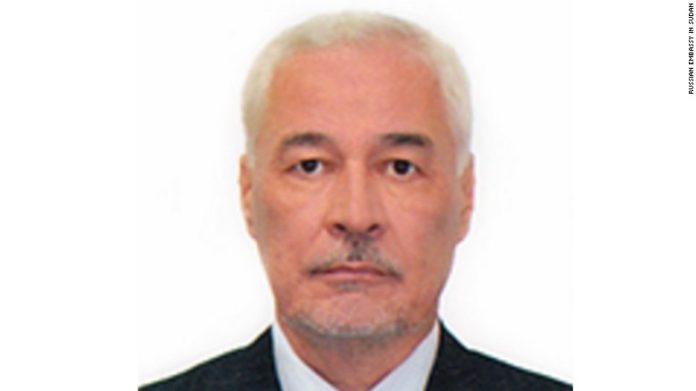
Russian envoy to Khartoum dies in swimming pool

The Russian Ambassador to Sudan Migayas Shirinskiy

The Russian Ambassador to Sudan Migayas Shirinskiy died Wednesday while swimming in the pool of his residence, state broadcaster Russia 24, has said.

Born in 1954 and appointed to the post in 2013, Shirinskiy manifested symptoms of an acute heart attack, embassy staff told the state broadcaster.

Embassy spokesman Sergei Konyashin said the staff called an ambulance but doctors were not able to save the ambassador.

The Sudanese police have ruled out the possibility of an assassination attempt.

Shirinskiy graduated from the Moscow State Institute of International Relations (MGIMO) and held diplomatic positions at Russia’s embassies in Yemen, Egypt and Saudi Arabia.

He also served as Russian ambassador to Rwanda prior to his most recent post.

Though there is no evidence to suggest anything suspicious about Shirinskiy’s death, he is the latest in a long line of Russian emissaries to die in the past year.

Since the start of 2017, four Russian diplomats have died, while nine have died since late 2016.

In February, Vitaly Churkin, 64, Russia’s ambassador to the United Nations died of an apparent heart attack, according to the Russian mission at the UN.

Less than a month earlier, the Russian ambassador to India, 67-year-old Alexander Kadakin, died after a short illness. A spokeswoman for the embassy added there was nothing “special or extraordinary” about his death.

Two weeks before that, on January 9, a senior diplomat at the Russian embassy in Greece was found dead on the floor of his apartment. A Greek police report said he had died of natural causes.


Stories Continues after ad

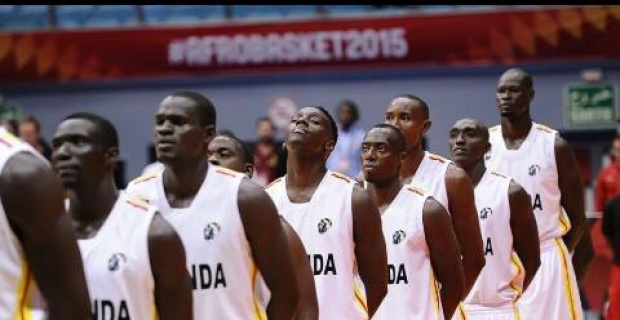
2017 FIBA AfroBasket: Uganda names 13-player provisional squad

Members of the Uganda National Basketball team

A team of thirteen players was named to participate in the 2017 FIBA AfroBasket tournament, will camp in the Egyptian city of Alexandria for a fortnight before heading for the games that will be co-hosted by Tunisia and Senegal.

The Ugandan team that has nine home-based players was drawn in Group A along with 11-time record winners Angola, Morocco and Central African Republic, for the tournament that will take place from September 8 -16.

The Uganda team that is still looking for means of raising about UgShs700m to cater for the players, is scheduled to kick off its campaign on the Sept. 8 against Angola, with the team playing its group games in the Tunisian capital, Tunis.

There are four groups and the top two teams from each group will advance to Tunis, which will also host the Final Phase (Quarter-Finals, Semi-Finals and Finals) from September 14-16.

Egypt is the second most successful team in the tournament, having won the trophy five times. Following Egypt are group rivals Senegal, who have won two medals less than the Pharaohs in the tournament.

The Uganda provisional squad:

Joseph Ikong Anyuru, Jonathan Egau, Jimmy Enabu, Samuel Kalwanyi, Syrus Kiviiri,Ben Komakech, Stanley Mugerwa, Stanley Ocitti Ochaya, James Okello, Stephen Omony, Robinson Odoch, Opong Jonah, Karma Otim, A’darius Pegues


Group A: Nigeria, DR Congo, Mali and Ivory Coast

Group B: Angola, Central African Republic, Morocco and Uganda

Group C: Tunisia, Guinea, Rwanda and Cameroon

Group D: Senegal, Mozambique, Egypt and South Africa

Stories Continues after ad

Sudhir’s son Rajiv marries in a lavish wedding

Rajiv and Naiya

Rajiv Ruparelia, the Managing Director of the Ruparelia Group, has finally married to his longtime fiancé Naiya in a lavish wedding in London, United Kingdom.

Rajiv is the only son of the three children of the money mogul Sudhir Ruparelia and his wife Jyostna.

The two daughters too, married in lavish weddings that took place in London and Kampala.

The Rajiv marriage fete started with a stag party in Madrid, Spain and later to London, UK where the two lovebirds exchanged their vows.

Given the challenges Mr. Sudhir is going through after the closure of his bank, the Crank Bank, and the legal battle with Bank of Uganda, the two challenges didn’t deter him from splashing mega cash on his son’s party.

For starters, Sudhir sponsored 50 Ugandans to Madrid for the stag party before they were all shifted to London, with all expenses on him.

Rajiv met Naiya, a daughter of wealthy British couple Sudheer and Rita Khagram, while they were attending university in London.


Stories Continues after ad