Stanbic Bank
Stanbic Bank
17.6 C
Kampala
Stanbic Bank
Stanbic Bank
Home Blog Page 1785

President’s nationwide land campaign exposes an inefficient system

By Jacky Kemigisa

President Yoweri Museveni is holding a nationwide radio talk-show to address discontent around the Constitutional Amendment Bill, which once passed, will make government compulsorily acquire land. The amendment raises several other issues, so I will limit myself to the President’s activism for the Bill.

On 4 September, President Museveni kicked off his radio activism in Kabale where he spoke on Voice of Kigezi at 7 p.m. He was joined by Prime Minister Ruhakana Rugunda and Attorney General William Byaruhanga. The president will hold similar talk-shows across the country.

His campaign follows land-related clashes across the country – the most reported being nude protests by Amuru women against the forcible demarcation and allocation of land for a sugarcane plantation and factory.

Earlier on December 2016, a land commission led by Court of Appeal judge Catherine Bamugemereire was tasked to look into the rampant land issues.

However, with growing push for the Constitutional Amendment Bill, further discontent among the population is being stoked. The Bill seeks to amend Article 26 of the Constitution to provide for compulsory acquisition of land for government projects. Article 26 of the Constitution provides for the right of persons to own property and decrees how the government can acquire it: with fair and adequate compensation that may be challenged in a court of law. However, government argues that this provision has slowed down the implementation of key projects whenever court halts the activities over compensation disputes.

President Museveni now claims his countrywide effort is meant to highlight the advantages of the Bill and to “remove toxins from the masses”, adding that “some people have been misusing radios to tell lies”. By appearing on radios across the country, the president hopes to generate support for the government Bill. From Voice of Kigezi, the president went to Radio West and Voice of Tooro.  He was also scheduled to be in Hoima (Spice FM), Mubende (Point FM) and Masaka (Radio Buddu).

Aren’t we better off firing all the ministers so that the president can do all the work, and therefore save tax payers’ money? I am sure many taxpayers would appreciate this development.

It is a busy week for the president. Interestingly, Uganda has one of Africa’s largest cabinet. The president is supported by 108 presidential advisers, a fully constituted communications team, plus representatives like Resident District Commissioners, among others. Ideally, one of these officials – who are fully paid by taxpayers – should be spreading the message that the president wants shared with the public. That way the president, his Prime Minister and Attorney General would not be hopping from one district to another but running the country.

In the president’s campaign, we are again seeing symptoms of a system that is centered on and around the President. There have been media reports about different groups – the poor youth, religious leaders, opposition MPs and local elders – all queuing at State House for a chance to share their issues with the nation’s topmost leader.

One might argue that this is a sign of a plugged-in President who has an open-door policy for his citizens; but if the local government is fully functioning with land commission, committees or boards, why are elders traveling from as far as Amuru to meet the President to solve their problems?

Why should the president be regarded as the chief problem solver without whom nothing moves? Isn’t it worrying that those appointed to carryout tasks the president is now doing, are simply taking home a salary without any work done?

The government could have rolled out a nationwide campaign to promote the Bill, spearheaded by Lands minister Betty Amongi. But as it stands, you can call into a radio station from your home area and talk to the President, Prime Minister and Attorney General – at the same time!

Aren’t we better off firing all the ministers so that the president can do all the work, and therefore save tax payers’ money? I am sure many taxpayers would appreciate this development.

MS Kemigisa is the Head of Content at Center for Policy Analysis


Stories Continues after ad

Tanzanian Parliament ratifies oil pipeline treaty

Uganda advancing on oil pipeline developments

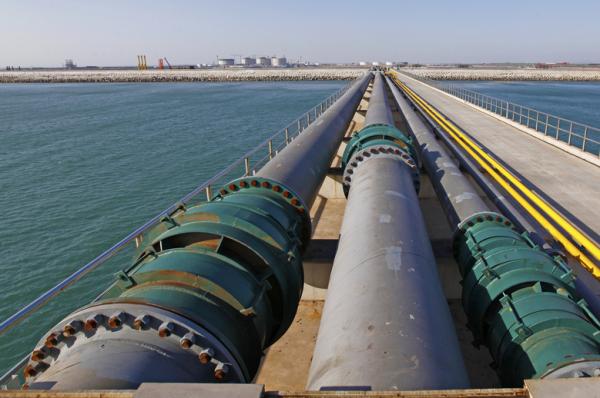
Tanzania Parliament has ratified the treaty concerning the crude oil pipeline between Tanzania and Uganda ahead of the construction expected to start early 2018.

The National Assembly passed the agreement on Monday afternoon, September 11, 2017, after comments from the energy and minerals committee, opposition and a short debate that demanded fine-tuning of some issues before and during the implementation of the project.

The Ugandan cabinet approved the ratification of the Inter-Governmental Agreement (IGA) between Uganda and Tanzania for the East African Crude Oil Pipeline (EACOP) Project in mid-August.

Known as the Intergovernmental Agreement between the United Republic of Tanzania and the Republic of Uganda concerning the Pipelines System of EACOP Project, it stipulates areas of cooperation, rights and freedoms to the project operators as well as the concessions the government provides for the project.

The other is the security issue where governments have agreed to provide for the safety and security for the project. Also in the treaty is the national content issue where the two states will cooperate with each other and with the pipeline project company in order to identify, develop and agree in a timely manner national content plans, national content obligations and procurement plans.

Energy ministers from the two countries signed the EACOP agreement in May this year where the countries agreed to construct the 1,445km pipeline from the oilfields in west Uganda district of Hoima to Chongoleani village in Tanga. The  contract aims at promoting efficiency, protecting and addressing the ownership structure of the US$3.5 billion project.


Stories Continues after ad

Africa: From ‘hopeless’ to the growth frontier

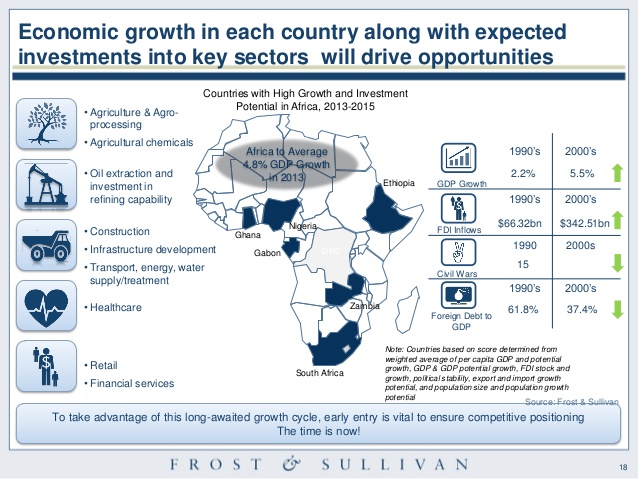
The world doesn’t address Africa as ‘hopeless’ continent anymore. The big nations, the multi-national companies, economists all have remolded their opinion on Africa to the next investment destination after Asia in the coming decades.

A decade ago one of the leading financial magazines had called Africa as a ‘hopeless continent.’ The winds started blowing in favour of Africa in a bigger way, and 10 years later all are queueing up for Africa as it is the second fastest growing region after Asia. This trend, all believe, will continue in the foreseeable future. The World Economic Forum (WEF) in one of its reports highlighted that “Africa is home to seven of the 10 fastest-growing economies in the world.”

Green shoots in African economy in 2017 after a sharp decline in 2016 is a clear indication that the continent is getting back on the track.

The untapped potential in the Sub-Saharan African region came to the forefront when the multi-national companies started focusing on Africa more. The sudden surge in investments in infrastructure development (road, rail and transport connectivity) from China, clubbed with conducive regulatory and policy support and regaining momentum in economy have brought Africa into the global centre stage.

The advancement in economy trickles down to all segments of the business. The latest Logistics Performance Index (LPI) by the World Bank shows that the African countries have moved itself to the upward trajectory. South Africa continues to lead the pack by positioning itself at 20 in the world ranking. Countries like Tanzania and Mozambique significantly improved its performance in comparison to the 2014 ranking.

World Economic Forum report painted a different picture on the ground reality when the African economy plunged into slumber in 2016, “An environment where private sector-led investments is starting to flourish, in large part thanks to government-led far-reaching economic and political reforms.” That means the adversities gave birth to new opportunities.

Investment attractiveness

Multinational consulting firm, Ernst & Young’s (EY) ‘Attractive Programme Report 2017’ which was released in May 2017 is very bullish on Africa. “Even as Sub Saharan Africa’s (SSA) three largest economies — Nigeria, South Africa and Angola — saw sharp downward revisions in growth forecasts, a diverse group of the second tier economies in Africa — including Cote d’Ivoire, Senegal, Ethiopia, Kenya, Tanzania, Mozambique and Egypt — are expected to sustain high growth rates over the next five years.”

They attributed it to the increased regional mobility, rapid urbanisation and population growth. EY report also says “The flow of foreign direct investments (FDI) into Africa registered an upward trend. During 2016, capital investment into Africa rose 31.9 percent. Investment per project averaged $139m, against $92.5m in 2015. This surge was driven by several large, capital intensive projects in the real estate, hospitality and construction (RHC), and transport & logistics sectors. The continent’s share of global FDI capital flows increased to 11.4 percent, up from 9.4 percent in 2015. That made Africa the second fastest growing destination when measured by FDI capital.”

Global transport and logistics providers see an opportunity to act as “connectors” for Africans and markets, considering the relatively underdeveloped state of infrastructure. In 2016, automotive FDI projects increased 6.5 percent. With 14 FDI projects Morocco retained the top spot for investment, followed by South Africa, Algeria, Tunisia and Nigeria.

By registering a 20.9 percent increase in FDI projects, transport and logistics became the fifth largest sector in 2016. The sector also ranked second by FDI investment and was the fourth largest contributor to FDI jobs.

Setting the stage

Especially in the past decade, Africa witnessed a sizable development in transport and logistics infrastructure segment. New airports, opening up of skies for international carriers with supporting aviation policies, inter country and intra-country rail networks, construction of road networks with cross border access, and larger sea ports.

Dedicated efforts are put into further accelerate Africa’s trade potential. Initiatives like MoveAfrica by NEPAD (New Partnership for Africa’s Development) aimed at the free movement of goods across the continent, establishment of the CFTA (Continental Free Trade Area) by December 2017; preceded by the Tripartite FTA launched by Heads of State and Government of COMESA (Common Market for Eastern and Southern Africa), EAC (East African Community) and SADC (Southern African Development Community) in June 2015 are the steps in this direction.

Open skies

Economists are upbeat about the African aviation segment as it will be one of the fastest-growing aviation regions over the next 20 years, with annual expansion averaging nearly 5 percent. Currently its contribution to the economic activity of the continent is $80 billion annually.

Five African countries lead international air trade to/from Africa – South Africa contributing 16.1 percent, followed by Egypt with 15.9 percent, Kenya holding 12.9 percent, Nigeria 10.7 percent, and Ethiopia with 10 percent in 2015. African carriers’ posted the largest year-on-year increase in demand of all regions in March 2017 with freight volumes growing 33.5 percent.

The growth of air cargo segment in Africa mainly depends on technological innovation, regulatory reforms and investment in infrastructure. To fuel the growth further the International Civil Aviation Organisation (ICAO) had called for a faster implementation of the Lome Declaration. The primary objective of the Lome Declaration is to promote the unobstructed flow and rapid release of goods through enhanced trade facilitation and custom clearance frameworks.

Air freight is key enabler of international trade, especially the high value and time-sensitive goods. Interestingly air freight carries around 35 percent of world trade by value.

“The growth in African freight traffic outpaced the global average last year and that cargo capacity offered by African carriers in the region surged by over 20 percent in 2016. And the implementation of the Lomé Declaration in total will drive the air cargo further,” said the president of the ICAO Council, Dr Olumuyiwa Benard Aliu while addressing the Second Meeting on Air Cargo Development in Africa.

According to IATA, Africa’s share of world air freight market is only 1.6 percent as against the whopping 37.5 percent in Asia Pacific. But this drastically will change as soon as more countries within the continent liberalise the sky.

Europe accounts for 60 percent of the African cargo and commands the majority of international air trade. In the recent past Africa has become the largest contributor to the global flower exporting market. Kenya accounts for about 38 percent of cut roses sold in the European Union making it the third largest exporter of cut flowers in the world. Ethiopia and Tanzania are other East African countries with significant share in global cut flower export.

Keeping pace with the demand growth in cargo segment most of the operators are building new capabilities. Kenya Airways (KQ) opened a state-of-the-art cargo express centre at Jomo Kenyatta International Airport in April. Ethiopian Airlines joined the bandwagon by opening Africa’s largest cargo terminal recently in pursuit to offer its customers the best.

Mrisho Yassin, CEO, Swissport Tanzania, spoke about Tanzania emerging as logistic hub in the region. “There are a number of factors which makes Tanzania as one of the emerging logistics country in Africa. That includes investment needs (prospects in oil and gas and minerals deposits). For the satisfaction of internal consumables requirements, we are importing a number of products from abroad due to limited local manufacturing capacity. In Agricultural prospects – we have a potential to export horticulture products, animal products and in transit point – especially for sea freight for landlocked neighboring countries.”

On the civil aviation side, signing of a ‘Solemn Declaration’ by 21 African heads of state re-affirming their commitment to breaking down the artificial barriers obstructing air transport service expansion between African nations by implementing the Yamoussoukro Decision also a crucial step.

Store safe

Advancement in technology has put the warehousing management in an advantageous position. However to enhance efficiency and optimise the supply chain capacity addition in warehousing is essential.

Leading the pack is Agility which plans to set up a network of logistics hubs across Africa. It is building a 100,000 sqm logistics park on a 40 acre site at Tema Free Zone, east of Accra. PK24 industrial zone is on the northern outskirts of Abidjan, Côte d’Ivoire, covering 940 hectares. The first phase of 200 hectares is being constructed by China Harbour Engineering Company (CHEC), and Heineken has been announced as the first occupier.

Kenya is not too far behind. Africa Logistics Park (ALP) is Kenya’s first international standard modern logistics and distribution complex. It is of 50,000 sqm and currently under construction at Tatu Industrial Park. It is expected to be operational by October 2018.

The Momentum Africa Real Estate Fund that has announced plans to invest in the development of the Agbara Estate, an industrial andlogistics hub in Ogun State, west of Lagos, Nigeria.

Fortress Income Fund has begun the construction of a major logistics park on the former Clairwood Race Course in South Durban, South Africa. The park is planned to have 350,000 sqm of warehousing space, with completion expected in 2020.

The volume carriers

Like any other country, around 90 percent of Africa’s trade happens by sea, making its ports crucial points in logistics networks. Africa though known as a landlocked continent, one would be surprised with the number of ports in each region.  West Africa has 18 ports: East Africa has 3 ports and Southern Africa has 8 ports. According to the latest estimates, Africa’s ports need about $5 billion in investments every year to cope with the increasing container and cargo traffic.

Development in this segment is more visible may be because of the sheer size and the volume handled through the terminals. Transnet Port Terminals, one of the leading names in port development and managing entity in Africa, have made an investment totaling to Rand 17,304 million over the last 10 years.

In an email interaction Transnet Port Terminals elaborated on the major developments in the port infrastructure in the last decade. “Commissioning of the Ngqura Container Terminal in the Eastern Cape was a major achievement. And in 2011: Acquisition of 7 Ship-To-Shore Cranes for DCT Pier2, first tandem lift STS cranes in Africa. 2012 saw the delivery of a R70 million Liebherr crane in East London with a lifting capacity of 144 tonnes, a standard load operation of 77 tonnes and a spreader load operation of 63 tonnes. Arrival of a R140 million ship-loader in the Richards Bay terminal with a 2500-tonne per hour capacity happened in 2013. In the same year, took the delivery of 21 Hyundai forklifts in Richards Bay for break-bulk operations. And July 2017 witnessed the commencement of the assembly of 2 of 23 Straddle cranes at DCT Pier2.”

While looking forward, by 2020, 13m TEU new deepwater capacity is foreseen in West Africa; In Southern and East Africa, 23.2m TEU new deep water capacity projects is planned, of which 22m TEU are part of 3 mega multipurpose port complex projects.

APM Terminals is investing $1.5 billion for a new multi-purpose port in Tema and also has similar plans in Nigeria. Lamu Port is planned for construction about 300 km north of the existing port at Mombasa in Kenya. The China Communications Construction Company (CCCC) has won a contract to build the first three berths of the port.

Algerian government announced plans for a $3.3 billion investment into construction of a new deep water port at El Hamdania.

DP World Berbera complements its investment of $442 million in Djibouti. It had added 2.2 million TEUs of capacity in Africa over the past three to five years, bringing the total annual capacity to 6.2 million TEUs.

Railways

The shift in investments in Africa happened swiftly. The infrastructure development segment which was dominated by European investments once is now being handled by Chinese funding and companies.

The major achievement in this segment was the opening of the Mombasa-Nairobi SGR line this year. The 609 km long line cost $3.8 billion. This is part of the $13 billion line that eventually will link Kenya, Tanzania, Uganda, Rwanda, Burundi, and even South Sudanand Ethiopia.

Last year, the $4.2 billion railway line of 750 kilometres long, connecting Addis Ababa and Djibouti Railway was opened. In the 10-year period between 2004 and 2014, African countries borrowed nearly $10 billion for railway projects from China, facilitated by the China Export Import Bank.

Zambia-Malawi railway that is pegged at a cost of $2.26 billion will be constructed by China Civil Engineering Construction Corporation (CCECC). Lagos Rail Mass Transit System in Nigeria is another project that is handled by the CCECC. The Chinese company also handles the $876 million Abuja-Kaduna Rail Line in Nigeria. The $8.3bn contract for the Lagos-Kano standard gauge modernisation project is also in CCECC kitty.

Changing gears

According to a report jointly prepared by the Boston Consulting Group and the Africa Finance Corporation estimates that the annual infrastructure investment gap in Africa is at around $100 billion. Power accounts for 40 percent of total spending needs, followed by water supply, sanitation, and transport.

The report also listed out the key challenges faced in infrastructure funding in Africa and they are: limited public sector capabilities, insufficient political will, policy uncertainty, weak regulatory environments, shortage of man power with technical skills, financing complexities attributable to narrow financial markets, higher actual and provisional risks, longer project durations, significant cost overruns, and currency mismatches.

However in the past decade and a half the inter country and intra-country road network have improve tremendously.

“Although Sub Saharan Africa is rich in opportunities, it cannot fully unlock its potential unless it closes its significant infrastructure gap. Closing this gap and accelerating social and economic growth and development will certainly take time,” added the report.

Albert G Zeufack, World Bank Chief Economist for the Africa Region, in the LPI report says, “We need to implement reforms that increase the productivity of African workers and create a stable macroeconomic environment. Better and more productive jobs are instrumental to tackling poverty on the continent.”

While we see buoyancy in investments in Africa, many a times the lack of policy and regulatory support dampens the projects resulting in delays. The need of the hour for Africa is to encourage more private participation in projects as many of the countries are unable to fund their projects.

The Sub Saharan Africa region has nearly a billion people and by 2030 will have the world’s largest and youngest labor force. And if the SSA is able to connect the region with a stronger infrastructure network, then this generation would unlock Africa’s full potential and place the continent on par with any other world country.

Source: Logistics Update Africa


Stories Continues after ad

Mudavadi rumored to be out of Nasa

Mudavadi

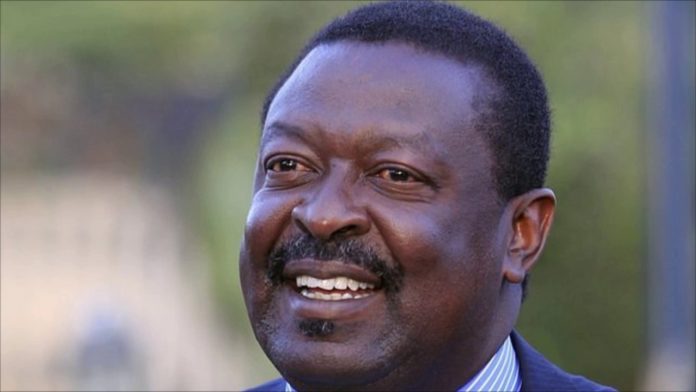
Musalia Mudavadi, one of the leading members of Nasa coalition in Kenya is reported to have jumped ship.

However sources close to the principal say “it is not true and merely a figment of fake news imagination”

There is a two paragraph letter purportedly from Mr Mudavadi making rounds where he attributes his departure on “unavoidable circumstances.”

“Due to unavoidable circumstances and following our night meeting that ran through to this morning without reaching a consensus, I hereby tender my resignation as a NASA principal and supporter of the change coalition,” the letter reads in part.

The letter ends with, “I wish you all the best in the ongoing contest, with a hope that you will campaign and will not boycott the October 17th election as required by law and for your supporters’ sake.”


Stories Continues after ad

Gov’t to regularize small scale gold miners

Energy and Mineral Resources Minister Eng. Irene Muloni attended the launch.

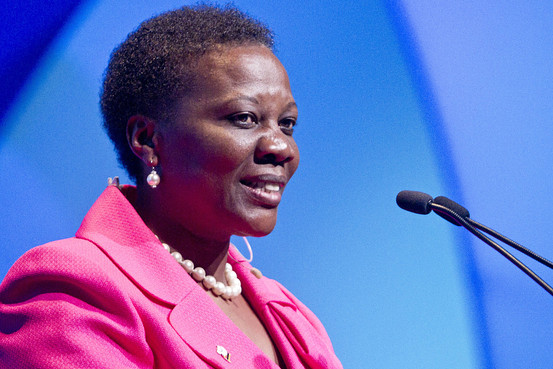
The Minister of Energy and Mineral Development, Eng. Irene Muloni, has said that the government plans to legalise small scale gold mining and trade so that it can raise revenue from the artisans.

Muloni said as she was responding to a motion tabled by MP Michael Bukenya (Bukuya County) to investigate the eviction and displacement of small scale miners in Mubende District. This was during a plenary session in parliament two days ago.

The Motion called for investigation into the police and army eviction of 60,000 small scale artisans operating in the gold mines in the district.

Muloni said that the process of reorganising mining sites was on-going across the country and will include regularising mining of gold.

“We plan to move businesses located at the sites to nearby trading centres, the small scale miners are going to be resettled and given new demarcated sites. They are also going to be registered for purposes of proper revenue collection,” she said.

She added that her ministry will submit to cabinet a policy to regulate small scale mining in the country. “It will cater for all the issues that these artisans are faced with. We need to have the activities regularised and carried out in a legal manner so that the government does not lose out, the minister said.

Muloni said that the Ministry was conducting operations in areas where illegal gold mining takes place to minimize on loss of revenue.

However, Bukenya urged the government to speed up the process of formulating a policy to govern and protect small scale artisan miners and compensate those whose property was damaged in the eviction.

Roland Mugume (Rukungiri Municipality) tasked Minister for an explanation as to why the miners were given only two hours’ notice by the Uganda Peoples Defence Forces soldiers to leave the mines and queried the process of compensation of the evicted artisans.

Deputy Speaker, Jacob Oulanyah, directed the Minister to speed up the process of formulating a policy to govern the mining sector and to constantly furnish Parliament with the progress on the policy and rehabilitation of the artisans.

=

Stories Continues after ad

NRM caucus to meet over land amendment

Legislators of the National Resistance Movement are set to meet on Monday (September 18, 2017) to discuss a report on the proposed Constitutional Amendment Bill 2017 that seeks to give Government powers to compulsorily take over private land for public projects.

Ruth Nankabirwa, government Chief Whip made the revelations about the meeting while in a meeting with journalists at office of the Prime Minister yesterday.

The caucus followed the earlier gathering of MPs at State House on August 16, 2017 in which the ruling party legislators agreed unanimously to set up a committee to look into possible legislation after the bill received fierce protest from the public.

During the earlier meeting, the committee had been given two weeks and with two weeks having elapsed on August 30, 2017, the members are set to table their report findings.

Headed by Vice President, Edward Kiwanuka Ssekandi, other members on the team include; Kahinda Otafiire, Betty Amongi, Robinah Rwakoojo Vice Chairperson legal Committee, Gaster Mugoya, Denis Obua, Isala Eragu Bichetero Kaberamaido County, Sam Bitangaro Kwizera (Bufumbira County South) and Jackson Kafuuzi.

President Yoweri Museveni who also doubles as NRM Party Chairman called for the caucus to forge a way and see how the bill can be passed on the floor of Parliament without any hurdles, but even within his party troops, MPs opposed the move.

The matters were even made worse after three of Museveni’s Ministers; Kahinda Otafiire (Minister of Justice and Constitutional Affairs), Betty Amongi (Minister of Lands and Urban Planning) and Mwesigwa Rukutana (Deputy Attorney General) failed to defend the bill before the committee of Legal and Parliamentary Affairs, bringing the committee business to a standstill to date.

The meeting comes at a time when President Museveni is holding country wide radio shows in an attempt to counter the negative publicity surrounding the bill.

If passed in its current form, the bill will give powers to government to take possession of land, deposit the contested compensation award with courts, pending disposal of the legal suit.


Stories Continues after ad
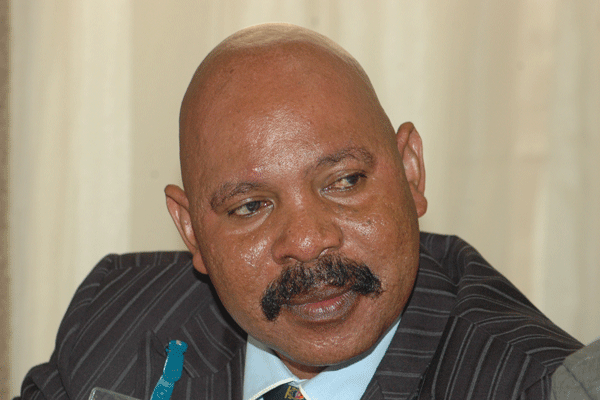
When NRM MPs agreed to remove presidential age limit

They came in disguising to be arriving for a routine day at Parliament.

But when, they chose to take the left, to the conference hall, instead of taking to the main chambers, the lobby journalists knew something was amiss.

They planned it to be an off camera event but it is not usual that MPs from one colour shed- yellow- converge and they fail to catch the media’s eye. It couldn’t have been any different with the removal of age limit conclave.

They were 246 and there, in a hot stuffy hall without air conditioning, the National Resistance Movement (NRM) party MPs resolved to bring a private members bill to scrape the presidential age limit clause from the constitution.

Mr Raphael Magyezi, infamously known for doctoring a committee report in the last Parliament was gracefully picked to lead the doctoring of article 102(B) of the constitution.

Others on the morticians table will be Minister for Defence and Veteran Affairs, Adolf Mwesigye, commissioners Peter Ogwan (Usuk County) and Arinaitwe Rwakajara (Workers MP), and back benchers Jackson Kafuuzi, Simeo Nsubuga, Margaret Komuhangi (Nakasongola Woman MP)and James Kakooza (Kabula).

To justify his actions, Mr Magyezi hid under the cloak of a one man research he had conducted on the constitution that had to be amended.

He said the constitution had unacceptable lacunas and time has never been ripe to have things put right— the discriminatory age limit

The proposal if adopted by Parliament will see the age cap for one to contest as President and LCV lifted and scrap off the 75 age cap.

“The proposal is meant to make Parliament compliant with the Supreme Court deadline that gave the Executive two and half years to put in place all the court’s provisions.

“With just six months left to the deadline there couldn’t be a better time to bring the amendments,” Mr Magyezi spoke with tremendous confidence.


Adolf Mwesige, kicked off his support for Magyezi by saying having a presidential age cap in the constitution will be robbing people of their powers to choose their leaders as highlighted in Article 1 of the constitution.

He said Uganda should behave like its counterparts across the world.

“There is no constitution in those model democracies where there is age limit,” he said.

Said he, further, “If we can’t have age limitations anywhere in the European laws, on that, I support the idea of private member’s bill because Members of Parliament are the representatives of the people, so we have a right to move the bill in Parliament because we are the representatives and the constitution is clear.”

Jackson Kafuuzi, Kyaka South MP simply said the current provisions in the constitution in regard to age are simply rubbish.

“We remove what you don’t want and replace with what you desire. We are moving forward. The time when the constitution was made in 1995 was different and this is 1997.

“The dynamics on the ground have changed, we require an all-inclusive constitution. That is an abnormality that needs to be cured,” he argued reminding those in the room that he, actually, is a learned lawyer.

He added, “The older you grow, the more you are treasured. There is no scientific justification as to why we should have age cap in our constitution.”

By this time, the House was yelling “lets pass the motion” a la the biblical “crucify him and give us Barabbas” when Pontius Pilate asked the crowd what they wanted him to do with Jesus.  Arinaitwe Rwakajara (Workers) was quick to remind Ugandans that what they were doing has less to do with President Museveni.

“We aren’t amending the constitution for President Museveni. For us, we aren’t concerned with President Museveni’s contest, we haven’t consulted him whether he wants to contest or not. For us, we want to deal with the constitutional mandate and that is our main job,” he said.

As expected the opposition was caught flat footed. On hearing what was happening at Parliament, many rushed in panting, vowing to fight the mischievous plot, the tyranny of numbers notwithstanding.

“We are fed up with age limit. We shall not wait until a ruler dies in his seat. What they did is a shame to the world. Their argument is so lame, flimsy and bogus.

“You can’t say it isn’t all about Museveni, so who is it all about? Why now? Of all the things that are hurting Uganda, why would 200 MPs sit to talk about lifting the age limit? Is that all they can do?” said Kampala Central MP Muhammed Nsereko. His pronouncements though should be taken with a pinch of salt as he is known for bulking and making a no show at the eleventh hour when needed most on such controversial issues.

He however, took a dig at his yellow counterparts calling them idle folks living in denial.

“They are betraying the nation, but they will live to pay for it. We instructed cabinet to come up with an omnibus bill of all the amendments? Why do they think they should bring a private member’s bill? Most of them were not sane enough,” he said.

NRM’s John Baptist Nambeshe, Manjiya County MP, however walked out of the meeting in protest of the agenda of the meeting.

He said he will save his dancing for the tunes that benefit the majority.

“I remained completely opposed to removal of age limit from our constitution because it would be like dancing to the tunes of the selfish intentions of an individual.

“This time, these fellows would be making off with a whooping Shs1 billion because I have over heard from reliable sources that fellows promoting this are hired mercenaries at a huge pay,” he said.


Stories Continues after ad

Nansana murder suspects remanded again

Foreign Affairs Minister, Gen. Jeje Odongo.

The thirteen suspects charged with the serial murders of women in Nansana, a municipality on the outskirts of Kampala, have been further remanded to Luzira Prison till October 6.

Making submissions today before the Nabweru chief magistrate Mary Mutesi, State Prosecutor Joan Keko said members of the group engaged in terrorism, aggravated robbery and the murder of 10 women including Josephine Nakazibwe, Esther Nansamba and Patricia Nansubuga, among others.

The suspects were arrested by police and SFC following the murders that had dogged the area for the past two months.

Prosecutor Keko also said the suspects stole blankets, Shs100, 000, and a pair of bed sheets belonging to Nansamba, who was raped and mysteriously killed in cold blood.

Last week Internal Affairs Minister General Abubaker Jeje Odongo told Parliament that the ‘illuminati’ was responsible for the serial murders in Nansana and Entebbe of Wakiso district.

Since then another suspect, Ibrahim Kawesa was arrested.


Stories Continues after ad

NSSF, MTN partner on mobile money social security contributions

NSSF Managing Director Richard Byarugaba and Wim Vanhelleputte, the MTN Uganda CEO , after the signing of the MoU.

MTN Uganda and the National Social Security Fund (NSSF) have today announced a partnership to enable payment of social security contributions using Mobile Money.

The partnership enables contributing members on the NSSF Voluntary Membership Plan as well as small and medium sized entities to conveniently make payments using MTN Mobile Money. NSSF on the other hand will be able to receive contributions promptly, thus enhancing its contributions process efficiency.

At a joint press conference today held at Workers House, Wim Vanhelleputte, the MTN Uganda CEO noted that this was part of fostering financial inclusion through easing the payments process of pensions that are critical to avoiding poverty in old age.

“In the last eight years, MTN Mobile Money has had significant impact in the transformation of people’s lives. Now we are further enabling people to pay for their NSSF Contributions using MTN Mobile Money. This will enable a significant part of our customers pay their pension and ensure they don’t retire into poverty,” Wim said.

He added: “MTN Mobile Money is an enabler and we believe that on top of facilitating transactions, we can also have real impact on the lives of people.”

NSSF Uganda Managing Director Richard Byarugaba also emphasized that the MTN Mobile Money payments will ease the payments process. “MTN Mobile Money benefits both our members and the Fund. In a survey we conducted last year on voluntary contributions, 67% of respondents cited mobile money as a preferred transaction method when remitting their social security contributions,” Mr. Byarugaba said.

He added: “in addition to guaranteeing convenience for our voluntary contributors, it will ease reconciliation with an option of automating the upload of contributions onto members’ accounts. It will greatly improve data accuracy, as well as instant confirmation of received contributions through SMS to the contributors.”

Byarugaba clarified that MTN Mobile Money can be used by both voluntary contributors under the NSSF Voluntary Contributions Plan as well as established entities, especially those that remit less than 4 million shillings in social security contributions per month.

MTN Mobile Money, since its launch in 2009 has been a major facilitator of financial inclusion in the country. Over 8.8 million Ugandans depend on MTN Mobile Money, of which the majority had little or no access to any formal banking structure. MTN Mobile Money has also evolved from just being sending and receiving tool to one that enables people to borrow and save using MoKash. Now it is ensuring people save with NSSF, Uganda’s largest pension fund, and earn a return once they retire or are unable to work.

MTN Uganda recently concluded the MTN Mobile Money month that celebrated its over 8.8 million customers for having transformed their lives.

Estimates indicate that millions of Ugandans do not have any form of social security in old age.

NSSF launched the Voluntary Contributions Plan to provide an opportunity to workers not covered by the mandatory provisions of the NSSF Act, as well as those in gainful self-employment that were previously contributing to the Fund to voluntarily save.

To make the payment, VMS members only need to dial *165*3*4# and follow the prompts to make their payments.


Stories Continues after ad

2017 Afrobasket: Uganda fail to reach knock-out stage

The Silverbacks in the match against CAR

Uganda’s journey at the ongoing 2017 AfroBasketball Championship came to an end in Senegal after losing to Morocco in the final game of the group stages.

The Silverbacks failed to win any game in group B, after they suffered a 94-89 defeat to Angola in the first match, lost 57-54 to Central African Republic and 79-70 to Morocco. Angola and Morocco advanced to the next round.

The quarter-finals are scheduled to take place on Thursday, September 14 in Tunis, with Egypt facing Morocco in the first game, before Afrobasket title holders Nigeria take on Cameroon.

Hosts Tunisia will be up against DR Congo while former champions Angola will battle Senegal in the final game of the last eight.

The semi-finals will be on played September 15, while the final is scheduled for September 16. All the knock-out games will be hosted in Tunisia.


Quarter finals:

Morocco vs Egypt

Nigeria vs Cameroon

Tunisia vs DR Congo

Senegal vs Angola

Stories Continues after ad