Stanbic Bank
Stanbic Bank
20 C
Kampala
Stanbic Bank
Stanbic Bank
Home Blog Page 179

UNRA summoned over delay to return 6,673 land titles to PAPs

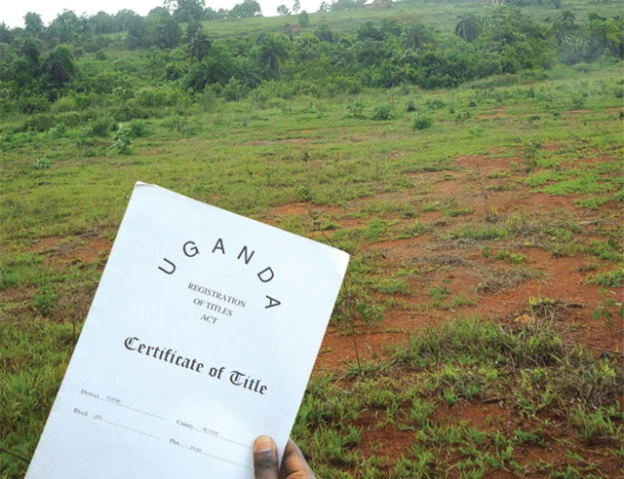
Parliament has summoned the Uganda National Roads Authority (UNRA) over failure to return 6,673 land titles to Project Affected Persons (PAPs), despite these titles having been collected more than 10 years ago.

According to UNRA’s Land Acquisition and Resettlement Policy, these titles should have been returned within six months. This delay, affecting several road projects across the country, was highlighted in a report by Medard Sseggona, Chairperson of the Committee on Commissions, Statutory Authorities, and State Enterprises (COSASE), while presenting findings from the Auditor General’s report on UNRA.

Sseggona revealed that the delays are particularly pronounced in the Central Region, especially in areas like Wakiso, Mpigi, and Mukono. For instance, only 87 of the 856 titles collected for the Kampala Northern Bypass project, which began in 2004, have been returned. The Auditor General’s November 2023 report further detailed that out of 8,101 titles collected, only 1,428 had been returned, leaving 82.4% of the titles still in UNRA’s custody.

UNRA officials admitted the issue but blamed the delays on the Ministry of Lands, which is responsible for the subdivision and mutation processes. Despite this, Sseggona argued that UNRA, as the face of government in such projects, is ultimately responsible for ensuring timely returns of titles.

He warned that the prolonged delay is depriving landowners of their rights, as they are unable to sell or transact on their land without titles. This situation also raises potential legal risks for UNRA, as affected persons may seek legal redress.

In addition to the delayed land titles, Parliament also expressed frustration over UNRA’s outstanding compensation payments to PAPs, which have soared to Shs773.7 billion. Sseggona’s report noted that while UNRA had acquired 28,960.87 acres of land from 172,608 PAPs, only 139,933 of them had been compensated, leaving 32,675 still awaiting payment. Delays in compensation often lead to re-assessments and higher costs, as landowners reject earlier valuations.

Sseggona also highlighted specific road projects, such as the Kigumba-Bulimia and Acholibur-Musingo roads, where original valuations had to be redone due to payment delays. UNRA admitted that the challenges included land disputes, bounced cheques, and inadequate documentation from PAPs. Additionally, UNRA cited insufficient budget releases from the Ministry of Finance as a major hindrance to processing payments.

Parliament adopted COSASE’s recommendation, urging UNRA to engage relevant stakeholders to expedite the return of land titles and compensate PAPs without further delays. The Committee also called on the Executive to submit a Treasury Memorandum outlining actions taken to address the situation.

Parliament issued a six-month ultimatum for the government to establish a clear unit cost for road construction in Uganda, in an effort to curb corruption and exorbitant rates. A study commissioned by the Ministry of Works and Transport in 2023, conducted by LEA Associates South Asia Pvt. Ltd and suggested that Uganda’s road construction costs were lower than in neighboring countries.

However, COSASE rejected the findings, citing significant gaps in the data provided by key agencies like UNRA and the Kampala Capital City Authority (KCCA). The committee pointed to the high unit cost of the Kampala-Entebbe Expressway and lingering issues with road toll fees as evidence of the need for a more thorough and accurate cost assessment.

Stories Continues after ad

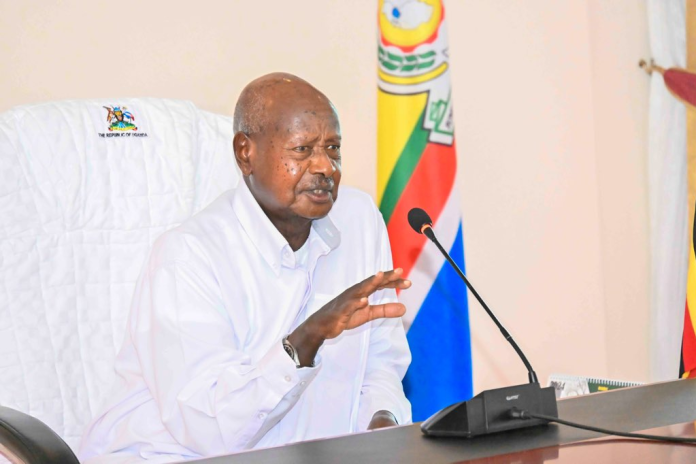
Museveni confirms arrest of some state house staff, defends Gen.Nalweyiso

President Museveni.

President Yoweri Museveni has responded firmly to recent social media stories spreading false and malicious allegations against key figures in the National Resistance Movement (NRM), Abu Mukasa and Prossy Nalweyiso.  

He acknowledged that arrests had been made under his orders, following intelligence information, but criticized those dragging innocent names into the mix.

“Some staff at State House have been arrested for a number of offences and they are already charged in the appropriate State courts. The facts of the alleged offences will come out in the trial,” Museveni stated.

He however, questioned why names such as Abu Mukasa, a prominent NRM supporter and investor, and Prossy Nalweyiso, a veteran of the People’s Resistance, were being falsely implicated.

Museveni praised Abu Mukasa for his invaluable contributions to Uganda’s economy. “Indeed, Abu Mukasa has brought billions of dollars of investments to Uganda. That seems to be his offence to the foreign and local parasites that would like Uganda’s economy to remain stunted as long as they benefit individually,” he remarked, clearly frustrated with those seeking to undermine his efforts.

Mukasa’s role in bringing the multi-billion-dollar bulk fuel supplier Vittol to Uganda was highlighted. At one point, Vittol was offering competitive prices for petroleum, diesel, and kerosene far below those being charged by other suppliers.

“He brought to us a multi-billion-dollar bulk fuel supplying company known as Vittol that, at one point, was offering to sell us a tonne of petroleum at $61.5, a tonne of diesel at $83 and a tonne of Kerosene at $79.25 while the parasites, working with our either corrupt or careless officials, were supplying the same products at: petroleum at $97.5, diesel at $118 and Kerosene at $114 respectively,” Museveni said.              

According to Museveni, these “parasites,” working with corrupt or careless officials, inflated prices, costing Ugandans significantly more. Mukasa’s intervention, along with other investors like Sheikh Maktoum, has been instrumental in bringing cheaper fuel and investment opportunities to the country.

“Sheikh Maktoum has brought us other investors in Air Cargo, gold refinery, produce export, etc. After a long struggle with the parasites, Uganda is now getting cheaper petroleum products,” Museveni stated, reminding Ugandans of the many times the Energy Minister had stepped in to order lower prices.

On the allegations surrounding Prossy Nalweyiso, Museveni reaffirmed her loyalty and long-standing service to the NRM cause. “Yes, she is not highly educated. However, the majority of the NRA freedom fighters were even less educated than Nalweyiso. Nevertheless, these uneducated Ugandans liberated both the uneducated entirety of other Ugandans and the educated that had failed to solve the problem of governance and constitutionality in Uganda.”

Museveni also invoked a biblical reference to expose those spreading lies and exploiting the system for personal gain. “We shall know them by their fruits, Jesus educates us in the book of Matthew, chapter 7, verse 20.”

He called out those attempting to undermine the contributions of the uneducated cadres within the National Resistance Movement (NRM) to remember that these individuals played a big role in addressing Uganda’s major economic challenges in the past, such as crippling shortages of essential goods and the prevalence of black market practices.

“There is a simple acid test you could apply to discover the usefulness of the uneducated Nalweyisos,” Museveni said. “In 1986, you had crippling shortages of soap, salt, paraffin, sugar, etc., and you had magendo (smuggling), Kibaanda (forex black market), and Kusamula (speculation). What happened to those problems? Who contributed to their solution? Were the uneducated Nalweyisos part of the contributors?”

He reminded Ugandans that while there are still challenges like poverty and unemployment, it was the NRM, using both educated and uneducated individuals that solved those earlier problems. He elaborated that the NRM had always understood how to harness the skills of modestly educated fighters, alongside those with formal education. “The Political Commissars and the intelligence officers were normally Makerere graduates – the Arondas, Muntus, Matsikos, etc. – while the Secondary school leavers and some of the uneducated, were Combat Commanders – Saleh, Kashaka, Mugume, Kyaligoonza, Musisi, Peter Kerim, etc.”

He added that today’s commanders are both educated and combat-experienced, but emphasized that the African resistance needs patriots, whether educated or uneducated. “Educated traitors are poison for Africa,” he warned, as he criticized social media figures who spread false narratives. “The ‘informant’ on social media is actually, Mr. Misinformant.”

He noted that the real issue for these “parasites” appears to be Uganda’s economic growth. He credited the NRM’s correct philosophical and strategic positions for Uganda’s robust economy, pointing out that significant foreign investments have been pouring in from countries like China, India, the UAE, and Europe. “Our agriculture is very strong. We shall shift it to irrigation. The strong UPDF and other security forces guarantee peace.”

He also condemned the online blackmailers, who he accused of targeting good investors like Sheikh Maktoum in an effort to drive them away from Uganda. He explained that some of these individuals even go so far as to demand money in exchange for not publishing defamatory stories. “We shall use the law to deal with these parasites,” Museveni vowed, urging Ugandans to be aware of these blackmailers.

Defending Prossy Nalweyiso’s contributions, Museveni pointed out that despite her lack of formal education, she is supported by highly educated professionals such as lawyers, economists, and Army officers. “She brings in her knowledge of our struggle and patriotism,” he said, highlighting her frequent radio appearances where she educates Ugandans about the history of the struggle.

He then shared a personal anecdote about his long history with Abu Mukasa, a key NRM supporter and investor, whom he first met in Washington many years ago. Mukasa, at the time, was working for Harris, an American military radio supplier. The President admired Mukasa’s initiative, sharing how he linked up with Harris through a well-known American General whom he met by offering to cut the grass in the General’s compound.

“Such initiatives by our young people are good. Stop Nyeko (envy), ihari (hatred), obuggya (jealousy), and etima (bitterness),” Museveni concluded, urging Ugandans to focus on the progress of the nation rather than tearing down those who are contributing to its development.

Stories Continues after ad

Rajiv Ruparelia nominated for prestigious Choiseul100 Africa 2024 award 

Rajiv Ruparelia, the Managing Director of the Ruparelia Group, has been nominated for the prestigious Choiseul100 Africa 2024 award. This award highlights the top 100 young African leaders under the age of 40 who are making a significant impact on the continent’s future.

The nomination recognizes Rajiv’s exceptional leadership and contributions to the growth and success of the Ruparelia Group, one of Uganda’s most prominent conglomerates. Rajiv’s innovative ideas and strategic vision have played a critical role in expanding the company’s reach and influence across Uganda and beyond.

Expressing his pride in the nomination, his father, Mr. Sudhir Ruparelia said, “I couldn’t be prouder to congratulate Rajiv on being recognized in the Choiseul100 Africa 2024. This prestigious recognition highlights the top 100 young African leaders… Rajiv’s hard work, vision, and dedication to excellence have truly set him apart.”

Rajiv’s leadership has been instrumental in driving the company to new heights, demonstrating his commitment to innovation and excellence.

His recognition as the only Ugandan among the top 100 is a testament to his dedication and the significant impact he has had on the business landscape.

Sudhir applauded, “His contributions to Ruparelia Group have been remarkable, as he has consistently brought innovative ideas and strategies that have propelled the company to new heights. His leadership has played a vital role in shaping our companies’ success and expanding its influence within Uganda and beyond.”

The Choiseul100 Africa award celebrates emerging leaders who are shaping the future of Africa through their entrepreneurial spirit, vision, and commitment to economic development. Rajiv’s nomination is not only a personal achievement but also a proud moment for Uganda, as he continues to inspire future generations with his accomplishments.

“Your achievements inspire those around you, and I am excited to see how you will continue to influence the future. Congratulations, Rajiv!” added the spokesperson.

Stories Continues after ad

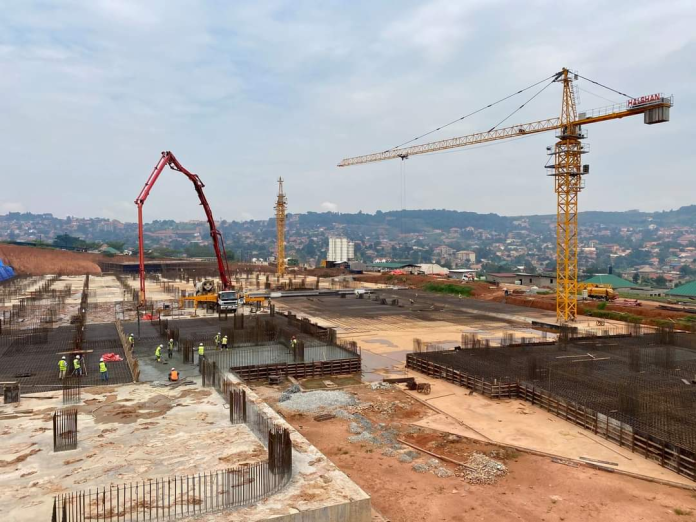
PAC calls for immediate halt to “ghost project” Lubowa hospital funding

Construction site foe the Lubowa Hospital which MPs have termed 'ghost project'.

The Public Accounts Committee (PAC) has called for an immediate halt to all funding for the International Specialized Hospital in Lubowa, citing it as a “ghost project” that is likely to cost Ugandans far more than the Shs286 billion already spent, with no tangible work to show for it.

This recommendation is part of the PAC report on the Auditor General’s Treasury Operations audit for the fiscal year ending June 30, 2023, which was presented by PAC Chairperson Muwanga Kivumbi. Kivumbi urged Parliament to suspend further funding until a special audit by the Auditor General is completed and reviewed.

“The Committee recommends that work on the Lubowa project be stopped until Parliament has reviewed the special audit report from the Auditor General. Those responsible for financial losses should be held accountable by refunding the misused funds. Furthermore, the owner’s engineer should face legal charges for issuing false completion certificates,” Kivumbi stated.

The PAC’s recommendations follow numerous irregularities identified in the project by the Auditor General. The report revealed that although seven promissory notes amounting to $133.6 million (approximately Shs476.5 billion) had been paid to the project’s financier, only 23% of the works had been certified by the government’s engineer, valued at just $57.5 million. This discrepancy suggests a potential overpayment of US$76.1 million (Shs286 billion).

Kivumbi warned that the government’s method of paying through promissory notes based on milestone certificates issued by the owner’s engineer—who lacks full access to the construction site—could lead to significant overpayments or payments for incomplete work.

The Auditor General also highlighted that, per the project agreement, payments are to be made upon completion of specific milestones and issuance of completion certificates by the owner’s engineer. However, it was revealed that the engineer’s certification was based more on progress reports from the contractor and consultation fees than actual physical work done, raising concerns about the integrity of the process.

While the Accountant General, Lawrence Semakula, told the PAC that all payments were backed by certification from the owner’s engineer and the government was obligated to honor promissory notes with binding due dates, the Committee was not satisfied.

Muwanga noted that the PAC was only provided with promissory notes, not the milestone completion certificates necessary for making payments.

The PAC also faced challenges in verifying the status of the project, as multiple attempts to visit the Lubowa hospital site were blocked by the project developer, leaving the Committee unable to confirm whether any work was being done.

“This is essentially a ghost project, and the risk of Ugandans losing money is very real. Parliament must address this issue urgently,” Muwanga emphasized.

The Ugandan government contracted Finasi-ISHU Construction SPV SMC Limited in May 2015 to design, finance, construct, and equip the International Specialized Hospital of Uganda at Lubowa.

In December 2018, the government signed a Promissory Note Purchase Agreement with the Ministry of Health, Africa Export Import Bank, Trade & Development Bank, and Barclays Bank Limited to fund the project up to $379.71 million. Parliament approved the project’s execution and funding in March 2019.

However, debate on the PAC report was postponed by Speaker Anita Among because no Finance Ministry officials were present in the plenary at the time of the report’s presentation.

Stories Continues after ad

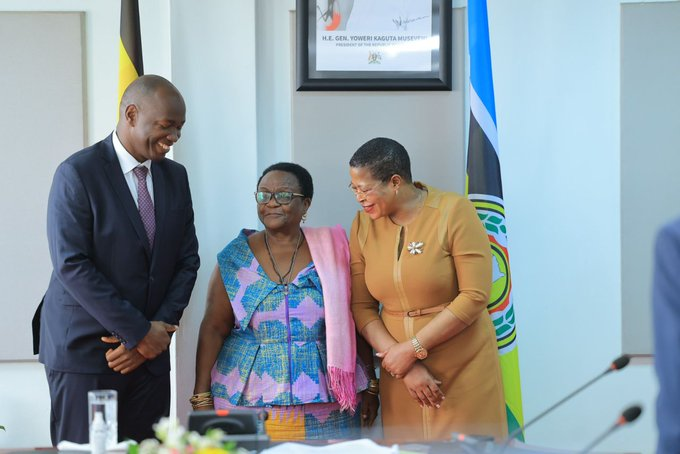
Among calls for redeployment of staff affected by rationalization of agencies

Chairperson of the Public Service Commission Agnes Kabogoza-Musoke, former Jinja District LCV and now member of the commission, Titus Kisambira interact with Speaker Among.

Speaker of Parliament Anita Among has called for the placement of staff affected by the ongoing rationalization of government agencies.

In a meeting with officials from the Public Service Commission (PSC) led by the chairperson, Agnes Kabogoza-Musoke, Speaker Among said leaving the affected officials jobless and without compensation will affect them and their dependents.

“People who are going to lose their jobs due to rationalisation should be handled properly to avoid any chaos in the economy; we want you to ensure that the persons being rationalised are absorbed…they should not be left out without being absorbed or compensated,” she said.

Government has brought a multitude of amendments to laws, repealing sections which create government agencies, rerouting most of their functions to their line ministries.

This exercise has seen hundreds pushed out of jobs, which is why Speaker Among wants them either reabsorbed into the mainstream public service or adequately compensated.

The commission presented their annual report for Financial Year 2023/2024 to the Speaker where Kabogoza-Musoke asked for a budget increment to address the commission’s growing needs.

“It is my humble request to you to support the increase of the commission’s budget effective Financial Year 2025/26 from the current Shs12.1 billion to at least Shs21.8 billion to enable the commission carry out its supervisory role, roll out competence-based recruitment, review job descriptions across government, and verify academic qualifications of all applicants joining and officers within public service,” she said.

The chairperson reported that the commission concluded the appointment, confirmation in appointment, promotion and disciplinary control totaling to 1,730 cases in Financial Year 2023/2024, compared to 4,134 cases in Financial Year 2022/2023.

She explained that the upsurge in 2022/2023 cases was caused by #Covid-19 backlog, which the commission was clearing.

The Speaker asked the PSC to report and advertise all vacancies across government for competitive filling by Ugandans.  

Stories Continues after ad

UPDF, UCREPP uplift Fort Portal Referral Hospital

The Uganda People’s Defence Forces (UPDF) in partnership with the Uganda #Covid-19 Response and Emergency Preparedness Project (UCREPP) has stepped up to provide assistance to Fort Portal Regional Referral Hospital.

The critical healthcare facility serving nine districts in the Tooro region, has long struggled with staff shortages, oxygen supply issues, and inadequate waste management.

The hospital’s radiology department lacks radiologists to interpret data, resulting in delayed reports. With only two radiographers available, they struggle to meet the high demand, serving only 4-5 patients daily instead of the expected 15. This shortage has significant implications for patient care.

The hospital’s oxygen supply has been disrupted since the functional plant stopped working, forcing patients to buy oxygen from private providers. These poses risk due to transportation challenges.

“The interruption of our oxygen supply has been devastating,” said Dr. Kalisa Oscar, acting hospital director.

He added, “The patients have to buy oxygen from private providers, posing risks due to transportation challenges.”

Fortunately, UPDF has constructed a new oxygen plant, expected to supply all nine districts in the Tooro region, although it currently faces electricity challenges.

Acting hospital director Dr. Kalisa Oscar expressed concern over the hospital’s insufficient waste management system, with only two incinerators available. This has led to waste burning, which doesn’t eliminate bacteria. Locals collecting and recycling hospital waste also pose health risks.

“Our waste management system is insufficient,” Dr. Oscar noted.

He added, “We have only two incinerators available, leading to waste burning, which doesn’t eliminate bacteria. Locals collecting and recycling hospital waste also pose health risks.”

In a positive development, UCREPP has constructed a new satellite laboratory, nearly 80% complete.

The state-of-the-art facility will serve as a one-stop centre for lab tests, reducing congestion in older labs and the need to send samples to Kampala.

“This state-of-the-art laboratory will serve as a one-stop centre for lab tests, reducing congestion in older labs and the need to send samples to Kampala,” said Doreen Nshabahurira, UCREPP’s Project Communications Officer.

The laboratory will significantly ease diagnosis, particularly in the Tooro region, which has recently experienced outbreaks of cholera, Marburg, pox, #Covid-19, and Ebola.

The new laboratory and oxygen plant are expected to significantly improve healthcare services in the region. Funded at approximately 5 billion shillings, the project will provide modern and internationally recognised laboratory services to the region.

Stories Continues after ad

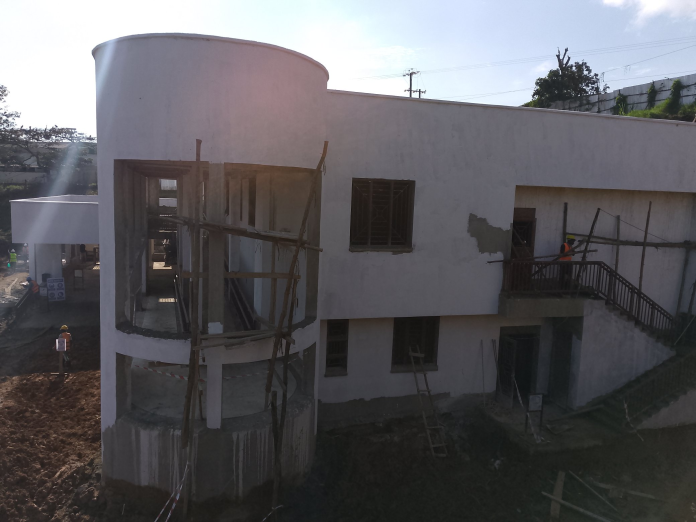
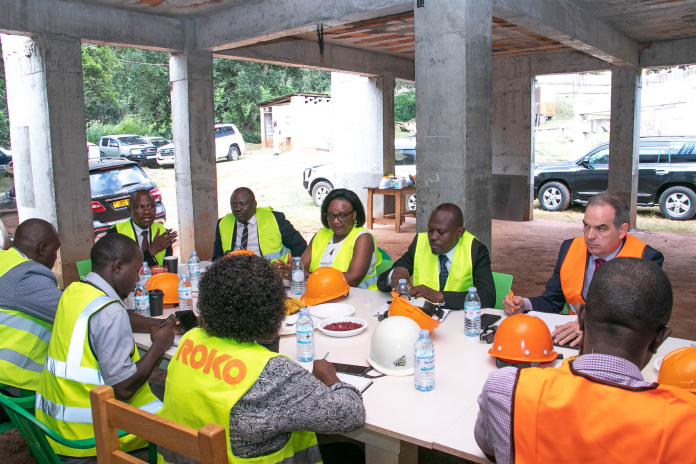
Speaker Among issues two-week ultimatum for accountability on stalled Shs287b Roko Construction Company

Roko Construction Company top managers in a meeting.

Speaker of Parliament, Anita Among, has issued a two-week ultimatum to the Parliamentary Commission, demanding a comprehensive status report on the stalled Shs287 billion project.

Speaker Among expressed growing frustration over the delay and questioned the project’s progress under the management of Roko Construction Company Limited.

Early this week, Leader of Opposition, Joel Ssenyonyi and the shadow cabinet members were denied entrance by Roko Construction Limited’s security to carry out their oversight responsibilities.

Ssenyonyi narrated that he wrote a letter on the October 8,2024, informing the Management of Roko Construction Company of his plan to visit, but upon arrival, his team was denied access, but instead, he was presented with a letter from Mark Koehler, the Managing Director of the Company, informing him of the decision by the Board of Directors not to allow the team into the Company premises.

Ssenyonyi sought to know how the Company received the funds from Ugandan taxpayers and utilized them yet the staff complained of working for four (4) months without pay.

Ssenyonyi further revealed that there are plans by the Government to table a Supplementary Budget very soon, in which Roko is set to benefit from another bailout, despite there not being any accountability on how the previous bailout funds have been spent.

“I went with colleagues, after I wrote on October 8, 2024 to the Management of Roko Construction Limited, that we will go and interface with them because so far, government has given them Shs263.3 billion and there have been numerous concerns, the staff haven’t been paid for four months. There are numerous projects including our new chambers that aren’t being attended to. But on going there to carry out our oversight functions, we found a letter at the gate, written back to me, saying that the Board has denied us as MPs access to the premises of Roko Construction Company,” he said.

Roko Construction Company received the first batch of the money in July 2022 but ever since, projects have stalled and the workers are complaining of no pay. 

Stories Continues after ad

ATMIS hands over Kuday military base to Somali security forces 

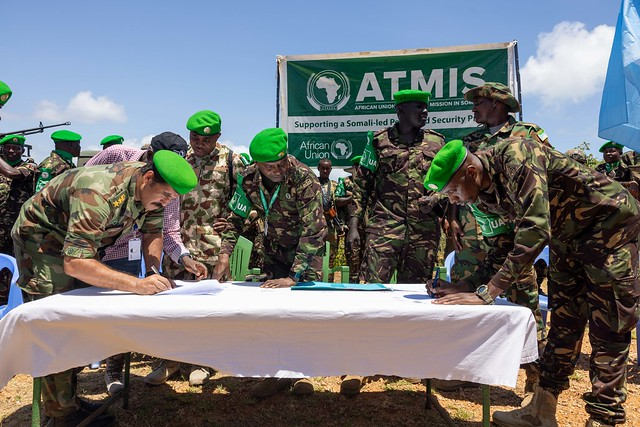
The African Union Transition Mission in Somalia (ATMIS) officially handed over the Kuday Forward Operating Base (FOB) to Somali Security Forces (SSF) in Jubaland State on Wednesday.

Kuday FOB, located in Lower Juba, has been manned by ATMIS Kenya Defence Forces (KDF) since 2015. It has played a critical role in safeguarding the port city of Kismayo as a strategic buffer zone.

The area was liberated from Al-Shabaab by ATMIS and SSF in 2015, dismantling the group’s operations in southern Somalia.

“This handover demonstrates the Federal Government of Somalia’s capacity and willingness to continue to take over security responsibilities, supported by ATMIS,” said Col. Ibrahim, ATMIS Force Headquarters representative.

He also commended the KDF troops for securing Lower Juba and urged the incoming SNAF contingent to remain vigilant and uphold the legacy of their predecessors.

Brig. Seif, ATMIS Sector Two Commander, thanked ATMIS KDF troops for their commitment to peace and Somali-led transition.

“We have engaged in extensive discussions for a long time, planning the exit from Kuday and today we are witnessing the culmination of our efforts. We will ensure a smooth transition moving forward,” said Brig. Seif.

Maj. Omar, SNAF representative, emphasized the importance of collaboration between KDF, SSF and Jubaland Forces against Al-Shabaab in the region.

“Al-Shabaab is an enemy to Kenya, Somalia, Ethiopia and every country in Africa and the entire world. We must work together to degrade the threats these enemies pose,” said Maj. Omar.

Maj. Tohwari, the incoming Kuday FOB Commander, signed the handover documents on behalf of the Federal Government of Somalia (FGS), with Col. Ibrahim and Koka signing for ATMIS and UNSOS, respectively.

The Officer Commanding Police Division (OCPD) Kuday Police Post, Suleiman Abdule Ali, highlighted the cordial relationship with ATMIS KDF troops through civil-military cooperation (CIMIC) projects.

“We are grateful to KDF troops for building two school classrooms, one madrassa, constructing a fish waiting bay, and purchasing a dhow, all of which support the local community,” said Ali.

As part of the handover, UNSOS gifted the SSF with UN-owned equipment, including generators, solar panels, refrigerators and boreholes.

ATMIS has so far transferred six FOBs to SSF and reduced troop numbers by 2,000 as part of the UN and African Union-approved phase three drawdown.

Other FOBs handed over include Bariire, Jowhar Town, Ceel Eglow, Abdalla Birolle and Orahsan.

Stories Continues after ad

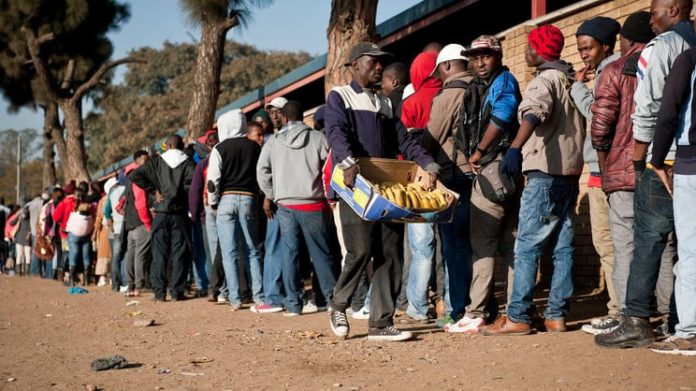
Netherlands planning to send rejected African asylum seekers to Uganda

African asylum seekers arrive in Europe.

The Dutch coalition government, headed by Geert Wilders’ far-right Freedom party (PVV), is considering sending Africans whose asylum requests are rejected to Uganda, in plans that opposition politicians have said are “totally unfeasible”.

During a visit this week to the East African country, the Dutch minister for trade and development, Reinette Klever, said the cabinet was exploring the idea and that Uganda was “not averse” to it, the Dutch public broadcaster Nos reported on Wednesday.

Klever offered few details and it is unclear whether such a plan would be legal or feasible, but it is reported to involve rejected asylum seekers from Uganda and the surrounding region – the exact list of countries has not been specified – being taken in by Uganda and hosted in exchange for financial compensation.

“In the end we want to curb migration,” said Klever, who is part of the PVV.

Her ministry said she had briefly discussed a number of possibilities for accommodation in Uganda and the region during her visit. The plan is in its early stages as the Dutch cabinet investigates “what legally is possible and desirable,” a spokesperson said in an email.

Uganda’s foreign affairs minister said the country was willing to contemplate the possibility. “We are open to any discussions,” Jeje Odongo told Nos.

However, on Thursday another minister struck a firmer note. “I don’t think Uganda would agree to that,” Okello Oryem, Uganda’s state minister for foreign affairs, told Reuters, noting that his country already sheltered 1.6 million refugees from Sudan, South Sudan and Democratic Republic of Congo.

“We don’t deport any refugees. Why do European countries deport refugees?”

Wilders welcomed the plan on social media, but other members of the country’s four-party coalition government were more hesitant given Uganda’s draconian anti-gay legislation and patchy human rights record.

“We have to be very vigilant when it comes to LGBTI people,” said Claudia van Zanten of the populist farmer’s party BBB. Diederik Boomsma of the anti-corruption NSC acknowledged Uganda’s human rights reputation was a concern.

Opposition politicians decried the idea. Jesse Klaver of the Green Left party said it was an effort to distract people from the scant progress the government had made in tackling broader issues. “They are not building houses, they are not managing to keep hospitals open,” he said.

The leader of D66, Rob Jetten, described the idea as “totally unfeasible and ill-considered”, citing the fact that similar plans had already been floated by Denmark and the UK. “The result? Zero people went to Africa,” he said.

The UK’s failed plan to send asylum seekers to Rwanda for processing, a policy of the previous Conservative government that was abandoned by the new Labour administration, is estimated to have cost British taxpayers £700m. It was viewed as the most extreme form of “offshoring” asylum, in that even people with successful claims would have had to stay in Rwanda.The coalition government in the Netherlands has focused much of its attention since taking office in July on curbing asylum, with promises to introduce the country’s “toughest ever” policy on immigration, even though EU data suggests the country has an average number of asylum requests among member states.

The Netherlands received two first-time asylum applications per 1,000 residents last year, matching the average across the bloc, according to the data. Ten-member states, including Greece, Germany and Spain, reported higher ratios.

News of the Dutch plan comes days after the European Commission president, Ursula von der Leyencalled for the idea of “return hubs” outside the EU to be explored, citing a deal between Italy and Albania as a possible model.

Stories Continues after ad

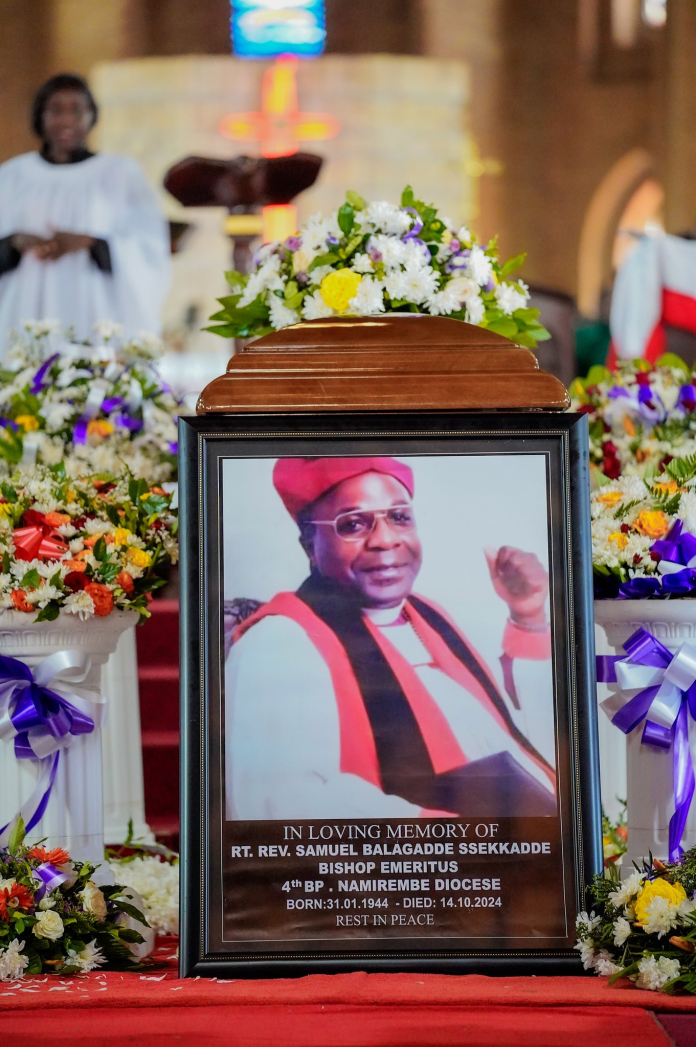
Bishop Ssekadde’s kind words of wisdom will ever be cherished—Museveni

Late Bishop Ssekadde.

President Yoweri Museveni has paid tribute to the late Bishop Emeritus Samuel Balagadde Ssekadde.

According to Rev. Prof. Samuel Lugoga, the Chairman of the Education Services Commission, Bishop Ssekadde died of a heart attack.

In a condolence message that was delivered by Robinah Nabbanja, the Prime Minister, Museveni said he received the news of the death of Bishop Emeritus Samuel Balagadde Ssekadde with sadness.

“I convey my heartfelt condolences on my own behalf and that of the National Resistance Movement’s (NRM) leadership to the family and the Church of Uganda upon the loss of a bishop, a father, a counsellor, and a friend,” Museveni said during the funeral service at Namirembe Cathedral.

He commiserated with Allen Ssekadde, the wife and children, upon the loss of her husband and father and asked God to uphold them in this time of grief.

“Today, we celebrate the late bishop Emeritus Samuel Baragadde Sekadde with gratitude for the service he has rendered to the church and more so to the nation. We grieve but with hope because he served and he knew God; we delight in his sons and the project he oversaw during his service to God’s people and those that he transformed during his preaching and counsel,” he said.

 He said the nation shall remain indebted to his service. Memories and his kind words of wisdom will ever be cherished.

Bishop emeritus has been laid to rest at the Namirembe cathedral cemetery.

Stories Continues after ad