Cornerstone Asset Managers has launched its operations in Uganda, offering wealth management and investment services to individuals, institutions, and corporations.
The new firm, which has been granted a license by the Capital Markets Authority of Uganda (CMA), will provide a range of investment services, including unit trusts and wealth management solutions.
According to Henry Ariganyira Musasizi, Uganda’s Minister of State for Finance, Planning and Economic Development, the firm’s presence in the Ugandan market marks a significant milestone in the country’s journey towards financial inclusion and economic growth.
“Cornerstone’s wealth management services and Unit Trust Funds represent a bold step forward in enabling Ugandans to secure their financial futures,” Musasizi said in a statement.
Michael Opira, Board Chair of Cornerstone Asset Managers, said the firm is committed to delivering bespoke investment solutions that cater to the unique needs of its clients.
“We are dedicated partners who work closely with our clients to achieve their financial goals,” Opira said. “Our team of experts has a deep understanding of the local market and is well-positioned to provide innovative solutions that meet the evolving needs of our clients.”
The launch of Cornerstone Asset Managers comes at a time when Uganda’s economy is experiencing significant growth, driven by a young and entrepreneurial population, as well as an expanding middle class.
With its innovative approach and commitment to excellence, Cornerstone Asset Managers is poised to make a significant impact on Uganda’s wealth management landscape.
Officiating at the launch of Cornerstone Asset Managers’ Investment Management Services in Naguru,Kamplala,the Minister of State for General DutiesHenry Musasizi, congratulated the company for achieving this milestone and being licensed by the Capital Markets Authority (CMA).
The license authorizes the company to offer financial products such as private wealth management, unit trust funds, and pension management, among others.
Musasizi said this development is in line with the Government policy on capital mobilization and financial inclusion.
“Our young population, thriving entrepreneurial spirit, and increasing middle class provide enormous prospects for growth. To fully achieve this potential, we must guarantee that individuals, families, and businesses have access to a wide range of financial solutions that address their needs for security, growth, and long-term prosperity,” said Musasizi.
He said the total capital market capitalization as at 31st August 2023 stood at Shs 7.2 trillion, representing only 4.4% of GDP compared to 10.5% of GDP for Kenya, 45.3% of GDP for Mauritius, and 327.6% of GDP for South Africa (equivalent to USD 1.23 trillion).
Musasizi said this implies that our capital markets are not doing well compared to our peers and more work needs to be done.
The Minister said the Finance Ministry is working to strengthen capital markets as an alternative source of long-term development finance for both the public and private sector.
He said the Government interventions include: establishment of a framework for operationalising the fixed income market, expansion of the Investor compensation Fund,strengthening the dispute settlement mechanism & promoting private equity finance, among others.
“We believe the above proposed interventions shall contribute to the development of capital markets in Uganda,” said the Minister.
Cornerstone Asset Managers to offer wealth management solutions in Uganda
PSFU recognizes Uganda Baati’s community initiatives
Uganda Baati has been named the Community Development Champion of the Year at the 2nd Annual Private Sector Gala, an award recognizing the company’s profound impact on communities through its Corporate Social Responsibility (CSR) initiatives under the Safal Uganda Baati Foundation.
Guided by its four CSR pillars- Health, Education, Shelter, and Environment, the leading steel manufacturer has consistently demonstrated its pledge to uplifting lives and nurturing sustainable development across Uganda.
Over the past year, the foundation has tackled diverse challenges with impactful results. Among its impactful projects, the re-roofing initiative at Nyamifura Primary School has provided better learning conditions for over 400 pupils, while Busoga College Mwiri in Jinja now serves 1,000 students in a more conducive learning environment. These efforts, coupled with training programs for graduates in partnership with PSFU and Mastercard, highlight the company’s dedication to fostering education and employability.
The health sector has also been a major focus. The clinics in Tororo and Kampala have improved access to medical services for over 500 individuals, offering family planning, immunizations, and disease testing. Through partnerships like the Kabaka’s Birthday Run, Rotary Cancer Run and Malaria Free Uganda, Uganda Baati has made strides in HIV/AIDS awareness, early cancer detection and malaria prevention. The North Ankole Mission Hospital project, which expanded access to maternal healthcare for one million mothers and children, stresses the company’s commitment to improving lives.
At Sanyu Babies Home, Uganda Baati transformed a dilapidated shelter into a safe, sustainable haven for abandoned children. Donating roofing materials, the initiative addressed health risks caused by leaking roofs and enabled rainwater harvesting, drastically reducing water bills. The new roof also supports solar water heaters, ensuring warm baths for the children while cutting electricity costs.
A skilling initiative was launched in Tororo District targeting over 260 out-of-school youth aged 16-25.
This program provides training in practical areas such as hairdressing, backyard gardening, roofing, and detergent making, while incorporating life skills like financial literacy and business management. Aimed at tackling youth unemployment and teenage pregnancies, the initiative empowers participants to create sustainable livelihoods.
Uganda Baati, in partnership with the National Forestry Authority (NFA) intensified efforts to restore forest cover in Uganda by replanting 10 hectares in Mubuku Central Forest Reserve, Kasese. This marked the second milestone in a four-year collaboration, following similar work in Kayunga. The initiative addresses deforestation’s impacts and promotes environmental sustainability.
The Safal Eye in the Wild photography competition has further heightened awareness about wildlife conservation and climate action. The 2023 edition themed “Drought in Focus,” in 2023 aimed to raise awareness about drought’s impact and promote environmental conservation. Participants from Kenya, Uganda, South Africa, Ethiopia, and Tanzania showcased creative and powerful imagery that sparked discussions on climate action.
The company’s leadership is unified in its commitment to these causes. George Arodi, CEO of Uganda Baati, captures the essence of their work: “For us, it’s about empowering lives and driving sustainable progress. These projects are stories of resilience and transformation.”
George Mubiru, Manager of the Safal Uganda Baati Foundation, highlighted the collective spirit behind these projects. “The success of our initiatives is as a result of the partnerships we’ve built with organizations like NFA, NEMA, PSFU, Uganda Police and many others. Together, we’re addressing critical gaps in shelter, education, healthcare, and environmental conservation.”
Ian Rumanyika, Head of External and Corporate Affairs, emphasized that Uganda Baati’s initiatives reflect its core values of care, partnerships and excellence. He remarked that the award serves as evidence of the lives the company has positively impacted and its forward-looking vision.
As Uganda Baati marks its 60 th anniversary, its accomplishments highlight a deliberate pledge to transforming communities and fostering meaningful progress. Through interventions in education, healthcare, shelter, and environmental restoration, the company demonstrates that corporate responsibility is about addressing real needs and creating tangible change.
High health care costs in Africa continue to push over 150 million into poverty- new WHO report
A new report by the World Health Organization (WHO) Regional office for Africa finds that most African countries continue to rely heavily on out-of-pocket payments to fund their health services, and urges countries to reduce the financial strains that high health-care costs place on their population.
The practice of out-of-pocket payments, warns the report, continues to; place a financial burden on over 200 million people, including pushing over 150 million people into or deeper into poverty across the WHO Africa Region; exact a heavy price on people’s health; and hamper progress in attaining universal health coverage.
“Having to pay for medicines and other health-care costs out of their own pocket can instantly bend the trajectory of someone’s life toward financial hardship and ill health. Such payments force many people to spend less on other basic needs such as food, housing and utilities, which, in turn, may worsen their conditions. This also creates a major barrier for the poorest and the most vulnerable who cannot get, as a result, the care they need,” said Dr Matshidiso Moeti, WHO’s Regional Director for Africa.
“Despite countries’ efforts to build more sustainable health financing systems, more needs to be done so that people across Africa have access to the quality health services they need, when and where they need them, without having to fall into financial hardship,” added Dr Moeti.
Between 2000 and 2019, the period analysed by the report, the number of people making ‘catastrophic’ out-of-pocket payments rose every year by 2.5 million people from 52 million in 2000 to 95 million in 2019.
That said, progress, albeit at a slower pace than globally, has been made during the same period, with the overall number of people pushed into or deeper into poverty because of out-of-pocket payments having halved between 2000 and 2019.
The report, the only one of its kind, helps countries track progress on financial protection in health and make evidence-based decisions to accelerate efforts to attain universal health coverage.
The report highlights good practices by several countries to address the burden of out-of-pocket payments by, for example, abolishing patients’ fees at the point of care, introducing health insurance schemes, and progressively increasing reliance on government-funded health services.
“I hope this report will strengthen countries’ resolve to improve financial protection in health for their populations and to invest in better data generation, analysis and use to inform better decision-making,” said Dr Moeti
Museveni Defends the Trial of Civilians in the General Court Martial
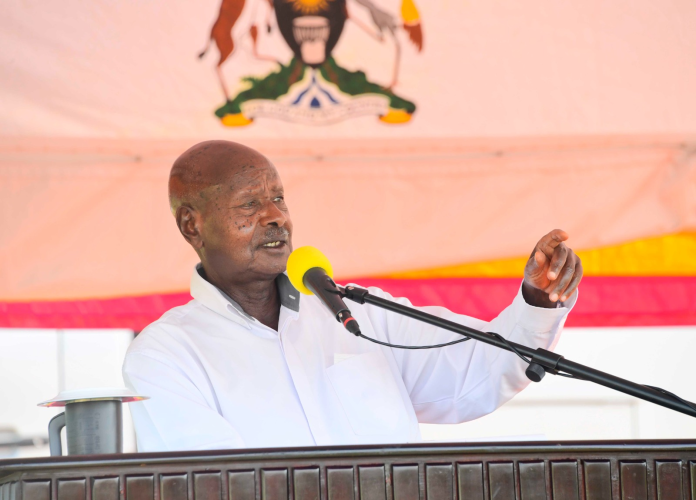
President Yoweri Museveni has defended the trial of civilians in the General Court Martial, stating that it contributes to the stabilization of the country.
Museveni’s defense came at a time when former bush war fighter Rtd. Col. Kizza Besigye and Obed Lutale are facing multiple charges, including possession of firearms at Riverside Apartments in Nairobi, Kenya, and allegedly holding meetings in Greece and Switzerland with the intent to undermine the security of the Ugandan army.
The two suspects were reportedly abducted last month in Nairobi, where they had attended a book launch event hosted by Kenyan opposition politician and lawyer Martha Karua. Karua is currently in Uganda, leading a team of 50 lawyers defending Dr. Besigye and Hajji Kamulegeya.
“I have seen the arguments in some papers by lawyers regarding the correctness of trying civilians in the Court Martial. I want to affirm that this move was correct and useful and has contributed to the stabilization of Uganda,” Museveni said. “It was the NRM that, in 2005, enacted this law through Parliament because of the rampant activities of criminals and terrorists who were using guns to kill people indiscriminately.”
He explained that at the time, civilian courts were overwhelmed with cases such as murders, rape, assaults, robbery, and land disputes, which made it difficult to address the threat posed by gun-wielding criminals swiftly.
“For stabilization, you need speed,” Museveni emphasized. “These individuals, although not soldiers, voluntarily and with malicious intent acquired weapons that should be the monopoly of the Armed Forces, governed by the relevant laws. Uganda, like many parts of Africa, has been and, in some cases, still is disturbed by such unprincipled actors. This is why the law provided that since you became a ‘soldier,’ albeit an illegal one, you should be tried by a court-martial, which is the court that deals with firearms.”
He further clarified that the General Court Martial system is subordinate to the country’s higher courts. If the Court Martial makes an incorrect judgment, superior courts can rectify it.
“The advantage of trial in the General Court Martial is that, in the meantime, these dangerous individuals are legally provided for—they are fed, medically treated by the State, and kept away from harming people,” Museveni said. “It also benefits the lawbreakers because their dangerous activities, such as killing people, can lead to their own deaths in encounters with law enforcement and peacekeeping agencies.”
Museveni added that after a conviction, the defendant has the right to appeal the decision of the General Court Martial.
Museveni directs CDF Gen. Muhoozi to release 900 remanded Karamajong youths
President Yoweri Museveni has directed the Chief of Defence Forces (CDF), General Muhoozi Kainerugaba, to spearhead the review and potential release of 900 Karamajong youths currently idtaine at Kitalya Prison.
These youths were arrested and prosecuted by military courts for their involvement in criminal activities particularly illegal possession of firearms.
In a statement, Museveni lauded the role of military courts in restoring peace in Karamoja and the neighboring regions emphasizing their efficiency in handling cases involving armed offenders. He explained that the military courts’ swift actions had removed dangerous individuals from society thereby contributing to peace efforts.
“Oh, I now remembered one of the factors that caused the return of peace in Karamoja and the neighboring areas,” Museveni said.
“It was the efficient and focused work of the military courts that had supplemented the military operations by legally putting away these confused youths from society for a given period,” he added.
Museveni contrasted the operations of the military courts with civilian courts which he argued often granted bail or kept suspects in remand for prolonged periods contributing to the backlog in the general judicial system. He defended the use of military courts for suspects involved in gun-related crimes, noting that these courts though subordinate to civilian courts were established to handle cases involving weapons.
“Indeed, Uganda and many parts of Africa were, and in some cases are still, disturbed by these unprincipled actors. This is why that law provided that since you became a ‘soldier,’ albeit an illegal one, be tried by a court-martial because it is the one that deals with guns,” Museveni noted.
While touring Karamoja last week, Museveni was approached by leaders and elders who pleaded for the release of the detained youths. He revealed that of the 2,000 inmates at Kitalya Prison, 900 are Karamajong youths. He directed the CDF and the army to audit these cases and determine who among them could be pardoned.
“Just by coincidence, last week, I started my tour of Karamoja. While there, the leaders and elders appealed to me to pardon the, apparently, thousands of the Karamajong youth that had been safely put in prison by the active Court Martial courts in the 3rd Division AOR (Area of Responsibility). Kitalya Prison has, apparently, 2,000 inmates, and the Karamojong youth account for 900 of that number,” he said.
Museveni assured Ugandans that the review process would be rigorous distinguishing between those eligible for pardon and hardcore criminals who should remain in custody.
“I have already directed the CDF together with his army colleagues to audit the Karamojong youth who are in prison now to see the ones who can be pardoned separate from the hardcore criminals who should not be pardoned yet,” he revealed.
The President also hinted at the possibility of holding a referendum on the use of military courts in handling such cases expressing confidence that communities in the affected regions would support the initiative.
“Should we have a referendum on this issue? Why would lawyers not see what the ordinary mwanainchi sees? If we were to have a referendum in the affected districts neighboring Karamoja on this issue, I am sure 100% would support the law,” Museveni stated.
Archbishop Kaziimba urges youth to embrace scriptures for transformation
The Archbishop of the Church of Uganda, The Most Rev. Dr. Stephen Samuel Kaziimba Mugalu, has challenged the youth to embrace the power of scripture for personal and leadership transformation.
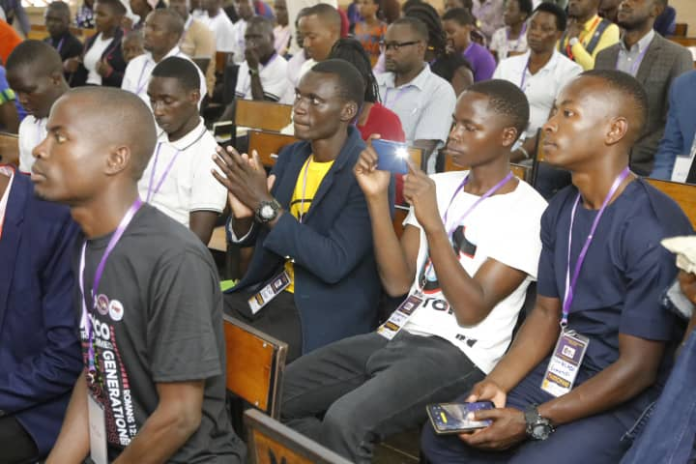
Addressing hundreds of youthful attendees at the official closure of the Provincial Annual Youths and Students Convention (PAYSCO) at Mengo SS, Archbishop Kaziimba emphasized that reading and living by the scriptures is a fundamental step in becoming transformational leaders.
“Youth, if you desire to make a significant impact, the scripture must guide your life. It is only through God’s word that you can lead with integrity and purpose,” Archbishop Kaziimba said.
He further cautioned the youth about the dangers of undisciplined behavior, bad company, and inappropriate dressing, urging them to maintain a strong moral compass and lead by example.
The three-day convention was officially opened yesterday by Rev. Canon William Ongeng, the provincial secretary of the Church of Uganda, who emphasized the need to empower young people to take up leadership roles within the church and society at large.
Renowned Bible expositor and former Vice Chancellor of Uganda Christian University, Rev. Canon Dr. John Senyonyi, challenged participants to embrace leadership as a calling, transforming both themselves and their communities.
Canon Dr. Ruth Senyonyi, the Chairperson of the Uganda AIDS Commission and former Provincial Mothers Union President of the Church of Uganda, spoke on “The Integrity and Sexual Purity of a Leader,” emphasizing that purity is a core value for any leader, both in their personal life and public service.
Rev. Dr. Lydia Kitayimbwa, the Chaplain of St. Francis Chapel, Makerere University, shared on “Generational Challenges and Opportunities of Leadership,” reminding participants of the unique challenges young leaders face and the opportunities available to those who remain faithful.
Bbira Vocational Training College equipped participants with basic skills in bakery, hairdressing, knitting, catering, and other vocational skills.
The College Principal, Eng. Juliet Nakanjako Ngabirano, said, this is in line with the College mandate to equip the youth with skills to be job creators and not job seekers.
Throughout the convention, there were engaging activities, including Bible study quiz competitions, team-building games, and Music, Dance, and Drama (MDD) competitions.
Two smartphones were awarded in a draw for downloading the Church of Uganda App, and two study Bibles were awarded to participants who recited ten Bible verses.
Rev. Emmanuel Koboi, the Youth and Students Coordinator, commended the sponsors and the dioceses that sent their youth to the convention, which made this event possible.
“I thank our sponsors and the dioceses for encouraging and facilitating their youth to participate. The participants have greatly benefited from the Bible expositions, practical skilling, networking, teachings, and fellowship, and we are proud of their exemplary moral behavior throughout the convention,” Rev. Koboi said.
Rev. Simon Peter Ddembe Lya Yesu, the Director of Mission and Outreach, noted that the convention has been a remarkable success.
“The youth have shown a tremendous commitment to learning and spiritual growth. The sessions have equipped them with practical leadership skills and a deeper understanding of their faith. We have witnessed a high standard of moral conduct among the participants, which reflects the impact of the teachings they have received,” Rev. Ddembe said.
Speke Resort offers friendly holiday packages for the festive season to clients
As the holiday season approaches, Speke Resort has introduced its much anticipated Festive Escape Packages offering a blend of luxury, comfort and unbeatable value.
Meant to suit varying tastes and budgets, these packages promise a perfect getaway for individuals, couples and families alike.
The exclusive holiday offers valid from December 21, 2024 to January 4, 2025 feature competitively priced options for a range of accommodations from deluxe rooms to presidential suites. Guests who book for the peak festive days, December 24 and 25 can enjoy rooms starting at just $176 for single deluxe accommodations. Those visiting during the surrounding days will find even greater deals with rates beginning at $139.
For larger groups or those seeking a more opulent experience, the resort presents its Presidential Suite at $1,000 during the peak festive days and $800 for other dates within the holiday window. Other luxurious options include the Garden Villa and Executive Suites, ensuring there’s something special for everyone.
The packages are on a full-board basis including breakfast, lunch and dinner. Guests can look forward to indulgent culinary experiences without worrying about extra meal costs though drinks are not included. Additional perks such as complimentary access to the swimming pool, gymnasium, steam rooms and saunas ensure relaxation and wellness are just steps away.
Extra persons can be accommodated at an affordable rate with Speke Resort charging $68 per night during the non-peak period and $105 during the peak festive days. This makes it ideal for families and groups looking to create unforgettable memories together.
Situated in a tranquil environment, Speke Resort combines world-class facilities with the festive cheer, making it the perfect holiday destination. Whether you’re looking for a romantic retreat, a family-friendly atmosphere or simply a luxurious escape, these packages ensure unparalleled hospitality and unbeatable value.
With limited rooms available during this busy season early booking is highly encouraged to secure your preferred choice. Celebrate this festive season in style and let Speke Resort redefine your holiday experience.
Besigye’s lawyer, Iduli is a rent defaulter not an abductee – UPDF
The Uganda People’s Defence Forces (UPDF) has dismissed claims that Maj (Rtd) Ronald Iduli, one of Dr. Col (Rtd) Kizza Besigye’s lawyers, was abducted.
The Uganda Law Society had claimed that Maj. Iduli was abducted by unknown gunmen barely before Besigye’s trial at the General Court Martial.
“The Uganda Law Society (ULS) strongly condemns the abduction of Retired Major Ronald Iduli, a prominent lawyer and member of our Society. Ronald was representing Dr. Kizza Besigye, a renowned opposition leader, and Hajji Obed Kamulegeya, who are scheduled to appear this morning before the Uganda People’s Defence Forces (UPDF) General Court Martial in Makindye, Kampala City,” Isaac Ssemakadde, ULS president said.
Addressing the allegations, Brig Gen Felix Kulayigye, Director of Defence Public Information, expressed disappointment in a letter from the Uganda Law Society that raised the abduction claim.
“The UPDF is appalled at the level of unseriousness exhibited by the letter from the Uganda Law Society alleging that one of Dr. Col (Rtd) Besigye’s lawyers had been abducted,” said Brig Gen Kulayigye.
He noted, “It would have been useful to all concerned for the author of the letter to put pen to paper after investigations. We respect the legal profession like all noble professions and expect them to conduct business with objectivity.”
Brig Gen Kulayigye pointed out that the facts surrounding Maj Iduli’s arrest had already been clarified by SP Patrick Onyango, the spokesperson for Kampala Metropolitan Police.
According to Kulaigye, Maj Iduli, a retired officer, has defaulted on rent payments for ten months and allegedly threatened his landlady with violence.
“The retired Maj as we have learned has defaulted on rent for ten months and as if that’s not bad enough he threatens his landlady with violence!” said Kulayigye.
Kulaigye also criticized attempts to politicize the issue, emphasizing the importance of accountability.
“Whatever one’s profession or status, we must all meet our obligations and it is very unfortunate to hide our misdeeds behind a politicized legal process,” he said.
The UPDF reiterated its commitment to upholding the rule of law and urged citizens to allow the police to carry out their duties without interference.
Yesterday, Dr. Kiiza Besigye and his comrade Hajji Obeid Lutale were further remanded to Luzira Prison until January, 7th 2025. The duo is charged with illegal possession of firearms in Kenya and holding meetings in Greece and Switzerland with the intent to disrupt the security of the Ugandan army.
Police arrest man for impersonating commissioner of police in fraud scheme
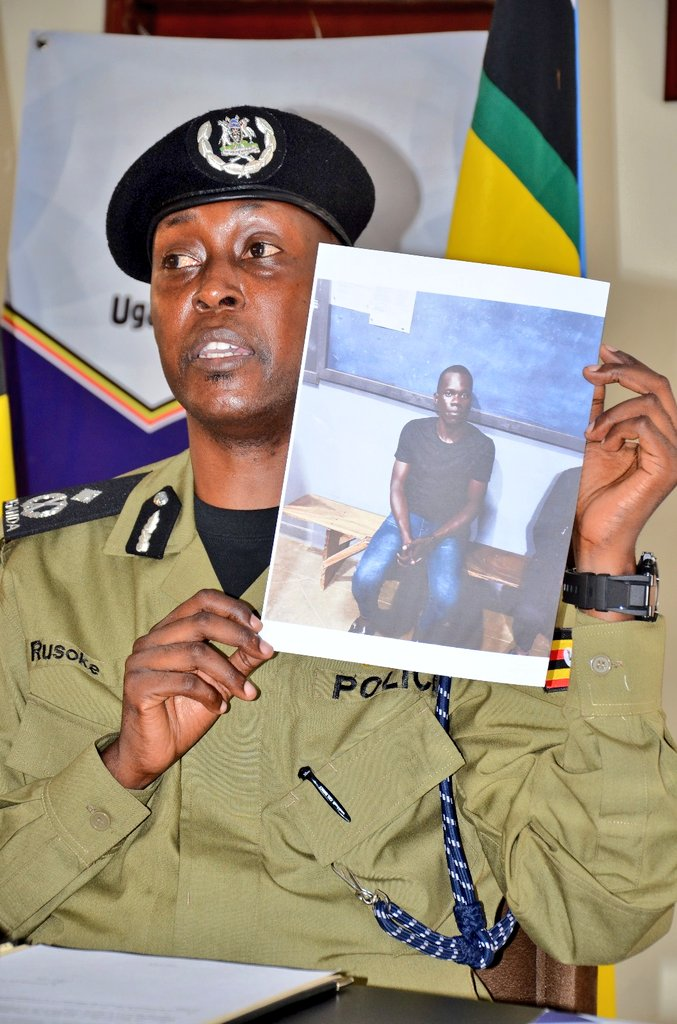
Police in Naggalama have apprehended a man accused of impersonating a Commissioner of Police in a bid to defraud unsuspecting individuals. The suspect, identified as Kassim Byaruhanga, is also alleged to have posed as an intelligence officer in the army.
The arrest follows a complaint filed in July 2024 when the District Police Commander (DPC) of Naggalama Police Division received a suspicious phone call. The caller, claiming to be a Commissioner of Police named Tumusiime informed the DPC of a purported auctioning exercise of motor vehicles at the Uganda Revenue Authority (URA).
The following day, the impersonator requested that the DPC send Shs800,000 to a phone number he claimed belonged to URA. Sensing foul play, the DPC reported the matter to the relevant authorities prompting an investigation.
Police tracked the phone number and other leads culminating in the arrest of Byaruhanga on December 7, 2024. Authorities are continuing investigations to establish whether Byaruhanga has defrauded other victims using the same scheme.
The police have issued a warning to the public to remain vigilant against fraudsters impersonating government officials and urged individuals to verify any financial requests through official channels.
Byaruhanga is currently in custody at Naggalama Police Station and is expected to face charges of impersonation and fraud.
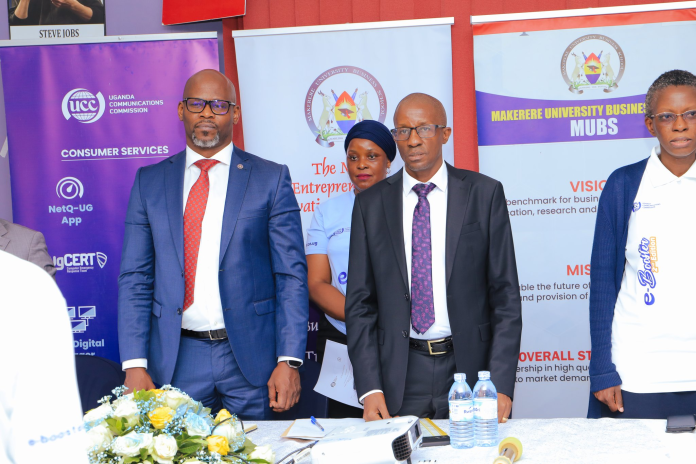
MUBS, UCC launch shs3b E-Booster initiative to improve unserved and underserved communities
Makerere University Business School in partnership with Uganda Communications Commission (UCC) has launched the second phase of E-Booster initiative aimed at empowering the unserved and underserved communities in Uganda.
The initiative is worth, Shs3 billion under theme “Serving the unserved and underserved sectors”
E-Booster aims to foster the adoption of technology by SMEs and communities in Uganda. It seeks to address the challenges faced by these stakeholders, including limited access to funding, technical expertise, and reliable internet and electricity.
The program under the Universal Service Fund (UCUSAF) focuses on fostering innovation, digital inclusivity, and entrepreneurship in line with Uganda’s Digital Vision and National Development Plan.
“This milestone demonstrates our commitment to nurturing innovation and empowering entrepreneurs to shape the future of our communities, especially in unserved and underserved parts of the country,” Eng. Arnold Bareba Mujuni, Head Technical Monitoring UCC remarked during the launch.
The first phase of the E-Boost Camp registered significant achievements, attracting 53 applicants with diverse ICT solutions in sectors such as agriculture, health, education, and assistive technologies for persons with disabilities (PWDs).
Projects like Cinnamon Solutions’ digitization of 21 Village Savings and Loans Associations (VSLAs) for fishing communities, Feast Farm’s online farming platform supporting over 200 farmers, and Suzie Waters’ assistive technology for 600 visually impaired students were among the key successes. These initiatives have demonstrated the program’s ability to integrate ICT into daily life effectively.
This second phase seeks to build on these successes with a broader focus and an expanded pool of applicants. The officials expect even better applications to emerge as they widen the scope to cover more ICT-enabled solutions for underserved communities.
Speaking at the launch, MUBS Principal, Prof. Moses Muhwezi applauded UCC for the partnership in improving digital innovation to reach out to ‘far-reach’ communities in Uganda.
He said that MUBS is the center of innovation and tasked researchers, entrepreneurs, professionals and innovators to always scale up their works and do accountability to the everlasting solutions to different problems.
“Innovations which do not deal with business cannot work out because it has to be cost effective and also requires marketing,” he said.
“Just imagine research was made on the Kiteezi landfill and reports were submitted but there was no work done and many people lost their lives. Let the knowledge we have in research and innovation be put on ground so as we can save communities,” he added.
He added that the world is suffering because of the educated people who have decided to embezzle funds meant to help the unserved and underserved people.
“The poor parents sent us to schools so that we can help them transform the society but we have decided to use the money for our own gain. The educated are conniving with police and judges to kill off cases and are eating the taxpayers money themselves,” he added.
However, Muhwezi urged the researchers and innovators that as they generate knowledge for new innovations, they should keep it in its originality. He cited, “Nowadays, people buy maize seeds for planting and after harvesting these seeds cannot be replanted. This has to be avoided.”
Speaking at the same event, Eng. Susan Nakanwagi, Manager of Projects & Partnerships at UCC, delivered a speech on behalf of Nyombi Thembo.
“It is an honor and privilege to join you today at the launch of the second phase of the E-Boost program, a remarkable initiative that aligns perfectly with the Uganda Communications Commission’s mandate to promote the development and use of ICT solutions,” Nakanwagi said.
She added, “By fostering a culture of innovation and supporting the development of homegrown solutions, we aim to bridge the digital divide and position Uganda as a regional ICT hub.”
She commended the collaboration between UCUSAF, led by Director James Beronda, and MUBS, under the leadership of Prof. Earnest Abaho, highlighting how partnerships have made the program possible.
As the second phase kicks off, the program will focus on encouraging a broader range of applicants and scaling impactful solutions.
Nakanwagi added, “We are excited to see even more innovative solutions that will drive progress and make a tangible difference in the lives of Ugandans. This is not just about winning; it’s about creating a meaningful impact in the lives of underserved communities.”
The selection process will remain rigorous and transparent to ensure high-quality solutions. UCC reiterated its commitment to making ICT accessible and impactful, urging participants to leverage this platform to bridge the gaps between served and underserved communities.
“As a Commission, we remain committed to supporting initiatives that harness the power of ICT for national development. While we have made significant strides in bridging the digital divide, much work remains to be done. Programs like E-Booster are a critical part of our broader strategy to ensure that ICT is accessible, affordable, and impactful for all Ugandans,” Nakanwagi noted.
She added, “As we move forward, let us ensure that no one is left behind, and that every Ugandan has the opportunity to benefit from technological advancements. Together, we can create a more inclusive, prosperous, and connected Uganda.”
The E-Boost Camp’s first phase showcased the transformative power of ICT solutions for instance Cinnamon Solutions digitized 21 Village Savings and Loan Associations (VSLAs) across fishing communities on the shores of L. Victoria training over 10,000 people in financial literacy and digital transformation.
Cinnamon Solutions launched the #YimusaLevo campaign initiative purposely to uplift Uganda’s fishing communities by promoting a culture of saving, offering digital financial solutions, and fostering community engagement through creative competitions.
Feast Consultants International Limited developed the Feast Farms application, surpassing its target of 250 users to register 1,500 farmers and stakeholders.
Suzie Water Harvesting Company created assistive technologies for visually impaired individuals, equipping over 600 students with digital literacy tools.
Voyage Technologies revolutionized agricultural trade through its FarmSell platform.
Infosec Technologies launched a pro bono legal services app, ensuring justice for disadvantaged communities.
These projects have addressed issues in agriculture, education, and legal access, leaving a tangible impact on communities.
The program also commits to transparency and rigorous evaluation.