Stanbic Bank
Stanbic Bank
20.7 C
Kampala
Stanbic Bank
Stanbic Bank
Home Blog Page 1790

Zambian opposition leader walks free in treason case

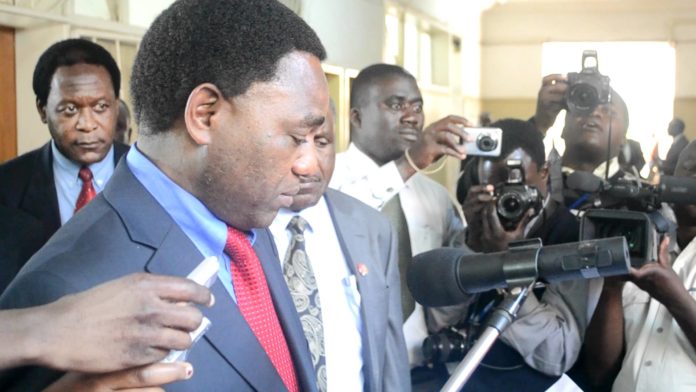
Hakainde Hichilema

LUSAKA – Zambian opposition leader Hakainde Hichilema was freed from prison on Wednesday after the state prosecutor dropped charges of plotting to overthrow the government, but a judge warned him he could be arrested again at any time.

Hichilema and five others were arrested in April and charged with treason after his convoy failed to make way for President Edgar Lungu’s motorcade. His release could help defuse tensions in the southern African country, where Lungu imposed a state of emergency in July.

High Court judge Charles Chanda told Hichilema and his co-accused that the prosecutor had terminated the proceedings but their discharge was conditional.

“This is not an acquittal as you can be arrested any time over the same offence. For now you are free to go home,” he said.

Hichilema’s supporters were jubilant, but he showed no emotion as he listened to the judge. He then drove from prison to the headquarters of his United Party for National Development (UPND) in an open-roof Toyota Land Cruiser and waved to supporters over the 5 km (3 miles) stretch.

In a speech outside the building, he called on the government to free several members of the party who are still detained over various charges.

“As of yesterday, some of our members were arrested. Even today, as I speak, others were arrested,” Hichilema told hundreds of supporters, without giving details of the cases.

“Zambia’s criminal justice system has broken down. I can’t say I am free when our members are in detention,” Hichilema said, adding “I am willing to go back to prison” if the arrests persisted.

Hundred of people celebrated outside the prison, singing, dancing and waving red and yellow UPND flags. Others marched outside the party’s headquarters, shouting Hichilema’s name and punching the air in victory.

“It is good he is out, but sad that he has been released conditionally. We would have loved him to be acquitted,” said Peter Simukonda, a 26-year-old University of Zambia student.

After the initial treason charge over the motorcade incident, Hichilema was later accused of plotting to overthrow the government.

The case has heightened political friction in Zambia, a major copper producer which is seen as one of Africa’s more stable democracies, after a bruising election last year in which Lungu’s Patriotic Front defeated Hichilema’s UPND.

A government spokesman said the release of Hichilema showed the state did not interfere with the courts.

“We accept what has happened today and respect the decision of the DPP,” chief government spokeswoman Kampamba Mulenga said. “This shows that the government does not interfere with the judicial system.”

Hichilema, an economist and businessman widely known as HH, mounted an unsuccessful legal challenge claiming the poll was rigged. His release could ease tensions in the run-up to elections in 2021, analysts said.

“It signifies the beginning of the reconciliation process, with the next elections being central,” said Alex Ng’oma, a political science lecturer at the University of Zambia.

Government and legal sources had told Reuters on Sunday that Zambia’s government would drop the treason charges and free Hichilema under a deal brokered by Commonwealth Secretary-General Patricia Scotland.

Scotland visited Zambia last week and told reporters she had met Lungu and Hichilema separately and that the two leaders had agreed to a process of dialogue facilitated by her office.

In a statement, Scotland said she hoped the decision to drop charges would help Zambia “achieve political cohesion and reconciliation through dialogue”.

A Zambian official said the Commonwealth would be appointing a special envoy to facilitate the talks between Lungu and Hichilema along with other political players.

Last month Lungu invoked emergency powers to deal with “acts of sabotage” by his political opponents, after fire gutted the country’s biggest market. The powers allow police to ban public meetings, detain suspects longer than usual, search without a warrant, close roads, impose curfews and restrict certain people’s movements.


 

Stories Continues after ad

Konde resigns as NTV MD

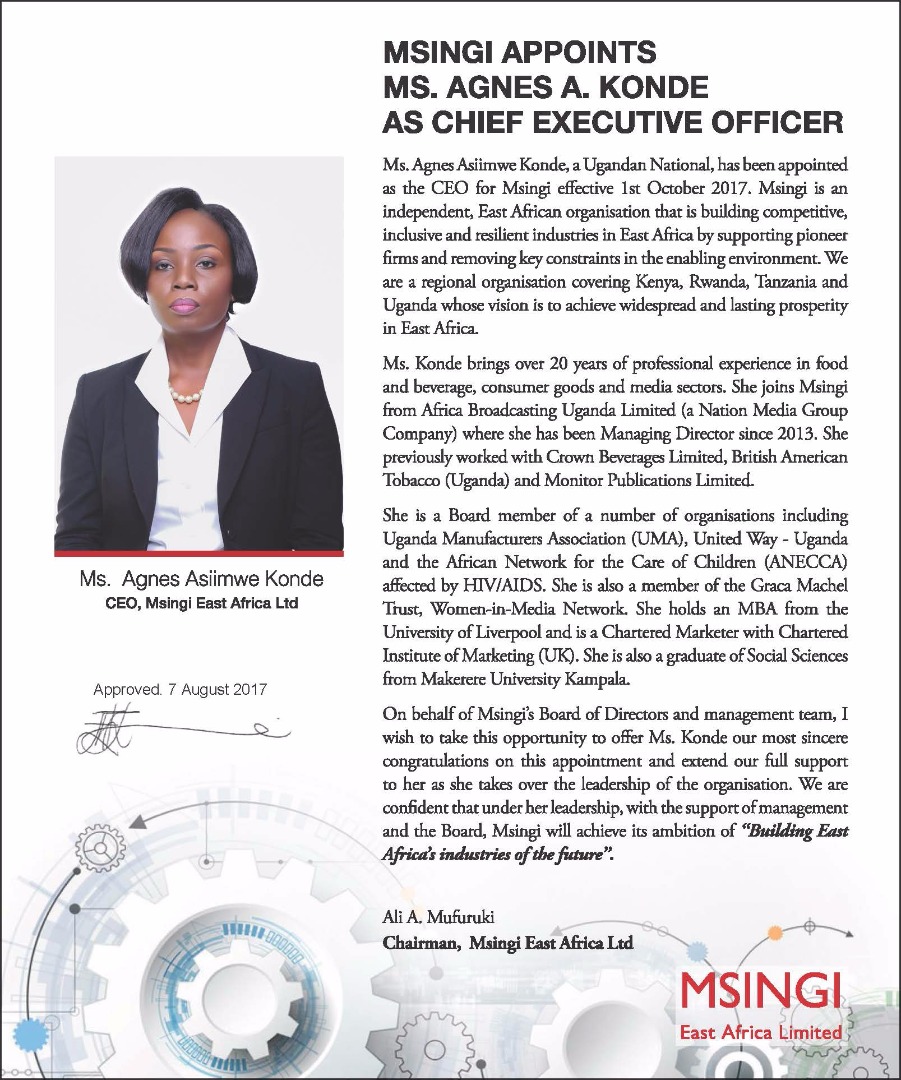
OUT-Agnes Konde Asiimwe.

Agnes Konde Asiimwe, the Managing Director of NTV-Uganda has resigned.

According to a source at Nation Media Group (NMG) Nairobi, Ms Konde tendered in her resignation last evening.

NMG Chief Executive Officer, Joseph Maganda is already in the country and is set to address NTV staff this morning and possibly name an acting person to take charge of the station.

According to sources, at the time of her resignation, Konde  has been appointed as Managing Director Msingi East Africa Limited.  According to their website, Msingi was established in 2016, Msingi is an independent, multi-decade organisation that is building East African industries of the future. However, it is important to note that by the time of her departure, Kondo wasn’t having a good relationship with Sam Barata whom NGM appointed as joint commercial manager for Uganda. Another person whom Konde didn’t want to have a say in NTV editorial work is Mr. Daniel Kalinaki who was appointed recently to oversee NMG editorial interests.

Ms Konde was appointed as NTV boss in February 2013 and took over from Mr Joe Munene, who had been at the helm of the television station for four years since 2009. Ms Konde has been a brand and marketing manager at Crown Beverages Limited, the manufacturers of Pepsi as well as market and circulation manager for Monitor Publications Limited. She has vast experience in the media industry although this will be her first assignment in broadcast.

Konde started her career journey as a truck sales girl for Madhvani Group selling soap, sugar and cooking oil in Fort Portal.

Stories Continues after ad

Acholi leaders finally allow surveying of Amuru land

Betty Amongi

The Minister for Lands, Housing and Urban Development, Betty Amongi has said Acholi leaders yesterday met President Museveni at Entebbe State House where they agreed to have the contested 10,000 hectares of land in Amuru district surveyed to pave way for the sugar manufacturer, Madhvani Group to grow sugarcane.

Last week, local women in the area organised a nude protest against Minister Amongi who had gone to oversee the surveying exercise in preparation for the Madhvani group to begin its sugarcane production activities.

Addressing the journalists at the Uganda Media Centre in Kampala on Wednesday, Amongi said that during the meeting with Museveni, the local leaders agreed that the project would stimulate development in the area that was affected by the 20-year Lord’s Resistance Army (LRA) rebellion led by Joseph Kony, now believed to be hiding in the dense forests of the Central African Republic.

“All the leaders agreed on the importance of the sugarcane project in stimulating economic development and pledged support to the onging exercise,”Amongi said.

The lands minister named Acholi chief Rwot David Onen, Bishop Baker Ochola and MPs Odonga Otto and Gilbert Oulanya among some of the local leaders who graced the meeting at Entebbe State House on yesterday.

Amongi also said that both sides will address a joint rally in Amuru district on Monday next week as the security deployment in that place remains.

“They agreed that the deployment should remain while a thorough investigation on the concerns raised is carried out by law enforcement agencies,” she said.

She applauded the leaders for their efforts in ensuring a consensus is reached and embracing the project.


Stories Continues after ad

Celebrating 25-year journey of ICPAU

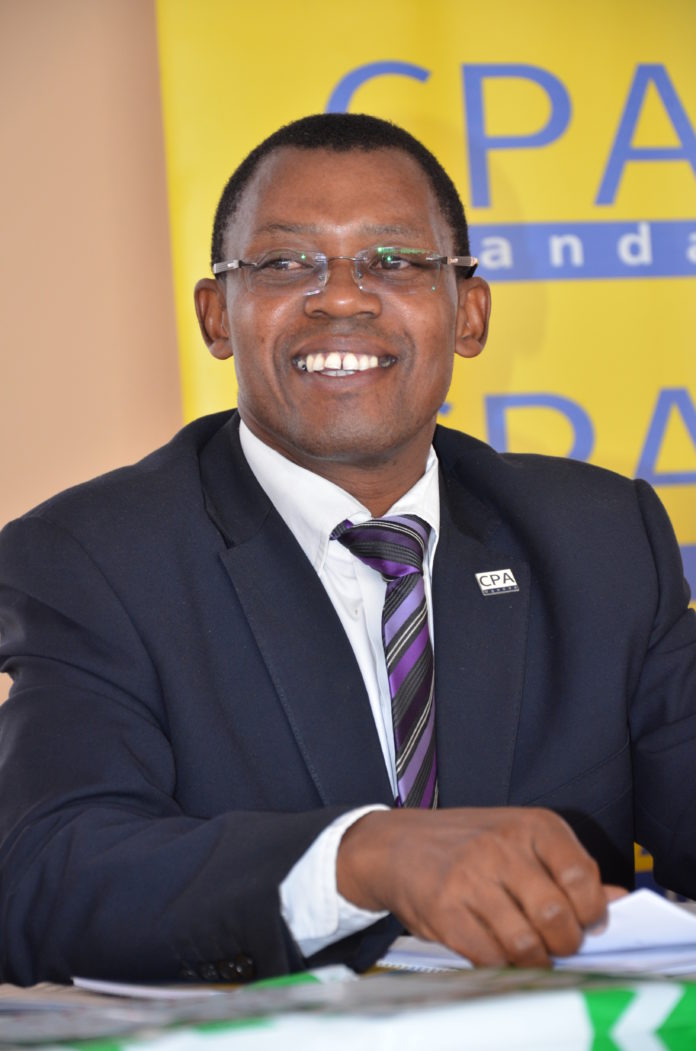
CPA CEO Derrick Nkajja

As the ICPAU marks its Silver Jubilee, the Chief Executive Officer (CEO) of the organisation Derrick Nkajja answered some questions about the 25-year journey and below we reproduce the interview

Who was an Accountant then before establishment of the Institute of Certified Public Accountants of Uganda (ICPAU)?

A. Before the Accountants Statute of 1992, Uganda as a country was training and qualifying individuals solely through the university and colleges as accounting personnel. Any individual who would end up in any money or finance related activity would be categorised as an Accountant.

How was the profession regarded then?

Although the title ‘Accountant’ was known and there were some individuals who had trained outside Uganda as professional Accountants, the profession on its own was not well known. In fact those who strived to have ICPAU established faced a lot of obstacles from all corners of the country because many thought that the Accountancy profession was not that important to be with a proper strong framework.

How did ICPAU’s establishment change the Accountancy profession in the country?

The establishment of ICPAU, twenty five years ago, created a firm foundation on which the accountancy profession in Uganda has been built. ICPAU has since gone on to educate the public on the role of the accountancy profession; established a qualifying examinations scheme that has helped Ugandans to train and gain accountancy skills at affordable cost. ICPAU has qualified over 2,500 individuals through the Certified Public Accountants of Uganda course [CPA(U)] as well as over 1,300 individuals through the Accounting Technician Certificate course [ATC(U)]. In the process, ICPAU has enabled the country to train high calibre human resources and save foreign exchange since Ugandans used to train based on foreign courses. The emergence of ICPAU has helped to raise the debate on the role of the accountants in the economy. Institutions like the Office of Auditor General, Inspector General of Government, Ministry of Finance, Planning and Economic Development, Uganda Revenue Authority have all started to employ and also use the services of trusted professional accountants. It should also be noted that in the process as the professionals started unearthing the financial problems within our country, which on many occasions people have inadvertently [and I attribute this to lack of knowledge on the role or value of the profession] reflected it as a problem of the accountants yet in many of those cases the individuals involved are not accountants in the spirit of Uganda’s laws as well as our professional values and code of ethics.

Who is an Accountant today and how is the profession regarded?

According to the Accountants Act, 2013, an Accountant in Uganda is a member of the Institute of Certified Public Accountants of Uganda (ICPAU). The membership is in two categories; Full Membership and the Associate Membership.

The accountancy profession’s standing has greatly improved although more is desired. We call upon the general public, especially the business community to always interact with and use the services of professional accountants. It has been proven world over that there is a very strong relationship between the development of an economy and increased usage of professional accountancy services. Our members have started to be entrusted with leadership of organisations and that is a vote of confidence in who they are as individuals but also as a profession because that is their training skill set.

Generally, how has the Accountancy profession evolved over the years since the establishment of the Institute?

At that time, Uganda as a country officially had only 79 professional accountants. Since then, the number of professional accountants in the country has increased to over 3,600 so there has been growth in numbers although still not enough. The economy has grown and the demand for accountancy services has also grown. In terms of what the profession looks like, there has been a great shift in the way the profession is trained in Uganda. The training has taken a more rigorous approach and the individuals who complete are well grounded in the subject knowledge but need to demonstrate usage of that knowledge by attaining at least three years of practical experience before they can be registered as full members of the Institute. The profession has also progressed in terms of technological advancement and many routine tasks that used to be executed as part of accounting function are now automated.

The accountancy profession is one of those that have been named to be highly affected by advancements in technology. Technology may lead to loss of many accounting jobs and there are smart softwares that can process large amounts of data and give the right answers all the time without any downtime. How are you preparing future accountants for this challenge?

Yes, technology has advanced rapidly over the years but so are the demands of society. We believe the accountancy profession will still exist in another form. We are already noting the demands of voluminous data that has been brought about by technology and as a profession we are now flagging data analytics as part of our profession. So yes, we take note of the changes within society and include within our syllabuses areas of new interest for the profession to keep pace with new trends.

 ‘Analogue’ accountants have been tipped to be replaced by more tech savvy ones, how is the Institute prepared in regards to human capital development?

[this question is similar to the one above]

As ICPAU, we regularly carry out surveys to understand new demands and adapt accordingly. We assure the users of accountancy services and employers that human capital development is part of our mandate in the maintenance of the standard of accountancy in Uganda and we are working to fulfill that mandate in line with the evolving demands.

Developments in technology are always associated with risks such as cybercrime and fraud, how are Accountants dealing with this?

Risks are a daily occurrence and part of the accountancy training is to identify risks and learn how to mitigate the identified risk. The risk of fraud and cybercrime is an everyday risk and is mainly posed by IT challenges. So as ICPAU, our focus is to ensure that we have the appropriate training regime for our accountants to deal with the ever-changing IT landscape. Fraud by nature evolves from unethical disposition and as a profession accountancy organisation, we emphasize ethical conduct for all our members and we have a code of conduct to follow which includes a disciplinary mechanism with sanctions that may lead one to be removed from the profession.

Stories Continues after ad

Museveni apologizes for 1970s insecurity on Kiwamirembe Hill

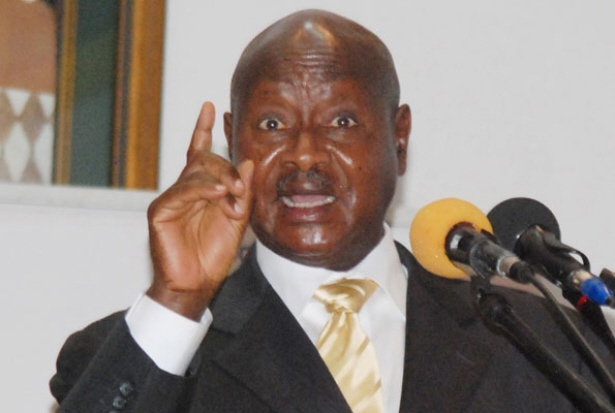
ATTENDED PRAYERS IN KIWAMIREMBE: President Yoweri Museveni

President Yoweri Museveni yesterday attended the Assumption Day celebrations on Kiwamirembe hill in Wakiso district, where he apologised for the insecurity that rocked the famous hill in the 1970s when the Tanzanian soldiers invaded Uganda to depose former president Idi Amin.

“I am sorry for the insecurity that rocked the hill. I was with the Tanzanians who put the guns on this hill but I am glad that the wars brought peace and development to the area,” he said.

The President, who was speaking to Catholic pilgrims during the Mass at Our Lady Queen of Peace Kiwamirembe Catholic Shrine in Lweza Parish, said he had come to join the faithful to give thanks to the Virgin Mary for the peace and security in the country.

“I am here to pray with you to the Virgin Mary and thank her for the peace and all the good things she has done but also to share some of the challenges still remaining,” he said, appreciating the people for supporting the NRM government which he said has guaranteed peace in the country.

Kampala Archdiocesan Bishop, the Most Rev. Dr. Cyprian Kizito Lwanga said the place was named Kiwamirembe after the then Lweza Parish Priest and his parishioners started to pray for peace to be restored in the country.

“In the 1970s, we had a civil war here and those that were fighting put up big guns here. The prayers were heard and no bombs went off at the hill,” he said.

Archbishop Kizito Lwanga lauded President Museveni and the NRM Government for the peace and security in the country. He also read out a message from Pope Francis urging the pilgrims to pray for their loved ones, instructors, leaders and the vulnerable.

President Museveni donated Shs.20 million towards the management of the shrine and another Shs.80 million for the development of the shrine.

State Minister for Primary Education, Rosemary Sseninde and former East African Legislative Assembly (EALA) Speaker Margaret Nnantongo Zziwa, attended the Mass.

The Catholic Church throughout the world holds annual prayers every 15 day of August to mark the assumption of the Virgin Mary to heaven.


Stories Continues after ad

Acquisition of Crane Bank boosts dfcu’s balance sheet to Shs3tn in June

dfcu bank

Following the acquisition of Crane Bank’s assets, the DFCU Bank has posted impressive figures for the first six months of 2017, with its balance sheet hitting Shs3.05 trillion, up from Shs1.8 trillion in December 2016.

The latest interim financial statement also shows the dfcu bank’s gross profit more than doubled in the first half of this year, totaling Shs151.670 billion up from Shs58.363 billion in December 2016.

The dfcu management says the acquisition of Crane Bank placed the dfcu Bank amongst the top three banks in the market in terms of total assets.

Further, they attribute the huge change in the balance sheet to the acquisition of some of Crane Bank assets like physical cash, balances, loans and advances, computer software, listed stocks, shares in private companies, land and furniture.

“In January 2017, our wholly owned subsidiary, dfcu Bank Limited, acquired certain assets and assumed certain liabilities of Crane Bank Limited (in receivership). This was a great opportunity for the Group which was carefully considered by the Board and found to be in line with our growth aspirations,” the interim statement released by the bank yesterday says.

The statement shows growth in customer numbers which rose by over 50%, as branch network rose from 43 to 67 with over 100 ATMs.

They add the acquisition also puts the Group firmly on the path to transforming from a niche bank to a universal bank. “Overall we expect the transaction to result in enhanced value to our shareholders through superior financial performance,” the directors said in a statement now I public domain.

Bank of Uganda, the regulator of commercial banks in the country, requires all the banks to release half year financial statements. Many banks in the country are releasing their financial performances this July.

Meanwhile, in 2017, dfcu will invest $20m in upgrading the Finacle Core Banking System.


Stories Continues after ad

Education ministry bosses quizzed over Shs2b to private varsities

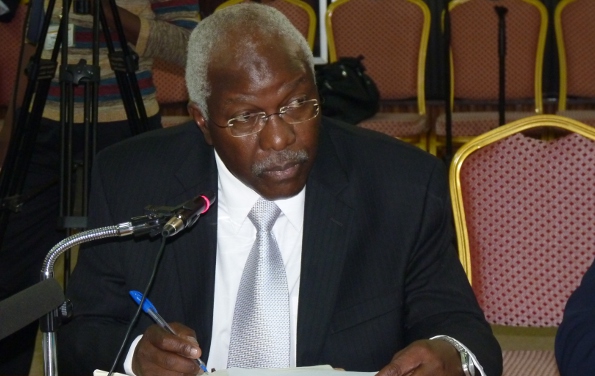
TO AUDIT BoU: Auditor General John Muwanga

The Legislators of Parliament Public Accounts Committee have grilled officials from the Ministry of Education and Sports, seeking explanations as to why they gifted Shs2.1b of public funds to private universities.

In his June 30 2016 report to Parliament, Auditor General John Muwanga highlighted that the Ministry transferred Shs2, 192,500,000 to six private universities, in fulfillment of presidential pledges.

The universities include Bishop Stuart University (Shs380m), Kumi University (300m), Kisubi Brothers University College (912.5m), Nkumba University (300m), Mountains of the Moon University (150m)and Ndejje University (150m).

During the audit process, the auditors discovered that the transfers lacked detailed information with regards to status of implementation of pledges.

The auditors also queried discovered that the transfers were made without putting in place mechanisms for accountability from the universities that benefitted from Museveni’s generosity.

During the interface, it was discovered that the ministry issued the money without drawing any agreement with the Universities.

The Ministry acknowledged that there was no MoU drawn but revealed these have since been put in place.

Further, the Ministry officials told the MPs that only Nkumba and Ndejje universities had handed in their accountabilities, with the Director Higher Education justifying the Ministry’s position in respect to the presidential pledges.

“The understanding is that the students from private universities are also Ugandans who come to the job market, who should be properly trained,” Mr Onen said.

But Masaka Municipality MP Mathias Mpuuga warned: “Whoever touches public funds must account. It doesn’t matter if you are a private person.”

Gerald Karuhanga, Ntungamo Municipality MP, wondered how the ministry would commit such huge funds to private universities, yet public universities are grappling with meager funds.

He also questioned why the ministry budget should go into paying presidential pledges, yet Parliament also allocates monies to the Office of the President for the same purpose.

Fred Kakooza, Permanent Secretary Ministry of Education replied: “When he (President Museveni) makes pledges that fall under our sector, we budget for it.”


Stories Continues after ad

Parliament’s accountability committees get financial inquiry handbook

The Speaker of Parliament Rebecca Kadaga launching the handbook

Financial accountability committees of Parliament will now have a manual to follow as they inquire into how government agencies spend the money allocated to them for service delivery.

The new handbook launched by the Speaker of Parliament Rebecca Kadaga provides for among others, procedures of handling witnesses appearing before committees.

The committees to use the book include the Public Accounts Committee; the Local Government Accounts Committee and the Committee on Commissions, Statutory Authorities and State Enterprises.

While carrying out their work, the committees call or summon various persons that may include Ministers, heads of government departments and accounting officers.

One of the procedures in the handbook is that committees must provide witnesses with a pre-appearance briefing, the agenda and information about the upcoming hearing.

“The committee must also seek to obtain a thorough briefing from the Auditor General on the background and substance related to the appearance of specific witnesses,” it says in part.

Launching the handbook, Kadaga called for the Office of the Auditor General to be given more financial support to recruit additional staff to audit government departments.

“There is still a gap (in accountability process), which should not be blamed on Parliament. We need to support the Auditor General to deliver on their mandate faster,” said Kadaga.

The Auditor General is established under the Constitution to audit and report on the public accounts of Uganda and of all public offices; and is also mandated to conduct financial and value for money audits in respect of any project involving public funds.

The Speaker asked development partners to work with Parliament while designing programmes intended for the institution or its committees.

“Any donors wishing to work with Parliament must first come and we agree on the programme; we must design the programme together, so that we support the country in its efforts to improve and develop,” she said.

The handbook was developed with the support of the United States Agency for International Development (USAID), UK’s Department for International Development (DFID) through the Governance, Accountability, Participation and Performance (GAPP) Programme.

It seeks to improve the performance of the accountability committees through defining roles and responsibilities of various actors in the accountability cycle.

Meanwhile, the Clerk to Parliament Jane Kibirige, said the book went through a two-year consultative processes involving legislators and staff of both the 9th and 10th Parliaments, civil society and experts on parliamentary practices and procedures.

“This process has not only ensured a consensual final product but importantly enriched the content,” said Mrs. Kibirige.

Ms Kibirige also pledged full implementation of the handbook as a guide for the efficient and effective discharge of the mandate of accountability committees.


Stories Continues after ad

MPS to monitor use of Global Fund cash

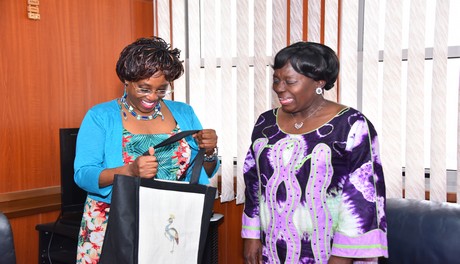
UN_AID_Country_Director_Dr._Karusa_Kiragu_receiving_a_gift_from_the_Speaker_of Parliament Rebecca Kadaga

The Speaker of the Parliament Rebecca Kadaga has said that legislators will take keen interest in scrutinising how the Global Fund money is spent in the procurement of ARVs and other items on the list.

While meeting the new UNAIDS Country Director Dr Karusa Kiragu, the Speaker said there were concerns about the poor absorption of the Geneva-based Global Fund money yet there were still major issues to be addressed in regard to the AIDS pandemic in the country.

The Speaker also asked Dr Kiragu to avail her with information regarding to the utilisation of the funds for the HIV/AIDS initiatives so that she can mobilise MPs to efficiently follow up especially at committee level.

“Members of Parliament are very concerned about issues regarding AIDS and would definitely be interested in following up this matter,” Kadaga said. On her part, Dr Kiragu said that there was a growing trend of some money from the Global Fund not being utilised and instead returned at the end of the accounting period.

“There is a glaring issue of absorption of resources on the ground yet we see more AIDS patients lacking access to anti-retroviral medicine,” Dr Kiragu said.

On her part Dr. Kiragu requested Kadaga to urge parliamentarians to re-echo and support President Museveni’s message and support to the Presidential Fast-Track Initiative on Ending AIDS as a Public Health Threat in Uganda.

The initiative which was launched last June  in Kampala outlines key areas in revitalising HIV prevention and closing the tap of new infections specifically among girls, young women and men; consolidating progress on elimination of mother to child transmission; accelerating implementation of ‘test and treat’ which is expected to rapidly scale-up coverage of HIV treatment services in the country and ensuring domestic financing sustainability for the HIV response and finally strengthening institutional effectiveness for a multi-sectoral response.

“We ask you to push the MPs to talk about preventive measures of AIDS and have the message out to their constituents,” Dr. Kiragu, a public health specialist and epidemiologist, said.

In response Speaker Kadaga said that Parliament has a Committee on HIV and AIDS, which support the presidential initiative.

“We have confirmed that the AIDS Fund is functional and funding should be availed to the Ministry of Health. I will also ask all the parliamentary committees to talk about all measures against AIDS as they go out to conduct field visits and also during the Speaker’s outreach,” Kadaga said.

While addressing the media early this month, Dr Kiragu noted that while Uganda registered a 56% decline in AIDS related deaths between 2010 and 2016, the major concern is high deaths among the men. Of 23,000 adult’s deaths recorded in 2016, 15,300 were males and 7,700 were females.

Recent HIV/AIDS surveys point out that many fear testing for the disease which makes them miss medicines.

During the launch of Presidential Fast-Track Initiative on Ending AIDS as a Public Health Threat in Uganda, Museveni urged the men to voluntarily go for counselling and testing in order to access treatment if diagnosed with HIV.


Stories Continues after ad

Grace Mugabe eludes arrest over assault in South Africa

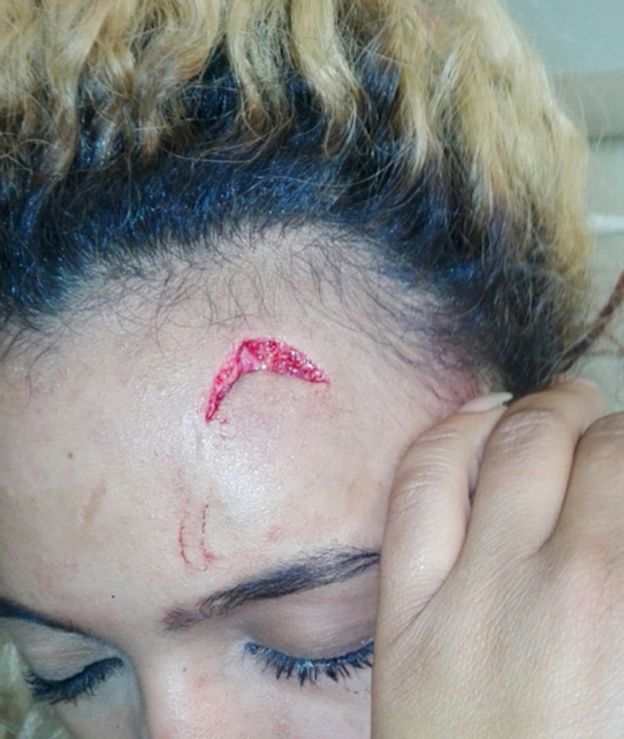
Model Gabriella Engels shows off a wound sustained after assault by Zimbabwe First Lady Grace Mugabe

Zimbabwean First Lady Grace Mugabe has returned home from South Africa after failing to turn herself in to police in Johannesburg to face accusations of assault, officials say.

It was not immediately clear why Mrs Mugabe did not report to police after saying she would do.

A 20-year-old South African woman has accused Mrs Mugabe of hitting her over the head with an extension cord during a row at a hotel on Sunday evening.

Mrs Mugabe has so far not commented.

Zimbabwean government sources confirmed that Mrs Mugabe, wife of President Robert Mugabe, had returned home.

“Yes, she is back in the country. We don’t know where this issue of assault charges is coming from,” said one senior official quoted by Reuters.

Earlier, South African police said they had been negotiating with Mrs Mugabe’s lawyers to get her to hand herself in.

Confusion surrounded the case with officials saying at one point that Mrs Mugabe had handed herself over to police and would appear in court. She did not appear and police sources later said she had agreed to turn herself in but failed to do so.

Gabriella Engels, a model, accused Mrs Mugabe, 52, of hitting her after finding her with her two sons in a hotel room in Sandton, a wealthy suburb north of Johannesburg.

Ms Engels released an image of a head injury online.

“When Grace entered I had no idea who she was,” she told South African broadcaster News24.

“She walked in with an extension cord and just started beating me with it. She flipped and just kept beating me with the plug. Over and over. I had no idea what was going on. I was surprised. I needed to crawl out of the room before I could run away.

“There was blood everywhere,” she added. “Over my arms, in my hair, everywhere.”

She registered a “case of assault with intent to do grievous bodily harm”, police said.


Stories Continues after ad