Stanbic Bank
Stanbic Bank
17.4 C
Kampala
Stanbic Bank
Stanbic Bank
Home Blog Page 1793

Museveni urges youth to monitor budgetary processes

90 per cent of Ugandans want to criticize President Yoweri Museveni.

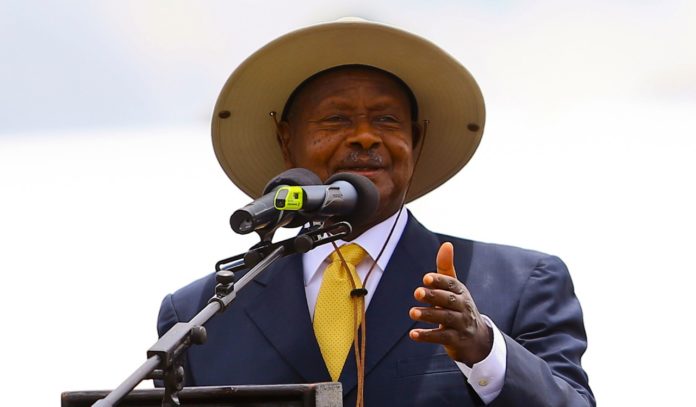
President Yoweri Museveni has urged Ugandan youth to get acquainted with the government budgeting process.

Presiding over the International Youth Day celebrations held at Bubukwanga Primary School grounds in Bundibugyo district, western Uganda, Mr. Museveni said the youth should use their numbers to pressurize and engage their MPs to budget and prioritize three areas; peace, job creation and infrastructure development, including roads and electricity.

“Youth leaders need to get acquainted with budgeting, because it’s through this process that we are able to put more money in roads and electricity,” he said, adding: “We now spend more than Shs3,000 billion on roads and I can confidently say that we have archived minimum economic recovery.”

The International Youth Day is a global event, celebrated annually on August 12 to recognize efforts of governments in enhancing the widespread response to young people`s needs. It also aims to promote ways to engage the youth in becoming more actively involved in making positive contributions to their countries and communities.

At the celebrations President Museveni also noted that despite government collecting more revenue now, there is need to budget by the book.

“We should budget more for development and not consumption,” he said.

Museveni also cited the contribution of peace to the recovery of cocoa in Bundibugyo, a region that was heaped with loads praise for its high production of the cash crop.

“All these cocoa plantations had been abandoned because of unrest, however we restored peace, and cocoa production is now on the increase. There cannot be development without peace,” Museveni said.

President Museveni also commended the people of Bundibugyo for protecting the environment and asked the youth countrywide to help join in the conservation drive.


Stories Continues after ad

50 Ugandans join Sudhir for son’s wedding in Spain

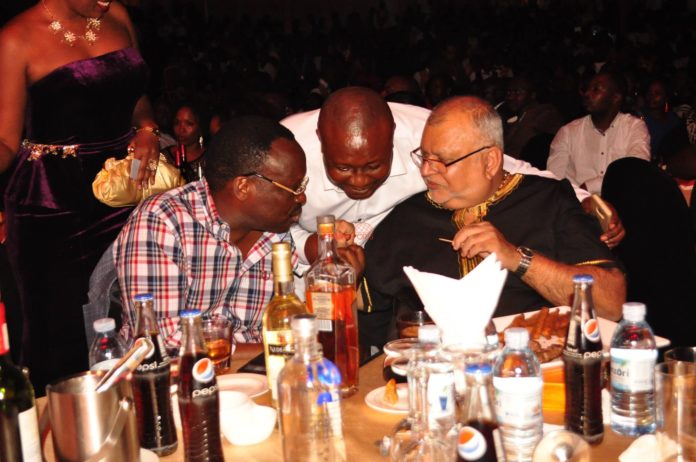
Partying time, Sudhir and his friends at a social event.

Property mogul Sudhir Ruparelia has organized a week long party for his son Rajiv Ruparelia’s wedding to take place in Spain.

Sudhir flew out of the country last week with a delegation of about 50 other Ugandans and are set to party for a full week. Last year, Sudhir married off his second daughter in London but also threw another party in Kampala for his Ugandan friends.

Mr. Rajiv Ruparelia is set to wed in August 28, in Madrid Spain.

According to sources, the party in Spain starts on August 20 and will run through until August 28, the day Rajiv is set to wed.

Efforts to know the young tycoon’s future wife were fruitless by press time.


Stories Continues after ad

Stop over taxing informal sector-Museveni

90 per cent of Ugandans want to criticize President Yoweri Museveni.

President yoweri Museveni has directed the Prime Minister, Dr. Ruhakana Rugunda to harmonize the taxation of informal sector directing that those involved should pay tax once and more multiple taxation.

In a letter dated July 22, 2017, the president says it is unfair for multiple taxation and therefore, single taxation should apply across the board.

“I am writing through you, to all government agencies on the issue of over taxing our informal business groups (market vendors, gonja sellers, muchomo sellers, Maize sellers etc). It is correct that these operators buy annual license of, may be Shs50, 000 that should be all. Nobody should again charge them daily fees of, for instance, Shs1; 000” reads the letter to Dr. Rugunda.

Mr Museven said that as far taxis are concerned, it should again be one fee for an annual license.

“Once you have that license, you should operate without hindrance on the route for which you were licensed for the whole year. There should be no fees for Kampala, and fees for up country vendors.”

The President further emphasized that it should be one consolidated fee and if the owner of the taxi business makes profit out of the income, then the profit could be taxed and the employees should also pay income tax. “However, daily taxation of operations must stop completely”

He added “The excessive direct taxes for these or any other groups are not correct. Once these groups get some income, they will start spending that is how the government will get taxes through consumption taxes”

Mr. Museveni’s directive comes at the time when taxi operators have just petitioned Parliament through Kira Municipality legislator, Ibrahim Semujju Nganda challenging the issue of several taxation.

Stories Continues after ad

60-year-old lady wins car in Airtel Mega Masappe promo

Airtel Uganda Sales and Distribution Director, Ali Balunywa, (3rd right) pose with the lucky winners of the Airtel Mega Masappe promotio

In an exciting ceremony befitting a wekend, Airtel Uganda has for the sixth time, rewarded subscribers taking part in the ongoing ‘Mega Masappe’ promotion.

The winners received their prizes from a team of Airtel Uganda representatives led by Ali Balunywa, the Airtel Uganda Sales and Distribution Director, with Jovia Tungahurira, a 60-year-old businesswoman based in Bweyogerere, taking home the grand prize of a brand new Toyota Premio. Susan Mpumwire, Ojambo Zakaria and Sebaganzi David took home Shs1,000,000 each, while Joseph Sebyanzi, Nakakande Miyanakawa, Mariam, Namuase and Amkampurira Eva rode off with brand new motor bikes.

Speaking at the prize-giving event, Balunywa congratulated the winners and expressed gratitude to them for taking part in the promotion.

“On behalf of Airtel Uganda, I am honored to be here, rewarding the sixth set of loyal customers and winners in the ‘Mega Masappe’ promotion.

For the past five weeks, we have been rewarding our subscribers and we are always excited to see them in a celebratory mood. Our customers’ loyalty is crucial to our business operations and we are honored to be able to reward them with life-changing prizes.”

“Airtel Uganda is committed to continuously giving our customers an unbeatable experience. We believe that fulfilling this is the reason we’ve remained Uganda’s Number One Smartphone network,” he added.

Balunywa also called upon Airtel Uganda subscribers to participate in the promotion.

‘Mega Masappe’ is a nationwide campaign. We have winners from various regions across Uganda, so my message to everyone is to take part in ‘Mega Masappe’- there are daily, weekly prizes to be won, in addition to the bonus calls, SMS and data bundles that come when one reaches their target.”

As part of ‘Mega Masappe’, subscribers are required to opt into the promo by dialing *162# and selecting option 1 to opt in, option 2 to check target and option 3 to redeem their data bonus – which will be broken down into Voice, SMS and Data at 50%, 10% and 40% respectively. This bonus however does not apply to social packs, quarterly, annual and free bundles.

Mega Masappe promotion subscriber bonus will be given instantly on the achievement of the daily target. For example, if a subscriber’s bonus target is Ushs. 1,000 and they recharge with that Ushs. 1,000, they will receive 100% bonus of the same value under the Voice, SMS & Data split. However, if they recharge with another Ushs. 1,000 on the same day, they will not get a second bonus.
Daily and weekly prizes will be given away every Friday for the 90-days’ duration of the promotion.


Stories Continues after ad

Uganda to benefit from US$1 trillion regional export market

ASSURED UK OF CONTINUED TRADE: The Minister of Trade and Cooperatives,

The private sector stands to gain if Uganda ratifies the US$1 trillion EAC-COMESA-SADC Tripartite Free Trade Area Agreement (TFTA) that seeks to widen the market for the member countries, the Trade Minister Amelia Kyambadde, has said.

Minister Kyambadde says that as Uganda prepares to ratify the TFTA, the region of 26 countries will become its biggest export market, accounting for about 56.1 percent trade.

She however, notes that Uganda lose some revenue due to free entry of goods from partners states.

“By joining a regional integration arrangement, you accept to trade off some revenue losses with the benefits of regional integration, which arise from a bigger market created,” she says.

“The focus in regional integration should not be on revenue losses, but on how to maximize the benefits that accrue from bigger market access”, Minister Kyambadde adds.

Cabinet recently agreed that uganda was ready to start the implementation of the TFTA, which will open up a wider market for Uganda’s products and services in 26 African countries.

The exports will include agricultural and livestock products.

The TFTA has a combined population of 632 million people which is 57% of Africa’s population; and with a total Gross Domestic Product (GDP) of USD$ 1.3 trillion, makes 58% of Africa’s GDP.

With Cabinet approval, Government has started the process of drafting the legal instrument that will form the basis of Uganda’s implementation of the TFTA Agreement. Upon ratification, Uganda will become the second country to ratify the TFTA after Egypt.

But for the TFTA agreement to come into force, 19 Member States (two thirds) out of the 26 must ratify it. It is not clear when a sizeable number of countries will sign the pact as many are still in consultations on how best they can achieve that.

Meanwhile, the Acting Commissioner External Trade, Richard Okot Okello says the cooperation in industrialization among the three Regional Economic Blocs will broaden the manufacturing base for the partner sates and enhance regional value chains which will increase the intra-tripartite trade which stands at only 15 percent.

Okello cautions that for in order for Uganda to benefit from the opportunities that the tripartite arrangement has to offer, the country must be able to meet the challenges of competition and satisfy the requirements of the market.

“This requires us to, among others; to address the supply side constraints by increasing production and productivity and to address the infrastructure bottlenecks that make the cost of doing business high and hinder our competitiveness,” Okot Okello says.


Stories Continues after ad

The impact and benefits of the Single Customs Territory

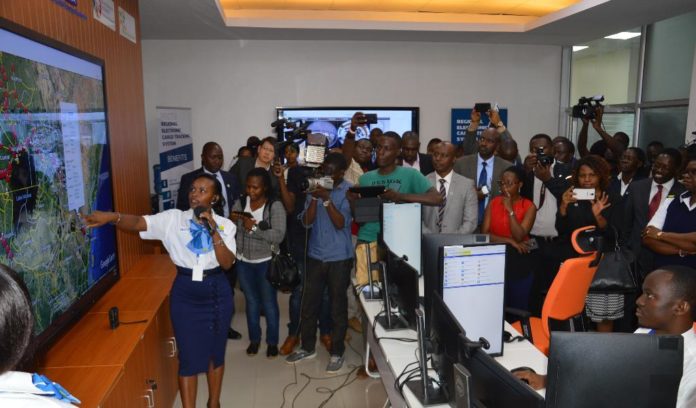
The Regional Electronic Cargo Tracking System monitors goods cleared under SCT

By Herbert Ssempogo

About five customs entries, customs agents’ fees in two countries, two goods- in-transit guarantee bonds and duplicated customs procedures in Kenya and in Uganda.
That was the inconvenience that characterised cargo clearance before the implementation of the Single Customs Territory (SCT) in 2013.

Steel and Tube Industries’ Aggrey Ijara recollected that back in 2013 he was required to declare each container on  five to seven  customs entries for Mombasa Port,  and two entries for transit and on arrival at Malaba, Eastern Uganda respectively

“The many entries were costly and a lot of time was consumed,” Ijara stated.

Importers paid US$200m fees for clearing agents in Mombasa, a Sh150, 000 (over US$40) bond fee at Malaba and another Sh500, 000 (US$138) for agents in Kampala. This was in addition to two goods –in- transit bonds to deter dumping of cargo in Kenya or Uganda.

The delays and costs were an indictment on revenue authorities, which were failing on the trade facilitation role.

To address these challenges and others that impeded regional trade, the Presidents of the East African Community (EAC) agreed to fast track the implementation of SCT to enable importers declare their goods once on arrival at the first port of entries into the region.

It is a stage towards full attainment of the Customs Union achievable by the removal of restrictive regulations and/or minimization of internal border controls on goods moving between the partner states.

In June 2013, amid a Northern Corridor Presidents’ Summit, Uganda, Rwanda and Kenya heads of state agreed to fast track SCT’s implementation.

During the summit, said Commissioner Customs, Dicksons Katweshumbwa, the Presidents agreed on a destination model of implementing the SCT.

Under the model, Customs clearance is done while goods are still at the first point of entry into the region. The Customs declaration is done only once in destination country.

Other features of SCT are, taxes are paid to respective country of destination while goods are still at the first point of entry, and goods are moved under a single regional guarantee bond-the Regional Customs Transit Guarantee Bond and physical verification of goods done once; at first entry point, originating partner state or destination country.

Also important is the mutual recognition of customs agents in the EAC region A Customs agent licenced in Uganda is now able to clear goods in the customs business systems of any of partner states.

And in what could be music to importers’ ears, goods in transit are electronically monitored by the Regional Electronic Cargo Tracking System (RECTS), with monitoring centers in Kampala, Nairobi and Kigali

SCT is supported by interconnected customs systems of all the revenue authorities and port authorities, this has enabled real time exchange of information. Because of system interconnections, importers are now able to clear port charges online. There is no need to travel to Mombasa.

Four months after the presidential directive, said Kateshumbwa, Uganda in October 2013 piloted with petroleum imports of the biggest fuel dealers namely VIVO Uganda and Total Uganda.

Subsequently, phased implementation commenced in February 2014 with all other fuel imports.

“Phased implementation was to minimize trade disruptions and to provide for sufficient change management for all stakeholders,” Kateshumbwa, a Uganda Revenue Authority official, explained.

In July 2014, all intra region (EAC) cargo traded within EAC partner states (except for selected cargo to Burundi) started being cleared under SCT.

Others thereafter were bulk cargo including clinker, wheat grain,  crude edible oil, steel products, bitumen; containerized cargo including rice, sugar, used clothing & used shoes, dry batteries, beverages, alcoholic drinks, cooking oil cigarettes, neutral spirit, steel products, and then motor vehicle units imported through Mombasa.

Fuel and bitumen imported through the Dar es Salaam, Tanzania followed thereafter. Currently, approximately 50% of customs revenue is collected from goods cleared on SCT, according to Kateshumbwa.

And because of its success, it will be rolled-out on all imports via Mombasa on September 1, 2016, Kateshumbwa disclosed. Dar es Salaam will follow.

Following implementation, importers commend authorities for facilitating trade.

“SCT has reduced paperwork, time and the cost of doing business. We have saved a lot. It used to take a week for the cargo to get to Kampala,” Ijara stated, adding that now it takes two days to get to Kampala.

Mukwano Group of Companies’ BW Rwabogo agreed, saying, “The system is good. We are using less people and documents. I do not see any disadvantages.”

Rwabogo concurred with Ijara on the savings and reduced travel time between Kampala and Mombasa.

Since inception, said TradeMark East Africa’s, Richard Kamajugo, travel time fell from 18 days in 2012 to 4-5 days. Citing fuel, the TradeMark East Africa Senior Director said before SCT, Uganda suffered shortages especially during festive seasons.

“Uganda used to experience fuel shortages around Christmas and prices used to escalate. SCT improved the supply of fuel and Christmas of 2014 was the first time fuel was available in all towns in Uganda within the same price ranges,” he stated.

TradeMark has worked with the EAC Secretariat and the Revenue Authorities to sensitise their staff, stakeholders and the public, and also to develop and document the SCT clearance procedures.
“TradeMark East Africa is still working with the EAC Secretariat and the partner states to further improve the exchange of data between the different customs information technology systems,” Kamajugo added.

In Rwanda, one of the EAC partner states, SCT clearance procedures have been rolled out for all goods imported through both Ports of Mombasa and Dar es Salaam. Another member, Burundi has rolled out SCT only for selected items.

SCT is expected to enhance efficiency as the EAC partner states continue investing in modern information technology systems. This will have long term positive impacts on the clearance times and the cost of doing business in the region.

The Writer is an officer at URA’s  Media Desk, Public & Corporate Affairs

Stories Continues after ad

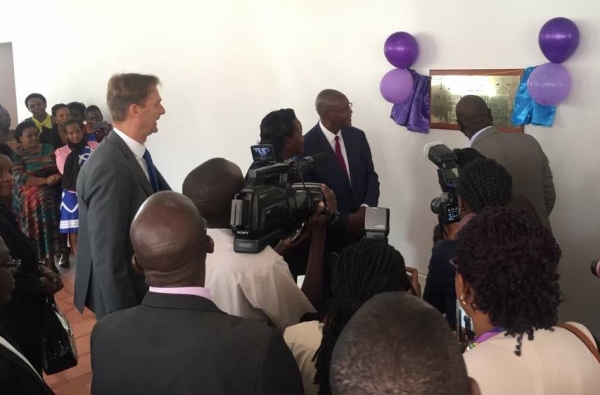
CJ Katurebe commissions LDC multi-purpose auditorium

The Chief Justice Bart Katurebe officially opening the new auditorium at the Law Development Centre

Chief Justice Justice Bart Katurebe has presided over the opening a new state-of-the-art auditorium at the Law Development Centre (LDC), saying that the facility will help LDC improve service delivery.

LDC officials said the plan to build the auditorium at LDC was hatched in the 2007/2008 financial year. Construction was funded by the Government of Uganda with support from the JLOS development partners.

The ultramodern auditorium can accommodate up to 100 people, is air-conditioned and equipped with modern seats and a public address system. It will also provide space for general lectures, seminars and moot competitions. Officials say it will also generate money from external users who will pay for space at a cost of Shs6 million per day.

At the function Justice Katurebe also launched three volumes of the Uganda Law Reports for the years 2010, 2011 and 2012, which documents provide precedents to judges on the Bench and lawyers at the Bar and are also helpful to law students and legal researchers.

Present were stakeholders from the Justice, Law and Order Sector (JLOS) and development partners led by the Netherlands Ambassador to Uganda, Henk Jan Bakker.


Stories Continues after ad

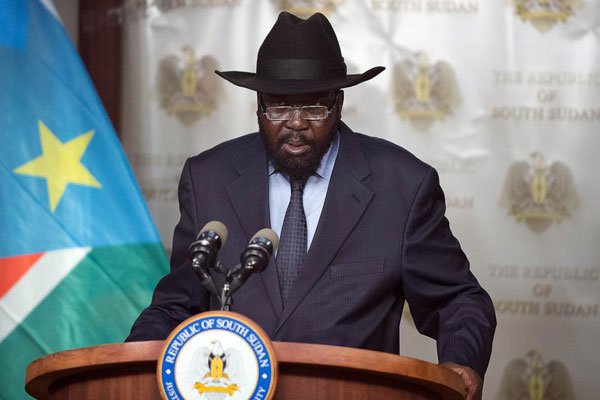
Kiir releases 30 political prisoners

DECLARED THREE DAYS OF NATIONAL MOURNING: President Salva Kiir

South Sudan has released at least 30 political prisoners since President Salva Kiir declared an amnesty in May to facilitate national dialogue and douse a four-year civil war, a senior security official said.

Jalban Obaj, director of legal affairs at the Internal Security Bureau told state television that the prisoners had been set free at different times since the declaration of the amnesty.

Nearly all the ex-detainees, including Justin Wanawila Bilal, a religious cleric, had been accused of supporting opposition leader and former vice president Riek Machar.

“The release of the political detainees came as a gesture of good will,” Ateny Wek Ateny, Kiir’s spokesman said.

He said the freeing of the detainees without any precondition also demonstrated that Kiir was determined to resolve the country’s conflict.

South Sudan was plunged into war in 2013 after a political disagreement between Kiir and Machar strained relations between the two. Kiir then sacked Machar as his deputy, triggering fighting between forces loyal to both men.

Kiir hails from the Dinka while Machar is a Nuer and the rivalry between the two tribes has meant much of the fighting and violence has unfolded along ethnic divisions.

South Sudan Human Rights Observatory (SSHRO), a local non-governmental organisation, said in a statement the release of only 30 prisoners was ‘cosmetic because thousands of South Sudanese… are still unlawfully detained’.

The SSHRO also accused the government of continuing a campaign of ‘hunting, harassing and kidnapping political opponents’ – a charge Kiir’s administration denies.

An estimated quarter of South Sudan’s 12 million people have been uprooted by the conflict, with neighbouring Uganda hosting a million of those displaced.

Machar is being held as a ‘guest’ in South Africa to prevent him stirring up trouble, diplomats and political sources told Reuters last December.

Last month an international mediator said Machar had declined to renounce violence or declare a unilateral ceasefire and instead demanded new peace talks outside South Sudan.


Stories Continues after ad

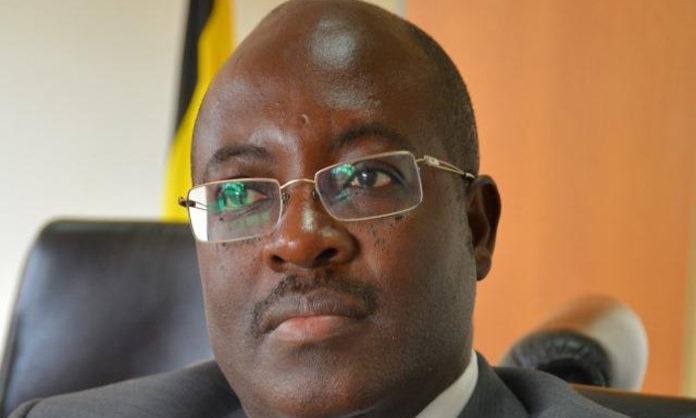
Health ministry dispels Ebola outbreak reports in Luwero

NO EBOLA! Ministry of Health Director General of Health Services Prof. Anthony Mbonye

The Ministry of Health has allayed fears that there could be an outbreak of Ebola in Luwero district, following the death of a 20-year old female patient who had signs of the deadly disease.

The Director General of Health Services Prof. Anthony Mbonye, in a press release today instead confirmed that the female patient died of carbon-monoxide poisoning identified after the post mortem on her body.

“Results from the Uganda Virus Research Insititute (UVRI) indicate that all cases were negative for Ebola, Marburg, Congo Cremean Hemorrhagic Fever, Rift Valley Fever and Sosuga viruses,” Prof. Mbonye said in the statement.

Three days ago the ministry’s Public Health Emergency Operations Centre (PHEOC) received the report of the dead victim as having high fever, dizziness and blood oozing out of her mouth and eyes, all related to Ebola.

Pro Mbonye further said other three female patients with similar signs are under observation, admitted at Bishop Asili Hospital in Luwero.

“The Ministry of Health team is working closely with the district health team to monitor, review and manage these cases,” Prof. Mbonye said, adding that health workers there were being oriented on management and referral protocol of the suspected cases.

According to the Centres for Disease Control and Prevention, Ebola has symptoms of fever, severe headache, muscle pain, body weakness, fatigue, diarrhea, vomiting, abdominal pain and unexplained bleeding or bruising.

Health experts say symptoms may appear anywhere from 2 to 21 days after exposure to Ebola, but the average is 8 to 10 days.

“Recovery from Ebola depends on good supportive clinical care and the patient’s immune response. People who recover from Ebola infection develop antibodies that last for at least 10 years,” they say.

Ebola, which in the past has hit Uganda hard, spreads through contact with infected persons.


Stories Continues after ad

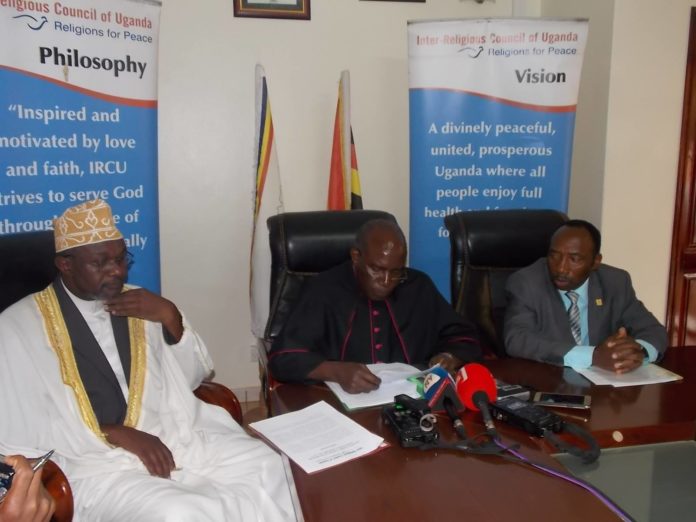
IRCU urges Cabinet to drop land bill amendment drive

IRCU members Deputy Mufti Sheikh Muhammad Ali Waiswa, Monsignor Charles Kasibante and Pastor Dr. Daniel Mate at the press briefing today

The Inter- Religious Council of Uganda (IRCU) has advised Cabinet and Members of Parliament not to amend Article 26 of the Constitution, which seeks to empower government acquire land for infrastructure development before compensating the owners.

The bill was tabled in Parliament last month by the Deputy Attorney General Mwesigwa Rukutana and seeks to insert Clauses 3 and 4 to allow government to acquire land in lieu of compensation based on the Governments Valuer’s report.

In a press conference held at the IRCU headquarters in Mengo Pastor Daniel Mate, the leader of Seventh Day Adventist Church said the move infringes on people’s rights in respect to land ownership, and might lead to a political and constitutional crisis.

“We appreciate the fact that the government wants land for capital development but the proposed method of acquisition violates the rights of Ugandans for whom the developments are intended,” Dr. Mate, who read a statement on behalf of IRCU chairperson Sheikh Shaban Ramathan Mubajje, said.

Observers say that churches and mosques own big chunks of land that are not in use and that the proposed bill has put them on tension, with fears the land may be taken should the bill become enacted.

IRCU Secretary General Joshua Kitakule said Article 26 ably caters for government’s interests to acquire land without violating any individual’s rights.


Stories Continues after ad