Stanbic Bank
Stanbic Bank
17.4 C
Kampala
Stanbic Bank
Stanbic Bank
Home Blog Page 1812

FULL LIST: Makerere University Private Admission list out

????????????????????????????????????

Makerere University has released the admission lists for private sponsored students for 2017/18 academic year.

The lists also have those for the Nakawa based constituent, Makerere University Business School. In the release that has 170 programs, Bachelors of Laws (Day) with highest cut-off points at 53, while Bachelor of Laws (Evening) has 50.

For science programs, Bachelor of Science in Civil Engineering (Afternoon) hard the highest cut-off points at 42.7, but quite less than 49.1 which was the limit for admission on government sponsorship.

Other courses like Bachelor of Science in Electrical Engineering (Afternoon) have 38.5 points, Bachelor of Science in Electrical Engineering (Day) at 40.1 and Bachelor of Medicine & Bachelor of Surgery at 41.3. The cut-off point for Bachelor of Pharmacy is 40.7.

According to Ritah Namisango the Makerere University Public Relations Officer, “The admission lists for other entry schemes on the private sponsorship programme namely Diploma Holders, DegreeHolders, Mature Age and International Applicants will be released next week,”

Click the links below to view the full lists.

Copy-of-private-admission-list-2017-2018-Final


CUT-OFF-POINTS-PRIIVATE-2017-2018 (1)


Stories Continues after ad

Let’s leave the law to take its course in the age limit issue

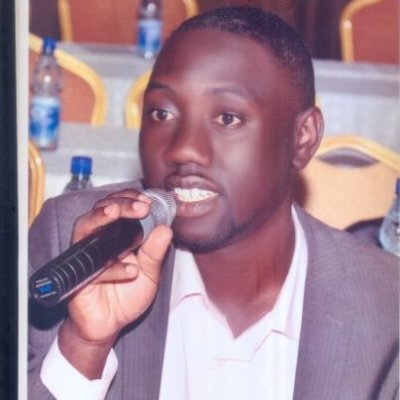
Mr. Michael Woira


At the start of this month the whole of social media and main stream media has been awash with stories related to the age limit constitutional amendment, members of Parliament and many other elite politicians, NGOs and activists were all over radio talk shows, Television shows and some yearning to appear in front of any camera that passed by them mindless of whether it was from a media house or not.

It is this age limit hearsay discussions that have proved to me that very many people are seeking for sympathy and some just want to prove that they know something about politics because every person with a political idea has been debating something that has not even appeared in Parliament or in any committee.

As also a Ugandan who has always been silent at the murmur that has been ongoing, I personally feel it isn’t the right time to discuss what has not yet been tabled in Parliament but in the meantime I can also submit in my thoughts on the topic.

First and foremost Uganda is a democratic country whose leadership is based on the Constitution which is the supreme law; the first Constitution was adopted in 1962 only to be replaced four years later in 1966. The 1966 Constitution, passed in a tense political environment and without debate, was replaced in 1967.

The 1995 Constitution established Uganda as a republic with an executive, legislative, and judicial branch. The roles and powers of each of the government arms are enshrined and spelt out in the Uganda Constitution 1995 but all in all the very first article in this constitution stipulates it out well that power belongs to the people and it’s the people to decide on which policies and laws to govern them through the various departments laid out by the government in power.

I am very sure that all Ugandans know that this country has been operating normally following the constitution since 1987 when President Yoweri Kaguta Museveni took over power and no alterations have been made in any part of the supreme law since all matters concerning the law are dealt with by Parliament of Uganda which is responsible for passing bills and amendments.

Now for this particular age limit lifting that has caused chaos all over, I openly state that I have no hesitation about limiting the age limit supposing the various acceptable stages are being followed because denying it at this early stage before it even goes through the stages openly shows that we are not abiding by the constitution yet it’s our role to protect and follow it.

Ever since this debate started, I have not heard of anyone saying that its unconstitutional but they are just saying we don’t want President Museveni to contest again because he is clocking 75 years!!,Scenarios where reforms have been made are in white and black all over the world and referendums have been organized for the electorates to decide but here it seems a few Members of Parliament and some elite class activists who are financially benefiting from the debate want to decide for we the local people.

I say they will not, Kagame clocked 58 years last year and was ineligible to run in this year’s election because the Rwandan Constitution limits a president to two seven year terms but Rwandans approved his come back through a referendum and he can now take on Rwanda even until 2034 and this wasn’t breaking the law but following the constitution that allows citizens of the country to decide on their leadership.

Similarly in Kenya on our neighborhood, the controversial upper age limit of 70 for a Presidential candidate, which would have barred President Kibaki from contesting the 2007 General Election was also dropped in 2004 from the draft Constitution and he was now free to contest for the presidency but am not sure some of our Members of Parliament and opposition leaders always do some research before appearing in front of the cameras and shouting at the radio talk shows.

The reasons that my fellow Ugandans are tabling against the lifting of the age limit are not satisfactory enough because many of them are the usual allegations and lamentations by the usual politically greedy politicians in the opposition and some from the Non-Government Organizations that almost all Ugandans know are earning because of being anti-government.

The fact should remain that age is just a number and we shouldn’t grade leadership according to age, some people have great experiences than the one we have so we shouldn’t look at issues in a kindergarten manner. And for purposes of informing my fellow Ugandans, Sabah al-Ahmad al-Jaber al-Sabah, of Kuwait clocked 87 years now but is still a good leader, Raul Castro, of Cuba is 83 years and has been in charge for almost a decade.

Akihito of Japan clocked 81 and was still in leadership and very many other leaders all over the world and have made commendable developments in their countries just like Sabalwanyi has done in Uganda and it’s on this background that I ask fellow Ugandans to go slow on this issue and wait for the various bodies to deal with the amendments in case they exist and for sure we the local people must be the final people to decide on whether we support the idea or not because we are empowered by the constitution.


MICHAEL WOIRA

PATRIOTIC UGANDAN


Stories Continues after ad

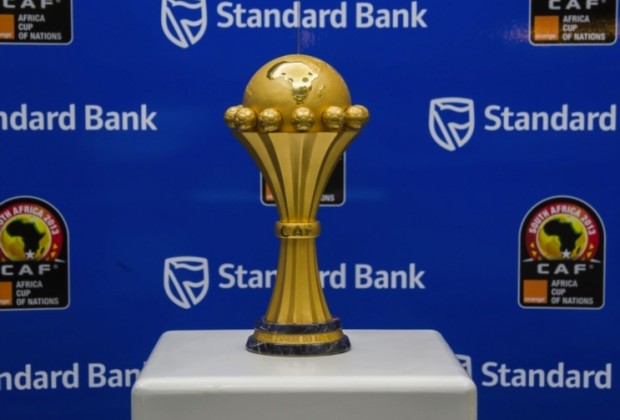
AFCON moved to June

The Confederation of African Football (CAF) has confirmed that the 2019 Africa Cup of Nations (AFCON) will be held in June and July.

The teams of the tournament will also be increased from 16 to 24 which is almost half the membership of CAF. This means more money for CAF, more money for the African Football Associations, involvement of more nations and more fans.

Ahead of this year’s tournament that was held in Gabon, there were a number of players who turned down call-ups to stay with their clubs and numbers were expected to rise in the next finals in Cameroon

The competition will continue to be held every two years in odd years to avoid collision with the World Cup.

Moving the AFCON from January ends the club versus country dilemma facing African players based at clubs in Europe and will be played when all European major leagues are on a break.

These were the most important resolutions taken during a CAF executive meeting in Rabat, Morocco, on Thursday.

Earlier this year FIFA expanded the World Cup to host 48 teams, up from 32 beginning in 2026.


Stories Continues after ad

Israel trains 900 to support Uganda’s agriculture sector

Israel will continue giving technical support to Uganda in the areas
of agriculture and agribusiness to ensure that the country acts as a food basket for the region, the out-going Israel Ambassador to Uganda, Yahel Vilan has said.
According to Vilan, Israel has sponsored 900 Ugandans for training in
his country in various agriculture practices ranging from animal and crop husbandry and irrigation to sophisticated systems of cell culture farm microbial science.
The Ambassador made the statement yesterday as paid a courtesy visit
to Vice President Edward Kiwanuka Ssekandi at his office in Kampala following his end of tour of duty as Israel top diplomat to Uganda.
Vilan urged the Ugandan government to utilise the trainees, saying
that the knowledge they have acquired can
support the country’s efforts to become a middle income country.
“Given Uganda’s fertile soils and temperate climate, the country can rely on agriculture more than any other sector,” the diplomat said.
He also appreciated the support of president Museveni and his Government, saying that made his work easy and that it saw the Israeli Prime Benjamin Netanyahu visit East Africa for the first time, starting with Uganda, a move he said has made East Africa one of Israel’s greatest allies.
On his part Vice President Ssekandi said Israel and Uganda have long standing relations since bible times when the Israelites were in Egypt
surviving on the River Nile waters and later when attempts were made to settle some of them in Uganda which could have been their second home.
He hailed the relationship between the two countries and invited more Israelites to visit Uganda, saying it is ‘an amazing country equally shared by the two hemispheres.
Ssekandi said that Ambassador Yahel was leaving the country at the
time Uganda needs strong allies and support to achieve its
middle-income status and asked the outgoing Ambassador to be Uganda’s good will promoter in Israel and wherever he will be.
HThe VP also lauded the diplomat for his positive attitude that has contributed to the revsumption of relations between Kampala and Tel-Aviv after a bleak history and hostility between the two countries following hostage-rescue mission carried out by commandos of the Israel Defense Forces (IDF) at Entebbe Airport on July 4, 1976.
At the time, an Air France plane bound for Paris with 248 passengers on board was hijacked by two members of the Popular Front for the Liberation of Palestine – External Operations.
During the rescue operation, five Israeli commandos were wounded and one, unit commander Lt. Col. Yonatan Netanyahu, a brother to Prime Minister Benjamin Netanyahu was killed. All the hijackers, three hostages, and forty-five Ugandan soldiers were killed, while thirty Soviet-made MiGs of the Uganda Air Force were destroyed.

Stories Continues after ad

DRC officials embezzle US$750m mining revenue

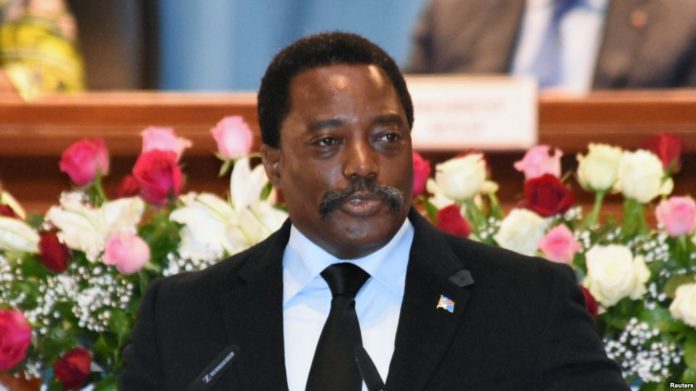
DRC-President Joseph Kabila.

In the Democratic Republic of Congo (DRC), one of Africa’s poorest countries, more than US$750-million in mining revenue disappeared before it could reach the national treasury, an investigation has found.

The money from mining companies in the DRC was diverted over a three-year period, with much of it siphoned off by politically connected insiders at opaque tax agencies, according to a report by Global Witness, an independent research group.

The findings are significant for Canadian mining companies, which have been major investors in Congo and have given millions of dollars in payments to official agencies and state enterprises in the country.

Under new federal laws, Canadian mining and energy companies must disclose all payments to all levels of governments at home and abroad. Those disclosures, most of them released this year for the first time, show that Canadian companies have paid many millions of dollars to Congolese agencies.

Toronto-based Banro Corp., for example, disclosed on May 30 that it had paid $10.8-million in taxes, fees and royalties in Congo last year, while Vancouver-based Ivanhoe Mines Ltd. disclosed that it had paid about $6.3-million in taxes and fees in the country last year. Banro operates gold mines in Congo and Ivanhoe is developing copper and zinc mines.

“Testimony and documentation gathered by Global Witness indicates that at least some of the funds were distributed among corrupt networks linked to President Joseph Kabila’s regime,” the report says.

In a statement, Pete Jones, senior campaigner at Global Witness, said: “Congo’s mining revenues should be helping to lift its people out of poverty, but instead huge sums are being siphoned away from the public purse and into unaccountable agencies headed up by people with ties to political elites. Some of the transactions we’ve looked at paint a picture of these agencies as a cash machine for Kabila’s regime.”

Congo, one of the biggest countries in Africa, is also among the poorest. It is ranked 176 out of 188 countries in the latest United Nations Human Development Report, with 77 per cent of its population surviving on less than $2 a day. More than 40 per cent of its children have stunted growth because of malnutrition. Roads, hospitals and schools are poorly funded and often in terrible condition.

Yet at the same time, Congo has vast mineral resources, attracting huge investments from foreign companies because of its low production costs and high-quality minerals. It is the biggest copper producer in Africa, and it produces 60 per cent of the world’s cobalt. Up to $10-billion worth of copper and cobalt is extracted and exported from Congo every year, yet only 6 per cent of this revenue is reaching the national budget, the Global Witness report says.

In total, foreign mining companies are paying more than $1-billion annually in taxes, royalties and other payments in Congo, but a large fraction goes missing, the report says. “Year after year, Congo is losing out on a fortune.”

Looking at data from 2013 to 2015, the report estimates that $753-million in Congo’s mining revenue did not reach the national treasury. Instead it was held back by state-owned mining companies and national tax agencies, which did not explain what they did with the money.

In addition, a further $570-million over three years was paid to small government agencies and a provincial tax agency that failed to account for the funds. This means that 30 to 40 per cent of annual mining payments in Congo are never reaching the national treasury, the report says.

One of the main reasons is an obscure law that allows Congo’s national tax agencies to hold back a portion of mining revenues for their own use. “What happens to this money is unclear,” Global Witness says in the report.

“The agencies are secretive and often headed by powerful individuals with close professional or personal ties to the Prime Minister’s office or to the Presidency. The opacity around the withheld funds makes this system highly susceptible to corruption.”

The tax agencies are also permitted to issue penalties to mining companies for tax violations and keep a proportion of the fines, which can be enormous amounts. This encourages ‘predatory behaviour’ and corruption at the agencies, the report says.

Another key reason for the disappearing revenue is the state mining company, Gécamines, headed by a close ally of Mr. Kabila. While it provides little to the national treasury, and its employees often go for months without salaries, Gécamines has handed out millions of dollars in cash in suspect transactions to unknown persons, the report says.

In 2014 and 2015, for example, it says the state company earned more than $514-million in revenue from the mining sector, including payments from foreign mining companies, yet it transferred less than $37-million to the government.

Foreign mining companies that pay multimillion-dollar amounts in Congo should use their influence to persuade the official agencies and state companies to become more transparent and publish audited annual accounts, the report says.


Stories Continues after ad

One sentenced over lawyer Mpanga – Kabushenga Silk Liquid video

City lawyer David Mpanga

One person has been sentenced to jail over a recently leaked video from Club Silk Liquid, showing footage of renowned city lawyer David Mpanga, a former advocate of city businessman Sudhir Ruparelia, meeting with Vision Group boss, Robert Kabushenga.

At the time of the Kabushenga-Mpanga meeting, The New Vision, a newspaper headed by the former had been extensively reporting on a case brought up against businessman Ruparelia by Bank of Uganda.

And as a result of the leaked video, one Charles Mugabi on Wednesday appeared before at Nakawa Magistrates Court and was charged under the computer misuse act over leaking the Club’s property to the public.

Mugabi pleaded guilty to the charge and Grade One Magistrate Christina Nantege sentenced him to three months in prison and a fine of Shs300, 000. His co-accused, Simon Kazooba denied the charge and was later released on bail.

The duo was arrested Monday and detained at Jinja Road Police Station after Club Silk Liquid management lodged a case against the two on learning that CCTV footage from their cameras had ended up in public hands.


Stories Continues after ad
DPP to earn Shs36m in the new salary structure

DPP, Mike Chibita

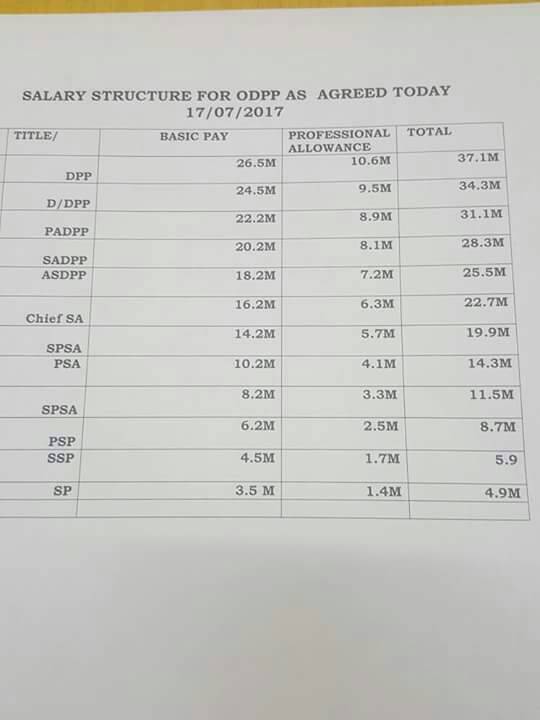
Government has released a new salary structure for the Office of the Director of Public Prosecutions (DPP), and in the new proposal, the DPP Mike Chibita Wa’Duallo will earn Shs26.5 million as basic pay and Shs10 million as monthly allowance.

The Deputy DPP Amos Ngolobe is to earn Shs24.5 million as monthly salary while Shs9.5 million has been earmarked as his monthly allowance.

The across-the-board increment in the salaries of the state prosecutors is a result of the strike by junior prosecutors who recently demanded a pay rise.

The low rank prosecutors have been earning Shs500, 000 as basic pay and this prompted them to go on strike.

However, in the new proposal, State Prosecutors will now earn Shs3.5m and Shs1.4m as monthly allowance.


Stories Continues after ad
Civil society warns MPs on constitutional amendment bill 2017

Members of Parliament of Uganda

A group of national and grassroots civil society organisations in Uganda has in a communiqué published today, implored MPs to reject  the Constitutional Amendment Bill 2017 which  seeks to amend Article 26 of the 1995 Constitution to pave way for government to the compulsorily acquire private property before compensating owners.

The group led by Africa Institute for Energy Governance (AFIEGO) says: “If effected, the proposed amendments will worsen human rights violations, land grabbing, displacements, delayed compensation, payment of unfair and inadequate compensation, poverty, land conflicts, food insecurity, destruction of protected among others.”

According to the communiqué, the group instead wants MPs to use their oversight powers to compel government to implement progressive legal reforms.

“AFIEGO and her partners are committed to mobilise communities across the entire country to oppose this Bill in order to guard against violation of citizens’ rights,” the communiqué signed by over 10 CSOs reads in part.

More so, the participants observe that since the discovery of oil in western Uganda, government’s appetite to compulsorily acquire private land without payment of fair and adequate compensation prior to acquisition has increased to uncontrollable levels.

They argue that the current efforts to amend the Constitution is mainly intended to be used by government to give herself more discretionary powers on when and how much to pay in compensation. These powers will soon be used by government to acquire land for the on-going oil developments in the country, they further added.

“We know that the government and oil companies will need land for feeder pipelines from all the oil wells scattered in different locations including sensitive biodiversity areas such as national parks, forests and others to the central processing facilities (CPFs),” they say.

Land, they further say, will also be needed for pipelines from CPFs to the refinery and export crude pipeline from Hoima to the border with Tanzania. “Land will also be needed for the finished products’ oil pipeline from Hoima to Buloba in Wakiso near Kampala. More land will also be needed by the government for waste management plants, camps, roads, power stations and lines, heating centers and many others,” they add.

They say it is  unfortunate that the government is able to fast track the amendment of Article 26 but for the last four years, the same government has failed to complete the process for the enactment of the new National Environmental law and formulation of the new Environmental Impact Assessment (EIA) and Strategic Environmental Assessment (SEA) Regulations.

They noted that without such new laws, oil development activities will continue as usual making it difficult for the citizens to demand for social, environmental and economic accountability from those in charge of the oil and other sectors that are potentially harmful to conservation.

The participants want  MPs to use their oversight powers to compel the Ministry of Water and Environment to immediately table before Parliament the new National Environmental Bill and formulate new EIA and SEA regulations in order to safe guard biodiversity and citizens against the dangers of oil.

Government on its part says compulsory acquisition of land is necessary for the fast implementation of its infrastructural projects such as construction of roads, railways and others such as hydropower dams.

“The fear that many Ugandans will be rendered landless and their property acquired compulsorily without fulfilling the Constitutional principles of prompt payment of fair and adequate compensation prior to the taking of possession or acquisition of the property, are unfounded,” Betty Amongi, the Minister of Lands, Housing and Urban Development said two days ago in a press statement.

Some of the CSOs that signed the communique include; national and grassroots civil society organisations (CSOs) including Africa Institute for Energy Governance (AFIEGO), National Association of Professional Environmentalists (NAPE), Centre for Constitutional Governance (CCG), World Voices Uganda (WVU), South Western Institute for Policy and Advocacy (SOWIPA) and Guild Presidents Forum on Oil Governance (GPFOG),

Others are: Kanungu Youth Initiative for Environment (KYIE), Oil Refinery Residents Association (ORRA), Green Orgnization – Kyambogo, Empagi Z’abunyoro, Buseruka Twimukye Women’s Organization, Kigezi Coffee Development Academy, GRAFENI BUTIMBA Hoima, Kakindo Orphans-Buliisa .

The CSOs realsed the communique today having met in Kampala yesterday.


Stories Continues after ad

Opposition launches campaign against amendments on land

Kasese Woman MP Winfred Kiiza has announced plans by the Opposition MPs to traverse the country, in a sensitization drive on the Constitutional Amendment Bill 2017.

Addressing journalists at Parliament this morning, Kiiza, who also doubles as Leader of Opposition, called on Ugandans to put their MPs on pressure to ensure the bill is kicked out of Parliament.

Recently, the Deputy Attorney General, Mwesigwa Rukutana tabled the Constitutional Amendment Bill 2017, seeking to make amendments to Article 26 of the Constitution.

If passed in its current form, the Bill will give Government powers to compulsorily take over land for establishment of public infrastructure projects, to allow works to go on, as the owner of the land battles with government in court.

Kiiza was accompanied by fellow Opposition MPs including Chief Whip Ibrahim Ssemujju Nganda, Angelline Osegge, Muwanga Kivumbi, William Nzoghu, Robert Centenary, Francis Zaake and Julius Ochieng.

“The law isn’t in good faith and is meant to dehumanize Ugandans because they are going to deprive Ugandans of their right to property,” she said.

The Kasese Woman protested Government’s justification to take over land for public development, revealing that the same Government is chocking on debts after failing to compensate people who willingly handed over their land.

The Opposition highlighted the land in Naguru and Shimoni where Government displaced a school and residents to construct affordable housing units and a first class hotel, but said both projects have never seen light of the day.

Further, she warned the Executive against the amendments on land, saying it is a ploy geared towards stripping courts of their powers.

“This is going to make harder for courts because Government intends to place money in court, for court to pass over to the owner. This is taking away the powers of courts. Courts aren’t supposed to be administrative units,” Kiiza said.

According to the Opposition, the compulsory land acquisition will make corruption ‘very normal’ because the country will be at the mercy of the Government Valuer.

Responding to questions on how the Opposition will fight to see the bill is killed, despite the few numbers in the House, the Opposition Leader answered: “It doesn’t matter how many you are, but what you are talking about. We may be few, but talking about a matter that is so dear and has entered deep to the bone marrow of Ugandans. Nobody is going to look about numbers.”

The opposition group revealed that they intend to visit all the 21 subregions in Uganda, with the sensitization gatherings kicking off in Masaka, Wakiso and Kampala.

On how the Opposition intends to solve the case of engaging in running battles with police over the ‘illegal gatherings’, Kiiza said that the Police has already been informed.

As a result, she also warned the Force against indulging in such acts, saying it would be illegal to stop MPs from carrying out their legislative duties in their constituencies.

“It should be in the intention of Police not to interfere instead of dealing with Ugandans after their land is taken. If Police is going to stop one arm of Government from doing their work, it will be unfortunate for it to be dragged into the matter,” Kiiza observed.


Stories Continues after ad

HFB get 45bn EIB facility for local SMEs

Loans have facilitated the growth of the manufacturing industry in Uganda

The Housing Finance Bank (HFB) has sourced for a Shs45 billion credit facility from the European Investment Bank (EIB) for the Ugandan small and medium enterprises (SMEs) that don’t have ready cash to invest in projects.

Philip Miiro-Kwagala, the HFB Head Business Banking, said the loan targets SMEs dealing in agro industry, fishing, food processing, manufacturing, construction, transport and tourism. Others are; private educational institutions and health care services.

Further, according to Miiro-Kwagala , SMEs implementing both large and small projects have chance to borrow money up to the tune of Euros 200,000.

He says SMEs can use the money to complete buildings such as hotels, hospitals, buy machinery or even acquire land for development.

The loans, he says can be given in Ugandan shillings or United States dollars, attracting a fixed interest rate of 14.5 percent for the entire term of the loan.

“The large or small projects to be funded are those within the sectors mentioned,” Kwagala says. However, the bank can only fund up to 50 percent of the total project cost.

He says the projects can be funded from 3-10 years, depending on their size. “Large projects are between 4-10 years while small projects are between 3-7 years,” he adds.

Specialising in mortgage financing, the HFB is owned by National Housing and Construction Company (0.82%), National Social Security Fund (50%), and the Government of Uganda (49.18%), with paid up capital of Shs 61 billion.


Stories Continues after ad