Stanbic Bank
Stanbic Bank
16.6 C
Kampala
Stanbic Bank
Stanbic Bank
Home Blog Page 1814

Parliament ‘saves’ rich landlords from property tax

The then COSASE Chairman Abdu Katuntu.

Members of Parliament on the Committee on Commissions, Statutory Authorities and State Enterprises (COSASE) have resisted Kampala Capital City Authority’s call to amend the law exempting landlords residing in Kampala’s upscale areas from paying property tax.

The MPs led by the chairperson, Abdu Katuntu (FDC, Bugweri County) were responding to a proposal by KCCA officials led by the Executive Director, Jennifer Musisi, asking Parliament to amend the KCCA Act (2006) and have property owners in the high-end residential areas pay property tax.

According to Musisi, people staying in Kampala’s upscale neighbourhoods do not make any contribution yet they demand a lot from KCCA.

“We want the law on owner occupied exemption to be amended because we feel that all citizens should contribute to the improvement of the city,” Ms. Musisi said.

She added:  “Citizens staying in affluent areas are exempted yet they subject the Authority to heavy demands about maintaining their roads, street lights and are generating a lot of garbage; we want everyone to make a contribution.”

However, in response, Katuntu said that the law applies to all landlords occupying property both in the upscale and low-scale neighbourhoods.

“Regardless of whether you have property in Kololo or Bwaise, as long as you stay in it you are not required to pay property tax so it does not matter where you stay,” Katuntu said.

Katuntu further said that most of the houses in the upscale neighbourhoods like Kololo and Nakasero are being rented out or occupied by businesses and therefore are subject to property tax.

Katuntu also said that tax is supposed to be imposed in a regulated manner and should not be a punishment to citizens.

Katuntu could not countenance Ms Musisi’s argument that it is hard for KCCA to establish whether the property in the posh residential areas is being occupied by the owners or not, saying that it was her job to establish that.

“The job you do is supposed to be challenging and that is why you are highly paid; if it was easy we would not have to go through the rigorous exercise of recruiting you as the best people,” Katuntu said.


Stories Continues after ad

Diamond Platinumz to grace Shs1.3bn KCCA Festival

GETTING READY; KCCA Executive Director Jennifer Musisi Semakula

Celebrated Tanzanian crooner Naseeb Abdul Juma aka Diamond Platinumz will be the leading entertainer at this year’s Kampala Capital City Authority (KCCA) Festival slated for October 6-8, the Executive Director Jennifer Musisi Semakula has disclosed.

Speaking at the launch of the 6th Edition of the KCCA Festival at City Hall, Ms. Musisi said Diamond Platinumz, who is also the husband of Ugandan socialite Zari Hassan, will grace the charity event at Kololo Airstrip on October 6, aimed at raising funds for the renovation and refurbishment of KCCA and also to cater for its health facilities.

Ms. Musisi noted that the festival has captured the interest of city residents, with the numbers of attendees rising from 800,000 to over a million last year.

Local artistes including Kyadondo East MP Robert Kyagulanyi aka Bobi Wine, Bebe Cool, Jose Chameleone, David Lutalo, Eddie Kenzo, Swahaba Kasumba, Irene Namubiru, Julian Kanyonozi and Stecia Mayanja will perform at the different stages that will be sat up in the city.

John Ddumba, the chairperson of the festival organizing committee, lauded service providers and advertisers including among others the East African Breweries Limited (EABL), the manufacturers of Bell Lager, Century Bottling Company, manufacturers of Coca Cola; Movit, City Tyres, Airtel and Kampala Casino for their contribution towards the success of the event.

City officials said the Shs1.3 billion event is not expected to carry on past midnight, in contravention of the city regulations.


Stories Continues after ad

‘NRM group’ steps up land and age-removal drive

Lands minister Betty Amongi addresses the press at the Media Centre

In what may be described as the ‘first baby steps’ to vouch for the removal of the age limit cap by supporters of the National Resistance Movement (NRM), a group said to comprise ‘diverse members of the Movement’ has released a raft of declarations to support their inclinations.

According to the unsigned document seen by The EagleOnline and released July 18, among the issues of focus for the group is the debate on ‘land rights under Article 26 of the Uganda Constitution and the age of persons qualified to contest for President of Uganda as provided in Article 102 (b) of the Uganda Constitution’.

The group that met at Kati Kati restaurant in Kampala also charged that the opposition has resorted to ‘arm-twisting’ tactics to subvert would-be debate on matters of national importance.

‘Some some members of the opposition are addressing the debate on the issues of national importance mentioned above by use of unlawful acts that include blackmail, intimidation and physical harassment of the elected leaders especially the Members of Parliament,’ the Kati Kati group says.

Further, according to the group, it is the constitutional duty of every member of the NRM to ensure that party’s interests are defended.

‘It is our duty as members of NRM in our Constitution to fight propaganda detrimental to the interests of NRM (Article 9 (2)(d) ), explain the achievements of NRM to the population (Article 9(2)(c)) and exercise the right to submit proposals or statements to the National Conference or National Executive Council (NEC) of the NRM (Article 9(1)(f)),’ they impute.

The group also calls upon the party leadership to mobilise members and initiate ‘consultations’ on a number of issues including ‘whether or not any Ugandan who is 18 years and above should be disqualified from being President of the Republic of Uganda; whether or not term limits should be simultaneously restored and, whether or not a second Chamber of Parliament should be created’.

Meanwhile, the removal of the age limit cap has generated heightened public debate, with sections of Ugandans taking to social media to argue for or against the idea, with those opposed to the removal arguing that the drive is intended to ensure the NRM Chairman, President Yoweri Museveni, rules for life.

By press time it was not possible to establish whether the party had sanctioned the Kati Kati meeting. However, sources told the EagleOnline that the meeting was coordinated by NRM honcho David Mafabi, a Senior Presidential Advisor on Political Affairs, the Kassanda South MP Simeo Nsubuga and his Nyabushozi counterpart Brig (retired) Fred Mwesigye.


Below is the full ‘Kati Kati Resolution’


RESOLUTIONS OF THE SYMPOSIUM OF DIVERSE MEMBERS OF THE MOVEMENT HELD AT KATI KATI ON TUESDAY 18TH JULY 2017


“HONGERA, MZEE NA CHAMA!”

WHEREAS:

We, diverse members of the National Resistance Movement have been gathered today 18th July 2017 in Symposium, at Kati-Kati;


WHEREAS:

We have had deep and cordial discussion on issues of Constitutional Amendment in Uganda;


BEARING IN MIND:

That the National Resistance Movement (NRM) is a national liberation movement whose historical mission is to transform Ugandan from a peasant to a modern society;


RECALLING:

That Founder Leader and President, Yoweri Kaguta Museveni has successfully led the Movement from fundamental victory to victory for more than 5 decades;


MINDFUL OF THE FACT:

That issues of national importance such as the land rights under Article 26 of the Uganda Constitution and the age of persons qualified to contest for President of Uganda as provided in Article 102 (b) of the Uganda constitution have caused a lot of debate in the public;


NOTING WITH REGRET:

That some members of the opposition are addressing the debate on the issues of national importance mentioned above by use of unlawful acts that include blackmail, intimidation and physical harassment of the elected leaders especially the Members of Parliament;


NOTING FURTHER:

a). That some members of the Opposition are spreading propaganda detrimental to our party (NRM) and the country and peddling outright lies;


b). That the people of Uganda on 28th July 2005 voted in a referendum to restore multi-party politics, and that in this dispensation political parties and not individuals compete for political power during elections, and that our duty as NRM is to maintain the political power mandate given to us by the people of Uganda;


NOW THEREFORE, HEREBY DECALARE AND RESOLVE AS FOLLOWS:

  1. That it is our duty as members of NRM in our Constitution to fight propaganda detrimental to the interests of NRM (Article 9 (2)(d) ), explain the achievements of NRM to the population (Article 9(2)(c)) and exercise the right to submit proposals or statements to the National Conference or National Executive Council (NEC) of the NRM (Article 9(1)(f));


  1. That the leadership of the NRM urgently initiates wide consultations of its membership on land right matters, as well as urge and mobilize Ugandans to participate and cooperate with the Commission of Inquiry into land matters set up by the President of the Republic of Uganda in 2016, in order to contribute to a comprehensive national consensus Ugandans on land matters;


  1. That the leadership of the NRM urgently initiates wide consultation of its membership to determine:

a). Whether or not any Ugandan who is 18 years and above, should be disqualified from being President of the Republic of Uganda;


b). Whether or not term limits should be simultaneously restored;


c). Whether or not a second Chamber of Parliament should be created;


d). Etc;


  1. That the NRM widely explains the achievements of the NRM Government and reminds the population of the achievements with a pledge to further improve service delivery;


  1. That the NRM reminds its members that the main objective of a political party is to compete for and acquire political power, and urge our members to work for the continued service of Ugandans as well as prepare and front our best candidates to contest for political office, in order to win their electoral mandate and maintain the NRM party in political power in 2021 and the subsequent elections;


  1. That these resolution be urgently submitted to the National Chairperson of the NRM, the Secretary General of the NRM – for onward transmission to the National Executive Council (NEC) and Central Executive Committee (CEC) of the NRM, etc – with the aim to generate consensus,  correctly advise members of the NRM Parliamentary Caucus and in so doing provide and exercise political leadership in the country, reference Articles 11 (3)(b),(e), and 13 (4)(a) – of the NRM Constitution.


Stories Continues after ad

Serena Hotel shines at the Kampala Restaurant Week

WINNERS: Different categories of winners of the 3rd edition of Kampala Restaurant Week pose for a photo with their awards (1)

Kampala Restaurant Week came to an end after a 10-day exciting experience of food discovery and restaurant hoping for many food lovers in and around Kampala.

Organised by Pearl Guide Uganda together with Uganda Breweries Limited’s premium beer, Tusker Lite, Kampala Restaurant Week saw over 40 restaurants including those in Jinja and Mbarara participate in this year’s edition.

The fanfare from July 5 -15, was crowned with an awards ceremony at the Kampala Sheraton Hotel, where restaurants were recognized for their exceptional performance in the categories of Outstanding Service Award, Innovation Award (also known as the Dish of the Week Award), Top Casual Dining and Top Signature Dining Restaurants.

The night’s big winners were The Explorer, Kampala Serena Hotel which picked up two awards for the Outstanding Service Award and the Top Signature Dining Restaurant award, respectively.

Not to be outdone, Riders Lounge also scooped the award for the Top Casual Dining Restaurant, and among other winners was Le Château which won the Innovation Award.

“Today we take home an unforgettable experience from this year’s Kampala Restaurant Week. The restaurants that have been voted as the best in the various categories, we salute you for your meals and services and we hope you continue giving us the best,” Grace Namutebi, UBL’s Brand Manager Premium Beers, said at the awards ceremony.

The restaurants were judged by members of the public and judges from the Chaine de Rotisseurs, a body of Chefs worldwide. The body which comprises of over 25,000 members worldwide also has 60 members from Uganda.


Stories Continues after ad
Sheebah Karungi, Lydia Jazmine on their Coke Studio Africa feature

IN COKE STUDIO: Ugandan artiste Sheebah Karungi

Ugandan artistes Sheebah Karungi and Lydia Jazmine are in Kenya to participate in the recording of Coke Studio Africa – 2017.

Sheebah, Lydia Jazmine and other artistes were unveiled at a Coke Studio Africa Nairobi press conference held at the Stanley Hotel, this week.

And while Sheebah is making her debut on the show this year, Lydia is making her big return on the show – after being on the show’s Big Break segment last year performing alongside Bahati (Kenya) and Kiss Daniel (Nigeria).

This year, Lydia has been paired with Liloca from Mozambique – to be produced by top South African producer – Sketchy Bongo.

Sheebah has been paired with Asgegnew Ashko from Ethiopia, and the two will be collaborating with Tanzanian rapper Bill Nass in music collaborations that will be produced by Gemini Major – acclaimed music producer.

Speaking at the presser, Sheebah said: “My dream is to be the biggest super star I can ever be. Being on Coke Studio Africa this year is one of the things that make me feel like am on my way now – I am so honoured to be here and that Coke Studio has recognized me,” adding, “Africa is recognizing me and I am happy to be working with talented producers and musicians. I am going to use this opportunity to do everything I can to go the next level. Looking forward to knowing everybody and Africa knowing me.”

On the role that Coke Studio played on the trajectory of her career, Lydia said: “I am blessed to be back on Coke Studio 2017, I lack the words to express the experience because It is more than just amazing! It’s the biggest African stage we have and every artist would love to be on the stage. As Lydia Jazmine, I was one of the big break artists last year. Since then my life has never been the same – my career back home boomed! Everyone is now looking at me in a different way and my music is up there!”

Sheebah and Lydia are among Uganda artistes on this year’s show. The others include Bebe Cool and Eddy Kenzo. All the music they create on the show will be performed and recorded live alongside Coke Studio’s highly talented house band.

Coke Studio Africa also gives a chance to upcoming artistes to feature on the show as a Big Break artist. The new season is set to premiere in different regions from September this year and will broadcast in more than 30 countries across Africa.


Stories Continues after ad
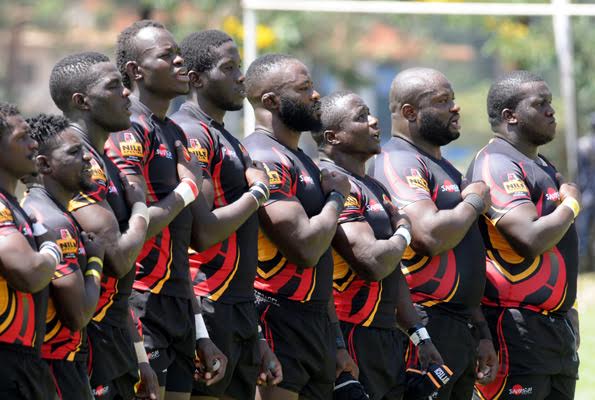
Rugby Cranes improve in latest rankings after Gold Cup victory

CLIMBED IN WORLD RANKINGS: The Rugby Cranes

Uganda was 38th on July 4 but have moved to 36th with a total of now 50.30 points, according to the latest rankings that were released by World Rugby.

The Rugby cranes climb two places following an emphatic 78-17 victory over Tunisia but stay third behind fellow unbeaten sides Namibia who are at the top and second-placed Kenya in the Rugby Africa Gold Cup standings.

Neighbours Kenya remained unmoved in the rankings, holding onto the 26th position alongside Africa’s top ranked team South Africa at 5th.

Uganda was the biggest climber, improving by two places from the 38th to the 36th slot, but remaining 5th in Africa behind South Africa, Namibia (21), Kenya (26) and Zimbabwe (35).

The Africa Gold Cup continues this weekend as Uganda host Namibia in Kampala and Kenya travel to Zimbabwe.

The tournament takes place until August 5, with Namibia, Zimbabwe, Tunisia, Uganda, Kenya and Senegal participating in home and away matches.


The top ten in the world:


(1) New Zealand

(2) England

(3) Ireland

(4) Australia

(5) South Africa

(6) Scotland

(7) Wales

(8) France

(9) Argentina

(10) Fiji

Stories Continues after ad
Jumia Travel launches new feature to scale Facebook Messenger

Facebook Messenger is now fully integrated in Jumia Travel’s system as a powerful channel for Customer Service. The integration of customer service for Messenger in Jumia Travel’s system marks a new dawn for its customer service experience, as it offers a live chat experience on Facebook Messenger. The tool can also be used to instantly request for a hotel room on the platform, where the company’s professional Travel Advisors will offer counsel on the best accommodation options as well as make the booking.

As the first African company to integrate Facebook Messenger in its own system, Estelle Verdier, Jumia Travel’s COO and Co-Founder says that this is a “show of our great commitment to always bring the latest technology and high quality services to our customer in Africa”.

On its recently published hospitality report for Africa, Jumia Travel states that 51% of searches done on the website are via smartphones, with 68% of the bookings. This compares to 49% and 32% of searches and bookings respectively done through the desktop.

“In Africa, e-mail penetration has remained low especially because it doesn’t provide a fluent conversational experience and is not fitted for mobile. With Customer Service for Messenger integration, we bring to our customers an instant and convenient way to chat with us on mobile from Facebook. We trust that Facebook Messenger will become a major channel in the coming years, and this new feature allows us to scale the communication with our customers on Messenger,” says Stanislas de Dinechin, Jumia Travel’s Global Head of Customer Service.  

“Facebook Messenger is a major communication channel for most Ugandans and as such, our customers shall receive faster and efficient feedback on their queries, for better service delivery,” says Jumia Travel Uganda’s Country Manager Timothy Mugume.

The tool will also be used to handle customer queries and requests such as airport pickup, and booking modification among others. With a high ‘mobile first’ population in Africa, Facebook Messenger provides a great opportunity to reach people in addition to other social media platforms, as compared to the conventional browser.

Stories Continues after ad

UNBS warns traders on evading standards tests

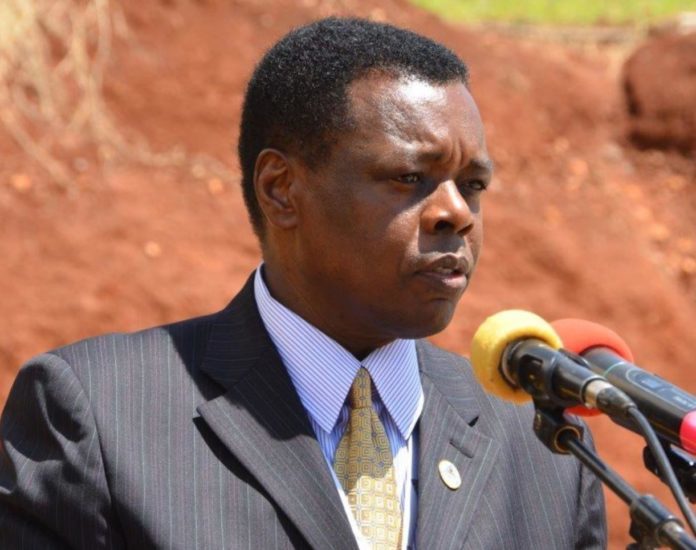
UNBS boss Dr. Ben Manyindo

Local traders and other people who import goods into Uganda in disregard of national set standards will face the strong arm of the Uganda National Bureau of Standard (UNBS), its Executive Director Ben Manyindo has warned.

UNBS is the national standards watchdog and its boss Dr. Manyindo has said some individuals are evading the Pre Export Verification of Conformity (PVoC) Standards Program, which requires that all goods, whether for sale, personal use or donations must conform to the Ugandan standards before being shipped to the country.

“Failure to undertake PVOC attracts a 15% CIF penalty in addition to undertaking payment for laboratory fees and inspection,” Dr Manyindo says, adding that any products found to be substandard will have to be re-exported to the country of origin or destroyed at the cost of the importer.

Cost, Insurance and Freight (CIF) is a trade term requiring the seller to arrange for the carriage of goods by sea to a port of destination, and provide the buyer with the documents necessary to obtain the goods from the carrier.

According to Dr Manyindo, the inspection covers all categories of goods as provided for in the UNBS Import Inspection and Clearance Regulations 2015.

Further, Dr. Manyindo says the purpose of the program is to protect Ugandans from consuming and or using substandard goods that are dangerous to their health, safety and also to protect the environment.

In addition, Dr. Manyindo says, the program enables importers to enjoy faster clearance of imports since goods will not be held at entry points pending inspection, testing and issuance of clearance certificates by UNBS. “It enables smooth flow of trade which is critical to all importers and traders,” he added.

The Government of Uganda contracted SGS, Intertek and Bureau Veritus, internationally recognized inspection agencies, to carry out PVoC for general goods on behalf of UNBS.


Stories Continues after ad

Ugandans now have capacity to buy new clothes – minister

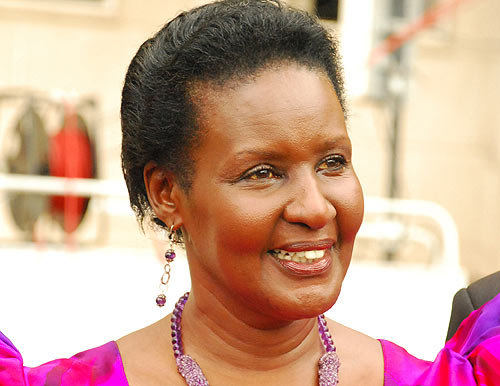
ASSURED UK OF CONTINUED TRADE: The Minister of Trade and Cooperatives,

Uganda’s Minister of Trade, Industry and Cooperatives, Amelia Kyambadde has said Ugandans and East Africans at large can now afford to buy new clothing, compared to the past decades when they preferred secondhand clothes due to poverty.

“East Africans want a new life. People are able to afford to buy new things,” Kyambadde said, adding that “the demand is now for new clothing.”


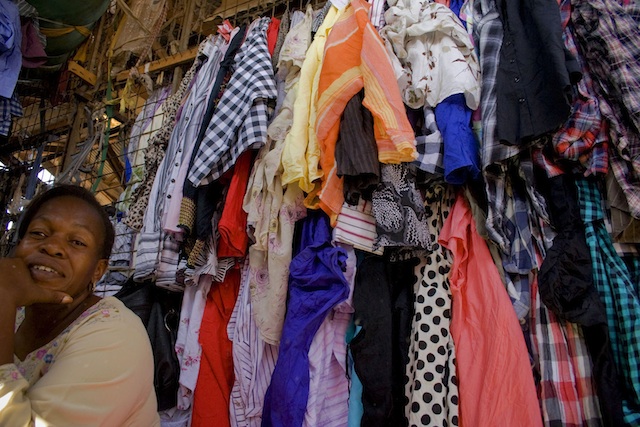
One of the many clothing vendors sits amongst her merchandise of colorful shirts.

The minister’s statement came days ago as senior officials from Rwanda, Tanzania and Uganda argued in Washington that their collective phase-out of used clothing imports should not result in any loss of benefits from a US preferential trade programme – the African Growth and Opportunity Act (Agoa).

Minister Kyambadde said the development of local apparel manufacturing would create jobs along a value chain in the form of cotton growing, ginning, weaving, garment manufacturing and other forms of retail business.

Uganda, Tanzania and Rwanda are opposing an effort by a US business association to restrict their eligibility for Agoa. The Secondary Materials and Recycled Textiles Association (Smart) filed a petition with US trade authorities in March urging that the three countries, along with fellow EAC member Kenya, be deemed ineligible for Agoa’s allowance of duty-free textile and apparel exports to the US market.

Lawrence Bogard, an attorney representing Smart, warned at the recent US government inquiry that the association’s member companies would suffer major losses in jobs and revenues if the EAC bans the importation of used-clothing.

Kenya would have far more to lose from suspension of its duty-free textile export privileges under Agoa than would any of the other EAC countries. The country sold USD 394 million worth of textiles and clothing on the US market last year, compared to the total USD43 million sum of Agoa trade for Rwanda, Tanzania and Uganda.

The opposing parties presented their comments to a panel of representatives of six US government agencies: the departments of Commerce, Labour, Treasury and State, as well as the US Agency for International Development and the Office of the US Trade Representative.

The US president Donald Trump has vowed to oppose any trade initiative that he deems injurious to American interests. And Smart seeks to depict the EAC ban on used-clothing imports as a threat to thousands of US jobs.

Tanzania’s and Uganda have doubled levies on used-clothing imports — from $0.20 to $0.40 per kilogramme, while Rwanda has increased levies to USD2.5 from USD0.20.  These increases, the US secondhand clothing exporters say, go against the rules of the World Trade Organisation.

EAC countries’ countries dispute Smart’s contention that the used-clothing action violates two of Agoa’s eligibility criteria.

The 17-year-old programme requires participant countries to have achieved “elimination of barriers to US trade” or be making progress in that direction. Agoa also stipulates that benefit-recipient countries should be moving toward a “market-based economy.”

The EAC countries decided to adopt the used clothing import phase-out as a means of encouraging development of their own textile manufacturing sectors, said Uganda Trade Minister Amelia Kyambadde, who spoke in her capacity as chair of the EAC’s Council of Ministers.

“Industrialisation is a strategic pillar of EAC integration,” Ms Kyambadde said, adding that the heads of state decided that textiles and footwear manufacturing is a priority as growth of those sectors would create many more jobs in East Africa than will be lost through the shutdown of local businesses involved in the used-clothing trade.


Stories Continues after ad

Crane Bank saga: BoU should be held solely responsible

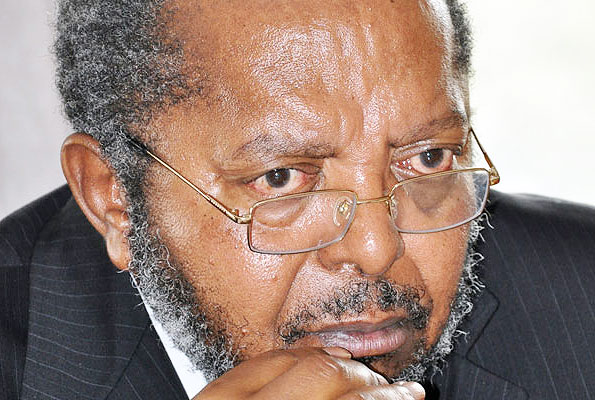
BoU Governor Prof Emmanuel Tumusiime Mutebile.

The recent imbroglio that has put the Bank of Uganda, Crane Bank and businessman Sudhir Ruparelia in the limelight is not only interesting, but should provide a learning for the government on how to handle the crucial affairs of the economy.

The Bank of Uganda under the Governor Prof. Emmanuel Mutebile and the Executive Director Bank Supervision Justin Bagyenda are responsible for the overall supervision of all the commercial banks in the country, and should indeed be held accountable for any mess, perceived or real, that takes place in the banking sector, including the current saga involving Crane Bank.

By the time of its closure and subsequent sale, Crane bank was the 3rd largest commercial Bank in Uganda, running 44 branches and employing over 700 people.

Also, it is worth noting that the Crane Bank had for the bigger part of the past 10 years, been named as the best-performing commercial bank in the country. Obviously, if our country is to claim its rightful place in the community of nations, then such accolades bestowed on Crane Bank could not have been the result of a figment of fertile imagination!

By law, the BoU is supposed to carry out spontaneous audits of all commercial bank transactions every six months, an exercise aimed at minimizing possible fraud including ‘insider lending’. This therefore means if there was any lapse on supervision, the BoU was solely responsible for the commission or omission.

Needless to say therefore, the Crane Bank was a good performer that merited all it got including its existence as one of the leading financial institutions, and it sounds extremely frivolous for those who supervise the economy to turn around, and in just a matter of months, throw all the dirt in the direction of the Crane Bank and its shareholders including the majority shareholder, Sudhir Ruparelia. Inevitably, the nature of throwing around the buck, and the reasons advanced for the boarding off of Crane Bank become suspicious!

At individual level, Mr Ruparelia has invested billions of dollars in the Ugandan economy since the early 1990s. Worth noting is that his investments at the time came when almost no one wanted to inject his/her money in an economy that had nothing to write home about.

That said, it is time those responsible for supervising the economy begin smelling the coffee, just so the country avoids finding itself in an almost similar predicament like the one currently spoiling the broth in the banking sector.

Stories Continues after ad