Stanbic Bank
Stanbic Bank
18.9 C
Kampala
Stanbic Bank
Stanbic Bank
Home Blog Page 1824

Jinja agricultural show attracts 400 exhibitors

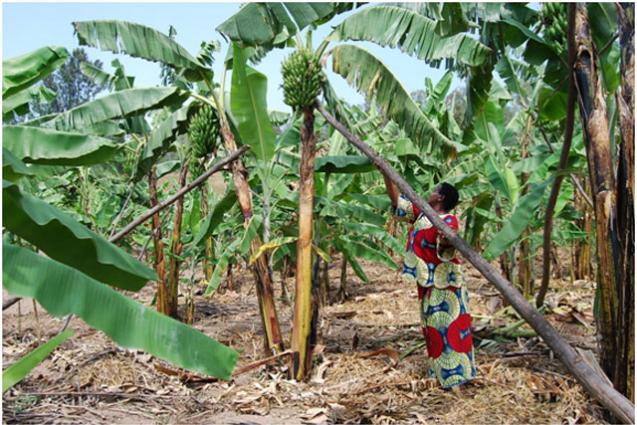
AGRICULTURE: A woman tends to her banana plantation

The 25th Source of the Nile National Agricultural show to be held at Jinja Show Ground is expected to attract 400 companies.

According to Captain Esau Tisasira, the Vice President of the Uganda National Farmers Federation (UNFF), 280 of them have already confirmed participation.

UNFF is an umbrella of farmers’ organizations representing 3.2 million farmers in the country and is the organiser of the show.

The show, now in its 24th year is expected to be officially opened by President Yoweri Museveni, and will run from July 17-23, 2017.

Addressing the media at the Uganda Media Centre in Kampala today, Capt. Tisasira said this year, unlike the past years, the show will be strictly for agricultural exhibitors such as farmers, agro-dealers, agricultural service providers.

“In the past we included trade but we have realised trade does not serve our objective of helping farmers,” Capt. Tisasira said, adding that exhibitors will come from the EAC countries like  Kenya, Rwanda and Tanzania as well as Egypt, that is expected to showcase irrigation technologies.

Capt. Tisasira said that one of their objectives is to move the Ugandan farmers from peasantry status to commercial. “We want every Ugandan to practice agriculture as a business,” he said.

He added that key government ministries, agencies and NGOs will also grace the show, giving farmers information and services.

At the same occasion UNFF’s Chief Executive Officer, Augustine Mwendya, said that the show will help farmers and exhibitors share information on market access, financing, products, diseases and pests, government policies and networking during the week-long event.
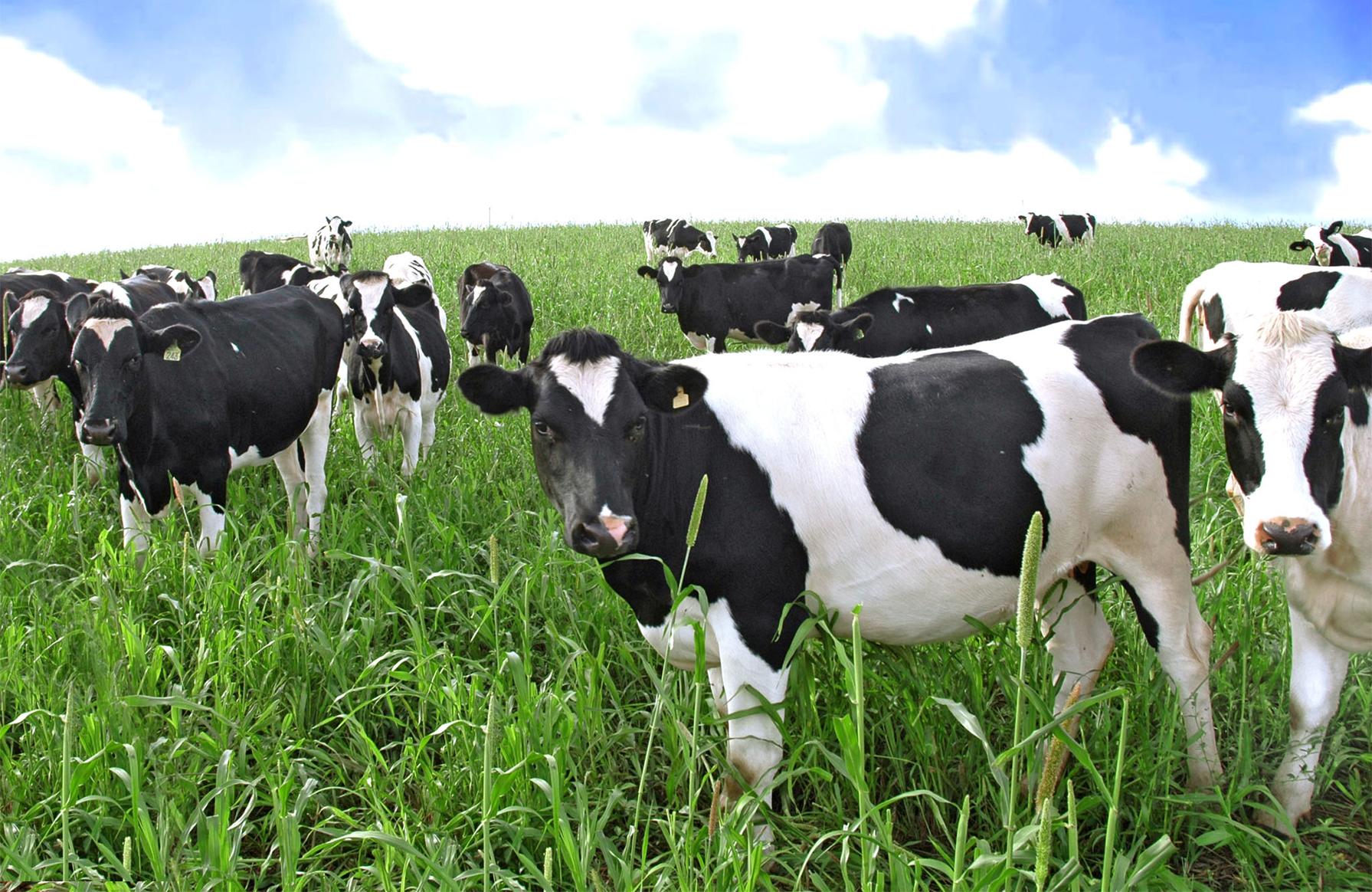
Ugandan farmers at the show will be trained on growing pasture for cattle

Mwendya said there will also be training in poultry, piggery, dairy farming, pasture growing, coffee and banana management.

Status

Agriculture is a core sector of Uganda’s economy. About 60 percent of Uganda’s population is engaged in agriculture, forestry and fishing. It presents immense opportunities for growth in other sectors like manufacturing especially agro-processing.

It is for these reasons that the sector has been given priority in the national development plan. The Agricultural sector is structured along the following lines: traditional cash crops-include coffee, cotton, tea, cocoa, tobacco,sugarcane

Non-traditional Cash Crops- maize, rice, beans, soya beans, palms, and horticultural produce.

The Livestock Census (UBOS 2008) indicated that the national cattle herd is estimated at 11.4 million,12.5 million goats, 3.4 million sheep, 3.2 million pigs and 37.4 million poultry birds. The Census also showed that livestock numbers had increased across all animal types: cattle, sheep, goats, poultry and others. But livestock production levels could only meet half of the domestic and regional demand.

The fishing subsector accounted for 3.1 % of GDP at current prices in the 2011/12 financial year. 20% of Uganda’s surface area is covered by water. The country has enormous potential for fresh water fisheries and aquaculture production. Uganda’s fisheries resources are diverse in aquatic ecosystems and in fish species bio-diversity.

The agricultural sector is fragmented and dominated by small farmers most of whom combine subsistence farming with cash crop and livestock farming. Most farmers own land individually except in parts of Northern Uganda where pastoralists land is owned communally.

Farming is gradually becoming mechanised although the bulk of cultivation is still done by hand or cattle driven ox ploughs. Commercial scale farming of cash crops is found in parts of the Central, South and South Western parts of Uganda. There are commercial plantations of tea, palms, rice, and sugarcane.

Coffee and banana plantations tend to be small although in some parts of the south west, there are some commercial scale banana plantations that supply produce to Kampala and other urban centres.




Stories Continues after ad

Is UNATU funded to promote homosexuality in Ugandan schools?

The logo for Education International


The Uganda National Teachers Union (UNATU) is a member of Education International (EI), a global union federation of teachers’ unions from over 159 countries. In fact, the Secretary General of UNATU James Tweheyo sits on the board of Education International. It has now been uncovered that EI is campaigning for its members including UNATU to recognize homosexual or lesbian teachers who are teaching in schools. EI is pushing for Lesbian, Gay, Bisexual and Transsexual (LGBT) teachers to be promoted and embraced by all members signatory to the organization and that means to be promoted in Uganda. It is disheartening that the very institution that should be championing promotion of moral values in schools is instead used to promote gay rights by a foreign firm.

As you navigate the Education International website, you cannot help but notice statements like schools should provide teaching materials that encourage the respect of human rights of all and that deal with the LGBT rights.

Education union’s promotion of LGBT has been emphasized and promoted during several meetings and conferences. One of the meeting was held in Sweden’s capital Stockhom in 2003 where the Head of Education International, Secretary General Fred Van Leeuwen, who is himself a homosexual, presented a paper entitled “Pushing the Lesbian, Gay and Bisexual Issues”.

During the presentation, Mr. Van Leeuwen, made clear EI’s strategic efforts in empowering teachers to speak out their sexual orientation: “I believe teachers should be open about being gay or lesbian. Today our students are led to believe that they are being taught only by heterosexuals – or worse, by non-sexuals. Many of us would rather pretend neutrality than to reveal what is perhaps the most rudimentary element of our personalities. Yet, we want to help students cope with discovering their own sexual orientation. The LGBT education activist said.

As he concluded this remarks to the delegates, the Secretary General made recommendations that he wanted members to implement once they return to their home countries. “I see three important tasks for national education unions in particular;” he said “Number one is of course to protect their gay and lesbian members….If we believe that teachers have the right to be open about being gay or lesbian we must create the environment in which they can be themselves.”

Part of the funding that Education International in partnership with Public Service International gives to its members is to ensure that gay and lesbian teachers are given the opportunity to freely express themselves not only before other staff members but also before children. This is captured in Van Leeuwen’s concluding remarks at the Stockholm conference.

“Education unions must promote and help develop education programs aimed at fighting intolerance and prejudice….,We do not want gays and lesbians to be tolerated; we want them to be respected and to be recognized as equals. Nothing more, nothing less.”

As a member organization, UNATU has to play by the rules that have been set by the world body. Therefore, secretly, UNATU seeks to identify if there are any members of the union who are gay. If they are any, they follow the recommendation of the EL world congress. Secretly, they support gay men teaching our boys and girls, secretly they support men who dress as women, teaching our children. This is not acceptable in Uganda and enough is enough.

Against this new revelation, there are many questions than answers. How can we trust an organization that is funded to promote gay and lesbian teachers with our children and Ugandan education decisions? What happens to our children when they are at school? Is UNATU encouraging homosexuality in our schools to justify the funds they receive from Education International. Why should Uganda and its Government, allow an organization lead by a gay man in Europe to have any say over what we teach our children and the moral values of Ugandans.

Recently, UNATU Secretary General James Tweheyo accused people of ‘teaching our children things that might be against our moral values’ What he was talking about, I have no idea but what is more immoral than being funded to let gay and lesbian teachers promote their immoral values among our Ugandan children? And been affiliated to an organization that promotes this.

There is no doubt that these LGBT teachers could easily persuade our children to join their clubs. What happens when an LGBT teacher gets attracted any of the students or pupils? What explanation will you give to a parent who finds out that their children are gay because of a teacher at their school?

Mr. Tweheyo and Mr Van Leeuwen, in Uganda, we have values that we respect as a society, we as a people have norms that we respect. We shall not by any chance accept the promotion of homosexuality and lesbians in our schools and we do not think an organization based in Brussels should have influence in Uganda about what happens in our schools. We do not think that the head of UNATU should be involved with EI, sit on its board, or promote its homosexual agenda. That is not what we want in Uganda.

Before UNATU ties itself up any further with Education International, as Ugandans we should ask our Government to stop it and stop Education International being allowed to operate in our country. If parents and teachers knew what Education International wanted to be taught in Ugandan schools and what UNATU as a member is pushing, they would be horrified and all those that work in education should stand up against this vice that is slowly eating away our moral fabric by recruiting our children into these acts in schools.


The writer, who sought anonymity for fear of reprisal, is a teacher


Stories Continues after ad

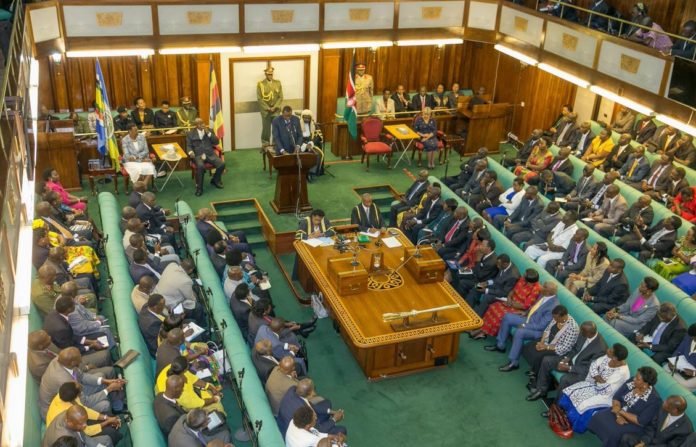
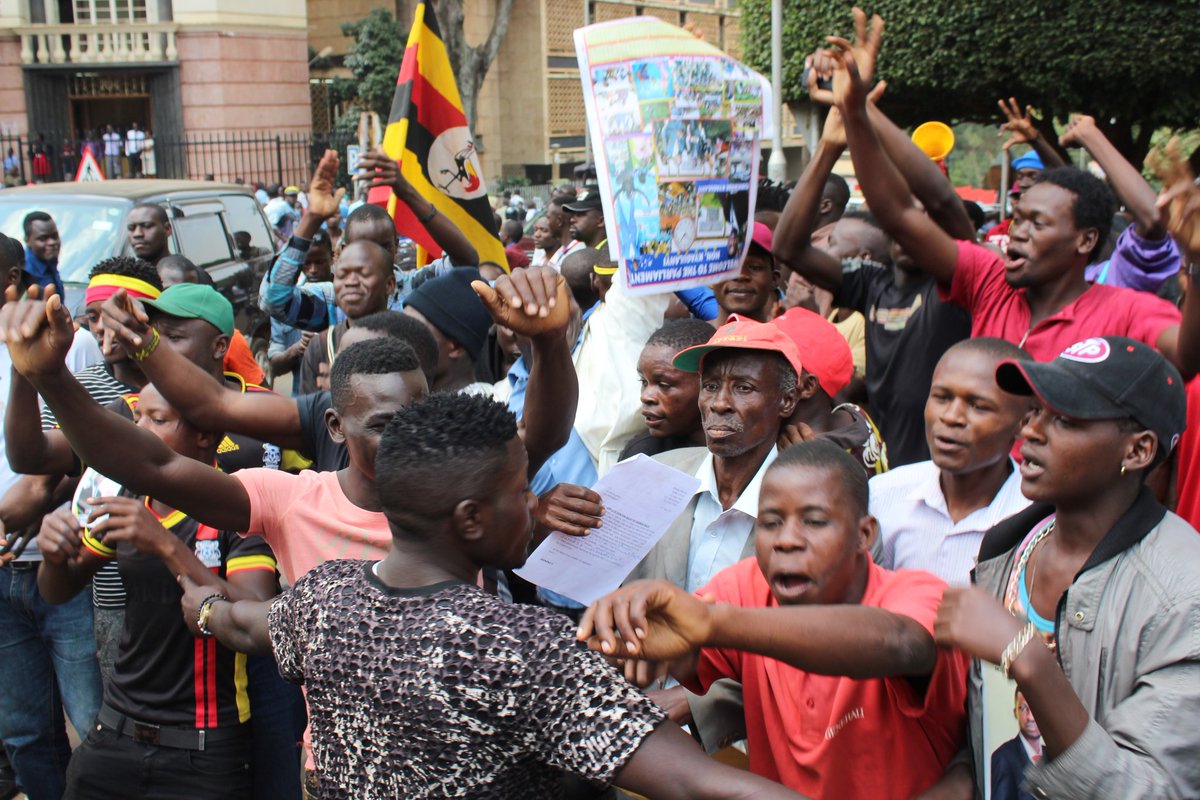
Parliament new chambers construction kicks off

Movements around Parliament have been curtailed, following the kickoff of construction of new chambers.

Staff and guests using the gate at North wing were this morning treated to a new site after all cars were barred from parking at the parking yard, to pave way for the works.

At a Shs180 billion contract price, Roko Construction Limited is manning the works that will see the crowded current chambers expanded to accommodate the pregnant Parliament.

However, the procurement of the new chambers has been bogged by numerous petitions to Inspector General of Government, as well Public Procurement and Disposal of Assets Authority (PPDA).

The other bidders that competed with Roko include; CRJE (East Africa) Ltd, China Civil Engineering Construction Company, China Complete Plant Import and Export, Seyani Brothers and Company.

But there has been bickering amongst these firms, protesting the manner in which the procurement process has been conducted.

The old chambers were built by the British colonial Government and it was meant to cater for only 80MPs, but the numbers have since shot to 427 Members Parliaments.

In fact, the matter of space has been top of priority for Parliament, with many of its own members decrying the shortage of space.

Last week, Budadiri East MP blamed the shortage of space on President Museveni, whom he accused of wrecking more havoc on the already crowded chambers, by what he claims appointing a beehive of Ministers, to crowd the front bench.

“The people who designed this House knew that the front bench shouldn’t over flow. The President must also be advised that the front bench shouldn’t over floor. The reason we are having everybody everywhere, it is because of those problems, even to the extent of getting a Uganda Peoples’ Congress (UPC) (Betty Amongi-Minister of Lands) to come and sit here.”


Stories Continues after ad

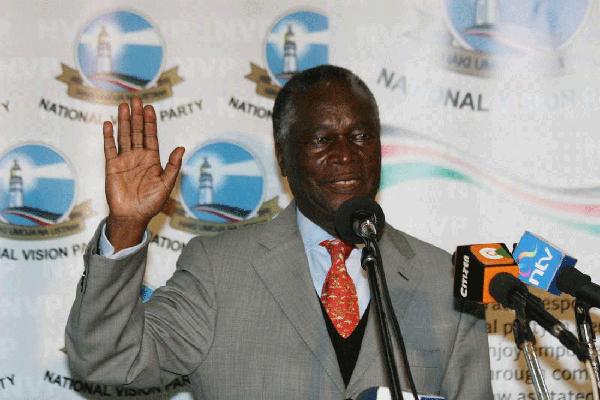
Powerful Ex-Kenyan Minister Nicholas Biwott dead

Nicholas Biwott

Former powerful Cabinet minister Nicholas Kipyator Biwott is dead.
Mr Biwott, popularly known as ‘Total Man’, passed on in Nairobi after a long illness, his personal assistant said.
His body has been moved to Lee Funeral Home.
Born 77 years ago, Mr Biwott bestrode Kenya’s political landscape like a colossus in the post-1982 attempted coup era — helping then President Daniel Moi deal with the growing opposition.
Most of his peers hold that when the story of Mr Moi is exhaustively told, he will occupy a number of chapters.
Even though Mr Moi had a vice-president, it was an open secret that Total Man was closer to the Head of State and no one in the Cabinet dared to go against his word.
There would be serious repercussions. Sources indicate his health had taken a downward spiral in the past one year. He has been in and out of hospital.
Total Man’s death is yet another personal loss for President Uhuru Kenyatta, coming less than a week after the demise of Interior CS Joseph Nkaissery last Saturday.
Mr Biwott’s National Vision Party of Kenya (NVP) had endorsed Mr Kenyatta for a second term in office and he was one of the key opinion leaders he was relying on to campaign in the North Rift.
For a man who was an MP for 28 years representing Keiyo South Constituency, the loss to ODM’s Jackson Kiptanui Kamai in 2007 dealt a humiliating blow to Mr Biwott, who had himself become an institution in regional politics.
It is worth noting that before he formed his party, Total Man’s faction in Kanu had lost the control of the party to another wing led by Mr Kenyatta following a successful petition in the High Court.

Stories Continues after ad

Kampala Restaurant Week goes to Jinja

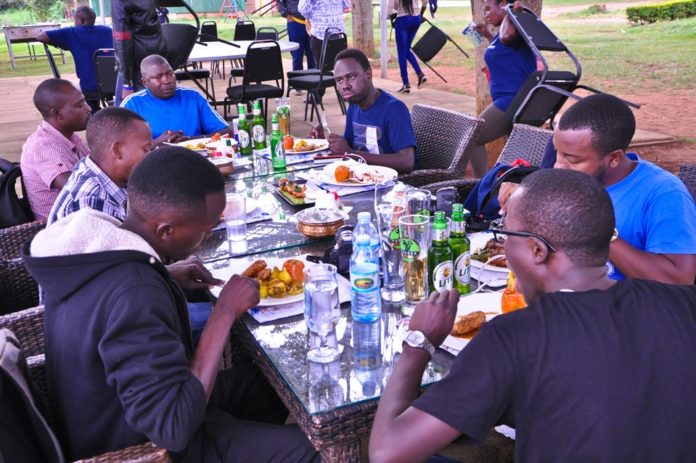
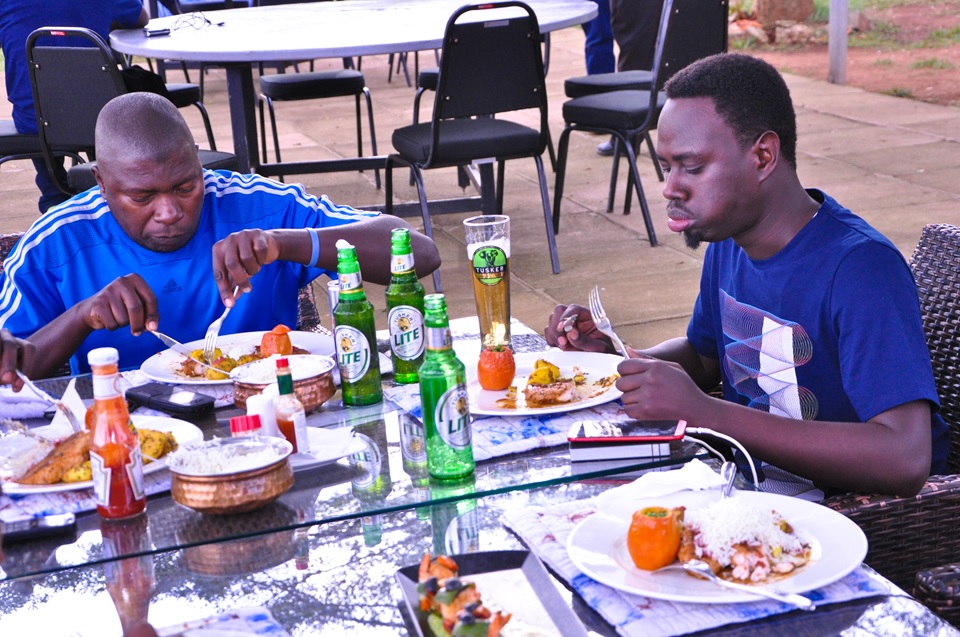
FOOD AND BEER!!! The Media Luncheon

Jinja Sailing Club was the centre of focus as key media personnel and food lovers traveled to Jinja to check out its participation in the ongoing 3rd edition of the Kampala Restaurant Week.

Powered by Tusker Lite and organised by Pearl Guide Uganda, the largest showcase of restaurants in and around Kampala kicked off on July 5 and will go on till July 15.

During the Kampala Restaurant Week, restaurants get to offer meals for as low as Shs15, 000 and Shs25, 000. On normal days, the same meals would go for as high as Shs35, 000.

Jinja Sailing Club’s Executive Chief, Norman Qureshi said that the restaurant week activity offers customers a chance to try out the best cuisines at affordable prices.

This year, Tusker Lite has added great value to everyone’s experience by offering a complimentary drink to diners to ensure they enjoy a complete dining experience.

Tusker Lite was introduced into the East African market in 2011 as a low carb beer uniquely brewed with natural ingredients that ‘delivers an easy drinking experience’. The idea behind its introduction was to bring a new taste.

“Tusker Lite offers a soothing experience with every meal. It is for this purpose that we had to check out the experience in Jinja. We hope that people are enjoying their meals and this edition of Kampala Restaurant Week.” Uganda Breweries Limited’s Head of Beers Estella Muzito, said.

The Kampala Restaurant Week will be capped off with an awards ceremony on the 15th July at the Sheraton Hotel Kampala. This will be to recognize the most outstanding chefs, restaurants and other participants in this edition.

In line with its support for responsible drinking, Tusker Lite will be maintaining a strict ‘OVER 18 only’ policy for sale of alcohol.


Stories Continues after ad

Spark TV joins DStv and GOtv ‘family’

'NEW FAMILY": L-R Creative Director Spark Zena Bantariza, Mercy Natukunda Brand Manager Spark, Peter Kabba Project Manager Spark, Albert Nga and Phoebe Nakabazzi MultiChoice officials at the Spark launch.

DStv and GOtv Uganda, products of MultiChoice have made a major announcement today – the launch of Spark TV, the second highest ranked new channel in the ‘family’.

Spark TV went live on the DStv platform on channel 285 and GOtv channel 390, respectively.

The birth of this partnership will give Ugandan viewers from all over the country an opportunity to enjoy more unique content, skewed primarily to the female audience on DStv and GOtv platforms.

Commenting on MultiChoice Africa’s latest additions on the DStv and GOtv platforms, the General Manager of MultiChoice Uganda, Mr Charles Hamya said: “We are proud of the fact that we have lived up to our promise – enriching lives and providing customers with local content that they can resonate with. We stand by our decision to continually expand and enrich our channel line out of respect and adherence to customer demands with content they can better identify with.”

Mr also Hamya thanked Spark TV for the partnership which, he said, will bear fruit for the company and its viewers. He also encouraged Ugandan viewers to purchase DStv and GOtv kits to get access to the content on Spark TV and other fantastic channels offered on DStv and GOtv platforms.

Agnes Asiimwe Konde, Managing Director of NTV and Spark TV said the partnership will help them achieve “greater empowerment of the woman which is our ultimate aim through educational and inspiring programming”.

“It gives us great pride to realize that we have a shared vision with MultiChoice to promote and elevate content for the female audiences. The woman of today needs to be inspired, uplifted through inspirational programming that will make them better citizens. We are glad that this partnership will enable us reach many more homes and offices tapping into the geographical reach and subscriber base of DStv and GOtv subscribers,” Ms. Konde said.

Spark TV will be available to DStv Premium, Compact Plus, Compact, Family and Access subscribers on DStv channel 285 and GOtv Plus, Value and Lite package on channel 390 respectively.


Stories Continues after ad

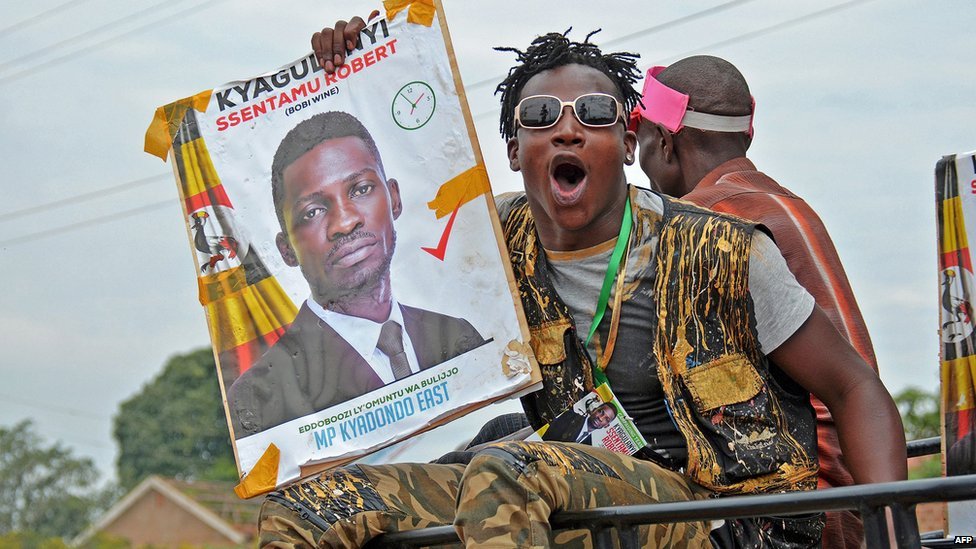
Bobi Wine makes it to Parliament with pomp

'GHETTO FIRST COUPLE': MP-elect Robert Kyagulanyi aka Bobi Wine and his wife Barbie Kyagulanyi head to the swearing-in ceremony.

Hundreds of fans and supporters have escorted Robert Kyagulanyi popularly known as Bobi Wine to his swearing-in ceremony as Kyadondo East MP at 2pm at the Parliament Buildings.

Fans of Bobi Wine

Travelling mostly on boda bodas and showcasing different acrobatic skills, Bobi Wine’s entourage blocked traffic flow from Kampala town as they turned Kira Road into a one-way, giving traffic police officers one of their busiest days.

A fan carrying Bobi Wine’s poster

Nevertheless, the officers seemed to enjoy the entertainment from the fans and were occasionally seen smiling and waving back at the excited crowds.

On reaching City Oil, Kamwokya branch, Bobi Wine and his entourage branched into John Babiha Road before connecting to Parliament.

Bobi Wine is a first-timer in elective politics and his beating of seasoned politicians by a 75% margin was widely celebrated by his supporters.


Stories Continues after ad

ADB rejects UNRA drive to re-tender Rukungiri-Kanungu road procurement process

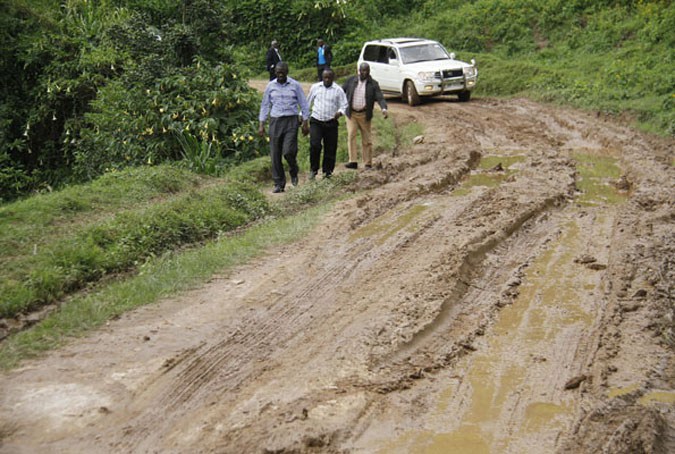
IMPASSE? Dr. Besigye 'touring' the Rukungiri-Kanungu road.

The African Development Bank has rejected a proposal by the Uganda National Roads Authority (UNRA), to have the procurement process for the construction of the Rukungiri – Kihihi – Ishasha – Kanungu road, re-tendered.

In March this year the UNRA Executive Director Allen Kagina wrote to all bidders for the road including the two top bidders, Dott Services and Zhongmei Engineering Group Ltd., telling them about UNRA’s rejection of their bids in accordance with Section 75 of the Public Procurement and Disposal of Public Assets Act 2003’. Zhongmei Engineering Group Ltd. had emerged top in the bidding process.

However, in a follow up letter on May 5 Kagina wrote to the ADB, seeking to have the procurement process of the 78.5 kilometre road restarted, with the argument that the Bid Evaluation Report (BER) had been submitted prematurely.

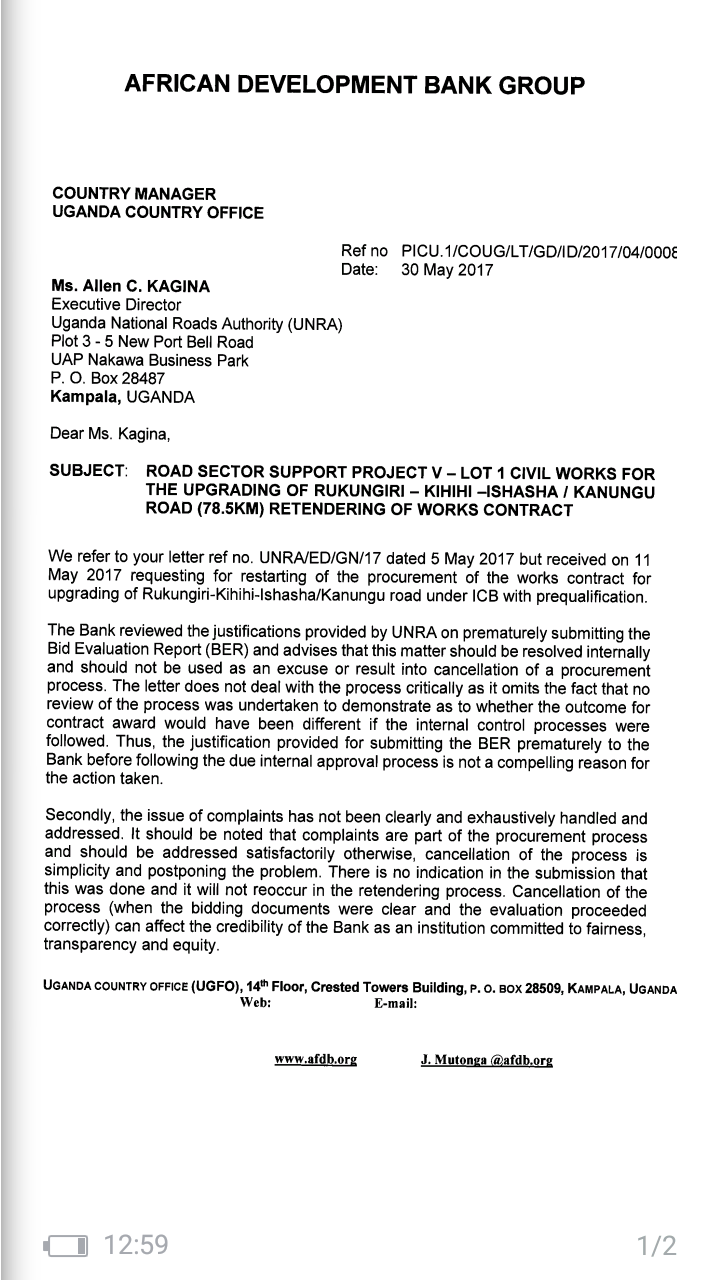
The ADB letter to UNRA Executive Director Allen Kagina

Subsequently, in a letter dated May 30 addressed to Kagina and signed by a one J. Mutonga for the ADB Country Manager, the Bank advised against cancelling the process, saying that ‘can affect the credibility of the Bank as an institution committed to fairness, transparency and equity’.

Further, the Bank advised that the process carry on, with UNRA strengthening its ‘internal processes’.

‘The Bank reviewed the justifications provided by UNRA on prematurely submitting the Bid Evaluation Report (BER) and advises that this matter be resolved internally and should not be used as an excuse or result in cancellation of a procurement process’.

Further, the letter states: ‘The letter does not deal with the process critically as it omits the fact that that no review of the process was undertaken to demonstrate as to whether the outcome for the award would have been different if the internal control processes had been followed. Thus, the justification provided for submitting the BER prematurely to the Bank before following the due internal approval process is not a compelling reason for the action taken’.

‘…Cancellation of the process (when bidding documents were clear and the evaluation proceeded correctly) can affect the credibility of the Bank as an institution committed to fairness, transparency and equity’.

Stories Continues after ad

Internal Affairs ministry to register Ugandan-Americans for dual citizenship

UNAA: The Speakrer of Parliament Rebecca Kadaga (in black-center), at the 2016 Ugandan North American Association (UNAA) Convention.

The Ministry of Internal Affairs will in September carry out the registration of Ugandans who acquired American and any other northern American citizenship but are still interested in maintaining their original citizenship.

‘Dear UNAA members and Ugandans in North America, please be informed that the Ministry of Internal Affairs technical team will be on hand to process dual citizenship certificates at the 29th UNAA Convention in Miami Sept 1-3,’ the statement reads.

Those intending to register have been asked to present the following: a notarized application form, two American-size passport photos and copy of previous passport or proof of prior Ugandan citizenship.

They will also be required to pay US$400 to the Uganda Embassy in the US, have their finger print biometrics taken by officials of the ministry, while those intending to acquire National IDs could also apply at the venue in Miami, Florida.

A survey carried out in 2014 indicated that there were 20, 248 Ugandan-Americans living in the US at the time, with the largest Ugandan communities being in Atlanta, Georgia; Baltimore, Washington DC area; Massachusetts; Chicago, Dallas, Texas; Detroit; Minneapolis; Sacramento, San Francisco and San Diego in California, and St. Petersburg in Florida.

In August 2008, the Uganda Citizenship and Immigration Control (Amendment) Bill was introduced in Parliament, to give effect to the Constitution Amendment (Act No.2) of 2005, which allows the acquisition of dual citizenship.

Stories Continues after ad

Somalia plans for ‘one person, one vote’ by 2020

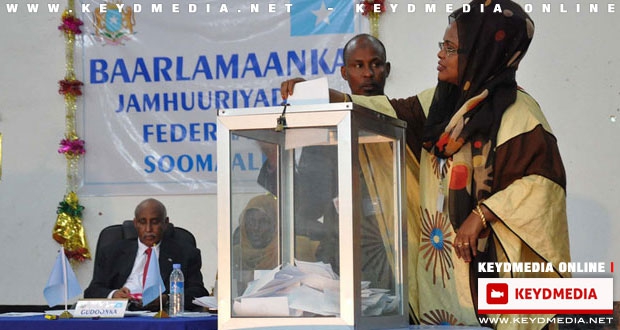
A woman casts her ballot in the Parliamentary elections in Somalia. Photo/keymedia-online

African and Arab election experts are in Kenya this week meeting with Somalia’s electoral commission to help the country prepare to move to ‘one person, one vote’ elections in 2020.

The year 2004 marked the beginning of the end to more than two decades of civil war and anarchy in Somalia. Members of Somalia’s interim parliament gathered in Nairobi to vote for a new president. They met in Kenya because Mogadishu was still too dangerous.

Somalia has since held three polls. But regular Somalis are yet to cast any ballots. The country has relied on a clan-based formula in which the lawmakers were selected by the clan elders, and then the legislators elect the president.

Last year, Somali political leaders agreed to scrap the clan-based formula in favor of a one person, one vote system, and Somalia’s electoral body, the National Independent Electoral Commission (NIEC), hopes to make the change for the next elections in 2020.

Experts from the Organization of Arab Electoral Management Bodies and from around the continent gathered in Nairobi this week to advise the Electoral Commission.

“This [meeting] is an important step amongst others to assist NIEC with some of the experience that in turn can use as its developing its procedures and a very important step along the path to universal multi-party democratic elections,” says Electoral advisor Gerald Mitchell, director of the United Nations Electoral Support Group.

The experts agree one of the first steps to take is to register political parties.

Idris Aminu Kasimu, who works with the Nigeria’s Independent National Electoral Commission, said: “If you do not start with democracy within political parties, you have a challenge in the democracy within the country because democracy within the political parties, candidates who want to contest elections will emerge democratically and will emerge by choice of majority members of the political party, because the credibility of the general elections actually starts from the credibility of political parties and how candidates emerge.”

Credibility is something that critics say Somalia’s last two polls have lacked. The 2017 elections were marred by allegations of vote buying and irregularities, and some of the races had to be redone.

Security may be another obstacle to one person, one vote elections in 2020.

The government of Somalia, with the help of African Union troops, has retaken territory from al-Shabab, but the militant group continues to carry out attacks. Many Somalis doubt whether they can have a chance to vote.

“I know many Somalis are asking each other with the current crisis, how can one-man, one-vote be achieved? But we believe if we work hard on it, it can work. We also believe, as the electoral commission, we are ready and we know we can handle such an election. It is important we start working on this process as early as possible,” Halima Ismail Ibrahim, the chairperson of the Somali National Independent Electoral Commission, said.

The conference ends tomorrow.


Stories Continues after ad