Stanbic Bank
Stanbic Bank
19 C
Kampala
Stanbic Bank
Stanbic Bank
Home Blog Page 1823

BOU predicts economy will grow at 5 percent

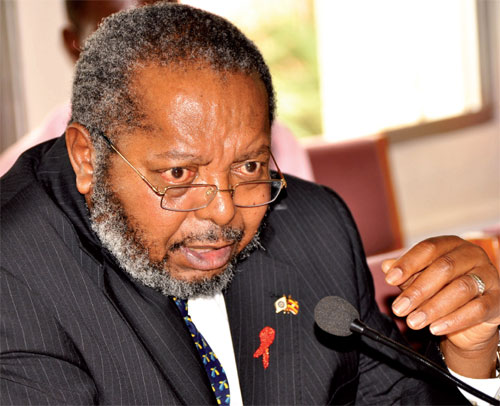
BoU Governor Emmanuel Tumusiime-Mutebile.

The Central Bank expects the economy to grow between 5 and 5.5 percent in the financial year 2017/18, up from the 3.9 percent attained in the previous year.

Releasing the Monetary Policy Statement for August 2017 in Kampala today, the BOU Governor Emmanuel Tumusiime-Mutebile said that economic activity gathered momentum in the first half of 2017 and was expected to improve further based on the current accommodative monetary policy, recovery in external demand and foreign director investment (FDI).

Prof. Tumusiime-Mutebile added that the improved activity in the agriculture sector due to improved weather conditions and the fiscal stimulus outlined in the current national budget would also help push the economy forward.

He maintained the Central Bank Rate (CBR) at 10 percent, saying the economic activity was picking up while inflation which currently stands at 5.7 percent remained on target, having dropped from 6.4 percent in June.

“Given the fact that inflation is expected to remain around the medium-term target and that economic activity is picking up, with output approaching potential … the BOU will therefore leave CBR unchanged,” Prof. Tumusiime-Mutebile said, adding that both core and headline inflation figures were projected to be between 5 and 7 percent by the end of the year.

The Governor also said Uganda’s current account position had improved in 2016/17, with the deficit a percentage of GDP declining to 2.8 percent from 5 percent in 2015/16, supported by an 18 percent rise in export earnings compared with the previous year.

Further, the Governor said the increase in exports earned the country USD3.17 billion in the financial year 2016/17 as it exported products like coffee, flowers and sugar. This, he said improved Uganda’s account position of USD3.5 billion and Adam Mugume, the Executive Director Research at the Central Bank said the cash can cover five and a half months of imports.


Stories Continues after ad

It would help if the BoU accounted for the proceeds from Crane Bank collaterals

Barring any other eventualities, the raging saga between Crane Bank, the Bank of Uganda and businessman Sudhir Ruperalia will make the top story for this year.

For obvious reasons, anything to do with Mr. Ruparelia will always attract the attention of the public, given that he appeared on the Forbes List in 2015 as the richest man in East Africa, with a value of US$1.2 billion then, mostly invested in the financial, hospitality and real estate sectors. Certainly, a man of such financial muscle has a very big stake in the economy, including but not limited to providing jobs and services to a wide range of locals and foreigners.

But that notwithstanding, it is imperative to note that at about that time, the economic climate in the EA region took a turn for the low as a result of plummeting markets, most especially in South Sudan where many Ugandan businessmen, including those who were dealing with Crane Bank lost huge monies estimated in excess of US$60 million. Indeed, the government of Uganda and that of South Sudan are aware of the said losses, which, if looked at in context, distorted the Ugandan economy and inevitably, the banking sector in which the Crane Bank was one of the leading players and lenders.

Be that as it may, issues of finance (lending and borrowing) can only be carried successfully when there is close supervision. And, under the law, the BoU can, if it deems it necessary, carry out impromptu bank audits every six months and the Crane Bank was no exception to any such undertaking.

Needless to say therefore, if the BoU had properly carried out its supervisory mandate, the Crane Bank saga would never have become public fodder and a subject of litigation. However, with the court case lodged by the Central Bank that now lies in the past. But since the oft recommended method of solving disputes is through mediation, the suit parties should chart a way forward that will leave little egg on their faces.

Indeed, the first die towards a harmonious resolution of the standoff was cast by Mr. Ruparelia, when he offered his three multi-billion properties as a guarantee/security, in lieu of settlement of his obligations in a period of six months.

This gesture should then be reciprocated and for a start the BoU should, for any avoidance of doubt, account for any monies so far raised from the sale of collateral belonging to the Crane Bank debtors, and then ask Mr. Ruparelia to pay the balance, if any. This is important because Mr. Ruparelia says that the collateral is about Shs.600 billion, yet the money, that is allegedly owed to the Crane Bank by debtors is less than that, estimated at about Shs340 billion.

Further, for purposes of better accountability, it is also equally important for the Crane Bank debtors and general public to know the entire procedure of how the disposal is being conducted and the end beneficiaries (buyers of the collateral), as this will help scuttle any suspicions of ill-will on the part of the BoU, against Mr. Ruparelia.

And, ultimately a win-win situation between the billionaire businessman and the BoU would be a good starting point for both parties to re-evaluate and improve upon their methods of work.


Stories Continues after ad

Centenary Bank to boost financial inclusion

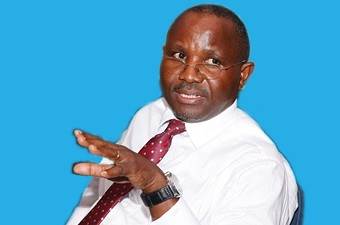
FINANCIAL INCLUSION: Centenary Bank Managing Director Fabian Kasi

Centenary Bank and MasterCard have signed an agreement to boost the National Financial Inclusion Strategy aimed at bringing more Ugandans into the financial system through savings and payments.

The partnership realised in Kampala days ago is expected to roll out digital payment solutions and also help strengthen the national payment system through the introduction of payment solutions such as Masterpass QR, debit, prepaid, credit as well as premium solutions, officials said.

Centenary Bank Managing Director Fabian Kasi said the partnership would help boost the accessibility of financial services, credit infrastructure, digitisation of the bank’s financial services and products that can be consumed by clients.

According to Mr. Kasi, such innovations will help address findings of the 2016 Financial Inclusion Insights Survey, which established that only 11 out of every 100 adults in Uganda have access to a bank account, with 53 percent of adults using mobile payment solutions to transact business.

“In our position as the largest commercial microfinance bank in country, with over 1.4 million customers, we are committed to delivering solutions that meet the diverse needs of people, especially those living in rural areas,” Kasi said, adding that MasterCard would work with the bank to diversify its services and solutions.

The introduction of the mobile-driven person-to-merchant (P2M) solution (Masterpass QR) by MasterCard will help turn mobile phones into a payment and acceptance tool.

Chris Bwakira, Vice President and Area Business Head for East Africa, said the partnership is part of the MasterCard commitment to financially empower 100 million people in Africa by the year 2020 in which Uganda targets to become a middle income country.

“We have made significant strides this year in Uganda, with our recent agreement with the Uganda Bankers’ Association and the work we are doing through the MasterCard Labs for Financial Inclusion,” Bwakira said

He further said MasterCard would support new financial tools to empower more Ugandans to build a stronger future through participation in the financial system.

MasterCard is a payments technology company, operating payments processing network, connecting consumers, financial institutions, merchants, governments and businesses. MasterCard products and solutions make everyday commerce activities such as shopping, traveling, running a business and managing finances easier, more secure and more efficient.


Stories Continues after ad

MPs accuse Justice Kavuma of delaying election petitions

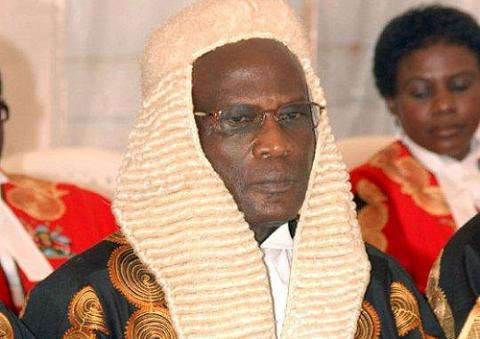
Justice Steven Kavuma.

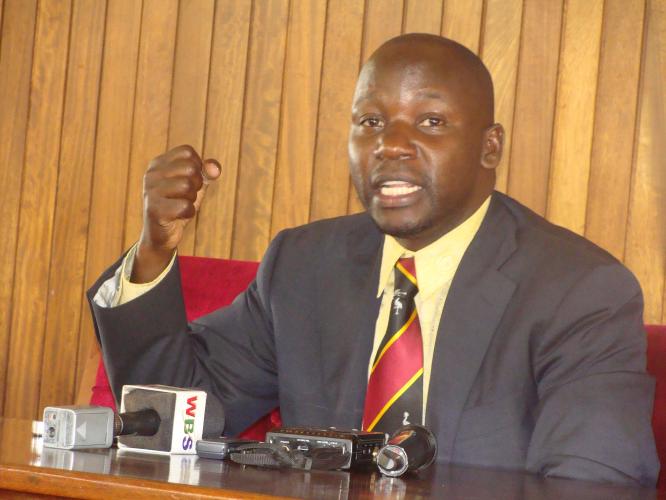
Legislators have blamed Court of Appeal head Justice Steven Kavuma of being behind the delayed disposing of election petitions, citing the one against former MP Sebuliba Mutumba, which dates back to 2011.

Section 66(2) of the Parliamentary Election Act 2005 requires the election petitions to be disposed of by the Court of Appeal within six months from date of filing.

But according to the MPs led by Gerald Karuhanga, the Ntungamo Municipality MP and Francis Gonahasa, the MP Kabweri Constituency, to date some cases that were filed during the 9thParliament haven’t been disposed of.

They say that the situation has been worsened with the impending retirement of Deputy Chief Justice, Steven Kavuma, who they accused of ‘sitting on cases’, something they argue has led to abuse of powers of the appellate court, and want the Auditor General John Muwanga to conduct a performance audit to establish why some election petitions haven’t been disposed of to date.

“The purpose hereof is to request for a performance audit in respect of Election Petition Appeals which were filed regarding the 2016 General Election in view of Article 163 of the 1995 Constitution,” their petition reads.

The legislators also blamed the delayed disposal of cases on the ‘exclusion of some justices from hearing the election appeals’, saying the action led to backlog at judgment stage, which they say goes against principles of natural justice.

“It is so sad that Court of Appeal has for long been sitting on election petition appeals contrary to the law,” Karuhanga said.

To augment their argument, the MPs pointed out the election petition against former MP Sebuliba Mutumba, slapped on him in 2011, but which hasn’t been resolved to date.


Stories Continues after ad

Museveni, German Minister discuss South Sudan refugee situation

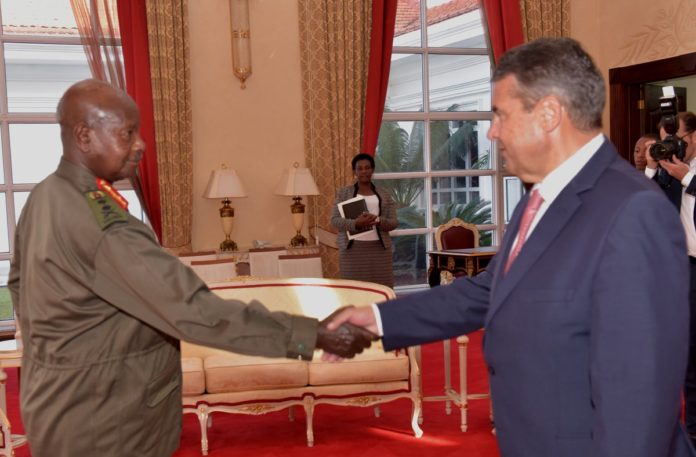
President Museveni meets German Foreign Minister Gabriel Sigmar

The German Foreign Minister, Gabriel Sigmar has commended President Yoweri Museveni and his government for putting in place a policy that gives refugees the dignity they deserve as human beings.
The Minister, who called on the President at State House Entebbe, said that although Germany has hosted many refugees, mainly from the Middle East, what Uganda is doing especially for the South Sudanese refugees is inspiring and should supported by the international community.
“Germany has many refugees but that is different from what a poor country like Uganda is doing. The international community should support Uganda because it stands out as an example and deserves support and recognition,” Sigmar said.
President Museveni said that Uganda’s decision to assist refugees stems from its ideological position of Pan Africanism. “They talk about South Sudanese in Uganda but all these people are the same. Those are just colonial borders,” he said.
On his part President Museveni urged the international community to address the causes of refugees such as wars and civil strife and the challenges faced by refugees in the communities where they settle such as provision of education, health services, water and energy.
He said that there is need to have more schools as the schools built by government are overwhelmed by the unplanned for populations. He added that if the refugees use the time in Uganda to study and get skills, they could be useful once they go back to their countries.
President Museveni further implored the international community to develop infrastructure in areas where refugees have settled so that they do not cut down trees for fuel and cooking to ensure that they do not damage the environment.
The President also briefed the visiting German Minister about the situation in South Sudan and his efforts to unite the various factions of the Sudan People’s Liberation Movement (SPLM).
Responding to Museveni’s brief on the situation in South Sudan, Minister Sigmar asked the international community to support Uganda’s efforts to cause peace in South Sudan.
“Uganda has committed itself to the peace process in South Sudan, it is our role as the international community to support them as, in the long run, it will not be able to handle the refugee influx,” he said. The Minister had earlier visited the Rhino Refugees Settlement (Ofua Zone) in Arua district. The settlement hosts most Sudanese refugees in Uganda.
The Minister of Foreign Affairs, Mr. Sam Kuteesa and that of Disaster Preparedness and Refugees, Mr. Musa Ecweru, attended the meeting.


Stories Continues after ad

Coca-Cola resurrects ‘Rolex’ festivities

The State Minister for Tourism Godfrey Kiwanda last year launched the Kampala Rolex Festival after renowned media outlet Cable News Network (CNN) ranked the snack as fastest growing new African fast food.

State Minister for Tourism Godfrey Kiwanda Ssuubi.

But with time, the Minister ‘lost steam’ and this year he has remained largely mute about the snack that is enjoyed by Ugandans of all walks of life.

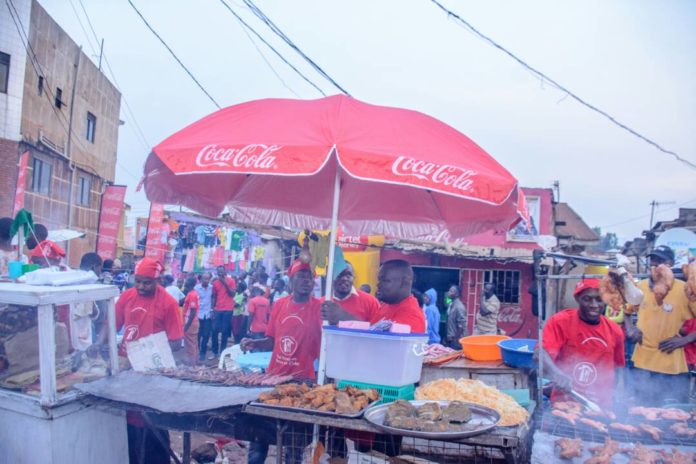
Well, Coca Cola has resurrected the story of the delicacy and last evening people residing and working in Kyengera and the surrounding areas were treated to fun and excitement as the Kampala Rolex Week festivities commenced.

Commenting about the Kampala Rolex Week, Coca-Cola Uganda Brand Manager Rodney Nzioka expressed his delight to be part of the celebration of a Ugandan food consumed by different people with different backgrounds and social classes.

“Coca-Cola is proud to associate with Kampala Rolex Festival. We remain committed to offering our consumers unique moments and experiences as they enjoy their favorite drink in the right company,” he commented.

During the Coca-Cola Kampala Rolex Week, teams will visit different markets across Kampala – Kyengera, Ggaba landing site, Kasangati, Katwe/ Namasuba and Nansana – holding rolex making competitions and awarding winners with Coca-Cola goodies.

“The Kampala Rolex Week is just another example of the beverages giant’s continued association with food and belief in one of the most celebrated rituals among families and friends – enjoying meals together,” one of the beneficiaries said.


Stories Continues after ad

Uganda Entertainment Award 2017 nominees revealed

The Third Edition of the Uganda Entertainment Awards (UEA) is on and the nominees in the various categories have been selected.

This year’s event will be hosted by the multi-talented Malaika Laika Nnyanzi and the award-winning duo Dj Slick Stuart and Dj Roja, and is to be held under the theme ‘Dance to the Beat’.

Sources say that this year’s winners in the selected categories will walk away with two million Ugandan shillings each.

The prestigious event that is becoming bigger and better occurs every year in a bid to recognize all efforts put together to achieve a great entertainment product in Music, Comedy, Movies and Dance in Uganda.

The function will take place on Saturday, September 9, 2017 at the Kampala Serena Hotel.


The full list of nominees:

Male artiste of the year

David Lutalo

Eddy kenzo

Geosteady


Artiste of the year

Sheebah Karungi

Eddy kenzo

David Lutalo

Winnie Nwagi


Sports personality

Dennis onyango

Farouk miya

Allan okello

Geofrey sserunkuma

Peace proscovia


Entertainment tv presenter

Douglas Lwanga
Mc Kats
Flavia Namulindwa
Nabatanzi Diana


Best comedy Group

Mad rat and chikko

Swengere family

Fun factory

Akandolindoli


Best Entertainment programe

The beat. NTV

Oluyimba lwo Bukedde TV

After 5 Nbs

Live wire Spark tv


Radio host of the year

Dj nimrod Galaxy fm

Crystal Newman. Sanyu fm

Abu Kyazze

Mukunja

MckenZie

Denzel

Dedan


Hip hop artiste of the year

Big trill

Da agent

Fic Fameica

Big Ben


Best fashion Designer
Ras Kasozi
Kyaligonza
Anita beryl
Kwesh Ug
Gloria wavamunno


RNB artiste of the year

Naava Grey

Lydia Jazmine

Filled mutoni

Geosteady


Video producer of the year

Sasha Vybz

Zyga Rony Mugerwa ZygaPhix

Jah live

Grate make

Nolton George films


Song of the year

Kwasa

Smart wire

Owooma

Emotoka

Dangerous

Munakampala


Video of the year

The way. Sheebah Karungi

Jubilation. Eddy kenzo

Dangerous. Ceaserous

Still standing. Cindy Sanyu


New act of the year

B2C

Yikes benda

Latinum

Voltage music


OUTSTANDING MODEL OF THE YEAR
Akello Patricia
Ronald Waiswa
Nanyondo Fauzia
Anyon Susan
Paul Mwesigwa


BEST ACTOR

Mutebi Farouk

Roger Mugisha

Micheal Wawuyo

Patriko Mujuka

Robert Segawa


BEST ACTRESS

Tania Shakirah

Mirembe Doreen

Hellen Lukoma

Stella Nantumbwe

Mutesi Candy

Faridah Kutesa


GOSPEL ARTISTE

Exodus

Spring Gents

New Chapter

Jehovah Shalom

Levixon


BAND OF THE YEAR

SNS Band

Kangie Band

Janzi Band

Band Cindy


KADONGO KAMU ARTISTE OF THE YEAR

Kazibwe Kapo

Willy Mukaabya

Mathias Walukagga


BEST DANCE GROUP

Rozviccycathy

Trojans Dance Group

IDU

Kings 256

Ghetto Kids

Platinum Dance Crew


Collaboration of the year

Owooma – Geosteady ft Charly and Nina

Body – Rabadaba ft Jody

Akatijjo – Fille and Babaritah

Big Bumper – Kemishan Ft Mun G

Gudi Gude – Radio and weasel ft Khalifa


Dance hall Artiste of the year

Nutty Naithan

Ziza Bafana

Cindy sanyu

Vampino


DJ of the year

Dj Nimrod

Dj Slick Stuart and Roja

Selector j

Dj Apeman


Audio producer of the year

Nessim

Andre

Dans Ku Mapessa

Diggy Baur


Artiste in Diaspora

Coco Ug

Micheal Kiwanuka

Angelina

Sarah Musayi Muto


Song writer of the year

Blackskin

Mozey Radio

Yesse Oman Rafik

Dr Brain


Tv series

Second chance Ug

Honourables

Nawolovu

cofee shop


African Act of the year

Wiz kid

Ray vanny

Davido

Vanessa Mdee


East African Act

Khaligraph jones

Eddy Kenzo

Diamond Platinumz

Darassa

Stories Continues after ad

FIFA rankings: Uganda improves as Brazil reclaims top spot

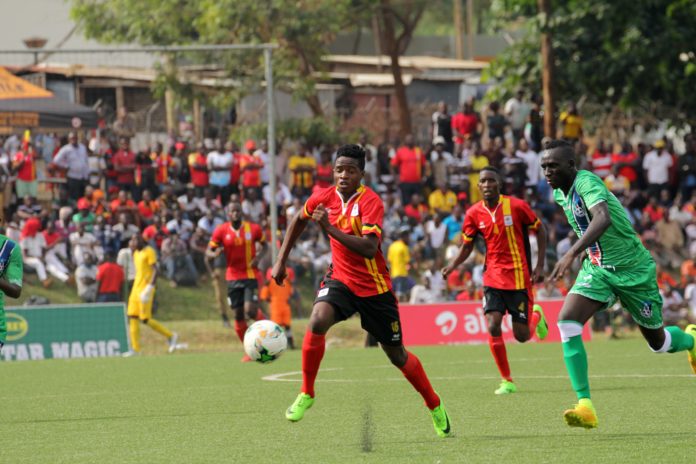
IMPROVED: Members of the Uganda Cranes squad in the match against South Sudan

Uganda has moved up one place in the latest FIFA rankings to the 73rd position with a total of 464 points and remain 15th in Africa, according to the results released today.

The rise comes after the Uganda Cranes 5-1 resounding defeat of South Sudan last month in the CHAN 2018 qualification match.

Neighbors Kenya have moved two places up in latest rankings despite having played no match in the month of July, now at 82nd with 412 points.

Uganda maintains its record of the highly ranked country in East Africa followed by Kenya and Uganda’s next opponents Rwanda at 119 in the world.

Egypt remains the top ranked African nation at 25th in the World followed by DR Congo at 28, Senegal at 31, Tunisia placed 34 and 2017 AFCON champions Cameroon at 35, completing Africa’s top 5.

Meanwhile, Brazil have returned to the top of the FIFA/Coca-Cola World Ranking after a one-month hiatus, replacing reigning FIFA World Cup champions Germany who slipped back into second spot. Argentina are third, followed by Switzerland (4) and Poland at 5.

Namibia (136th, up 20), were this month’s biggest climbers while Curacao, a Dutch Caribbean island were the worst movers dropping 18 places to 86th.

FIFA rankings are based on the average number of points that a team accumulates over a four-year period. The ranking points in each match are determined by its result, its value and the relative strength of the opponent and their confederation. The system also has a yearly basis depreciation for the value of the matches.

Next month’s rankings update will be announced on September 14.

Stories Continues after ad

Energy ministry, NGO in row over resettlement of oil refinery affected villagers

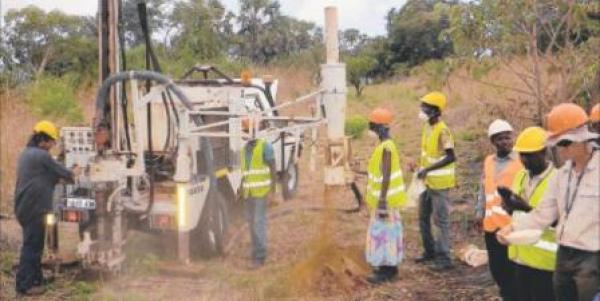
Oil exploration workers in Albertine region of Uganda

The Ministry of Energy and the Africa Institute for Energy Governance (AFEIGO), a non-governmental organisation based in Kampala are involved in counter accusations as the ministry today commissions the relocation of oil refinery affected families from Kabaaale-Buseruka to Kyakaboga, Hoima District.

Yesterday The Eagle Online published a story in which the General Secretary of the Oil Residents Refinery Association (ORRA), Christopher Opio and AFIEGO’s Senior Communications Officer Diana Nabiruma, confirmed that the refinery affected households in Hoima district had told government officials on Tuesday that they wouldn’t move from the area unless government fulfills all its pledges it made to them in October 2012 Resettlement Action Plan (RAP) Report for the oil refinery project.

Some of the families whose land was part of the over 29 square kilometres that was acquired by government in 2012 for Uganda’s proposed oil refinery were set to be relocated today from Kabaale-Buseruka to Kyakaboga village in an operation led by officials  from ministries of Energy and Lands alongside other government agencies.
“In a meeting held today August 8, 2017 at Nyahaira P/S in Hoima district the over 80 families unanimously  resolved that unless government provides them with land titles, electricity, water sources and access roads as promised in the RAP report, they will not allow to be relocated to Kyakaboga on Thursday,” Opio was quoted as saying in a press release published by AFIEGO two days ago.

However, going by the latest communication from the Ministry of Energy Permanent Secretary Dr Stephen Isabalija the relocation will go on today as planned.
“On Thursday 10th August 2017, the Ministry will commission the relocation process which involves agreeing with the PAPs (project affected people) on a programme for each household to be resettled. it is therefore not true that they are all expected to relocate on the day of the commissioning. Some households are already cultivating their land and would therefore be better off once relocated,” Dr Isabalija says.

Dr Isabalija says leaders of the affected familes during the August 8 meeting barred the locals from airing out their views, yet on the other hand, Opio and Nabiruma in a letter to the media accuse the ministry officials of trying to engage only representatives of the people, which they say almost resulted into chaos.

“The ministry and subcounty chiefs were interested in hearing the views and concerns from PAPs, however some of their leaders barred them from speaking,” Dr Isabalija says.

The meeting on Tuesday 8 was attended by Ms Maureen Wadiyo (Community Liaison Officer Oil and Gas in the Ministry of Health), Mr Stephen Enachi (Petroleum Exploration Directorate, LC3 Chairperon for Buseruka Subcounty Ali Tinkamanyire and representatives from AFIEGO.

Despite AFIEGO’s that government has not prepared the relocation areas, Dr Isabalija says government is providing seedlings and food for the next six months, including bringing the skills development programme expected to run for six months to one year.
“Individual land titles are being processed,” says the Permanent Secretary, confirming that the consolidated land title of the relocation area has been obtained. One of the issues the families are said to have raised for not wanting to relocate was the issue of individual land titles to guarantee security of tenancy for their households.

Dr Isabalija says government says the relocation area is not isolated as claimed by AFIEGO and leaders of the affected families, saying other communities exist nearby. Government he says, has provided each household to be relocated a with 500-litre water tank, wired houses as it prepares to connect them to electricity, with further promise that it would build more infrastructure to ease the lives of the new occupants Kyakaboga village.
The PS has castigated AFIEGO, saying the NGO doesn’t represent the views of the families to be relocated. He further accused the organisation of trying earlier on to relocate residents to Kyakaboga “amid allegations of delays by government” and wonders why AFIEGO is now inciting people not to relocate.

“We would also wish to confirm that PAPs are willing and eager to be relocated and the commissioning programme is going on as scheduled at the resettlement area,” he says of the 73 households much as AFIEGO in a press release says they are over 80 families to be relocated.

However, it should be noted that the Land  Acquisition  and Resettlement Framework (LARF) exists which is supposed to provide a guide to land acquisition in the Albertine Graben for Oil and Gas  activities.
LARF emphasizes that land acquisition may result into displacement of people and as a result it is important for authorities to prepare adequately to address the issues of relocation and compensation of the affected peoples.

The cost of the refinery is estimated to be US$4.3 billion, with 70 percent of that amount to be borrowed and the remaining 30 percent coming from shareholders.
With the capacity to process 30,000 barrels per day, the refinery is planned for commissioning in 2020, with government sure it will bring many economic opportunities to the country.
 

Stories Continues after ad

PAP MPs want land vested in women

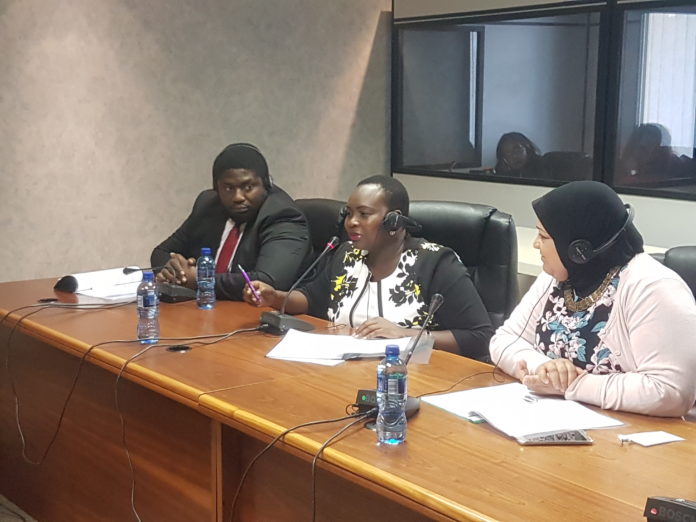
Hon. Jacqueline Amongin addresses PAP MPs

Women legislators on the African continent have decried the persistent marginalization of women in the control of productive resources. The legislators say that despite being the majority population on the continent accounting for 80 percent of food production in Africa, they continue to be sidelined in the ownership of land in the legal, customary and social spheres.

They argued that the current large scale investments on land on the continent are a big threat to women accessing land resulting in the loss of livelihoods and displacement.

In a workshop on strengthening women’s access to land in Africa held at the Pan African Parliament in Midrand, South Africa on Wednesday 09th August 2017, legislators explored avenues to close the gender gap for economic development through agriculture.

“Women need land because it is the vehicle for growth and economic development. When people have access to productive resources like land, they also realize their human rights,” Dr. Gaynor Paradza, a land governance expert told legislators, adding that “there is also evidence that points to the fact that women’s lack of access to land contributes to their vulnerability to violence.”

Gaynor observed that while on paper there are international legal instruments, national statutory laws and other customary practices, in a continent where 75 percent of land is customary, women’s rights to land are the most insecure because they are not registered.

“Women face challenges in securing land. There is discriminatory land registration and titling; women lack information and empirical evidence to argue their case,” she said.

She commended Rwanda for tackling women’s land inheritance rights where both sexes have equal rights. Uganda was commended for decentralizing land administration to make it more accessible.

Gaynor recommended that nation states domesticate international laws and conventions advocating for women’s land rights, rationalize and amend discriminatory land practices.

Hon. Anifa Kawooya (Uganda) was dismayed that the issue of land rights has been topical in many conferences but nothing much had happened in addressing the problem.

“In Uganda, seven percent of women own land and I am not happy with this,” Kawooya said.

She sought to know the progress by the African Union and the African Development Bank in their campaign to ensure that 30 percent of African women own land by 2025.

She observed that many African states had not ratified the Maputo Protocol citing Uganda which ratified the protocol with reservations on Article 19.

Mboni Mohamed (Tanzania) attributed the land gender gap to low levels of education and low representation of women in positions of leadership.

“Once a woman has access to education, we have more activists, more presenters, and more women in leadership,” adding that “the moment we have minority of women in Parliament, we should forget about the laws changing.”

She explained that while customs are what Africa is made of, with many women in Parliament, the retrogressive customary laws would be history.

Hon. Jacqueline Amongin (Uganda) said that in most countries where less than 10 percent of land is in the purview of land management institutions, it presents a challenge to planning and makes access, tenure and security problematic.

At the national legislative level, the Parliament of Uganda through the Uganda Women Parliamentary Association (UWOPA) is building capacity of rural women and women leaders to be at the forefront of advocating against the issues impinging on their rights to land, especially land inheritance and succession rights.

UWOPA has interfaced with women in the Greater North, in the districts of Lamwo, Kitgum (Acholi region) Kaabong and Kotido (Karamoja region) and Nebbi and Arua (West Nile region).

Uganda’s representatives to the Pan African Parliament include Hon. Jacqueline Amongin (NRM, Ngora); Prof. Morris Ogenga-Latigo (FDC, Agago North); Hon. Anifa Bangirana Kawooya (NRM, Sembabule); Hon. Felix Okot Ogong (NRM, Dokolo South) and Hon. Babirye Kadogo (Ind. Buyende).


Stories Continues after ad