Stanbic Bank
Stanbic Bank
19.6 C
Kampala
Stanbic Bank
Stanbic Bank
Home Blog Page 1835

Uganda among first African countries to use latest AIDS drug

AIDS SCOURGE: Some of the Aids drugs currently in use

Uganda will be among the first three African countries to start using the generic version of the latest AIDS drug that can improve and prolong the lives of people who suffer severe side effects and resistance to other treatments, health agency, UNITAID has said.

Uganda will follow her neighbour Kenya and Nigeria, with UNITAID saying 20,000 Kenyan patients have already started using the drug- a generic of Dolutegravir (DTG), first approved in the United States in 2013.

DTG is the drug of choice for people with HIV in high-income countries who have never taken antiretroviral therapy before and for those who have developed resistance to other treatment.

The brand name version of DTG is Tivicay, produced by ViiV Healthcare, which is majority-owned by GlaxoSmithKline.

UNITAID works to bring medicines to market quickly and to reduce manufacturing costs by allowing generic companies to access patents for a small royalty and produce them cheaply for the developing world.

Available national data indicates in the year 2015, an estimated 1.5 million people in Uganda were living with HIV, while an estimated 28,000 died of AIDS-related illnesses. As of 2015, the estimated HIV prevalence among adults in Uganda (aged 15 to 49) stood at 7.1%

The number of new HIV infections in Uganda increased by 21% between 2005 and 2013.  However, according to official government health records, infections are now reducing and fell from 140,000 in 2013 to 83,000 in 2015 The number of AIDS-related deaths decreased by an estimated 19% over the same period.6

Robust treatment and prevention initiatives have been implemented in recent years, leading to improved conditions for people living with HIV. Due to the implementation of antiretroviral treatment throughout the country there has been a gradual increase in the number of people living with HIV receiving treatment.

In 2013, Uganda reached a tipping point whereby the number of new infections per year was less than the number of people beginning to receive antiretroviral treatment.

However, as of 2015 around 40% of adults living with HIV were still not on treatment. Persistent disparities remain around who is accessing treatment and many people living with HIV experience stigma and discrimination.

UNAIDS claims Sub-Saharan Africa has been at the epicenter of the HIV epidemic for decades and home to nearly three quarters of all people with HIV/AIDS. The agency aims for 90 percent of people diagnosed with HIV to receive antiretroviral treatment by 2020.

Stories Continues after ad

Global journalists’ body calls for investigations into EagleOnline break-in

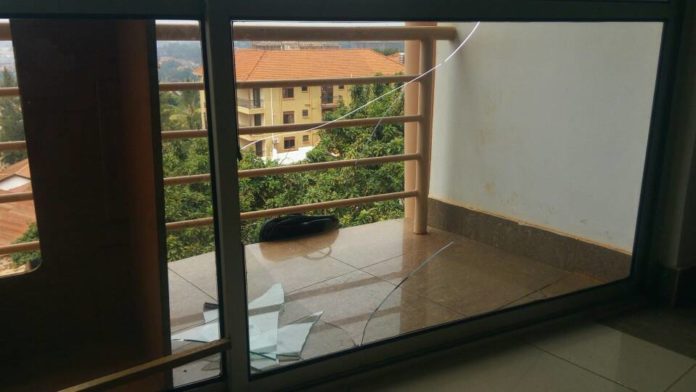
EAGLEONLINE BREAK IN: The 'gateway' for the thugs who stole laptops

Reporters without Boundaries, (RSF), a global organization that deals with the rights of journalists has implored the Uganda Police to investigate circumstances under which the EagleOnline offices were broken into.

“RSF urges Police to shed the light on the burglary of Eagle Online in Uganda,” the organization wrote on its Twitter handle.

On Monday this week the EagleOnline workers arrived to a ransacked and broken-into office, only to discover that thugs, who accessed the offices after smashing the glass-paned door at the back, had stolen two laptops, one belonging to Senior Investigative Reporter Richard Wanambwa.

That break-in was reported to Ntinda Police Station on Monday but since then work at the offices has been slowed down as reporters await a Scene-of-Crime Officer (SOCO) to come and set investigations in motion.

Started about three years ago, The EagleOnline is one of Uganda’s fastest-growing news websites.

Stories Continues after ad

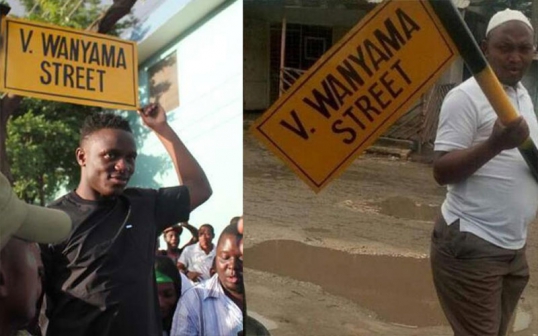
Tanzania officials remove ‘Victor Wanyama Street’ sign-post

Tanzanian officials after removing the Victor Wanyama Street sign-post

Kenyan international Victor Wanyama who plays for Tottenham Hotspurs football club in the English Premier League, while on a visit to Dar es Salaam, Tanzania over the weekend, was honoured by having a street named after him.

This was to recognize him as neighbouring Kenya’s most high-profile sportsman, with the Tanzanian city adopting him as the face of sport due to his presence in East Africa.

However, this good gesture has short-lived after Dar es Salaam’s Ubungo Council removed the sign-post, insisting official procedures required to rename a street had not been followed. The street has now been stripped of the new name and returns to being called Ubungo Road.

The midfielder had been on holiday in Tanzania, and the commercial port city of Dar es Salaam decided to reward the 26-year-old with ‘his own street’ after winning the Kenyan sports personality award.

Tottenham signed the Kenyan from Southampton last July for 11m euros on a five-year deal. He also played for Celtic in Scotland from 2011-2013.

Stories Continues after ad

South Sudan government intensifies censor on media coverage of conflict

A man reads athe ajuba Monitor, an independent newspaper in South Sudan. The media in the country is increasingly coming under threat.

As South Sudan’s civil war creates the world’s largest refugee crisis and widespread allegations of sexual and ethnic violence, the government is clamping down on the news media, journalists charge.

This is starkly evident in the country’s newspapers, which the government in May started censoring by blanking out articles it deems critical.

In addition, 15 South Sudanese journalists have been arrested, beaten, jailed, threatened or denied access to information in the past four months, according to the Union of Journalists in South Sudan.

At least 20 members of the foreign press have been banned from or kicked out of South Sudan in the past six months, the Foreign Correspondents’ Association of East Africa says.

With the civil war more than three-and-a-half years old, journalists say they are hard-pressed to report on alleged atrocities amid warnings by the United Nations and others of ‘ethnic cleansing’.

In her first public statement on the issue, U.S. Ambassador Molly Phee said that the pattern of denying visas to foreign journalists violates international standards.

“U.S. law prohibits assistance to the government of South Sudan until they take effective steps to protect freedoms of expression, association and assembly,” Phee said. Such direct financial assistance to a government doesn’t include humanitarian aid, which this year amounts to $391 million.

Since South Sudan gained independence from Sudan in 2011, the media landscape has become grim. Reporters without Borders ranks the country 145th out of 180 states in its 2017 World Press Freedom Index, down five slots from the previous year.

The Committee to Protect Journalists says South Sudan has muzzled the media for too long and is urging President Salva Kiir not to use the accreditation of foreign journalists ‘as a new tool of censorship and retaliation against foreign media’.

In March, Austrian freelancer Simona Foltyn was told to leave the country by the Media Authority, a regulatory body created by South Sudan’s government.

“The (Media Authority) managing director told me that I’d only been reporting about conflict and sexual violence,” Foltyn said. “And that I hadn’t been writing anything positive about South Sudan.”

The blocking of journalists is getting worse, said Alfred Taban, a veteran South Sudanese reporter and chairman of the Association for Media Development in South Sudan.

“Who at this time, if he’s a real journalist, would write articles that aren’t critical about South Sudan?” Taban asked.

A spokesman for South Sudan’s government, Ateny Wek Ateny, said the government doesn’t interfere with the Media Authority’s activities.

“I don’t entirely agree with the decision to reject journalists, but anyone who is trying to incite the people of South Sudan is not wanted in this country,” Ateny said.

The government established the Media Authority in February to regulate journalistic practices. It is funded by the government and some board members are government officials.

“Hate speech, defamation and incitement are three things we don’t tolerate,” said Media Authority managing director Elijah Alier. He said it isn’t his intention to restrict journalists or throw them out of the country, but said unbalanced reporting can be harmful and misleading. The Media Authority said it has issued more than 200 press passes out of roughly 250 applications between February and June.

British freelance journalist Ashley Hamer reported in South Sudan between 2014 and 2016. She said the visa process was seamless until she applied for renewal in March. She was told she had failed her background check.

“I understand why they don’t want us here,” Hamer said. “There are horrific atrocities going on and they’d prefer us not interfering and making them look bad.”


Stories Continues after ad

Bobi Wine has inspired us to return to school – Ronald Mayinja

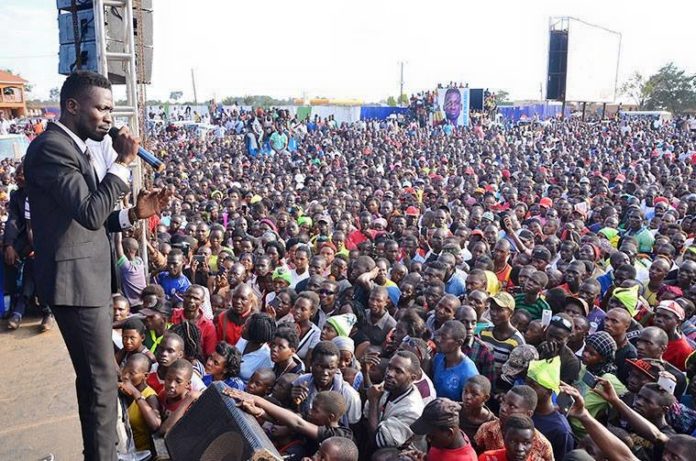
CANDIDATE: Bobi Wine addresses his supporters at the last rally held at Gayaza grounds .

The day in Kyadondo East begun with chaos as Robert Kyagulanyi popularly known as Bobi Wine, one of the candidates in the by-elections, got arrested.

The good news is, that normalcy has since returned since his release a few hours back, and he is now addressing his last rally at Gayaza grounds.

He has been escorted by colleagues from the entertainment fraternity, and among these is Catherine Kusasira and Ronald Mayinga to mention a few.

Addressing thousands of supporters that have turned up for the rally, Mayinja says that Bobi Wine’s candidature is a big inspiration to many artistes and he has made entertainers in the country feel proud. The by-election is set for Thurday, June 28.

“People often call us (musicians) lumpens but when they asked for qualifications while nominating candidates in the Kyadondo East by-election, they realised Bobi Wine had the same qualification like those who they call educated,” Mayinja boasted amidst wild screams from the crowd.

“Bobi Wine doesn’t end at music. He is a father, he is married. He is a student, studying law. He is a farmer. As musicians, we decided to go back to school. I went back to study and I am a student at Makerere University studying political science. All these people you are seeing here are not dancers, they are Makerere students. They requested me that since I enjoy a close relationship with Bobi, I should tell him that youths study but never get any employment,” Mayinja said.

Mayinja added: “We came to assure you that Makerere University has resolved our candidate is Bobi. We are ready to work with our fellow youth, Bobi and we are to do all we can to make sure no single vote is stolen.”

His wife Barbie Kyagulanyi on receiving the microphone thanked the people of Kyadondo East for turning up in huge numbers for the final rally of her husband.

“On election day, please make sure you wake up very early in the morning and head to polling stations in your areas. Once here, don’t look for Bobi Wine, look for Robert Kyagulanyi Ssentamu. To some of us who have difficulty in reading, look for a clock and that’s where you should place your tick or thumb,” she said amid cheers.


Stories Continues after ad

Kampala slum residents celebrate Eid with free health services

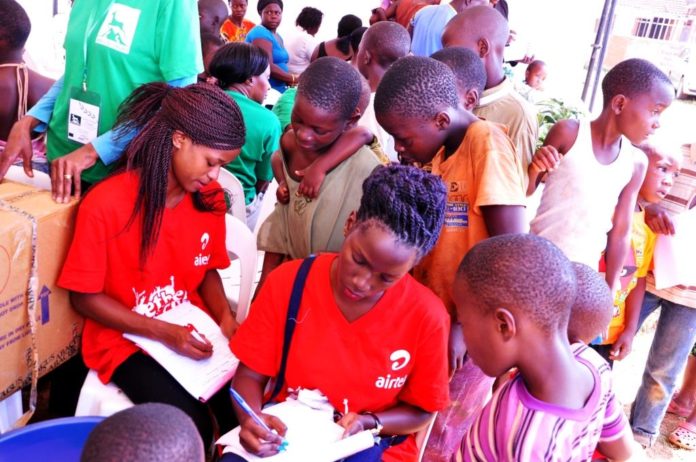
ACCESS TO HEALTH CARE SERVICES: Airtel-Uganda-staff-members-register-sick-children-at-the-recently-concl

Residents of Kosovo and surrounding areas – a health underserving slum area in the Rubaga Division of Kampala city celebrated their Eid day by accessing free health services.

Airtel staff members and a Hinds Feet volunteer carry an elderly lady to receive treatment at the recently held health camp in Kampala

Organised by Airtel Uganda community health fair in partnership with The Hind’s Feet Project, a non-profit organization that focuses on making health information accessible to all, free medical services were offered to hundreds of community members in an effort to improve their wellbeing and empower them with the basic health information and services they need to make appropriate health decisions.

The medical services offered included; Hepatitis B screening and shots, Dental, eye checkups and general medicine, Screening for HIV, diabetes, ulcers, blood pressure, syphilis, hepatitis B and malaria. The health fair also included safe male circumcision and free cancer screening services.

Improving health access is a core aspect of Airtel Uganda’s community engagement pillars of Education, Health, Digital enabled Entrepreneurship and the Environment. Airtel believes, strong health, quality education, relevant entrepreneurial skills and a good environment are the enablers required to empower Ugandans to build better livelihoods.

Speaking during the health fare, Airtel Uganda Corporate Social Responsibility Manager, Mrs. Charity Bukenya said: “At Airtel, we aim to improve the lives of Ugandans, not only by providing them with affordable and reliable telecommunications solutions, but also by increasing knowledge on general health and the use of preventive health services to help them live healthy lives.”

“Working closely with our partners, we will continue to reach out to other communities in Uganda,” she added.

The free community health fair is one of Airtel Uganda’s interventions that also include the Kabaka Run in support of Sickle Cell initiatives, and the recent blood donation campaign.

Airtel Uganda holds quarterly health camps in different medically underserved regions of Uganda, and this is second community health fair in 2017.

In March this year, Airtel Uganda held a community health fair at Nyakabaya Primary School in Nyarusiza, Kisoro district. Previous health fairs were head in Arua, Fort Portal, Kabale, Bugiri, Mbale, Lira, Bugiri, Kalerwe – Kampala.


Stories Continues after ad

State House Scholarships: Comptroller Nakyobe tries to confuse MPs with language

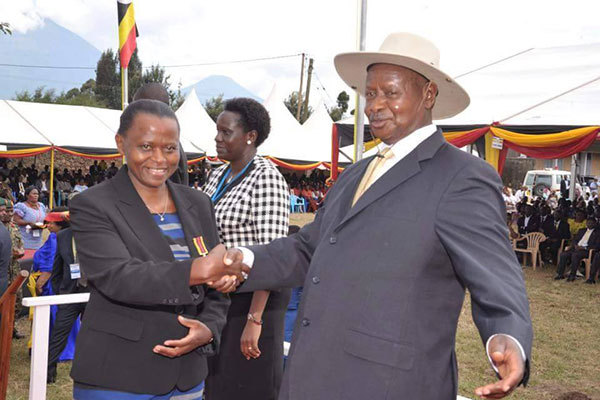
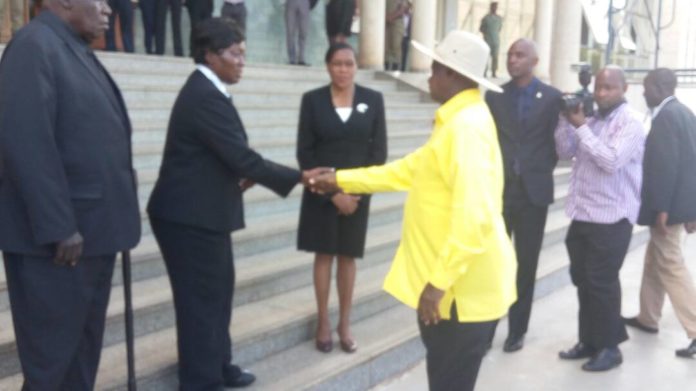
Museveni shakes hands with Lucy Nakyobe the state house financial Comptroller after receiving a medal of exemplary service.

State House Comptroller Lucy Nakyobe hid behind English words to try and get off the pan during a Parliamentary hearing where she was being grilled over the issue of State House scholarships.

To try save self, she told the MPs that State House does not give scholarships but fees.

The State House vault boss played the semantics card early today morning while appearing before the Parliamentary Committee on Equal Opportunities to answer queries showing State House scholarships.

Her remarks followed an argument fronted by the committee Chairperson, Muhammad Nsereko, (NRM, Kampala Central) who questioned legality of State House scholarships.

“Our money isn’t scholarship fund, what we use are donation funds. We haven’t been given money in the budget as scholarship funds,” she said denying any illegality in paying fees for the students benefiting from State House.

Mr Nsereko had pointed out Section 42(9) of the Higher Education Students Financing Act 2014 which calls for all funds paid by Government institutions to be channeled to Students Loan Scheme.

Mr Nsereko contended that it is illegal for State House to be running a parallel fund where the process of choosing beneficiaries is not transparent.

The meeting between State House officials and MPs followed complaints raised in the Minority National Budget report by Members on the Parliament Budget Committee.

Authored by Cecilia Ogwal and Muwanga Kivumbi, the duo opposed budget allocations for the said activity.

They argued that scholarships being offered at Secondary and Primary levels are parallel to Government policies of offering Universal Primary Education and Universal Secondary Education.

In its just passed budget breakdown, State House  is set to spend Shs2.4b on 20 university students abroad (continuing), university students abroad (new in-take 41 doctors for specialized training, 2 for ICT training and 2 petroleum Engineers at Shs3.8 billion.

2031 University students in Uganda will account for Shs11.7 billion while 85 Students in other Tertiary institutions will account for Shs782 billion.

The First House plans to spend another Shs1.6 billion on 707 secondary school students and Shs188m will be spent on paying fees for 85 pupils in primary schools.

Although the authors of the Minority report had proposed the Shs20b on State House Scholarship be diverted to the Students Loan Scheme, where no money had been committed, their proposal was rejected.

Stories Continues after ad

Cindy’s performance excites Mbale fans at NBS TV’s Fashion Show

Cindy Sanyu at one of her past shows

Female dancehall queen, Cindy Sanyu staged a lit-up performance that left her Mbale fans yearning for more at the NBS organized Runway Heat show.

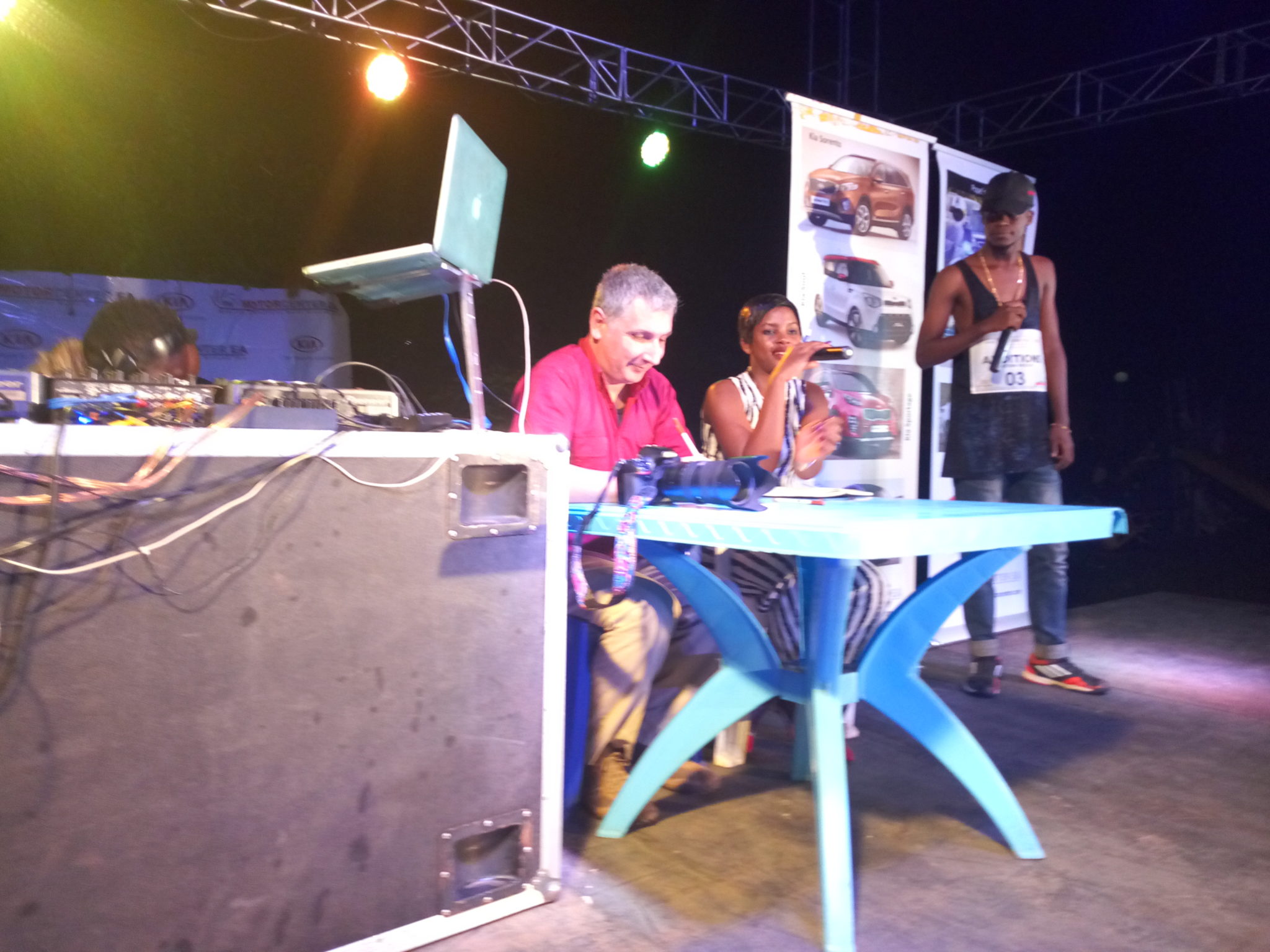
Hosted at Thatch Gardens, Mbale on Eid day, the event kicked off with fashion showcase by different designers showcasing amid search for the best models in Mbale, which stretched to midnight before celebrated DJ, Mark of NBS TV took to doing what he does best – spinning.

After about ten minutes of entertainment, Cindy finally took to the stage in company of her four dancers and were welcomed with screams and ululations from her fans.

As always, she didn’t disappoint. She kicked off her performance with her hit ‘One and Only’, a song to which her fans danced and sang along to.

This was followed by other songs; Dat Dat, Run this City, Sample Dat, Ndi Mukodo among other songs.

The crowd knew and sang and danced along to all her songs but it was ‘Tempo’ a remix she recorded with Kenyan musician, Dufla Dilligon which was the crowd’s favourite. Nevertheless she had saved her best for the last as this was her last performance before the talent in House DJ, Sadamix Pro took to the disks.

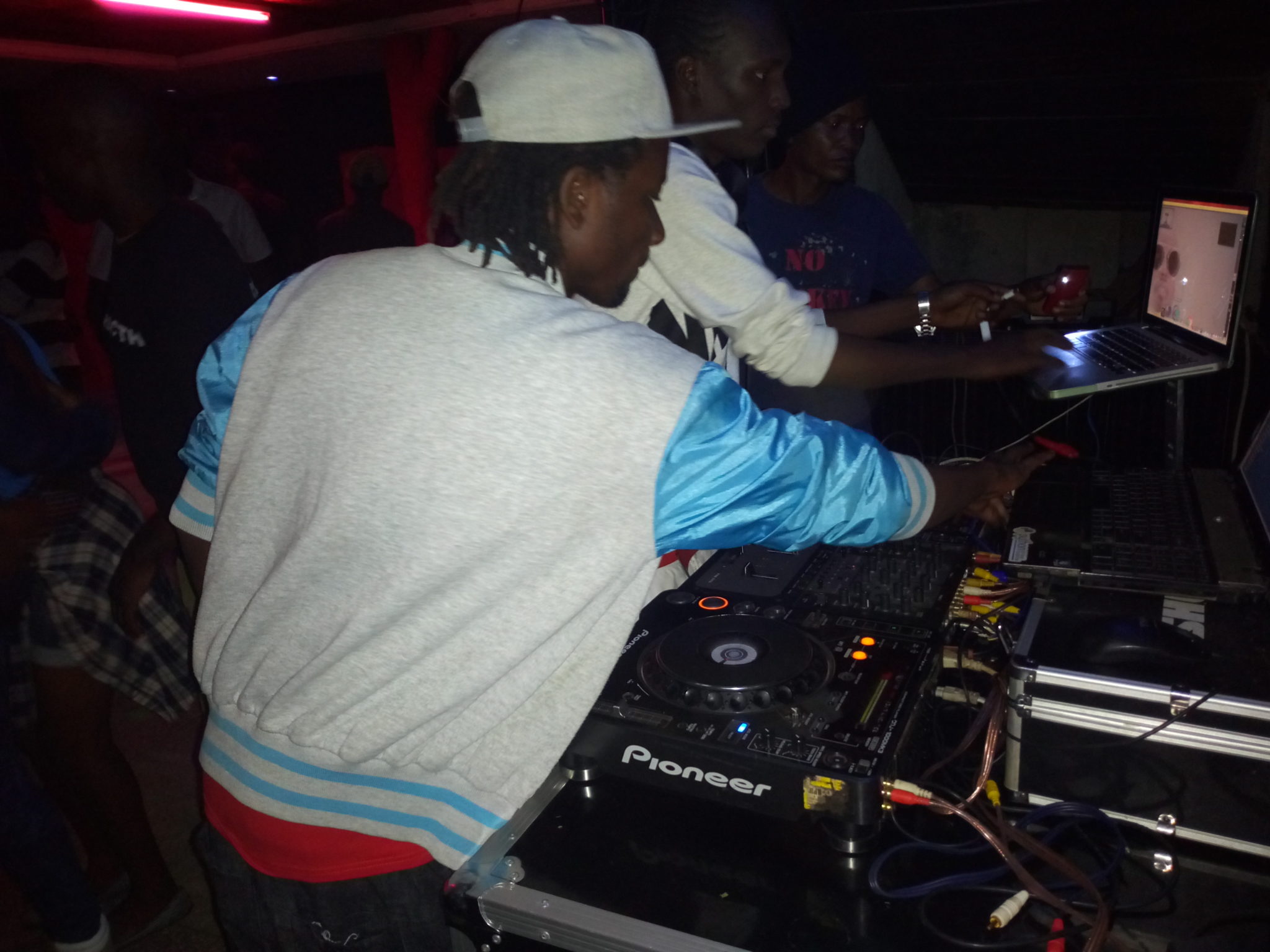
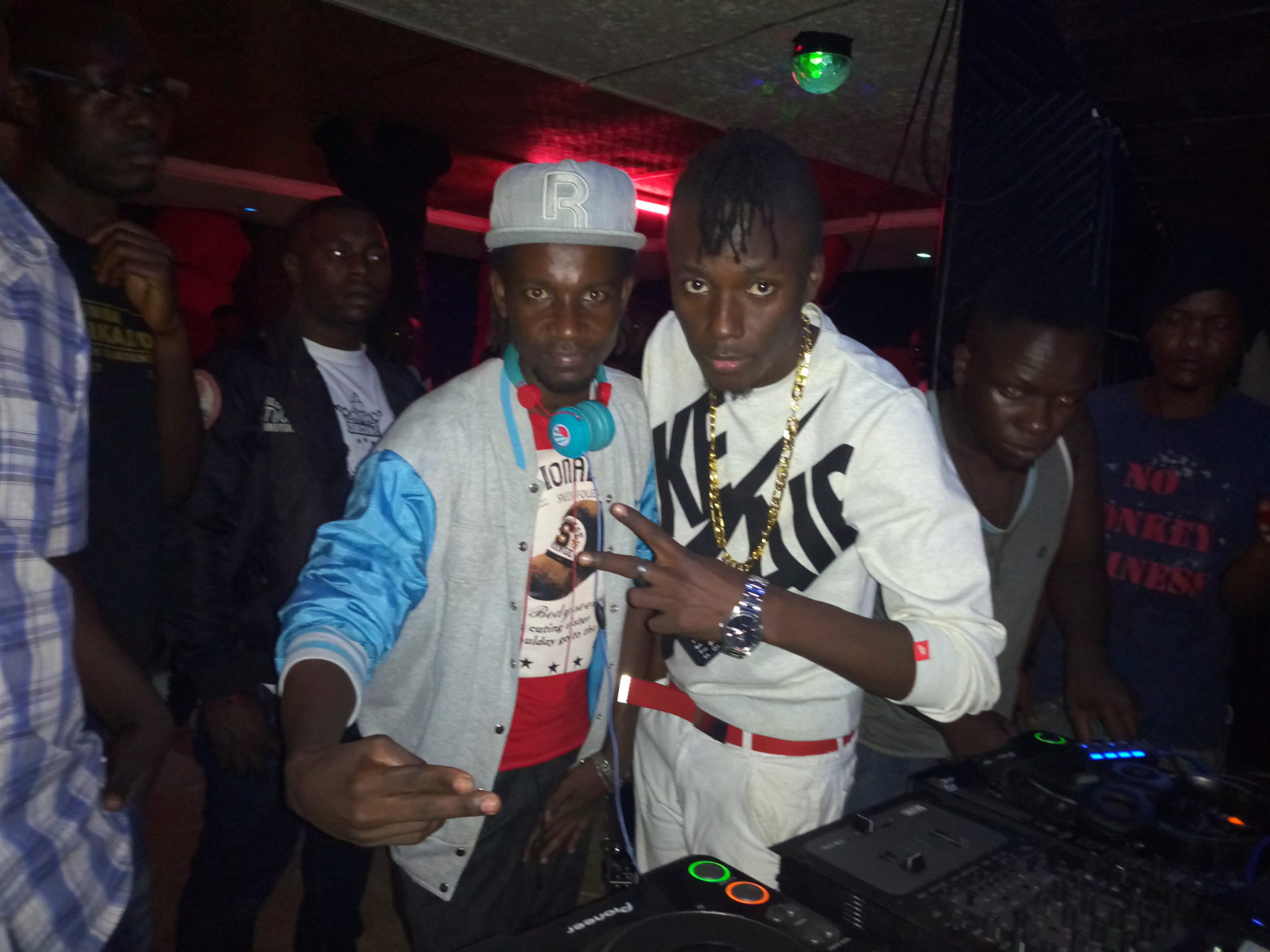
He lived to the mood left behind by Cindy as he kept revelers on their feet, dancing to some of the biggest hits in the country. His music selection and skills on the decks did the magic in keeping revelers pulling out their best dance strokes till dawn. No wonder he emerged Mbale’s best DJ in the just concluded Club DJ competition in the Eastern town of the country.


Stories Continues after ad

Museveni eulogizes Mutagamba

President Yoweri Museveni being welcomed by Speaker Rebecca Kadaga

Members of Parliament have this afternoon paid tribute to fallen former Minister of Tourism, Wildlife and Antiquities, Maria Mutagamba, at a function attended by President Yoweri Museveni.

The late Mutagamba’s body arrived at Parliament at exactly 10am  and was received by Speaker of Parliament, Rebecca Kadaga alongside Government Chief Whip, Ruth Nankabirwa.

EULOGISED: Former Minister Maria Emily Lubega Mutagamba

Mutagamba, who retired from active politics as Rakai Woman MP, succumbed to cancer of the liver at Case Clinic on Saturday, where she had been rushed, after first complaining of stomach complications early this year.

Ahead of the February 2016 general elections, Mutagamba informed journalists of her retirement from active politics citing ill health.

In a rare gesture, President Museveni joined the rest of the nation to mourn the fallen ‘Miss Tourism’ as she was called by her peers at the Ministry, having spearheaded the beauty pageant during her reign.

President Yoweri Museveni arrives at Parliament

Museveni arrived at Parliament at 12:10pm where he paid his respects, immediately held a closed day meeting with Mutagamba’s family and left immediately. He, however, declined to address journalists and was immediately whisked out of Parliament’s premises.

Top on the issues MPs are expected to discuss is the failure by Government to procure a cancer machine at Uganda Cancer Institute.

After the Parliament sitting, Mutagamba’s body will be transported to Rakai district and will be followed by a vigil at Gamba Village Kakuuto Sub-county.
She will then be laid to rest tomorrow with a mass set to be officiated by Masaka diocese prelates.

Ms Juliet Kiinyamatama, Rakai Woman MP, spoke candidly about Mutagamba, describing her as a mentor, telling journalists she is saddened by her death, given the fact that the deceased won’t have an opportunity to see the development she will bring unto the people in Rakai.


Stories Continues after ad

Bankers to hold conference amid calls to reduce interest rates

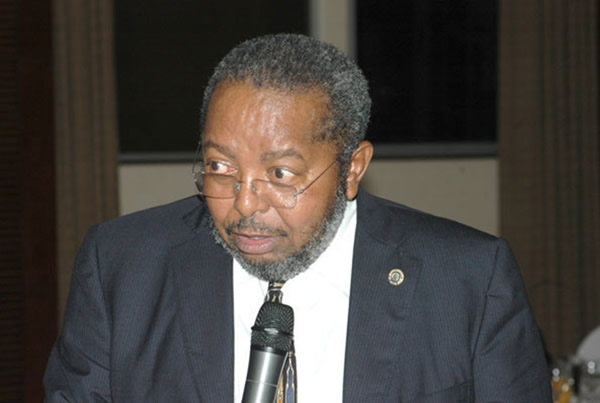
Mutebile wants banks to cut interest rates

Having released their financial reports for the year ended December 2016, member banks of the Uganda Bankers Association (UBA) will hold a conference to take stock of their business activities that saw most banks make impressive profits and accumulate assets despite a bad economy characterised by low production.

Organisers say bankers and other participants at the conference will gain insights from global, regional and country specific issues, trends and drivers in the banking and financial services sector.

Fabian Kasi, Chairman Uganda Bankers Association

They will also discuss the dynamics that are increasingly shaping sustainability strategies in banking and finance. The Conference is scheduled for 19th July 2017 in under the theme, “The Future of Banking”

The event is expected to attract banking and non-bank financial sector executives, international development partners and multi-lateral agencies, investment advisors, regulators, research associates and academia, among others.

However, as bankers plan to hold their meeting, there is concern within the Ugandan society that commercial banks reduce their prime lending rates to encourage private sector borrowing. “Hope they will agree to reduce their rates,” an economist says.

Mid June, Bank of Uganda (BOU) cut its central bank rate (CBR) to 11%, expecting commercial banks to follow by cutting their prime lending rates. Currently it is only Stanbic Bank that has reduced its prime lending rate to 19%.

On average, Ugandan commerical banks lend at 20.5 percent, but this only happened this year, as of February 2016, the average lending rate was 25.2%.

BOU Governnor, Prof. Emmanuel Tumusiime-Mutebile has always urged commercial banks to peg their lending rates to the CBR, but this is far from happening, much as Prof. Mutebile says the reduction would attract the private sector players to borrow and boost production.

The conference also comes at a time when government is determined to introduce the Islamic mode of banking which gives interest-free loans, but borrowers instead share profits and losses with the banks.

Experts say Islamic banking, if launched in the country would help those without collateral to borrow to do business. Collateral as a form of security in terms of titiled fixed assets such as land, buildings, has evaded most would-borrowers.

Prince Kassim Nakkibinge, the MD Cairo Bank, says collateral is a big challenge for the local banking sector and that it needs to be addressed. “The issue of collateral is a big challenge,” he says.

The commercial banks have been accused of mainly targetting salaried workers at the expense of the majority of the population who dont have a steady flow of income. “They should come up with ways of reaching people in the informal sector,” says Milton Seguya, a welder in Kisenyi, a Kampla suburb.

Other people have called on government to cap the lending rates like Kenya did recently.

But the bankers’ association says capping interest rates could be counterproductive for the Uganda economy an interest control regime could instead stifle free market forces, expose lenders to possible collapse, discourage credit growth.

In a statement released months ago, Wilbrod Humpreys Owor, the executive director of the Uganda Bankers Association argued that capping interest rates “does not necessarily translate into lower cost of credit and discourages banking players investing further.”


Stories Continues after ad