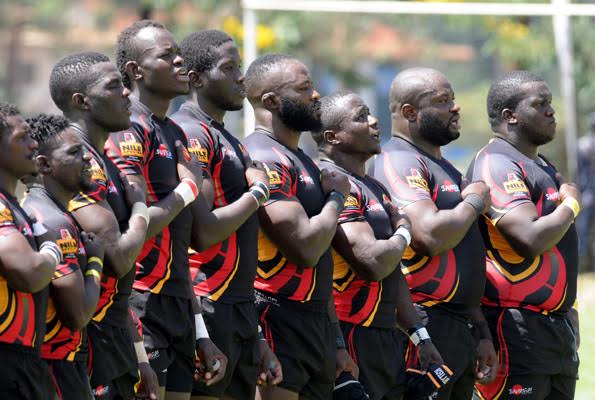
READY FOR ACTION: The Rugby Cranes are set to play today in Kenya
Today Kenya hosts Uganda in the second leg of the Elgon Cup which doubles as the opening round of the 2017 Rugby Africa Gold Cup.
Uganda remains optimistic to make up and earn a win after losing 18-23 to the Simbas in the first leg of the Elgon Cup at Legends in Kampala.
Brian Odongo will captain the Rugby Cranes in today’s opening Gold Cup game which also doubles as the second leg against the Kenya Simbas as there are a number of major surprises in the team selection.
Starting line-up
Forwards
Asuman Mugerwa
Alex Mubiru
Brian Odongo
Mathias Ochwo
Charles Uhuru
Brian Asaba
Scot Oluoch
Marvin Odongo
Backs
Ivan Kirabo
Ivan Magomu
James Odongo
Pius Ogena
Michael Okorach
Lawrence Ssebuliba
Philip Wokorach
Substitutes; Cyrus Wathum, Collins Kimbowa, Adnan Mutebi, Cox Muhigwa, Musa Mwonge, Gerald Ssewakambo, Justin Kimono, Makmot Kevin.
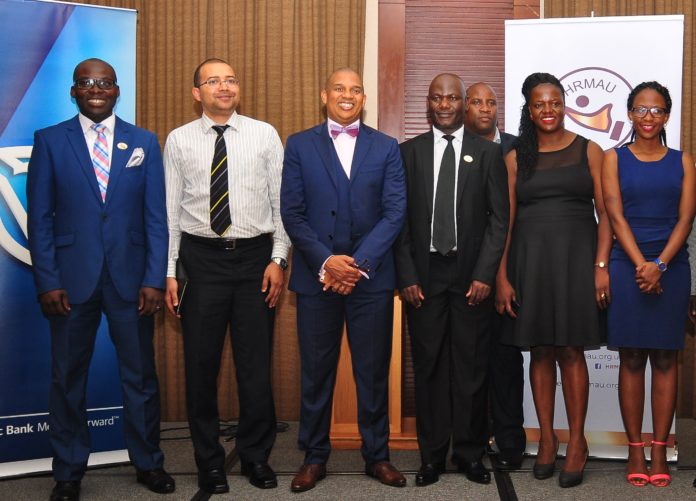
Uganda’s Human Resource leaders have been challenged to embrace changes in organizational culture if they are to remain relevant with the times.
The advice was given by internationally renowned motivational speaker and leadership coach, Lincoln Mali from South Africa while giving a keynote presentation at a leadership dinner hosted by the Human Resource Managers Association of Uganda (HRMAU).
Lincoln, a professional banker with over 18 years of experience currently works as Standard Bank’s Group Head of Card and Emerging Payments across Africa in Personal and Business Banking.
In his keynote address Lincoln gave professional advice, high level insights and practical examples on the theme of the day, “Harnessing organizational culture and demographics for strategic business achievements.”
“There is a big generation gap dominating many companies. Millennials today are coming into the workforce in big numbers with different perspectives on how to execute tasks. They are confident, curious, value diversity, have high expectations and are thirsty for knowledge; human capital leaders have to create an enabling environment and embrace them as a reality,” he noted.
The US Bureau of Labor Statistics predicts by 2020 Millennials will make up 50% of the US workforce and 75% of the global work force by 2030.
Speaking after the dinner the President of the association Patrick Ngolobe noted that Lincoln Mali’s presentation was very inspiring. He advised fellow professionals to put their theories into action.
“Human Resource leaders and captains of the industry must rise up to the challenge of organizational culture, we must model and reinforce culture that we desire through our behavior, character, systems and models and have less talk and slides; leaders who do not catch-up to this reality will be out of business and jobs sooner rather than later,” Mr. Ngolobe said.
He added: “As an association we believe constant exposure to global best practices is important for the personal and professional development of our members which directly links to the quality of our labour market both at the side of the employees but also within the work environments we continue to enhance, a reason as to why we continually bring high profile presenters such as Lincoln to share their experiences and encourage members of our profession to improve their skills.”
The HRMAU dinner is the first major event Lincoln has spoken at in Uganda. An internationally renowned and respected motivational speaker, he holds a BA LLB (Rhodes University); MBA (Henley Management College – UK) and an AMP from Harvard Business School.
He has been a main speaker at a number of high level global conferences including the WeLead Women’s conference on the topic “Fathers with daughters – role models who shape lives and create leaders” held in Johannesburg in March.
Lincoln thanked HRMAU for inviting him to the dinner and Stanbic bank Uganda for making the trip possible.
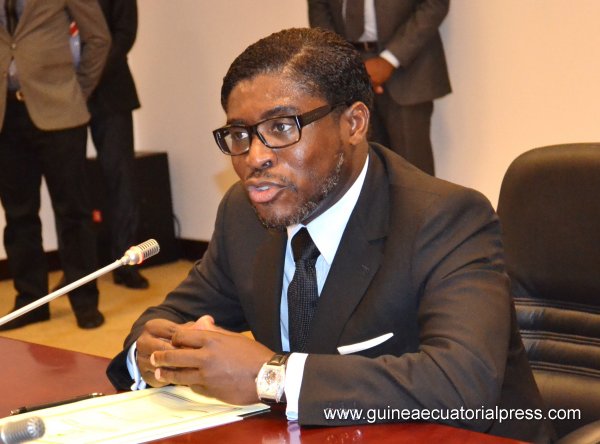
CHARGED WITH PLUNDER: Equatorial Guinea VP Teodoro Nguema Obiang Mangue
The son of Equatorial Guinea’s President is on trial in France for splurging on a Parisian mansion, a private jet and a fleet of luxury cars using tens of millions of dollars he allegedly looted from his country.
Teodoro Nguema Obiang Mangue’s trial on charges of embezzlement of public funds and money laundering started in Paris on Monday and is expected to last several weeks.
Prosecutors say he’s amassed a fortune, including an opulent mansion near the Champs-Elysees, along with Bugattis, Ferraris and an Aston Martin. He also allegedly spent millions of dollars on pricey European art and jewelry.
He also owns a yacht named Ice, which reportedly costs about $800,000 a month to maintain
Obiang, 47, serves as his father’s vice president and earns about $100,000 a year in that role, according to his lawyer, Emmanuel Marsigny.
In addition to his government job, the lawyer said, Obiang has income from his various private businesses in the central African nation.
“He is accused of money laundering for investing or spending funds in France that would come from offenses committed in Equatorial Guinea,” his lawyer told CNN.
Marsigny said his client, who has not appeared in court so far, has diplomatic immunity.
Secretive nation
The trial of the President’s son is being watched closely in Africa, where corruption is a major problem among government officials.
Obiang’s father, President Teodoro Obiang Nguema Mbasogo, seized power in a 1979 coup and is the longest-serving head of state on the continent.
Equatorial Guinea is a former Spanish colony rich in oil, but a majority of its population lives in poverty.
The country has mostly stayed out of the headlines by maintaining a tight lid on information. The trial gives an insight into the financial workings of one of the most secretive nations in the world. So much so, that for several years Transparency International described Equatorial Guinea as ‘too opaque to rank’, saying it could not get enough data on it for the global corruption index.
Why France?
Obiang amassed his wealth in France, but Marsigny said it has no jurisdiction to charge him for alleged money laundering in Equatorial Guinea. He said the case is an example of French courts intervening in the affairs of a sovereign nation.
His client, he said, acquired his personal fortune legally, and his financial dealings were not illegal in Equatorial Guinea.
“Equatorial Guinea examined the proofs presented by the French prosecutor and ruled on June 12 that no offense had been committed,” Marsigny said.
“The vice president’s defense contests the right of French justice to substitute Equatorial Guinean justice, to judge offenses committed in Equatorial Guinea while applying French law.”
Obiang has always declared his taxes in France, and has a bank account under his name in Equatorial Guinea, according to Marsigny. He said he has no offshore accounts.
10 years in the making
Efforts to charge Obiang with money laundering started nearly a decade ago when Sherpa, a group that says it protects and defends victims of economic crimes, filed a complaint along with several nongovernmental organizations accusing him of using public money to buy property in France, a favored destination for African leaders.
After France’s highest court said it had jurisdiction to try the case, Obiang’s lawyers asked the International Court of Justice in The Hague to intervene. In December, the UN court gave the Freench court a go-ahead, but ruled that it should treat the Paris mansion as Equatorial Guinea’s diplomatic mission.
US corruption settlement
France is not alone.
In 2014, the United States agreed to a settlement following allegations that Obiang used money plundered from his country to amass assets such as a Malibu mansion, a private jet and Michael Jackson memorabilia.
Under the settlement, the Justice Department allowed Obiang to keep a Gulfstream jet and most of his Michael Jackson collection, including the white glove from Jackson’s “Bad” world tour. Those assets were not in the United States, the Justice Department said, but they could be subject to seizure if they ever come to the country.
At the time, Obiang disputed the US allegations and said the assets, including a $30 million Malibu mansion, were purchased with proceeds from his businesses. He admitted no wrongdoing in the settlement.
As part of the settlement, Obiand had to sell the Malibu mansion, a Ferrari and pay $20 million to a charity that benefits the people of Equatorial Guinea.
Under the settlement, the US government kept about $10 million.
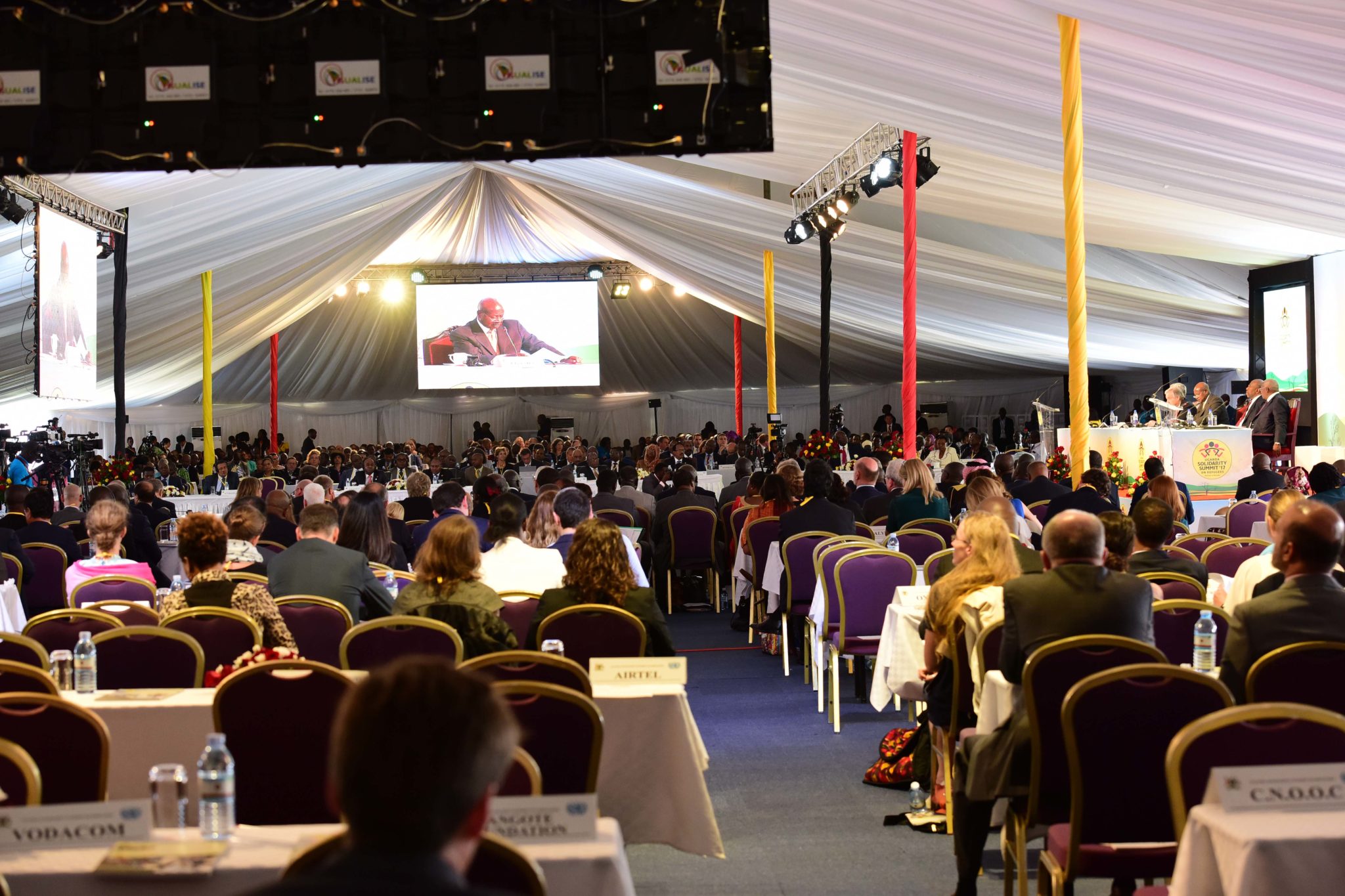
President Yoweri Museveni with the UN Secretary General Antonio Guterres at the Refugee Summit in Munyonyo
OPENING REMARKS BY H.E. YOWERI KAGUTA MUSEVENI
PRESIDENT OF THE REPUBLIC OF UGANDA
ON UGANDA SOLIDARITY SUMMIT ON REFUGEES
Your Excellencies, Heads of States and Governments,
The Secretary General of the United Nations, H.E. Antonio Guterres,
The United Nations High Commissioner For Refugees, H.E. Filippo Grandi,
Hon. Speaker of the Ugandan Parliament,
The Chief Justice,
Their Excellencies the Heads of Delegations,
Hon. Prime Minister,
Ministers,
MPs,
District Leaders,
Refugee Leaders Present,
Distinguished Delegates,
Ladies and Gentlemen.
I greet you and welcome you to Uganda. We are happy that you decided to hold this big Conference on Refugees here in Uganda.
We the indigenous people of the Great Lakes, have been dealing with refugees (empuungyi, abashuhuukyi, etc.), for millennia. Our concept of refugees was dynamic, not static like the concept we hear about today.
Participants at the Refugee Summit
When there was a bad ruler (king or chief), portions of the population could kumwimuura (withdraw allegiance from a ruler) and they would okwehongyera (pledge allegiance to a new ruler). Thereafter, they would become citizens of the new area. Sometimes, there would be civil wars or wars of succession. The losing party would flee to another kingdom where they would be secure. To give example, in one of our kingdoms, Buganda, there was a succession war between two princes: Semakokiro and Jjunju, in the year, 1797. The faction that lost scattered all over East Africa and became citizens of the new areas. There are now six districts in the East African countries of today where the Diaspora of that conflict are now resident. They are no longer referred to as Baganda. In Kamwengye district, they are called Batagweenda with a Parliamentary constituency. In Ibaanda, they are again, called Batagweenda with a Parliamentary constituency. In Kamwengye they are part of the Batooro people. In Ibaanda, they are part of the Banyankore people. In Rubirizi district, where they are part of the Banyankore people, they are called Banyaruguru or Bakuunta (the ones who came with rugs).
The word Batagweenda means the ones that could not continue travelling (fleeing ─ kugyeenda). Banyaruguru refers to those who could run more and more (fleeing).
The Diaspora of the Jjunju – Semakokiro war did not end in Western Uganda. Some are in Kayunga, which was not part of Buganda at that time. Others are in Pallisa. In these two districts, they are called Bakenyi (originally Bagyenyi). Two other branches went to Kenya and Tanzania. In Kenya, they have a whole district to themselves known as Suba district. In Tanzania, they are part of the Musoma-Kuria groups. They are called Basuba in both countries. This is a corruption of the Luganda word: “Abasubwa” ─ the ones who “missed” ─ meaning the ones who missed the throne. In all the direction of their dispersal, these Baganda became the citizens of the new kingdoms.
Occasionally, the refugees could go back to their countries of origin. Prince Bacwa of Ankole, a great commander, accidentally, killed a person and was exiled to Rwanda. Later, the Rwanda kings, on some suspicion, killed him; but he left a son, Bikwatsi.
Bikwatsi was invited back to Ankole and his people are still around. These refugees would bring new skills ─ bark-cloth making, medical skills, etc, etc. This was our concept of managing refugees before the onset of colonialism.
Moreover, it is not that difficult to absorb or to co-exist with the refugee groups because the entirety of the African population is comprised of only 4 linguistic groups. These are: the Niger-Congo group of languages, the Nilo-Saharan, the Afro-Asiatic and the Khoisan. These linguistic groups are either similar or linked. Given our Pan-Africanist ideological orientation and the history of our people already captured above, it is not such a difficult problem to absorb or co-exist with refugees from within Africa.
Nevertheless, the sudden large numbers of refugees present the following problems:
feeding them;
sheltering them;
providing energy for them (for cooking, lighting, etc), so that they do not destroy the environment by cutting trees;
water for household use and production;
allowances for clothing and other household needs;
education for knowledge and skills so that , having lost property in their home countries, especially for the children and the youth, do not lose time for knowledge and skills acquisition; and
health ─ immunization, treatment, etc.
If the International Community assists us to cope with these challenges, we shall manage as we have done in the past.
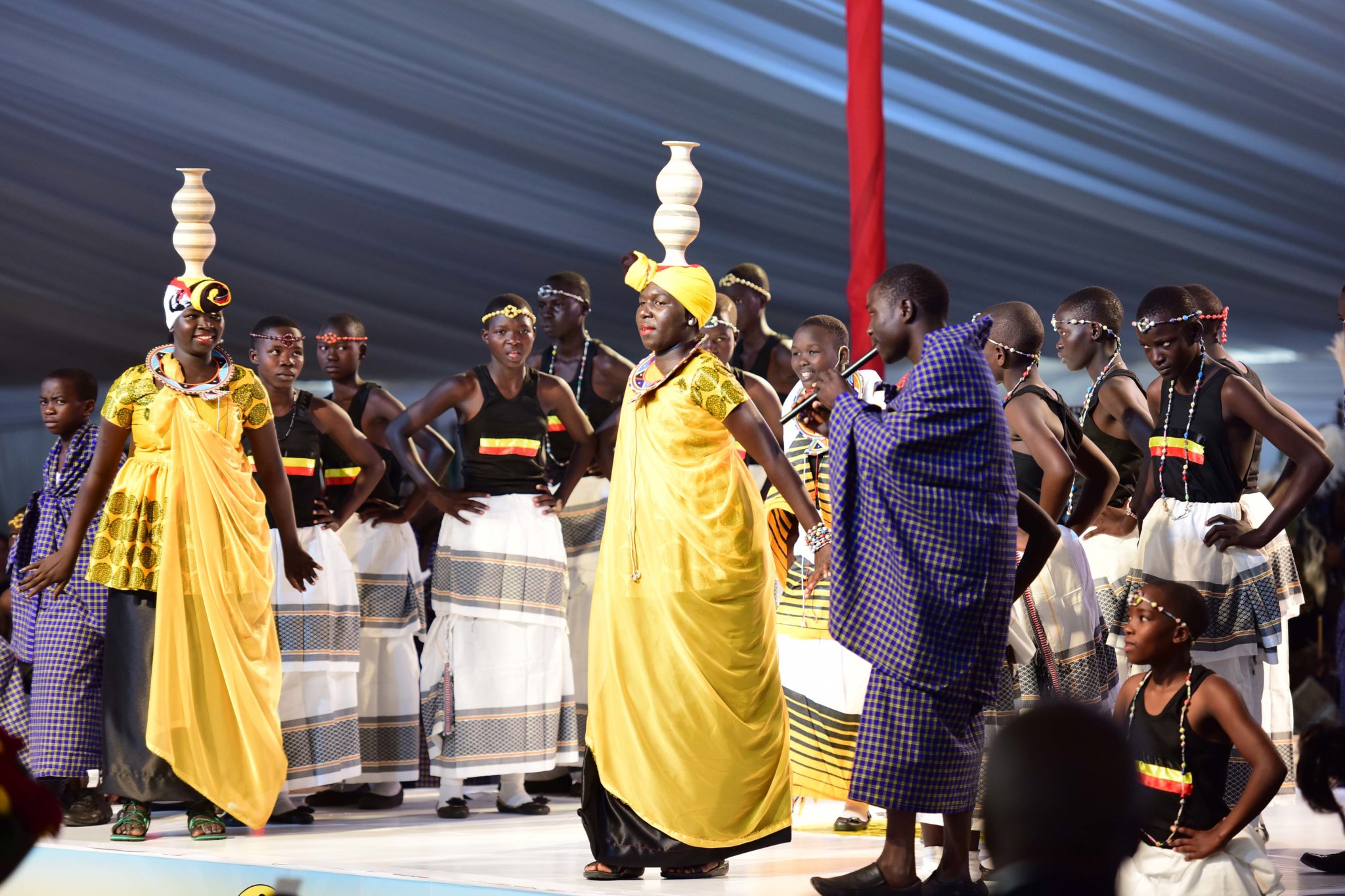
Refugees stage a concert during the summit
Currently, Uganda is hosting the following number of refugees:
950,000 refugees from South Sudan;
216,612 refugees from the Congo;
3, 294 refugees from Sudan (Khartoum);
36,278 refugees from Burundi;
35,941 refugees from Somalia;
14,899 refugees from Rwanda;
12,654 refugees from Eritrea;
3,080 refugees from Ethiopia; etc., etc.
As of today, there are 1,271,000 refugees in Uganda.
In terms of avoiding conflict with the rural populations of Uganda, we discourage the rural migration of refugees beyond the gazetted camps. However, when they have skills and capital, our African brethrens that are unfortunate to be refugees, can locate to the urban centres and participate in the sectors of industry, services and ICT. The International Community should assist those who are able to acquire that mobility.
The hosting districts of Uganda should also be rewarded. Especially in the area of the road infrastructure, the government of Uganda is already doing most of the development required. On account of many demands, however, there are certain roads that over-night become of high demand because of the sudden big numbers in the area on account of the influx of refugees. There are, in particular, two roads that should be bituminized but the government is not yet able to take on. These are: Moyo-Yumbe-Koboko, in the neighbourhood of the famous Bidi Bidi camp in Yumbe district that is hosting 272,168 refugees today; and Kabiingo-Rugaaga-Magabi-Rakai that starts from the famous Nakivaale Refugee Settlement camp that looked after the Rwanda refugees between 1960 and 1994 and is still hosting different waves of subsequent refugees.
The Uganda government will, eventually, do these roads. If, however, the International Community was to expedite that process and we informed our people in the areas, they would understand that their hospitality has not been in vain.
Finally, a word on the factors that cause refugees to flee their countries of birth. The poor African people either flee from bad governments or from criminal, terrorist groups or from both. Sometimes, of course, they may flee from drought which is easier to understand because it is not man-made. It is the man-made crises that are totally unnecessary and should be condemned. The regional mechanisms, if actively used, supported by the International Community can help resolve the man-made crises. Hence, the Great Lakes and the UN are supposed to handle the endless man-made crises in Congo, including the occupation of Eastern Congo by terrorists from Uganda, other East African countries, Congo itself and, I hear, even Somalia and the Middle East.
The ICGLR and the UN have been totally un-useful on this long-standing tragedy in that area. IGAD is trying to handle the problem in South Sudan. President Salva Kiir has additionally, mandated me to deal with certain aspects of that crisis. The EAC is handling the problem of Burundi. I appeal to the Government of Burundi to make our work easier than it has been. The Burundi-Arusha Agreement was guaranteed by the East African Governments. Any failure there will, in part, be our responsibility.
The problem of Somalia where we are, rests more with the Somali leaders. Otherwise, the IGAD, the AU and the International Community have done alot to save Somalia from the demonic groups that had overrun the country. If the Somali leaders could use the solidarity of the Africans and the World to revive the pillars of the Somali State (the army, the police, etc) and form patriotic parties, the terrorists could be defeated completely and Somalia’s recovery would be irreversible.
Bad politics, utilizing the pseudo-ideology of opportunistically exploiting identity of religion or tribes is behind most of these crises.
The ideology of sectarianism in Africa must be condemned. Uganda suffered from those mistakes until we formed the Student Movement in the 1960s that rejected the pseudo-ideology of exploiting identity and emphasized the ideology of pushing for the legitimate interests of our people (development, peace, wealth creation, market access, education, health, etc). It is that Movement of patriotism as opposed to sectarianism and Pan-Africanism as opposed to parochialism that helped us to rescue Uganda.
The leaders, both in Government and Opposition, of the suffering countries have a very serious historic responsibility to end this haemorrhage and suffering of the poor African people affected.
I thank you for this Solidarity Conference. I wish the Conference success.
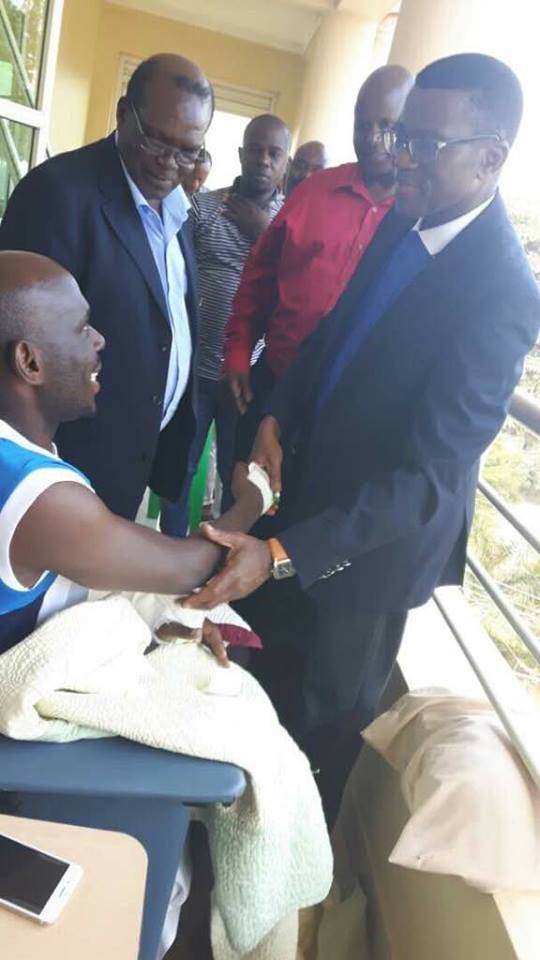
QUICK RECOVERY: Katikiro Charles Peter Mayiga while visiting socialite Sulaiman Kabangala Mbuga aka SKMbuga.
Following a motor accident at the weekend, Socialite Suleiman Kabangala Mbuga popularly known as SK Mbuga has been receiving several visitors at his home in Buziga.
And today was a bit different; Buganda Katikiro Charles Peter Mayiga and Major Juma Seiko and Frank Gashumba this afternoon visited Mbuga and wished him quick recovery.
Mbuga was Sunday involved in a nasty accident that nearly cost him his life when a BMW motor bike he was testing crashed into a wall, three meters from his home. He was rushed to Nakasero Hospital while in critical condition.
Meanwhile, Katikiro Mayiga and former Prime Minister Amama Mbabazi checked on ailing Democratic Party (DP) stalwart, Ssebaana Kizito, who has been in a coma for most of this week.
Amama was seen driving himself today to Nakasero Hospital, where Ssebaana is admitted, and sources at the hospital confirmed he had visited the veteran politician.
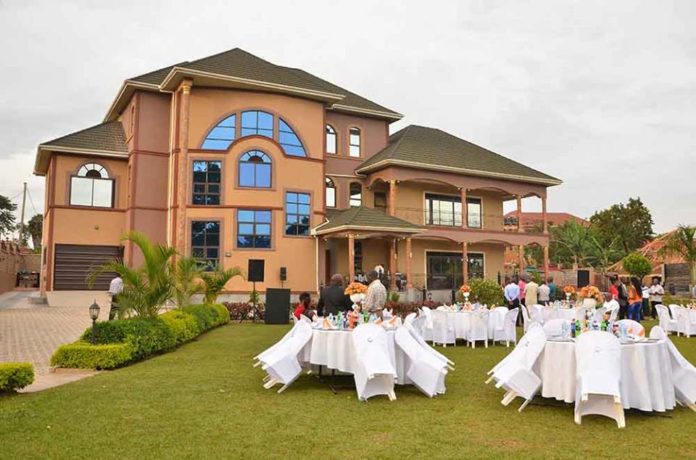
Ettoffaali boss, John Fred Kiyimba, popularly known as Freeman has completed the construction of his mansion that he claims cost him Shs10 billion.
Located in Lungujja, the 18 bedroomed house That has 40 CCTV Cameras, a lift and each room has a TV set including bathrooms, has taken him three years to complete.
Fred-Kiyimba-Freeman
Kiyimba, only 43 years, says he got the plan of the house from the US while materials that were used on its construction were sourced from UK and China.
The house-warming party was attended by famous city tycoons including Godfrey Kirumira, John Ssebalamu, Steven Katabaazi, Haji Hamis Kiggundu (Ham), Topisita Nabbaale, Agnes Babirye, Tom Kitandwe and Ephraim Ntaganda. KCCA Executive Director, Jenifer Musisi was also among those in attendance.
The house is just the latest addition to his assets; last year he acquired a brand new Range Rover Sport 2016 model that costs over $80,000 (about Shs 285,000,000 million) before tax.
Kiyimba is the chairman of Buganda Twezimbe, which is in charge of collecting funds ‘Ettoffaali’ for the reconstruction of the burnt Kasubi Tombs.
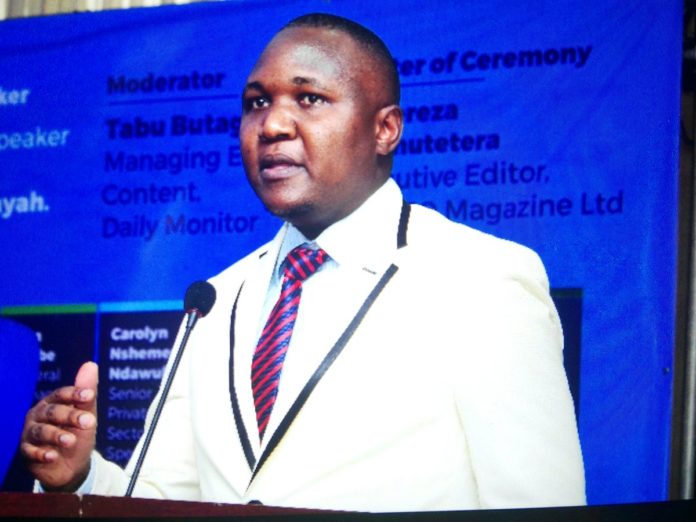
Seasoned journalist Isaac Midas Imaka has joined the EagleOnline team as Political/Current Affairs Editor, and with his vast experience reporting on the energy, oil and gas sectors, is expected to drive the publication to greater heights.
Imaka, who until a week ago worked with Daily Monitor as the Parliamentary Chief Reporter, resigned and will start work at his new station tomorrow.
An Alfred Friendly Fellow, Imaka had a six-month stint in the US studying at the Missouri State University majorly focusing on ‘mobile’ journalism, while also working with the Miami Herald. He also holds a degree in journalism and mass communication from Makerere University, and heads the Uganda Parliamentary Press Association (UPPA).