Stanbic Bank
Stanbic Bank
24.5 C
Kampala
Stanbic Bank
Stanbic Bank
Home Blog Page 1846

‘Crisis meetings’ as NTV loses another employee to NBS

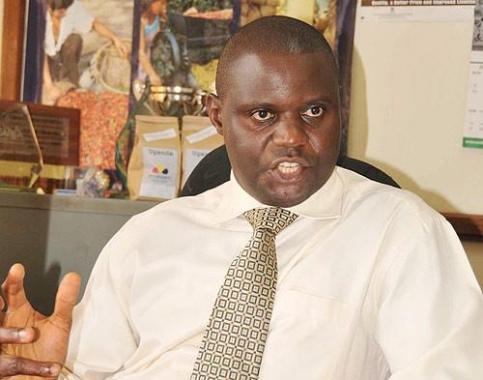
IN PANIC MODE? NTV MD Aggie Konde

Nation Television (NTV) Managing Director Agnes Asiimwe Konde is scheduling a series of hasty crisis meetings amidst a threatening exodus of employees, troubled by the recent introduction of a new pay structure.

According to sources, Ms. Konde’s meetings with selected staff followed the resignation of long-serving reporter Gertrude Tumusiime Uwitware, who reportedly left after getting disgruntled with NTV’s current pay structure where ‘you earn for what you produce’ that came into force in May.

Uwitware handed in her resignation on Monday and by yesterday she had signed a contract with NTV’s main rival, NBS TV, the source said.

The development is said to have sent Konde into panic mode, prompting her to convene the meetings with some of her most treasured employees.

Gertrude Tumusiime Uwitware


According to one of those who met her but preferred to remain anonymous, Konde is said to have pleaded with the others to stay.

Further, the source said some asked for salary increment while others pledged loyalty, saying they were okay with their current earnings.

Uwitware’s departure came barely a month after the resignation of NTV’s head of marketing, Collins Mugume.

Uwitware joined NTV in 2013 and has been presenting ‘Living Life’, and ‘Tetenkanya Obulamu’, a news feature that highlights the everyday life of ordinary people in Uganda.

Reports also reveal that a senior editor with same TV is negotiating with an international media house to crossover as the local editor for the said agency. Details of the deal will exposed on www.eagle.co.ug after signing of the contract.


Stories Continues after ad

Stanbic Bank loan applications rise, competitors remain silent on interest cuts

REDUCED LENDING RATES: The headquarters of Stanbic Bank

Stanbic Bank has realized positive changes in loan applications since it slashed its prime lending rate it was charging borrowers before June 1, 2017.

“We are seeing positive changes in the uptake of loans since we operationised the new interest on June 1,” said a junior worker in the Stanbic’s loans department, who preferred to remain anonymous for fear of reprisal from his seniors.

And when this reporter talked to some customers at the counters, most were pleased with the new offer, calling on other banks to reduce their rates.

“I have been a client of this bank (Stanbic Bank) for a long time and I hope the bank will continue to reduce the interest,” a client who said he was a teacher responded as he prepared his loan requisition papers.

When asked about the new rate, another customer who claimed to be a businessman said: “Banks should reduce their interest rates to at least 15 per cent.”

Stanbic Bank, the biggest local commercial lender by capitalization and assets, cut its lending rate from 19.5 to 19 per cent following the Bank of Uganda reduction of the Central Bank Rate (CBR) to 11 per cent.

In so doing the BoU, which regulates the local financial sector, had hoped that all the 23 commercial banks would also revise their interest rates downwards to attract private sector borrowers who see the current rates as too high for them to absorb.

In the process Bank of India (BOI) and United Bank of Africa (UBA) come second as the cheapest commercial lenders whose loans go at a rate of 20 per cent. NIC Bank and Commercial Bank of Africa are the most expensive, offering rates of 25 per cent and 23.5 per cent, going by the recent figures published by BOU to encourage transparency in the local banking industry.

Research shows that commercial banks in Uganda on average charge 22 per cent interest on loans, a rate many local analysts say is too high for most Ugandans to afford.

The Uganda Bankers Association, an umbrella of 23 commercial banks, recently said it would be difficult for most banks to push down their lending rates to below 20 per cent, given the current bad shape of the economy characterized by the low purchasing power of consumers.

Most banks say the non-performing loans (NPLS) which in 2016 stood at a staggering 1.8 trillion shillings contribute to high interest rates. “Some clients don’t pay as agreed and at the end of it banks lose the money invested and would-be profits,” one banker says, adding that a considerable percentage of the loans is written off as bad debts.

The NPLs were partly responsible for the financial woes of Crane Bank, which ended up being placed under receivership by the BOU. Reports indicate DFCU Bank intends to buy off its former competitor.

The Ugandan government has always slated commercial banks for their refusal to lower interest rates saying high rates limit the growth of the private sector, the reason it intends to launch Islamic banking in the country. Islamic banking mode of business disregards interest payments.

However, other analysts say that government’s continued borrowing from commercial banks through the issuance of treasury bills and bonds leaves banks with little money to lend to the private sector. They have advised government to look for alternative channels of raising money to fund its project, such as widening the tax base.

Recently, the Finance Minister Matia Kasaija said government would continue borrowing from the local private sector, adding that it has provided Uganda Development Bank Shs150 billion for private borrowers.


Stories Continues after ad

Coffee volumes drop as dealers blame government

CONCERNED: Joseph Nkunda, the Executive Director of National Union of Coffee Agribusiness and Farm Enterprises (Nucafe),

Uganda would be earning more foreign exchange from coffee, its leading cash crop, if there was a law regulating the sector, dealers have said.

Joseph Nkandu, the Executive Director of National Union of Coffee Agribusiness and Farm Enterprises (Nucafe), says government is lax and needs to fast-track the enactment of the coffee law to guide the crop’s production and marketing.

Nucafe boasts of 200 member associations and cooperatives and operates a farmer ownership model which enables farmers to own their coffee along the various stages of the value chains.

And, according to Nkandu, the delay in the enactment of the law has created uncertainty in the coffee sub-sector and that it is partly responsible for the declining quality and coffee, despite natural uncertainties like prolonged drought.

“We are now posting reduced coffee volumes and value because of declining yields and low coffee quality,” Nkandu says.

Nkandu, who has been dealing in coffee for years, says time has come for all coffee stakeholders in the country to produce high quality coffee so as to remain competitive on the world market that has competitors like Brazil and Colombia among other countries.

Further, according to Nkandu, the National Coffee Policy formulated in 2013 has not done much to improve the local coffee sector where some farmers and dealers don’t emphasise standards.

Nkandu’s concerns are echoed by the Uganda Coffee Development Authority (UCDA) which has reported declining coffee exports that fell to 326,232 60kg-bags in April, compared to 409,916 bags exported in March.

UCDA, the government agency mandated by law to develop Uganda’s coffee sub-sector, estimates May exports should have been 300,000 bags.

Dealers fear the declining coffee volumes will continue to bring in less dollars. For instance, the drop in April coffee sales meant that the country earnedS$39.36 million US dollars, less than the US$50.44 million it earned in March this year.

Meanwhile, government seems determined to streamline the coffee sub-sector law in place as parliament has included the coffee bill for debate in the new financial year. The bill is among several other bills deemed urgent for passing into law.

If enacted, the law will streamline the production and marketing of coffee, provide standards for pre-and post-harvesting but also establish punitive measures for offenders such as those who pack moist berries or dry coffee beans on bare ground.

Days ago, UCDA closed at least 30 coffee factories in Lwengo district for allegedly dealing in unripe coffee but some were later re-opened after the intervention of agriculture minister Vincent Ssempijja.

Nucafe recently started operating a coffee processing plant at Namanve Industrial Park, Wakiso district.


Stories Continues after ad

Legendary musician PJ Powers to stage charity concert In Uganda

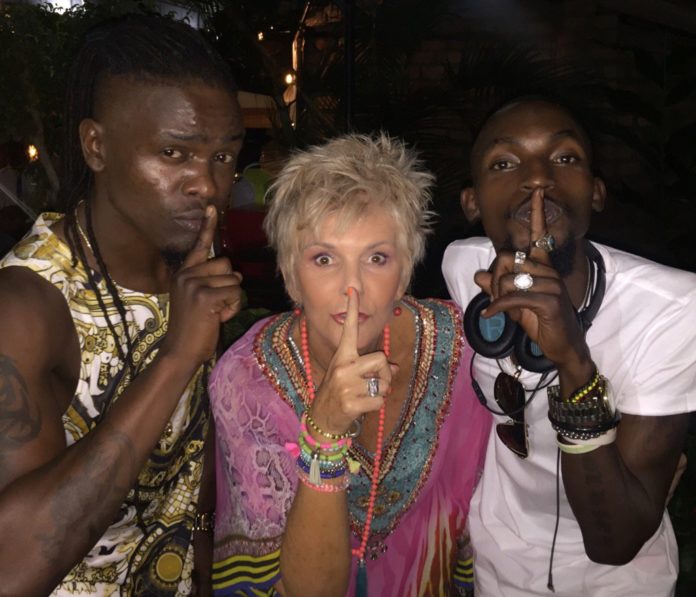
South African music icon Penelope Jane Powers aka PJ Powers

South African legendary music icon Penelope Jane Powers aka PJ Powers is returning to Uganda for a charity concert organised by Girls Up Uganda, an NGO, dubbed, ‘Jabulani Charity Concert’ scheduled for June 30, at the Serena Hotel.

“I am not going to be paid for this but I was so touched by Monica’s (founder Girl Up) story. How a person like her would rise from the slums to one of the best universities in the world and now back to helping other girls. When she reached me, I welcomed the idea of being part of the event because this is one of the ways I could give back to the people of Uganda,” she said of the concert.

She added: “Reflecting on an amusing memory from a previous trip to Uganda, I love this country! It’s about 14 years since I was here. I really loved the country and Ugandans have always been loyal to me. Not that the rest of Africans don’t love me, they do but in all countries I have been to, Ugandans were most loyal to me. They helped my music career and this the best way I can give back.”

Born 56 years ago in Durban, South Africa, PJ Powers is popularly known in Uganda for her anti-apartheid songs among which include “Feel So Strong” (a 1983 duet with Steve Kekana which she wrote herself), as well as “You’re So Good to Me” (1982).

Her other hits are; ‘There is an Answer’ (1986) and ‘Home to Africa’ (1985) but one of her biggest hits (with Hotline) was ‘Jabulani’, the title of her upcoming concert.

PJ has shared the stage with Eric Clapton, Joan Armatrading, Hugh Masekela, Divine Divas, Lord Richard Attenborough, Richard E. Grant, Sibongile Khumalo, Janet Suzman and other big names.

PJ has sang for Queen Elizabeth of the United Kingdom, King Juan Carlos of Spain and Queen Beatrix of the Netherlands. She sang at the inauguration of President Nelson Mandela and at the 1995 Rugby World Cup. She collaborated with Vicky Sampson, Yvonne Chaka Chaka and M’du Masilela for the music video ‘Flighted’ at the United Nations Assembly in Washington, D.C. and in Greece.

PJ also wrote an 85th birthday song for Mandela, which she sang for him and guests including Bill Clinton and Oprah Winfrey at his party in 2003.

The other performers at the concert in Uganda will be her record label-colleagues, Radio and Weasel.

PJ Powers was last in Uganda in April this year, and during her weeklong stay she shot the video for her collabo with Radio and Weasel, dubbed ‘Home To Africa’. At the time she also visited charity homes.


Stories Continues after ad

Museveni to meet Northern Uganda leaders over Apaa land dispute

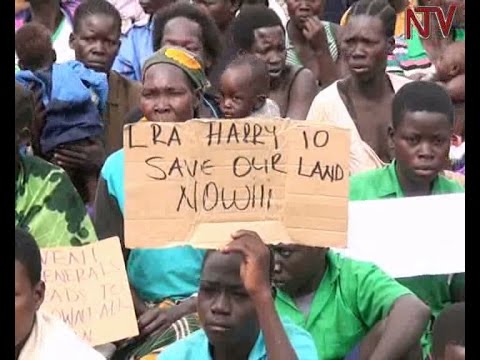
The people of Amuru protest with placards calling upon the LRA to 'save their land'

President Yoweri Museveni is scheduled to meet northern Uganda leaders at State House Entebbe tomorrow, to deliberate over the land clashes in Apaa, Amuru district, which led to death of seven people.

By press time it was not possible to establish further details of the meeting, but the development comes in the wake of futile attempts by the Prime Minister Dr. Ruhakana Rugunda early this week, to mediate between the Acholi and Madi warring factions.

The Acholi leaders led by the Member of Parliament for Kilak County Gilbert Olanya have blamed government for the clashes, saying it has failed to take action against the Madi.

Indeed, Olanya has since accused the First Deputy Prime Minister and MP for East Moyo County in Adjumani district, Gen. Moses Ali, of being ‘the Godfather of all the chaos between the Acholi and the Madi.’

As a sign of their disgruntlement the Acholi, who claim their land between Zooka Bidge and Aliwala is up for grabs by the Madi, threatened to retaliate in two weeks in case the suspects are not arrested.

And yesterday, the suspicious Acholi community gathered at Apaa market square rejected relief food that was sent to them by government, saying that they need an ‘independent chemist’ to determine whether food is safe for consumption “because they think government wants to kill them slowly.”

Sources indicate the Apaa land was gazetted for a ‘South African’ investor after political instability hit the area before 2007.

But when peace returned to the area in 2008, the Acholi people started settling back in their former homesteads only to be told later in 2015 to vacate the area, the sources add.

In subsequent incidents the Acholi people were to protest, with elderly women undressing before cabinet ministers led by then Internal Affairs Minister Gen. Aronda Nyakairima (RIP), who was accompanied by then lands counterpart Daudi Migereko.


Stories Continues after ad

Barnabas Nawangwe: Africa’s only Professor of Architecture

MUK Vice Chancellor Prof. Barnabas Nawangwe.

In Uganda’s academic circles mention of the name Barnabas Nawangwe elicits anxious gazes, as almost everyone around struggles to come to terms with the possibility of an encounter with Africa’s only Full Professor of Architecture.

Similarly, mention of Prof. Nawangwe’s name attracts similar reactions in amphitheaters and conference rooms across the globe. A soft-spoken and erudite gentleman, Prof. Nawangwe is a global icon whose academic and social exploits know no bounds.

Born in 1956, the 61-year old Professor Nawangwe is the current Vice Chancellor of Makerere University in charge of Finance and Administration, having risen to that position five years ago. Previously, he served as the founding Principal of the College of Engineering Design, Art and Technology (CEDAT), at the introduction of the collegiate system at Makerere University.

The scholarly product of the Kyiv National University of Construction and Architecture, Prof. Nawangwe earned his Doctorate in 1989, after presentation of a thesis paper titled: ‘Mass Urban Housing in Third World Cities’.

Before that, between 1976 and 1983, he had earned a Master’s of Architecture Degree from the same university, presenting a thesis titled: ‘Environmental characteristics of Uganda’s middle income residential houses: a case of Jinja’.

Since then, Prof. Nawangwe has carried out several high-profile academic engagements that include signing of cooperation memoranda with various universities around the world, and also held a number of responsible positions in the academia, globally.

Indeed, with a 28-year experience working with top universities in Africa and around the globe, Prof. Nawangwe has intellectually contributed to the development of over 40 policies in governance, financial and human resource management, teaching and student affairs at Makerere University, adopted by the university in December 2014.

Little wonder then that in 1987 when he joined Makerere University, Prof. Nawangwe, despite being a ‘Teaching Assistant’ then, was assigned the task of commencing preparations for the establishment of the Department of Architecture, and also to ensure the University developed a degree programme for Architecture.

In 1989, the year in which the Department of Architecture was established, Prof. Nawangwe was appointed full lecturer and also tasked to head the new department. True to his conviction, in just under five years, he managed to have the department validated by the credible and influential Commonwealth Association of Architects (CAA), making it just one of the five departments accredited in Africa at the time.

His star did not dim; between 2002 and 2013, he rose through the ranks to become the Deputy Vice Chancellor in charge of Finance and Administration (DVC/FA), a position he has gainfully used to further hundreds of cooperation links between Makerere University and the rest of the academic and non-academic world.

For example, during his tenure as DVC/FA Prof. Nawangwe spearheaded the establishment of Makerere University Holdings, an undertaking that was intended at streamlining the operations of the various commercial ventures the university was involved with. Indeed, Prof. Nawangwe’s ‘Marshall Plan’ is so enormous, that it also involves the construction of a five-star hotel on one of the university’s prime land in Kampala.

Other huge projects include the establishment of the Makerere University Endowment Fund, and the successful negotiations with the Kampala Capital City Authority (KCCA), for the expansion of the Makerere Hill road, a development that has changed the outlook of the university, through which all sidewalks have been revitalized, while the street lighting at the campus has also improved tremendously. Most importantly the partnership with KCCA with see the authority construct a perimeter wall fence along the 350 metre stretch along Makerere Hill Road, from the Jjunju Road junction to the Apollo Kaggwa road junction. Unsurprisingly, for all his negotiating skills the KCCA tagged Prof. Nawangwe ‘The Best Uganda Negotiator’!

But Prof Nawangwe’s prowesses are not only academic; the man has a social life that has endeared him to both his villagemates at his ancestral home in Busia, and in Kampala where he has lived almost all his working life.

Bach home and in his private capacity as a responsible citizen, Prof. Nawangwe has held a number of responsibilities in the community, among them being a board member of Busia Holdings and Busia Millers Ltd.

He also sits on the boards of Barclays Bank; the Makerere University Multi-purpose Cooperative Society, the Gatsby Trust/Microfinance and his brainchild, the Makerere University Holdings Ltd.

A devout Protestant, Prof. Nawangwe is a member of the Church of Uganda Busia Archdeaconry Synod, and also, as an eminent ‘son of the soil’ he sits on various boards of local primary schools in the district.

Needless to say, Prof. Nawangwe’s illustrious academic profile which involves supervising 6 Phd students, 10 Masters and 5 post-graduate diploma students, cannot be complete without mention of the 44 Publications he has authored, and the various external examination assignments he has carried out in Africa and elsewhere in the world.

Against such a background, and coupled with the hundreds of social, professional and academic engagements he has carried out, Prof. Nawangwe might just easily turn out to be the 15th Vice Chancellor of Makerere University.

Stories Continues after ad

Floyd Mayweather comes out of retirement

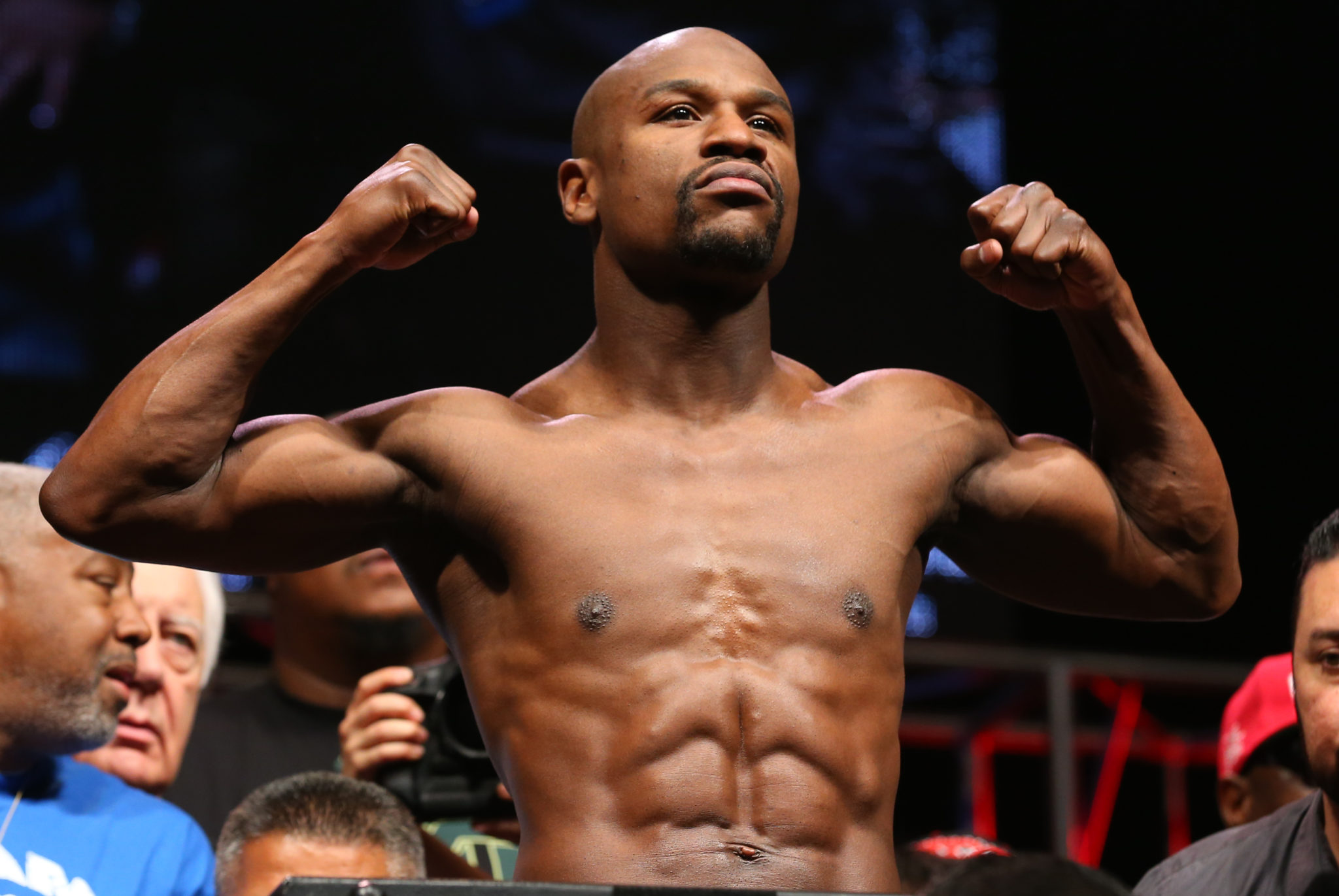
Floyd Mayweather Jr. will come out of retirement to meet UFC star Connor McGregor in a boxing match that will feature two of the top-selling fighters in the world.

Floyd Mayweather

Mayweather will come out of a two-year retirement in a bout that McGregor has been pushing for nearly that long. It finally came together and Nevada boxing officials on Wednesday approved the date for the fight.

Floyd retired in 2015 after winning all 49 (49-0) of his professional fights, will face the Irish UFC superstar at the T-Mobile arena on the Las Vegas Strip to make it (50-0) fight if he wins.

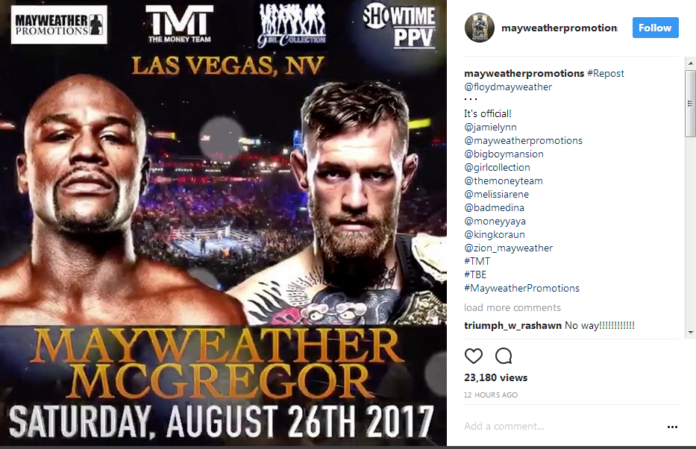
“It’s official,” Mayweather said on Instagram next to a video poster of both fighters.

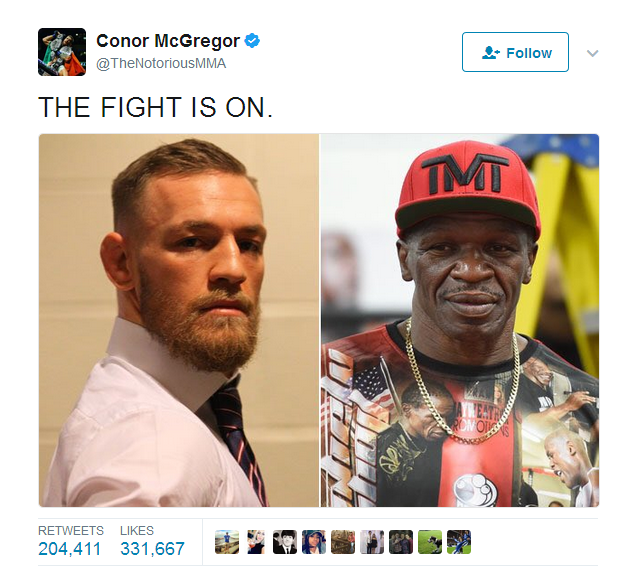
“THE FIGHT IS ON,” McGregor tweeted minutes earlier, posting a picture of himself next to one of Mayweather’s father, Floyd Sr.

The former pound-for-pound champion last fought in September 2015, beating Andre Berto and then announcing his retirement.

His fight before that, a decision win over Pacquiao, was the richest in boxing history and reportedly made him more than $200 million.

The much-discussed boxing match will take place on August 26 2017.

Stories Continues after ad

Coke Studio: Bebe Cool ‘eats big’, to record with Jason Derulo

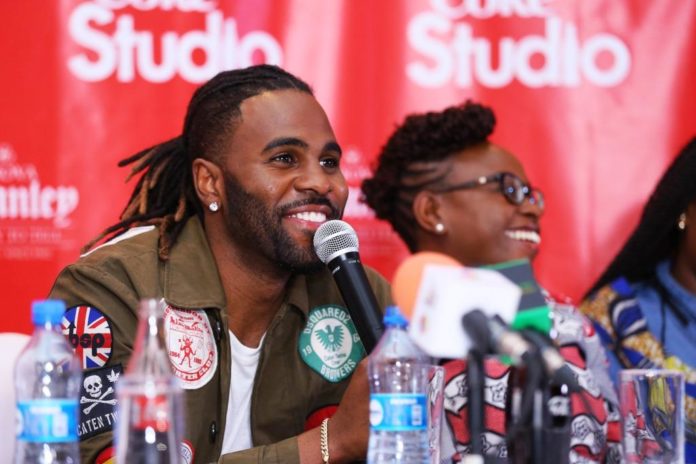
HERE I COME: Jason-Derulo-addresses-press-during-the-press-conference-to-announce-his-participation-in-Coke-Studio-Africa

Musician Moses Ssali aka Bebe Cool might turn out to be the biggest Ugandan beneficiary of this year’s Coke Studio Africa, when he records a song with guest star Jason Derulo who is currently riding high with his latest banger ‘Swalla’.

During his time at Coke Studio, the new-school, multi-talented creative giant who has sold over 50 million singles and impressively achieved 11 platinum singles including ‘Wiggle’, ‘Whatcha’ Say’, ‘Talk Dirty’, ‘It Girl’, ‘In My Head’, ‘Trumpets’ and ‘Marry Me’ will meet and work with 11 talented African Stars including Uganda’s Bebe Cool, Dela (Kenya), Rayvanny (Tanzania), Mr. Bow (Mozambique), Falz (Nigeria), Joey B (Ghana), Betty G (Ethiopia), Jah Prayzah (Central Africa Republic/Zimbabwe), Shekhinah (South Africa), Locko (Cameroon) and Denise (Madagascar).

Jason, who is in Nairobi, Kenya this week to participate in the recording of Coca-Cola’s flagship African music show, has sold 94 million-plus single equivalent sales worldwide (5.5 billion streams & 58 million downloads).

Both his introductory breakout “Watcha Say” and “Talk Dirty” [feat. 2 Chainz] reached quadruple-platinum status, while “Want To Want Me” and “Ridin’ Solo” went triple-platinum, and “Trumpets,” and “Wiggle” feat. Snoop Dogg, and “In My Head” earned double-platinum certifications. Platinum singles include “Marry Me”,“The Other Side,” and “It Girl,” while “Get Ugly” and “Don’t Wanna Go Home” went gold.

“I am excited to be part of Coke Studio Africa – 2017. I can’t wait to meet and make great music with the African super stars,” Derulo exclaimed, adding that he is also looking forward to lend all his expertise, learn and exchange ideas with the African artistes, producers and the show’s creators.”

Two of Africa’s hottest music producers: Masterkraft (Nigeria) and DJ Maphorisa (South Africa) will be tasked with producing all the African artistes and Jason Derulo, after which all the music will be performed and recorded live alongside Coke Studio’s highly talented house band.

“In 2014 Coke Studio Africa saw the legendary Wyclef Jean take the stage and light up our households with the unforgettable ‘Divine Sorrow’. In 2015 super star NE-YO took Peace One Day to Rwanda and delivered a Coke Studio original song ‘Reason’.

In 2016 Coke Studio saw the iconic Trey Songz set the stage on fire with his dynamic presence and now, in 2017 we are proud to have Mega Platinum star: Jason Derulo, a new-school, multi-talented creative giant who has sold over 50 million singles and impressively achieved 11 platinum singles including ‘Wiggle’, ‘Whatcha’ Say’, ‘Talk Dirty’, ‘It Girl’, ‘In My Head’, ‘Trumpets’ and ‘Marry Me’,” commented Rodney Nzioka, the Coca-Cola Uganda Franchise Brand Manager.

This year, Coke Studio has merged Coke Studio Africa and Coke Studio South Africa into one—bigger and better, Coke Studio Africa – 2017, which includes artistes from South Africa, Kenya, Uganda, Tanzania, Rwanda, Ethiopia, Nigeria, Ghana, Angola, Zimbabwe, Togo, Cote d’Ivoire, Madagascar, Mauritius, Mozambique, DRC and Cameroon. The new season is set to premiere in different regions from September this year and will broadcast in more than 30 countries across Africa.


Stories Continues after ad

Lesotho Prime Minister Thomas Thabane’s wife shot dead

Thomas Thabane

The estranged wife of incoming Lesotho Prime Minister Thomas Thabane has been shot dead two days before his inauguration.

Lipolelo Thabane, 58, was travelling home with a friend when both women where shot by an unknown assailant, the police say.

The police add the motive is unknown and an investigation is continuing.

The couple had been living separately since 2012 and filed for divorce which hasn’t been granted yet.

She won a court case against her husband during his first stint as prime minister affirming her position as Lesotho’s first lady instead of his youngest wife, Liabiloe Thabane, the AFP news agency reports.

Samonyane Ntsekele, the secretary general of Mr Thabane’s All Basotho Convention party, told AFP that Mr Thabane was devastated by the shooting.

“Everyone is traumatised by these developments,” he said.

The election took place earlier this month and was the third election in three years because of a bitter power-struggle.

He is due to be sworn in on Friday.


Stories Continues after ad
Uganda plans to re-deploy in South Sudan – reports

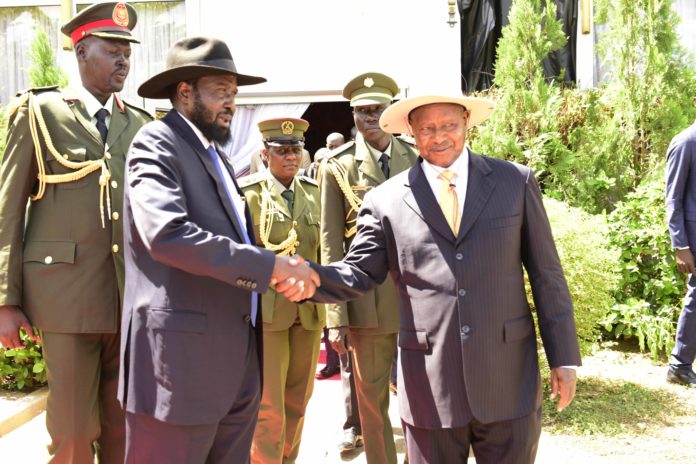
US POINTS MAN IN REGION: President Yoweri Museveni with his South Sudan counterpart Salva Kiir

Ugandan and South Sudanese governments have secretly been working on a plan to allow Uganda People’s Defence Force (UPDF) to re-enter South Sudan and control specific locations in the war-torn country.

Quoting a senior South Sudan government official, local media in the war-torn country reported that both South Sudan and Uganda have initiated a plan designed to allow the latter to deploy its troops along major roads linking Kampala with Juba.

The official allegedly said that South Sudanese President Salva Kiir wants Ugandan President Yoweri Museveni to deploy UPDF’s soldiers to some areas he deems a threat to his government.

“There is an active discussion between South Sudan and Uganda over the possibility of Uganda’s military re-intervention in our country. Kiir and Museveni started talking about bringing back UPDF to South Sudan last month [May],” the official reportedly said.

But contacted on phone earlier today, the UPDF Spokesperson Brigadier Richard Karemire denied any such plans, only saying: “We have not contemplated that.”

Meanwhile, the source was quoted as saying that Kiir and Museveni were infuriated when some leaders of the African Union, United Nations, and other countries publicly admitted that the August 2015 peace agreement is dead, adding, “Kiir and Taban believe the implementation of the peace agreement is going smoothly.”

“President Kiir is only implementing what he wants not the peace. The big problem here is that Taban Deng Gai who is now the First Vice President has no power to change anything Kiir wants and it is a big problem,” the source added. The official described the FVP Gai as ‘a man with no real power’.

South Sudan’s armed opposition, the SPLM/A-IO, has intensified its operation against government troops in and around Equatoria region, causing Uganda’s truck drivers to stop delivery of Ugandan goods to Juba.

Ugandan traders have recently called on Ugandan leader Museveni to order occupation of main roads linking South Sudan with Uganda, claiming Kampala has rights to protect its business interests in the war-wracked young nation.

Uganda is South Sudan’s biggest trading partner.

Previously, the UPDF has deployed in South Sudan following clashes that erupted there in December 2013, when President Kiir fell out with his then Vice President Riek Machar, resulting in the bloodbath which prompted the Ugandan army to intervene.

Meanwhile, reports indicate that President Yoweri Museveni is the only leader in the region, who is reportedly in favour of South Sudan holding ‘free and fair’ general elections.


Stories Continues after ad