Stanbic Bank
Stanbic Bank
27.2 C
Kampala
Stanbic Bank
Stanbic Bank
Home Blog Page 1852

Internal Affairs ministry to register Ugandan-Americans for dual citizenship

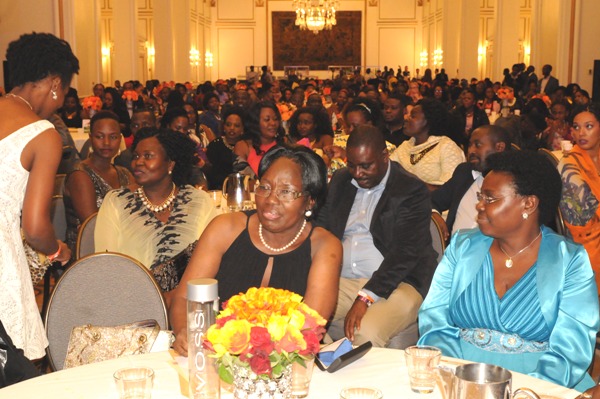
UNAA: The Speakrer of Parliament Rebecca Kadaga (in black-center), at the 2016 Ugandan North American Association (UNAA) Convention.

The Ministry of Internal Affairs will in September carry out the registration of Ugandans who acquired American and any other northern American citizenship but are still interested in maintaining their original citizenship.

‘Dear UNAA members and Ugandans in North America, please be informed that the Ministry of Internal Affairs technical team will be on hand to process dual citizenship certificates at the 29th UNAA Convention in Miami Sept 1-3,’ the statement reads.

Those intending to register have been asked to present the following: a notarized application form, two American-size passport photos and copy of previous passport or proof of prior Ugandan citizenship.

They will also be required to pay US$400 to the Uganda Embassy in the US, have their finger print biometrics taken by officials of the ministry, while those intending to acquire National IDs could also apply at the venue in Miami, Florida.

A survey carried out in 2014 indicated that there were 20, 248 Ugandan-Americans living in the US at the time, with the largest Ugandan communities being in Atlanta, Georgia; Baltimore, Washington DC area; Massachusetts; Chicago, Dallas, Texas; Detroit; Minneapolis; Sacramento, San Francisco and San Diego in California, and St. Petersburg in Florida.

In August 2008, the Uganda Citizenship and Immigration Control (Amendment) Bill was introduced in Parliament, to give effect to the Constitution Amendment (Act No.2) of 2005, which allows the acquisition of dual citizenship.

Stories Continues after ad

Somalia plans for ‘one person, one vote’ by 2020

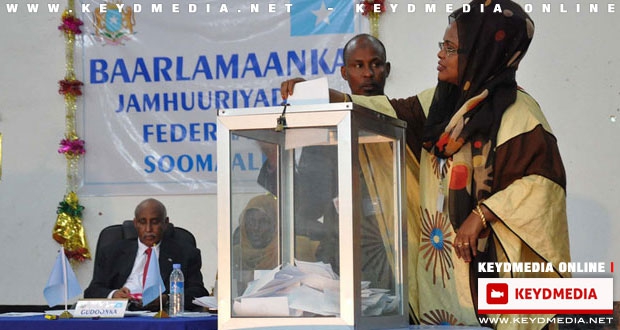
A woman casts her ballot in the Parliamentary elections in Somalia. Photo/keymedia-online

African and Arab election experts are in Kenya this week meeting with Somalia’s electoral commission to help the country prepare to move to ‘one person, one vote’ elections in 2020.

The year 2004 marked the beginning of the end to more than two decades of civil war and anarchy in Somalia. Members of Somalia’s interim parliament gathered in Nairobi to vote for a new president. They met in Kenya because Mogadishu was still too dangerous.

Somalia has since held three polls. But regular Somalis are yet to cast any ballots. The country has relied on a clan-based formula in which the lawmakers were selected by the clan elders, and then the legislators elect the president.

Last year, Somali political leaders agreed to scrap the clan-based formula in favor of a one person, one vote system, and Somalia’s electoral body, the National Independent Electoral Commission (NIEC), hopes to make the change for the next elections in 2020.

Experts from the Organization of Arab Electoral Management Bodies and from around the continent gathered in Nairobi this week to advise the Electoral Commission.

“This [meeting] is an important step amongst others to assist NIEC with some of the experience that in turn can use as its developing its procedures and a very important step along the path to universal multi-party democratic elections,” says Electoral advisor Gerald Mitchell, director of the United Nations Electoral Support Group.

The experts agree one of the first steps to take is to register political parties.

Idris Aminu Kasimu, who works with the Nigeria’s Independent National Electoral Commission, said: “If you do not start with democracy within political parties, you have a challenge in the democracy within the country because democracy within the political parties, candidates who want to contest elections will emerge democratically and will emerge by choice of majority members of the political party, because the credibility of the general elections actually starts from the credibility of political parties and how candidates emerge.”

Credibility is something that critics say Somalia’s last two polls have lacked. The 2017 elections were marred by allegations of vote buying and irregularities, and some of the races had to be redone.

Security may be another obstacle to one person, one vote elections in 2020.

The government of Somalia, with the help of African Union troops, has retaken territory from al-Shabab, but the militant group continues to carry out attacks. Many Somalis doubt whether they can have a chance to vote.

“I know many Somalis are asking each other with the current crisis, how can one-man, one-vote be achieved? But we believe if we work hard on it, it can work. We also believe, as the electoral commission, we are ready and we know we can handle such an election. It is important we start working on this process as early as possible,” Halima Ismail Ibrahim, the chairperson of the Somali National Independent Electoral Commission, said.

The conference ends tomorrow.


Stories Continues after ad

DRC opposition protests against elections delay

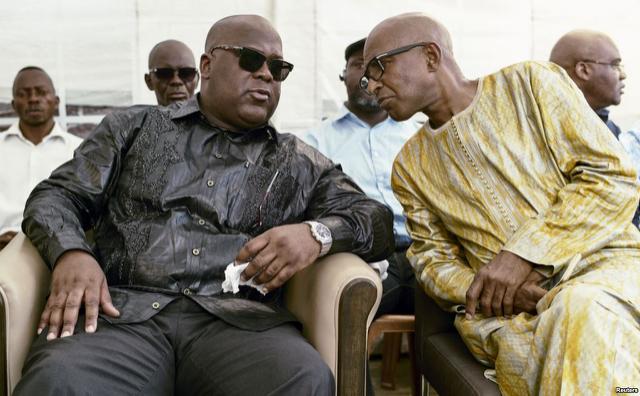
FLASHBACK: Opposition leader Felix Tshisekedi (L) talks to an unidentified person. Photo/Reuters

The main opposition party in the Democratic Republic of Congo has blasted as ‘provocation’ and a power grab an announcement that elections to end a deep political crisis in the mineral-rich democratic republic of Congo will likely not be held this year.

The president of DRC’s electoral commission, Corneille Nangaa, had told reporters in Paris on Friday that “it will not be possible” to hold presidential and legislative elections “before the end of the year”.

But the opposition views it as a move to keep President Joseph Kabila in power.

“Corneille Nangaa is helping Joseph Kabila to achieve his plan to hold on to power,” Augustin Kabuya, spokesperson for the Union for Democracy and Social Progress (UPDS), said.

“It is a provocation. It’s not responsible and we will not let this happen,” he added.

Elections are due this year under a transitional deal brokered last New Year’s Eve, aimed at avoiding fresh political violence in the vast central African country after Kabila failed to step down when his mandate ended in December.

Under the deal, Kabila, 46, was allowed to remain in office until elections in late 2017, ruling in tandem with a transitional watchdog and a new prime minister chosen from within the ranks of the opposition.

Kabila took office after his father Laurent Kabila’s assassination in 2001. He was elected president in 2006 and again in 2011.

We “condemn in the strongest possible terms this unilateral decision, illegal and anti-democratic,” read a statement by a coalition of 33 NGOs that has been pushing the government to respect the country’s constitution, which sets a two-term limit for the presidency.

The group charged that Nangaa has been subtly enabling a ‘power without legitimacy’ which is ‘aggravating a political and social crisis’.

It called on civil society and other partners, local and international, to reject the Nangaa’s announcement and urged setting an electoral calendar.

 Kasai violence 

Nangaa had cited ongoing security issues in the country’s troubled central Kasai region for the delays which previously forced electoral officials to postpone voter registration in two provinces there.

The violence in Kasai erupted last September after the death in clashes of a tribal chieftain, known as the Kamwina Nsapu, who rebelled against the authority of Kabila’s regime and its local representatives.

The killing sparked gross violations of human rights such as extrajudicial killings, rapes, mutilations, torture and the use of child soldiers, according to rights groups and the United Nations.

A tally by the Roman Catholic Church said the brutal violence has claimed more than 3 300 lives and displaced 1.3 million people – more than 600 000 of them children, the UN children’s agency said.

Nangaa said the commission was ‘working wholeheartedly to organise these elections’ and fix the delays, and that voter registration in Kasai, which had been postponed indefinitely because of the unrest, was due to resume ‘before the month of August’.

For the UPDS, the transitional deal remains the only viable solution to resolve DRC’s political crisis.

“Naanga has declared war against the Congolese people with his declaration proving his allegiance” to Kabila, opposition leader Felix Tshisekedi tweeted.

Felix Tshisekedi is the son of veteran UPDS chief Etienne Tshisekedi, who before his death in February had headed the opposition coalition that negotiated the deal with Kabila’s government.

The party, along with other opposition groups, led numerous demonstrations in the days following Kabila’s refusal to step down, resulting in deadly clashes with armed police.

At least 40 people were killed and more than 100 injured, the UN said, and over 450 people were arrested.

DRC has never seen a democratic transfer of power following polls since independence from Belgium in 1960.


Stories Continues after ad

Tea production to rise by 3 per cent this year

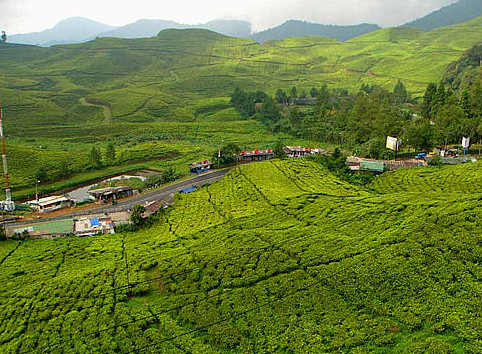
An aerial view of one of the tea estates in Uganda

Uganda’s tea production is expected to rise by 3.4 percent this year, boosted by a maturing new crop and good rains, an industry official has said.

Tea is one of Uganda’s main exports, alongside coffee and tobacco, and an important source of foreign exchange though many Ugandans consume it locally.

George William Ssekitoleko, the Executive Secretary of the Uganda Tea Association (UTA), said production this year could go up to 60 million kilogrammes, a 3.4 percent increase from an output of 58 million kilogrammes realised in 2016.

“For about two to three years, the government has been distributing seedlings to farmers. Some of this crop is now ready for harvest,” Ssekitoleko said. Most growing areas were also receiving higher-than-average rains, he added.

Ssekitoleko said increased output would most likely come from districts in northwestern Uganda, where the government has been distributing free seedlings to expand the crop’s cover from traditional growing areas in the centre and southwest.

The majority of Uganda’s leaves, produced on around 25,000 hectares of land, are sold at Kenya’s Mombasa tea auction.

Uganda has over twenty companies selling tea at the Mombasa Tea Auction.

With extra acreage planted in recent years, Ssekitoleko said Uganda’s production had the potential to reach 70 million kilogrammes but that frequent droughts were a big problem.
Progressive shifts in traditional weather patterns have seen increasingly erratic and scarce rains in Uganda, exacting a heavy toll on the country’s mostly rain-fed agriculture, he said.

Arable land is also increasingly lost to human settlement in a country with an annual population growth rate of 3.2 percent, potentially limiting the area for expansion of acreage for key crops like tea, coffee and sugar cane.


Stories Continues after ad
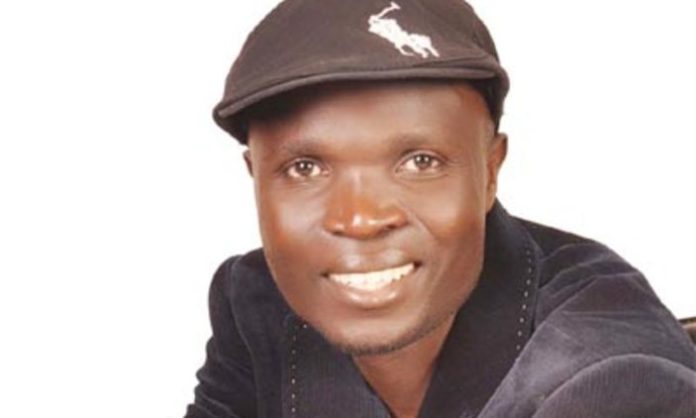
Poor economy pushing us to politics – Ronald Mayinja

POOR ECONOMY: Singer Ronald Mayinja

As music icon Robert Kyagulanyi aka Bobi Wine prepares to swear-in tomorrow, colleague Ronald Mayinja has revealed he could be the next singer to join Parliament.

According to Mayinja, music is now less paying for the singers, something he blames the current economic situation that has seen several companies, which have been supporting and endorsing them, close.

“People are suffering. My clients are no longer attending my shows. I don’t think it fitting for me to go and continue dancing (singing)… It’s better to go and talk about those issues that are making people suffer,” he said in an interview with NTV.

Mayinja, popularly known for conscious music advocating for proper welfare of all Ugandans said that currently, it is very hard for them (musicians) to pass over their messages to the masses.

“The fact that we (musicians) don’t own radio stations, when you sing anything that does not appeal to the ears of our leaders, they just switch off those radio stations playing such songs,” he added.

Mayinja is known for hits like; Africa, Nguzi and Tuli Kubunkenke. He is also a close friend to the just elected Kyadondo East MP, Robert Kyagulanyi aka Bobi Wine.


Stories Continues after ad
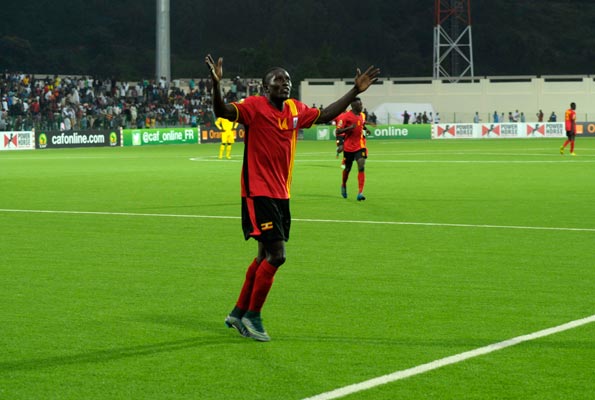
Sserunkuuma to captain Cranes in CHAN campaign

CRANES CAPTAIN: KCCA maestro Geoffrey Sserunkuuma

Uganda Cranes Head coach Milutin ‘Micho’ Sredojevic has named KCCA FC leading striker Geoffrey Serunkuma to captain the national team that will feature in the 2018 Total Africa Nations Championship (CHAN) campaign.

The KCCA superstar will be assisted by Nicolas Wadada of Vipers SC and SC Villa Jogoo’s Bernard Muwanga throughout the campaign.

Uganda Cranes will take on South Sudan in the first leg of the CHAN 2018 qualifiers on July 14, while the return leg will be in Kampala on July 22.

A squad of 25 players resumed training at Mandela National stadium today ahead of the qualifier against South Sudan on this Friday in Juba.

Seven KCCA FC players were included in the squad after the club’s exit from the 2017 CAF Confederations Cup on Friday, following a 4-0 loss to Club Africain in Tunisia.

The KCCA players are: Timothy Awany, Muzamir Mutyaba, Paul Mucureezi, Paul Musamali, Geoffrey Sserunkuma, Isaac Muleme and Derrick Nsibambi.


The Cranes team:

Goalkeepers: Watenga Isma, Ikara Tom, Keni Saidi 

Defenders: Wadada Nico, Awanyi Timothy, Muwanga Bernard, Kabugo Savio, Toha Rashid, Musamali Paul, Adiriko John 

Midfielders: Bukenya Deus, Kasozi Nicholas, Mutyaba Muzamil, Matsiko Tom, Waiswa Moses , Mucurezi Paul, Muleme Isaac ,Kizza Martin, Majwega Brian, Kagimu Shafiq 

Strikers: Serunkuma Geoffrey, Nsibambi Derrick, Sekantuka Nelson, Shaban Mohamed, Karisa Milton.

CHAN 2018 Qualifiers 

South Sudan Vs Uganda

Friday, 14th July 2017

Stories Continues after ad

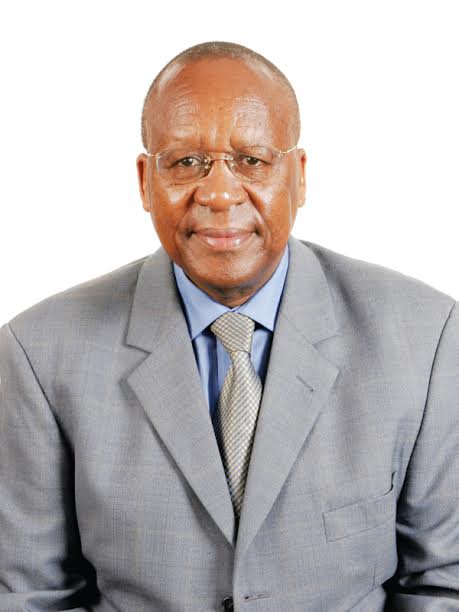
Former Minister Kaijuka lands top oil sector job

BOUNCED BACK TO LIMELIGHT: Former energy minister Richard Kaijuka

Flamboyant former Minister of Energy ‘Sir’ Richard Kaijuka was overwhelmingly elected the chairman of the Board of Trustees (BoT) for the Uganda Chamber Mines and Petroleum (UCMP), beating the organisation’s long-serving chairman Elly Karuhanga.

The UCMP is an umbrella organization of all stakeholders in the mining and oil sectors, and according to UCMP sources, karuhanga was elected to chair the organisation’s Council, a subordinate body to the one led by Kaijuka.

A wealthy politician, Kaijuka was one of the influential Ugandans who opposed the lifting of term limits in 2005, prompting leaders of the National Resistance Movement (NRM) to associate him with the opposition then led by Col (rtd) Dr. Kizza Besigye.

UCMP Board of Trustees

Chairman Hon. Richard Kaijuka

Vice Chairman Mr. Jimmy Mugerwa

Treasurer Ms. Kellen Kayonga

General Secretary Mr. Paul Sherwen

Member Mr. Gordon Sentiba


UCMP Council

Chairman Hon. Dr. Elly Karuhanga

Vice Chairman Mr. Patrick Mweheire

General Secretary Mr. Sam Thakkar

Treasurer Mr. Jeff Baitwa

Council Mr. Abdul Kibuuka

Council Mr. Adewale Fayemi

Council Mr. Xiao Zong Wei

Council Mr. Daniel Pettersson

Council Mr. Nicholas Ecimu


Members of the UCMP Advisory Committee:

Oliver Lalani- Roofings Group Minerals
Tony Otoa- TOTAL E&P Oil & Gas
Patricia Ojangole- Uganda Development Bank Finance
Allan Mugisha- Ernst & Young Tax & Investment
Pamela Natamba- PWC Local Content
Miriam Magala- Uganda Insurers Association Insurance
Gerald Mukyenga- Multilines International Health Safety & Environment
Carol Athiyo- AON Risk Solutions Public Relations

Name Committee
Joshua Ogwal- Ligomarc Advocates Legal & Advisory
Natasha Venus- Sipa Exploration Human Resources
Dilip Bhandari- Spedag Interfreight Logistics
Peter Bitarakwate- ZAKHEM Special Advisor to the Chairman
Dr. Josephine Wapakabulo- Uganda National Oil Company (UNOC) Special Advisor
Aggrey Ashaba- GCC Services International Relations


Stories Continues after ad

Shs110m raised from Kabaka Run handed over to fight Sickle Cells

Katikiro-of-Buganda-Owek.-Charles-Peter-Mayiga-centre-and other officials displaying-the-Kabaka-Birthday-Run-2017-kit-as-Airtel-Uganda-officials-look-on-at-Bulange-Mengo

Airtel Uganda and the Buganda Kingdom have Monday handed over one hundred and ten million shillings  (Shs110m) that was collected during the Kabaka Birthday Run 2017,  as a contribution towards the fight against Sickle Cells in Uganda.

The handover to the Central Public Health Laboratory under the Ministry of Health was graced by Buganda Kingdom officials led by the Buganda Kingdom Prime Minister Charles Peter Mayiga and the Buganda Kingdom Minister of Sports Henry Sekabembe, alongside Airtel Uganda team led by the Chief Commercial Officer Deepak Bhatia.

Speaking at the handover ceremony, Bhatia said: “We are so honored and proud to partner with the Buganda Kingdom in the fight to put an end to Sickle cells in the country.”

“This partnership is Airtel’s commitment to working with various stakeholders to improve health standards in Uganda and providing affordable healthcare to our customers through investing in passion points that connect our customers such as the annual Kabaka Birthday Run,” he added.

“I would like to thank and recognize all Airtel Uganda customers, fellow sponsors, the media as well as the general public who showed support to those suffering from sickle cells by coming and participating in the 2017 Kabaka Run” he concluded.

Katikiro Mayiga thanked Airtel Uganda for their support in the fight against Sickle Cell anaemia and also lauded the company for supporting social causes that are developmental to society.

“I encourage my fellow Ugandans who have been affected by this scourge of Sickle Cells in one way or another to support each other and seek medical help and be consistent in their treatments as partners like Airtel come together with the Kingdom of Buganda to put an end to this disease,” Mayiga said.

According to the Ministry of Health, over 25,000 babies are born each year with sickle cell disease and over 80% die before their 5th birthday contributing to 15% infant mortality.

It is also said that 13.3% of the total population have Sickle cell traits.


Stories Continues after ad

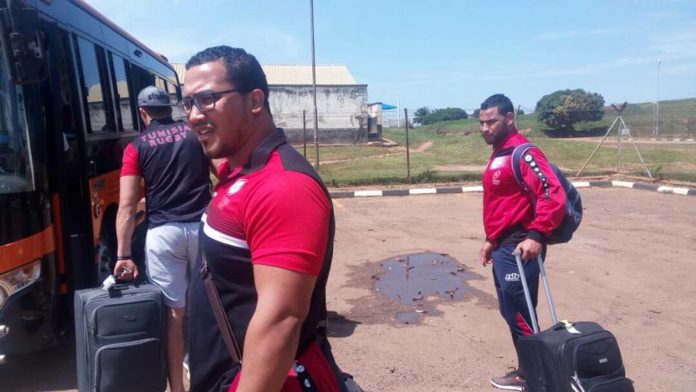
Tunisia arrive a week early for the Africa Gold Cup game against Rugby Cranes

Members of the Tunisia Rugby team at the Kyadondo Rugby Grounds

The Tunisia Rugby team arrived early in the country ahead of their third game of the Africa Gold Cup against the Rugby Cranes on Saturday in Kampala.

This is determined to help them get used to the weather conditions in East Africa as they look for a positive result and to bounce back from their heavy defeat against our neighbors Kenya.

Tunisia have kicked off the campaign with two losses to Namibia (53-07), plus yesterday’s big loss to Kenya.

Kenya beat Tunisia 100-10 in their second match of Africa Gold Cup on Saturday July 8, 2017 in Nairobi.

The Simbas had drawn with Uganda in their first match two weeks ago and could not afford another slip. They will also be hosting Senegal in Nairobi from 2pm on 15 July in their next game.

The rugby cranes have so far played two away games and on the 15th July, they will host Tunisia at Legends Rugby Club in their first home game.

Uganda will be aiming to continue their impressive start after they drew 33-33 with Kenya and won 17-16 against Senegal in their first two games of the competition.

The last time Tunisia came to Kampala was in 2009 and they beat Uganda 41-17. The game will be live on Kwese Free Sports at 4 pm

The tournament takes place until August 5 with Namibia, Zimbabwe, Tunisia, Uganda, Kenya and Senegal participating, playing home and away matches.

For every win, a team gets four points, two in a draw, 0 in a defeat while one is available for a bonus win.


Saturday, 15 July:

Africa Gold Cup

Uganda vs. Tunisia

Legends Rugby Ground, Lugogo (4pm)

Stories Continues after ad

Museveni to officiate at hotels expo

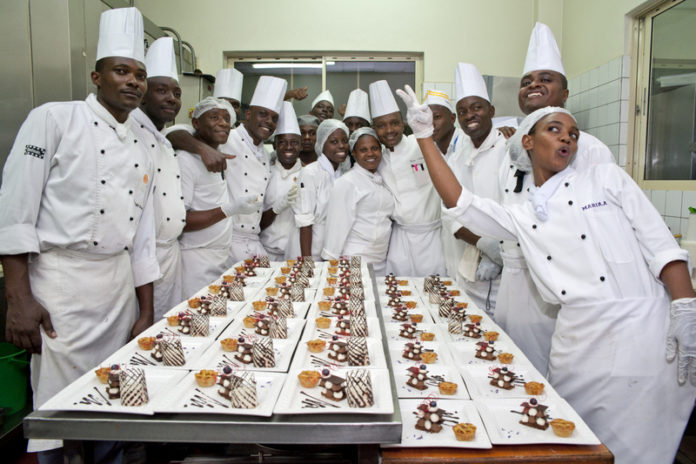
HOTELS EXPO 2017: Ugandan chefs will showcase their skills at the expo

President Yoweri Museveni will be chief guest at the 5th Annual Uganda Hotels and Restaurants Expo 2017 that will be held at Hotel Africana from August 4-6, 2017.
The expo is organised by the Uganda Hotels and Restaurants Association in partnership with Ministry of Tourism, the Uganda Tourism Board, the Kampala Capital City Authority (KCCA) and the National Culinary Association.

To be held under the theme: ‘Promoting the local hospitality, tourism industry and business investments in Uganda’, the expo will be attended by among others representatives from government ministries and agencies, hotel owners, suppliers and sector investors.
The annual expo helps to promote and market services and products of
the Ugandan hospitality industry.

“Business owners, C.E.O, hotel owners and other stakeholders will discuss how to grow and promote business investments in the hospitality industry. There will be cooking competitions for chefs. Waiters and waitresses will compete as they demonstrate their ability, skill and precision … while racing against the clock.” One of the organisers said.
There will also be an eating competition reserved for members of the
public in celebration of the rich variety of foods on display.

“The participants will have a specific amount of time to eat a set meal.
Sources say the Awards Ceremony will be held for best chef, best
waiters/waitresses relay team and best exhibitor,” the organizer added.

Hospitality industry records show that Uganda has over 3000 hotel establishments with over 20,000 and 30,000 rooms and beds respectively, with national average room rate slightly over shs30,000. The industry contributes annual revenue of over shs40 billion to the national coffers with the national average room occupancy approximated at 28%. Central regional-Kampala, Jinja and Entebbe room occupancy is at approximated at 50% whereas average room and bed occupancy range between 30 – 40%.

The sector employs over 16,000 persons, equally split between men and women.
Approximately, according to reports, 90% of the hotels and restaurants are owned by private sector against 10% public aided, but major hotels are owned by a few individuals and are managed through hotel chains. Uganda’s hotels are currently referred to as luxury, mid-range and budget facilities mainly based on room price tags and self class
awards.

Industry analysis

Experts say majority hotels in Uganda do not meet the international
standards of excellence with regard to design and service standards.
But hotels in the central region generally offer acceptable services,
though those in protected areas such as parks are perceived as good
but expensive with less variety.
On the positive side experts say the labour market for country’s hotel
sector has brighter prospect than ever before, characterized by labor
mobility, increase in skilled labor, labor diversity, non-traditional
markets.
The experts add that improvement can be undertaken at industry
level by government and at individual enterprise level to enhance
labour force that is key for increased productivity and sector
profitability.
Watchers also point out that many workers in the local hotel industry
enter without formal qualification and yet many desire to lead a
fruitful career there. This, experts say, impacts negatively on service
delivery.
Reports show that Uganda’s hotel sector is currently unable to attract
and retain good talent that can manage, sustain and grow hotel
investments that are oriented to offering branded services. “To do so,
industry must move towards providing good working conditions to all
categories of hotel workers,” a recent report says.
Experts warn that any delay in the improvement of Uganda’s hotel
sector labour market will hamper the overall sector yield and directly
affect Uganda’s image.

Stories Continues after ad