Stanbic Bank
Stanbic Bank
27.2 C
Kampala
Stanbic Bank
Stanbic Bank
Home Blog Page 1853

URA targets Ushs15 trillion in FY 2017/18

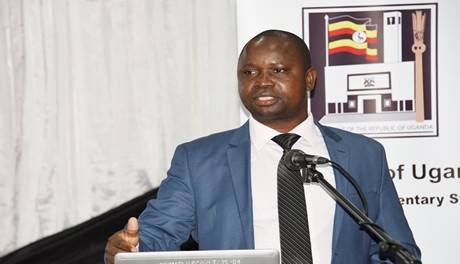
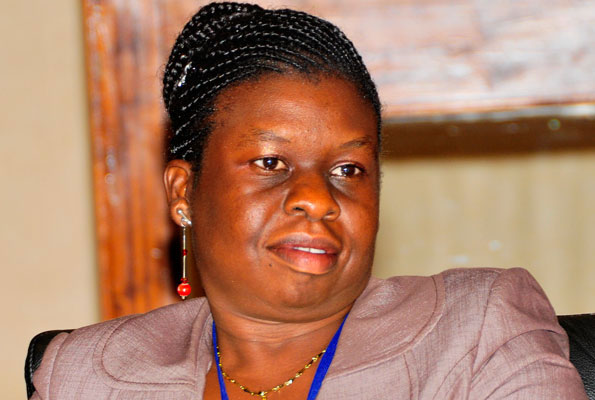
IMPROVED DOMESTIC TAX TARGETS: URA Commissioner General Doris Akol

The Uganda Revenue Authority (URA) will soon begin preparations for the establishment of a sustainable national revenue mobilisation strategy to boost domestic revenue collections, targeted to hit the Shs15 trillion mark in the financial year 2017/18.

According to a release by the URA Commissioner General Ms Doris Akol, the strategy will embrace a holistic view of policies, laws, administration and tax culture.

“It is one that takes on a whole of Government approach and one which will get us all rallying behind the cause of increasing our domestic revenues,” Ms. Akol, who said the URA colled Shs.12.8 trillion in the finanacial year 2016/17, said.
Further, Akol said that voluntary tax compliance has improved, with growth in revenue collections in the country averaging 16.07% over the past four financial years “with a real increase of shshs4.521 trillion being sent to the national treasury.”

“We …thank you because we saw many of you willingly comply with your tax obligations,” she said.

According to Akol, this year’s tax as a percentage of Gross Domestic Product (GDP) has increased to a projected 14.2%, registering an average increase of 3.8 percentage points over the past four-year period.

“URA is particularly encouraged by the growth in the tax to GDP ratio this past financial year by 0.7% points over and above the targeted annual growth of 0.5%,” she noted, adding that the good performance in the revenue collections is also a return on investments made over the years to make the tax administration more efficient.
Akol noted the taxes have significantly contributed to the growth of the
economy and led to improvements in service delivery and the quality of
life of Ugandans.

While presenting the 2017/18 national budget, the Minister of Finance,
Matia Kasaija  said that several roads were tarmacked using
locally-generated tax revenue. These include Kampala-Mityana;
Kampala-Masaka; Kampala-Kafu-Karuma-Gulu; Jinja-Kamuli; Iganga-Kaliro; Tororo-Mbale-Soroti; Ishaka-Kagamba and Mbarara-Kikagate
and Matugga-Semuto.
Akol added that local revenues have supported sectors such as water and sanitation, education, health, agriculture and other sectors.

“These are testimony of why growing the country’s tax revenue should be the goal of everyone and not only of those involved in tax policy and administration,” she says.

Akol says that some of the changes URA has introduced include the Centralized Document Processing Centre that has quickened the process of clearance of goods through customs.

“We will continue with our tax education drives and community engagements of all clients in their various segments. Our desire is to lessen the burden of tax payment on the just over one million taxpayers by bringing on board many more eligible taxpayers,” she
said, adding: “We will continue investing in systems, quality people and non-bureaucratic processes to ensure efficient and expeditious service delivery.”

Stories Continues after ad

Kenya President, Chief Justice clash over elections

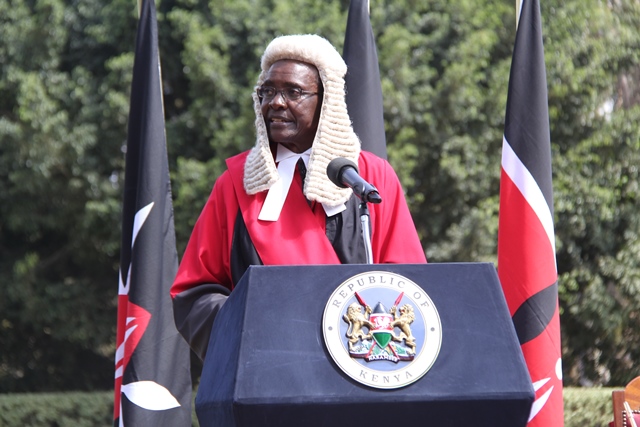
Kenya Chief Justice David Maraga

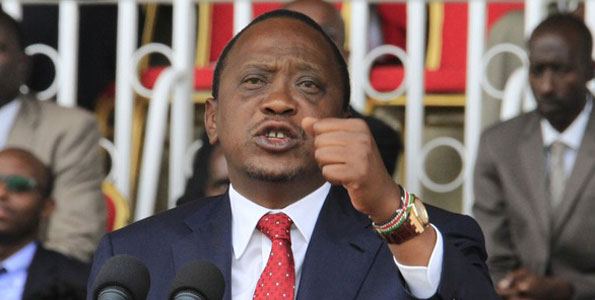
With barely a month to the scheduled elections in Kenya, President Uhuru Kenyatta and Chief Justice David Maraga have drawn swords, throwing jibes at each other over a recent decision by the High Court.

In response to a court ruling against the Kenya Independent Electoral and Boundaries Commission (IEBC) over a case filed by the opposition National Super Alliance (NASA) to the effect that it printed ballot papers in breach of the established procedures, Justice Maraga warned President Kenyatta on Sunday not to undermine public confidence in the judiciary.

“When political leaders cast aspersions on the administration of justice based on a misinterpretation of my statements, it has the potential to impair public confidence in our courts, and this concerns me a great deal,” Justice Maraga wrote in response to President Kenyatta’s earlier statement in which he criticised the court decision.

“They are taking us for fools,” President Kenyatta was quoted as saying at an election rally in the western county of Baringo, referring to the judiciary.

He added: “I want to tell those in courts, we have respected you. But do not think respect is cowardice. And we will not allow our opponents to use the courts and to intimidate the IEBC, thinking they will win using the back door.”

Kenyans are due to choose legislators and local representatives for the first time since 2013, when the elections passed peacefully after the opposition challenged the results in court.

The opposition has already brought a flurry of cases against the electoral commission, including the one settled on Friday when the high court ruled that contract to print ballot papers for the presidential poll had not been awarded transparently.

Kenyatta’s chief rival is veteran opposition leader Raila Odinga, the head of the National Super Alliance, who was also the opposition candidate in both 2007 and 2013.

A spokesman for Odinga said he had been hospitalized on Sunday with a suspected case of mild food poisoning.

Stories Continues after ad

Kenya imposes curfew on Lamu coastal town

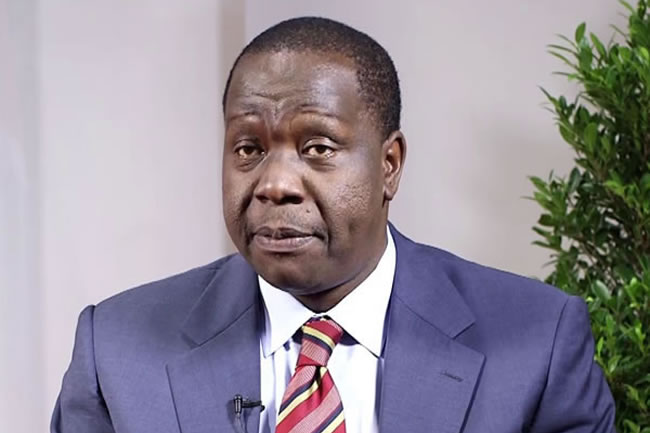
ORDERED CURFEW: Acting Interior Cabinet Secretary Fred Matiang'i

Kenya’s internal-security ministry imposed a dusk-to-dawn curfew in three districts it described as ‘dangerous and disturbed’, after violence including the beheading of nine people by suspected Islamist militants.

The curfew was imposed in the eastern counties of Lamu, Garissa and Tana River, acting Interior Secretary Fred Matiang’i said in a statement posted on the ministry’s Twitter account. Sixteen areas within the counties have been designated as dangerous, he said in a separate statement.

On July 7, attackers suspected to be members of the al-Qaeda-linked al-Shabaab group attacked a village in Lamu and decapitated nine people. An unspecified number of other people are missing after the raid.

The three counties under curfew are close to the border with Somalia, where al-Shabaab has waged an insurgency against the government since 2006. Six years ago, Kenyan soldiers invaded southern Somalia to combat the militants, who had attacked aid workers and tourists in Kenya. The Kenyan troops now form part of a multinational force fighting the Islamists.

The curfew was imposed by Matiang’i hours after he was appointed as acting secretary to replace Joseph Ole Nkaissery, who died suddenly on Saturday, a month before the country is scheduled to hold presidential and other elections.


Stories Continues after ad

ANC commission insists Zuma must go

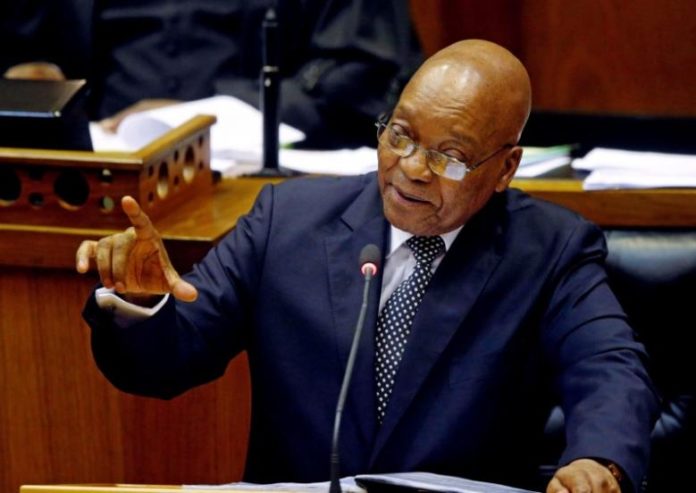
WANTED OUT: President Jacob Zuma

The ANC’s high profile, but practically powerless Integrity Commission (IC), still wants President Jacob Zuma to step down.  The commission members are angry that their six-page, 14-point report, giving reasons for their decision, has effectively been suppressed by the party’s secretary-general, Gwede Mantashe.

The IC, chaired by former Rivonia trialist Andrew Mlangeni, twice interviewed Zuma, and completed its report on May 21.  It was handed to Mantashe in order for it to be tabled at the National Executive Committee meeting preceding last week’s ANC policy conference.

The report was not tabled and when it became clear that the format of the policy conference would also preclude it being debated, several IC members referred to the fact that they had recommended that Zuma resign.  Prominent among them was veteran Sindiso Mfenyana, a former secretary for education.

But what the 14-member commission actually stated was that it was ‘unable to provide satisfactory responses to legitimate concerns about the President’s continued leadership of the ANC and the country’.  This in reply to ‘a growing number of ANC members’ who ‘question how it is possible for the President to remain in office when the Constitutional Court has found that he violated his oath of office’.

In a barely concealed allusion to Zuma’s relationship with the Gupta family, the report notes:  “Recent events have called into question the President’s judgement and led the Commission to ask from whence does the President take counsel”?

When interviewed, Zuma rejected all charges against him and stated emphatically [to the IC] that he would not resign.  He also noted that several IC members were part of the ‘101 stalwarts’ group that had already called for his resignation.  This, Zuma said, brought into question the independence of the IC.  He had been ‘judged prematurely’, he said.

Given the opportunity to present his case, Zuma maintained that if he resigned it would amount to “a betrayal of our people and of our revolution”.  He did not believe he could be held solely responsible for divisions in the ANC and pointed out that divisions existed under the leadership of President Thabo Mbeki. This was evident in the run-up to the Polokwane conference that unseated Mbeki.

Zuma also claimed that, when, in exile, as head of the ANC’s intelligence department, he had been advised of plots to get rid of him.  He knew now of “similar plots and threats”.

The IC report notes that much of the evidence presented to substantiate these claims was confidential, but explains that ‘the essence of Zuma’s refusing to resign is his belief that there exists a conspiracy by Western governments to oust him as president of the ANC and of the country. Their objective is to replace him in order to capture the ANC’.

This explanation was rejected by the IC. Its report notes that Zuma ‘ignores the very real problems in the ANC, as evidenced by the rapid decline in support of the ANC’.

The report also mentions that “recent developments within government have dented public and international confidence in the economy”;  that corporate governance of some state-owned enterprises is in “complete shambles”; and that “public confidence in the ANC’s ability to govern has been rudely shaken”.

Finally, the IC sees, as “a cause for alarm”, the “breakdown of the unity of the ANC and of the Alliance”. New and innovative ways, it says, “need to be found to rebuild unity and solidarity”.  This in an effort to “regain the confidence and trust of all sections of the people of South Africa”.

The IC includes among its members, former parliamentary Speaker, Frene Ginwala and former ANC treasurer, Mendi Msimang.


Stories Continues after ad

MTN Mobile Money breakdown affects business in Kampala

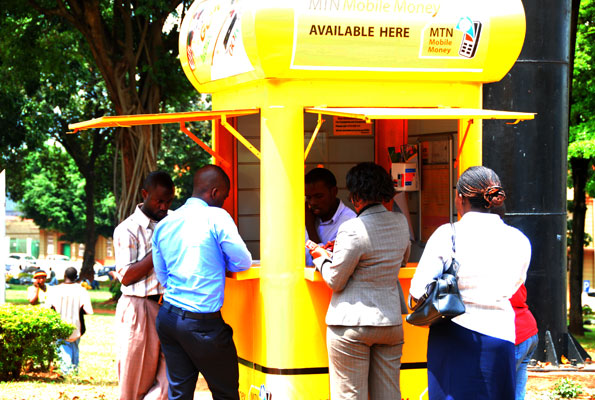
an mtn mobile money outlet

The unexplained breakdown of the MTN Mobile Money service early today has affected businesses, with estimates by businessmen put at hundreds of millions.

In Kikuubo, the business hub of the Central Business District (CBD) several businesspersons were overheard complaining that they had failed to get supplies and other related services after failing to transact on the MTN platform.

“MTN is the biggest mobile money platform in the country and such a breakdown grossly affects the way we conduct business,” said Jamada Lukwago, a businessman in Kikuubo. His sentiments were echoed by several other people, from different walks of life.

By press time MTN had offered no explanation as regards the hitch, but company staff contacted said there was a ‘technical fault which is being handled’.

“Normally, when it is a planned activity we inform our customers but this is a technical matter but it is being addressed,” the staff said on condition of anonymity.


Stories Continues after ad

Panic as NRM MPs are added to anti-age removal digital platforms

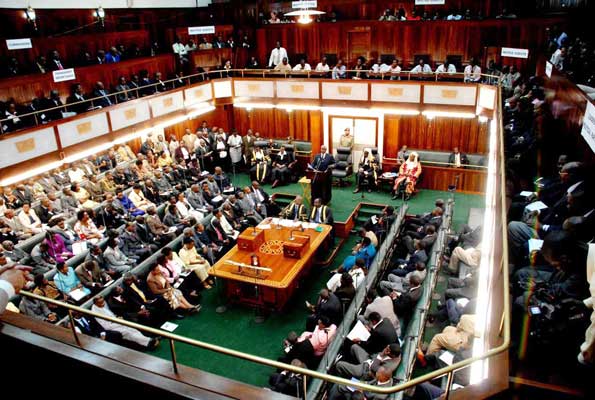
The Uganda Parliament in Session

Hundreds of ruling National Resistance Movement (NRM) party Members of Parliament have been thrown into panic, as their contact phone numbers are being displayed on anti-age removal digital platforms formed by groups of hitherto anonymous people.

According to a source, the NRM MPs fear to be associated with the anti-age removal groups currently sprouting out across the country that are targeted against President Yoweri Museveni running for elections in 2021, for fear of reprisal by the NRM or its agents.

The Parliament of Uganda has about 400 MPs from the ruling NRM whose chairman is is 73-year old Museveni, who is currently constitutionally barred from running for presidency because he will be over 75 years after his current term ends in 2021.

However, following the imminent tabling of constitutional amendment bills among them the one on the removal of age limit for the President, several Ugandans have expressed doubt Museveni will step down, prompting them to take to various forms of remonstration including the digital platforms like Whatsapp.

WARNED THOSE IN BREACH: Parliament Director of Communication Chris Obore

“We have received reports that some people are forming WhatsApp groups and forcefully adding MPs then harass them. The numbers of MPs were picked from our parliamentary website. Some groups include Memorial Africa, Team No Age Limits etc. When MPs quit such groups, they are forcefully added,” Chris Obore, the Communications Director of Parliament was quoted as writing in defence of the MPs.

He added: “Political agitation is good but harassment of others tantamount to intolerance. Intimidation could trigger a reaction. Hopefully the perpetrators will not cry foul when laws on cybercrimes are triggered against them by the authorities concerned.”

Stories Continues after ad

South Sudan calls off official Independence Day celebrations

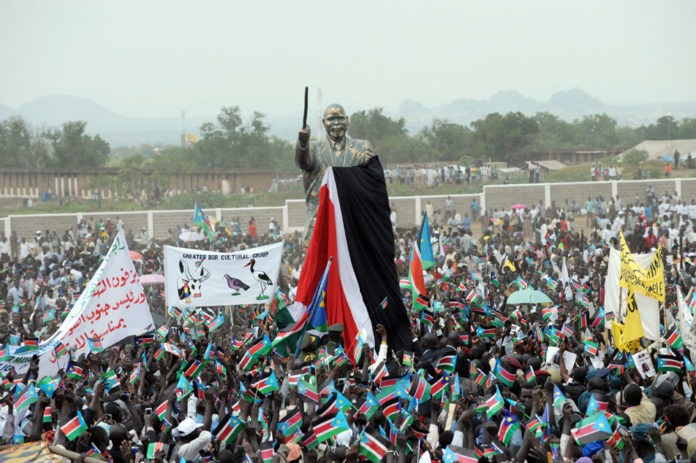
HOPE DASHED: Enthusiastic South Sudanese celebrate Independence in 2011.

As a four-year highly destructive civil war ravages South Sudan leaving thousands dead and millions displaced, the world’s youngest country has today called off its official sixth Independence Day celebrations.

Government spokesperson Michael Makuei announced last month that the troubled country that largely depends on oil, would not hold the celebrations.”Our situation does not require us to celebrate, “he said then.

On July 9 2011, South Sudan seceded from Sudan, giving hope of a brighter future to the mainly animist Southerners. However, two years later in 2013, a civil war that pitted President Salva Kiir against his erstwhile Vice President Riek Machar Teny broke out, and has since spiraled to cause the world’s biggest refugee crisis in recent times, with over a million South Sudanese currently forced out of their homeland.

Stories Continues after ad

Al Shabaab behead nine in Kenya’s coastal town of Lamu

President Uhuru Kenyatta of the Republic of Kenya.

Just as the Kenya mourned the sudden death of Interior Minister Joseph Ole Nkaiserry yesterday morning, suspected Al Shabaab fighters had beheaded nine men in an overnight assault on a village in the Kenyan coastal district of Lamu, police said, days after the armed group killed three police officers in an attack on a nearby village.

A witness, who asked not to be named, confirmed the death toll.

“They raided Jima and Pandanguo villages and killed nine men. They were slaughtered like chickens, using knives,” said the witness.

Kenya’s Interior Ministry announced late on Saturday that curfew was imposed in three districts following the attack.

It said in a tweet that the 12-hour curfew, from 6:30pm (1530 GMT), affects parts of Lamu, Garissa and Tana River and is to be in place for the next three months.

In a televised address on Saturday morning following the death in hospital of Kenya’s Interior Minister Joseph Nkaissery, President Uhuru Kenyatta spoke of ‘an unfortunate incident this morning, which we are assessing’.

Appointing Education Minister Fred Matiangi as acting security minister, Kenyatta promised there would be “no vacuum in securing our country”.

President Uhuru Kenyatta sought to reassure Kenyans when mentioning the latest killings in a speech earlier on Saturday.

“We have had an unfortunate incident this morning that we are currently assessing and addressing,” he said.

Earlier in the week, three police officers were killed in an attack on a police post in Lamu, blamed on the Al Qaeda -linked al-Shabab group.

Stories Continues after ad

No elections in DRC this year – electoral body

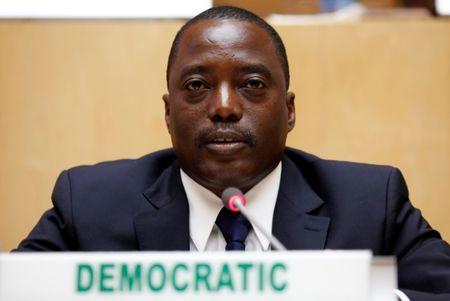
BACKTRACKING ON ELECTIONS? DRC President Joseph Kabila

The Independent National Electoral Commission (CENI) announced in Kinshasa that it was impossible to organize elections this year in the Democratic Republic of Congo (DRC).

“It is impossible to organize the elections in 2017,” the President of the election supervising body, Corneille Nangaa said during a meeting with a delegation of the International Organization of the Francophonie (OIF).

However, he promised to assess the situation with the Government and the National Follow-up Council of the Political Agreement (CNSA), before making any ‘extension decision’.

The political agreement signed on December 31, 2016 between the Government and the Opposition, under the mediation of the country’s Catholic bishops stipulated that the national and provincial, presidential and legislative elections should be organized ‘before the end of 2017’.

DRC President Joseph Kabila is under pressure to relinquish power after his term of office expired late last year.

He however, held on to power, promising to organize elections this year and step down next year.

But in a June interview with German weekly Del Spiegel in Berlin Kabila ‘swallowed’ his words and said he ‘never promised anything’, in regard to holding elections and his stepping down.

And, in February this year his budget Minister Pierre Kangudia had said the DRC could not raise the US$1.8 billion needed to conduct elections in Africa’s second biggest country, which has a population of about 70 million people.


Stories Continues after ad

Former Kenyan High Commissioner to Uganda dead

DEAD: deceased Interior Cabinet Secretary Joseph ole Nkaiserry

The Kenyan Cabinet Secretary of the Interior Major General Joseph Kasaine Ole Nkaiserry, has died.

According to a statement by Joseph Kinyua, Kenya’s Chief of Staff and Head of Public Service, the 68-year old Maj. Gen. Nkaiserry, who once served as Kenya’s High Commissioner to Uganda, died a few hours after he was admitted to Karen Hospital for a medical check-up.

‘It is with deep sorrow and shock that we announce the sudden passing on of Interior CS retired General Joseph Nkaissery. Gen. Nkaissery passed on at Karen Hospital in Nairobi a few hours after being admitted for a check-up. The country to be updated as more information becomes available,’ the statement by Kinyua indicates.

Meanwhile, Kenyan President Uhuru Kenyatta has said the country will remain secure despite the death of Maj. Gen. Nkaiserry.

“There shall be no vacuum in securing our country”President Kenyatta, before appointing  Dr. Fred Matian’gi to head the security docket in an acting capacity.


Stories Continues after ad