Stanbic Bank
Stanbic Bank
17.6 C
Kampala
Stanbic Bank
Stanbic Bank
Home Blog Page 1864

Tortured Kamwenge mayor returned to hospital as health deteriorates

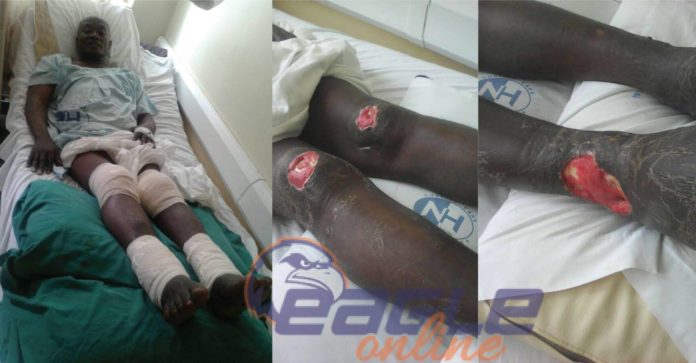
Tortured Kamwenge town council mayor, Godfrey Byamukama was on Saturday returned to Nalufenya, a notorious police detention centre where he had earlier been tortured to near-death.

To many, the move was to keep him away from media and public that had become aware of his condition at Nakasero Hospital.

However, we have since learnt that Byamukama was later returned to the hospital after his condition deteriorated.

Police spokesma, Asan Kasingye confirmed the information though downplayed the fact that it was because Byabakama’s condition had deteriorated.

“Yes, it’s true he was returned to hospital though it was just a normal checkup. He will be returning to hospital every after two days,” he told Eagle.co.ug on phone.

Byamukama was recently arrested in connection to the murder of former police spokesperson Andrew Felix Kaweesi. He had been admitted at the hospital with serious wounds allegedly sustained from police torture.

No family members or friends were allowed access to him but when his presence in the hospital became public, he was returned to Nalufenya, a move protested by Kibaale county legislator, Cuthbert Abigaba.

Byamukama is not just a mere mayor but a cadre of the National Resistance Movement party as double as deputy to Information Minister Frank Tumubaze as district party leader in Kamwenge.


Stories Continues after ad

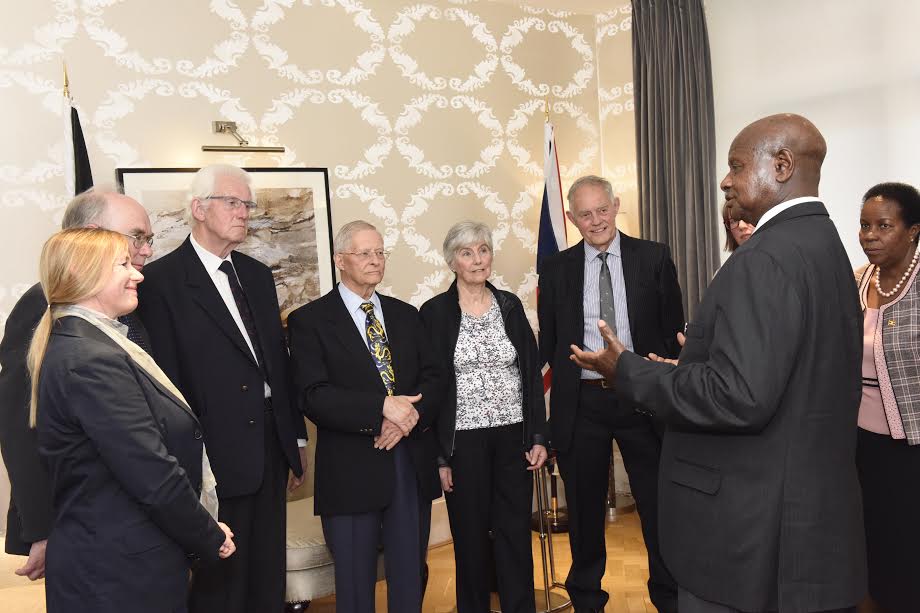
Museveni meets teacher who saved him

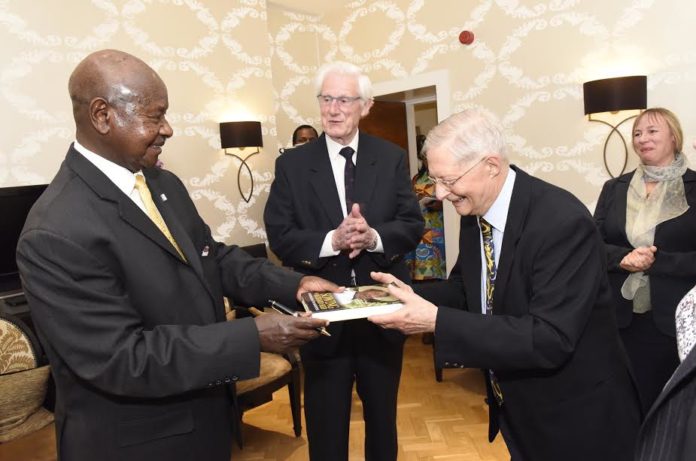
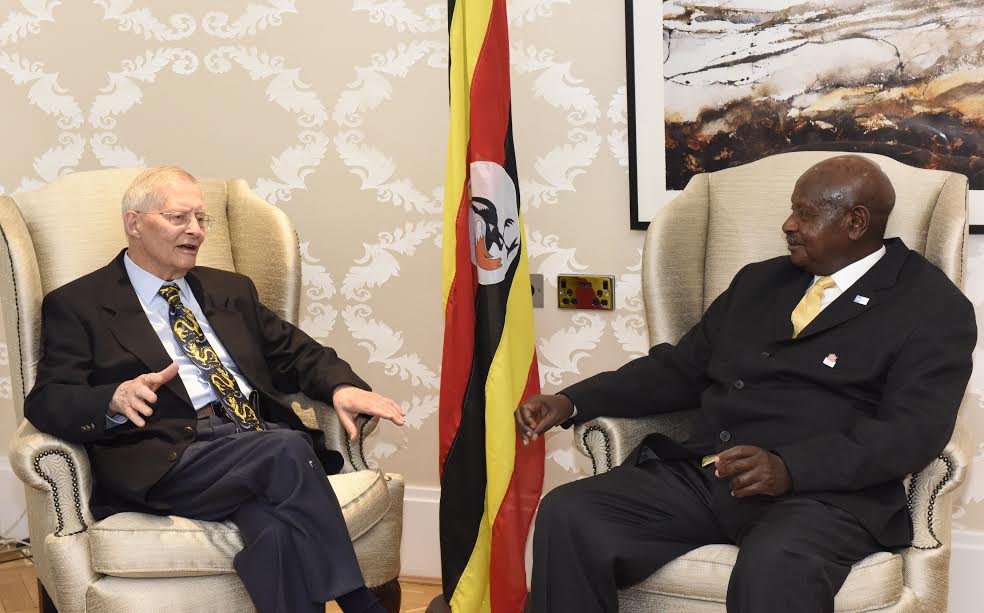
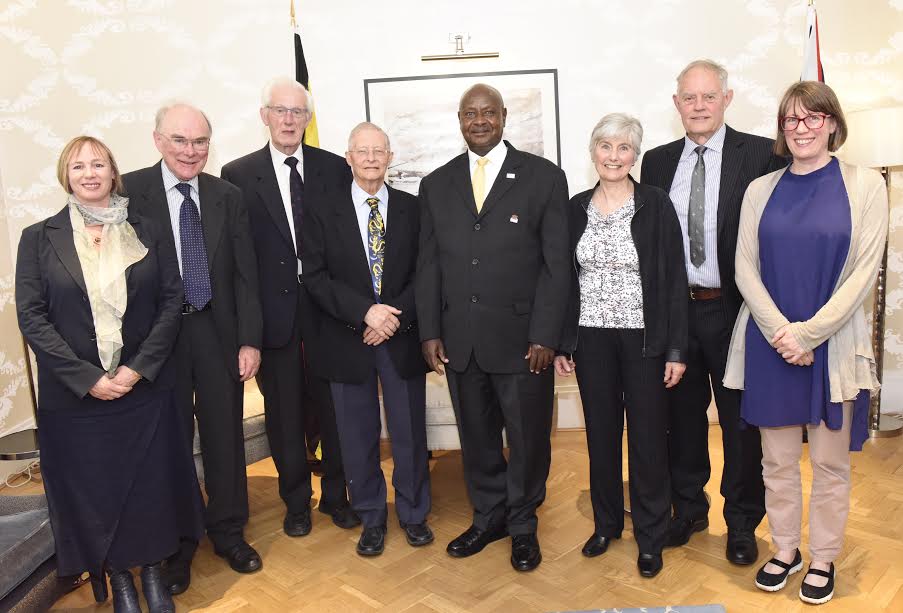
President Yoweri Museveni used part of his two day State visit to the United Kingdom to meet one of his secondary school his former Economics teacher Gerard Sullivan and his wife Mary Sullivan.

On seeing him, Sullivan was reminded of a day in 1963 when a young teenage guy at Ntale School came down with a serious fever with a temperature of over 104 degrees centigrade.

This was strange considered that the normal body temperature is said to be between 98.6 degrees Fahrenheit (37 degrees Celsius).

“According to one of my teachers who took the temperature, I was practically dead. The temperature was too high. I was taken to hospital and I became delirious,” President Yoweri Museveni said, in one of those rare moments, recalling how one of his teachers Mr. Gerald Sullivan saved him from chickenpox.

The Sullivans were accompanied by a former Headteacher of Mbarara High School John and Ailsa Nicholsan and Brian Remmer and Maurice Reeve a former English teacher.

The nostalgic meeting that raked in emotions from a teacher who taught a young man he described as ‘A tall, serious looking student’ recalled how he treated the young Museveni of chickenpox, which he later contracted himself.

Museveni recalled how he got a bout of malaria that lasted for three days from Thursday to Saturday but as he sat on his bed one morning, one of the boys noticed blisters on his chest and immediately called a one doctor Philpot.

“Dr. Philpot came immediately and said this is very serious. They took me to an isolation centre and later teacher Sullivan took me to his house to look after me. The school was closed because of the chickenpox,” the President reminiscenced.

According to the President there was no immunization at the time and even at 18 years, students were susceptible to contracting chickenpox.

The President said teacher Sullivan took him in and fed him until he fully recovered.Teacher Sullivan said he contracted the Chickenpox from Museveni and was down with a fever when Obote visited their school.

“I never forgave you because I contracted the chickenpox from you and missed seeing Obote when he came to our school,” he said.

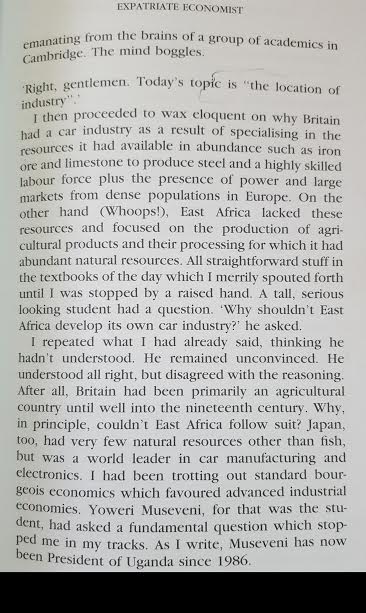
Sullivan was later to write a book “The Making of a One-Handed Economist” in which he described the young Museveni as a tall, serious looking student who asked him a fundamental question, which stopped him in his tracks.

Sullivan had been teaching about the location of Industry, telling students why Britain had a car industry because of its abundant resources while East Africa lacked resources and focused on Agriculture.

“All straight forward stuff in the textbooks of the day which I merrily spouted fourth until, I was stopped by a raised hand. A tall, serious looking student had a question. ‘Why shouldn’t East Africa develop its own car industry?’ he asked,” Sullivan wrote in his book.


“I had been trotting out standard bourgeois economics which favoured advanced industrial economics. Yoweri Museveni, for that was the student, had asked a fundamental question which stopped me in my tracks. As I write, Museveni has now been President of Uganda since 1986,” he wrote.

President Museveni talked about several of his former teachers including Mr. Reeds and Robert Ball with whom they acted “Murder in the Cathedral,” a play by T.S Elliot

Sullivan later handed the President a Ntale alumni classlist of the 1967.

The President said the British teachers gave them a strong foundation and said his former teacher must be proud that he taught a student who has contributed to the development of Uganda.


Stories Continues after ad

UNDP to develop strategy on violent extremism for Uganda

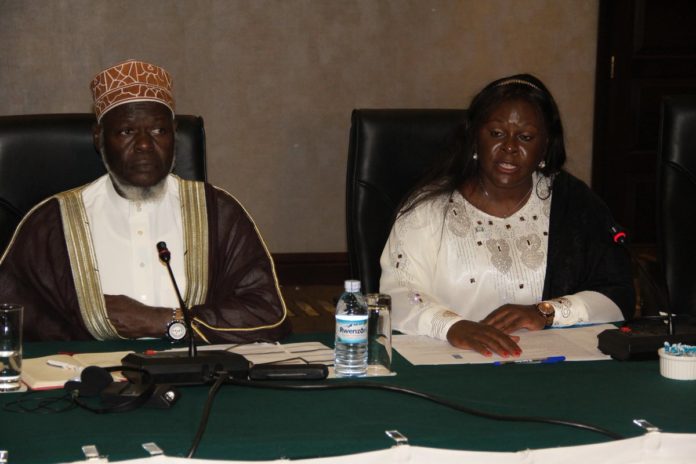
Mufti of Uganda, Sheikh Mubajje and UNDP country representative-Uganda, Rosa Malango.

United Nations coordinator and a representative of United Nations development programme Rosa Malango has promised to collaborate with the government of Uganda and all its ministries to fight against violent extremism.

Over the past decades, violent extremism has dramatically grown around the world including in Africa, but the fact that violent extremism affects Muslims and Muslim communities most therefore, the need to engage religious leaders.

In a two days summit of religious leaders from 10 African countries held at Serena Resort Kigo  under the theme countering, responding and preventing violent extremism in Africa, Rosa Malango said ‘’Violent extremism is a contribution to a reversal of Africa’s development and gains, if not addressed, it threatens to curtail development prospects. Fighting it is a collective responsibility and as religious leaders, you are our key partners’’

She added that Political will is critical in maintaining stability and sustaining development in Uganda and Africa as well. At regional level, UNDP Africa has produced a regional strategy for Africa on preventing and responding to violent extremism.

3rd Deputy Primer Ali Kirunda Kivejinja represented gov’t at the function.

However 3rd Deputy Prime Minister  and Minister of East African Affairs, Kirunda Kivejinja assured the public that the government of Uganda is committed to fighting violent extremism through its firm stand on terrorism and promotion of peace.

The leader of Muslims in Uganda who showed up in the same summit Sheik Ramadan Mubajje lauded UNDP for organizing such summit to discuss the issues of extremism from a scholarly perspective and the move of any assumptions formed over time.

United Nations development programme (UNDP) is supporting the government of Uganda to develop a national preventing violent extremism strategy with the Ministry of Internal Affairs claiming that working together can eliminate violent extremism from our continent and the world.

‘’We hope to have a re-affirmation of the Abuja declaration 2016 against all forms of extremist activities’’ UN Chief emphasized


Stories Continues after ad

Gov’t is to invest Shs10 trillion in different sectors-Bahati

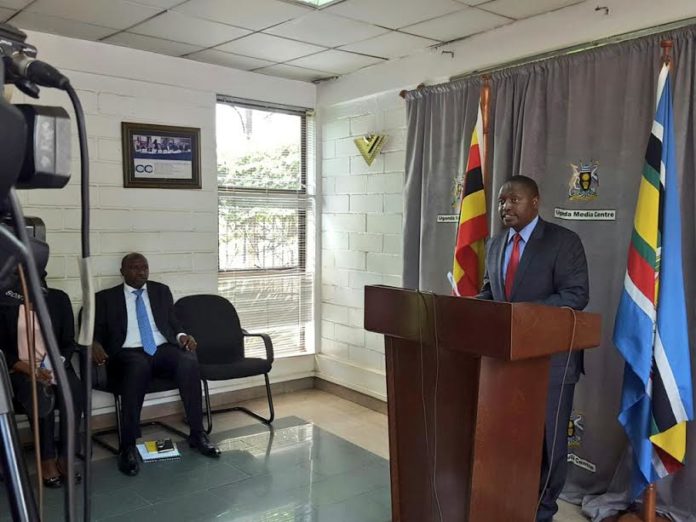
Minister David Bahati during the presser to at Media Centre early this year.

While giving accountability, taking stock of achievements and shortcomings of President Museveni’s first year in office, the State Minister of Finance, Planning and Economic Development, David Bahati has revealed that government is to invest in agriculture, by providing seedlings to farmers at a cost of Shs250 billion to encourage irrigation.

“The engine of our economy is the private sector however inflation is affecting us, Uganda has remained relatively stable at 6 per cent and we hope it shall remain at a single digit. Declining commodity prices have affected Uganda’s export earnings (plus regional instability) that is why we have high interest rates”.

Bahati highlighted that the cost of domestic borrowing was at Shs900 billion he however, said that government is doing its best to bring it down closing to Shs700 billion.

‘’We are in line with what the president said on reducing the cost of power from 11cents – 7cents.upon completion of Isimba and Karuma hydro power projects, power will be a bit cheaper and that will boost industrial developments in various areas’’

Addressing the press at Uganda media Centre, David Bahati said ‘’Due to low savings in the economy, in the coming year the government is going to reduce on its domestic borrowing.  “Uganda’s balance of payments is still in deficit because we are importing more than we export’’.

He said government has massively invested in infrastructural development but little has gone into local content he said however, the government is going invest Shs94 billion in Uganda Revenue Authority to buy scanners that will be used to detect fake products that tend to be imported.

He acknowledged that corruption is a cost towards business as it is a challenge in different sectors and departments of the economy.

“This vice has somehow affected Uganda’s dream of achieving the middle income status”


Stories Continues after ad

Museveni commits self to end Burundi conflict when he becomes EAC chair

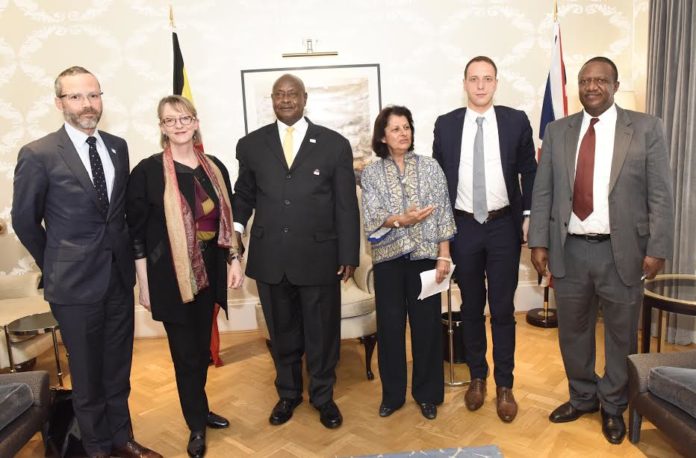
President Museveni meeting Director for Africa and Indian Ocean Remi Marechau and its envoy to the Great Lakes region Ambassador Sophie Makame in London.

President Yoweri Museveni has pledged to bring the Burundi conflict to the attention of other EAC heads of state so as to bring about peace in the region.

This was revealed in a meeting the president had with France’s Director for Africa and Indian Ocean Remi Marechau and its envoy to the Great Lakes region Ambassador Sophie Makame in London.

“We need a consensus on Burundi as a region. When I take up the chair of EAC at the next summit, I will raise this issue so that we can have a decision. We should never neglect any opportunity for dialogue. We need to ease tensions with regional players,” he said.

The two diplomats were accompanied by Uganda’s Ambassador to France Nimisha Madhivani at his residency at the Taj Hotel, St. James Court in London.

Museveni had travelled to London to attend the International Conference on Somalia.

Museveni who is a mediator in the Burundi peace process will assume the EAC chairmanship at the next summit while former Tanzania President is the lead facilitator. Amb. Makame said the facilitation of the peace process needs to be given more support and that they want to see a gesture to open up to dialogue by all stakeholders.

There has been a growing concern over the political situation in Burundi, the lack of progress in implementing resolution 2303 (2016) and the lack of engagement by the Government of Burundi thus the need to involve the regional leaders.

Presidents of the six countries making up the East African Community will gather for the 18th EAC Ordinary Heads of State Summit meeting in Arusha this May include Summit Chair, President John Magufuli (Tanzania), President Uhuru Kenyatta (Kenya), Yoweri Museveni (Uganda), Paul Kagame (Rwanda), Pierre Nkurunziza (Burundi) and for the first time, Salva Kiir Mayardit of South Sudan.


Stories Continues after ad

WizKid to hold two ‘free’ shows in Uganda

Following the last minute cancellation of his show dubbed “WizKid Live in Kampala”, the Nigerian crooner has since been the most hated musician in Uganda.

Though, he appears to have found the key to finding forgiveness from his Ugandan fans.The ‘Dadiyo’ hitmaker has announced that he will be holding two free shows in Uganda as a compensation for the missed show last year.

“I’m doing free shows in Uganda this year! Two days free to make up for last time!” he shared the good news on twitter today.

One of the responses from his fans was, the_other_guy‏ @j03mostly: “Well I still have my ticket from last year, thanks for foxing Kampala Uganda.”

It turns out the shows are not actually free since over 25,000 fans had paid for the show but their money was never refunded even when the show was cancelled.

WizKid was scheduled to perform in Uganda in November last year only for the show to be called off on the last day.

“We regret to inform you and all of our esteemed fans that Wizkid is unable to fly to Uganda for the show as planned, on December 3, 2016, due to unavoidable circumstances,” read part of the statement released by Face TV, one of the people behind the failed concert.

Following the cancellation of the show, it was feared that Face TV, which booked the musician might have duped StarTime, the main sponsors of the show who had paid a whooping Shs350, 000,000 to the musician to perform at their show as they celebrated 6 years.

In what appeared to be avoiding legal measures from Star Times whose image had been tainted, Face TV rushed to court to request for an arrest warrant for the musician, accusing his of failing to honour his agreement with them.

They claimed the musician was paid the full performance fee of US $60,000, a brokerage fee of $5,000 and $3,000 as per diem for the days Wizkid’s group was going to stay in Uganda.

“Our client then incurred substantial expenses in booking and re-booking flights, hotel, venue, advertising and promotions for the concert, which expenses grossed over US $300,000….” An arrest warrant was indeed issued by Buganda Road Court in November last year and that was the last time we had heard anything about the show not until last week when renowned events promoter, Suudiman came out and called for the arrest of Face TV officials over defrauding over 25,000 fans of their money.

“Many Ugandans by nature are the forgiving and forgetful type. After close to 25,000 Ugandans paid for the “Wiz Kid Live in Kampala” concert in December 2016, only for him not to turn up at the last minute, it appears a closed chapter. It is almost six months since the incident, but what has been done to date to bring him to book? Some of this broad day light thuggery needs to be investigated by the IGP,” reads part of the statement by Suudiman last year.

On why the artist called off the show, Suudiman said Wiz Kid’s management had been told that he was to perform in a night club. “With that lie, they negotiated a huge discount of 40%. As if that wasn’t bad enough, the booking for Wiz Kid, who was the most popular in Africa at the time, was made in Rwanda (where he performed) by people who are amateur in the business. They comprised a singer who isn’t familiar with Wiz Kid’s management and two naïve officials from Face TV.

“When I called my sources in Nigeria and the US, I landed on the truth. The organizers, Face TV were telling lies. When I called them, they rubbished me and my concerns. I asked them about WizKid’s play list for the concert and whether they had been in contact with the band director, and they were ignorant and showed me attitude. Unknown to them, I was in touch with someone in Wiz Kid’s camp two weeks to the stipulated date of the concert, but they confessed they were not even rehearsing for the concert. Then it dawned that Ugandans are being taken for a ride. I would be lying if I tell you how much money exchanged hands or what was on the documents reflected in the lawsuit reflected the real sum disbursed to Wiz Kid’s management team.”


Stories Continues after ad

UPDF accused of rape, exploitation in Central African Republic

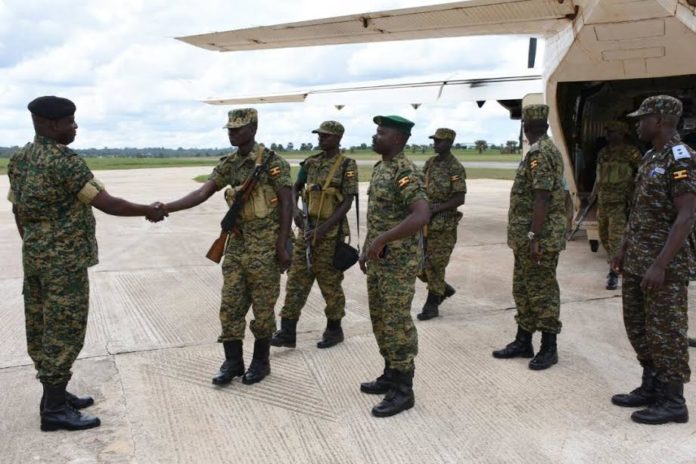
UPDF soldier boarding a plane at Gulu Airstrip as they head to Obbo IN CAR.

Uganda recently announced that its UPDF troops pulled out of Central African Republic but according to the latest human rights watchdog, the soldiers went to CAR to enrich themselves than fighting Joseph Kony.

But as UPDF pulls out, its soldiers are accused of having sexually exploited or abused at least 13 women and girls since 2015, including at least one rape, and threatened some victims to remain silent, Human Rights Watch said today.

It’s against that background that Human Rights Watch has requested the US government to halt military support to UPDF until investigations are complete and the abusers held to account.

“MINUSCA should not consider accepting any Ugandan troops for the UN mission until allegations of sexual exploitation and abuse have been credibly investigated and abusers held to account, Human Rights Watch said,” the Human Rights body appeals.

According to a report released today by Human Rights Watch, a total of 13 women and 3 girls interviewed in early 2017 described the exploitation and abuse since 2010 by Ugandan soldiers in the southeastern town of Obo, where Ugandan forces were based.

However, responding to the allegations in the report, UPDF Spokesperson, Brig. Richard Kalemire acknowledged that there are elements within the army that went to CAR not to fight but to exploit women. Kalemire revealed that as an institution of ‘clean’ record, the army has instituted an investigation in the allegation.

“We have taken note of what is contained in the report. There are elements within the UPDF that have been exploiting women in CAR but our record is clear on errant soldiers” Kalemire said.

Adding “There are already some soldiers that are before the court martial and once found guilty , they will be punished”

Two of the women were girls when the exploitation or abuse took place. Two women and one girl said that soldiers threatened reprisals if they told Ugandan and United Nations investigators about the abuse.

“As counter-LRA operations wind down, Uganda’s military should not ignore allegations of sexual exploitation and rape by its soldiers in the Central African Republic,” said Lewis Mudge, Africa researcher at Human Rights Watch.

“Ugandan and African Union authorities should conduct proper investigations, punish those responsible, and make sure that the women and girls who were sexually abused or exploited get the services they need.”

Fifteen of the women and girls interviewed said they became pregnant, but in each case the soldier who fathered the child left the country and has not provided any support.

“The 16 cases documented by Human Rights Watch clearly under-represent the full extent of sexual exploitation and abuse by the Ugandan forces, not only because sexual violence is generally underreported, but also because others, including the UN and local health workers, have documented other cases, Human Rights Watch said. In the Central African Republic, women and girls often do not report sexual violence or exploitation due to shame, stigma, or fear of retaliation.”

The report further states that in 2016, the UN Office of the High Commissioner of Human Rights reported 14 cases of rape by Ugandan forces in the country, including cases involving victims who were children at the time. Four of these cases are among those Human Rights Watch documented.

According to an internal UN report from 2016 obtained by Human Rights Watch, UN investigators in Obo registered 18 cases of sexual violence or harassment by Ugandan soldiers against women and girls who were afraid to give details out of fear of reprisals. The report states that investigators also obtained information about 44 women and girls with children fathered by Ugandan soldiers; the UN team interviewed 12 of them, all girls.

In January 2017, the BBC reported cases of rape by Ugandan soldiers in the Central African Republic, including of a 12-year-old girl who gave birth. The Ugandan military said at the time that it conducted an investigation in Obo and found no evidence of wrongdoing.

Human Rights Watch submitted a series of questions about the allegations to the Ugandan Ministry of Defence and Veterans Affairs on April 20, including about any investigations or disciplinary action, but the ministry has not replied.

The Ugandan military has been deployed in the country since 2009 as a part of the African Union’s Regional Task Force to eliminate the Uganda rebel group, the Lord’s Resistance Army (LRA), but recently announced it is withdrawing its troops.

While in Obo, Ugandan forces received logistical and intelligence assistance from the United States.

“The US government should condition future support for the Ugandan military on Uganda promptly and thoroughly investigating the allegations of sexual exploitation and abuse in the Central African Republic and punishing the abusers, among other concerns, Human Rights Watch said.”

Rape; sex in exchange for money, goods, or services; and sex with anyone under 18 by African Union (AU) military, police, or civilians qualify as sexual exploitation and abuse, and are prohibited by the AU. The AU states a zero-tolerance policy for sexual exploitation and abuse.

This is not the first time the UPDF is being accused of abuse and sexual exploitation.

In 2014, Human Rights Watch’s report indicated that AU soldiers in Somalia mainly from UPDF, relying on Somali intermediaries used a range of tactics, including humanitarian aid to coerce vulnerable women and girls into sexual activity.

“They have also raped or otherwise sexually assaulted women who were seeking medical assistance or water at Amisom bases,” the press release said


Stories Continues after ad

Lotteries and Gaming: Regulating a nascent multi-billion industry through ‘partnership’

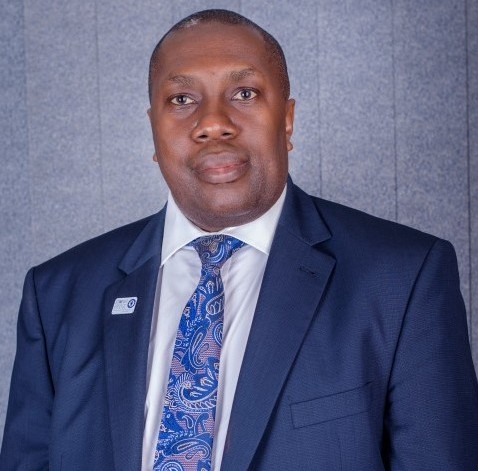
TO STAND FOR SC VILLA PRESIDENCY: The Lotteries and Gaming Regulatory Board CEO Edgar Agaba

Just over two weeks ago, the two Top Bet Sports Betting outlets in the Mutungo suburb of Nakawa Division were closed.

In normal circumstances the two outlets, just less than two kilometres apart are beehives for sports betting activity, an emerging past-time for low and middle income earners in the city, municipalities and townships.

Needless to say however, the closure of the two outlets meant that the punters had to quickly find an alternative: to relocate to the two nearest sports betting shops, The Premier Bet outlets, also just about two kilometres apart.

Reason the two Top Bet outlets and those of several other sports betting companies across the country were closed? Yes, they had failed to comply with the regulations as set by the recently-launched Lotteries and Gaming Regulatory Board (LGRB), the new authority under the Ministry of Finance that is charged with ensuring that the gaming industry in Uganda is carried out in accordance with the set rules and regulations.

‘Coming into in April last year, the LGRB is mandated by law to supervise and regulate the establishment, management and operation of lotteries, gaming betting and casinos in Uganda, and to protect the citizens from the adverse effects of gaming and betting in Uganda,’ reads part of the Board’s Mission Statement.

And, according to the pioneer LGRB Chief Executive Officer Edgar Agaba, one of his topmost priorities at the Board is to ensure that all stakeholders, mostly the operators, respect ‘the rules of the game’ as enshrined in the LRGB Mission Statement.

However, he adds that this will be achieved through a working partnership that will involve constant interaction to exchange ideas on how to make the industry acceptable to all Ugandans as a recreational activity that should involve responsible spending, just like all other leisure activities.

Most gaming industry operators I interacted with at the launch at Serena Conference Centre Victoria Hall last week noted that Mr Agaba is not your ordinary ‘pick off the shelf’ administrator; he is up to the task as observed by the leisure gaming industry’s top honcho Bob Kabonero, the proprietor of the first indigenously-owned Casino, the Kampala Casino.

According to Mr Kabonero, Edgar Agaba’s management prowess was earlier exhibited when he soundly acquitted himself as the pioneer Director of the Public Procurement and Disposal of Assets (PPDA), something that makes most operators anxious to benefit from the working partnership with Mr. Agaba while at the LGRB.

It is also worth noting that the Board of Directors at the LGRB comprises Ugandans of good public standing that include among others seasoned Economist and former Minister Manzi Tumubweine, and the Criminal Investigations and Intelligence Directorate (CIID) boss Grace Akullo. Previously, Mr Manzi Tumubweine was linked to the National Lotteries Board (NLB), the precursor to the LGRB.

That said, over the past few years Uganda’s economy had improved, thanks largely to a favourable balance of payment climate that left a good number of employed Ugandans with disposable income, some of which has been channeled to gaming, notably Sports Betting.

By its very structural set up, Sports Betting in Uganda is a comparatively affordable form of social entertainment, costing the low-income punter at least 1000 Shillings. This, of course, is not to say that there are those in the low-income segment (or in the non-income generating segment like some students in upper primary, secondary and university) who get addicted to gambling, spending beyond their means and in the end become social burdens. Then there is also the issue of under-age gambling (mostly involving illicit ‘street operators’ that also attracts mostly students), an anomaly that the government, in conjunction with the LGRB, has to stamp out.

Needless to mention therefore, gaming including gambling in Casinos and sports betting is a multi-billion industry that needs to be regulated if all the stakeholders including the punters (betters); the operators and the Government are to benefit from the enterprise.

And according to Mr. Agaba, this therefore means that slips in the enforcement of the regulations should be put at a ‘heightened red’, in an effort to protect all the interested parties. For instance, he observes, that if not well regulated, an unscrupulous punter can make it difficult to claim his/her well-deserved winner’s money, something that erodes the public trust and often ends up at the police for arbitration.

Similarly, Mr Agaba says the operators may also find themselves holding the ‘wrong end of the stick’ if government does not put in place a flexible tax regime that allows for the gaming industry to grow, while the government also stands to lose billions in revenue if the operators don’t come clean on their earnings.

So, it is in important that this complimentary chain is insulated from the industry’s misgivings if all the three principal stakeholders and other Ugandans are to appreciate this new and complex multi-billion undertaking.

Perhaps, to better understand the import of investment in the gaming industry, it is worth noting that last year alone the sector, according to the Uganda Bookmakers and Gaming Association (UBGA), contributed slightly over 62 billion to the national coffers. Also, it is important to say that the gaming industry employs 5000 people, who in turn also look after an estimated 10.000 dependents in the elastic chain, and also pays rent to over 1000 owners of premises countrywide.

But the industry is also faced with challenges, with some operators taking the gaming activities deep in the rural areas where villagers are ignorant and poor and can’t afford the luxury of gambling away their hard-earned money.

“I want to emphasise that the we will only allow gaming in the city, municipalities and Town Councils,” the State Minister for Finance in charge of General Duties David Bahati said at the launch, emphasizing a point earlier stressed by Mr. Tumubweine.

The LGRB is also burdened by importers who bring in obsolete slot machines and, at the time of the launch it was estimated that there were about 400 slot machines smuggled into the country as ‘spare parts’, and assembled in Nyendo – Masaka, in the process denying the government revenue.

Nonetheless, there will always be a silver lining and at the LGRB launch, the operators, under their umbrella association, donated 15 tonnes of grain to the famine-stricken Ugandans in various parts of the country, attracting a nod of approval from all those in attendance, and lending credence to Mr. Agaba’s optimism of a ‘smooth partnership’ with other stakeholders who value the importance Corporate Social Responsibility (CSR) as a societal transformational tool to help the less privileged also attain some of their dreams.


Stories Continues after ad

Tension grips Kakiri barracks as two UPDF Colonels trade blows

IN FIST FIGHT: First Division deputy division commander, Col Joseph Balikkudembe

There was a scuffle in Kakiri, the headquarters of Uganda Peoples Defence Forces First Division, after the deputy division commander, Col Joseph Balikkudembe assaulted a fellow officer at the rank of Lieutenant Colonel during a meeting.

According to sources that attended the meeting, Col Balikudembe pounced on the battle-hardened Lt. Col. Robert Ruteinama, the commander of 301 brigade and punched him in the presence of junior officers.

Col. Balikudembe accused Lt. Col. Ruteinama of indiscipline after the latter attended the meeting adorned in civilian clothes.

Col. Balikudembe accused Lt. Col. Rutainama, who is known in the UPDF as being among fearless and courageous officers who have spent their entire military career at the frontline.

After the scuffle, Col. Balikudembe ordered for disarmament of Lt. Col. Ruteinama and his bodyguards.

Subsequently, there was tension in the barracks because of fear that Lt. Col. Ruteinama might seek revenge.

By press time it was not possible to get comment from the army spokesperson Brig.Richard Karemire.


Stories Continues after ad
DPP appeals Desh Kananura acquittal

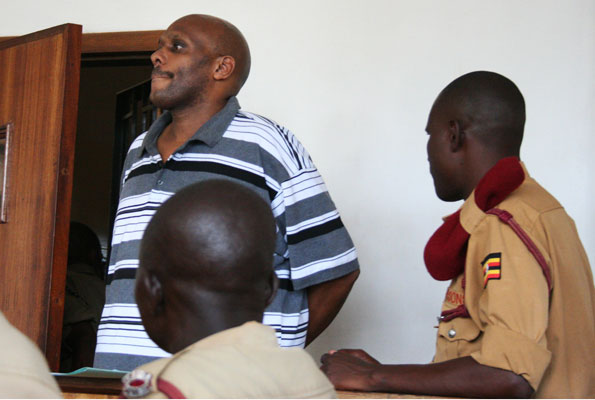
TO FACE APPEAL: Andrew Kananura, alias, Desh, in the dock at Buganda Road Court. He is currently appearing before the High Court for murder.

The Directorate of Public Prosecutions (DPP) has appealed against the acquittal of Andrew ‘Desh’ Kananura and four others, and wants the Court to revisit the ruling.

Desh Kananura, his brother Raymond Kananura and employees Jacob Onyango, Cyrus Maganda and Samuel Mazelewo had been accused of murdering Badru Kateregga, a barman at the Naguru-based Panamera Bar owned by Desh Kananura but the five were two weeks ago acquitted by Hugh Court Judge Justice Joseph Murangira.

Records indicate that on September 30, 2012 Kateregga was beaten to death on claims that he was found with Shs30, 000, against the rules of the bar.

Stories Continues after ad