Stanbic Bank
Stanbic Bank
19.7 C
Kampala
Stanbic Bank
Stanbic Bank
Home Blog Page 1863

Fresh clashes break out in DRC’s North Kivu, ‘Uganda border post attacked’

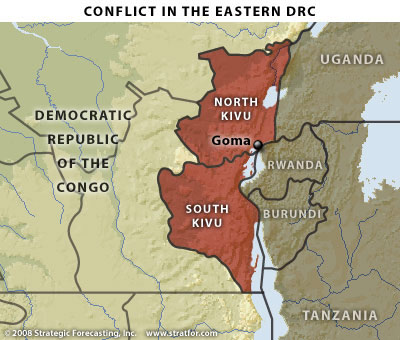
The map showing the shared borders between the DRC, Uganda and Rwanda.

The governor of Democratic Republic of Congo’s restive eastern province of Nord-Kivu urged the army to beef up operations against a spate of militia attacks there, saying all-out war may be imminent.

“I am alerting in particular the army chief of staff to refocus its strategy after these new incursions. There is a looming threat of a fresh war,” Julien Paluku told a press conference.

An unprecedented string of attacks in the last few days against border posts and army positions in DRC’s troubled east have been attributed to the Mai-Mai, a ‘self-defence’ militia comprising members of several ethnic groups in the region.

But Paluku said ‘these repeated attacks in Beni far exceed the capabilities of the Mai-Mai’, instead they suggest the involvement of ‘another force’ supporting the unidentified militia groups.

His warning raises bitter memories of DRC’s two wars, in the late 1990s and early 2000s, which dragged in at least six African armies and left more than three million dead and 1.6 million homeless, Africa’s worst conflict in recent history.

On Monday the Kasindi border post on the Ugandan border was attacked by a Mai-Mai militia group previously unknown to the authorities, an army spokesperson said.
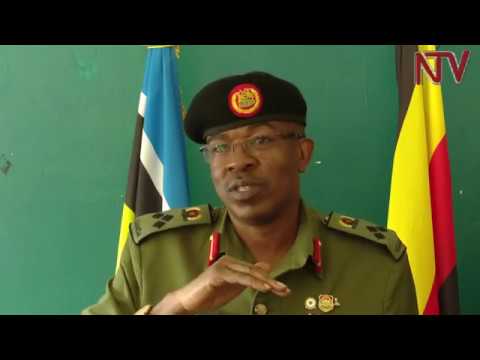
BUSY: UPDF spokesperson Brig. Richard Karemire

And contacted over the matter Uganda Peoples Defence Forces (UPDF) Spokesman Brigadier Richard Karemire could not respond, as he said he was attending a function.

Meanwhile, in a related development, the DRC forces said on Tuesday there was an attack against an army position at Kalau and on Wednesday the army again came under attack at Nyamitale by assailants believed to be Mai-Mai.

There were clashes also last weekend in Nord-Kivu, in Kaseghe, where ‘the Mai-Mai (militia)’ attacked government troops, said an army spokesperson.

During the second civil war in the Democratic Republic of Congo (1998-2003), a number of groups were armed by the ruling power to fight invading Ugandans and Rwandans – and several groups never disarmed.

Kaseghe is located in the Lubero territory neighbouring Beni where a series of deadly clashes have taken place over the past year.

Sixteen people were killed early this month near Beni in clashes between the army and a suspected Mai-Mai group – though its presumed spokesperson describes it as a national revolutionary movement opposed to the regime of President Joseph Kabila.

Kabila has been in power since 2001 when he succeeded his father. He was elected president in 2006 and 2011 and his second mandate expired in December.

But the 46-year-old leader has refused to step down fuelling a political crisis in the vast central African country. Elections are now supposed to be held by the end of this year.

 

Stories Continues after ad

South Sudan recalls its envoy to Uganda

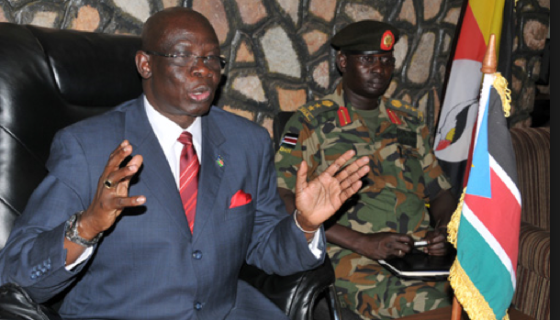
RECALLED: Outgoing South Sudan Ambassador to Uganda Samuel Luate Lominsuk

The South Sudan government has recalled its Ambassador to Uganda Samuel Luate Lominsuk, and also written to six other heads of its diplomatic missions across the world, asking them to report to the headquarters of the Ministry of Foreign Affairs and International Cooperation.

The June 14, 2017 letter carries the signature of the Minister of Foreign Affairs and International Cooperation, Deng Alor Kuol.

“The esteemed Ministry of Foreign Affairs and International Cooperation would like to inform you that the above-cited decision has been taken by the leadership of the ministry, you are therefore to avail yourselves within 60 days to expedite the process of handing over to the most senior diplomats,” read the letter.

The letter was addressed to South Sudanese ambassadors to seven countries including Uganda, the United Kingdom, Sudan, Germany, India, Egypt, and Eritrea.

The Spokesman of South Sudan’ Foreign Ministry, Mawien Makol, said that a recall was part of normal administrative measures, where a period since the diplomats were deployed to specific countries has elapsed.

“This is a normal recall. It is part of the routine changes when the period of deployment has elapsed,” Mawien said.

But the South Sudanese diplomats contest the decision pointing they cannot return before being paid their salaries and the needed money to pay the rent of their apartments.


Stories Continues after ad

UNAIDS, StarTimes in joint fight against Aids in Uganda

JOINT EFFORT: Andy Wang, CEO StarTimes Uganda exchange MoUs with UNAIDS Country Director Amakobe Sande

UNAIDS and the Chinese media group StarTimes Uganda have today signed a memorandum of understanding to raise awareness about HIV prevention among the adolescents and young people with a specific target on men.

This partnership is aimed at working together to attain the UNAIDS global and national target of 90-90-90 targets by 2020 that will contribute to ending the AIDS epidemic in Uganda by 2030.

Through this cooperation, UNAIDS and StarTimes Uganda will partner in resource mobilization, advocacy, publicity and awareness raising for HIV prevention initiatives.

In particular, StarTimes will provide media support and outreach during UNAIDS campaigns, notably World AIDS Day and Zero Discrimination Day as well as regular dissemination of HIV prevention information on popular programming with key messages targeting the young and adolescent viewers and mobilizing young people to learn about HIV/AIDS services in the country.

In 2015, an estimated 1.5 million people were living with HIV in Uganda with 83,000 new infections registered. Of concern is the situation among young people and particularly young women and girls registering 50 new infections a day.

The trend of rising new HIV infections in the country called for an accelerated action plan and it is on this basis that the President launched the Presidential Fast Track Initiative on ending AIDS as a public health threat in Uganda by 2030 on June 6.

The initiative contains a five-point plan for more focused and urgent action to accelerate achieving control of the HIV epidemic in Uganda.

Signing on behalf of UNAIDS, Amakobe Sande UNAIDS Country Director welcomed the partnership.

“Government and other agencies involved in the AIDS control should work harder and reverse the new trend of infections among the youth. As UNAIDS, we shall continue to work with Uganda Aids Commission, Ministry of Health and other partners to end AIDS as a public health threat in Uganda by 2030,” Amakobe said.

Andy Wang, CEO StarTimes Uganda said: “AIDS is the public enemy of all mankind and we are honoured to have the opportunity to work with UNAIDS in the mission of fighting AIDS. We will use our digital media platform to create content that appeals to the youths and adolescents so that we get their attention. That way we shall be able to convey messages that sensitize them, alert them and warn them about the dangers of careless living. Enhancing awareness of HIV is the first step in helping the people”

Uganda is the first country to localize this partnership after UNAIDS Executive Director Michel Sidibé and StarTimes’ President Pang Xinxing sealed the partnership during a meeting in Beijing, China, on May 12 to raise awareness about HIV in Africa and to work together to end the AIDS epidemic.

StarTimes is the leading digital pay television operator in Uganda, with over 1 million subscribers.


Stories Continues after ad

Prof. Nawangwe beats rivals to the Makerere VC job in Senate interviews

TOP RATED PROFESSOR: The University Senate released a report indicating Prof. Barnabas Nawangwe leading his rivals to the post of Makerere University Vice Chancellor.

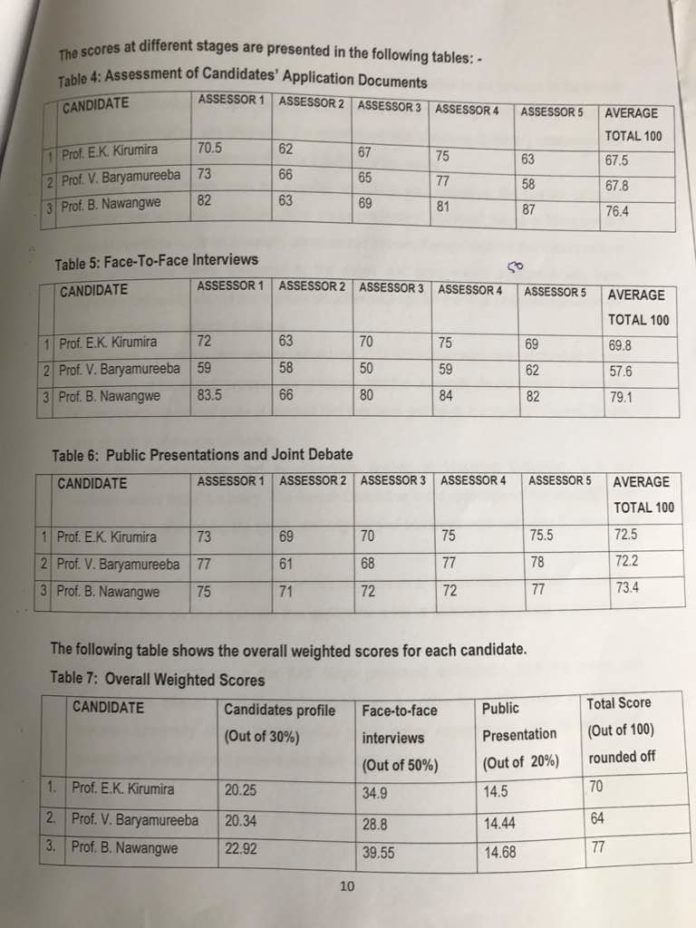
Professor Barnabas Nawangwe has today emerged best candidate for the post of Makerere University Vice Chancellor, leading Professors Edward Kirumira and Venansius Baryamureeba in interviews conducted by the university Senate.

According to a report released by the search committee, Prof. Nawangwe beat his rivals in all the components of interview including among others the ‘Assessment of Candidates Application Documents (76.4); ‘Public Presentation and Joint Debate’ (73.4); ‘Face-to-Face Interviews’ (79.1) and in the ‘Overall Weighted Scores’ (77%).

“The race attracted suitable candidates, who the university Senate should find suitable for the job,” the Search Committee wrote in the report.

The Makerere VC contest comes to the final bend tomorrow when the candidates appear before the University Council.

With a career track record of over 40 years, and currently the only African holder of a Doctorate in Architecture, Prof. Nawangwe is the substantive Deputy Vice Chancellor of Finance and Administration (DVC/FA).

Earlier, Prof. Nawangwe had served as the Head of the College of Design, Art and Technology (CEDAT), and Dean of the Faculty of Architecture since its inception in 2009.


Stories Continues after ad

Tullow Oil, local partners in gigantic undertaking by year-end

BIG DECISION: Oil production equipment

Tullow Oil and its partners-Total AND CNOOC expect to make a Financial Investment Decision (FID) around end of year, the giant company which launched its oil activities in Uganda 13 years ago says in its latest Trading Statement and Operational Update, whose official report is to be released next month.

“Key work programme activities such as … Geophysical and Geotechnical surveys are underway. Based on the progress with these activities, Tullow and its partners are working toward project FID around the end of the year,” the brief statement reads in part.

Tullow Oil says that oil pipe agreement signed between Uganda and Tanzania towards the end of May is a big step forward for investment in the country’s oil and gas sector.

“The pipeline FEED and ESIA are progressing well and both are expected to be completed in advance of FID,” it says.

FEED stands for front-end engineering design which includes technical issues and rough investment cost, whereas ESIA stands for Environmental and Social Impact Assessment.

On January 9, 2017, Tullow announced that it had agreed a transfer of 21.57% of its 33.33% assets in Uganda to Total for a total of USD$900 million.

This forced CNOOC to exercise its pre-emption rights under the joint operating agreements between Tullow, Total and CNOOC to acquire 50% of the interests being transferred to Total on the same terms and conditions that were agreed between Tullow and Total.

Tullow says it is now working with Total  and  CNOOC  to  conclude  definitive  sale  documentation  in  relation  to  the  farm-down. But the company (Tullow Oil) adds the completion of the transaction is subject to certain conditions, which include approval by the Government of Uganda.

According to Aidan Heavey, the CEO Tullow Oil, to date, his company has done more than USD$200 million worth of business with 550 local companies, much as it continues to rely on international suppliers to deliver services which require deep technical and industry knowledge, such as well engineering.

The Government of Uganda is expected to get around 80% of net revenues, after the exploration costs are recouped. The potential value of Uganda’s oil reserves discovered to date amounts to around USD $100 billion.

Based on current estimates of costs and the future price of oil, Uganda’s share could amount to USD$50 billion, says the company’s General Manager Jimmy Mugerwa.

Uganda has proven crude oil reserves of 6.5 billion barrels, about 2.2 billion of which is recoverable.

Tullow  is  a  leading  independent  oil  and  gas,  exploration  and production  group, quoted  on  the London,  Irish  and  Ghanaian  stock exchanges.  The  Group  has  interests  in  over  100  exploration  and  production  licences  across  18  countries.


Stories Continues after ad

Africa music Icon PJ Powers in Kampala for Friday charity concert

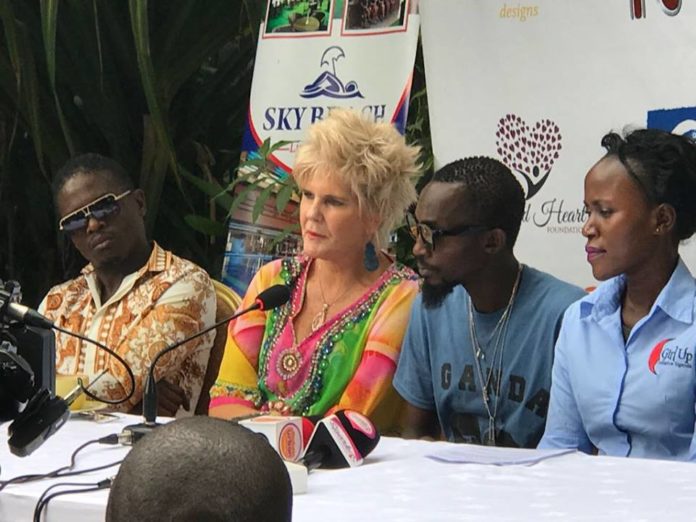
READY: African music icon PJ Powers addresses a press conference

African music icon PJ Powers is in the country for her Friday Charity Concert. Powers, popularly known for her anti-apartheid and music, jetted into the country on Saturday, and ‘celebrated Eid in Uganda.

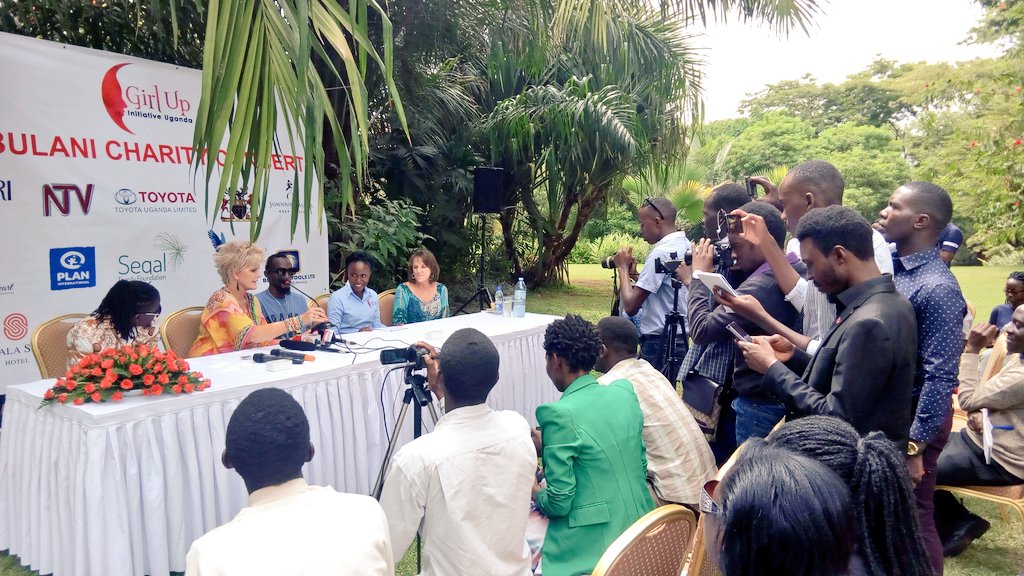
PJ Powers and other officials linked to the concert at the press conference

Addressing journalists at Serena Hotel today, she promised the public to expect the best from her. In Uganda she is popular for her hit songs like ‘Jabulani’, ‘Feel So Strong’ and ‘There is an answer’ to mention a few.

Also to perform at the show will be Radio and Weasel. They also promised the public not to miss out on the show for they will be putting up one of their best performances this year.

Proceeds from the concert will go to charity and worth mention is that all the musicians lined up to perform at the show have a big heart for the less privileged.

Whereas Radio owns a school for the less privileged in Ndeeba, PJ Powers is the global ambassador for Girl Up Initiative Uganda, an NGO behind the show.

Girl Up Initiative Uganda is a young women-led NGO that puts women and girls’ at the centre of development through girls’ leadership and economic empowerment programs.


Stories Continues after ad

Former Minister Kabafunzaki aides committed to High Court

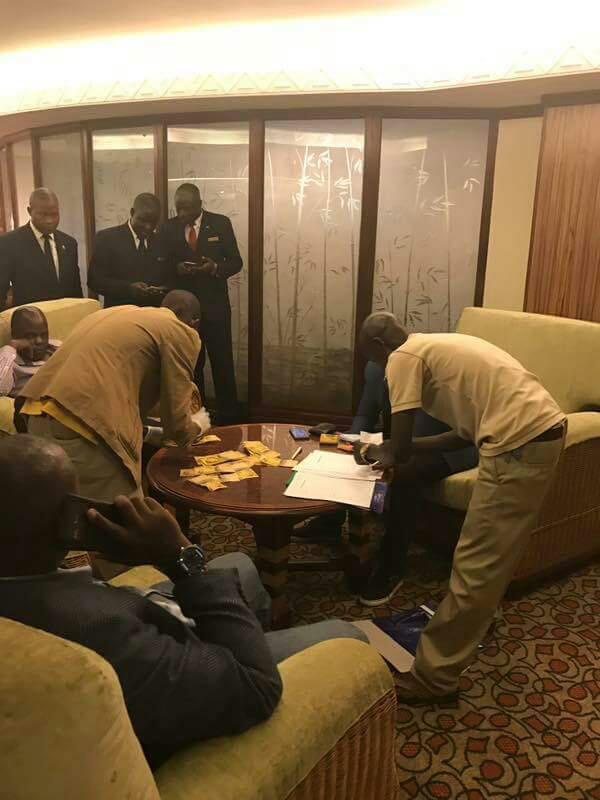
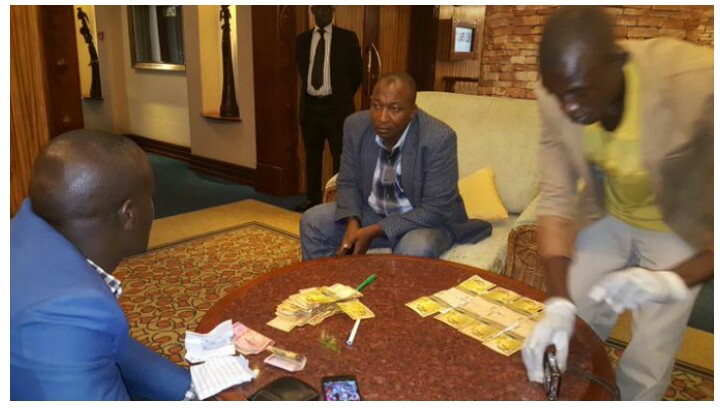
Detectives pick the money that was allegedly given to former Minister Herbert Kabafunzaki as a bribe.

Bruce Lubowa and Brian Mugabo, political assistants of the former Minister of State for Labour Herbert Kabafunzaki, have been committed to the High Court to answer to charges of soliciting a bribe.

FORMER MINISTER: Herbert Kabafunzaki with the ‘bribe’ money

Appearing today before chief magistrate Agnes Alumu of the anti-corruption court, the two were charged with soliciting a bribe from the chairperson of Aya Group of companies Muhammad Hamid, to ostensibly clear his name of allegations of abuse.

Magistrate Alumu ordered the prosecution led by Barbra Kauma to file all the evidence within a week for mention of the case before the Anti-corruption court.

Prosecution is to rely on the footage that was captured by CCTV cameras from Serena hotel for the suspects to be convicted. It will also rely on the Shs50,000 notes that were found on the table in a manila envelope of Orient Bank that contained the five million shillings.

In early April, minister Kabafunzaki and his co-accused were arrested at Serena hotel and on Monday April 11, they were produce to anti-corruption court and charged with corruption.

Brian Mugabo has since reportedly accepted hiding Shs5 million.


Stories Continues after ad

John Terry wanted by Aston Villa and Birmingham

FAREWELL: Chelsea players accord Captain John Terry a befitting send off from Stamford Bridge.

Chelsea captain John Terry, whose contract at Stamford Bridge expires in two days’ time, is wanted by championship sides Aston Villa and Birmingham.

Both clubs have offered Terry a one-year contract. Aston villa is managed by Steve Bruce while Birmingham is managed by Harry Redknapp.

John Terry with Birmingham Manager Steve Bruce

The 36-year-old player has had a number of offers this summer from top clubs but looks he will choose to make the step down to the Championship.

West Brom, Swansea and Bournemouth were also interested in Terry who is reluctant to play against Chelsea in the Premier League, where he spent two decades as a player and will decide his future next week.

Terry posted a photo with Aston Villa manager Steve Bruce on Instagram hinting that he may be at Villa Park next season.

Terry made his Chelsea debut against Aston Villa in 1998 and has played over 700 games for the club, winning Premier League x 4, Champions League x 1, FA Cup x 5, League Cup x 3 and Europa League x 1.

He also won the PFA Player of the Year in the 2004/05 season.

Stories Continues after ad

Digital business registrations hit 70%, as process goes mobile

HELPING WITH COMPANY REGISTRATION: The URSB mobile van travels upcountry

The digital business records in Uganda have hit 70% as the registration process continues , Mr Bemanya Twebaze, the Registrar General of the Uganda Registration Services Bureau (URSB), has said.


“The year 2017 started on a good note at Uganda Registration Services Bureau with digitalization of the Registry records in order to transform how we do business,” Mr Bemanya says.

According to the Registrar General, the digitalisation process is formalizing businesses in the informal sector as part of the interventions to help maintain a stable and predictable macro-economic environment in the country.

The future integration of these online services, with services of the other agencies will ultimately result into a seamless service to the public and the private sectors, Mr Bemanya noted.

“As we harness the opportunities to serve better, we will continue to implement the institutional reforms aimed at increasing public service efficiency and reducing the cost of doing business so as to improve responsiveness towards the private sector needs,” he adds.

Mr Bemanya says online registraion of businesses has changed URSB operations. For instance, he says, file retrieval is done in 30 minutes as compared to the previous 3 days, while the number of days to register a business has reduced from 30 days in 2014/15 to 8 working hours.

There has also been an increase in non-tax revenue collections per year from UGX 5 billion in 2010/2011 to UGX 24 billion in 2015/2016, and with a projection to increase further, he says.

He says URSB has started using a mobile registration services van to reach more clients in the countryside. The van is already traversing the country, covering places where the bureau does not have physical presence to conduct both onsite registrations and sensitization, he adds.

URSB currently has regional offices in Gulu, Arua, Mbarara and Mbale while Kampala residents accesses services from the Headquarters on Georgian House,  and three other offices; at Post Office Building, UIA and in Nakivubo on Ssekaziga House.

Rachel Odoi-Musoke, the Technical Advisor JLOS, says of the importance of the mobile registration van.

“Our wish is to see that registration services reach every sub county and parish in the whole country,” she says, adding that the initiative will enhance the investment climate in the country.

As for Mr Bemanya, the van will enable URSB to reach some of the hard to reach areas in Uganda.

“While we are already digitalizing our registry and services, we acknowledge that not all our clients are ICT complaint, so we must reach where they are,” he says.

Stories Continues after ad

Uganda among first African countries to use latest AIDS drug

AIDS SCOURGE: Some of the Aids drugs currently in use

Uganda will be among the first three African countries to start using the generic version of the latest AIDS drug that can improve and prolong the lives of people who suffer severe side effects and resistance to other treatments, health agency, UNITAID has said.

Uganda will follow her neighbour Kenya and Nigeria, with UNITAID saying 20,000 Kenyan patients have already started using the drug- a generic of Dolutegravir (DTG), first approved in the United States in 2013.

DTG is the drug of choice for people with HIV in high-income countries who have never taken antiretroviral therapy before and for those who have developed resistance to other treatment.

The brand name version of DTG is Tivicay, produced by ViiV Healthcare, which is majority-owned by GlaxoSmithKline.

UNITAID works to bring medicines to market quickly and to reduce manufacturing costs by allowing generic companies to access patents for a small royalty and produce them cheaply for the developing world.

Available national data indicates in the year 2015, an estimated 1.5 million people in Uganda were living with HIV, while an estimated 28,000 died of AIDS-related illnesses. As of 2015, the estimated HIV prevalence among adults in Uganda (aged 15 to 49) stood at 7.1%

The number of new HIV infections in Uganda increased by 21% between 2005 and 2013.  However, according to official government health records, infections are now reducing and fell from 140,000 in 2013 to 83,000 in 2015 The number of AIDS-related deaths decreased by an estimated 19% over the same period.6

Robust treatment and prevention initiatives have been implemented in recent years, leading to improved conditions for people living with HIV. Due to the implementation of antiretroviral treatment throughout the country there has been a gradual increase in the number of people living with HIV receiving treatment.

In 2013, Uganda reached a tipping point whereby the number of new infections per year was less than the number of people beginning to receive antiretroviral treatment.

However, as of 2015 around 40% of adults living with HIV were still not on treatment. Persistent disparities remain around who is accessing treatment and many people living with HIV experience stigma and discrimination.

UNAIDS claims Sub-Saharan Africa has been at the epicenter of the HIV epidemic for decades and home to nearly three quarters of all people with HIV/AIDS. The agency aims for 90 percent of people diagnosed with HIV to receive antiretroviral treatment by 2020.

Stories Continues after ad