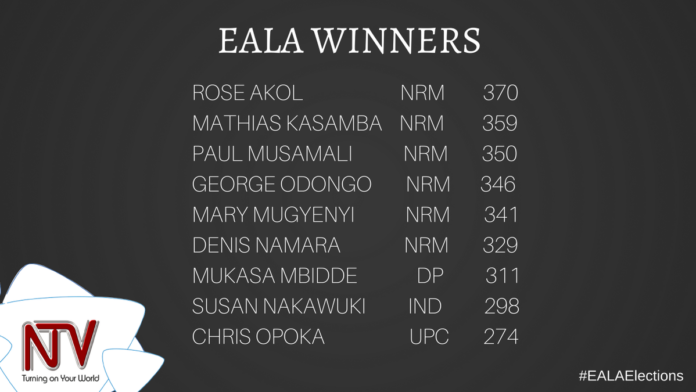
WINNERS: The names of Uganda's new representatives to EALA.
It was a game of numbers. Despite being the biggest opposition political party in Uganda, the Forum for Democratic Change (FDC) has failed to capture a seat on the East Africa Legislative Assembly (EALA).
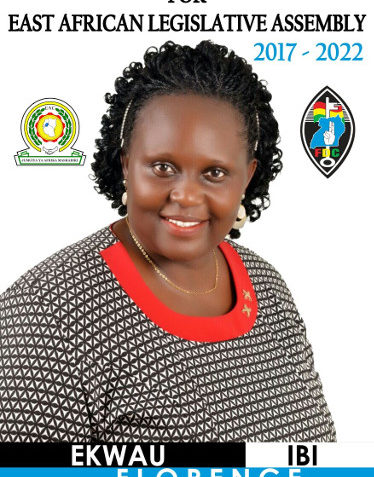
This follows yesterday’s elections, where the National Resistance Movement (NRM), which has the biggest number of MPs in the 10th Parliament, overwhelmingly voted against the FDC candidate Florence Ibi Ekwau, denying her a chance to represent Uganda at EALA. This is the second time in a row that the opposition party is failing to get an EALA seat, courtesy of the ruling NRM.
During the EALA elections earlier yesterday there was drama as the NRM MPs denigrated opposition strongwoman Ingrid Turinawe, who contested as an Independent, even denying her a chance to address the house. She however, managed to get 25 votes, most believed to have been cast by opposition members in Parliament.
Ms Turinawe recently made headlines when she lashed out at FDC President Major General John Gregory Mugisha Muntu, who had written to the Clerk to Parliament Jane Kibirige, withdrawing her party candidature. At the time Ms Turinawe, who is the FDC Secretary for Mobilisation, said party president Gen. Muntu had ‘no authority’ to stop her from contesting for an EALA seat, a position that was buttressed by Kibirige’s response to Gen. Muntu’s letter.
Meanwhile, following yesterday’s elections, former Internal Affairs Minister Rose Akol of the NRM led the pack with 370 votes, followed by Mathias Kasamba (NRM) with 359 votes. Other NRM winners were Paul Musamali (NRM) 350; George Odong (NRM) 346; Mary Mugyenyi (NRM) 341 and Dennis Namara (NRM) with 329 votes.
Others are: Democratic Party Vice President Fred Mukasa Mbidde with 311 votes; Susan Nakawuki (Independent) with 298 votes and Chris Okumu Opoka with 274 votes.
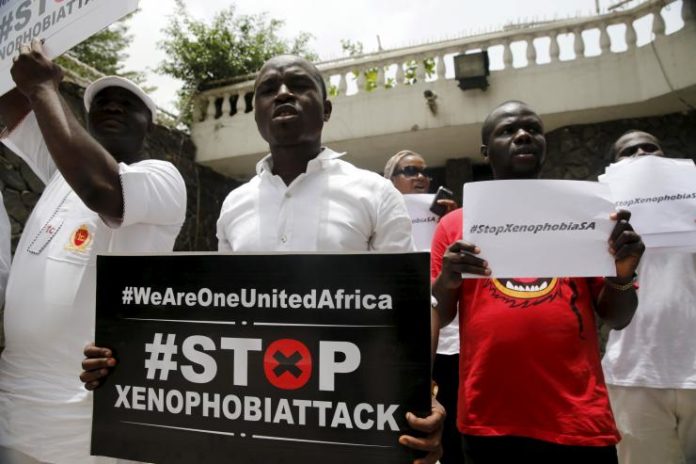
STOP! Nigerian youth protest against Xenophobia in Lagos. Photo credit/thesheet.
Nigerian youths under the aegis of Advocates for Collective Transformation (ACT) have marched to the South African Embassy in Lagos to stage a protest against the xenophobic attacks on Nigerians and other Africans.
Many Nigerians had been unhappy about the attacks on people from other countries in South Africa and had complained bitterly about it to the federal government.
In fact, some Nigerians are of the opinion that South African companies in the country must be abandoned until they (South Africans) can guarantee the safety of those living in the Southern region of Africa.
The protesters, who were quite few in number, got to the South African High Commission house on Molade Okoya Thomas Street, Victoria Island, much later than the journalists who were waiting to catch a glimpse of the agitators, but were still early enough to articulate their demands.
According to Ayodele Samuel, the media coordinator of the group, they decided to stage the protest to pass a message to the Nigerian government to put an end to the citizens’ suffering in the former Apartheid region.
“We say it is barbaric and unacceptable, and we therefore ask the Nigerian government to declare a persona non grata to South Africans unless they can assure us of the safety of our people in their country,” he said.
Fehintoluwa Ajayi, the secretary general of the group also noted that the federal government has a huge role to play in ensuring the safety of the lives and properties of Nigerians living in South Africa.
According to him: “We are representing 80 million Nigerian youths home and abroad and are saying that if all our leaders and professionals are killed in diaspora, who will lead us?
“South African emissaries should be disallowed from entering the country until they can guarantee the safety of our people in their country.”
Samson Uwala who also spoke on behalf of the Nigerian students, agreed that it was a barbaric act to kill innocent citizens of Nigeria in South Africa.
After the peaceful protest in Lagos, nobody from the embassy came out to meet the protesters, rather, it was gathered that the staff of the high commission were asked to shut their gates properly and stay indoors.
Stern-looking police officers were stationed at the entrance of the embassy to protect the lives and properties inside the high commission in the event that any violence breaks out.
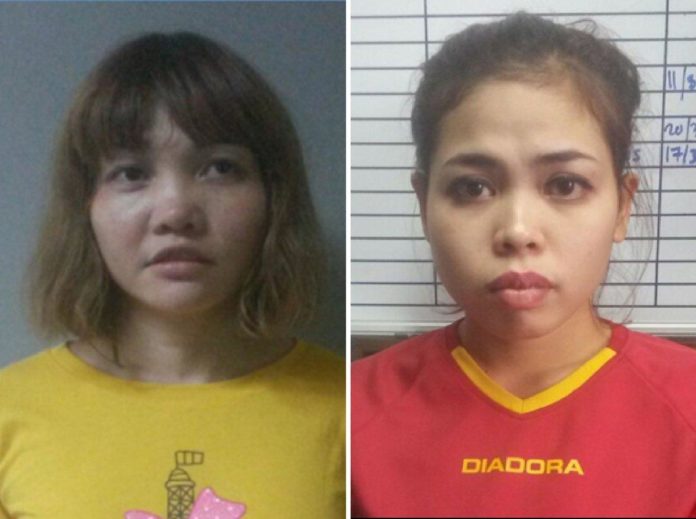
IN COURT TOMORROW: Doan Thi Huong, the Vietnamese, and Indonesian Siti Aishah
Two women – an Indonesian and a Vietnamese – will be charged with murder on Wednesday over their alleged involvement in the killing of the estranged half-brother of North Korea’s leader at Kuala Lumpur’s main airport, Malaysia’s Attorney General has said.
Police have said that the women smeared VX nerve agent, a chemical on a UN list of weapons of mass destruction, on Kim Jong-nam’s face in an assault recorded on airport security cameras on Feb 13.
US and South Korean officials believe Kim Jong-nam was the victim of an assassination orchestrated by North Korea. He had criticised the regime of his family and his half-brother Kim Jong-un in the past and had been living in exile, under Beijing’s protection, in the Chinese territory of Macau.
While Malaysian police arrested Doan Thi Huong, the Vietnamese, and Indonesian Siti Aishah in the days after the attack, they are are also holding one North Korean man and have identified seven other North Koreans wanted in connection with the sensational case.
Attorney general Mohamed Apandi Ali said the North Korean in custody will not be charged yet. His remand period ends on Friday.
The security camera footage, which has been released in the media, showed two women assaulting Kim Jong-nam in the departure hall of Kuala Lumpur International Airport, and the victim stumbling into a medical clinic. He died within 20 minutes of the assault.
Both women have told diplomats from their countries that they had been paid to take part in what they believed was a prank for a reality TV show.
The attorney general said the women will be formally charged on Wednesday under section 302 of the penal code, which carries the death penalty.
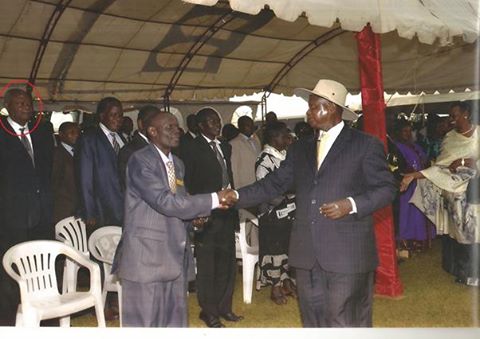
HULLO: President Yoweri Museveni greets the author Mr Nabende Wamoto.
Jack Maumbe Mukhwana, the legendary Bugisu FRONASA veteran, in whose compound in Malukhu estate -Mbale two youthful combatant friends of Yoweri Museveni were killed by Field Marshal Idi Amin soldiers in the 70s, is no more. At the time in 1970s, Museveni escaped narrowly and fled through then Nashibiso forest into safety.
The last time we met President Museveni with the late Maumbe Mukhwana, we did remind him that civilians in Bududa pursued and captured the former Obote.II Chief of Staff (COS) Brig. Smith Opon Acak when the latter attempted to launch a rebellion in Mount Elgon on behalf of his former commander in chief – Dr. Obote, who was then living in Zambia.
If Luweero Triangle area can be referred to as the Mecca (of the NRM revolution) then Bugisu must be the Jerusalem of National Resistance Movement because Bagisu paid harshly if Ugandans and the world can remember the firing squad that took place in Mbale after the only one at Queen’s clock tower in Kampala which squad claimed the innocent life of a very young secondary school student called Namirundu.
The Bamasaba Kampala Chapter therefore request and require that due to our heroic contribution to the FRONASA and NRM cause, the deceased be honoured by the National Assembly (Parliament) and also be promoted posthumously to the rank of General since he did much more than Honorary Brigadiers ‘Ahmed Mbayo’ a.k.a Amama Mbabazi and Eriya Kategaya.
And that the house of the late Mawumbe Mukhwana be converted into a very magnificent tourist, revolutionary and training monument.
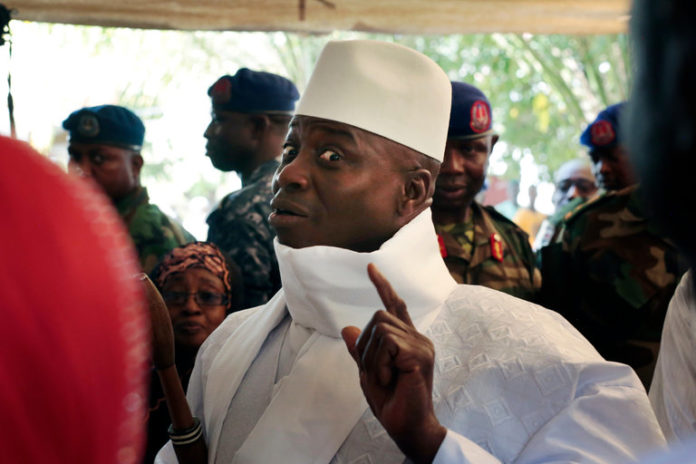
Former Gambian strongman Yahaya Jammeh who now exiled in Equatorial Guinea.
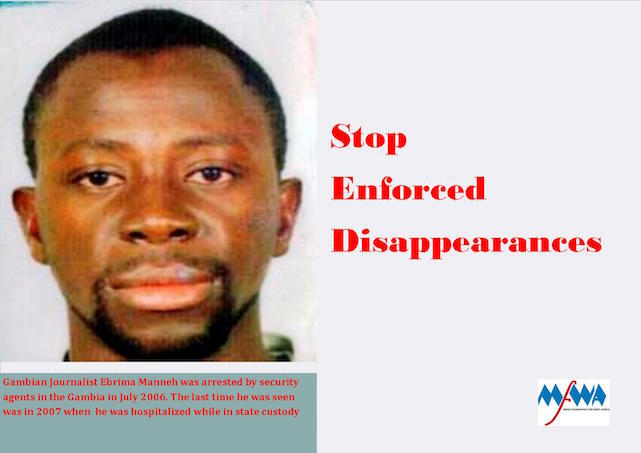
When Gambian intelligence officers arrested journalist Ebrima Manneh at his newspaper, he asked an office guard to save some tea.
“I’m coming right back,” he said, according to colleague Alhagie Jobe, who was present in the newsroom. That was on the afternoon of July 11, 2006; since then, neither his colleagues at the Daily Observer nor his family have seen him again.
Rights groups say Manneh is one of dozens of Gambians who disappeared without trace during the 22-year rule of President Yahya Jammeh, which ended last month when he fled the country.
Relatives have tried in vain for a decade to find the journalist, nicknamed “Chief” although he held no traditional title. Now they believe he is dead and, like a growing number of Gambians, say they are seeking justice.
“I want the new government to take action and prosecute whosoever had a hand in my brother’s disappearance,” said his sister Adama Manneh, a police officer, wearing a T-shirt bearing her brother’s face that read: “Where is Chief Manneh?” Ebrima’s brother Lamin said he hoped at least to recover the body.
Some families hope to gather evidence for a case against Jammeh – who quit under international pressure after losing an election in December – for human rights abuses, including unlawful detention, torture and murder of perceived opponents, charges his supporters deny.
Journalist Ebrima Manneh who is believed to have been killed by Jammeh regime.
Attempts by Reuters to reach Jammeh for comment in Equatorial Guinea, where he fled, were unsuccessful.
Rights officials say building a case could be tough. Another African ex-leader, former Chadian president Hissene Habre, was jailed for life last year for crimes against humanity, more than a quarter century after his overthrow. Habre was convicted by a court in Senegal with the help of incriminating documents, but rights officials say any hard evidence against Jammeh is lacking so far.
Another complication is that Equatorial Guinea has no extradition treaty with Gambia.
Many Gambians dream of bringing Jammeh before the International Criminal Court, which has put former Ivory Coast president Laurent Gbagbo on trial.
While Jammeh fled before fulfilling a pledge to withdraw Gambia from the ICC, Equatorial Guinea has never been a member of the Hague-based court and would be unlikely to hand him over.
Still, police in Gambia have promised to investigate cases of at least 30 people so far reported as missing or killed since Jammeh seized power in 1994, among them journalists, businessmen and soldiers. Several senior officials have been arrested including the former prison boss, interior minister and spy chief who was charged with murder last week.
Gambia’s new President Adama Barrow has promised a U.N.-backed truth and reconciliation commission into past crimes which also include alleged torture.
CHRONICLE OF THE DISAPPEARED
Manneh was 28 when the intelligence officers came to call at the Daily Observer’s offices in the capital, Banjul. On various occasions, Jammeh and his officials told reporters he was dead, had fled the country and had “stage-managed” his disappearance, according to an annual human rights report published in 2012 by the U.S. State Department.
The family still do not know the reason for his arrest, though colleagues suspect it may have been related to comments he wrote about the former president.
Adding to the mystery, Manneh called his mother immediately after his arrest, asking her to fetch his bag from the office. Manneh had said he was planning a trip abroad and would not be able to get it himself, his mother Sulay Ceesay told Reuters.
Three days later, on July 14, Manneh’s sister discovered his passport in the bag. “I said to myself: ‘Chief did not travel, he is in town’,” said Adama.
The search began but family members were unable to find out where he was taken after the local police station. Two witnesses said they spotted him on separate occasions in hospital in 2007 looking sickly, but Adama said officials prevented her from visiting him at the time.
When Adama made inquiries within the police force, her superiors warned that she too risked arrest.
In 2007, the Media Foundation for West Africa, an NGO, brought a legal action against the Gambian government at the Community Court of Justice, a body set up by the ECOWAS group of West African states. The government lodged no defense and failed to show up for the case.
The Nigerian-based regional court ruled in 2008 that Gambia had violated Manneh’s human rights. It ordered the government to free him and pay the family $100,000. The compensation was never handed over, the family said.
The court heard Manneh had been shuttled between at least six different detention sites between 2006 and 2008, and was never charged or given access to a lawyer. One witness, a journalist from a different newspaper, told the court he had seen Manneh being led back to a police cell in December, 2006.
Edward Gomez, who was justice minister and attorney general in 2010-2012 and later acted as Jammeh’s lawyer, expressed ignorance of the journalist’s fate. “I know what happened is very painful but quite frankly I don’t know what happened to him,” Gomez told Reuters.
Every year Adama went to Banjul’s main prison to attend the annual release of pardoned prisoners to see if her brother was among them. Hope finally deserted her only in the past month when the new president released more than 100 political prisoners from some of the country’s many detention centers. Manneh was not among them.
“I was thinking that my brother would be released but he never showed up there and I knew he had been killed,” Adama said in the courtyard of her home near Banjul with her mother and sister, their cheeks glistening with tears.
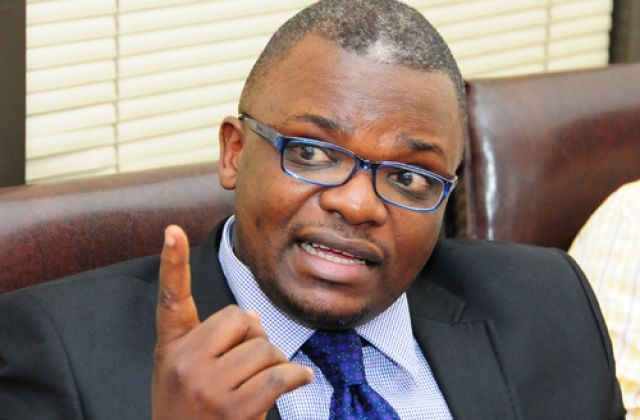
Despite having obtained partial judicial reprieve in respect to a case involving ‘faceless’ Facebook user Tom Voltaire Okwalinga (TVO), city lawyer Fred Muwema has once again taken on the giant social media platform, seeking relief against ‘the refusal of an interlocutory order’.
In an appeal filed by his lawyers, Ms Lavelle Solicitors of St. James House Adelaide House, Dublin, on February 27, Mr Muwema seeks to appeal the decisions of Mr Justice Donald Binchy, made on August 23, 2016 and February 8, 2017.
In the ruling, Mr Muwema argues, he was not granted the relief sought in his Notice of Motion of May 25, 2016, seeking a ‘Disclosure Order’ (Norwich Pharmacal) against Facebook, to know the identity of TVO, and also to stop publishing his posts.
‘The Learned Judge erred in law or in a mixed question of law and fact in finding that the appellant was not in the circumstances of the case, entitled to a Disclosure Order (Norwich Pharmacal) relief in the circumstances where the Learned High Court Judge found that the posts and or articles of Tom Voltaire Okwalinga (‘TVO’) posted between 17th and 24th March were defamatory to the Appellant,’ Muwema’s lawyers wrote in the Expedited Appeal that also has 14 other grounds of appeal against Facebook Ireland Limited.
In the appeal Muwema wants court to set aside the ‘refusal’ of Mr Justice Binchy ‘of the reliefs sought by the Appellants at paragraph 4 of Notice of Motion dated 25th May, 2016 and a finding in lieu thereof that the Respondent provide the Appellant with any details which it holds relating to the identities and or vocation of the person or persons who operate the Tom Voltaire Okwalinga Facebook page,’ the lawyers add.
The lawyers also want Facebook to pay costs to Muwema, for the suits in the High Court and Appeal Court, ‘with regard to the Disclosure Order’.
BACKGROUND
On February 8 this year the High Court in Ireland ordered anonymous Facebook user Tom Voltaire Okwalinga aka TVO, to pull down Facebook posts he put up disparaging Muwema.
In TVO’s post, he indicated that in the period before the presidential elections in February 2016 Muwema, who was counsel for former presidential candidate John Patrick Amama Mbabazi, had broken into his own offices and caused the disappearance of several affidavits sworn to support Mr. Mbabazi’s presidential petition, lodged against declared winner President Yoweri Museveni.
After losing the elections Mr. Mbabazi lodged a petition in the Supreme Court challenging Mr Museveni’s victory, but this was after Muwema had withdrawn from representing Mr Mbabazi.
In the ensuing debacle counsel Muwema asked Facebook to reveal to him the identity of TVO in order to ensure his public stature (Norwich Pharmacal Order) and also have the offensive post put down; kicking of the protracted legal battle.
And, Mr Justice Donald Binchy, ruled that TVO delete his posts, giving the anonymous ‘poster’ 14 days in which to effect the court decision.
This has not been done, prompting Muwema to appeal, and the case will be heard on March 31, 2017.
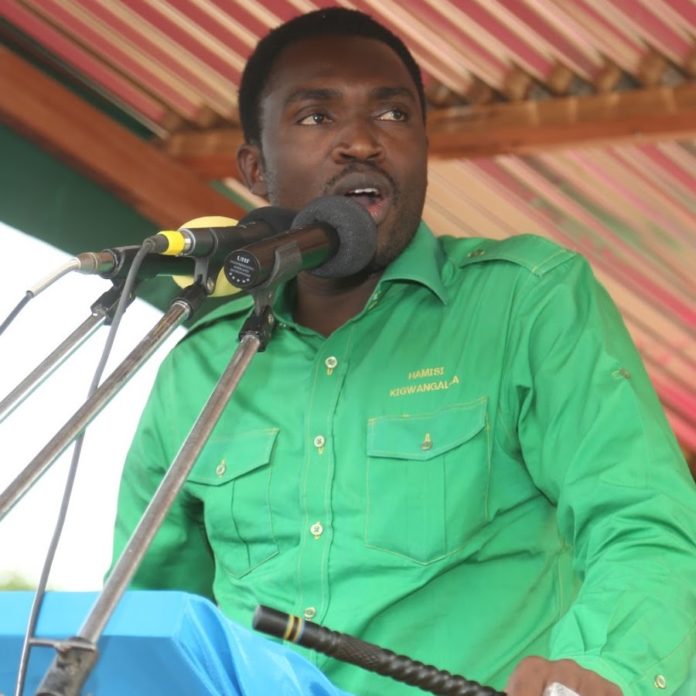
BACKTRACKED: Tanzania Deputy Minister of Health Hamis Kigwangalla
Tanzania backed out of its plan to publish a list of names of gay people accused of selling sex online, saying this would ‘destroy evidence’.
Deputy health minister Hamisi Kigwangalla had called to publicise the list, after announcing the plan earlier this month.
“We cancelled the press conference. We are not going to announce the names of (LGBTs) who publicly market themselves for technical reasons,” he wrote on Twitter.
“For strategic reasons and to avoid destroying evidence we will deal with this issue differently and will keep you informed at every step.”
He also said that releasing the names would be akin to ‘freeing a devil in a bottle’.
Kigwangalla’s threat to publish such a list came just days after the government announced it was stopping many privately run health centres from providing Aids-related services, which Health Minister Ummy Mwalimu said promoted homosexuality.
The United States criticised a move which “could impact US government funded programs and impede progress made over the past several years in addressing the HIV/Aids epidemic in Tanzania.”
Gay male sex is punishable by anything from 30 years to life imprisonment under Tanzanian law, but there is no such ban on lesbian relations.
However, politicians have largely ignored the gay community – which was not subject to levels of discrimination seen in other countries such as neighbouring Uganda – until a recent spike in anti-gay rhetoric by the government.
In July last year, the regional commissioner for the port city of Dar es Salaam, Paul Makonda, announced a crackdown against gays, followed by arrests in clubs.
Dozens of men suspected of being gay have been detained and taken to hospital for anal exams to confirm their homosexuality.
Also in July last year the government banned the import and sales of sexual lubricants, which Health Minister Ummy Mwalimu said encouraged homosexuality which led to the spread of HIV/Aids.
Homosexuality is illegal in 38 of 54 countries in Africa, and is punishable by death in Mauritania, Sudan and Somalia, according to Amnesty International.
Uganda in 2014 tried to impose the death penalty on those found guilty of being homosexual, however the controversial law was later repealed.
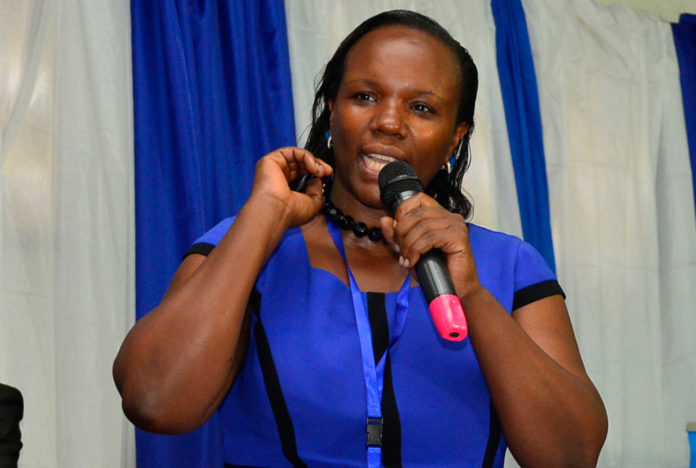
Members of Parliament have snubbed Forum for Democratic Change strongwoman Ingrid Turinawe, with one MP taking a microphone away from her. Ms Turinawe, who said she would ‘advocate for the minority in this country’ was booed by the MPs, some of who carried placards denouncing her candidature and ‘behavior’. They also recited stanzas denigrating her.
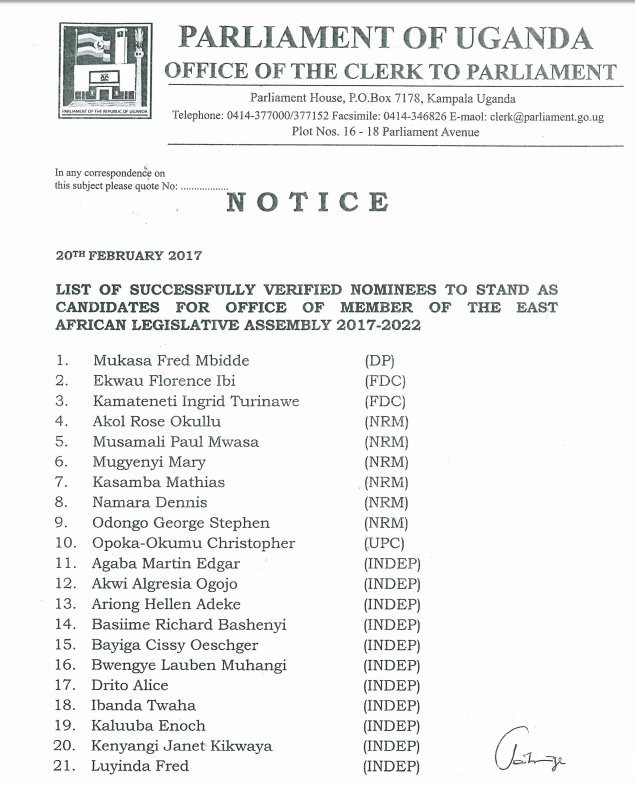
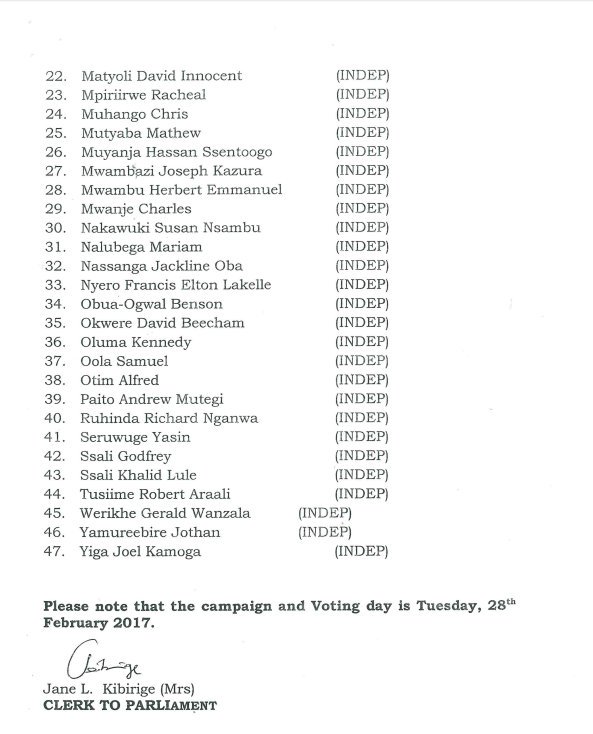
Names of EALA candidates cleared by Parliament
Ever since she joined the race for EALA, Ms Turinawe has not found the going easy, with the FDC withdrawing her candidature last Friday. She however insisted on participating in the race, buoyed by a letter from the Clerk to Parliament Jane Kibirige, who said her withdrawal was not in consonance with the Parliament’s rules of procedure.
There are 47 people vying for the nine slots at the regional Parliament in Arusha; the National Resistance Movement (NRM) has already chosen its six representatives, leaving the other parties with representation in Parliament and Independents to struggle for the remaining three slots.
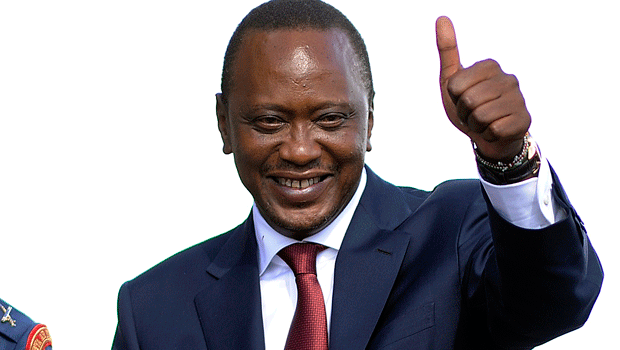
TO CONTEST FOR PRESIDENCY: Kenyan President-Uhuru-Kenyatta
Media regulators have issued guidelines for election coverage to ensure fair and peaceful process. Communications Authority of Kenya (CA) and Media Council of Kenya (MCK) said media owners should not use their positions to influence editorial content.
The regulators further asked media proprietors and journalists seeking elective positions to ‘take leave from newsrooms’ three months to the polls in August to avoid conflict of interest.
Speaking at a breakfast meeting with media owners in Nairobi, CA Director General Francis Wangusi said they will ask, in writing, journalists with political ambitions to leave newsrooms.
“We are going to write to media houses to ask them to relieve their reporters of duty three months to the elections,” he said. Mr Wangusi added: “If you are a media owner, you also need to de-link yourself from the day to day running of the media house so that journalists can be allowed to carry their duties without any form of influence. We do not want to see anybody with political ambitions continuing to work in the newsroom.”
At the same time, the Independent Electoral and Boundaries Commission (IEBC) announced that it will accredit journalists it plans to engage on poll preparations. IEBC Chief Executive Officer Ezra Chiloba said the commission will help in ensuring the media feeds the public with “accurate facts and figures”.
He said the commission will be updating the public on poll preparations on a weekly basis as part of its plans to build public confidence in the agency.
“Every Tuesday of the week, we will be informing the public on preparations for the polls either through press briefings or statements. We also plan to accredit journalists who will be engaging the commission on election preparations,” said Mr Chiloba.
IEBC further urged media houses to help it with “free advertising space” as part of efforts to ensure free and credible polls.
National Cohesion and Integration Commission (NCIC) Chief Executive Officer Hassan Mohamed warned media outlets, particularly vernacular stations against promoting hate speech.
The commission said it has acquired 300 audio recorders and 47 camcorders to collect evidence on hate speech.
The gadgets will be issued to police officers and 104 NCIC officers tasked to monitor hate mongering during the electioneering period. The commission blamed lack of witnesses in hate speech-related cases for its failure to secure conviction of some of the leaders arraigned in court for hate mongering.
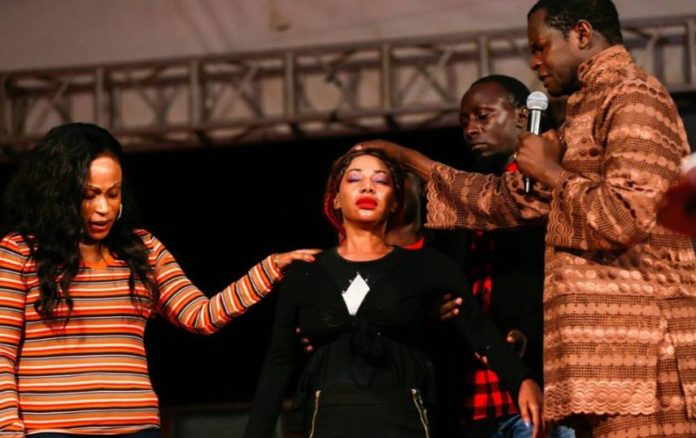
ANNONTING: Shanita Namuyimbwa aka Bad Black being 'blessed' at Pastor Kayanja's church.
Among the people who claimed to have become ‘saved’ at the ongoing 77DOGs at Pastor Robert Kayanja’s church is socialite fading Shanita Namuyimbwa aka Bad Black.
This came as a surprise to many and some believe she did it just for money. So, on getting to church on Friday, this was among the things Bad Black reported to Kayanja.
“Pastor, people are taunting me, asking me to share with them some of the money I allegedly got from you. They hardly believe I converted on my own. They think I converted after being paid by you,” she claimed.
In his response, Kayanja said he was not surprised by the word because he expected them. “When I saw Bad Black here I never believed it. I had heard stories about her splashing money everywhere she went. I just couldn’t believe she was the person who had come to give her life to Christ. But they will believe people can convert on their own. Bad Black has started to bring even her colleagues to give their lives to Christ,” Kayanja who has of recent taken to donating to socialites who flock his church, said.
Kayanja, who recently gifted singer Cute Kaye with a Toyota Prado, added that he was to send Bad Black money today so she could give to all those that were asking for money from her.
“They think you became a born-again for money, you’ll get the money. No one becomes a born again and remains poor. No. Look at me, am I poor? No. I am not poor….. ” he boasted, adding: “I ask you Lord to send the angels to hurry up the miracles of these people…”
Meanwhile, Bad Black, who has pledged to serve “dear Lord” all her life, has prayed to the Holy Spirit to help her endure a ‘new celibate life’ “because sex steals anointing….”
She has also called on Spark Tv presenter, Zahara Toto, who was recently involved in a verbal exchange with Bigeye’s ex, Don Zella, to follow her to Kayanja’s church.
“God you fight ma battles now days sikyelega Ku Facebook because u gave me enough grace to endure every insult, fake stories, stupid comments Zahara Totto. It hurts showing our kids olaba dis week wateka ma son Ku TV with false information anyway nze ndi mulokole (I am born again) check your inbox and call mi; come we go to church owoone okuwemula mukwano (so you stop vulgarity).