This year’s Nile Gold Jazz and Soul Safari was last Friday and what a show it was: Epic!
Gates to Lugogo Cricket Oval, the host grounds for the event, opened as early as 3pm; revellers wasted no time in accessing the venue as soon as the gates were opened.
By 5pm a fair crowd had gathered in the spacious Cricket Oval and was enjoying cool oldies music played by Club Guvnor’s resident DJ, Selector Jay, the person who was in charge of the disks that night.
The party began at 5:30pm with the legendary Afrigo Band’s Moses Matovu; Tony Ssenkebejje, and Michael Kitanda. These took the audience on a journey of their classics over the past 40 years. What a way to begin a party!
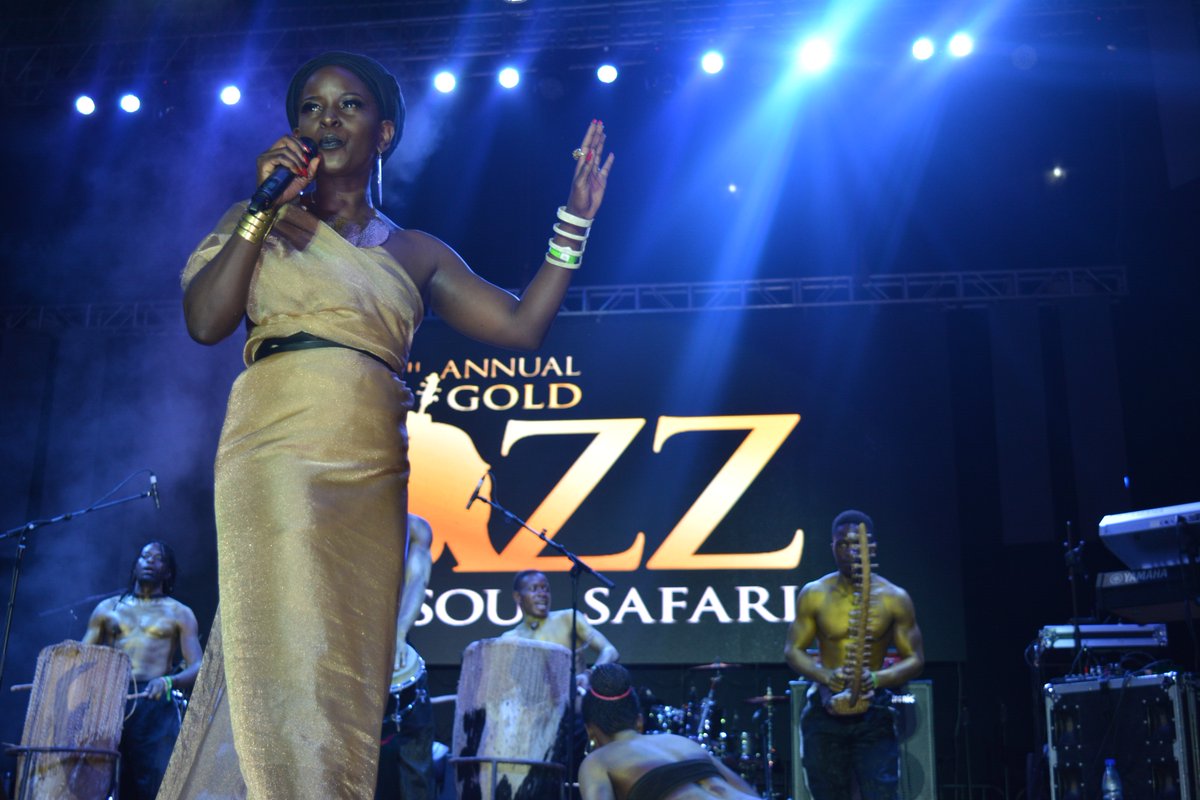
FRIDAY NIGHT SURPRISE CROONER: Singer Lillian Mbabazi
As always, they didn’t disappoint though, the biggest surprise of the night was Lillian Mbabazi. Backed up by the legends, former Blu*3 member Lillian Mbabazi nailed it on Afrigo Band’s classic, ‘Empissa Zo’. With her amazing vocals, the audience appeared not to have missed Joanita Kawalya, the original voice behind the song.
The show partially hit a climax at 7pm when Lillian performed her hit, ‘Vitamin’. This was fused with Afrigo Band’s hit, ‘Sikulimba’ towards the end. The song got almost all present to their feet with each trying out their best dance moves and ‘normalcy’ only returned when jazz stars Jackiem Joyner and Lin Roundtree took to the stage at about 8pm.
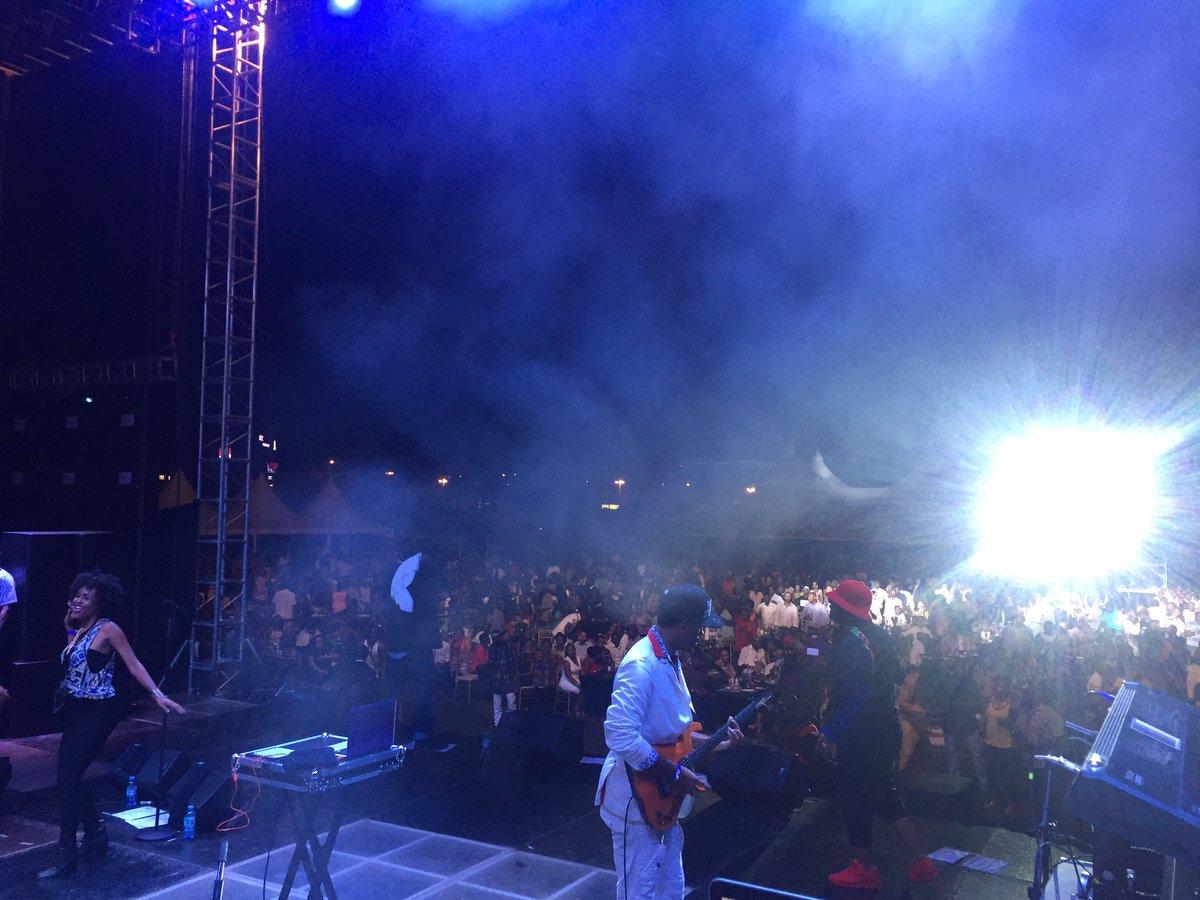
EPIC: Revellers at the Lugogo Cricket Oval enjoy the performances.
These kept the audience entertained with their skills on the saxophone and trumpet. Some of the notable moments were when they played Michael Jackson’s song, ‘You Rock My World’. It wasn’t until 10:30pm that the long-awaited artiste, Maxi Priest, took to the stage.
But before he came on stage, the person behind the Jazz Safari Franchise, Shaka Winston Mayanja spoke to the audience, and thanked them for the support for the time the Jazz Safari has been in existence.
SPONSOR: Ushers display the sponsor’s plaques during the show at Lugogo Cricket Oval.
In the same spirit, he thanked Nile Gold, the principal sponsors of the event since its inception.
“We started from a parking lot and Nile Gold was the only sponsor we had at the time. We moved to Serena and five of our shows have been a sell-out. We’ve now outgrown Serena and here we are, at the much bigger Cricket Oval. I want to tell you that my wealth is not in the bank, it’s you people who have been attending the Jazz Safari for the past years and we don’t take you for granted that’s why we always bring you the best……”
Indeed he brings them the best because shortly after releasing the microphone, the MC of the night, Gaetano Kaggwa invited Maxi Priest on to stage.
The mood was already ecstatic as almost everybody was back to their feet.
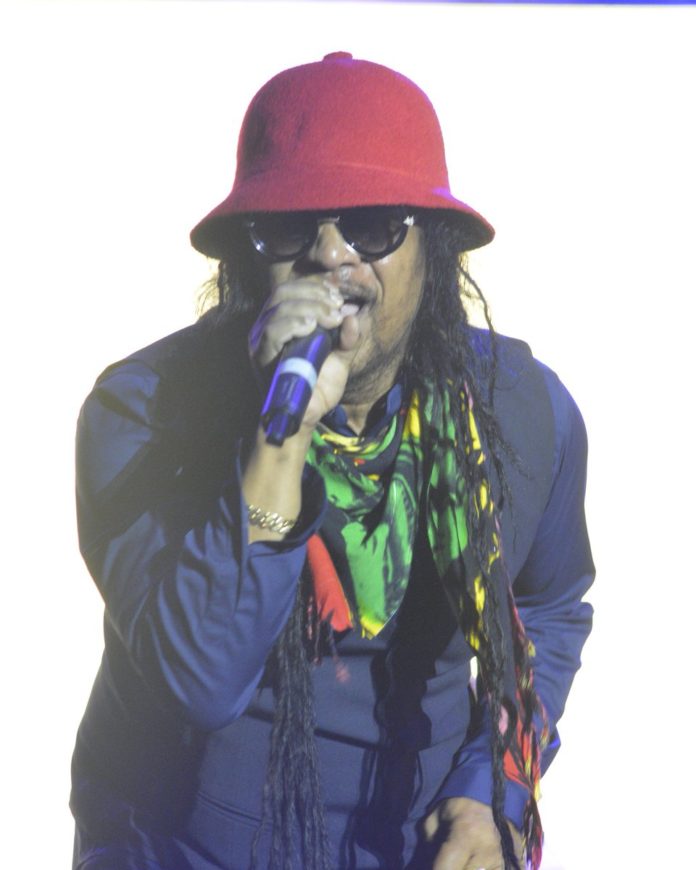
Backed up by his band of instrumentalists, Maxi Priest, who was dressed in all-black from jumper to shorts and a pair of red sneakers supplemented with a red hat and black glasses, performed among songs among which included Wild World, Close To You, A Little Bit Longer, If I Gave My Heart To You, Holiday, My Gal Dis and his mega hit; House Call among others.
The crowd danced and sang to almost all the songs though, it was House Call that ‘stole’ the day. Backed with one of the best vocal DJs in the US, Maxi Priest resurrected the sweet memories of the 90’s when he perfectly performed the song, popularly known by Ugandans.
His vocal Dj did a wonderful job, making the audience not miss Shaba Ranks, whose part he performed. The American also brought more life to the show with his additional lyrical flavour to Maxi’ Priests performance.
Inevitably, the show came to an end at 12.30 am but the audience had got their money’s worth. Tickets to the show had been priced at sh130, 000 for gold and sh250,000 for platinum.
“The #epic night that was #MaxiPriest in #Uganda. The brother kept us sweating as we danced and sang along from start to finish,” is how socialite Gaetano Kaggwa described the show on twitter.
TO CHAIR NAIROBI SITTINGS: EALA Speaker Dan Fred Kidega.
The East African Legislative Assembly (EALA) will over the next 10 days hold sessions in Zanzibar, Tanzania, where debate will focus three key bills.
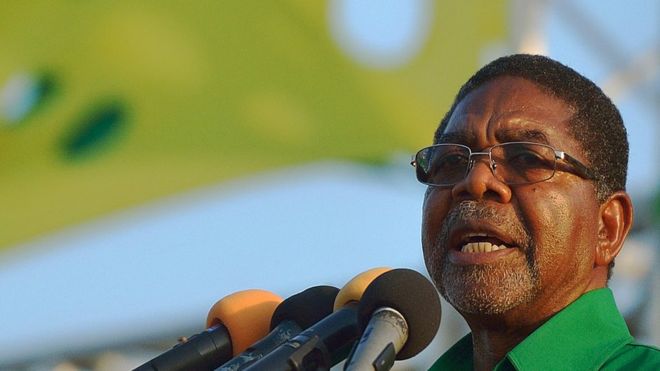
Zanzibar President Dr Ali Shein
The Second Meeting of the Fifth Session of the Third Assembly between October 10 and 21 and expected to be addressed by the President of Zanzibar Dr. Ali Mohamed Shein, is to be presided over by the EALA Speaker, Rt. Hon. Daniel F. Kidega.
This is the first time the 3rd Assembly is meeting in Zanzibar as part of its rotational principle. The 2nd Assembly on its part held a Sitting in Zanzibar in December 2007.
The Assembly is expected to dispense the EAC Trafficking in Persons Bill 2016, the EAC Polythene Materials Control Bill 2016 and the EAC Gender Equality and Development Bill 2016.
The EAC Counter-Trafficking in Persons Bill, 2016, seeks to provide a legal framework, develop common measures, strategies and programmes to the prevention of trafficking in persons and the perpetrators of such actions.
The Bill is being debated at a time when the region and the globe are reeling from major effects of counter-trafficking in persons.
The Bill is to further develop partnerships for co-operation in counter trafficking in persons and provision of protection mechanisms and services for persons. At the Sitting in Dar es Salaam in March 2016, the Assembly committed the crucial Bill to the Committee stage.
The EAC Polythene Materials Control Bill, 2016 moved by Patricia Hajabakiga, aims at providing a legal framework for the preservation of a clean and healthy environment through the prohibition of manufacturing, sale, importation and use of polythene materials. The Bill was re-introduced during the Sitting held in August 2016 in Arusha, Tanzania.
The EAC Gender Equality and Development Bill 2016 on its part, sets out to make provision for gender equality, protection and development in the Community.
According to the mover, Nancy Abisai, the Bill seeks to consolidate and harmonise the various commitments on gender equality that have been made at regional, continental and international levels in the context of the EAC.
The House shall also be furnished by a number of reports including reports of the Committee on Communication, Trade and Investments, the Committee on Regional Affairs and Conflict Resolution and the Committee on Legal, Rules and Privileges. The Committee on Agriculture, Tourism and Natural Resources and the General Purpose Committee shall also be tabling their reports.
EALA Sittings are held under the principle of rotation in line with Article 55 of the EAC Treaty. EALA meets at least once in every year at it’s headquarters in Arusha, Tanzania.
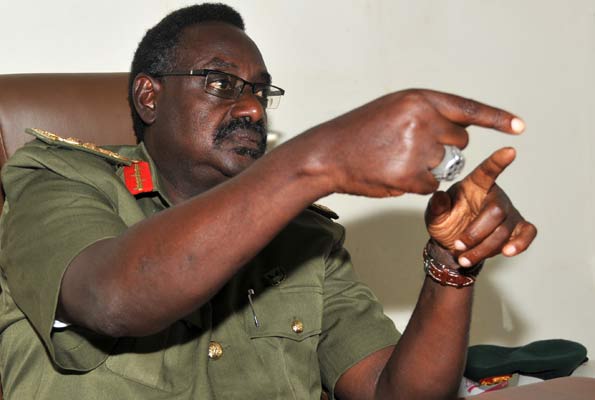
The Uganda Peoples Defence Forces (UPDF) has increased the visibility of its presence at the home of General David Sejusa in Naguru, on the outskirts of the city.
By press time it has was not possible to establish the exact reason for the increased visibility, but a source said the army had stepped up security ‘some time back’, with tents dotting the compound.
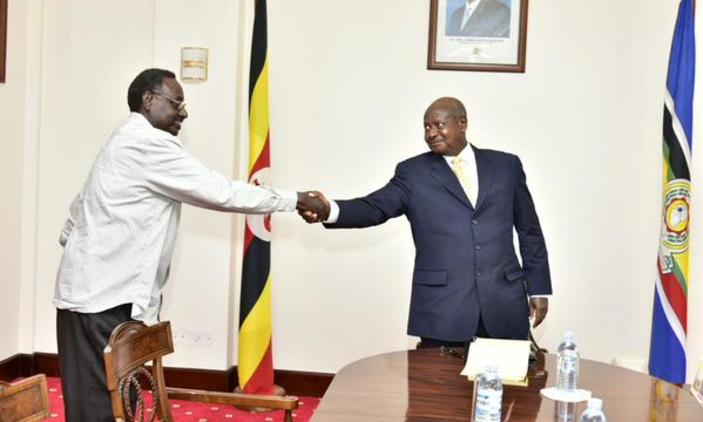
President Museveni meeting Gen. Sejusa at State House, Entebbe , after the latter’s return from exile in 2015.
Sejusa, a former Chief Coordinator of Intelligence Services, fell out with the National Resistance Movement (NRM) government of President Yoweri Museveni in 2013 after penning a dossier to Internal Security Organisation (ISO) boss Brig Ronnie Balya, in which he said there were plans to eliminate senior army officers and political figures including himself, the late Minister of Internal Affairs General Aronda Nyakairima and former Prime Minister John Patrick Amama Mbabazi.
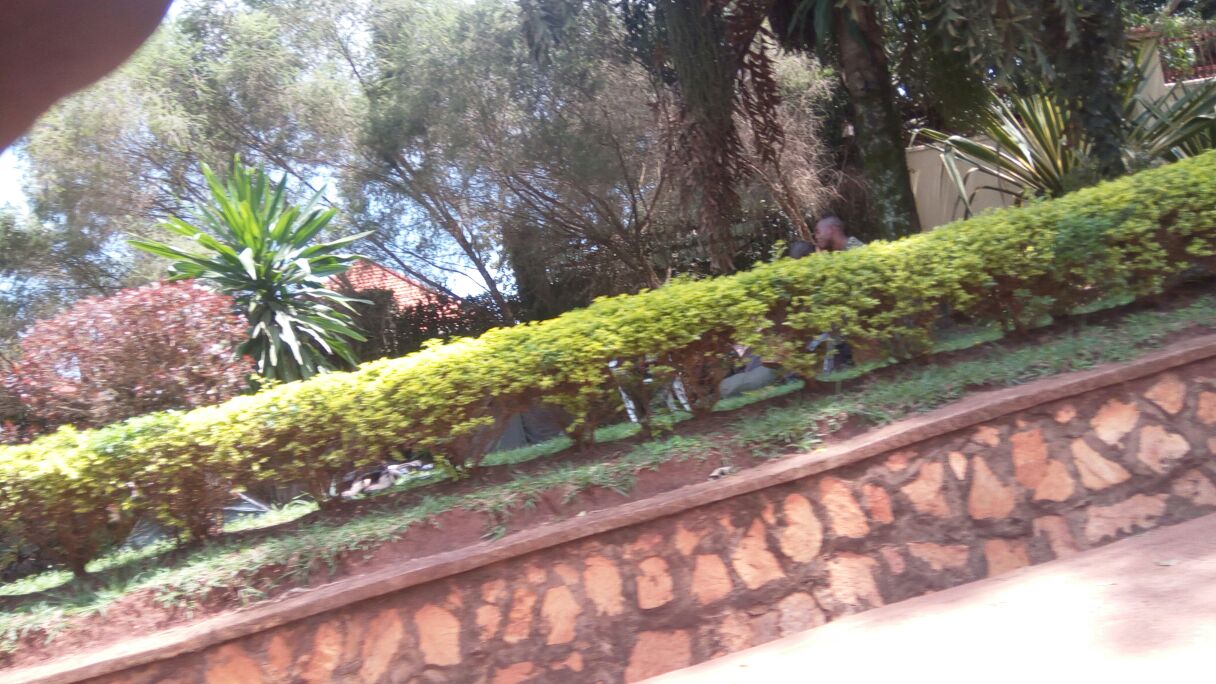
Army men having lunch at Gen Sejusa’s reidence earlier on today
He also said there was a plan by President Yoweri Museveni to groom his son, then Brigadier Muhozi Kainerugaba, as successor to the presidency. Muhozi, the Commander of the Special Forces Command (SFC) is currently a Major General.
Gen Sejusa, a renegade officer who has insisted he wants to be retired from the army, then fled to exile in the UK, where he stayed for two years till his ‘negotiated’ return.
Army camp tents can visibly been seen on Gen Sejusa’s Compound.
Sejusa’s woes with the Yoweri Museveni National Resistance Movement (NRM) government date back to the 1990s, when he controversially sought to leave the army, a demand he was denied.
Army Tents at Gen Sejusa’s residence.
Who is General Sejusa?
A lawyer by training, 62 year old General David Sejusa aka Tinyefuza graduated from Makerere University in 1980 and joined the police as a Cadet and later became an Assistant Superintendent of Police (ASP) in 1981. In the same year Sejusa joined the National Resistance Army, after a dramatic escape from pursuers in the Obote II regime who had linked him to the subversive activities of the rebel outfit, the NRA commanded by Yoweri Museveni.
Sejusa rose through the NRA ranks and on awarding ranks in 1987 he was made Brigadier, one of only three, the others being Brigadiers Matayo Kyaligonza aka Black Bomber and Tadeo Kanyankole.
Since then he served the NRA/UPDF in various command capacities, the most recent being the Coordinator of Intelligence Services, a post he held until he fell out with government in April 2013 and eventually fled to exile in the UK, where he formed an opposition group, the Freedom and Unity Front (FUF).
He returned from exile in December 2014 but has since been intermittently participating in politics, a position that is in contravention with the UPDF Act.
SACKED: Former South Sudan Finance minister Stephen Dhieu Dau. Photo credit/gurtong.net
Authorities in South Sudan’s Lakes state have instructed ministers operating government bank account with the Kenya Commercial Bank (KCB) to immediately close them down.
The Lakes state minister of finance, trade and industry, Daniel Gumwel Nhomabur, has confirmed receiving the new and abrupt instruction from the national government in Juba.
No explanation was given to the state government about the decision by Stephen Dhieu Dau, the national minister of finance and economic planning, to close down the government’s accounts with the KCB.
But Lakes State Minister Nhomabur further explained that the directive further said all government accounts are to be opened in the Ivory Bank with effect from October.
“We are told by national ministry of finance in Juba to close down all our government accounts [in] KCB [Kenya Commercial Bank]. These instructions are from top authorities in Juba and we have to respect them. All government institutions must open new bank accounts with Ivory Bank with effect [from] this month,” said the state finance minister, Nhomabur
However, KCB Rumbek’s branch manager, John Makoi Marial, said although the bank has received the notification to close down the government accounts, there was still a discussion going on to resolve the matter.
He also revealed that the government has taken huge loans from the KCB and also some individual senior government officials took loans from the bank which they have not yet repaid.
The bank official further pointed out that the KCB management and the government will sort out the issues and instructions will be sent to all KCB branches in South Sudan on how to operate if the government decided to close down their accounts in the bank.
KCB is one of the first foreign banks to establish their branches in South Sudan even before the country became independent in July 2011. It has opened many branches in different states in the young country.
It was unclear what prompted the government to decide to close down its accounts with the Kenya bank.
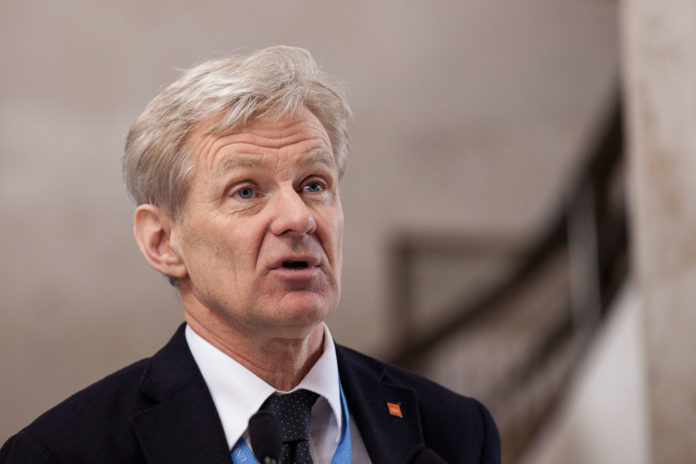
CRITICAL: Jan Egeland, the Norwegian Refugee Council (NRC) Secretary General
A new report released by the Norwegian Refugee Council (NRC) has criticized the returns process from Dadaab camp in Kenya to Somalia, as no longer being ‘voluntary, safe or dignified’.
The report, titled ‘Dadaab’s Broken Promise’, says that the decision by the Government of Kenya in May to close the Dadaab refugee camps in November has led to a situation where the voluntary returns process does not meet international standards, and breaks the agreement that Somalis would be assisted to return home safely and voluntarily.
The NRC is a humanitarian organisation working in more than 25 countries globally including Uganda, Kenya, Somalia, South Sudan, Ethiopia and Eritrea.
Jan Egeland, the NRC Secretary General said the deadline to close the world’s largest refugee camp must be lifted.
“We are willing and able to enable voluntary return, but the pressure to push more than 280,000 registered refugees from Dadaab camp has led to chaotic and disorganized returns. From what we have seen on the ground, it is no longer voluntary, dignified nor safe,” said Egeland.
“Refugees in Dadaab need international protection. The Kenyan government and the UN refugee agency should reinstate the organized and voluntary process of return under the Tripartite Agreement. The unrealistic deadline must be removed before the situation further deteriorates,” Egeland continued.
The Tripartite Agreement for the voluntary return of Somali refugees from Kenya was signed by the Kenyan and Somali governments and UNHCR in 2013. It was based on international law and created a framework in which returns were to be organized.
“The initial returns programme under the 2013 Tripartite Agreement was largely a success, as it saw Somalis would be assisted to reach their return locations safely and with dignity. We should return to the terms of this agreement, rather than simply aiming to push back as many refugees as possible,” said Egeland.
NRC’s new report highlights the major failures of the current returns process. In addition to failing to meet international standards for voluntary return, the report finds that refugees returning to Somalia are not sufficiently protected. It also reveals that the pressure to speed up the repatriation process threatens to create a revolving door scenario.
“The number of vulnerable Somalis planned for return far outstrips the resources available to support them in Somalia,” warned Neil Turner, NRC’s Country Director in Kenya. “Sustainable return should form a key component of the returns programme. It must prevent families ending up in displacement camps in Somalia or returning as undocumented refugees to Kenya,” he noted.
Over 80 per cent of the population in Somalia lives in poverty, and over one million people are internally displaced. Basic social services and infrastructure are mostly non-existent or at best limited. In addition, the security situation in many areas remains fluid. An overwhelming 74 per cent of Somali refugees in Dadaab said in August that they are not willing to return yet, largely fearing insecurity in Somalia.
Over 900,000 Somalis are registered as refugees, mostly in neighbouring countries, with Kenya hosting more than 335,000 Somali refugees including over 270,000 in Dadaab refugee camp.
ANNOUNCED US AID: South Sudan Cabinet Affairs minister Martin Elia Lomuro
South Sudan government has welcomed the United States decision to extend its military aid, saying it would help in consolidating ‘stability’ in the country and strengthening relations.
On Friday, President Barack Obama issued a decision to continue US military assistance to the troubled South Sudan despite the use of child soldiers in the troubled country.
The waiver circumvents the 2008 Child Soldiers Prevention Act, which is meant to block some military assistance to countries recruiting Childs in their armies.
Cabinet Affairs Minister Martin Elia Lomuro described the policy shift as ‘the right thing to do’, adding that imposing arms embargo would have increased hostilities and limited military capabilities to strengthening combat operations.
Minister Lomuro, an ally of President Salva Kiir, said the move showed the ‘renewal of the partnership’ between the two countries, and vowed to step up efforts to implement the peace agreement to restore stability.
Obama also granted waivers to six other countries: Somalia, Congo, Nigeria, Rwanda, Iraq and Myanmar.
Gordon Buay, a senior diplomat at South Sudan embassy in the United States, also commended inclusion of South Sudan in the list of countries which would benefit from military assistance from the US.
The diplomat added that his government under President Salva Kiir remains committed to full implementation of the peace agreement reached with armed and political opposition to end the nearly three-year conflict in the country.
The inclusion of South Sudan in the renewal sparked mixed reactions from among South Sudanese, with some questioning the basis for inclusion of the country after the government has been accused of buying weapons to use against dissenting groups without distinguishing civilian areas.
The move also is seen as a sudden major shift from earlier plans advocated and supported by senior officials in the United States administration to impose arms embargoes and individual sanctions.
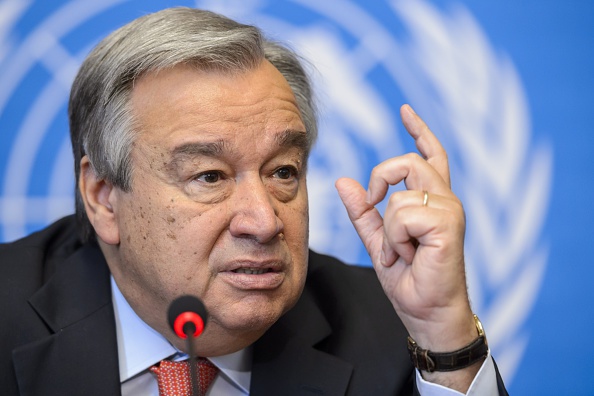
SOUGHT BY MACHAR: The incoming United Nations Secretary General Antonio Guterres at a past press conference. PHOTO / FABRICE COFFRINI /AFP/Getty Images)
South Sudan’s former First Vice President, Riek Machar, who leads the armed opposition faction of the Sudan People’s Liberation Movement (SPLM-IO), has called on the UN Secretary-General-designate, Antonio Guterres, to follow the footsteps of his predecessor, Ban Ki Moon, in helping to resolve the ongoing civil war in the country.
Portugal’s former Prime Minister Antonio Guterres is poised to become the next UN secretary general, after a formal vote by the UN Security Council approving his nomination for the post last Thursday 6 october.
In a meeting to be held next week, the UN General Assembly will appoint Guterres upon the recommendation of the Security Council.
Guterres, 67, who served during ten years (2005-2015) as the United Nations High Commissioner for Refugees is fully aware of the South Sudanese conflict and its impact on the regional stability.
In a congratulatory letter he wrote to the new Secretary General at the UN in New York upon taking up the position, Machar briefly explained the current situation in his country.
“I am writing to congratulate you for winning the confidence of the UN fraternity resulting to your ascension to the position of the UN Secretary General. I believe you are up to the task,” partly reads the letter, dated October 7.
“As you know South Sudan is embroiled in a new civil war that broke out again on July 8, 2016, that evening I was nearly assassinated in the Republican Palace (J1). As from July 8, 2016, the civil war has escalated in the country due to the collapse of the August 2015 Agreement on the Resolution of the Conflict in South Sudan and as well as the collapse of the Transitional Government of National Unity (TGONU),” further reads the letter.
Machar who signed the letter as the ‘Legitimate First Vice President’ as well as the Chairman and Commander-in-Chief of the SPLM/SPLA (IO), called on the new UN executive chief to prioritize South Sudan in resolving its ongoing conflict.
The former first deputy president was ousted in July in a controversial process, which he said violated the peace agreement, after he and his small number of troops were forced out of the national capital, Juba, by forces loyal to President Salva Kiir during four days of fighting.
Machar said he was lured to the palace by President Kiir to assassinate him on July 8, but the latter said the former attempted a coup. The opposition leader fled the capital and crossed into the Democratic Republic of Congo (DRC) in a journey that took him 40 days while facing government’s continuous daily ground and air attacks on the way.
The clashes have resulted to the renewed civil war in the country as fighting has resumed in Equatoria and Upper Nile regions between the rival forces.
The opposition leader is currently in the Sudanese capital, Khartoum, where he received treatment from extreme exhaustion and swollen legs. He is preparing to tour the region to tell his side of the story, Sudan Tribune recently learnt.
His faction has also declared an ‘armed resistance’ against President Kiir’s government and has been organizing forces for coordinated assaults with other rebel groups on main government’s controlled towns
This week, he has dispatched a team of his senior officials to Washington to engage the US Administration, UN officials as well as brief the South Sudanese communities residing in various states in the US.
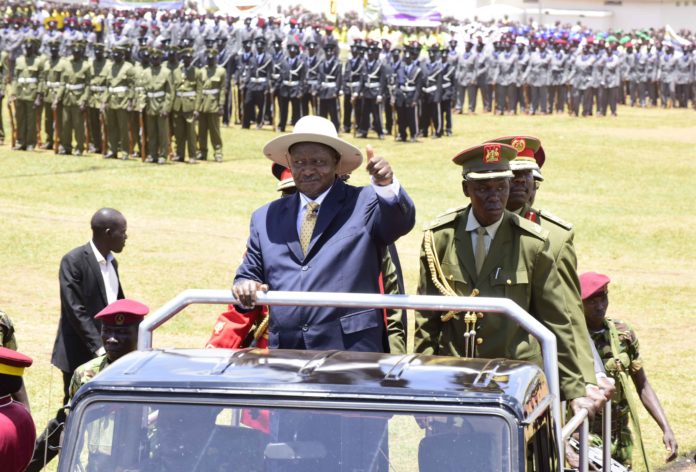
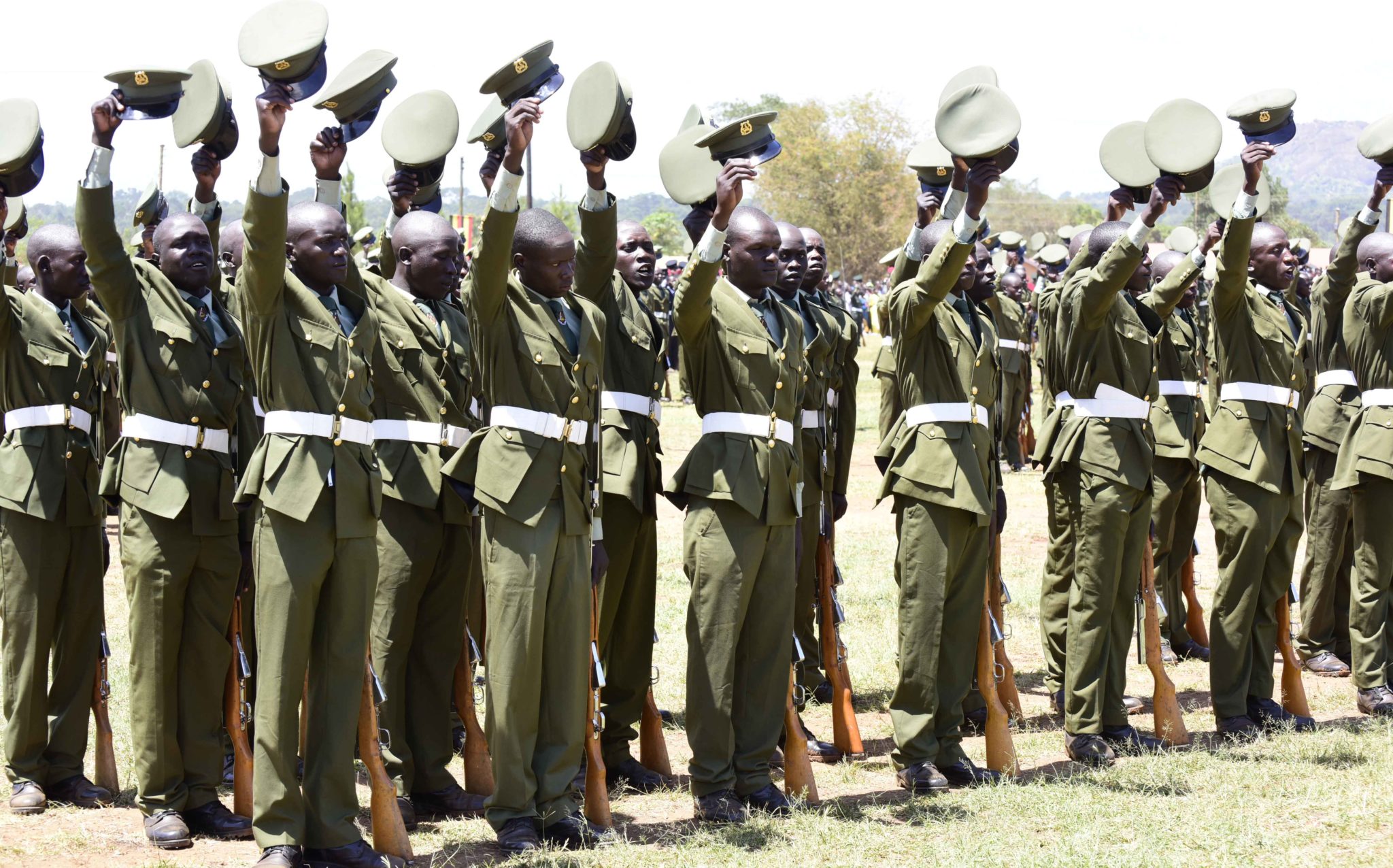
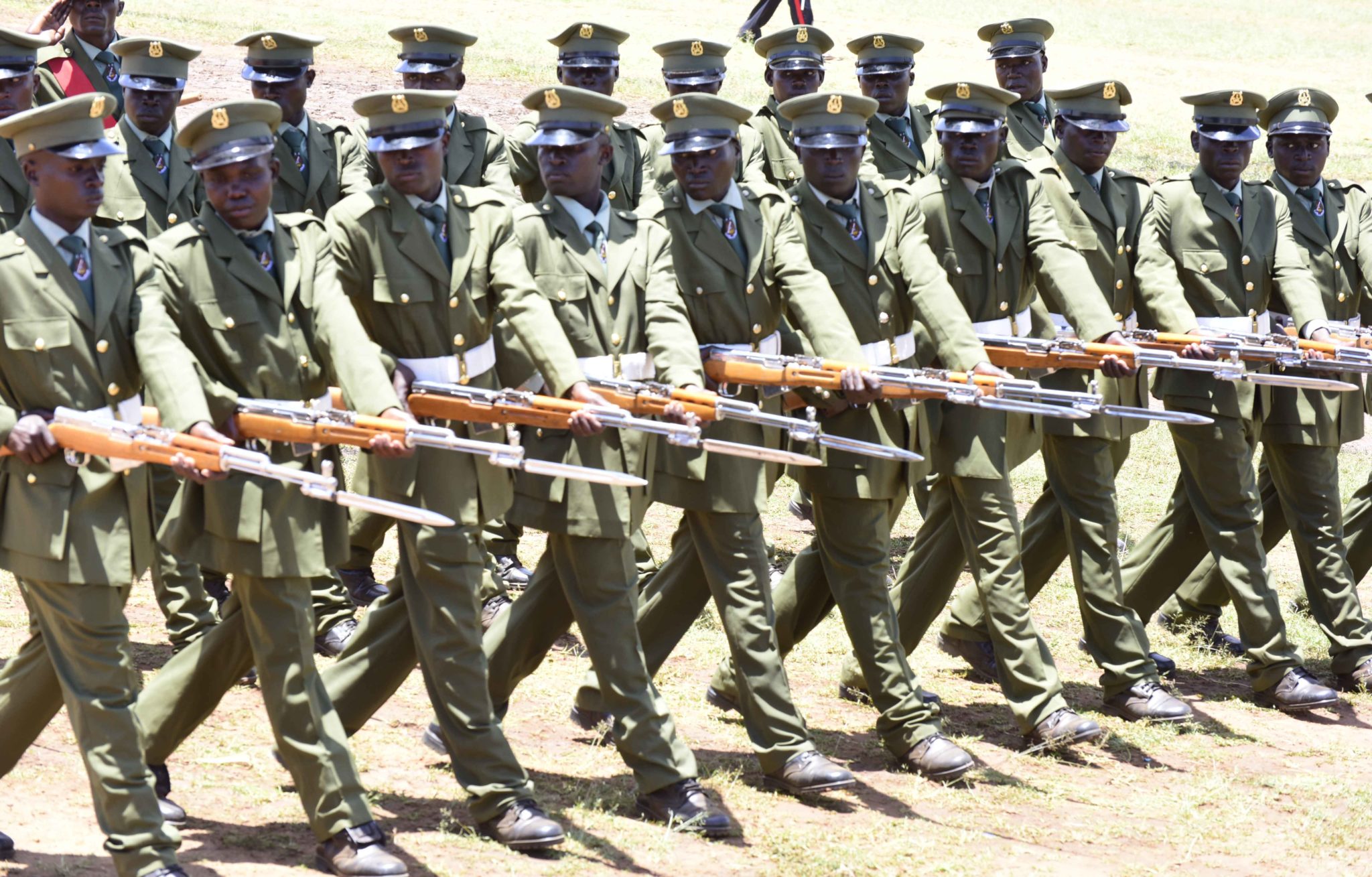
GUARD OF HONOUR: President Yoweri Museveni inspects a guard of honour at the Independence Day celebrations in Luuka.
The revival of a national airline will help Uganda save US$420 million spent of foreign travels , President Yoweri Museveni has said.
Speaking at the national celebrations to mark the 54th Independence Day held in Luuka district, Mr Museveni said modalities for setting up the airline are in advanced stages, a development that would also ease travel for Ugandans and also help the export sector.
‘The final effort is on the issue of the airline. We allowed Uganda Airlines to die because it was making losses and, at that time, Ugandans were not travelling as much as today. Somebody has told me that Ugandans are spending US$420 million per year on travel. Therefore, the NRM Government has decided to start a National Airline to stop the outflow of this money and to end travel inconveniences to Ugandans. We are now finalizing the modalities,’ Mr Museveni said at the celebrations held under the theme: ‘Protection of our independence through promotion of patriotism, unity and hard work.’
In typical fashion, Mr Museveni also outlined the bottlenecks faced by Uganda and Africa in general, singling out 10. He named them as: ideological disorientation; weak State, especially the army that needed strengthening; under-developed infrastructure (the railways, the roads, the electricity, the telephones, piped water, etc.); underdevelopment of the human resource (lack of education and poor health for the population).
Others are interfering with the private sector (either by policy or by corruption); fragmented African market on account of colonialism; export of unprocessed raw materials and, therefore, getting little money and losing jobs and lack of industrialization; underdevelopment of the services sector (hotels, banking, transport, insurance, tourism); underdevelopment of agriculture and attack on democracy.
Mr Museveni also said the government would capitalize the Uganda development Bank (UDB) to the tune of UgShs 50 billion, increased to UgShs 500 billion over the ‘medium term’ for lending to manufacturers at an interest of 15%.
Museveni’s speech below.
It is with great pleasure and honour that I welcome Your Excellencies and all the distinguished guests to this occasion as we mark 54 years of Uganda’s independence.
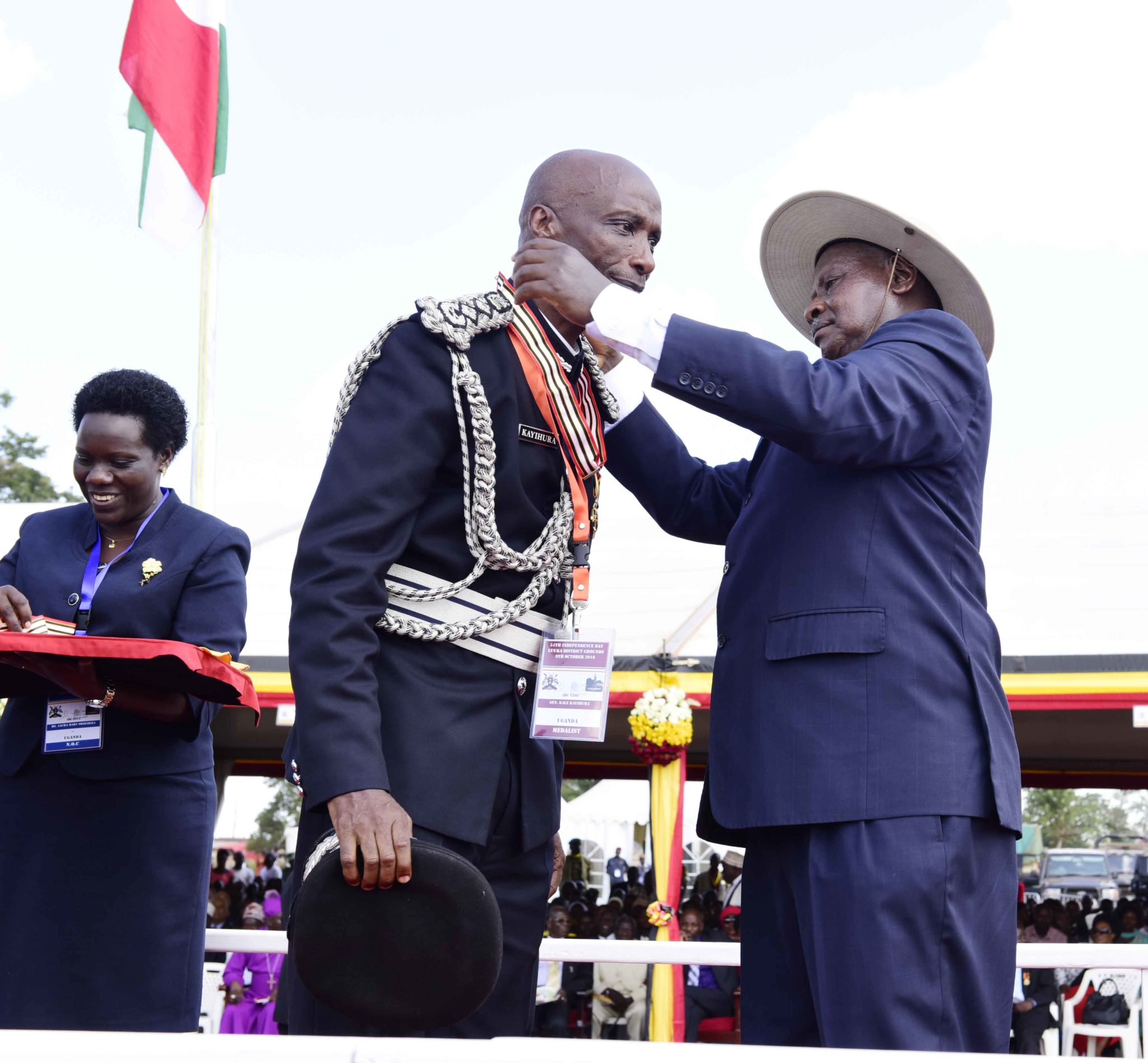
President Yoweri Museveni decorates the Inspector General of Police General Kale Kayihura
I congratulate Ugandans on the 54th Independence Anniversary of our country. I wish you a prosperous 55th year of Independence.
As I have told you repeatedly, over the last 55 years, the NRM and its precursors have identified ten strategic bottlenecks.
These are: Ideological disorientation, weak State, especially the army, that needed strengthening; under-developed infrastructure (the railways, the roads, the electricity, the telephones, piped water, etc.); underdevelopment of the human resource (lack of education and poor health for the population); interfering with the private sector (either by policy or by corruption); fragmented African market on account of colonialism; exporting unprocessed raw materials and, therefore, getting little money and losing jobs and lack of industrialization; underdevelopment of the services sector (hotels, banking, transport, insurance, tourism, etc); underdevelopment of agriculture and an attack on democracy.
By the time we eliminate or significantly reduce all the ten bottlenecks, Uganda will be a modern country. These bottlenecks need to be tackled in a holistic way. We have already tackled the problem of ideological disorientation; the problem of the weak State (especially the army); the problem of the fragmented African markets that needed integration; the problem of infrastructure such as electricity, improved roads, the ICT backbone, some piped water for some towns, educational infrastructure, the health services infrastructure, etc; the emancipation of the private sector; etc., etc.
Especially by handling electricity, the improved roads and ICT backbone, we are on the verge of lowering the costs of doing business in the economy, especially in manufacturing. The only problem remaining is on account of the high electricity prices caused by the Bujagali power station of 11 American cents. The power from Nalubaale is US 3 cents because we have finished paying the loans. Recently, in New York, I had a serious discussion with the stakeholders involved in the Bujagali project and agreed on how to bring down the cost of power of that power station.
By a number of measures, the cost of Bujagali electricity can go down to US 7 cents. Thereafter, we can undertake further measures that can bring down the cost of a unit of electricity to US 5 cents for, at least, the manufacturers. Apart from bringing down the cost of power, we are building new dams to ensure that Uganda will never, again, be in shortage of electricity.
In order to further deal with the high cost pushers in manufacturing and business, we are also going to build a modern electrified standard gauge railway. In a manufactured product, electricity accounts for 40% and transport accounts for 50% (World Bank). Once, therefore, you tackle these two (electricity and transport), you significantly lower the costs of doing business in any given economy.
Now that we are, finally, addressing the cost-pushers of electricity, road transport and rail transport, we remain to deal with the total monetization and modernization of agriculture, industrializing the country and continue to develop the services sector.
The total monetization of agriculture will mean persuading the 68% of the homesteads that are still in subsistence farming to join commercial agriculture. Operation Wealth Creation is continuing to distribute coffee seedlings, fruit seedlings, tea seedlings, etc. Since Operation Wealth Creation started in 2013, they have given out a total of 122 millions coffee seedlings, 11 million fruit seedlings, 15 millions of tea seedlings. This is in addition to the seedlings of maize, banana suckers, dairy heifers, cassava, piglets, poultry, etc.
Unfortunately, I am told that around 40% of the coffee seedling have dried up because of the beneficiaries not watering them. This is terrible carelessness. It is so easy to water coffee seedlings and similar plants by fetching water from a nearby swamp on a bicycle in a kidomola (a jerrycan), distributing the water into plastic water bottles, putting a small hole in each bottle and putting each near the kikolo of the plant (near the roots). This is simple drip irrigation. The plant will not dry in the dry season. Therefore, please stop this carelessness (obutafaayo). However, agriculture needs to do more. There is sometimes the problem of leeched soils that are deficient in phosphorus, potassium and nitrogen. You should carry out zonal tests and advise the farmers accordingly, through intensive radio, sensitization. I recently got Dr. Zaake to check on my land in the fertile Ntungamo area and we found that, the good rainfall in the area notwithstanding, the soil was very deficient organic matter, nitrogen, calcium and magnesium but relatively deficient in phosphorous and potassium, caused by the leeching in the sandy soil. The other big problem for agriculture is the occasional erraticness of the rain. The answer for this is irrigation-mega and micro. We have already repaired the mega-irrigation schemes of Doho in Butaleja, Mobuku in Kasese, Olweny in Lango, Agoro in Lamwo and Kibiimba in Bugiri. I, however, would not like to multiply the Olweny and Kibiimba type. They encroached on the wetlands. Mobuku, Doho and Agoro are more correct conceptually because they involve diverting River water and irrigating the terrestrial portion of our country and not encroaching on the wetlands ─ in effect tampering with the tributaries of the Nile River. We are going to extend those types around Mount Elgon, the Rwenzoris, the Kigezi highlands and the Agoro range.
This is where you use the mountain ranges to solve your civil engineering needs and you simply channel the water taking advantage of gravity. The other mode of irrigation is to use solar water pumps, pump water from a lower elevation to a higher one and irrigate the nearby fields. The Ministry of Agriculture is already directed to have those solar-pumps assembled and manufactured here, in the country. During the Katuumba rains (March to May), we got so much water that Lake Victoria got to 12.67 , metres at Entebbe almost equaling the record of the 1961-64 rains when the comparable level was 13-46 metres.
Indeed, during the Katuumba rains, the whole shore-line of Lake Victoria was flooded. Inside of Kyaanda (dry season ─ Kyeeya) of June-July that has gone on up to September on account of Al-ninna, the level of the Lake is still at 12.11 metres. All my dams at Kisozi and Rwakitura are still full. It is, therefore, an irrationality to cry about the drought when the Lakes are full of vast quantities of water. The answer is solar water pump for standby irrigation when the rain delays.
Chinese friends are, finally, helping us to manufacture phosphate fertilizers at Sukuru hills in Tororo. Eventually, we hope to blend the Tororo phosphates with the potassium from Lake Katwe and Nitrogen from the oil fields in Lake Albert or importing some from our Tanzanian brothers so that the NPK fertilizer is processed and formulated here.
Do not, however, forget that the other danger to stable commercial agriculture in Uganda is land fragmentation through archaic systems of inheritance. You the leaders need to aggressively sensitize the people on this issue.
On the side of livestock, the remaining challenge is to ensure that we provide good pasture for the cattle, both in the rainy and dry seasons. The farms everywhere must be planted with chloris Guyana (orunyankokoore), bracheria (ejubwe), hyperania ruffa (emburara), panicum maxima and minima (obuteera-nte) as well as the newly recommended fodder crops such as sorghum etc. etc. We cannot continue to have bad grasses in our farms such eyojwa (rhodenta Kaperansis) like the one I saw in Nyangoma the other day, egaashe, kasibante in Luganda (Sporaborus), omuteete (cymbopogan afronudus) etc. and talk of farming. The Ministry of Agriculture should solve the issue of tractors. Acquiring tractors is not a problem. The problem are the people to entrust the tractors with. Should we give them to Cooperatives or to rich individual farmers? I have been giving out tractors to some community groups. We have agreed in the sector meetings that Agriculture standardizes this. The issue of ticks is being handled. Apart from changing the acaricides, there is the solution of vaccines like the one of East Coast Fever or even the anti-tick vaccine.
The issue of industrializing our country will be handled in four ways.
First of all, the Ugandan investors who have already done a good job. These will be assisted to expand. I also encourage them to source new partners from outside or inside. Then there are the FDIs (the Foreign Direct Investments). The crucial point here is prompt decision-making by our officials. No delays.
The third source of manufacturers are our scientists whom we have assisted to get patents after their inventions. Those are being assisted with our direct funding. These include the banana project for flour and starch, the juice project, the Luwoko (phytolaccadodecandra), etc.
The fourth group are the youth, the women and the cooperative groups that we are assisting to acquire machinery for processing most of our agricultural, mineral and forest raw-materials into finished products. The UNBS is being strengthened to assure quality.
The services sector, especially tourism, is growing very well on account of robust security and the good roads. Yesterday we were at Hotel Africana for the Prayer Breakfast, I inquired and they told me that the occupancy rate was 80%. The other services are also growing ─ banking, insurances, transport, etc.
The other effort has been in the area of providing cheap finance for the manufacturers. We are going to give capital to Uganda Development Bank (UDB) to the tune of Shs. 50 billion this financial year.
Then, gradually, it will be increased up to 500 billion shillings over the medium term. They can, then, lend that money to the manufacturers at the interest rate of 15%.
The final effort is on the issue of the airline. We allowed Uganda Airlines to die because it was making losses and, at that time, Ugandans were not travelling as much as today. Somebody has told me that Ugandans are spending US$420 million per year on travel. Therefore, the NRM Government has decided to start a National Airline to stop the outflow of this money and to end travel inconveniences to Ugandans. We are now finalizing the modalities.
Therefore, my dear Ugandans, I can confidently tell you that the future is bright. In Africa, we are integrating our markets. Our produces are, therefore, assured of the internal market of Uganda, the regional market and the international markets. While purchasing power outside Africa is declining or stagnant, the purchasing power in Africa is going up. The purchasing power is one of the most important stimuli for production and growth.
I once again congratulate all Ugandans upon celebrating the 54th Independence and wish you good luck and happy celebrations.
Police has asked Forum for Democratic change to call off its independence week activities.
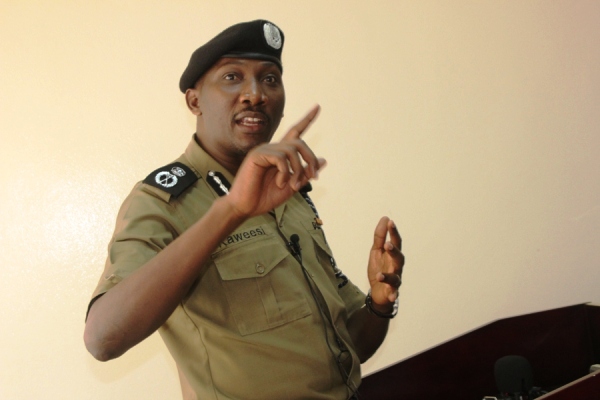
In a letter issued by the police spokesperson, Andrew Felix Kaweesi to FDC, he asked the party to desist from holding any assemblies and celebrations parallel to the national celebrations set for Sunday.
Police mouthpiece Felix Kaweesi, issued the warning.
He instead advises them to join the national celebrations to be held in Luuka, saying that the motive of their (FDC) celebrations is still unclear and would undermine the security and success of the national celebrations.
Homes of majority of FDC leaders have been sealed off by security today. Those confined in their homes include the party’s spokesperson, Ibrahim Semujju Nganda; Kampala Lord Mayor, Erias Lukwago; Kawempe councilor, Muhammad Ssegirinya and former FDC presidential candidate, Dr Kizza Besigye.
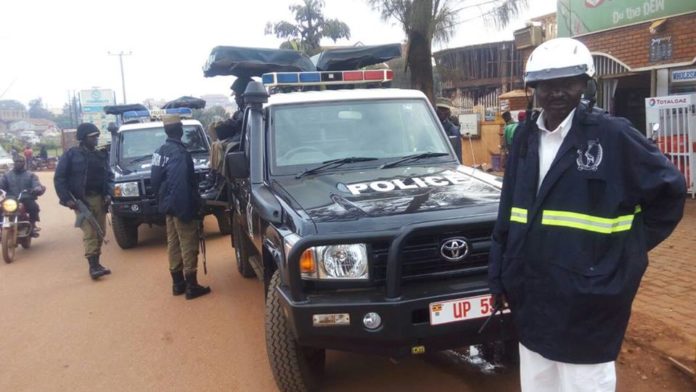
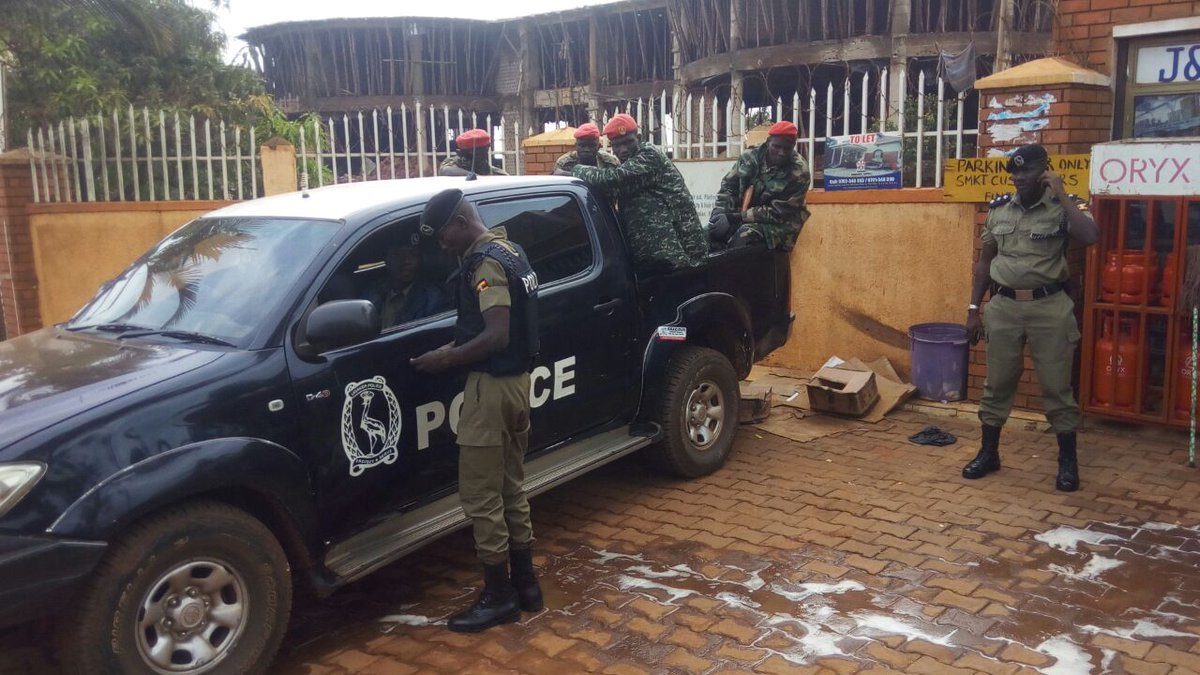
Police and military observing the home of Kira Municipality M P Semujju from a nearby hotel in Bweyogerere.
However, the latter managed to beat up security at his home and turned up for the burial of the late Makindye Court’s chief Magistrate, David Mafabi.
Some FDC leaders including Ingrid Turinawe, Amb. Wasswa Birigwa and Wafula Oguttu were this evening allowed to access his home though, he was stopped leaving with them.
The Opposition plans to hold Independence Day celebrations at Kira Municipality in Wakiso District today, another rally in Kawempe on October 8 and a national rally in Katwe on Independence Day on Sunday to renew what they termed their energy in the fight for good governance in this country.
Meanwhile, there is a protest by traders in down town Kampala. They are protesting a sudden increase of rent by Shs900,000 in some of the arcades without notice. Luwum street is all blocked by police and all shops closed.
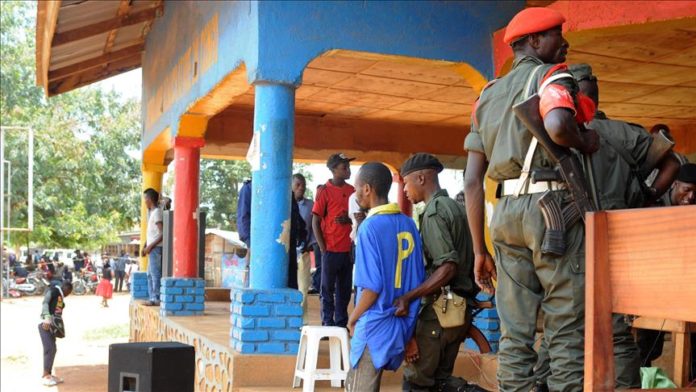
Soldiers escort Allied Democratic Forces (ADF) rebels group member Kasereka Sindani (L) as he is accused of having taken part in the Rwangoma massacre at the end of the trial, at North Kivu court-martial in Beni, Democratic Republic of the Congo on September 30, 2016. ( Stringer - Anadolu Agency )
A military court in the Democratic Republic of Congo has sentenced 10 Ugandans reportedly belonging to the Allied Democratic Forces (ADF) to death for crimes against humanity.
“These 10 terrorists were given the heaviest sentence, the death penalty, by the Operational Court Martial of Beni,” government spokesman Lambert Mende was quoted as saying, even as the fate of one Ugandan prisoner, Sam Mugumya, who was arrested in Beni and linked to the ADF, remains unknown.
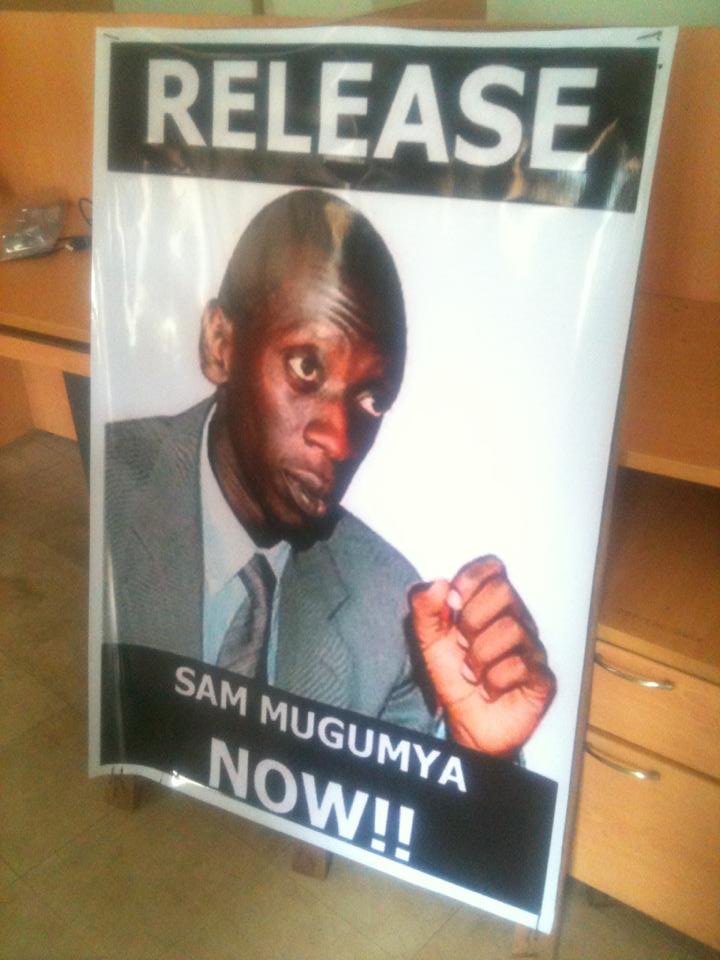
WHERE IS HE? A potrait of FDC activist Sam Mugumya, demanding his release from prison in the DRC.
In October 2014 Mugumya, a Forum for Democratic Change (FDC) activist, was arrested and detained at the Ndolo Military Prison in the DRC, for allegedly being in possession of huge sums of dollars and documents linking him to a rebel group in Eastern DRC intent on overthrowing the Uganda government.
The ADF, which has been based in the eastern DRC since 1995, is made up of several armed groups opposed to Ugandan President Yoweri Museveni.
Mugumya, who was also linked to the ADF, is a former aide to FDC 2016 presidential flag bearer Dr Kizza Besigye, and after his arrest in the DRC Uganda army spokesperson Lt Col Paddy Ankunda was quoted as saying the government was negotiating his extradition.
Meanwhile, DRC spokesperson Mende said that the sentenced Ugandan rebels were captured during a military operation that started last year in Beni, near the Ugandan border. They were convicted of terrorism, crimes against humanity, and rebellion.
The same sentence was passed in September against 10 other rebels of the same group.
The trial of the ADF rebels charged with killing innocent people in eastern Democratic Republic of Congo began in August.
The trial, conducted by the Operational Court Martial in collaboration with high military court magistrates, considered charges that the rebels killed innocent civilians with impunity, attacking their homes, and hacking them to death.
The Congolese army, backed by the UN mission in the country, has vowed to neutralize ADF militiamen in eastern DRC.
Between 1,200 and 1,300 civilians have been killed by the ADF since October 2014, according to a report released Monday by the coordination of Civil Society of Beni, a local NGO.